
Genre: Drama/Thriller
Premise: (set in 1941) A man wakes up in Mexico with no memory of his previous life or how he got there. Slowly, through the people he meets, he’s able to piece together his suspect past.
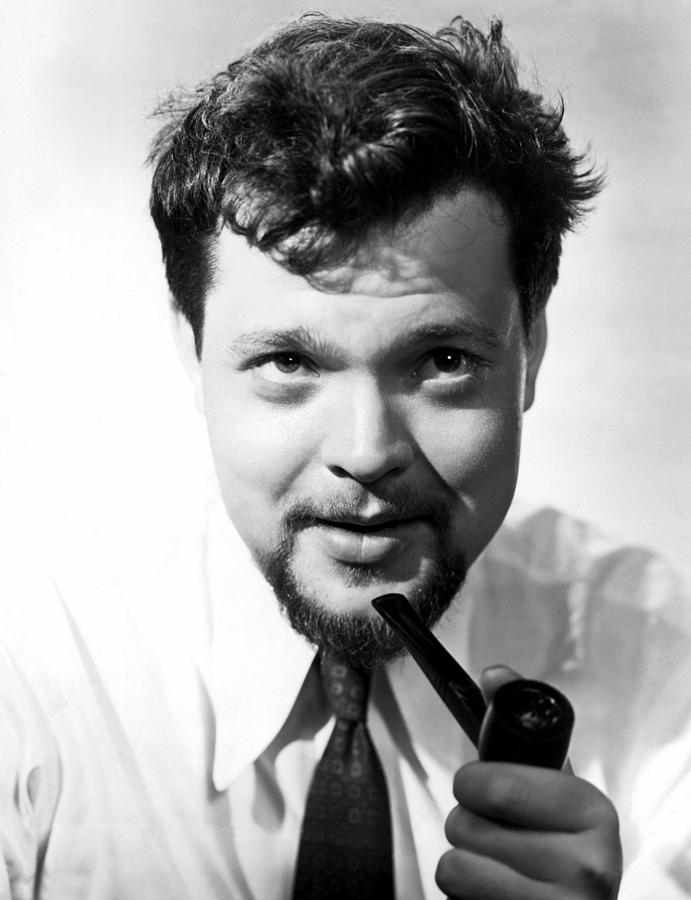
About: Today’s script is written by THE Orson Welles. You may have heard of this upstart. He co-wrote and directed a little movie called “Citizen Kane”? Oh, Orson. The man didn’t exactly have the career everyone thought he would after Kane, struggling to make films that, quite frankly, weren’t very good. This is one of those projects, a script that laid forgotten for 60-some years until it was recently found in RKO’s archives. They’re even saying they want to put this puppy into development! Find a new writer to modernize it. Well, let’s see if that’s a good idea.
Writer: Orson Welles
Details: March 25, 1941 draft. The “Third Revised Continuity” (whatever that means). 136 pages (though the over-spacing indicates it would’ve been shorter if put into proper format)
orson-welles-november-7-1939-everett

I love reading these old scripts because I love checking back on how they used to tell stories before the 10,000 screenwriting blogs and screenwriting books came around. Was storytelling “purer” back then? Did stories emerge more naturally, more organically, because writers weren’t following rules? Anti-establishment screenwriting folks will tell you, yes, of course! Books are bad! Rules be gone! Storytelling used to be a damn art form!

Oh, boy. If you think that, you are the president of Delusionville. Studios were just as strict about story and script-control back then as they are now. Case in point: When I went over to check what the studios thought of this script when it was originally turned in, they had the exact same problems with it that I did.

Storytelling is timeless. It’s followed a certain formula forever. And that’s because it’s a formula that works.

Okay, so what’s this Santiago script about? Before I tell you, let me tell you what the first line in the script is: “My face fills the frame.” You gotta love Orson Welles because lordy, lordy did he love himself!

Actually, Welles informs us before the script begins that because he’s starring in the film, he’ll be referring to himself as “Me, my, I” and whatever other pronoun can adequately capture his narcissism. So “me” wakes up in the middle of a room of people yelling at him in a dozen different languages.

He doesn’t know who these people are, how they got there, or why they care so much about him. All he knows is that he doesn’t remember anything about himself, so he can’t answer their questions. Pissed off, they eventually go away and “Me” learns that he’s in some Mexican city.

A kind, but suspicious-looking Mexican man named Gonzalez befriends “Me” and takes him into the city, where every single person who sees “Me” stares at him with scorn. Apparently our amnesiac is some sort of celebrity.

Eventually, “Me” is shot and almost killed, bringing to light just how sinister his former life must have been. He starts demanding answers from those around him and finds out his name is Lindsey Kellar, a Fascist radio personality from England. He’s trying to rally the Fascist movement wherever he can, and apparently his people sent him here to Mexico to transform them into like-minded, colonizing psychopaths.

I had to touch up on my history to understand what exactly this meant. Remember, it’s 1941, during World War 2, and the evil Axis powers wanted South America on their side. Hence, sending someone there to rile up Fascist sentiment would’ve been a big deal.

“Me” (now Kellar) learns from his fellow Fascists that he must go meet someone in the town of Santiago. Thus begins a long trek to the mysterious town. Kellar meets many sordid types along the way and eventually learns (spoiler) that he’s not really Kellar! He’s a body double FOR Kellar. The real Kellar is planning to kill a bunch of heavy-duty politicians on some boat, and Kellar was part of the plan (though I’m not sure how). Kellar must do a 180, from helping the Fascists to trying to stop them, a job he is not even close to being equipped for.

You know, I’ll be honest with you. I’m not surprised Orson Welles never had that mega career everyone was so sure he’d have. Citizen Kane is one of those screenplays (extremely layered, jumping through time, lots of characters, unorthodox narrative) that can only come from someone who doesn’t really understand the medium. Your lack of knowledge in how to tell a story actually helps you, because you’re unaware of all the rules you’re breaking. Every once in awhile, one of these newish writers gets really lucky and comes up with something genius. The problem is, they can’t replicate that success because they never learned how to tell a proper story in the first place. I feel like something similar happened to Christopher McQuarrie. There’s a reason he’s never gotten close to another Oscar since The Usual Suspects. That script could’ve only be written by someone (as he’s admitted in interviews) who didn’t fully understand the medium.

Now, don’t get me wrong. I’m not saying Orson was a hack. But his legacy was more in his directing, how he was unafraid to try things and push the medium. That’s where he shined. Screenwriting is difficult. It’s a wonky way to write a story. So there’s no shame in it not being one’s forte.

And I’d argue we see these screenwriting issues here. I love a good amnesiac script (note: I have no idea if using an amnesiac as the main character was considered cutting edge or cliché in 1941), but while that definitely piqued our interest in the first act, after the excitement died down, there wasn’t much left in the story to get us excited.

I knew the script was in trouble when our main character randomly stumbled onto a tour bus for 15 pages. He does so to avoid his potential killers, which I guess makes sense. But did we need to stay with these people for 15 pages???

For those of you new writers who are starting to get feedback for the first time, you may have heard the note, “You need to tighten your story up.” Or “You need to tighten the second act up.” What that means is getting rid of sequences like these. Sure, the sequence is the first to bring up that Kellar’s a celebrity around the world, so you could make the argument that it’s necessary. But that one piece of information is placed amongst 15 pages of shit we don’t need at all. Just move that reveal to another scene and get rid of this sequence.

The more exciting stuff is when Kellar’s at the Presidential Party and everyone’s looking at him like he’s Hitler (and we’re wondering why). Have him meet his contact there, have the contact tell him he needs to go to Santiago, then the only scenes from there on out should revolve around him trying to get to that plane and leave the city.

Except that when we DO get on that plane and head to Santiago, we get stuck in another tiny town where a hell of a lot doesn’t happen. We’re looking for horses. We’re looking for lodging. It gets really boring really fast. I think Welles believed in his reveals and reversals (the man who’s supposed to be helping him is actually planning on killing him) too much and thought that gave him carte blanche to take his time.

The Way to Santiago had the story goal (get to Santiago), which gave the script some narrative drive. But it spent too much time in the waiting room, forcing it to come up with something to do before the next plot point. To that end, this script really could’ve used some urgency. If Kellar had to get to these checkpoints by a certain time, Welles would’ve had no choice but to not linger on these sillier unneeded moments.

I mean, look – this was a third draft. Obviously it wasn’t meant to be perfect. But it was the draft he was pushing on the studio in the hopes of making it and I have to agree with them in that it probably wouldn’t have made a good movie. The road to Santiago was too muddled and too slow for my taste.

You can read the script for yourself here!

[ ] what the hell did I just read?
[x] wasn’t for me
[ ] worth the read
[ ] impressive
[ ] genius

What I learned: SHIT’S GOTTA HAPPEN. I’m sorry for being so blunt, but in screenplays, shit’s gotta happen! You can’t be going 15 pages on a tour bus with a bunch of non-characters (characters who we’ll never see again) bickering. You can’t spend forever with your hero looking for stuff like lodging. Shit’s gotta happen! Get through the mundane stuff quickly then move on to the next plot point because that’s what we’re going to be interested in. I’m not saying you should never take your time. But don’t extend those slow sequences out for too long and don’t pack them to close together.

What I learned 2: Don’t let your script get stuck in the waiting room. This is where you’ve pre-established (for yourself) that a plot point is going to happen at “X” point in your story, and you realize you still have 5 (or 10, or 15) pages before that plot point occurs, so you have your characters “wait around” in the meantime. Long dialogue scenes. An unneeded foray into a store (or a tour bus) to pass the time. You don’t realize that, by doing this, you’ve pulled us into the boring waiting room as well. To combat this, create a goal and give that goal some urgency (they have to be at “x” by “y” time). That should keep your characters active during these sequences.

  • Illimani Ferreira

    Come on Carson, I didn’t read the script (yet) but saying that Welles didn’t understand the medium is really unfair. I’d put him on the same shelf of Hitchcock and Kaufman, screenwriters who knew/know the rules and were/are eager to bend them in entertaining ways.

    • Illimani Ferreira

      Okay, I’ve read 60% of the script now. And I’m liking it. I can’t understand why you didn’t like the bus scene: it’s an amazing scene that cushions two tense moments that conveys lots of information embedded in comic relief.

      This is a great script. The dialogue brings on tiny subtle pieces of information that give hints about who the characters are in the ocean of confusion that the protagonist is. That’s Welles at his best, and I think this review is among the 5% where I strongly disagree with your opinions.

      My speculative take on why this scripts wasn’t made: Welles was betting on the kind of sensibility that was guiding the entertainment industry at his time: bring Latin-America to the Allies. It was a soft power government strategy but also the initiative of individuals like Rockefeller who never missed a good chance to use his own fortune without expecting a profit to fund artists and projects that could influence Latin-Americans that the US and democracy were the right side to stand for. Now, if I was Rockefeller, patriotically looking for projects, if this script landed on my desk I wouldn’t go past the first page. Because “ME”. Welles wrote this project first for himself, and in a context of voluntarism people were not eager to waste their time and money funding a project that, despite its quality and the fact that it would actually work for their purposes, has such an egocentric signature.

      • brenkilco

        Don’t know for sure, but I think Welles was pushing a number of potential projects in the wake of Kane and maybe he just got more enamored with his adaptation of Ambersons. Bear in mind that It’s All True was a blatant attempt to build bridges with Latin America and the studio financed that unfortunate enterprise for a time.

        • Illimani Ferreira

          Good point

  • martin_basrawy

    Carson, first you were wrong about the awesomeness of a derivative work like the Equalizer, now you’re judging McQuarrie because he hasn’t been near another Oscar? Is that the barometer we’re judging people by? Should an Oscar winning screenwriter always be nominated/win an Oscar any time they write something? Did you read the Jack Reacher script? Thoughts about Tom Cruise aside, on a script level that’s a damn good script. I mean, hey, at the end of the day, these are your subjective thoughts and so forth, but I feel that sometimes you get too taken in by one thing over another, i.e. the sparse writing style of the Eqaulizer (even though on screen it won’t count for jack) and now the Oscar winning ratio of an otherwise pretty successful writer.
    Oh and Orson Welles? eh Citizen Kane bored me. If that invalidates anything else I’ve said, then so be it. :)

    • mulesandmud

      Are you bored by older films? Or black and white films in general? Or was your Kane boredom more specific somehow?

      The first time I saw Kane my reaction was the classic “Really? This is it? This is the one everyone talks about?”

      Long story short: I didn’t know shit. Kane is the gift that keeps on giving.

      Watch it again in a few years.

      • martin_basrawy

        I have nothing against B&W films, I quite appreciate them. It was Kane in particular that I just couldn’t get into. It was years ago though, so perhaps I should give it another go now that I’m “wiser and older”.

        • mulesandmud

          Don’t force it. When you do come around, it’ll be waiting.

          The detail that finally grabbed me was when I realized that during the opening sequence, the glowing window of Kane’s mansion is in the exact same place in every shot. Even when the mansion is reflected in the lake!

          More almost any other movie I know, I can feel a sense of purpose in every single choice made in Citizen Kane. Every word, every composition, everything. Inspiring and educational.

          http://www.youtube.com/watch?v=-r0b_XeRkG4

  • brenkilco

    Taking pot shots at a genius. You don’t lack for nerve. But some minimal research would have been in order before deciding to knock Citizen Kane. While accounts vary, it is generally agreed that the initial story of Kane and the flashback structure were the work of his co-writer, the extremely experienced, veteran screenwriter Herman Mankeiwicz. You’ll note that Mankiewicz’s name comes first in the writing credits and even Welles-after an initial attempt at credit stealing- admitted he deserved it. And the multiple flashback structure was not new. It had been used as early as 1933 in the Preston Sturges script The Power and the Glory. Doubtless Welles added all the brilliant visual touches but Kane did not spring from the mind of a novice. And anyway, Welles had been co-writing and editing tightly timed, commercial radio dramas for years.

    That said, I would agree that Wells was a far less talented writer than he was a director. Touch of Evil, for instance, is cinematically brilliant, but as a narrative it’s barely coherent. And much of the dialogue is downright lame.

    • Cfrancis1

      I didn’t think Welles wrote Touch if Evil. I thought he was just hired to direct and act in it.

      • walker

        After he came onboard the project, Welles rewrote the screenplay.

        • brenkilco

          And to be fair to Welles I don’t think he was given a lot of time.

          • walker

            While I agree about the lack of narrative cohesion, and especially about (some of) the dialogue, I feel that Touch of Evil overcomes these elements through the introduction of a radical, bravura visual style that was decades ahead of its time. HW really didn’t catch up to that until the steadicam and music videos.

          • brenkilco

            Which is why it remains one of my ten favorite films despite all the imperfections. I’m nitpicking genius here.

          • walker

            Have you ever seen I am Cuba?

          • Alex Palmer
          • brenkilco

            only bits and pieces like that really impressive moving shot just posted.

  • fragglewriter

    “Your lack of knowledge in how to tell a story actually helps you, because you’re unaware of all the rules you’re breaking…The problem is, they can’t replicate that success because they never learned how to tell a proper story in the first place. I feel like something similar happened to Christopher McQuarrie”

    This is a great point. I was looking at his other works, even though I’m not a fan of “The Usual Suspects,” just to see he’s body of work. His storytelling is slow, so if you like the slow burn, you’ll like his work. But I also notice that it is riddled with cliches or not fully thought it (consequence). I watched the first 30 minutes of “Jack Reacher” and knew that after the first scene, that the decline in excitement plummeted for the next 25 minutes. Also, the trailer was deceitful because it didn’t represent the movie that I was watching.

    The same also could be said for William Monahan who has written “The Departed.” I thought that movie was so boring (watched it twice) and too many plot holes and that if it wasn’t for Scorcese’s name, it wouldn’t have been regarded as being a great movie.

    Also, writers (entertainers) shouldn’t try to replicate a previous success. The writer is in a different state of mind, the change of times, and so forth to take 2-steps back. I think if someone tries to go back and recreate a work that was successful, you’ll end up stunting your creative growth as a writer. You’re so consumed with the past that you can’t move forward. Treat every work as a one-off, and keep it moving. You’re a writer so prove it. Wrote across the spectrum. This is why I have to give it to Stephen King. He loves horror movies, but he didn’t stick solely to horror. If he had, we wouldn’t have: “Stand by Me”, “The Shawshank Redemption”, “The Green Mile”, etc.

    I understand that Christopher McQuarrie couldn’t get work because everyone wanted him to write crime/drama, but write a script with different context under a pseudo name. Stephen King has done it before in the early part of his career because he didn’t want people to buy/sell his book because of his name.

    What I Learned Tip: Yes, Shit has got to happen, but also we have to recognize when it’s time to use it. Scripts do need pacing (high, low, valley, peaks), which is a two parter as to not let the valley go for 15+ pages. Pacing is the key.

  • Poe_Serling

    Hey, Carson, thanks for the blast from the past. Sorta fun to blow the dust off an old script like this and see how they did things back in the day.

    Orson Welles was such a fascinating filmmaker… not only for his classic films but for his long list of unfinished/unproduced films and screenplays.

    Even when Welles arrived in Hollywood to great fanfare, his first planned production was a film version of Joseph Conrad’s Heart of Darkness. As fate would have it, Welles’s 170 + page script was deemed too costly for RKO. So up next on his slate of proposed film projects: Citizen Kane.

    • brenkilco

      I believe Heart of Darkness was intended to employ a first person camera. For the entire movie the audience would be the eyes of the main character. Probably seemed like a great idea at the time but when the device finally was employed in the film Lady in the Lake it turned out to be pretty cumbersome. Probably just as well Welles dropped it.

      • Poe_Serling

        True… about Heart of Darkness ‘employing the first person camera.’

        I remember watching Lady in the Lake once. Not a great film, but an interesting one for trying to use the first-person narrative style to tell their story.

  • mulesandmud

    “Now, don’t get me wrong. I’m not saying Orson was a hack.”

    Oh, good. Was worried there for a second.

    One of the things that I find most uncomfortable about Carson’s approach is his glancing and dismissive view of film history. It’s true that many executives these days share his brand of cultural amnesia, so no one will call you out for not watching ‘The Magnificent Ambersons’, but that doesn’t mean we shouldn’t be doing the work.

    Please, writers, DO THE WORK. Not just the writing and the reading. Watch the movies. All of them, all time periods, all genres. See how different generations of creatives worked within and around the confines of the studios. See how filmmaking has changed over the decades. Gaining that perspective on both the industry and the art is at least as valuable as memorizing the modern crib sheet of screenwriting rules, and ultimately more enriching.

    If your interest in Orson Welles is only about whether or not he followed “a formula that works”, then really, why bother? You’re looking at the finger that points to the sky.

    • walker

      And by the way, the “work” is hugely enjoyable and rewarding. There is so much to learn from the work of great filmmakers like Welles, Preston Sturges, Powell and Pressburger, Hitchcock, Joseph Losey, not to mention the holy trinity of Tarkovsky, Bresson, and Ozu. And if that is not enough to recommend them, consider the fact that so many top directors–Scorsese, Soderbergh, Fincher, Payne– are familiar with and reference their works. Of course there are a few auteurs that are pretty glad their audiences are not particularly well-versed in cinema history.

      • brenkilco

        I think I would offer to pay to get Carson to review Tarkovsky’s Stalker. Of course I’d never have to come across with the money because either he’d swallow his tongue or his head would explode.

    • davejc

      Glad somebody mention The Amazing Ambersons. For my money, a far better film than Kane ever was, even after the Studio recut it. I could never get on board with Kane.and never will. The whole rags to riches to rags just isn’t my thing. Amberson’s theme of how technology redefines class distinctions is far more timeless and timely.

      Anyhow Kane has been knocked off it’s throne by Tokyo Story and I can’t wait to see Carson’s review of that one :)

      • brenkilco

        Ambersons is amazing despite the butchery. And so different from Kane. Also should be pointed out what a tremendous director of thrillers he was. Stranger, Shanghai and Evil all contain indelible moments.
        Actually Tokyo Story has now been knocked out by Vertigo. Another rambling thing with insufficient GSU from a script full of unacceptably whole sentences.

        • davejc

          Kane and Vertigo have something very significant in common. Bernard Herrmann.

          • brenkilco

            Hermann contributed so much, esp. to Hitchcock’s string of late fifties masterpieces. The Simon Callow bio of Welles contains the transcript of an interview some journalist conducted with Hermann. I had read that he was difficult, but this excerpt makes him sound like he had an ego that would have put Welles’ to shame.

          • davejc

            Herrmann is my favorite. Cape Fear, Taxi Driver, Psycho, the man is a legend.

          • brenkilco

            I suppose North by Northwest would still be my favorite film without the great music. But I’m glad its got the music.

      • klmn

        Have you seen Welles’ MacBeth? From 1948 or so. I saw it years ago in a revival house. I liked it a lot. Of course Welles had good source material.

        • walker

          Actually all three of Welles’ Shakespearean adaptations (MacBeth 1948, Othello 1952, and Chimes at Midnight 1965) are well worth seeking out, with the best being Chimes at Midnight.

          • brenkilco

            Chimes contains one of the best battle scenes ever despite a total budget that was probably less than what they spent on catering for Braveheart.

        • Poe_Serling

          Another Welles film I always thought was quite good: The Stranger (1946). Starring Welles, Edward G. Robinson. Directed by Welles. Features an intriguing game of cat and mouse between Welles and Robinson.

          And it’s been said, “this was the only film directed by Welles to show a profit in its original release.”

          • mulesandmud

            One of my favorite Welles films is F FOR FAKE (1974), a crazy experiment that he spend years cobbling together from spare parts. Part recut of someone else’s documentary, part magic show, and part autobiographical essay. Wild stuff.

            When people asked him what he was making at the time, he gave them the characteristic response “a new kind of cinema”. Guy wasn’t joking – there’s still nothing like it.

          • brenkilco

            Every once in a while there’s an article about The Other Side of the Wind, the movie he shot in the early seventies with John Huston. Depending on what you’re reading its either 95% complete and about to see the light of day or a mess of disorganized footage mired in ownership disputes that will never be resolved. A couple of clips from it shown at a Welles tribute decades ago are available online. Just enough to fascinate.

          • brenkilco

            Its usually dismissed as his most conventional work. But that clock tower climax is pretty memorable. Ditto the opening pursuit. Hard to believe that very convincing New England town was only a set.

      • mulesandmud

        It’s best if we keep Carson away from Asian films altogether. The idea of another culture with an entirely different storytelling philosophy might crash his server.

      • Kirk Diggler

        “The whole rags to riches to rags just isn’t my thing.”

        Did you watch the film? He isn’t in rags at the end. The thing he lost was lost to him before he ever gained a cent. Tokyo Story? A bit slow. Boring to some. Kane is the real deal, enough of this contrarian foolishness.

        • davejc

          Yeah. Watched it. I just saw a different ending is all. I mean as rich as he was, the final image should have been a whole warehouse on fire, a warehouse full of a thousand Rosebud sleds.

          • Kirk Diggler

            Because hitting someone over the head with a sledgehammer is always better than nuance.

          • davejc

            The point is: what he lost is what he can never get back no matter how hard he tries. He didn’t lose Rosebud. It was always there within arms reach. What he lost was the carefree innocence of childhood. But what he lost is also what every adult loses no matter how they choose to live. Not exactly the earth shattering reveal I’d expect from the greatest movie of all time. Then again, Kane is known more for its influence than for its story.

            In the article I read where Tokyo Story, Vertigo and Kane were all neck and neck for the number one position, down around number seven or eight was the film I would have chosen. Bicycle Thieves. I don’t think there’s a better example of Carson’s GSU anywhere. The last time I saw this film half the room walked out during the climax because they couldn’t bear to watch what was about to happen. To me that’s what getting your audience invested in your story is all about.

            I won’t tell you what happened the last time I watched Kane with a group of people :)

          • Kirk Diggler

            Regarding the ‘earth shattering reveal’ not being good enough. Perhaps we’ve become a little jaded. At the time, no one saw the Rosebud-as-sled reveal coming. Because the movie is so famous, most people who watch it for the first time are at least partially aware of the sled’s significance, and this might lessen it’s overall effect. But I think it’s beauty is it’s simplicity. Nowadays, we expect a head in a box delivered by UPS as the earth shattering reveal.

          • davejc

            Agree. That and expectations because the film is so revered.

  • blogwalker

    Screenwriting is one of the few professions that gets harder the more you practice it. As each day passes you realize how many things must work in order to tell a great story.

    • Guest

      So true

  • gazrow

    Carson, you sure this wasn’t filmed?!

    An amnesiac discovers he’s a bad guy – wants to be a good guy – becomes embroiled in an assassination plot – does a 180 to stop it.

    Pretty sure I’ve seen that movie! Guess my memory’s playing tricks on me? Hopefully, I’ll
    have TOTAL RECALL soon. Then again, knowing my memory, the answer might remain UNKNOWN!

    Oh, well, back to my latest script: ‘Nothing New Under The Sun.’ It’s about an amnesiac who…

    • walker

      Boy meets source code, loses source code to twelve monkeys, wins it back in final confrontation on a jetty, takes a snapshot to keep as a memento.

    • Sandy Balls

      Side note: One of the producers of Total Recall is a drunk living in the Tenderloin of SF. Someone told me this the other day (I’m writing in the TL currently.) I’ve yet to meet her, but apparently she’s one of the producers… Someone wants to introduce me but I’m sort of scared…

    • Montana Gillis

      You’re right Gaz… There’s been a couple of amnesiac bad guys that think they are good until their past catches up with them. I vaguely remember two black and white films with this theme. Can’t remember titles or actors.. come to think of it, I can’t remember shit anymore.

      • Poe_Serling

        “… bad guys that think they are good until their past catches up with them.”

        Angel Heart with Mickey Rourke.

  • Alex Palmer

    Watched The Magnificent Amberson’s last week. Orson Welles did a fine job, but the film suffered on account of the studio butchering the cut and forcing him to re-shoot the ending so it was as anti-climactic as possible.

    Another thing struck me as I watched it: Orson missed his radio days. While he’s famous for his elaborate, long takes and picturesque lighting, he likes to give his films a soundscape that could almost work on radio without the images.

    • Poe_Serling

      Just recently I discovered that the classic Twilight Zone episode The
      Hitch-hiker was inspired by one of Welles’s radio broadcasts.

      Welles considered The Hitch-hiker by Lucille Flectcher as ‘one of the best
      suspense plays ever written for radio’ and performed it several times on various radio shows throughout the ’40s.

      Serling took the same story (with a few changes for TV audiences) and featured it in the first season of his landmark television show.

  • juleslefrog

    I wonder if Orson Welles ever had to abandon a project because the script was leaked on the internet…

  • Alex Palmer

    Off topic: what does everyone feel about the Tarantino script leak row?

    I assume we will tend to have a more sympathetic perceptive on this than non-writers. I have to say, I feel kind of bad for him. While some might argue “oh, he leaks it eventually anyway”, that’s not the same if someone is indiscreet with an unfinished piece he trusted them with.

    I was trying to explain to a friend that there is a significant the difference between a finished spec script and a first draft. It’s kinda like the difference between a newborn baby and a 12 week foetus yanked out of the womb.

    But, full disclosure: I would LOVE to read it. I guess that makes me a hypocrite.

    • fragglewriter

      Glad you posted this cause I just asked for a copy. I think he might be overreacting to the link, BUT then he’s Tarantino, so you would think there would be a level of respect for a veteran screenwriter.

      I know why the leak because if you look at the state of films, there so regurgitated. Based on his filmography, praise and awards, you would want to read the script to get a heads up on how to MAYBE make a movie like the film leaked and beat him to the punch such as “Olympus has Fallen” and “White House Down.”

      • Alex Palmer

        Lol, there’s no point them even trying: the script was a Western. And (especially after Lone Ranger) NO ONE wants to make a western. Its just QT who gets a free pass because his last three films were basically westerns.

        Kill Bill: Eastern Western
        Inglorious Basterds: WW2 Exploitation Western.
        Django Unchained: Blaxploitation Western.

        Hey, the guy know what he likes.

        • fragglewriter

          I agree that he gets a free pass, but he still does most have trouble doing: getting people in the seats and actually enjoy the movie.

          I would love to know how a first draft compares to a finished draft for him.

          • walker

            The first drafts have perfect spelling, beautiful grammar, and clock in at 96 pages.

        • Poe_Serling

          He must be cut from the same cloth as John Carpenter, who has said on numerous occasions that his films/scripts were heavily influenced by his love of Westerns.

          • brenkilco

            Assault on Precinct 13- Rio Bravo

          • Poe_Serling

            Exactly.

            Once read a fun article over on CraveOnline where the writer went into detail on how the Western genre influenced quite bit of Carpenter’s films. For example…

            How Snake Plissken from the ‘Escape’ films bears more than a striking resemblance to John Wayne’s character in True Grit.

            -and-

            The Thing is frozen version of Peckinpah’s Wild Bunch.

          • filmklassik

            Regarding ESCAPE FROM NEW YORK…the character of Snake Plisken may’ve been WRITTEN to be a JohnWayne/Rooster Cogburn-type, but Kurt Russell has said (and it’s obvious from his performance) that he patterned his voice and manner after Clint Eastwood. Watch it again: He’s practically doing an impression of the guy.

          • Poe_Serling

            lol. I was kinda wondering where you were at today, especially since the topic is Orson Welles and the discussion would eventually veer off into some of his ‘classic’ films.

            Oh, I agree, Kurt Russell is doing an A-1 Clint Eastwood impression throughout the film.

            **Being a huge fan of Charles Bronson, I’ve always been fascinated by the idea that the studio wanted him for the part of Plissken… But Carpenter nixed the idea because of Bronson’s age at the time – 61.

        • Bifferspice

          this hollywood logic winds me up so much: the lone ranger flopped therefore the public don’t like westerns. just ridiculous. it’s like when cutthroat island bombed, hollywood decided we don’t like pirate films, and then gasped in collective shock when pirates of the caribbean did so well.

          i love westerns. leone is in my top three directors, once upon a time in the west is in my three favourite movies of all time, and i love recent additions as well as the classics: true grit and the assassination of jesse james by the coward robert ford are two examples of the genre done brilliantly. i would be fully in line to watch a QT western, but i would also be in line to see any western that looked as if it was done skilfully and artistically. that does not mean i want to watch a shite johnny depp comedy western based on a crappy tv show.

    • mulesandmud

      Not that I can muster much sympathy for QT, but still, it seems cruel to try to snag a copy at this point. We’re writers, we know how frustrating that kind of violation can be.

      There are other early versions of his projects floating around. Hunting around for this one feels more like schadenfreude than insight.

    • Matteo

      I’m kind of split on this. I think QT was incredibly naïve to distribute copies of a script himself and not expect a leak. Previous form should have told him that it would get out. Is it sad that you can’t trust people? Yes. But he is not the first person to be a victim of it and he won’t be the last. Nor is he the first person to scrap a project because of a leak – Dr. Dre was there way ahead of him on that ;)

      I have a hunch that there’s a little more to this story. My guess is that the project hasn’t had the kind of positive feedback he’d expected, which has made him especially sensitive to it being out there. His dismissive stance that he has ten more projects he can go to doesn’t sit with the Tarantino who has taken several years to write scripts before. I could be wrong, but I sense some wounded pride in there along with his anger.

      But the interesting part is his claim that he will publish The Hateful Eight (though I’m not sure if he means as a script or as a novel). If he does do that it will be something of a first. I know his original draft of Natural Born Killers was published in paperback, but I’m not sure any screenwriter has put out a fresh screenplay as a standalone property. If he publishes it and people love it, it might actually be a masterstroke. He’s the one writer who could put out a screenplay and have it ‘cross over’ and be read by a more mainstream crowd. I’ll be fascinated to see if he follows through on that.

    • garrett_h

      I’m with him on this one, and not just because I’m a QT “fanboy” as some might call it.

      I think it’s more about the betrayal than the work getting out there. Here’s a link that explains what happened, for those that missed it: http://collider.com/quentin-tarantino-the-hateful-eight-script-leak/

      When it’s that specific, and you can name exactly the 4 or 5 people who you handed the script to in person in a meeting and told them that it was for their eyes only, and they turn around and give it to their agent who carpetbombs Hollywood with it, then yeah, I’d be pretty mad too. That’s a major betrayal of trust.

      Which makes me wonder how Beyonce kept her album a secret. She must have the tightest inner circle of all time! Maybe that’s how she got Jay-Z… ;-)

      But I mean really, what were they thinking circulating this?

    • Jonathan Soens

      Honestly, part of me feels like Quentin is being silly. On some level, I feel like a writer like Quentin should be the last person to want to hide scripts from the light. I don’t imagine anybody skips seeing his movie because of a leaked script, and if the buzz about the script is good it might even attract more attention or viewers.

      On the other hand, having a script leaked so early in the production process has to be scary. It allows less scrupulous movie-makers the chance to read over his script and “borrow” anything they like, which they can then stick into their own project which might be coming out before/around Quentin’s movie.

      Quentin has had to put up with a lot of movie-makers trying to copy stuff he’s already put out, so I know he must hate the idea of those copiers having a chance to copy something before he’s had a chance to put his version out there.

  • fragglewriter

    It seems that Tarantino’s first draft leaked. So if anyone has it out there, gladly appreciate the email to : fragglewriter at yahoo dot com

    ‘There is an ugly maliciousness to the rest of it. I gave it to three actors: Michael Madsen, Bruce Dern, Tim Roth.

    http://www.dailymail.co.uk/tvshowbiz/article-2543891/Quentin-Tarantino-puts-Hateful-Eight-hold-script-leaks.html

    • Awescillot

      Pardon me for shamelessly jumping on this train here: if anyone has it, I’d love to read it as well. awescillot at gmail dot com

    • craktactor

      It isn’t QT’s that got leaked. It was McFarlane’s western. Sorry.

      • fragglewriter

        Are you sure because several news sites report that it was QT.

        • craktactor

          Absolutely certain.

  • Sandy Balls

    I think when Well writes: ‘Third Revised Continuity…’ does he not mean the posted draft a continuance of the changes he would have carried over from the 2nd draft meaning he kept the changes from the 2nd..? Either way I love the note he writes on the prefix page commenting with regard to America as a country that fought for its freedoms, etc. Man, times have changed. Wow. I love this man.

  • DforVendetta

    Someone send me Quentin’s “Hateful Eight” script/pdf- housey.d@gmail.com

  • grendl

    Have you ever heard of the butterfly effect?

    It’s the theory that a small change in history could ultimately have monumental effects later on.

    Orson Welles was an integral part of cinema’s development as an artform, or even being seen as an artform as opposed to the penny arcade entertainment it started out as at the beginning of the century.

    People used to pay to watch images of moving locomotives, and workers leaving factories, until filmmakers like the Lumieres and George Melies, and Edison decided to use the medium to tell narrative stories,

    And then the silent movies came along, with slapstick comedies like those of Chaplin, and the Keystone Cops, Laurel and Hardy, and horror films starring the likes of Lon Chaney. These were genres which lent themselves to a visual medium and didn’t require a whole lot of dialogue.

    Then the “Jazz Singer” came along in 1928 and people decided they wanted sound with their movies. And comics like Groucho Marx, W.C. Fields, and Mae West with their witty patter began to supplant the strictly slapstick movies of Laurel and Hardy and Chaplin.

    And Hollywood put the talk into talkies, almost to ridiculous lengths. The screwball madcap rom coms of Capra and Sturgess didn’t depend on silent subtitle cards to tell a story, but relied on cadence, the rhythms of speech, the voices themselves to enthrall audiences. Gangster movies, westerns, biblical stories and Shakespeare could now be told with dialogue not just images.

    And then Orson Welles came along with “Citizen Kane” who with a single hushed word to start his movie “Rosebud” brought everything to a halt, for just a moment.

    To me he was like QT of his day, an upstart who pushed the bounds of the medium as he had pushed radios limits with his incendiary Mercury Theatre performance of “War of the Worlds’ three years earlier. His directing style was atmospheric and unique, evocative of the German directors.

    I like the “Third Man” more than “Citizen Kane”, but that’s irrelevant. “Kane” an indictment of power, or absolute power at a time when this country was at war with foreign countries was a bold move, as its target, William Randolph Hearst was not a Nazi, but an American newspaper magnate. And yet Welles targeted him.

    It was ballsy,and hurt him and his future attempts to fund his movies. But the daring alone it took to do that inspired a great many filmmakers I believe. It’s hard to prove it, but its hard to rebuke that theory as well.

    Orson Welles influenced many great writers, and directors with his movies. Auteurs who did both included. Spielberg, Scorcese, Coppola, Kubrick were all influenced by his innovation and his daring. It doesn’t matter if they don’t have “Kane” at the top of their lists, as an artist he had a profound impact on cinema.

    To dismiss his work, or him as not quite a hack I think shows a lack of appreciation for his importance as an influence. If it weren’t for Welles whose to say your favorite directors or writers today would be working in the business. Quentin Tarantinos break came from knowing Harvey Keitel. You know who gave Keitel his break?

    Martin Scorcese. And if you don’t think Scorcese was influenced by “Citizen Kane” then you’re simply not paying enough attention.

    Pay attention more. Taking scripts or movies or their makers out of their temporal context, and holding them up to today’s standards following a century of cinema’s evolution is unfair. “Citizen Kane” came out a scant 13 years after the first talkie in 1928.

    You may as well compare the Lamborgheni with the Model T Ford. Why don’t we do that next. Give todays filmmakers all the credit and not acknowledge the giants on whose shoulders they currently stand.

    Sometimes I think you just post stuff to start a riot, Carson, but if you ever have the chance to attend a supper with Spielberg or Coppola, do you and Miss Scriptshadow a great big favor and keep your mouth shut about Orson Welles.

  • ripleyy

    I think it’s complete bullshit on the whole “wait (for so many pages) until the plot point occurs”. I’m not a traditionalist here, so I’m not going to pretend I’m strict on screenwriting, but if your plot point is going to come sooner, let it. I mean, you don’t have the excruciating need to pee but say to yourself “I need to wait five minutes so it’ll be half-past”. I know that’s a stupid analogy, but come on, why waste needless page and just get the story moving.

    Are you five pages too early for the plot point to happen? Who gives a shit? Just move the story at YOUR PACE.

    That being said, I have yet to read this (perhaps later) but it does indeed sound like an exciting story. If this was modernized (or, hell, just directed the way it was, albeit “tidied up”) then I would gladly pay money to see this.

    Also, because I have yet to read this, this sounds like something that could benefit very well to POV (I know it refers to him as “me” but is it still third-person?)

  • bruckey

    The Magnificent Ambersons was remade as a tv movie.
    Seemingly the script is more faithful to Orsen’s ambition

    http://en.wikipedia.org/wiki/The_Magnificent_Ambersons_(2002_film)

  • bruckey

    How does one update fascism for the modern age ?

    If the script goes from 1941 to 2014 ?

  • ElectricDreamer

    Orson’s approach to the concept seems very plot-driven.

    However, there’s a very character-driven take on it that’s wonderful:
    The Man Without a Past
    http://www.imdb.com/title/tt0311519/

    That film extols the virtues of moving on over conspiracy plots.

  • gazrow

    “I’ve yet to meet her, but apparently she’s one of the producers… Someone wants to introduce me but I’m sort of scared…”

    Buy her a drink!! :)

  • filmklassik

    “You may as well compare the Lamborgheni with the Model T Ford.”

    Grendl, I’m going to respectfully disagree with you here, because evolutions in art and evolutions in science aren’t really analogous. In fact they may not be analogous at all.

    A new Lamborgheni… a new car by ANY contemporary manufacturer, for that matter… is going to be better built than the Model T was. That’s right, I said BETTER — in any and all ways. Sure the designers may have “stood on the shoulders of giants,” but today’s cars are safer, faster, more reliable and more comfortable than anything being turned out by Henry Ford at the turn of the last century.

    And your smart phone has 10,000 times more computing power (at least) than the computers that guided Neal Armstrong to the moon.

    It’s just better.

    But Grendl, is a play written in the last 10 years necessarily better than, say KING LEAR? Is a well-received novel (a relatively young art form) from, oh, 2007, necessarily better than one written by Charles Dickens or F. Scott Fitzgerald?

    A great deal of art that came before is, I would venture, better — in many cases a LOT better — in many cases, a HELLUVA lot better — than what is being turned out today. Sharper, more inventive, more exciting, more insightful, etc.

    And that includes movies.

    Now, was all of it better? Of course not. But let’s not pretend that none of it was.

    • grendl

      You used the term BETTER, not me.,

      I’m not talking about better, I’m talking about historically significant.

      I;m not making any aesthetic judgments on movies today compared with those of yesteryear by that analogy.

      You can’t dismiss “Citizen Kane’s” historical significance in the timeline of film, and its profound influence on filmmakers who came after it. Just like you can’t dismiss the Model T Ford,s historical impact on the automobile industry.

      The Lamborgheni while a better car is not as historically important.

      Scorcese saw the film as groundbreaking…

      https://www.youtube.com/watch?v=f8Uh0fkrwIE

      So if you removed this film from existence, maybe he wouldn’t have been quite the director he became, and wouldn’t create a “Wolf of Wall Street” character who like Charles Foster Kane indulged in excess, was unlikable played by a charismatic actor.

      I would never intentionally suggest movies today are better than seventy years ago. But art forms do evolve. Machine gun back and forth dialogue of the thirties and forties gave way to more realistic dialogue in the sixties and seventies/ ‘Bonnie and Clyde” was a far cry from “Key Largo” or “the Maltese Falcon”.

      Once again, movies are not better today. Adam Sandlers proof of that.

      But art does evolve as technology does. You can infuse the very subjective idea of it being better or worse, but I won’t indulge such nonsense as I never suggested it gets better. It changes.

  • Randy Williams

    Maybe these days slow sequences can’t last too long, but remember we’re talking about way back when, when slow sequences needed to be longer because these were breaks for using the bathroom and there were just lots more zippers and ties to unfasten when using the potty, and just so much more delicate a matter.

    These days moviegoers could give a crap how they return to their seats after using the bathroom.

  • Midnight Luck

    TOUCH OF EVIL : Big, big fan.

    CITIZEN KANE : Not so much.

    Long laborious draining movie. Still baffled as to how it always is honored as the best movie of all time. I. Don’t. Think. So. So many, many, many much better movies have come out over time. If it is just a nostalgia thing, well, people loved Richard Simmons back in the day, but no one puts on their tight running shorts and exercises to him anymore. (of course, I could be wrong, as he has a website, etc and looks to still be pushin it) : http://www.richardsimmons.com/site/index.php

    The times, they been a changin’.

    This script doesn’t sound like much. On IMDB it lists Santiago as a short written by Welles. Not sure if it is the same one, or if he did another, only shorter.

    • Bifferspice

      as someone clearly interested in making films, i find this post a bit bizarre. you seem to be under the impression that each film is made in its own vacuum, owing nothing to anything that has ever been made before it. :-/

      • Midnight Luck

        hmm. while I appreciate your point, I said nothing of the kind.

        I do believe that movies in the beginning were not as well rounded as many later on. In the beginning (when film was first invented and for quite a few years after) they were learning how it all worked and the best way to present their ideas, just like with any newly discovered technology or avenue of creation (blog, website, movie, tv show, article, newscast, talkie vs silent, play, etc) or anything else.

        We have found much better ways to present our ideas on film and video as time has gone on. This is because we understand the Medium better as it relates to the kind of storytelling we want to present. Film is unlike theater is unlike the written word, is unlike audio. Now the basic principles of storytelling are, at their root, still the same in all those pieces, but how they are presented, what needs to be added in to make the story better understood because of the strengths and weaknesses of the particular technology then come into play.

        As time marches on we perfect our stories based on the system we are presenting them in. I am sure the first rock wall scribble was not nearly as well presented or interesting as one 10,000 years later (if the scribblers had a chance to see others’ work, if they didn’t it most likely stayed similarly less interesting and uncomplicated). While things alter and change, of course not all ideations are going to be better, but as a Whole they will move toward something better (at least we can hope).

  • Midnight Luck

    Interesting.

    In other news:

    ABC Gives Series Order to Drama From David O. Russell and Susannah Grant

    http://variety.com/2014/tv/news/abc-gives-series-order-to-drama-from-david-o-russell-and-susannah-grant-1201067213/

    Project from CBS TV Studios and ABC Studios is described as an upstairs-downstairs soap set at a tony country club. Sarah Timberman and Carl Beverly (“Justified,” “Masters of Sex”) are also exec producing. ABC has given the project at 13-episode order.

  • klmn

    I read somewhere- perhaps in Kenneth Anger’s Hollywood Babylon- that it was common knowledge in Hollywood that “Rosebud” was Hearst’s pet name for Marion Davies’ clitoris.

    I don’t know if that film was what ended Hearst’s attempt to establish her as a movie star, but I wouldn’t be surprised.

  • filmklassik

    Grendl, if I misunderstood you, I apologize, but I think my confusion stemmed from the following remark:

    “Taking scripts… and holding them up to today’s standards following a century of cinema’s evolution is unfair.”

    To me, that statement implies that screenwriting today, after years and years of evolution, is of a higher caliber than it was in decades past, and too often that is simply just not the case.

  • Bifferspice

    you wrote that like the third man is an orson welles film. it isn’t. he’s merely in it. it was written by graham greene and directed by the wonderful carol reed. i very much assume you know that, but it seemed an odd thing to throw in, in the middle of a passionate (and accurate) rant about the films of orson welles.