
avatar-23

So you’re the kind of writer who rolls their eyes whenever someone mentions the Black List. You hear about middle class men needing beaver sock puppets to overcome their bi-polar disorder and upchuck in the nearest fern pot. Charlie Kaufman and Aaron Sorkin would better serve themselves washing your car than writing any more of their garbage. You like your movies dripping with 3-D CGI, not 2-D Philip Seymour Hoffman. And that’s why you got into screenwriting. You want to write these movies. You want to write the next blockbuster.

Well before we can discuss how to do that, we must agree on what a blockbuster is. A “blockbuster” (in Scriptshadow terms) would be any ultra-high budget, high concept, action or adventure film which would likely be slated for a summer or Christmas release. These are the films that allow the studios to pay their bills, and are therefore a “no expenses spared” celebration of Hollywood moviemaking.

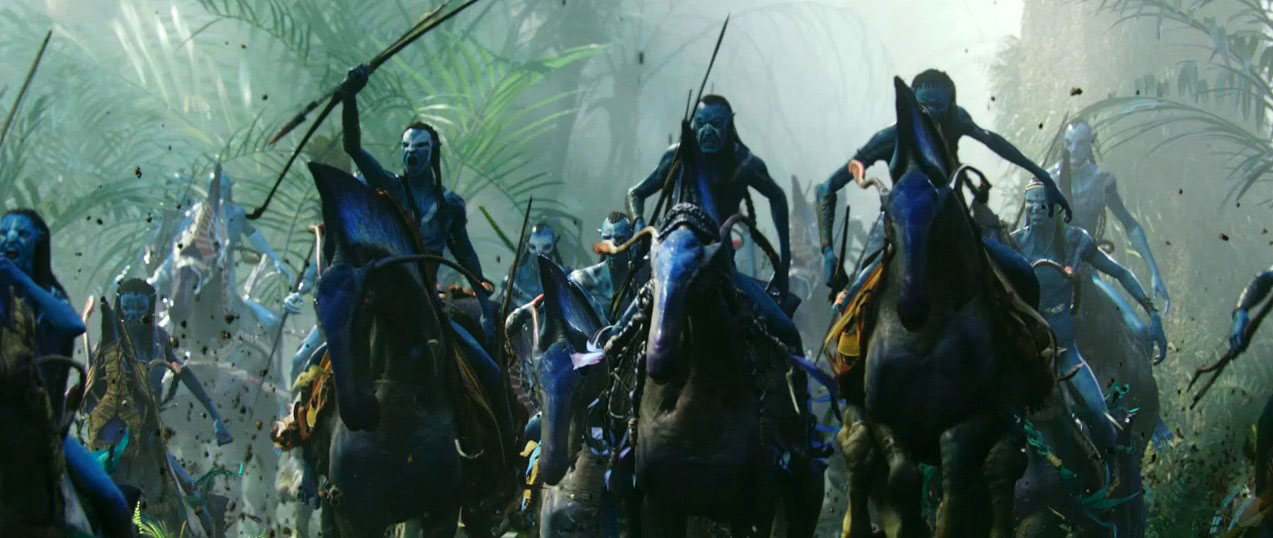
We’re going to stay away from nontraditional blockbusters like Avengers (multiple protagonists – built off of pre-established characters) and Titanic (period piece without any traditional set-pieces). We’re also going to avoid films that, even though they did huge business, did so despite their screenplay, not because of it. Films like The Phantom Menace, Transformers, Alice in Wonderland won’t be celebrated here. I’ll instead focus on movies that built their box office on strong ideas and sound execution, as I feel there’s a lot more to learn from them. Films like Raiders of The Lost Ark, Avatar, Pirates Of The Caribbean, Star Wars, Jaws, Inception, and The Matrix.

Okay, it’s time for Obvious Oliver here. But before you write your blockbuster, TEST YOUR CONCEPT! You have to have a big exciting original high-concept idea for your 200 million dollar movie or else none of the advice I’m about to write will matter. You can have the best set-pieces in the world, but if the concept is unmarketable or boring or derivative, nobody’s going to read it. Why would they? They already know they can’t sell it. Make sure you have a cool “Blockbuster worthy” idea before you start writing. This is essential!!!

As for how to approach your blockbuster story, it’s best to stay within the confines of the traditional 3-Act structure. When a studio is spending 200 million dollars, they’re not itching to experiment. They want to stick with what works. That means a first act that a) sets up your main character and b) a central problem that needs to be fixed, a second act where a) the main character tries to fix that problem (his goal) and b) encounters plenty of conflict along the way, and a third act where he takes on the story’s big evil force and defeats it.

If you look at the above movies I mentioned, most of them follow this model. Indy, Brody, Cobb and Jake Sulley are all going after clear goals. Star Wars and The Matrix change things up by giving the mentor characters (Obi-Wan and Morpheus) the goal for the first portion of the story, before handing the reins over to the main character for the rest of the film. Pirates has the wonkiest structure of the bunch, enacting a “see-saw” approach where the goal keeps shifting between three different parties (Will, Jack Sparrow, and Captain Barbossa).

It’s no coincidence, then, that Pirates got knocked around for its complex plot when it first came out. And with that in mind, I’d use that as a lesson when writing your own blockbuster. Make the goal clear. Make the story easy to follow. It doesn’t mean you can’t complicate matters within your story, but the overall plot should be easy to understand. We should always know where we’re going. For example, Inception is a fairly complicated plot, but we always know what the goal is because it was stated up front – they have to place the thought inside Robert Fischer’s head, then get out.

Once you’ve got your three acts all figured out, it’s important to remember why audiences come to these movies. They want a rush. They’re looking for the same sort of excitement one gets from riding on a roller coaster at Six Flags. That’s not to say you shouldn’t have characters with flaws or unresolved relationships. Just that thrills take a high priority in these kinds of movies. For that reason, you’re always looking to shock an audience. You want twists and turns and surprise reveals and double-crosses. That wife who’s been with your hero for ten years? Have her turn on him. That guy who needs the data plans you have in that R-2 unit? Have his planet blow up right before we get there. You gotta keep us on edge in a blockbuster. The audience has to be taken up and down and up and down, just like a roller coaster. The second they feel safe, they’re bored.

Speaking of thrills, you’re going to want a cool villain. Big blockbusters and cool villains go hand-in-hand. So if you don’t have a memorable one, pack it in. There are lots of ways to approach villains. For example, make your villain strong where your main character is weak. But I’m not going to lie, the villains in your blockbuster are going to live or die on their originality and their flash. They have to stick out in some way. They have to be bigger than life. They have to be the kind of person that audiences are going to leave the theater excited to talk about. I read too many average, unoriginal, uninspired villains in amateur specs. Don’t be one of those writers.

But let’s get serious. When you’re talking about blockbusters, you’re talking about action.  And that means great SET PIECES. These are the giant action scenes in your movie. After your concept and your main character, it can be argued that great set-pieces are the third most important thing in a blockbuster. That’s because THESE ARE THE SCENES THE STUDIO WILL USE TO MARKET THE MOVIE. If they don’t see anything new or unique in your set-pieces? If you’re not trying to push the envelope in some way? Then don’t bother writing a blockbuster, cause it will never sell.

I saw a script two years ago sell due to a SINGLE SET PIECE. Some of you may remember it. The opening scene had the core of the earth ripped off by a mega-nuclear bomb and our heroes flung into space. I couldn’t tell you a single thing that happened after that opening because the rest of the script sucked. But I’d NEVER read anything like that set piece before, and neither did the studio who bought it. Which is why they bought it.

In the typical blockbuster, you’ll have 3 or 4 “true” set-pieces. And the first thing you’re going to want to do is make sure they’re ORIGINAL. If they’re a rehash or a copy of something you’ve already seen, delete and start over. It HAS to be different. That’s imperative. Because that’s what studio executives are looking for. They’re looking for that thrill that nobody has seen before. Look at Terminator 2. James Cameron set his car chase set-piece in the Los Angeles viaduct. Ever seen that before? Nope. But he went one step further. This wasn’t one car chasing another. It was a SEMI rig chasing a DIRT BIKE! How fun is that??? Add on two indestructible robots and you had one of the most exciting original never-before-seen set-pieces in movie history. If you can pull this off 4 times in your script, chances are you’re going to get a reader’s attention.

Now where do you put these set-pieces? Well, you probably want one every 30 pages. That means 3 or 4 set pieces total. Where you place these is up to you and is typically dictated by the story itself. The Bond films, for example, like to put a set-piece right up front in the opener. The Empire Strikes Back, however, saves its first major set-piece, the Hoth battle, for 40 minutes in. In general, you’ll have one big set piece in your first act to get everybody all jazzed up. You’re obviously going to have one for your climax. That leaves two set pieces for your second act, whose placement, again, should be dictated by the story.

Another thing you have to remember about blockbusters is that they’re almost always rated PG or PG-13. The studios want to lure in the largest audience possible, so besides a few exceptions (i.e. The Matrix) they’ll stay away from R rated material. This also means the films will typically be light-hearted. Blockbusters (unless they’re directed by Christopher Nolan) should put people in a good mood. They should be fun and exciting (like a roller coaster!). For this reason, you’re going to want humor. And the best place to find that humor is in a “comedic sidekick.”

Now the “comedic sidekick” has gotten a bad rap over the years. That’s because it used to mean a side character who was actually funny. Then someone decided to turn it into a “thing” (the COMEDIC SIDEKICK!) and everyone started taking it literally. The result was a bunch of empty characters whose only job was to spew out cheesy one-liners. Avoid that “comedic sidekick” if possible. Instead, remember that there are different kinds of funny, that you don’t have to follow the traditional definition of a comedic character. Jack Sparrow is funny for being clueless. Han Solo is funny for being an asshole. The comedic sidekick in the The Dark Knight was the villain, The Joker, who definitely has his own sense of funny. Regardless, it’s a good idea to have funny in your blockbuster. Studios want people to laugh during their blockbuster trailers. They want them to feel good. People who feel good go see those movies.

Some final things you want to keep in mind. Don’t go TOO thin on the story. Despite the emphasis on things like thrills and villains, you still gotta keep us invested. I see too many blockbuster writers depending on their action scenes, essentially writing a bunch of fluff in between them. Ask yourself if your story is interesting without the action. There’s gotta be SOMETHING dramatically going on to keep us interested for 2 hours. So even though story isn’t AS important in the blockbuster genre, the better yours is, the more likely it is your script will sell.

Also, make sure your blockbuster BUILDS. In general, you want the feeling like we’re climbing stairs during your story. With each step, we get higher, and the further up we get, the further we can fall. This means fights get bigger, stakes get bigger, battles get bigger, chase scenes get bigger. During each stage of the script, make sure what’s happening is bigger than what happened before. This is not a hard and fast rule, of course. The Hoth Battle in Empire is the biggest set-piece in the film. But in a traditional blockbuster, we should feel the story building , with the final climax being the biggest moment of all, where everything for everyone is on the line.

Blockbusters are made to entertain, which means many of the superficial elements I typically rail against on the site become important in this world. I’ve struggled with this notion because the idealist in me has always believed that the better the story, the better a chance your script has at selling. But there’s no doubt that in the blockbuster world, if you come up with a kick ass concept, a memorable main character, and three amazing set pieces, you can sell your script to the right buyer. So make sure those elements are in place. Still, keep in mind that readers want to be taken away by a story. So if you can add a great story to all this, your chances of selling your blockbuster spec go up exponentially. There just aren’t that many writers who are good at both of these things. So if you’re one of the few who are, you can go a long way in this business.

  • ThomasBrownen

    This is a great article. I’ve been kicking around an idea for some time now that I started to write as a blockbuster-ish story, but then took a break from it and haven’t gone back to it yet.

    The one thing I realized is that set pieces really are crucial. I think Carson’s right that you can’t de-emphasize the story, but I found that I liked my story more when I really pushed myself and came up with fresh and original settings. It made the scenes fun and imaginative. I just kept pushing myself to be more original.

    But isn’t that true of screenwriting in general? We should always be pushing ourselves. I think you can — and should — be a purist with blockbusters too. We just have to recognize that bad blockbusters get made and bad indie dramas get made too. But the success of poor material should stop us from pushing ourselves as hard as possible.

    • Midnight Luck

      I agree.
      Very true for all screenwriting.
      Push yourself and your story.

      The adage is spot on: First Rule of Screenwriting:

      “Never Be Boring”

      • yeebarr

        Good call ML. Similar to what my brother (who works in television) told me: “don’t be lazy!”

        I tossed around a sci-fi spec idea with him and he barraged me with question after question; challenging me to know how the world works, what makes the characters tick, etc, so the concept doesn’t just become an excuse to have big, but ultimately hollow, action scenes (ala “Transformers”)

        • NajlaAnn

          I liked the first Transformers.

          • yeebarr

            I’ve got to stop making movie references in my comments! :)

            Hey I liked Transformers too – a nice Summer blockbuster and a great nostalgic flashback to my childhood – but it was all certainly paint-by-the-numbers (and that probably wasn’t the fault of the script-writer – I’m pretty sure the direction of the movie was dictated by the studio)

            What about Transformers 2? Would I be safe if I changed my answer to Transformers 2?

          • MrTibbsLive

            I liked the girls in Transformers…

          • LV-426

            I think that “paint by numbers” is my biggest pet peeve concerning blockbuster fare. Carving away as much of the paint by numbers elements and formula is the difference between something like The Matrix versus Godzilla (1998 remake).

          • NajlaAnn

            ‘Transformers 2′ Yes, a much better idea. :)

    • Murphy

      Good words Thomas, yes, we should all be striving to be better than the other guy, I think it is the only way to improve.

  • Greg Klein

    Great points that I don’t think many writers take into consideration when they try to write a blockbuster even though they may have heard this advice over and over. Some writers seem so stubborn to take advice as if they think their brand of writing is so unique it will blow people away, or they think advice is poison or something.

    People give advice because the majority of the time it’s helpful. Feedback on your script might not always be, but general tips like this usually are.

    Yes, being unpredictable and trying something new (especially when it comes to mixing genres) should be encouraged and kept in the mind of the writer at all times, but there’s nothing wrong with following a formula you know you can write and sticking to it. That’s how a lot of writers pay the rent.

  • Dustin T. Benson

    I agree with a lot of these points. Trying to brand myself as a blockbuster/popcorn flick writer this year with the spec titled BURST. Elaborate set pieces are some of the best scenes to construct. Who cares about budget? Let’s blow up a fuckin’ city.

    • Malibo Jackk

      Cool.
      Can you give us a log line?
      (Not sure what the title means.)

      • Poe_Serling

        Hey Malibo-

        Here’s an upcoming documentary on John Milius that you might just enjoy. I know I will.

        http://vimeo.com/61116464

        Gotta love that quote from Sam Elliott at the end.

        • Malibo Jackk

          Love it.
          “He doesn’t write for pussies and he doesn’t write for women. He writes for men.”

          SE has that lay back attitude and gravelly voice.
          And he looks like he grew that mustache for a western and never shaved it off.

          • Poe_Serling

            I think I read somewhere that SE was one of the original Malboro Men.

          • Midnight Luck

            He got his start in Butch Cassidy and the Sundance Kid, one of the greatest original westerns, and he played a Marlboro Man in Thank You for Smoking, where he so fit the part: “I didn’t even smoke Marlboros. I smoked Kools.” he so fits the part.

      • Dustin T. Benson

        Pitched as HURT LOCKER meets PREDATOR.

        • Malibo Jackk

          Not sure what that means
          but it would probably make for a good AF.

          • Dustin T. Benson

            Sure! I’ll submit the PDF through the website. Today’s Friday — Wonder if I can make the cut.

            After an unidentified explosion destroys an American city, an EOD team is sent in to search for assumed warheads only to encounter a weapon they’ve never been trained to disarm.

            Basically a HURT LOCKER (team of EODs in an unknown world) encounter a PREDATOR (benevolent creature from another world)

            Set pieces include -
            1. A whole city (Atlanta) being destroyed by meteors/nuclear bomb
            2. A tug of war between a Chinook chopper and an armored military vehicle across an airport
            3. A wild vehicle chase in the ruins of the city.
            4. The creature’s spaceship being destroyed.

        • http://twitter.com/KennyNOL Will Vega

          So it’s about a squad of bomb disarmers in an alien planet, all of who have to get rd of them before invisible martian soldiers eradicate them?

    • Greg Klein

      Writing relatable characters is still one of the most important things even in a blockbuster.You know why Transformers sucked? Because all the characters seemed about as three dimensional as paper.

      • Dustin T. Benson

        My last spec was hit hard on “character development”, so I know what you mean. It’s become the first thing to look at after fleshing out the idea/story/concept.

  • Midnight Luck

    Very nice article.

    i am not as much a fan of most of the spectacle blockbusters others on here are. Not a fan of Matrix (thought it was one of the worst movies ever), really didn’t like Avatar either.

    But, I agree, Indian Jones, The Terminator and T2, Alien though Aliens was an even bigger and better Blockbuster type movie, Die Hard, and the first Bourne Identity, were by my estimation some of the absolute best Blockbuster movies.

    The difference between the BB movies I listed and most of the ones coming out or that try to be big hits, they focus on very interesting characters and goals. Most of the BB focus on concept first, CGI second, and leave Characters to try to pick up the pieces. The Characters end up just being a bunch of people running around rearranging deck chairs.

    Without important and personal human interest and dynamics, the BB will be over and forgotten quick. It will have a massive drop off after the first week and might not recover, unless by some oddball miracle. That might not matter to anyone else, and it really might not matter to studios, but it should. Money is still coming in from people buying and watching Die Hard, or any of the others on my list. So 30 years later Terminator keeps coming back to the money pile.

    To me, staying power is king, and that is because of solid characters, central human issues, and a great story with some awesome set pieces (in that order).

    • Murphy

      Brilliantly put and absolutely spot on.

      I think the answer is heart, and I know we have had this before here (I think I remember Carson writing about heart at some point last year) it cannot be said enough. All movies need heart, we need to care about someone or something. The best way to make us care is to give us a character who we can relate to (or at least put them in a position we can relate to) on a human level.

      Heart is all about wants, needs and desires and our characters should all have wants, needs and desires. This is how we relate to people and thus take a movie like Training Day which is now 12 years old and yet it will always live with me and I will, for the rest of my life, watch it now and again.

      Heart gives staying power, I am not sure anything else really does.

      • Midnight Luck

        Definitely.

        When it comes to a Blockbuster, Cameron is usually the best. Look at T1, T2, Titanic, Aliens, and even The Abyss. All had very central struggling going on with characters, and big issues. The razzle dazzle of the story was great, but totally outside what really hooked us: the character journeys.

        Like you, I have a special place in my heart for Training Day. It was masterfully constructed and had you caring not only for Ethan Hawke’s newbie character but for Denzel’s bad guy as well.

        There are a couple other Big movies with dark, strong characters that hold really close space in my heart: True Romance, and Seven. Both literred with characters damaged or struggling with issues. At the core though, they are amazing and fun to watch because we care so much about the people. They reel us in. Not going to say some of the set pieces and over the top scenes weren’t incredible, they were. But they were so strong – purely because we are so attached to what happens to these characters we love.

        Someone for the love of god please make another movie like one of these.

        Going to have to snap the jockstrap on the next superhero movie we have (though hoping Kick Ass 2 pulls out a miracle and is good). Tired, boring and repetitive by and large. Very BORING.

        • Malibo Jackk

          Malibo is on the case.
          (I’m sure I’m not the only one.)

    • Greg Klein

      Definitely. If the audience (or reader) cannot find qualities he relates to in the characters (even if it’s an antihero), he will be bored out of his mind and walk out of the movie or move onto the next script.

    • Cfrancis1

      Out of curiosity, why do you think The Matrix is one of the worst movies ever? Just shocked to read that, especially looking at the rest of your list.

  • NajlaAnn

    Oh wow. Sounds easier said than done. My gut feeling is that writing one of these things can be daunting. Having said that, this article triggered an interesting idea [only one so far] for a set piece that I’ve been thinking about. :)

  • Howie428

    I hate to get all Devil’s Advocaty here, but isn’t “TEST YOUR CONCEPT” weird advice considering that prior to the release of most of these movies the appetite for them had not been shown to exist.

    Most notably Star Wars was not expected to find a substantial following and prior to it coming out there wasn’t much evidence that the public was clamoring for that kind of film.

    Pirates of the Caribbean followed a few years after Cutthroat Island so it’s difficult to believe that widespread public endorsement of the concept would have been forthcoming.

    Inception was a “keep Nolan happy so he’ll do another Batman” project that the studio didn’t have much belief in.

    I’ve just completed a space based blockbuster spec of my own, which I wrote ignoring the standard advice that it’s a waste of time. When I began work the Lucasfilm sale to Disney hadn’t happened and now there’s likely to be a glut of these released in a few years. I’m not sure if that helps or hinders me.

    • John Bradley

      I totally agree Howie. Look what happened when Snow White and the Huntsman got bought and made…all of a sudden a half dozen (mostly terrible-mediocre) fairly tale scripts got bought and made. Hansel and Gretal possibly one of the worst movies I’ve seen in a long time. I think a lot of it is having the right script at the right time and just because your concept is well liked today, doesn’t mean that will be the flavor of the week when you’re finished.

      • JakeBarnes12

        But a weak concept will NEVER be flavor of the month.

        A fresh idea that promises lots of intrigue and conflict will always get you reads.

        • Greg Klein

          Agreed. Like Carson says in his Scriptshadow secrets book, an average script with a great concept is a better than a great script with a lousy concept. (Right?)

    • BoxGoblin

      The bottom line is to write what you really believe in. That way you will showcase your best writing, and your voice, no matter the concept.

      • JakeBarnes12

        The single greatest problem with most spec scripts is not the execution but the fact that the idea is not that strong or exciting.

        You’re going to get reads on the strength of your logline; an average idea expressed in great writing is not the way to go.

    • JakeBarnes12

      I think Carson means “test your concept” in the Blake Snyder sense — pitch you concept to friends, neighbors, people in the line at Starbucks. If their eyes glaze over, that’s a bad sign.

      The single greatest problem with most spec scripts is not the execution but the fact that the idea is not that strong or exciting.

      • Howie428

        I agree with the general idea of testing your concept. The point I was making though is that I think a wannabe screenwriter pitching Star Wars in 1974 would have seen eyes glazing over. Similarly Pirates in 2000 or Inception a few years ago. The genius of George Lucas and other great film makers is that they figure out what we all want before we all know we want it.

        • Malibo Jackk

          Not even sure Lucas knew it would be that big.

          • http://www.facebook.com/todd.walker.3597 Todd Walker

            Yeah, but he also knew it had to be interesting,lol. A couple of people traveling in space isn’t very interesting but if you have a space civil war coupled with daddy issues then you have a start. I think Lucas said he called it a “space western”, so there is genre mixing as well.

        • LV-426

          How about pitching Avatar? Just to make it interesting, let’s pretend it is being pitched by an unknown, not by the guy who made Titanic.

          “So I’ve got this sci-fi epic about a paraplegic veteran that goes to a jungle planet populated by ten foot tall blue cat people…”

        • JakeBarnes12

          A wannabe screenwriter didn’t pitch Star Wars in 1974, Howie. A director who’d already made several movies did.

          Similarly, Pirates was based on a world-famous Disney ride, which is to say it had established brand recognition, and Inception was greenlit as an expensive thank you to Nolan for his billion dollar Batman movies and based on the fact that he and his brother had already PROVED they could write and direct a number of highly successful movies.

          If you’re an unknown trying to break in, as most of us are, you’re not going to get much attention without a strong concept expressed in a killer logline.

          So it’s incredibly stupid to waste months of your life pouring effort into a mediocre or just average idea that won’t attract reads.

          I know because I’ve done it several times.

          • Howie428

            I absolutely see your point. We are in agreement then that if you or I tested Star Wars in 1974 we’d have been greeted with eyes glazing over and a negative response from the industry.

            This means that for amateurs the range of possible big ideas that will succeed is very narrow, much narrower than it is for those who are established. The Holy Grail for us is to find a concept that is not only a blockbuster, but is also instantly recognizable as being one.

            Also, the months you wasted won’t turn out to have been wasted if they end with you writing one strong script.

  • Murphy

    This is a really great article Carson, thanks. I have been really busy this last week and have not had a chance to visit and am really pleased to turn up today and read an article like this. The timing is perfect as I am taking a week off at Easter to spend some time to write something, it was going to be a TV pilot but that is not working out too well and plan B is an action script.

    The final thoughts on not getting too thin on story are really good, something that I wish more people would think about. I get so annoyed on the odd occasions I see a blockbuster when the writers take to easy route and service up a rubbish, barely existing plot. Just because you have some A lister action star reading your words it doesn’t mean you have to forget story!

    • Kay Bryen

      All the best on your script Murphy, hope you “get some action” :-)

  • John Bradley

    I think it’s also worth mentioning that a lot of these blockbusters are high concept adaptations of older stories. Star Wars had a lot of influence from the Bible and WW2 Nazi Germany. Avatar was an adaptation of Pocahontas….or tackle real life issues, District 9 was sort of political commentary on immigration…. It seems like a good idea to take a story from history that appeals to you and adapt it into a high concept world. At least I think that seems to work well.

    • Greg Klein

      True, and I think a lot of scripts lean on their director or the popularity of what they are adapting for their success. Anyone read the script for Argo? I still haven’t finished it because the action is a clunky mess. I thought I wrote clunky action but reading this sounds like Tierro wrote a first draft within less than 24 hours and then was forced to make that his final draft. (Okay, maybe that’s a LITTLE harsh.)

  • cjob3

    Let’s play good comedic sidekick/bad comedic sidekick. I’ll start.

    Good comedic sidekick: Tom Arnold “True Lies”
    Bad comedic sidekick: Rob Schnieder “Judge Dredd”

  • grendl

    f

    • Greg Klein

      Aw, come on. I think this article deserves at least a B.

  • JaredW

    Some good food for thought regarding writing a blockbuster. Definitely some things I’ll have to consider when I attempt to write my own blockbuster-type scripts. But it seems that blockbuster specs aren’t really selling now. There was a market for them a few years ago when Expulsion sold, but now it looks like the studios are looking for more mid-range projects. I could be wrong, but that’s how it looks to me based on what I’ve seen from the spec market.

    • Malibo Jackk

      The failure of some recent big budget picture has got to sting.
      Have studios made a shift in what they’re looking for?
      Am wondering what agents are hearing from the studios now.

      Maybe Carson should give them a ring and ask.

  • LV-426

    I’ve sort of been running away from the notion of writing a mega-budget blockbuster spec. It has been a long time since this started building up inside my brain, and I guess I’ve been running away from my desire to write this type of stuff. I think my primary fear is that a blockbuster spec is going to be seen as “too expensive” by the bean counters, and not worth the risk in place of adapting some bestseller book series or comic that already has a built in audience.

    Perhaps I’m just making excuses towards writer’s block?

    Darn it Carson. With this article, you’ve inspired me to get all blockbustery in this hizzy.

  • LV-426

    I thought Belloq from Raiders of the Lost Ark was the best villain from the Indy movies. He was like the dark mirror image of Indy. Well dressed while Indy was always getting dirty. Belloq always had tons of hired hands and henchmen (natives, Nazis) while Indy had a sidekick or two and did most of his own gruntwork. Belloq was not an ogga-boogaa type villain like the main baddie in Temple of Doom. He was an intellectual like Indy, just a corruptible one whereas Indy was out for the greater good (“this belongs in a museum”).

  • FD

    Really liked this article, and having been at this site for some time, they’re not all as interesting as they used to be.
    My question is, however: I thought newbies didn’t have a snowball’s of getting a 100m script bought, and that the best way for an amateur to break in was a contained thriller.
    So what should I be writing if I’m on the outside looking to get in?

    • Malibo Jackk

      No one wants to invest 100+ million on a newbie.
      You have to give them a great reason to.

      • FD

        So it’s concept, concept, concept, regardless of budget?

        • Malibo Jackk

          Fortune cookie says –
          You have to decide what works best for you.

        • Midnight Luck

          it is:
          “Nobody knows nothin’” – William Goldman – the father (grandfather?godfather?) of screenwriting

          He also says: Write what excites you, what interests you, and that is it

          I have to agree with him.

          Any of it could work, none of it could work.

  • ripleyy

    Fantastic article – probably the best all year. I had a blockbuster for a number of years where I constantly build the story up and onwards, unfortunately the story itself went into the page 200 area (yeah, but I fixed that problem) but blockbusters are fun to write but they have to make sense. But as a writer, there is nothing cooler than writing a really amazing set-piece – go fucking wild – but make sure you ground it afterwards. Spend 20 pages being mellow, let us get our nerves back, our adrenaline settled before we’re set towards the next best high.

    That said, I will never get bored of Aeroplanes dropping out of the sky during blockbusters. Such a guilty pleasure.

  • Cfrancis1

    I love big, cheesy blockbusters. Even ones that I shouldn’t like. That said, I don’t know that I could write one. I tend to like smaller stories. Maybe it’s because I come from theatre and plays are usually intimate and character driven.

    That said, I do enjoy writing action scenes. Just not HUGE action scenes. My favorite action scenes in movies are usually hand to hand combat stuff. Again, more intimate. Large scale battle scenes tend to bore me after a while. Especially in military movies where I have trouble distinguishing one character from another due to pretty-boy casting and the fact that everyone’s dressed the same.

  • Bobby

    Great article. I’m focusing mainly on two ideas this year, a contained comedy and a blockbuster. Writing scripts on opposite ends of the budget spectrum got me thinking… With lack of budget, I’m forced to be creative yet still maintain everything expected (entertaining set pieces) of a good movie. With a sky high budget, my imagination can run riot but I’m still forced to be creative, just in a different way.

    Both approaches have their challenges and rewards but what’s paramount is characters who’s journey we care about (big or small) and need to see how it all works out. Characters are the beginning and end. Period. Get them right or we won’t give a dam how many explosions there are!

  • srdiction

    Most people try to write something like ‘Three,’ a script written by a character in ‘Adaptation.’

  • Ambrose*

    Another informative article, Carson, with lots that, hopefully, I’ll remember.

    I do have two disagreements though.
    I haven’t read any of the other comments yet so someone may have already brought this up.

    There have been some other pretty good chase scenes in the L.A. River. Maybe not including a big rig but good in their own right.

    Case in point, from the underrated ‘To Live And Die in L.A., directed by William Friedkin, who knows a thing or two about chase scenes, since he also directed ‘The French Connection’.

    There are a few other movies with chase scenes in the L.A. River listed in the Filming Location section here:

    http://en.wikipedia.org/wiki/Los_Angeles_River

    My second point of contention is your characterizing The Joker from Batman as a Comic Sidekick.

    He is not anyone’s sidekick, in my opinion.
    He’s a main character and the hero’s arch-nemisis. The villain in a movie may have a comic sidekick but he himself should never be a comic sidekick to anyone, least of all the hero, because then he’s of a lesser strength, so to speak.

    In order to be a powerful foe for the hero the villain should be of equal or greater ability so that the hero’s goal is harder to attain.

    To try and sublimate the villain to a comic sidekick role undermines your protagonist and your story.

Archives
  • 2013 (117)
  • 2012 (277)
  • 2011 (291)
  • 2010 (324)
  • 2009 (351)