
First screenwriter to e-mail me gets $150 off 4 pages of notes for their screenplay! – carsonreeves1@gmail.com
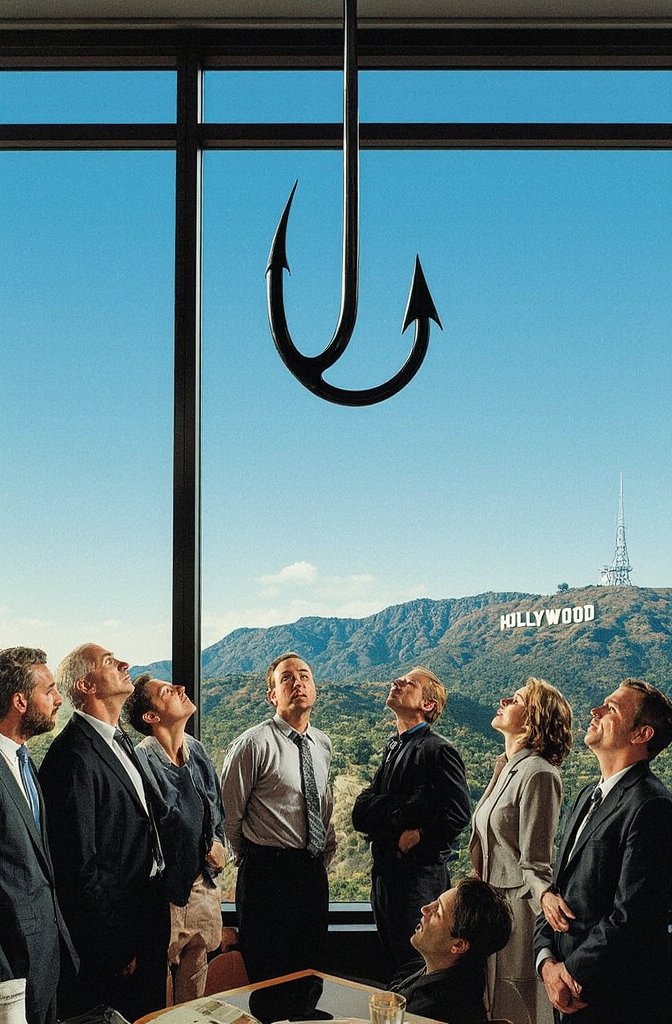 We gotta hook that reader!
Guessssss whaaaaaatttttt?
Next weekend is a FIRST SCENE SHOWDOWN for the Blood & Ink participants. In fact, let’s make it official. Starting this minute, you can send me your opening scenes for the Showdown.
What: Blood & Ink First Scene Showdown
Rules: You can only enter if you are a Blood & Ink participant
Length: Scenes can be as long as you want them to be
What I need: Script Title, Genre, Logline, a PDF of your first scene
Deadline: 9 pm Pacific Time, Thursday, September 25th
Send to: carsonreeves3@gmail.com
I’ll review the winning scene Monday and dig into why it works.
Now, if I’m being honest, I’m both excited and nervous about this experiment. In my experience reading thousands of screenplays, the first scene says a ton about what will follow. Which is why first scenes are so important.
However, I will say this: Coming up with a great first scene is not a requirement to write a great script. I’ve read plenty of good scripts that didn’t blow me out of the water with their first scene. With that said, I can count on one hand the number of good scripts that I’ve read after reading a weak first scene. Also, an awesome first scene is one of the better indicators that you’re about to read something good. So, it’s important.
Another thing that’s important to remember here because I’m sure it’s going to come up in the comments: The first scenes you see in movies are not a good indicator of the first scenes you should be writing in your script.
A lot of things can be going on that result in an uneventful first scene in a movie. For one, if a studio is developing a movie in-house, they’re not worried about hooking a reader. They’re just trying to make the best movie possible. And, generally speaking, if you’ve gone to the theater or rented a movie, you’re probably not turning the movie off after the first scene. So they don’t worry about that as much.
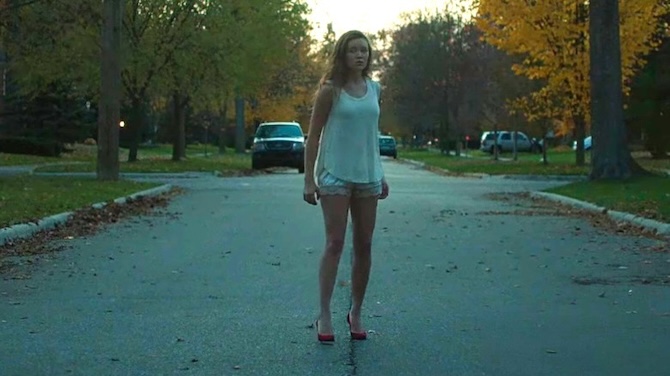
This is true for writer-directors as well. They don’t need to win anyone over with their script. They know the movie is getting made. So, they take the same approach as studios. They care about making the best movie possible, not hooking a reader with their first scene THEN making the best movie possible. However, the smart ones will write great first scenes into their script, such as Tarantino with Inglourious Basterds and David Robert Mitchell with his creepy “girl being followed by no one” opener in It Follows.
Another variable that screws up movie openings is title card sequences. You don’t have to write those into a script but you do need to add them when you make the movie so there’s something to put the title credits over. I will never forget how terribly they ruined one of the best scripts ever, in Source Code, which opened with this shocking scenario of a man waking up in another man’s body on a train, with a bomb about to blow up within minutes. And because they needed a title card sequence, they instead started with these wide sweeping endless shots of a train shooting along tracks in the countryside. It was the exact opposite tone of what you wanted that movie to start like.
So, don’t use ho-hum opening scenes in movies as an excuse for why it’s okay to open with a ho-hum scene in your script. Trust me, the reader is not thinking that way. All they’re thinking is, “Am I entertained?” And if the answer’s no, they’re already considering giving up on your script.
Weak first scenes have become one of the most common things I call out in screenplay consultations. Let’s get into why.
CHOOSING THE SCENE ITSELF
The number one note I give about opening scenes is: “Why did you choose to start with this scene?” You can literally write anything – ANYTHING – for your opening scene. Yet I read so many opening scenes that are beyond tame, that are beyond bland. Nothing interesting happens in them. And I’m just baffled by it. This is what you chose to open your script with?? Knowing that nobody in this town has any time. Knowing that nobody likes to read. Knowing that every person who opens a script from an unknown screenwriter expects it to be terrible. And this is the scene you’re going with? I get so frustrated because I don’t think writers understand the level of urgency they’re facing with readers.
Which leads me to my solution to this problem: Win them over right away. That’s how you want to treat your opening scene. There should almost be this desperation to write the single best scene ever to hook the reader. You may think that’s overkill. I promise you it isn’t. It is so so soooooo very hard to write anything that someone likes. So, if you’re not trying your best from the jump, you don’t have a shot. Think VERY hard about your first scene and what it’s going to be. Do not casually come up with something because I guarantee that the reader is going to feel that casualness and they’re going to have one foot out the door. From there, if you give them one more reason to stop reading, they will. You want to create the opposite effect with your opening scene. You want it to be so good that it automatically buys 30 more pages from the reader.
SETUP-ITIS
One of the biggest roadblocks in writing a great first scene is the fact that you have to deal with setup. In any screenplay, you have to set up your characters and your plot ASAP. And so what ends up happening is that writers go into that first scene with a huge handicap. They’re not just thinking about writing a great scene. They’re thinking about “How do I write a great first scene and set up my characters and plot along the way?” It’s like trying to write with one hand tied behind your back.
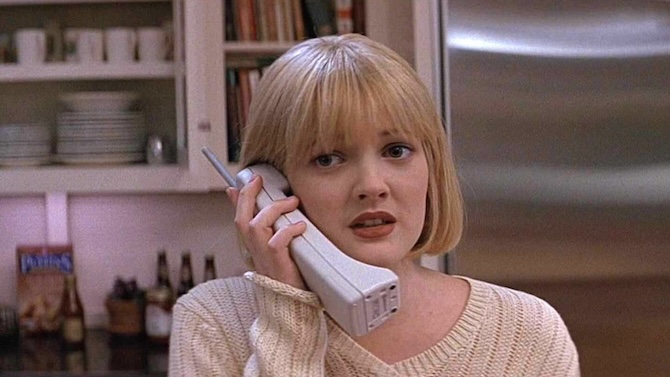
Ideally, you want as much freedom as possible when writing that first scene so that all the entertaining options are on the table. You have every tool available to you to write something great. To prove how valuable this is, look at one of the greatest horror first scenes ever, which occurred in Kevin Williamson’s spec script for Scream. One of the reasons that scene was so great was because Williamson didn’t have to worry about setting up any of his characters, as the scene only consisted of characters that weren’t in the movie (save for the villain, of course). You can see how that freedom allows you to just focus on entertaining the reader.
I recently was dealing with this in a consultation. The writer had a particularly hefty set of things he needed to set up in his story in the first act. And so every time we would rewrite the scene, we’d run up against the same problem. The scene couldn’t breathe because we were always so focused on setting up this character and establishing this plot point that was going to pay off in the third act, etc.
So I finally said to the writer, “Here’s what we’re going to do. You are going to write the most entertaining scene you can without worrying about setting a single character or plot point up.” And he went back and he ended up writing a scene that was 50 times better than anything he’d written before. And then we just went back through that scene and found little areas where we could set up the things he needed to set up. So, if you’re having that issue that this writer had, that may be a good solution to it.
BEWARE THE OBVIOUS OPENING SCENE
You have to be aware of this specific issue because it’s the one issue where you FEEL like you’re doing the right thing but you’re actually writing a weak scene. This occurs when you write the opening scene that 99 out of 100 writers would’ve written as well. For example, since Wednesday’s review is still fresh in my mind, let’s say that you’re writing a movie about a haunted house and your opening scene is a kid sees something scary in his closet. Or if you’re writing a zombie outbreak movie and the first scene is us trying to drive home during a zombie outbreak.
Technically, something exciting is happening during the scene. There’s tension. It’s scary. But it’s so obvious that we (the reader) already feel like we’re ahead of you (the writer). I mean, we already know what’s going to happen in the scene. That alone means you’re not being creative enough.
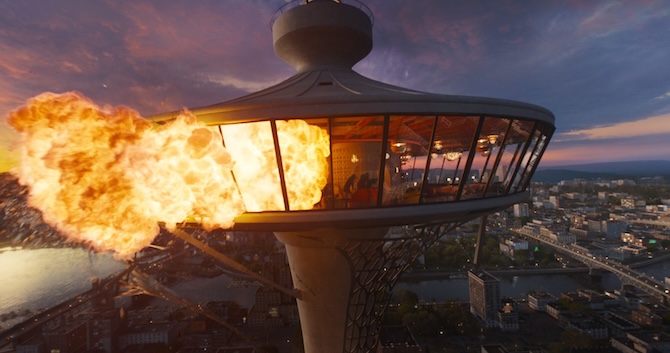
Instead, you should be digging deeper and looking for a scene that still stays true to your premise, of course, but that isn’t obvious enough that every writer would’ve thought of it. There are so many death scenes you could choose to feature in a Final Destination movie. One that occurs on a “Space Needle” restaurant is the last one I would’ve come up with. Which is a big reason why the opening scene in Final Destination: Bloodlines remains my favorite movie scene of the year.
SO WHAT SHOULD YOU ACTUALLY WRITE?
The four best options for your opening scene are: a) a mini-movie, b) drop us into an already occurring situation, c) something with heavy conflict, or d) something that plays, in an interesting way, with the specific conceit of your concept.
A mini-movie is something that builds like a movie. It has a setup. It has the conflict, and then it has the resolution. A great example would be the opening to Scream. Bonus points if the story focuses on suspense, which the Scream scene obviously does. A strange caller keeps calling the babysitter, building up the suspense of what he’s going to do.
Drop us into something exciting that’s going on. It’s hard not to be invested in an emerging situation that has some stakes attached to it. The Dark Knight, for example. We’re dropped into a bank robbery scene just as it’s about to happen. Again, you’re looking for scenes that it would be hard for a reader to stop reading. I don’t know why you would stop reading if you were dropped into the beginning of a bank robbery. It’d have to be one boring ass bank robbery.
Conflict should always be your safety net if you can’t think of something that creative or surprising for your first scene. Conflict is the lifeblood of drama so as long as you come up with a compelling scenario that’s packed with conflict, it should hook the reader. And the great thing about conflict is that the scene doesn’t even need to match the genre. It can just be two characters at odds about something. This is great if you have a horror script but the variables don’t line up for you to start your script with a scary scene. You can pull out a good conflict-filled scene and hook a reader easily if it’s well written.
For example, if your horror movie is about a single mother and her child being haunted, maybe the opening scene is the father coming home late from work one night and the wife is suspicious that he was out with another woman. If you write that scene well, and it’s not on-the-nose, and you play it so that we’re not entirely sure if he was out with another woman or not, that scene can easily hook a reader. That blowup then leads to him leaving. And we cut to several months later with the woman and son moving into an old house temporarily. And the haunting can begin.
Finally, you have “concept-specific” openings. You should be looking for these if you have a unique concept. It Follows is a great example. It’s a movie about these entities, who no one else can see but the target, who must constantly try and avoid being caught. The opening scene plays into this unique setup perfectly. We watch as a woman inexplicably runs out of her house at dawn continuing to look behind as if someone’s chasing her, despite the fact that there’s no one there. That’s the kind of opening that creates curiosity and intrigue. I’d definitely keep reading after I read that opening scene.
Now, I’m only trying to guide you here. If you feel lost, I’m hoping this post will give you some ideas. But the best opening scenes to me are scenes that I wouldn’t have been able to think of myself. That’s what makes me truly feel like I’m reading somebody who has a special idea. So, don’t let these rules constrain you in any way. You don’t have to abide by them. If you have a strong feeling that you’ve got a good opening scene and it doesn’t match up with my advice today, by all means write it. Cause sometimes it is just about intuition.
I’m very excited to see what you guys come up with. So, start sending me those scenes! And if you’re really struggling, you can always order a scene consult from me. If the scene is 5 pages or less, they’re 100 bucks for 1 page of notes. Every additional page is 10 bucks more. carsonreeves1@gmail.com (anybody can get this consult. You don’t have to be a Blood & Ink participant).
