
I am offering 2 HALF-OFF script consultations. The first two people to e-mail me get them. You don’t have to have the script ready but you do have to pay to secure the deal. E-mail me the subject line “JUNE BOOM” at carsonreeves1@gmail.com to grab one!
MEGA SHOWDOWN SCREENWRITING CONTEST IS COMING!
What: Mega Showdown
When: Friday, August 1
Deadline: Thursday, July 31, 10pm Pacific Time
Send me your: Script title, genre, logline, and a PDF of the script
Where: carsonreeves3@gmail.com
One of the things I love about Mega Showdown is that it forces me to focus on what truly makes a script good. I love you guys. I really do. And I want all of you to be successful. But I do have an ulterior motive when I give you advice for this contest. I want you to write the best scripts possible because it’s way more enjoyable for me to read those submissions than the terrible ones.
The problem is, not enough writers take what I teach to heart. I’m trying to teach you INSANELY IMPORTANT lessons about screenwriting that you can’t ignore if you want to write something good. And yet writers continue to put their heads in the sand and ignore the most basic (yet effective) advice.
That got me thinking. What can I tell you today that will massively upgrade your screenplays? I’m talking about getting them 50% better. 200% better. Even 500% better! And I came up with five game-changing things that will make your script so much better than the average screenplay.
Let’s go over them.
The more passionate you are about your story, the better – I hate this tip whenever I see it somewhere else because I don’t like screenwriting tips that aren’t actionable. “Be passionate” is a tip that someone who knows nothing about screenwriting could give and, therefore, it’s a bad tip.
However! — Stay with me — let me explain why I included it here. What I’ve found is that when a writer is very passionate about their material, they always go the extra mile. If their protagonist isn’t perfect, they’ll keep working on him until he is. If an important scene is clocking in at a 6 out of 10, they’ll keep rewriting it until it’s a 9 out of 10.
Conversely, when writers write scripts they THINK the industry wants, rather than stuff they’re passionate about, they never put in as much effort. And the stuff that makes a script go from good to great is the effort. And the only people I see caring about that extra effort are the writers who are passionate about their script.
Take the directors of Final Destination: Bloodlines. These dudes were OBSESSED with the Final Destination franchise. You could’ve spent a decade interviewing directors for the job and not found anyone even close to how passionate these two were.
Do you know the first thing they did before writing the script? They watched all seven movies in the franchise and RANKED EVERY KILL from best to worst. They then marked where they felt the kills dipped below an acceptable quality and made sure that every kill they came up with for their movie stayed above that level. That’s only something passionate people do.
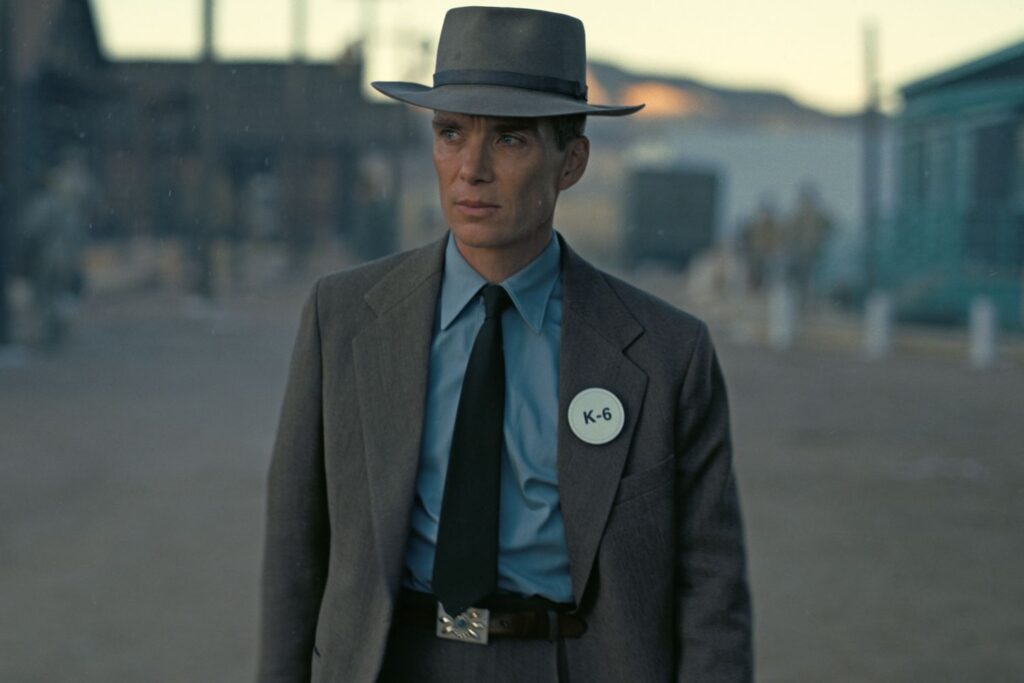
Another example is Oppenheimer. Let’s be real with each other here. Who the hell cares about Julius Robert Oppenheimer? STOP IT! Stop thinking about the comment you’re about to write where you tell me I’m wrong and that a lot of people care about Oppenheimer. Hollywood had 75 years to make a biopic about this guy and they didn’t. If people cared about him, one of the studios would’ve made the film, trust me. But boy could you feel the passion dripping from every frame in that movie due to Christopher Nolan’s obsession with Oppenheimer. It was his passion for that character that made the difference.
A script that starts strong and never lets up – We’ve forgotten about this on the site. Or maybe I’m not talking about it enough. There are a couple of common patterns I encounter with the scripts that I read. One is that a script will start off BIG and then, after that flashy cold open or sexy opening sequence, it will settle in, mellow out for a while, before eventually ramping back up in spurts.
Another pattern I encounter is scripts that spend the majority of their first halves in slow burn territory. And then, finally, they start paying off all that setup, leading to a fun and exciting final act.
Absent are the scripts that start strong then never let up. The writers who can pull this off start out with a great scene then say to themselves: “This is the bar for every scene in my script and I’m going to try and meet or exceed that bar.” I understand why writers don’t do this. CAUSE IT’S FREAKING HARD. It’s hard to give 100% of yourself every single scene. But there are so few scripts out there that do this, that if you’re one of the few writers who can pull it off, your script becomes way better than the competition.
What does this look like in execution? Mad Max: Fury Road. 1917. Memento. The Social Network. The original script for Source Code. The screenplay, Clementine.
But, believe it or not, you don’t need to write some big fast action thriller to meet this standard. Heretic is a script that starts strong then never lets up and that one is a slow-burner. The operating idea here is to continue to try and entertain with every scene. Too many writers take these little breaks during scenes that can last two scenes, three scenes, four scenes, or more. That’s not how you write a script that gets people’s attention.
Create at least one character who we really truly deeply connect with – I want to start off here by explaining what I *didn’t* just say. I *didn’t* just say to create a likable main character. Likable main characters are great. But what I’ve found is that “likability” is mostly for Hollywood-type movies. Those movies need to be easy breezy fun adventures so your main character’s likability is a key part of that.
Instead, if you want to write a script that RESONATES with someone – that they think about days, even months, after they’ve finished it – you have to write a character that resonates on a deep level. Yes, the equation for resonance is a complex one. There is no perfect formula. But it’s a combination of sympathetic traits, aspects of the character we feel empathy for, a character who is wrestling with conflict inside of them, a character who needs to overcome some flaw that has held them back from finding happiness for most of their lives, and a character who is battling unresolved issues with other characters in their lives. All of these things help create a character we want to root for.
I just read this book, The Curious Incident of The Dog in the Nighttime. It’s told through the eyes of a 15 year old autistic boy. The next door neighbor’s dog is murdered and he sets out to find out who killed the dog. The character exemplifies everything I listed above. His condition makes us sympathetic. We empathize with his troubles connecting with other people. He is against lying but realizes that in order to solve the murder, he will have to lie (internal conflict). His flaw is his stubbornness. And he has major unresolved issues he’s battling through with the two closest people in his life. It’s impossible to read that book and forget about that character.
Be unpredictable – You’ve heard me exhaustively talk about this on the site. In that sense, ironically, I’m being quite predictable with this tip. But the reality is a predictable script is a boring script. But creating an unpredictable experience inside a formulaic medium is a challenging proposition. However, that’s exactly why you want to do it. You want to do it because most other writers don’t. It takes too much effort and is too hard to push yourselves and come up with unpredictable plot points and unpredictable character actions and unpredictable story revelations.
When a reader is reading a script, you want to imagine that they have a meter above their head. And the meter is showing, at any particular time, where their interest is on a 1-10 scale. The deeper into a script they read where they’re able to generally predict what’s going to happen next, the more that number will fall. Once it gets to a “6″ and it doesn’t rise back up within the next few scenes, that’s when the reader checks out.
I remember never quite knowing where Parasite was going next. I remember having no idea where Anora was going once Alexi disappeared. Final Destination: Bloodlines did a great job tricking us several times, mixing up who was getting killed next. Even though Speak No Evil was a relatively formulaic movie, I was never quite sure what was going to happen next. And that’s a key point to this tip. I’m not looking for giant twists every other scene. I just want you, the writer, to be ahead of the reader most of the time. Not the other way around. Cause for the large majority of scripts that I read, I’m 40-50 pages ahead of the writer.
Be exceptional in at least one major part of screenwriting – There are too many screenplays I read where writers do everything well but nothing great. And for a script to truly leave an impact, you have to do at least one thing great. You have to be great at dialogue. You have to be great at writing unforgettable action set pieces. You have to be amazing at creating deep interesting thoughtful characters. You have to have an exceptionally unique voice.
The trick to nailing this task is to ask yourself BEFORE you write your script what it is you are best at. Then, make sure the next script you write allows you to feature that skill. A great failed example of this was Wednesday’s script, “Turnaround.” There wasn’t a single aspect of that script that stood out. Which is relevant because the writer had already proven, by landing on the top slot of the Black List with a previous script, that she was a good writer. But it doesn’t matter if you’re a good writer if you pick a script that doesn’t allow you to feature what you’re good at.
A positive example of this is Aaron Sorkin. It doesn’t matter what project you ask him to adapt, he will turn it into a talky “play-like” movie because he’s so damn good at writing those types of movies.
We’ve got about 40 days left. Plenty of time to institute some of these tips. Good luck and KICK ASS!
