

Just to put everyone’s mind at ease, I want to give a quick update on the Blood & Ink Contest.
About a month ago, I asked all the entrants to check in and let me know how things were going. The most common response was simple and honest: they were behind. But the more telling response came from the people who didn’t email me at all. My guess is that a lot of them are stuck. They don’t think they have a movie. They don’t think they can finish. Nothing is working, so they’ve gone into avoidance mode and buried their heads in the sand.
I want to make something very clear, not just to the writers in this contest, but to all the writers reading this post. A lot of you think this problem is unique to you. It isn’t.
There has never been a writer in history who finished a piece of work without, at multiple points, wanting to quit. There has never been a writer who didn’t become convinced midway through their script that what they were writing was terrible. There has never been a writer who didn’t believe, at some point, that they were the worst writer on the planet.
That’s not a personal failing. That’s just how the writer’s mind works, dude!
Writers live in their brain matter. That’s their gift. It’s what allows them to imagine worlds, characters, and all that swelling emotional nuance. But it’s also a curse. Internal people are very good at spiraling. Very good at catastrophizing. Very good at convincing themselves that everything is broken and unsalvageable.
Once you understand that, you gain power over it. You can ignore those thoughts. You can cut them off. Or you can let them pass through you and keep going anyway.
Self-judgment is the enemy of output.
Stop judging yourself. Just get the pages down. Don’t worry about where the script will be in a month, a week, a day, or even an hour. Focus on the present moment and on moving new words onto the page. If you do that consistently, you will finish. If instead you obsess over the perceived quality of every little word you’re writing, continuing becomes impossible.
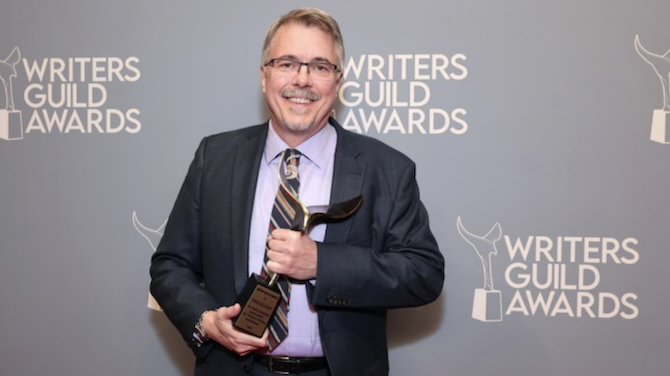
I watched an interview with Vince Gilligan recently, after finishing Pluribus, and he said, “Writing never gets easier. You’d think it would. It would be nice if it did. But it doesn’t.” And I know what he means. It always remains hard to discover those game-changing creative choices that bring a script alive. You gotta fight for them.
So do this for me. Don’t quit. Keep writing!
Now, moving on.
Since it’s the start of a new year, I want to talk about beginnings. Specifically, the beginning of ANY NEW SCREENPLAY you’re about to write. My job gives me a unique vantage point into the choices writers make at this stage, and there is one decision that comes up again and again as the most important of all. That is: deciding what kind of script to write.
That choice shapes everything that follows. Arguably, it’s the most important decision you will make on a screenplay. I’ve written a lot about choosing concepts, but over time I’ve realized there’s a variable that makes this decision especially tricky.
That variable is you.
As writers, we’re drawn to certain subjects. We’re fascinated by particular dynamics, themes, and corners of the human experience. The problem is that we often let our personal obsessions drive the idea, rather than stopping to ask whether those obsessions translate into something audiences actually want to see.
For example, I’m endlessly fascinated by people who have known each other forever, like married couples, quietly lying to each other in small, everyday ways. I find that dynamic riveting. But if I wrote a screenplay about a marriage built on tiny, constant deceptions, who’s lining up to buy a ticket to that movie?
My fascination alone doesn’t make it compelling.
This happens all the time. Writers inject their obsessions into scripts without asking whether those obsessions serve the audience’s curiosity. A screenplay should maximize dramatic conflict, deliver a compelling plot, and give audiences characters they want to root for. If the script exists mainly to indulge the writer’s personal interests, the result is a movie that only the writer enjoys.
With that in mind, I want to remind you of the three most effective ways to choose a script idea. I call these Tier 1 approaches. They consistently give writers the best chance of selling a script, getting a movie made, or getting hired for writing assignments.
First, the Big Idea

The Big Idea is baked into Hollywood history. It’s the idea that immediately feels like a movie, either because it’s high concept or extremely marketable. One of the easiest ways to figure out if you have a big idea is to imagine the poster. Is the poster exciting? Does it lean into a known genre and “type” of movie whose format we recognize? Or is it vague, confusing, or boring? Here are two posters. Which movie would you rather see?
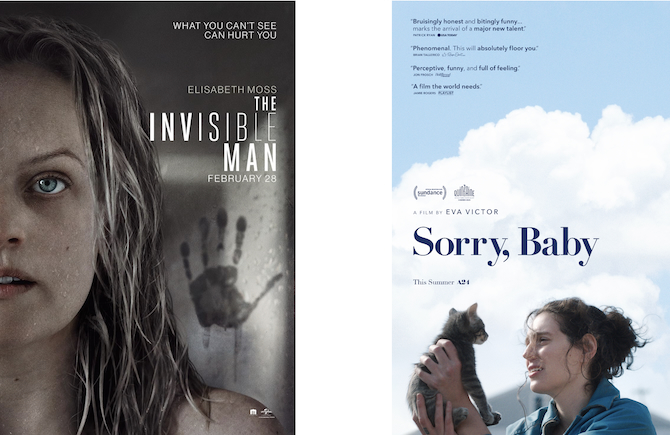
What helps is that the title is in sync with the image. When those two things don’t connect, it leaves the potential viewer confused.
The Housemaid is a big idea. The Running Man is a big idea. The Long Walk is a big idea. Good Fortune is a big idea. Sinners is a big idea.
On the other side of the spectrum are films like Train Dreams, If I Had Legs I’d Kick You, The Baltimorons, and Christy. I’m not making a value judgment here. This isn’t about what’s good or bad. It’s simply about illustrating what a Big Idea looks like. Big ideas are easier to pitch, easier to understand, and easier to get made.
Second, the Big Character
One of the great secrets of screenwriting is that if you have a big enough character, they become their own high concept. In that sense, the Big Character is the Big Idea’s close cousin.
I first heard this articulated by Wes Anderson. He said that he never starts with a concept. He starts with a character. That’s how Rushmore came to be. He created Max Fischer, a secretly poor student at an elite private school who signs up for so many extracurricular activities that he has no time left to attend class, and is therefore failing everything. Then Max falls in love with a teacher and chaos ensues. You could watch Max Fischer for hours. Which helped you forget that you were watching a very simple movie about going to school.
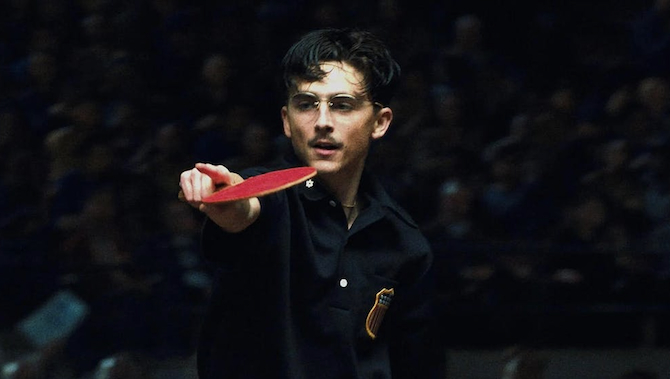
When you eliminate concept from the equation, you’re forced to work relentlessly to make the character fascinating, because that’s all you have. If the character isn’t shockingly interesting, the movie collapses. And ultimately, this is why people go to movies in the first place. We go to fall in love with people, not plots.
Recent Big Character movies include Marty Supreme, which I just reviewed, Christy from a few months back, Jerry Maguire, Tár, The Martian, and Anora. A good test is this: imagine a role so good that actors would happily stab each other in the back to get it. If that’s the case, you have a Big Character.
Third, the Big Voice.
The Big Voice is an interesting case. Having a strong, distinctive voice is arguably more valuable today than ever before, even though the golden age of the voice-driven screenwriter was fifteen to twenty-five years ago. That era gave us Charlie Kaufman, Diablo Cody, Quentin Tarantino, Richard Linklater, and Alexander Payne.
The media landscape is noisier now. We don’t really create household-name screenwriters anymore. But that doesn’t make voice any less important. If anything, it makes it more powerful. So many scripts today feel safe, familiar, and interchangeable. If you write weird ideas, see the world in an offbeat way, have a dark or unusual sense of humor, and your pages read unlike anyone else’s, you will stand out immediately.
The advantage of the voice writer is that the writing itself makes every page exciting to read. Even if no great character emerges or no great plot emerges, we enjoy reading the words on each page because those words are a direct link to a very unusual mind, which is a rare experience.
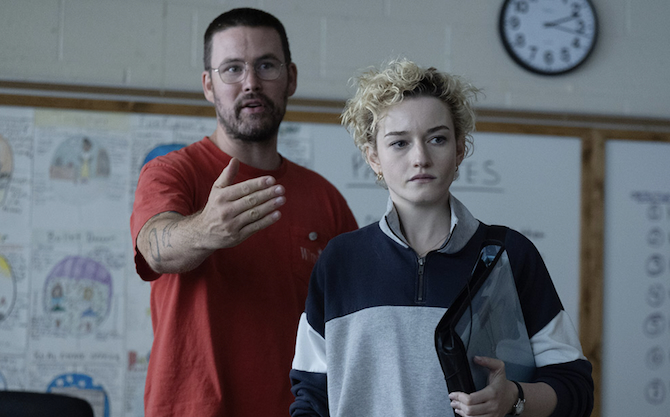
That said, this path only works if you truly have a voice. If your voice is vanilla AF, choose one of the other Tier 1 approaches. And if you do commit to voice, commit fully. Don’t hedge. Give us Bugonia, not Ice Cube’s War of the Worlds. Some contemporary writers working in this space include Charlie Brooker, Ari Aster, Zach Cregger, Alex Garland, Brian Duffield, Jesse Armstrong, Taylor Sheridan, Phoebe Waller-Bridge, and Vince Gilligan. When you read their work, it always feels unmistakably like them.
These three tiers will consistently give you the best shot at industry attention. They are not the only path in, but they are the most reliable. You can always choose to write exactly what you want and hope that passion carries it across the finish line. Sometimes it does.
But above all else, I’ll be happy if you just keep writing. Keep writing!! Don’t get discouraged. Writing is a peaks-and-valleys experience, and if we’re being honest, there are far more valleys than peaks. Let that knowledge empower instead of defeat you. When you expect the valleys, you’re better equipped to push through them.
Good luck in 2026. Here’s to a whole gondola full of you breaking in!
