
Let’s be honest.
The Hollywood box office hasn’t exactly been on fire lately.
Pretty much everything is landing in “average” to “bomb” territory.
It’s led to a lot of people predicting the end of the movie business.
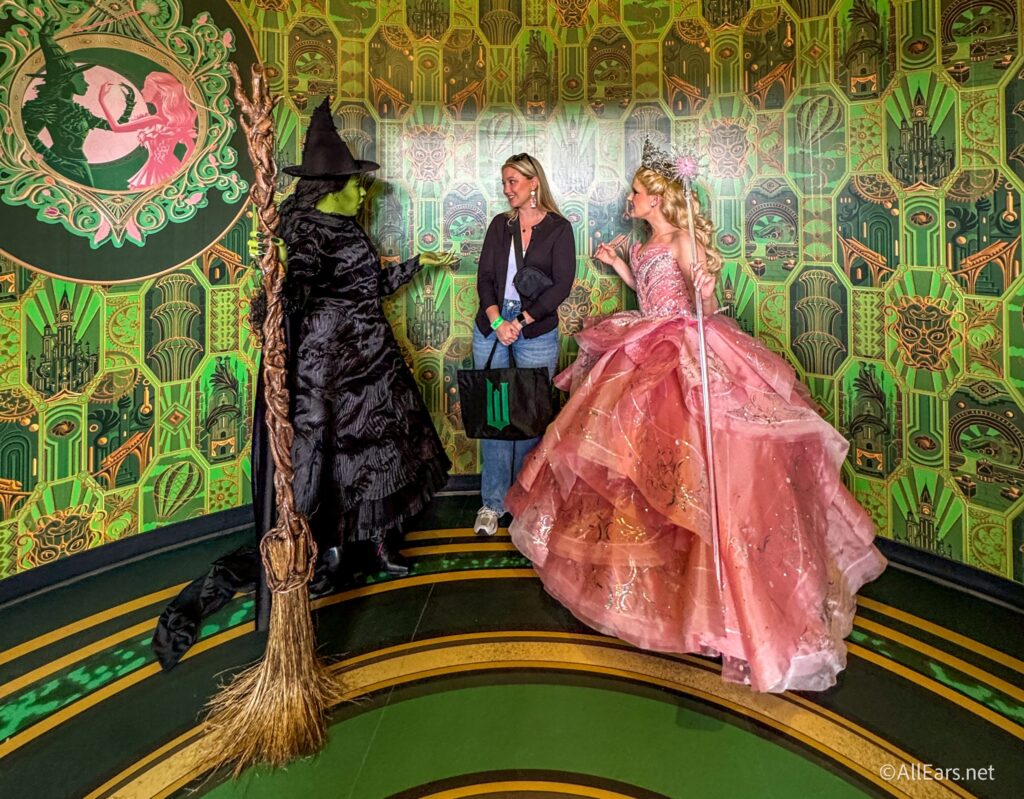
Except that Wicked Part 2 just made 150 million dollars.
This leaves Hollywood in a collective state of, ‘What the hell just happened?!?’
For an industry that’s been desperately trying to find its identity all year, Wicked’s success is going to create more questions than answers.
Because, while the news is awesome for Hollywood, it doesn’t exactly give it a roadmap moving forward. Big flamboyant musicals are not going to be the next superheroes. You probably can get one more big musical event movie out of this trend – and it will be Grease – but after that, you’re right back to square one. You need to figure out what’s going to replace the dying superhero genre.
What I can say about Wicked is that it may have cemented “event films” replacing “high concept films.” What’s the difference? High concept films are films where all the fun is on the screen. It’s Jurassic Park. It’s Fast and Furious. It’s Mission Impossible.
In contrast, event films are films where the fun is on the screen AND IN THE AUDIENCE. Event films are films you can dress up for. Event films are films you can be loud and celebratory during. Wicked, Minecraft, Barbie. These are event films.
They create this big fun atmosphere that people want to be a part of. Which makes sense when you think about it. It’s been so difficult for the movie business to pry eyeballs away from all the other types of media – TV, TikTok, Youtube, Instagram – that the films that were finally able to do it were the ones that added that extra element. It’s not just fun on the screen. It’s fun in the audience as well.
What does this mean for screenwriters?
Basically nothing.
It’s almost impossible to create an event from a spec script. There needs to be an element of pre-existence to the property. If you want to get into a more nuanced conversation, then, sure, you could game-plan your next spec to show that you’d be a good hire to write one of these films.
So, you could write something like Street Allie Punches Her Ticket and you would definitely get in the kinds of rooms that would allow you to pitch your take on Minecraft.
By the way – pro tip. If you want to prove that you can write for a franchise, write a spec script that’s a little bit darker than the franchise you want to write for. So, if you wanted to write Minecraft, you wouldn’t write a tone that exactly matches Minecraft. I promise you executives will think you’re too safe of a choice if you do that. They like to hire the writer who’s got a little more edge to him, even though, ironically, they’re going to sanitize that edge once you actually start writing for them.
Okay, moving on to what I really want to talk about today, which is Pluribus, episode 4.
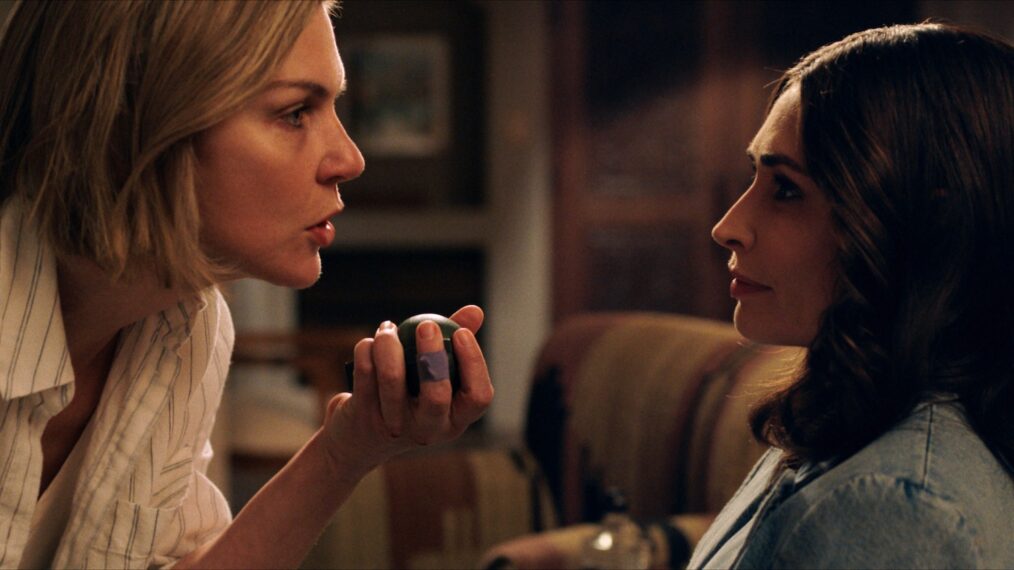
I am happy to say that I’m officially on board for the rest of the season. For some of you, this might be boring news. But I consider it a very big deal. My bar for TV gets higher every year. I am having to MUSCLE my way through The Beast Within Me, barely getting through 20 minutes a night before I turn it off.
But Pluribus is shaping up to be the antidote to all these samey shows. I watch every episode start to finish. Probably because it’s a show that challenges a lot of screenwriting norms.
In the most recent episode, Zosia (Carol’s concierge) is recovering at the hospital from the grenade blast in the previous episode.
Carol heads home to see a bunch of people cleaning up around her house (from the grenade blast) and gets an idea. She invites one of them inside (biker guy) and asks him what he thinks of her books (Carol is a writer).
The biker guy says they love her books. They genuinely think they’re amazing. So Carol next asks what Helen (her dead girlfriend) thought of her books. Biker Guy is much more hesitant. She has to poke and prod him but he eventually admits that she didn’t like them.
From this, Carol gathers some valuable intel. These people cannot lie.
So Carol heads off to see Zosia and asks her: Is there a way to reverse this virus taking over the world? Zosia gets very uncomfortable and says that is an answer she cannot provide. From this, Carol deduces the answer is yes. But she must figure out a way to get that information out of Zosia.
Her plan? Heroin.
Carol requests heroin, injects herself with it and records the results at her home. Afterwards, she watches the recording, where she sees herself confessing every bit of truth in her brain (including that she wants to bang Zosia) and decides that, yup, this is going to work.
She then heads back to the hospital, covertly escorts Zosia outside while secretly dumping the heroin into her saline drip. Zosia proceeds to get very high and Carol asks her the question again: “How do I reverse your takeover of our planet?”
Zosia struggles to resist and gets close to giving her the answer but then everyone at the hospital comes out and surrounds Carol and Zosia, trying to convince Carol to stop. The heroin then throws Zosia into cardiac arrest and that’s the end of the episode.
One of the more interesting things about Gilligan’s post Breaking Bad career is that he places his storytelling within these very slow narratives. And this is the most dangerous area to be in as a screenwriter because you really need to know what you’re doing to keep a slow story entertaining.
It’s almost like you’re playing with a handicap.
But, this episode shows us how to do it well. Just like any good story, you want to set up a goal. In this case, the goal is: find out how to reverse the virus takeover of humanity.
Now, the thing with goals is they are only as powerful as the stakes attached to them. And, lucky for Gilligan, the stakes of this goal are enormous. Carol is literally trying to save every person on the planet. Those are bigger stakes than the Avengers trying to defeat Thanos.
That’s a big part of what’s driving the interest behind this show. Is that the stakes are so so high. But if you want to turbocharge a character with a goal and stakes, you can take it one step further and make the goal as hard as it can possibly be.
Which is what Gilligan has done. We do not see any scenario by which our heroine can save these 8 billion people.
And guess what: THAT’S EXACTLY WHY WE KEEP WATCHING.
If the goal were easy, we wouldn’t need to watch. Because we’d know that our hero would eventually figure it out.
This trio – A goal, that the goal is impossible, and high stakes – is what makes this incredibly simple episode compelling. All that’s happening here is someone is asking another person questions. It’s as simple a plan you’re going ot find. But, if those above factors are in place, Carol’s plan is exciting. A lot of writers forget that.
I also want to note that Gilligan solved the problem I brought up after episode 1, which is that there was no clear unresolved relationship we needed to tune in for every week.
Since then, it’s very clear that Carol and Zosia are the unresolved relationship that will drive the character part of the story.
A question you might ask is, “Can I do what Gilligan did and wait until episode 2 to bring in my central unresolved relationship?” The answer is no. Gilligan can do this because Apple TV promised him 2 seasons. He doesn’t need to worry about winning over a reader with his first episode. Because of his success, he gets to think of his show as a whole rather than nailing episode 1.
You, on the other hand, need to write the perfect pilot. Which means setting up the plot of your show. And setting up at least one (but preferably multiple) unresolved relationships. For example, Succession sets up the intense, complicated relationship between Logan and Kendall immediately in that first episode. It’s just a better practice as a screenwriter. It’s actually lazy to kick that can down the road to episode 2. But Gilligan can get away with it cause of his success.
What I also like about this show is that it poses a lot of weird questions that you can’t get from any other TV show, past or present. Carol is attracted to Zosia. But Zosia is the culmination of 8 billion other people. So, if Carol were to, say, kiss Zosia, she’s kissing everyone.
So, you’re thinking, “How is that going to work?” It’s not exactly the simple situation that was Jim and Pam on The Office. So it’s like adding an atom bomb to a traditional TV writing practice, which I love.
The show is still clumsy. There’s no doubt about it. I’m not convinced you need to write a 10 minute record-and-playback sequence of Carol doing heroin to determine that heroin will make Zosia tell her the truth. Definitely a weird scene.
But every good TV show or movie has a little weirdness to it. There are imperfect things about it. As long as the core components of the story are in place, you can get away with a lot. And the core of Pluribus is working.
Don’t you agree?
