
The most ambitious movie of Paul Thomas Anderson’s career
Genre: Drama/Thriller
Premise: A former revolutionary who gets high all day must spring back into action when his teenage daughter is taken by the very group he used to fight for.
About: Paul Thomas Anderson burst onto the scene as a directing superstar with his one-two punch of Boogie Nights and Magnolia. The auteur continues to try and push the boundaries of cinema in an industry that seems determined to push the auteur aside. One Battle After Another, which stars Leonardo DiCaprio, brought in 22 million dollars on its opening weekend, and attempts to have staying power for the rest of the year in hopes of becoming Warner Brothers’ big flashy Oscar hopeful.
Writer: Paul Thomas Anderson
Details: Almost 3 hours long!!!
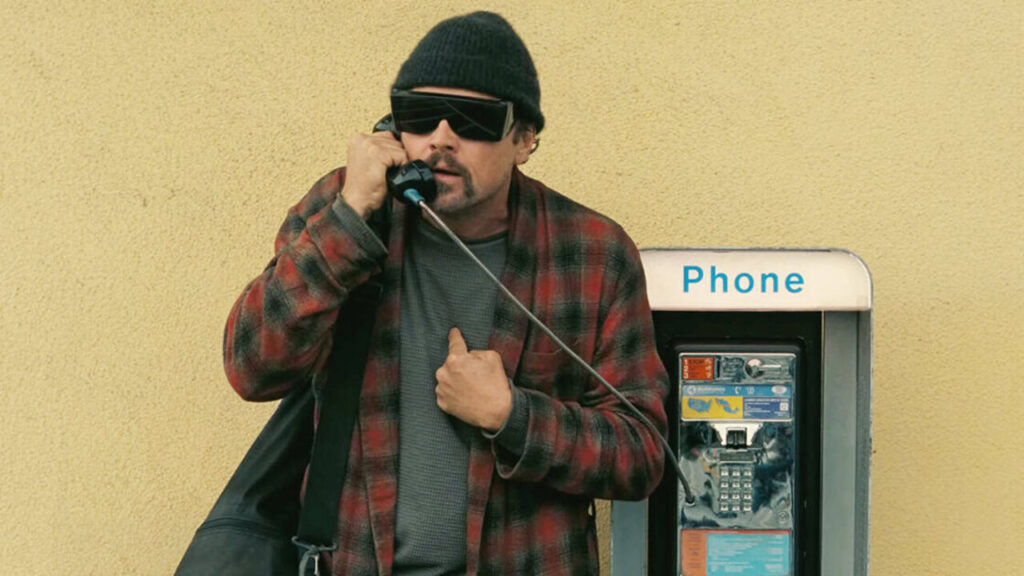
A month and a half ago, I started seeing a lot of publicity for this movie, which was confusing because Paul Thomas Anderson movies don’t usually get marketing campaigns this big. Sure, it had Leonardo DiCaprio in it. But it’s not like he was playing Jack Dawson again.
Paul Thomas Anderson hasn’t exactly been hitting the ball out of the park lately. The worldwide box office for his last film, Licorice Pizza, was 33 million. For The Phantom Thread, 48 million. Inherent Vice, 15 million. And The Master, 28 million.
So why is his latest movie getting the same marketing push as a Marvel movie?
Finally, the answer revealed itself.
Warner Brothers paid 150 million dollars to make this movie.
150 million dollars!!!
That’s four times the budget of any previous Paul Thomas Anderson film.
So of course WB was promoting the heck out of the movie. They had to after sinking 150 million dollars into it.
Did the movie deliver on that huge investment? Not exactly. It squeaked out 22 million bucks, officially killing the overtly political movie going forward. I mean, if audiences won’t show up for a film that mirrors the biggest political story in the country, when will they?
Everybody knows that if you want to make a political movie, you do it through sci-fi or horror. How do I know this? Because James Cameron made a movie about the environment in 2008 and it made 3 billion bucks. It was called Avatar.
Look, I’m not here to sugarcoat it — I’ve always had mixed feelings about Paul Thomas Anderson, who invented his own lane, aka, “the sloppy auteur.” He’ll present his movie as if it’s set in 1983, like he does here, yet have cops taking selfies at the end of the sequence. Maybe in his late-night drug-addled writing sessions, choices like that felt inspired. To me, they just feel careless. Have a plan. Build a consistent world that makes sense so we can believe in it. It’s not 1992 anymore — you can’t cram 72 storylines into a two-and-a-half-hour movie and expect critics to call it genius. The internet changed that. It raised the bar. But Anderson still seems to be playing by the old rules.
If you haven’t seen the film, and I hope you never have to, it follows a terrorist group called the French 75 (yet the movie looks like it’s set in 1983, though we later find out it starts in 2009, only to eventually to be set in 2025). Leading the group is a black woman named Perfidia. She and Bob (Leonardo DiCaprio), the French 75’s resident bomb expert, are in a relationship.
Colonel Steven Lockjaw (Sean Penn) has been tasked with stopping the French 75, but quickly falls for the sexy Perfidia. He tells her she can do all the terrorist things she wants if she just has sex with him. That’s an easy decision for her and she does so without telling Bob.
Perfidia later stupidly kills a cop, gets arrested, and the only way to lighten her sentence is to name names. She gives up everyone but Bob.
16 years later, a severely lazy Bob is raising his daughter, Willa, he had with Perfidia (or so he thinks). Willa just wants a normal life but gets taken by a reestablished wing of the French 75.
They’re saving her because word is Colonel Lockjaw is looking for her, as he believes she’s his daughter. Lockjaw’s pursuit is complicated by the fact that he’s a part of a secret white nationalist group that doesn’t allow interracial relationships. So Lockjaw wants to erase the evidence by killing his half-black daughter.
Meanwhile, Bob, who’s been laying on a couch for 16 years getting high, is pulled back into service. The lazy forgetful bumbling druggie teams up with Willa’s karate sensei to go and save her. Turns out it’s hard to do stuff, though, when you’ve become the physical embodiment of Jeffrey Lebowski.

Hmmmmmm…
I’m trying to think of anything I liked about this movie. The closest I’ve got to a positive would be Sean Penn’s character, Colonel Lockjaw. I wouldn’t say I liked the character. But the combination of the character and Sean Penn’s weird interpretation of it was, at least, interesting.
I don’t know what Leonardo DiCaprio is doing these days. This is the second major role in a row where he plays a half-witted dolt. At this point, if your script has a moronic main character, just send it to Leo’s people — he clearly loves these guys.
The frustrating part is that there was a version of this character — Bob — that could’ve made the whole movie work. Here’s what I mean. The film revolves around a group of ultra-progressive revolutionaries determined to change the world, and Bob is one of them.
Then comes the fallout (Perifia names names), sixteen years pass, and Bob gets pulled back into that world. Now, from a dramatic point of view, the most interesting version of this setup writes itself: Bob’s grown up. He’s changed. He’s become a middle-aged, 9-to-5, moderately conservative guy. The polar opposite of who he used to be.
That’s where the tension (and the humor) would’ve come from. A man re-entering a culture he no longer understands. A rebel turned square who suddenly has to face the ideals he abandoned. That’s conflict. That’s irony.
And you can tell Anderson wanted that contrast. Like when Willa’s friends come over and one of them is transgender. Bob awkwardly asks what pronouns he should use. It’s a great setup for a generational or ideological clash… except it doesn’t track, because Bob’s still progressive. He’s still this aging hippy whose identity was built in the same world that would obviously be comfortable around a transgender person.
The same issue pops up later, when Bob’s trying to call the French 75 number and forgets the old code words that will allow him access to his daughter’s whereabouts. He starts yelling at the operator, who chirps back, “You’re invading my safe space!” Bob snaps, “Invading your space? We’re not even in the same room!”
Again — Anderson wants that contrast, that sense that Bob has drifted so far from his roots he no longer speaks the language. But it never lands, because Bob isn’t fundamentally different. He’s only slightly less progressive than before. And “slightly” doesn’t create drama. It just creates noise.
All of this ties back to the larger point: Paul Thomas Anderson is a screenwriting cautionary tale. He came up in an era that celebrated anti-storytelling — where craft was considered “square” and traditional structure was seen as a prison. As a result, he never fully grasped that to make this premise work, Bob needed to be a true fish out of water. Instead, Anderson seems to think that simply moving Bob from one pond to another is enough.
By the way, one of the easiest tells of a weak screenwriter is an inflated page count. Long scripts are what happen when a writer can’t make decisions. Instead of committing to a clear direction, they throw everything in — every tangent, every side character, every half-idea that should’ve been cut. The result? A screenplay equivalent of the director’s cut. The one that no one asked for.
Look, I don’t love cutting scenes I like either. But that’s literally the job. You have to serve the spine of the story. This whole subplot about Colonel Lockjaw’s wannabe–white nationalist group that forbids interracial relationships? It’s so ludicrous it drags the film into parody. You didn’t need it. His motivation was already clean and compelling: he wants his daughter. That’s enough.
Unless you are heavily into leftist politics, a self-proclaimed cinephile, an uptight critic for one of the major newspapers, or a die-hard Paul Thomas Anderson fan, I would not watch this. I wouldn’t even bother when it shows up on streaming. It’s long. It’s aimless. It’s self-serving. And it’s ten drafts and a much better screenwriter short of anything watchable.
[x] What the hell did I just watch?
[ ] wasn’t for me
[ ] worth the price of admission
[ ] impressive
[ ] genius
What I learned: “The Level Above The Level” – In both this movie and Eddington (a movie I liked), both writers create this level of people above the central antagonists. Here, it’s this group of white nationalists who supposedly rule the world. And in Eddington, it’s this black ops military unit that protects ultra-progressive ideology. I don’t believe “the level above the level” works. Without enough time to let the plotline blossom, it always feels forced. I thought the wild gun shootout at the end of Eddington was fun. But I had no idea why this black ops unit was interested in killing a random small-town sheriff. And here in One Battle after Another, the white nationalist storyline had such a weak payoff that you clearly didn’t need it. Which meant you could’ve chopped off 10-15 minutes of your movie just by dropping it. So, the next time you’re thinking of adding a level ABOVE the level, don’t do it. It’s probably not going to work.
