
I’m giving 25% off two screenplay consultations to the FIRST TWO WRITERS WHO E-MAIL ME. So e-mail me at carsonreeves1@gmail.com if you want one of these deals!
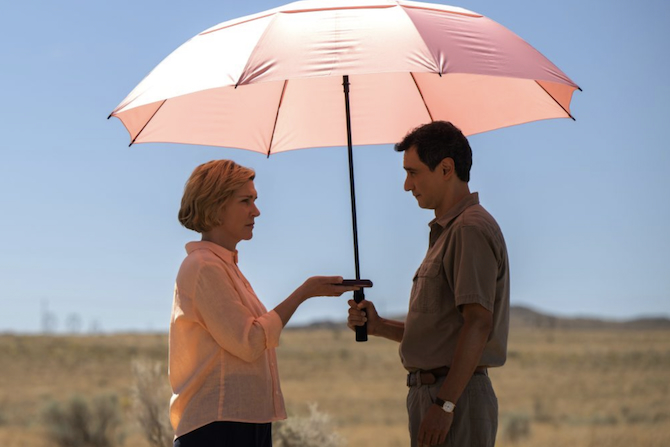
I watched a couple of things this past week, both of which I (mostly) enjoyed: The season finale of Pluribus and the Oscar-contending film, Sentimental Value. For those unfamiliar, Pluribus follows the last two people on earth who haven’t fallen victim to a global virus that turns humanity into a hive mind. And Sentimental Value is about a theater actress who has an extremely contentious relationship with her director father, who left the family when she was a child. He comes back into her life and wants her to play the lead role in his latest film.
What stood out to me about both stories was that the writers (either purposefully or ignorantly) were writing on hard mode. Writing on hard mode is the act of choosing a concept that doesn’t generate consistently dramatic scenarios (scenes).
Writing on easy mode is the opposite. It means choosing a concept that naturally generates dramatic situations. The most basic example is a zombie script. Zombies are always after you. They are a threat wherever you go. Because of that, you don’t have to work hard to create entertaining dramatic scenarios. The story can simply introduce the next wave of zombies, or the next survival challenge in a post-apocalyptic world, and the tension takes care of itself.
Writing on hard mode is like writing with one hand tied behind your back. You never get that strong inciting moment that launches a scene in an immediately engaging way. Instead, it’s like placing two characters in a coffee shop and saying, “Be entertaining.” They couldn’t even pull that off in one of the greatest films ever made!
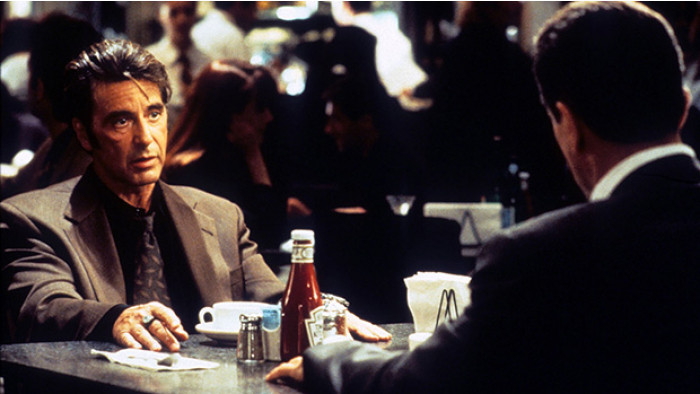
The only way to make “hard mode” work is through relatable characters, compelling character development, and compelling character dynamics. In short: through character. And the reason that’s so hard is because 90% of all screenwriting results in cliched characters, people we feel like we’ve seen before doing things we’ve seen them do before. Once we feel like we’re watching a tired “been there done that” group of people doing the same old shit, we tune out.
Is there a way to write in “hard mode” and make it work?
Yeah.
It’s just… harder.
You start by creating main characters we can relate to. So, for example, you create a character who’s struggling with their purpose in life. They’re not sure they’re on the right track. A lot of people can relate to that. If you can relate to someone, it’s easy to root for them. That’s why this first step is so important.
From there, you have to make the character feel REAL. This is the hardest part of hard mode. Because if you don’t make the character feel like they could exist in the real world, they will come off as cliched. How do you achieve this? It’s delicate. But, generally speaking, you can’t lead the character. You have to let the character lead you.
Let’s say your hero is running away from a bad guy. And then the hero comes up on a parked car with someone in it. Now, as a writer, you might want to evolve this foot chase into a car chase. If that’s the case, you might have your hero rip the driver out of the car, jump in it, and drive off, with the bad guy getting a car of his own and going after him.

You wrote the character doing that simply because you wanted them to. But you never asked the key question: would my hero actually do this? For example, if your hero is truly selfless, would that person really throw someone out of their car to save themselves? No. In that case, you’re forcing the character to serve your needs, instead of letting the character act according to their own nature and volition.
This is an extreme example but the point I’m making is, your hero will need to make dozens of decisions throughout a story. How many of those decisions are *you making for your character* and how many of those decisions *is your character making for themselves?*
By the way, I’m not saying to never make your character do something because you want the plot to move a certain way. I’m saying that the characters who come off as the least believable and the most cliche are the ones where the writer ALWAYS makes their decisions for them.
The last piece of this puzzle is coming up with compelling character dynamics. You want to think of character relationships similar to how you think of characters on an individual level. You’re trying to come up with the most compelling ones possible.
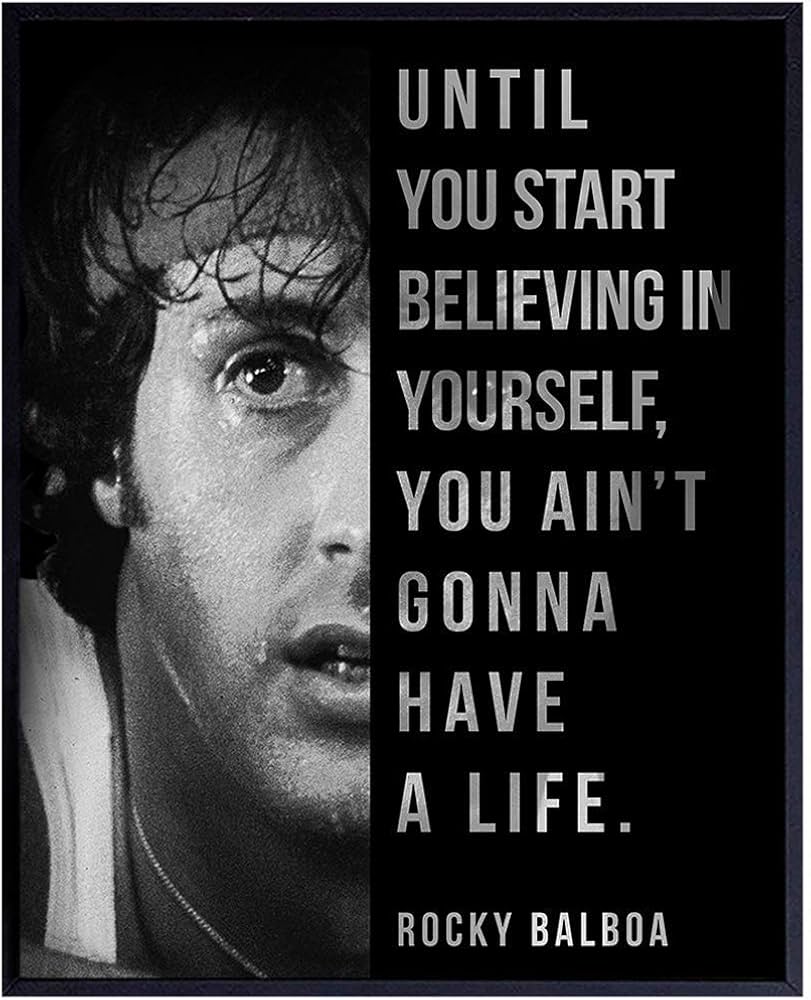
For example, just like a character who’s battling some inner conflict (i.e. they don’t believe in themselves) is compelling to watch because they’re trying to overcome that weakness in pursuit of their goal (Rocky Balboa), a character relationship can be battling its own conflict (Luke Skywalker sees everybody as good and approaches the world selflessly, Han Solo sees everybody as out for themselves and approaches the world selfishly – therefore every scene they’re in will be a clash).
Doing these three things effectively is writing on hard mode, because you don’t have concept-rich, built-in scenarios like zombies that automatically make a scene entertaining. Even the best writers struggle with this. That’s because there’s a frightening fourth factor you can’t control: character creation luck. Sometimes you can do everything right and a character still doesn’t work. There’s an indescribable X-factor that brings characters to life, and it’s one of the most frustrating aspects of screenwriting.
How do you deal with something you can’t control? Unfortunately, you go with your gut and hope for the best. But if you get those other three things right, the chances of you getting that fourth thing right improve dramatically.
Bringing this back to Pluribus, the final episode is 95% character-driven and, therefore, screenwriting on hard mode. Manousos finally gets to New Mexico to team up with Carol and stop the bad guys. But there’s a problem. Carol has fallen in love with bad guy, Zosia (who, remember, is an accumulation of 8 billion other people).
Hard mode activated.
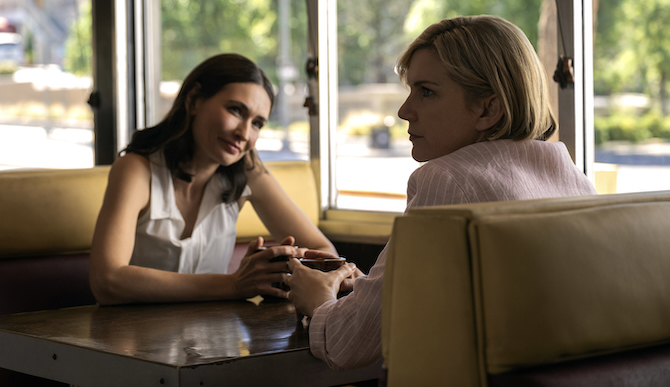
While it’s true that we do have this sci-fi element to spice things up, the finale doesn’t really explore that sci-fi element. What it explores is that Carol finally has someone to team up with to try and take back the world but she’s fallen in love with someone on the bad guy’s team. That’s your strong character dynamic. That’s the reason the reader wants to keep reading. What is Carol going to do? Will she prioritize love over humanity or will she prioritize humanity over her love?
Now, this next part is beyond the scope of today’s conversation but it’s worth noting because it’s an example of what good professional writing looks like. This is not a straight “A” or “B” answer. If Carol decides to go with Manousos, it’s still a .1% chance that they figure out how to save humanity. The odds are still heavily against them. When you add that variant into the mix, Carol’s decision becomes that much harder. If it was 50/50, it’d be easy. But it’s more like 99.9/.1.
But the point is, everything in this episode is character-driven. There’s very little plot. And because of all the hard work that Gilligan and his team did in creating these characters, we care about them enough individually that we care what happens between them.
In a decision that can only be described as insane, Sentimental Value embraces hard mode and asks, how can I make this even harder? What’s wild is that writer-director Trier actually had the option of writing on easy mode. His concept — an actress daughter who despises her director father being offered the lead role in his latest film — is inherently dramatic and capable of generating plenty of juicy, entertaining scenes. It’s not quite easy mode on the level of a killer robot sent back in time to murder the future resistance leader’s mother, but it is the kind of premise that organically creates conflict. An actress is being directed by someone she hates, yet she forces herself to endure it in order to advance her career.
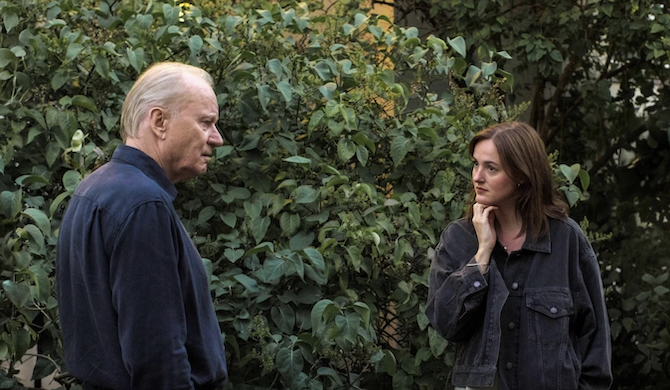
Except Trier completely abandons that setup and inexplicably imposes hard mode on himself. The story should have centered on a daughter who desperately wants to become a successful actress but can only achieve that goal by working with her tyrannical father, whom she despises. Instead, Trier creates a daughter who has no interest in becoming a famous actress at all and therefore has no trouble saying no to him. It completely undermines the premise.
This choice forces Trier to introduce a second actress, a famous movie star, to take the role, and it immediately deflates the tension. Why should we care about this new, random relationship? He has no history with her, and he doesn’t even need to win her over, since she’s the one eager to work with him. As a result, there’s very little conflict or dramatic tension in their scenes. Trier ends up tripping himself up by setting the difficulty level unnecessarily high.
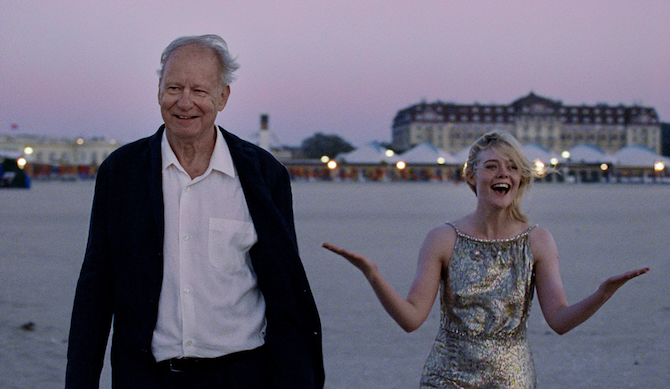
Now, that’s not to say the movie doesn’t work. Trier did a great job creating complex characters in Nora and Gustav. And did an even better job creating all this conflict between them. So, when they do have scenes together, those scenes are dripping with dramatic conflict. But because Trier, for whatever reason, designed the story to keep them out of the same scenes for much of the movie, he made what should’ve been a solid dramatic movie setup into more of a meditation on life, which is a nice way of saying “boring.”
But here’s where things get interesting. Remember when I said earlier that you want characters to make choices that are true to who they are, rather than what the writer wants? That’s exactly what Trier does here. You could argue that he avoids the more obviously dramatic version of the movie because it would feel inauthentic to real life. By staying true to the characters he created, Nora says no to the inciting incident, her father asking her to be in the film, instead of yes.
Because of that choice, the characters all feel VERY REAL. And for the people who love this film, that’s a big reason why they love it. Because every character in this film feels like a real person. It can therefore be argued that Trier won the game on hard mode. Not easy to do.
With that said, I do not recommend writing on hard mode. The whole reason I advocate so aggressively for generating strong concepts is because when you come up with a good concept, the script writes itself. If you create a character who’s determined to be the number one nighttime news videographer in Los Angeles (Nightcrawler) plotlines throw themselves at you. You know he has to go on the next run sooner or later. You know there’s always going to be other nightcrawlers trying to beat him to the story. You know his greed is going to drive him to be the best at any cost. That script writes itself for you.
But the second you enter the arena with a soft premise, you make your life miserable as a writer. Your life is already miserable as a writer. Why make it more difficult? I can’t imagine trying to generate scene after scene for a concept-less script like, say, The Banshees of Inisherin. Not saying it can’t be done. But it’s just 10x, 100x, 1000x harder. If you think you have the writing skillz to pull that off, go for it. But I wouldn’t call you a writer, then. I’d call you a masochist.
Write on easy mode by picking a concept that does the work for you. If you embrace this advice, the rest of your screenwriting career will be loads more enjoyable. :)
HAPPY NEW YEAR!
