
Scriptshadow called it the best script of 2024. How did it hold up!??
Genre: Drama
Premise: A Yale professor up for tenure must navigate a rape accusation from her most cherished student against another professor, who happens to be her best friend at the school.
About: After the Hunt was one of the buzziest scripts of 2024. When Julia Roberts hopped on to play the lead role of Alma, the Oscar statuettes began humming into the ethos, beginning their manifestation of Julia Roberts winning a second Oscar. But when the movie “only” received a 6 minute standing ovation at the Venice Film Festival (the best films routinely get over 13 minutes these days), worry began to permeate the post-festival game plan. Then came the critics’ response. The film is hovering around 45% on Rotten Tomatoes, a shocking score when you consider the talent involved (the movie is directed by current indie god, Luca Guadagnino). It is near impossible to get me to the theater for any movie that scores lower than 80% on RT. But I figured, since I loved the script, it would be an interesting case study on what went wrong. Imagine my surprise when I realized NOTHING WENT WRONG. That the movie was actually awesome. What makes this script-to-screen tale even cooler is that the writer came out of nowhere. Nora Garrett had zero footprint on the internet as a screenwriter before After the Hunt changed her life.
Writer: Nora Garrett
Details: 130 minutes
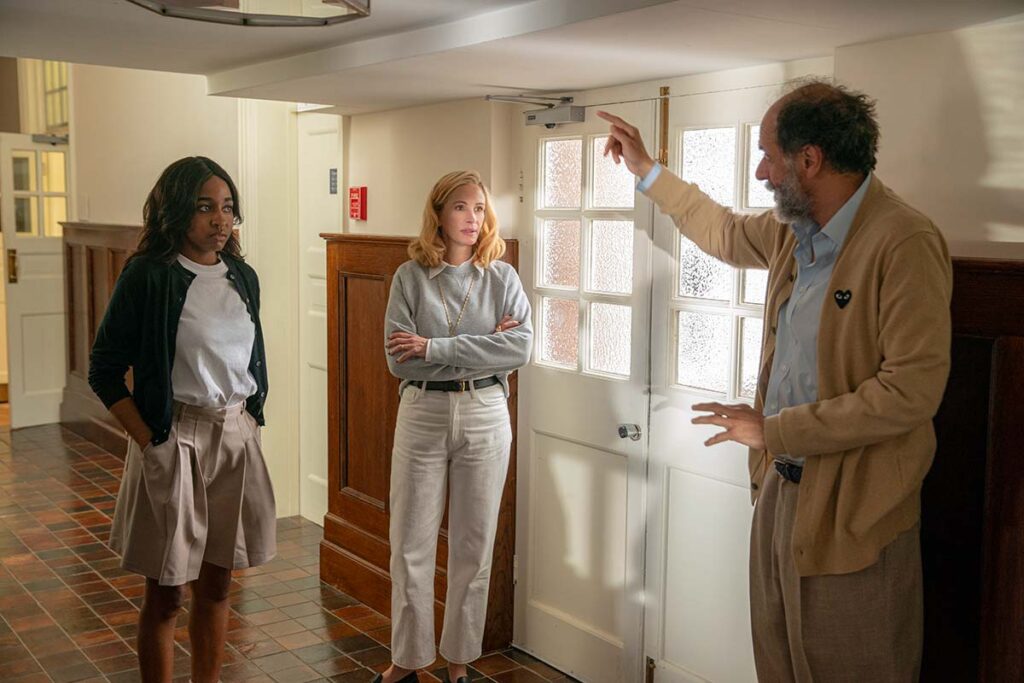
There was a time in Hollywood when studios would make movies and let the audience decide which were good enough to promote as an Oscar contender.
Those days, unfortunately, are long gone. They’ve been replaced with studios treating their “Oscar movies” like Marvel films, planning them 2-3 years in advance. They say, “This will be our Oscar film for 2025!”
They’ll then build marketing campaigns well ahead of time doing everything in their power to manipulate the general audience into believing that their movie is the most important piece of digital celluloid anybody will ever see.
The problem with that is audiences are pretty hip to the game these days. We can smell the manipulation. It smells like old car grease. And so it becomes this frustrating experience of watching a movie we’ve been told is amazing when, in actuality, it’s just some average adult-skewing film with more mature themes than usual.
One Battle After Another is a textbook example of this, and it frustrates me to no end that so many viewers are falling for it. It’s no different than when we thought we loved Chocolate, The Shape of Water, The Artist, or The English Patient. These movies were, at best, average. But the marketing campaigns gaslit us into believing they were masterpieces.
After The Hunt is a stupendous movie. I loved it. But it is not immune from this criticism. This movie wants to win the Oscar even worse than One Battle. At least One Battle has action scenes. This is just people in rooms talking.
But boy are they delicious ‘people in rooms talking’ scenes.
As some of you may know, I reviewed the script a year ago and called it the best script of 2024. The finished film started screening a few weeks ago and the critics were not kind, giving it a 45% Rotten Tomatoes score, effectively ending any chances of it winning Oscars.
What went wrong? It’s hard to tell! I don’t understand why people aren’t loving this film. I’m going to break down several areas that I believe may have caused the critics to sharpen their knives. But it’s disappointing because I think they’ve got it all wrong and are ignoring one of the best movies of the year.
After the Hunt is a simple story. Alma is a beloved professor up for tenure at Yale. Rumors are that her star student, Maggie, is putting the finishing touches on an amazing dissertation.
Alma is married to Frederik, whom she no longer finds attractive, but poor Frederik is in complete denial about it. Alma is best friends, drinking buddies, and flirting buddies with Hank, known around campus as the hot, cool professor.
One night after professors and students mingle at a party, Hank walks Maggie home. The next morning, Maggie comes to Alma and claims that Hank raped her. Alma, in a state of shock and confusion, is far from supportive.
This begins a series of “he said, she said” interactions where Alma, being violently pulled in opposite directions by each party, finds herself trying to gauge what the truth really is. But because her support for Maggie isn’t absolute, Maggie turns on her, putting Alma’s shot at tenure in question.
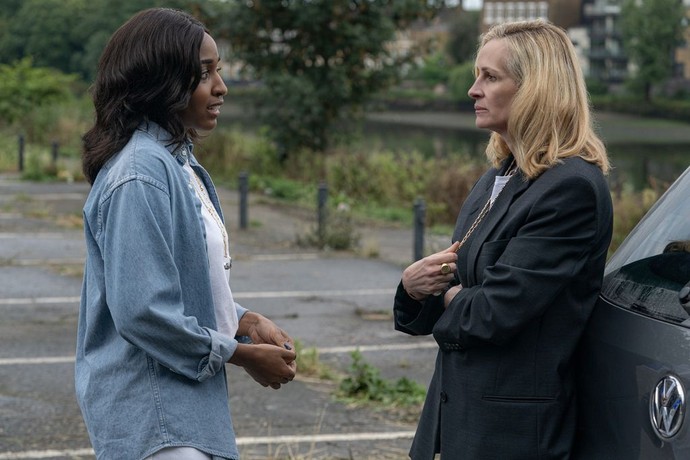
Let’s talk about the first screenwriting reason why I think people aren’t connecting with this film. The main character, Alma (Julia Roberts), is inaccessible. She’s cold. She’s unable to connect with others on any emotional level. She can’t be there for Maggie in her worst moment, she can’t give love back to her over-loving husband, and she’s able to heartlessly cast off Hank, who has fallen in love with her.
It’s very hard to pull people in when their entry point is a person who doesn’t let anyone in. That’s screenwriting 101. If you create a warm main character, we feel warm. If you create a funny main character, we feel good. So that’s definitely something to keep in mind when you write a script.
Now, the reason this didn’t affect me personally is that I am fascinated by these types of characters. I have had people like this in my life. And I can sometimes be this way myself. So that’s another lesson in why storytelling is so tricky. You never know what the audience is going to relate to because everybody’s different. Due to my negative experiences with people like Alma, I carry a higher emotional investment in what happens in this story because I’m hoping that Alma can change. That way I, retroactively, can change the people in my life who were similar to her.
But the point is, I think this was a big reason critics didn’t like the film. Alma put this giant wall up in front of the story and unless you were like me and were really determined to get to the other side, you decided not to scale it.
The next big screenwriting thing that hurt this movie was the back half of the second act. I would actually be surprised if anybody watched the first half of this movie and didn’t love it. It’s an incredibly compelling scenario! Someone accuses a beloved figure of sexual assault. The accuser is obsessed with a professor who just happens to be very close to the accused. That is a PERFECT dramatic triangle.
But 80% of that situation is resolved by the midpoint. Hank has already been fired. So we’re left to wonder: what is the story now? The makers of the film would probably argue that the story is the fallout – it’s about what happens to these relationships “after the hunt.” But the movie doesn’t do the greatest job of signaling that shift. So I think viewers felt a little lost. Like, “Why are we still here?”
There’s no doubt that 65-70% of the way through this movie, things have slowed down A LOT. It made me realize just how much writers struggle to nail the second act! It’s literally a problem in 9 out of 10 movies that I see. I don’t think anybody out there has truly cracked how the second half of the second act of a screenplay is supposed to work.
And it got me thinking: How *does* it work?
Most writers know that the third act is where the script “revs up” again. It’s where your heroes get together and execute that one last push to obtain the goal or take down the bad guy.
So, intrinsically, you would think that BEFORE THAT, things would need to SLOW DOWN. You can’t rev up if you’re already moving fast, right? Therefore, writers allow their second acts to drift off into this little nap as the act nears its completion. There’s no doubt that’s what happened here.
The solution? It’s tricky. Since Garrett is new to screenwriting, she may not understand story engines well yet. This movie is strongest when the story engine is: what’s going to happen between Hank and Maggie? Who’s going to win that battle? Well, Maggie wins it pretty quickly. Hank is out of a job by the midpoint.
So what’s the story engine now? The engine becomes: will Alma get tenure? And the drama comes from how nasty Maggie is going to get with Alma, since Alma didn’t give her full support.
But here’s why the engine sputters. The writer and director completely forgot to remind us how important tenure was for Alma. I don’t even think the average person understands what tenure means or why it would be so important for someone. It’s up to the writer to convey that and to also continuously hype up its importance. We need scenes where we see Alma freaking out or getting angry when her grasp on tenure starts slipping. But there was none of that and, as a result, the end of the second act began to wander.
Had they tightened that up and better established the engine, I think critics would’ve been more favorable.
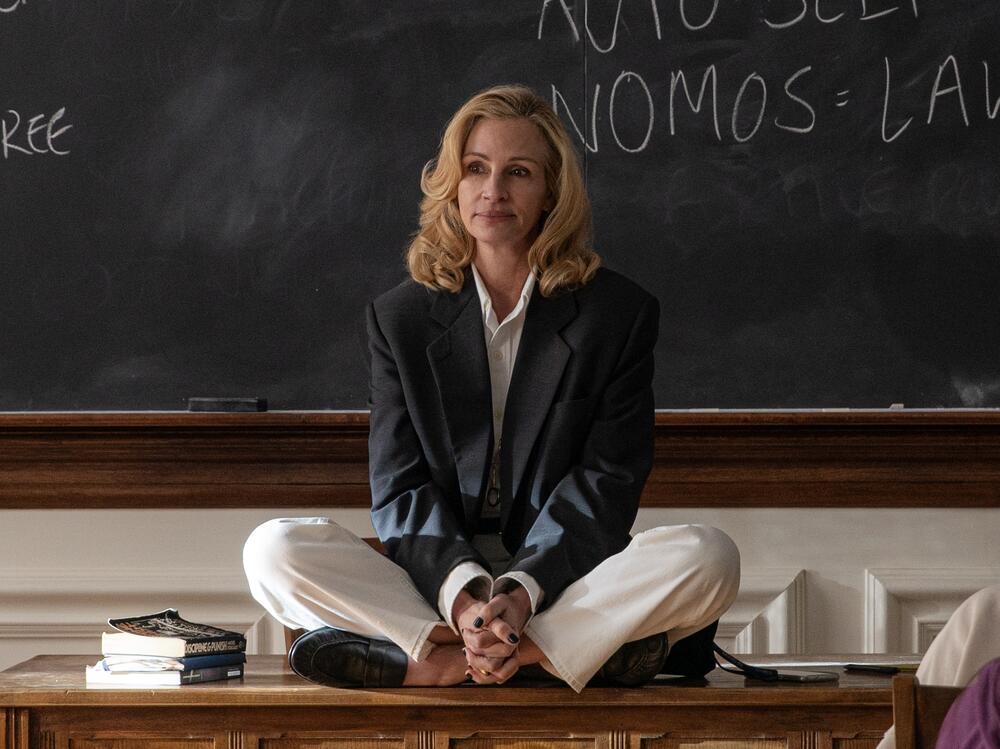
And if you want to know how to handle second-halves-of-second-acts in general, here’s the trick: Go hard and crash hard. Yes, there needs to be that “lowest point” for your hero at the end of the second act. It is their “death.” And then the third act is their “rebirth.” But the second-half-of-the-second-act should not be a cancer death. It should not be slow and lingering. Instead, you need your hero pushing and pushing and pushing to obtain whatever it is they’re trying to obtain, and then you give them a heart attack. The death needs to be sudden (metaphorically speaking, of course). Even in these slower dramas. In fact, ESPECIALLY in these slower dramas.
Okay, I’ve told you why I think everybody else didn’t like After The Hunt. But why did I like it? Well, for starters, I’m personally drawn to a lot of things here. I love old college institutions and campuses. I find them very romantic and one of the few pieces of real history that America has.
I think the character-writing here was amazing. Just like in the script, every character had something deep going on. You just don’t see that in screenplays these days. They even improved the character of Maggie from the draft I read, giving her more depth. She’s a black woman whose parents essentially run the school, so she has some power. She’s gay. She’s dating someone who’s non-binary. And it all plays into the story. There’s this great late scene where Alma calls her out on all of this. She points out: “you don’t even like this person you’re dating! You just think it makes you look more interesting!”
But what made the movie even better than the script was the performances. The performances here are SOOOOO good. I mean, Julia Roberts isn’t playing as splashy a role as she did when she won the Oscar for Erin Brokovich. But in many ways, it’s a much harder role because it’s so internal. And she does an amazing job of playing this character who’s keeping all of this damage inside while smiling at the rest of the world.
I recently told a writer that the key to writing an Oscar-winning character is to create the biggest gap possible between who they are on the inside versus who they are on the outside. In other words, if they’re extremely damaged, don’t have them act extremely damaged. Have them act happy. And that’s what you get here.
Ayo (who played Maggie) won me over by the end because she really is a good actress. Michael Stuhlbarg almost steals the show playing the “cuck” husband of Alma. He’s so nice and such a good guy and just has no idea that that’s the exact reason why his wife has fallen out of love with him. The way that Stuhlbarg passive-aggressively expresses his anger by cooking with the music volume dialed up to a hundred—he’s just a really fun but tragic character.
But the actor who steals the show, without question, is Andrew Garfield. Andrew Garfield is AMAZING in this. He plays the PERFECT balance between charming professor and potentially creepy guy. He steals every scene he’s in. He should be up for an Oscar for this, but I just don’t know if the Academy has ever celebrated a role like it before. It’s not the kind of role that results in awards, which is exactly why it stands out. In many ways, it’s a throwaway role. He’s there to jump-start this movie that will ultimately be about Alma and Maggie. But he’s just so damn fun to watch any time he shows up.
For example, there’s a scene in the middle of the film where Hank gets Alma to come have Indian food with him so he can explain his side. And as he’s explaining the very thing that could ruin his life, he’s gleefully ordering everything on the menu, flirting with the waitress. And you’re just like, “What the hell is up with this guy!??” You don’t know what to make of him, which is exactly why you want to keep watching him.

There’s another scene later in the story where he goes to Alma’s secret apartment, where they, presumably, used to hook up. It’s a 15-minute scene of just them hashing it out. And he’s so incredibly good in it. I’ve always thought Andrew Garfield was a solid actor. But I came out of this thinking he was a great actor. And he’s a big reason why, even when that second act took its nap, I still enjoyed it. Because he kept showing up.
The final, and probably biggest, mistake they made was miscasting Maggie. Ayo was good. Of course she was good. She’s a good actress. But her image was completely wrong for this part. This girl needed to be stunning, and that would’ve changed EVERYTHING about how we saw the situation. Hands down. It’s a completely different film. And it sucks because this is one of the things that writers have no control over, how a director can undermine a role just by miscasting it. It was the only mistake Luca made, but it was a big one. I think that alone would’ve bolted this up AT LEAST another 30 percentage points on Rotten Tomatoes.
Will you like this movie? That depends. Does this setup sound intriguing to you? If it does, I find it difficult to believe you wouldn’t like it. But if this isn’t a movie or a concept you find any interest in, you’re probably not going to like it. It’s not something that converts people who wouldn’t normally like these types of movies.
But for me, I loved it.
[ ] What the hell did I just watch?
[ ] wasn’t for me
[ ] worth the price of admission
[x] impressive
[ ] genius
What I learned – Here’s Nora Garrett on selling the script in her interview with Indiewire: [Before I sold the script], I didn’t have an agent, I didn’t have a manager. I asked a friend to introduce me to a manager. I thought, best case scenario, the script would become a spec that I would use as an example of my writing, and then I would hopefully get a manager, hopefully some jobs. Because it’s the exact opposite of what everyone tells you to write, it’s an adult psychological drama, it’s very heady. There are a lot of people talking. There aren’t a lot of action sequences. It can feel very play-like. And it’s about a subject that most people don’t want to talk about or touch. But then the woman who became my manager, Sydney Blanke, was very smart about who she sent the script out to. Allan Mandelbaum had just come out of doing “Fair Play,” and was then at Imagine. I had a meeting with a couple of interested producers, but Allan and the rest of the team at Imagine were always the ones who I felt like had just a real creative understanding, and also a really good idea of how to approach getting it made.
