
This may become a new feature on the site depending on how it goes.
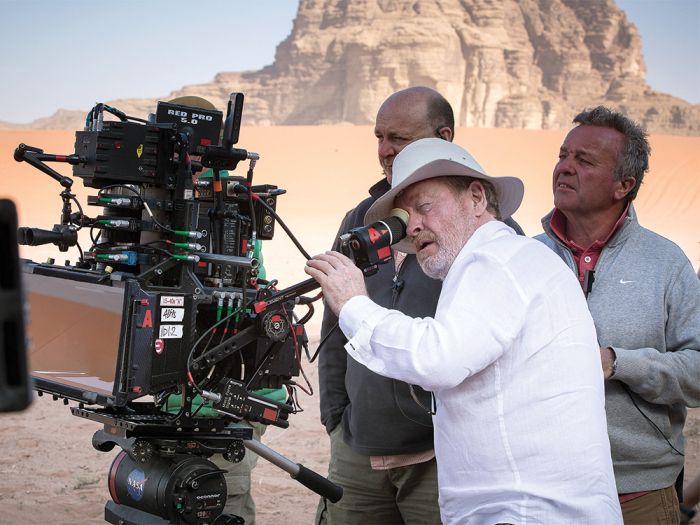
I was thinking of this recent article about Ridley Scott saying he doesn’t watch movies anymore. He feels that modern movies are “mediocre.”
I started to think about that. Because a collaborator of Scott’s, Denzel Washington, recently said something similar. “I’m tired of movies,” he said.
On the surface, this makes complete sense. Two legends north of 70, decades deep in the factory where the sausage gets made. When you know how the trick works, the magic evaporates. And movies ARE magic tricks—a carefully orchestrated series of misdirections and emotional manipulations. When they work, you get oohs and ahhs. When they don’t, you get One Battle After Another.
I’M KIDDING!
Sheesh. Try not to get triggered here. Actually, I have more to say about One Battle in a bit. And it may actually be positive.
Look, I get Scott and Washington to a degree. I’ve read thousands of screenplays. I see the gears turning, the tricks being deployed. Every year it gets harder to fool me. And when I hit a streak of ten mediocre movies in a row, I start wondering if the whole industry has driven off a cliff.
But here’s the thing—interesting movies are still being made. Great ones, even. Anora was phenomenal. Parasite was a masterclass. Eddington was fascinating. The last decade alone gave us Get Out, Promising Young Woman, The Big Short, Oppenheimer, Poor Things, Everything Everywhere All At Once, Red Rocket, The Brutalist.
Hell, the barrier to entry is so low now that Sean Baker made Tangerine on an iPhone, and it was brilliant. That film doesn’t exist in 1978. So maybe there are more interesting movies being made than ever before—we’re just drowning in so much content that the signal-to-noise ratio has scrambled our tuner.
Which made me wonder: Maybe Scott isn’t railing against ALL movies. Maybe it’s specifically the Hollywood studio movie he’s mourning. Because his solution to modern cinema’s mediocrity is rewatching his own filmography—and Scott has always operated in the big-budget studio system. That’s the language he speaks.
To that end, Scott has more of a point. Although it’s a complex one. Studio movies are definitely not the same as they used to be. I’m just not entirely sure what that means.
Because “Movies aren’t as good as they used to be” is the laziest take in cinema history. I’ve been hearing it for 30 years. I remember walking past an old couple after Crouching Tiger, Hidden Dragon, and hearing them say, “That was so good. Hollywood doesn’t make good movies like that anymore.” As long as there is a movie business, there will be people proclaiming it’s “not as good as it used to be.”
What even IS a “good” Hollywood movie? Does it require a certain sophistication that appeals mainly to adults? Or is it just that the strenuous, obsessive development culture of the past did such a thorough job weeding out the stupid that finished products came out more honed? Movies like The Rock were notoriously beaten into submission during development until the scripts were bulletproof. You had a *genuine* good time watching The Rock—not an empty good time, which is how I suspect Scott categorizes the modern moviegoing experience.
Of course, the elephant in the room is the superhero genre. It completely rewrote the map. And if you’re not into superhero movies (which I’m guessing Scott isn’t, since he’s never gone anywhere near them) then you’d naturally think the Hollywood system has bottomed out.
But I’d push back on that. Big-budget Hollywood movies with weight and sophistication still get made every year. One Battle After Another is a studio movie. Warner Brothers dropped 150 million on it. And it’s about as adult a film as you can make. I don’t see Twitch-loving teeny-boppers rushing to Century City after school to watch 50-year-old Leo in a bathrobe pontificating about immigration.
We’ve actually seen some VERY INTERESTING movies in the studio system lately. Furiosa was such a bold, risky creative swing. Barbie was unlike anything we’d ever seen. Sinners just came out earlier this year! Top Gun Maverick was so universally loved that even the most cynical corners of the internet had to tip their hats. You had the Dune movies, which are so close to the heady books in their adaptation that the Herbert family should consider adopting Denis Villeneuve.
I think what’s happened is this: The superhero genre has so dominated the studio landscape that it’s overshadowed the fact that good, interesting movies are still being made. But if you look past those overbearing 200-million-dollar marketing campaigns trying to convince you that Superman is the only movie being released this year, you’ll find good stuff, Ridley Scott and Denzel Washington. You just gotta look a little harder.
Which brings me to this: What movies still win me over despite my knowing all the tricks? The answer traces back to the first movie I liked in 2025—Novocaine. And it reveals a formula that works on everyone, from newbie moviegoers to cynical old complainers alike.
Develop a character that I really like. Put them in a difficult situation. Show them continually getting knocked down. Then have them keep getting back up and trying.
Do that, and everybody will like your movie. Because Novocaine doesn’t break ANY NEW GROUND AT ALL. It’s fairly standard. But that’s the power of that formula. When we genuinely like someone, we don’t need the story to be the second coming of Chinatown.
Of course, that first part—develop a character I really like—is the hardest thing to do in screenwriting. But the good news? Most of your writing competition doesn’t even know that should be the priority. The dumb ones actively rail against it. So just knowing that’s the goal puts you in position to write something great.
The movie business isn’t dead. It’s just changing, like it always has. It changes literally every decade. And as the superhero era flies toward its inevitable demise, it’ll change again. And I suspect it’ll change for the better, giving us more of these big, smart, fun Hollywood productions that Scott yearns for.
