
 Tip #13!
You will not get sceeewriting tips like this anywhere else on the internet. That’s why Scriptshadow is the best. You’ve got a dude reading thousands of scripts who sees real-life writing patterns every day and learns what works and what doesn’t then shares it with you.
ENJOY!
1) A good concept makes writing a script so much easier – A good concept doesn’t just get you more script requests. It actually makes writing your script easier because a good concept informs structure, scenes, and direction. Project Hail Mary gives us that clear accessible goal of saving the galaxy. Consider the alternative, writing this concept: a famous musician battling insomnia and a mental breakdown during a tour, is drawn into a dark, surreal odyssey after meeting a mysterious fan (Hurry Up Tomorrow). The latter concept has you lost, unsure, desperately trying to come up with logical scenes that move the story forward.
2) Twists are sexy, but they’re often fool’s gold – For every great end-of-script twist I read, I read 99 terrible ones. A good twist is one of the hardest things to pull off in screenwriting as it requires you to lie to the audience for the entire movie. And if you’re lying to the audience, you’re hiding so many things that can make your characters richer, make your scenes clearer, make your plot snappier. I would stay away from twists unless you have a whopper of one that you know works perfectly.
3) Keep your prose lean but descriptive – If you’re verbose and descriptive, it’s too much. If you’re lean and sparse, it’s too little.
4) Many scripts start strong then get messy – Writers become obsessed with their first act, going back to it again and again to make it perfect, then give 1/8th the amount of commitment to the rest of the script. I can’t convey to you how many scripts I’ve read that started off great then got messier with every ten pages that passed.
5) If you’re writing for studios, write a likable main character. If you’re writing for indies, write an anti-hero main character – Never do the opposite.
6) A day in the life of your hero – Open a new document and write down what happens in every single hour of your hero’s life on a typical day. I promise you you will learn new things about your character that you never knew and those things will inform the character in new ways that make them feel more real.
7) Give your hero one legitimate negative trait and your villain one legitimate positive one – Most characters are straightforward and boring. This little trick automatically makes your characters more complex.
8) Figure out the thing in your script that’s a refrigerator time machine, then upgrade it – As I love to remind you guys, the most memorable car in movie history, the Delorean in Back to the Future, was once a refrigerator in early drafts. That change resulted in several of the most memorable sequences in the history of movies. Some would say it turned that movie into a classic. There’s something in your script right now that is the equivalent of the refrigerator time machine. Figure out what it is, and find a way to upgrade it to a Delorean.
9) Reward characters who stand out, execute characters who don’t – We often go into scripts believing that “this” character will be a standout or that “that” character isn’t going to be important. But then you start writing and something changes. The awesome character turns out to be a dud and the side-dude ends up being awesome. Poor writers stay the course, trying to save the character they originally loved, while marginalizing the one that’s working. Good writers realize that they’ve struck gold and change course, giving the overlooked character a featured role.
10) Come at an old genre in a new way – It’s an oldie but a goodie because it’s one of the most reliable ways to write a standout script. This is what Zach Cregger did with Weapons.
11) Place your hero in as many scenes as possible that force them to make difficult choices – We love watching characters who have to make a hard choice. And when I say a hard choice, I mean a choice that we, ourselves, wouldn’t be able to easily make. To be clear, if the choice is even a 55/45 type of choice, it won’t work. It must be exactly 50/50.
12) Give at least one character in every scene a goal, and make that goal as big as you can get away with – I promise you that if you do this, your scenes will read a lot better. Most scenes falter because nobody in the scene wants something and, even if they do, the thing they want isn’t big enough for us to care.
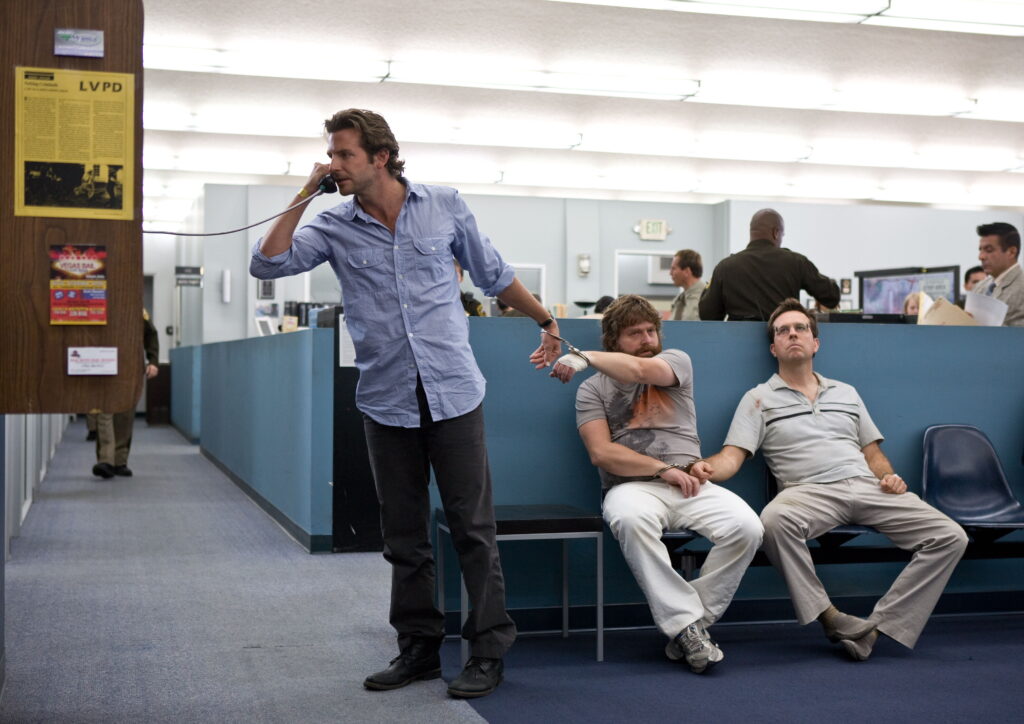
13) If there’s a shit-ton going on in your story, you need to add a hand-holder character – A lot of writers write complex plots with tons of characters and tons of subplots, then never hold our hand during the process. As a result, we’re already confused by page 30. Enter the “hand-holder,” a character designed to ask questions of the other characters and/or remind them of the current objectives so that we’re always up to date on what’s going on. See Bradley Cooper’s character in The Hangover. He spends most of the running time reminding everyone what it is they’re supposed to be doing right now and why.
14) If you need to cut pages, cut that subplot that, deep down, you know isn’t working – People get attached to subplots that add little to the overall story. But if pages need to be cut, cutting a 4 out of 10 subplot can easily erase 10 pages from your screenplay.
15) If you have to bulk intro a bunch of characters at once, give them highly distinctive names – If you bulk intro (introduce 5-10 characters in a span of two pages) there is literally no way we’re remembering all of them. So the trick you want to use is to make each name very distinct and, if possible, representative of that character (Seamus for the geek, Rocco for the stud). Some writers find this to be below them. Well, good luck to you when you bring a key character back 20 pages later and the reader has no idea who they are. Which happens ALL THE TIME when I’m reading.
16) Don’t write a low-concept or no-concept idea unless your character writing is literally at an A+ level – Writing something Low concept (Sentimental Value) or no concept (Sorry, Baby) is like showing up at a glitzy Hollywood party dressed in a t-shirt and sweats. But if you have the charm and personality to be the life of the party, you can make it work. Same thing with screenplays. These low concepts get NO SCRIPT REQUESTS. But if you write amazing memorable captivating interesting deep characters, then the tiny portion of people who do read your script will fall in love with it and recommend it to others. But even if the characters are only B or B+, it will never be enough to override a low or no-concept idea. What’s “A+ character writing?” Mike White.
17) “And then, things got worse” – This phrase will make your screenplay awesome. Every ten pages, say that line to yourself, and then make it true in your script. Keep making things worse and worse for your hero. The harder they have to fight to claw their way to victory, the more we’re going to love them.
18) Win the reader over – I think most writers try to write something good. But I don’t think good is good enough. Instead, I want you to imagine a tired overworked reader reading your script at the end of the day. Starting with your very first scene, I want you to write to win that reader over. Watch your script come alive when you do this.
19) One of your opening three scenes should establish what’s missing in your hero’s life — A story is ultimately about your hero growing. They can’t grow if we don’t understand what’s missing in their life. And since you want to establish a character as quickly as possible, understanding what’s missing in their life should be conveyed within your first few scenes.
20) Cliches are fine as long as you write them with authenticity – Dude who gives his character a crack addiction to add “depth” but has no experience with drugs and does no extensive research to figure out how to write that character believably? That character will come off as cliche. Dude who was once a crack addict himself who writes his protagonist as a crack-addict and goes into all the deep-cut shit about what being a crack addict is REALLY LIKE? That character will never come off as cliche.
Yo! Want some amazing feedback on your screenplay? Let me help you out! E-mail me at carsonreeves1@gmail.com and let’s get your screenplay in world class shape!
