
Genre: Christmas Comedy
Logline: When the Rockefeller Center Christmas Tree burns to a crisp, a ragtag group of misfit landscapers band together to find a replacement before the official tree lighting ceremony. It goes badly.
About: This past weekend, we had an Amateur Showdown here on Scriptshadow. Out of a little more than 200 entries, I picked the six best concepts and let you guys vote on your favorite. The voting was VERY close, but I ultimately decided to go with Rockefeller Center Christmas Tree as our winner. So today we find out if the script lives up to the concept!
Writer: Ervin Anderson
Details: 103 pages
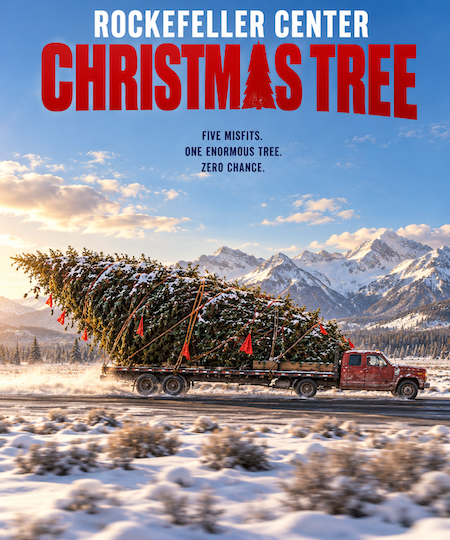
One of the reasons I picked this script is because I’m always looking for Christmas movie ideas that are different. I get sent a lot of Christmas scripts. And I swear 90% of them are some variation of The Santa Claus. I liked that a Christmas idea FINALLY didn’t do that.
But did it work??
Brian Parsons is a 32-year-old loser who works for his dad, the head gardener at Rockefeller Center. Brian has a gambling problem and, as a result, a hell of a lot of debt. And also a bad man who wants to collect on that debt.
One night, while Rockefeller Center is doing a test run for its annual Christmas tree lighting, Brian’s idiocy leads to the tree catching fire. The whole thing burns down. To make matters worse, dad has a heart attack (shout out Tommy Boy). And with the lighting ceremony less than a week away, New York City is about to have its first Christmas tree lighting without a Rockefeller Christmas tree!!
Desperate to redeem himself, Brian announces on live television that he’ll find an even BIGGER tree. His boss wants him to retrieve a safe backup smaller tree in upstate New York. But Brian’s meanie sister, Sarah, a reporter desperate for a career-making story, offers to pay off his $100,000 gambling debt if he gets a spectacular 100-foot tree in Minnesota instead.
Brian assembles a team of misfits, including a wannabe Santa Claus, a socially awkward mechanic, and a runaway Rockette carrying a bag of cocaine. They head to Minnesota for the bigger tree, where a stubborn old man named Ike guards the tree. Unfortunately, Ike has no intention of giving it up. And with the clock ticking, Brian has to figure out how to get the tree, transport it across the country, and save Christmas in New York.
Sometimes I’ll throw a screenplay into ChatGPT just to see how good it’s getting at script analysis. And what’s interesting is that about 80% of its notes are technically correct. The problem is that they’re all very by-the-book.
It can identify a passive protagonist or a first act that runs too long, but it reminds me of when I first started giving script notes. You learn all these screenwriting rules, and you’re so excited when you catch a script breaking one that you immediately point it out. “This is bad because somebody else told me it was bad!”
But here’s what I’ve learned over the years that AI still doesn’t understand. Whenever I identify a problem, I ask myself one simple question…
If the writer fixed this, would I actually like the script more?
And if the answer is no, then I haven’t identified the real problem (if you want notes on your script, contact me). That’s the difference between giving technically correct notes and giving genuinely helpful notes. You have to figure out what’s fundamentally wrong with the script, because until you fix that, none of the other stuff matters.
So what’s the note here that matters?
Well, first, we have to talk about comedy. Comedy is the simplest genre to judge and the hardest genre to write. And there’s a specific approach to the comedy here that’s limiting how funny this script can be.
Ervin relies heavily on what I call quick-hit comedy. Little jokes. Little quips. A character says something funny. Another character responds with something funny or does something funny. We move on. And there’s nothing wrong with that! You need funny lines in a comedy. But the problem with building your comedy around funny lines is that they’re essentially mini lottery tickets. Some hit. Some don’t. But even the ones that hit only provide one second of comedy.
You need ENTIRE SCENARIOS that are inherently funny, situations that can produce four or five pages of laughs without you having to come up with a hilarious line every five seconds.
For example, there’s a scene in this script involving a giant bag of cocaine that winds up getting ripped open, spreading everywhere, and eaten by pigs. That’s the kind of comedy I’m talking about! You could build an entire extended sequence around that. But Ervin is always rushing to the next joke. The next joke. The next joke. And I think that approach is, ironically, costing him a lot of laughs.
Which brings me to what I believe is the script’s biggest problem. Ervin made the wrong creative choice when deciding how his characters would find the tree.
Early on, Brian goes into his dad’s office, opens a file, and discovers that his dad has already picked out two potential replacement trees. One is in New York. The other is in Minnesota. That’s it. Problem solved. Now all they have to do is go get one.
NOOOOOOOOO!
You just made things easy for your protagonist! One of the most important things you can do as a screenwriter is make things difficult for your characters. You want them behind the eight ball, not with a head start.
And I can already hear some of you saying, “But Carson, it’s a comedy. Does that really matter?” IT MATTERS MORE! Because comedy comes from conflict. It comes from people struggling. It comes from characters trying to do something and failing spectacularly. The harder you make their goal, the more opportunities you have for that struggle.
So here’s how I would’ve approached this.
First, I wouldn’t have Brian working on the Christmas tree to begin with. I’d make him a total loser with some loser job who gets thrust into this responsibility. He’s the LAST PERSON ON EARTH you’d want in charge of saving Christmas. And then, instead of giving him a file with two preselected trees, I’d make him find the tree himself.
What would an idiot like Brian do? He’d probably search Google Images and type in “best Christmas tree ever.” Eventually, he finds a picture of the most magnificent tree he’s ever seen. THAT’S IT! That’s our tree! He finds the location, assembles his team, they get their equipment together, and they head out on this enormous road trip.
All sorts of ridiculous things happen along the way. They get lost. They get delayed. But FINALLY, after all this trouble, they arrive at the tree. And… it’s tiny. Like, comically tiny. The picture was taken from some deceptive angle that made it look enormous. In reality, it’s about six feet tall.
They’re devastated. They’ve traveled halfway across the country. They’ve wasted all this time. They have no backup plan. They’re screwed. Until one of them looks off in the distance and sees this giant beautiful Christmas tree, the best tree in the history of Christmas trees.
Except there’s one problem. It’s on a mobster’s property. And this mobster is NOT the kind of guy who’s going to let a bunch of idiots chop down his tree. So what do they do? They decide to steal it.
Now you’ve got a HEIST MOVIE!
Think about how much comedy you could get out of a bunch of morons trying to steal a 100-foot Christmas tree from a dangerous mobster. They have to sneak onto his property. They have to figure out how to cut the thing down without anybody noticing. They have to transport it without getting caught. That’s twenty pages of comedy right there!
And even if they succeed, they’re not out of the woods. Because now you’ve got a mobster chasing them halfway across the country. That’s a much funnier movie to me.
And notice what I did there. I didn’t come up with a bunch of funny lines. I came up with a PLOT THAT NATURALLY GENERATES FUNNY SCENES. That’s what comedy writers should be trying to do.
Because the version we get, where Brian goes to Ike’s house and tries to convince him to give up his tree, doesn’t generate nearly as much conflict as it should. Ike is actually quite accommodating. He invites everyone inside. He cooks them dinner. He’s easy to talk to.
And Ervin missed some comedic opportunities there too! Take that dinner. Ike invites everyone in for a meal and it turns out to be amazing. Why???? This is a comedy! Make it the WORST DINNER ANYONE HAS EVER EATEN. But because they desperately need his tree, everybody has to pretend it’s delicious. And Ike keeps giving them more.
“Have another helping!”
“No, really, I’m full.”
“Nonsense! You’ve barely touched your plate!”
Now you’ve got a scene.
And even the eventual solution to Ike’s refusal feels too easy. Sarah engineers the return of his long-lost love, and suddenly he’s willing to give up the tree. Why not make that backfire? What if she shows up and tells Ike that the one thing she remembers most fondly about their relationship was that beautiful tree? Now Ike is MORE determined to keep it!
That’s what you want. Every time the audience thinks the characters have solved the problem, you make the problem WORSE.
Let’s talk about Brian for a second.
Your job as a screenwriter is not over once you come up with a good concept. That choice should then lead to the second most important choice, which is, what character journey can I place inside this concept that takes maximum advantage of it? What kind of character change would be the most entertaining and emotionally satisfying?
Here, Brian’s big flaw is that he’s a gambling addict. Okay. But what does that have to do with Christmas? It’s a generic flaw that could be placed in almost any movie. I would much rather see a flaw that grows directly out of this specific story.
Which brings me to something interesting about Ervin’s writing. He actually puts a TON of work into his characters. Everybody has a storyline! Lee wants to become Santa Claus. Nellie wants companionship. Kitty has her family issues and her drug dealer problem. Sarah wants to become an anchor. Eva has her own dreams and disappointments.
It’s almost insane how much character work Ervin has packed into this thing. But ironically, the main character’s journey is the weakest one! I would just make Brian a loser. He’s someone who’s never been able to get the job done. And this is his opportunity to finally prove that he can. You don’t even need the gambling stuff.
I’d also shorten the deadline. Six days is the equivalent of six years in movie time. I’d love to see this mission become truly impossible. Give them 72 hours. That’s when the audience starts leaning forward and saying, “How the hell are they going to pull that off?”
There’s a better movie hiding inside this one. A funnier movie. A more challenging movie. The good news is that the concept is good. I just think the execution needs to take a bigger swing.
Script link: Rockefeller Center Christmas Tree
[ ] What the hell did I just read?
[x] wasn’t for me
[ ] worth the read
[ ] impressive
[ ] genius
What I learned: Never give your protagonist a head start. When Brian needs to find a replacement Christmas tree, his father has already identified two perfect candidates. That’s too easy! You want your protagonist starting from LESS THAN ZERO. It must sound impossible. That’s what gets us all jazzed to watch the mission. If we feel like they have things in the bag already, why would we keep reading?
