
Today’s writer bets that a very unlikely combo can win over the site’s host. He’s got an uphill battle. Can he pull it off??
Genre: Horror
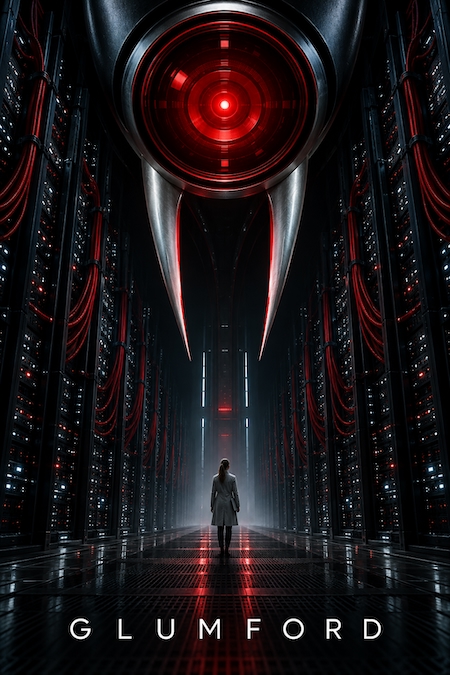
Premise: In the aftermath of a city’s comprehensive AI program experiencing an identity crisis and believing it to be a vampire, a group of resistance fighters with the reluctant expertise of a psychologist try to take back their wrecked and traumatized city.
About: Last year I did a pitch contest called Blood & Ink where anyone could pitch me horror movie ideas. I accepted the best 100 of those ideas. The writers then wrote those scripts. Ever since, I’ve been reviewing them on the site, looking for the best one. Already, one script, Wildman, written by Jacob Rainer, sold! Today’s script was voted in by you, the readers of the site.
Writer: Randy Williams
Details: 85 pages
Today’s screenplay is a good example of why, for the High Concept contest, I took over all selection duties.
I didn’t think this concept should’ve made it into the contest. I’ve read the logline quite a few times and I still don’t completely understand it.
The “loglines are pointless” argument I always hear from writers is that a screenplay gives them more room. They have more words, more scenes, more time to explain the things they couldn’t squeeze into a logline. And I understand that to a degree. A logline can’t explain every detail of your movie. But it should communicate the central idea in a way that both makes sense AND gives us a sense of the movie we’re about to watch. If the logline doesn’t meet that criteria, you’re usually in a lot of trouble before you’ve even written “FADE IN.”
With this one, we have an AI program that thinks it’s a vampire. I immediately get stuck on that. The defining thing about vampires is that they drink blood. An AI program doesn’t even have a body. So you’ve taken the thing we most associate with vampires off the table, and I’m left wondering what being a vampire actually means in this movie.
Now, I’m writing all this before I’ve read the screenplay. As always, I will root for myself to be wrong. But I don’t think I’ll be.
Our story appears to take place in the near future in a town called Glumford, where an artificial intelligence has taken control of the town. The twist? The AI believes it’s a vampire. It drugs blood donors to keep them coming back. Meanwhile, loyal citizens have their teeth sharpened to demonstrate allegiance to their overlord.
A group of rebels kidnaps psychologist Dr. Lauren Saulk, hoping she can talk the AI out of its vampire identity. The group is led by former cop Waltham and includes Elita, whose sister died from contaminated blood, and Nelson, whose teenage daughter, Katy, has disappeared. Elderly computer whizzes Esther and Luther sneak Lauren into city hall, where AI Dracula resides.
Through a series of flashbacks, we learn how these people became involved in the resistance. We also discover that Katy recorded a vampire audiobook for the library. Because the AI’s biggest fear is death, it loved the idea of vampires, since they cannot die.
Lauren’s therapy session ends up being a decoy. While she confronts the AI, Waltham and the team launch a separate mission to blow the local power plant up. Can Lauren get through to a machine that thinks it’s Dracula, or will the rebels have to pull the plug themselves?
I’m going to be blunt here folks. Because you know I always am.
The readers of the site let Randy down.
The thing I talk about more than anything on Scriptshadow is the importance of the concept. It doesn’t have to be the greatest movie idea in the world. But it has to be solid enough that you can build a movie around it. Before you commit months of your life to writing a screenplay, you need to know that the foundation can support the thing you’re building.
Look at Obsession. A friend-zoned guy wishes that the girl he loves would love him back. His wish comes true. But her love becomes a terrifying obsession. Simple. Clear. “Be careful what you wish for.” You hear that premise and immediately understand how it can sustain a movie.
With Glumford, I had the opposite reaction. I read the logline and saw all the places where the idea could go wrong. I couldn’t even confidently picture what the movie was going to be (does the AI place fangs on all of its servers?). And that’s why this is so frustrating. The entire reason I created these pitch contests was to address this problem. Let’s make sure the idea works BEFORE you spend six months on it.
If we vote somebody in because we like the writer, or because we want to encourage them, without honestly assessing whether their idea can work, what have we accomplished? We’re setting them up for this very moment, where we say this script never had a chance.
Ironically, buried somewhere inside Glumford is a narrative that might’ve worked. Something powerful and dangerous is hurting people so a group of rebels bands together to stop it. Plenty of successful movies have been built around that setup.
But the vampire angle makes everything so bizarre that I spent much of the script asking, “What am I actually reading?”
We have an artificial intelligence that apparently believes it’s a vampire. Okay. Then we have people breaking into a blood bank and drinking blood. Wait. I thought the AI believed it was a vampire. Do the citizens think they’re vampires too now? Are they actual vampires? Are they pretending? What are the rules here?
Then you have the flashbacks.
Please, people, stay the hell away from flashbacks unless they are absolutely essential to telling your story. They are diabolical little momentum killing gremlins. You finally get your movie moving and then you slam on the brakes every few scenes to go backwards. BACKWARDS!
Let me be very clear: 99.9% OF THE TIME IN SCREENWRITING – BACKWARDS = BAD!!!!
I understand the intention. Randy wants these characters to have personal reasons for fighting.
But here’s the thing. One of the most difficult things to create in storytelling is MOMENTUM. People get bored fast. Therefore, momentum is EVERYTHING. I know writers who would cut off toes if it guaranteed their stories consistent momentum.
The reality is, whatever momentum you think you have in your story, it’s probably not even close to what you actually have. So the fact that you’re going to risk injecting one of the most powerful momentum-killers out there: the flashback?? It’s just nuts to me.
Okay, let’s try to move into a more positive space. I always like to play this game: What if I were a producer at a studio, and the studio told me, “We’re making this movie no matter what. Your job is to get the script into the best shape possible”? What would I do here?
The first thing I would tell Randy is to get rid of the vampire stuff.
I understand that’s what makes the idea unique. But unique doesn’t mean good. Sometimes the thing that distinguishes your concept is the very thing preventing it from working.
Take away the vampires and you have a fairly compelling (as well as timely) premise. Ten years in the future, an AI has taken over a town. That’s a movie people could be interested in because it taps into something they already fear is coming. Just by removing that weird element, the story becomes way more manageable. From there, stop jumping around between so many people and their histories. This isn’t American Beauty. Focus on a group trying to take the AI down.
I’m sorry to be blunt but I’m not here to make writers think they’ve done a good job when they haven’t because then they’ll just keep making the same mistakes over and over again. Hopefully, my big note here: SIMPLIFY THE CONCEPT, SIMPLIFY THE EXECUTION, helps Paul in his next script.
Screenplay Link: Glumford
[ ] What the hell did I just read?
[x] wasn’t for me
[ ] worth the read
[ ] impressive
[ ] genius
What I learned: Don’t use your opening sentence to prove you’re a writer. If you do that, you’re serving yourself. Instead, always serve the screenplay. Here’s the opening line in Glumford: “A pair of elderly woman’s hands, veins like winding canyons beneath waxy skin hover over a piano keyboard.” This is a prime example of a writer trying to prove that they’re a writer. And ironically, it achieves the opposite. I had to read it several times to understand it. You’re over-complicating a very simple description, and in the process, giving us a line we have to put some effort into to decipher rather than one that allows us to see what we’re supposed to see. Keep it simple: “An elderly woman’s hands hover over the piano keys. Veins stand out beneath her waxy skin.”
