
Today’s script SCREAMS “movie.” Will its delicious setup deliver??
Genre: Horror
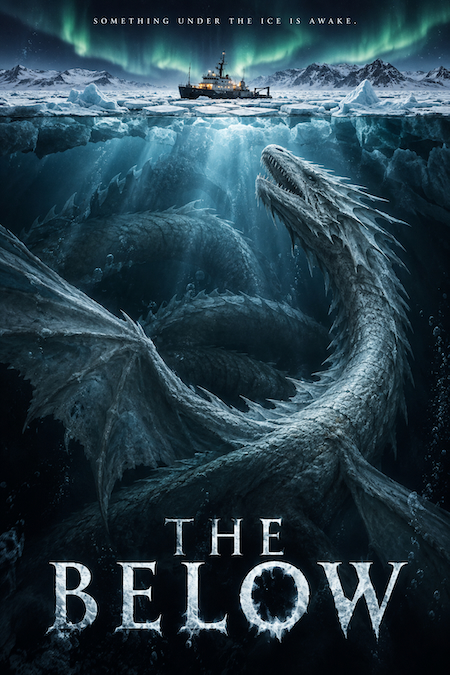
Premise: When an Arctic research vessel becomes stranded after retrieving a mysterious egg, a timid deckhand must overcome her fear and lead the crew against the ancient creature, tracking their every move through the ship itself as it hunts.
About: Last year I did a pitch contest called Blood & Ink where anyone could pitch me horror movie ideas. I accepted the best 100 of those ideas. The writers then wrote those scripts. Ever since, I’ve been reviewing them on the site, looking for the best one. Already, one script, Wildman, written by Jacob Rainer, sold!
Writer: Erica Benedikty
Details: 114 page
Okay, this is the FINAL Blood & Ink entry I’m reviewing on the site. Combined with the ones I’ve been reading privately, I’ve read almost all of them. If I have not reviewed your Blood & Ink script on the site and you’re curious what I thought, feel free to e-mail me at carsonreeves1@gmail.com.
The reason this one makes the site for a review is because it’s a really solid movie idea. Anything out in the middle of nowhere where getting help is impossible combined with a supernatural element is a great starting point for a screenplay because the poster shows up in your head immediately.
The question I always have going into these scripts is, “Yeah but are you going to give me the generic version that I could’ve written myself or are you going to give me something that I wasn’t expecting, that feels fresh, that surprises me in some way?” Well, we’re going to find out!
Somewhere in the ninth-century arctic, a bunch of vikings discover that stealing an ice dragon’s egg comes with a strict return policy. A winged creature lands on their longship and sends the whole operation to the bottom of the ocean.
Cut to the present, where research vessel, Northwind, discovers an abandoned trawler. Captain Jessup wants to check for survivors. But Lieutenant Chen, the resident military a-hole, would prefer that everyone recognize an obvious horror-movie setup when they see it.
Jessup wins, and the boarding party finds a nearly dead man clutching a mysterious chest. He warns them not to open it. Naturally, this leads to them bringing it onboard. Scientist Erin Gordan becomes fascinated with the chest, which contains an ice dragon egg. The trawler survivor dies but briefly revives long enough to shoot the chest, before collapsing again. Meanwhile, something enormous damages the Northwind’s thruster, trapping the ship in ice.
An underwater investigation reveals that sunken Viking longship we saw in the cold open. Their diver is killed, their underwater robot is destroyed, and a hungry hatchling starts making its way through the ship’s personnel.
Erin, meanwhile, keeps getting colder, stranger, and more protective of whatever they’ve brought aboard. Our intuitive deckhand, Rowan, begins figuring out that whatever they’ve found responds to heat and energy. Unfortunately, getting Chen to listen to her is harder than finding free parking in Beverly Hills. Sorry, bringing in a bit of my personal life here.
After Jessup is dragged overboard, Chen tries trapping the creature with liquid nitrogen. But fighting an ancient ice dragon with anything goes about as well as you’d expect. Rowan proposes an electrical attack using a Tesla coil, a harpoon, and the storm’s lightning. The resulting showdown kills more crew members and helps finish off the ship.
Erin’s transformation suggests that she has become, or merged with, the mother dragon. Rowan and a crewmate escape in a raft. The mother approaches but spares them after detecting that Rowan is with child (get pregnant kids! It pays off!). The end.
I really like the setup here. A research ship is trapped in the arctic with an ice dragon lurking beneath it. That’s a movie. The Viking opening gives us an immediate sense of dread, and bringing the egg aboard births some delicious dramatic irony into the mix where we know the characters have made a terrible decision before they do.
But the question that kept bothering me throughout The Below was, who the heck is our main character??
We meet so many people that I never knew who I was supposed to latch onto. Erin gets the mysterious scientist treatment. Jessup makes the big decisions. Chen dominates the arguments. Rowan gradually becomes more important. But there’s no clear handoff telling me, “This is your person. Experience the movie through them.”
You can write an ensemble without an obvious protagonist. The original Alien lets Ripley emerge from its ensemble, which I’m guessing was Erica’s inspiration. But that approach demands unusually strong control over character differentiation. If you don’t have that, an anchor is pivotal.
We do get some early information on Rowan. She’s throwing up a lot. She likes to doodle tesla coils. But the opportunity to make her a character that stood out was lost. On page 80, we learn she has a PhD in electrical engineering and all I was thinking was, this info needs to be set up a lot earlier, along with everything else about Rowan.
Look at Ripley in Aliens. Before we meet the larger ensemble, we know she’s traumatized, disbelieved, and fighting to make people understand what happened. Her experience makes her the person we trust when the danger arrives. We’re attached before the movie starts spreading our attention around.
The only real character who stood out early in this bunch was Chen. And the reason is, we continue to broadcast who he is through what he says and does beyond his introduction. When somebody wants to board the derelict ship, he objects. When something strange happens, he wants containment. When Rowan offers an explanation, he challenges her. Even when his decisions are wrong, they’re recognizably his decisions.
That’s how you establish a character. You don’t put “nervous but brilliant” in their character intro and assume the reader will carry that information around for you for the next hundred pages. You dramatize those qualities repeatedly.
There are some attempts to do this elsewhere. Matt talks about his fiance. Lukas steals and wants to sell things. Alexei has his old music. But too often this stuff feels like accessorizing rather than building real people from the ground up who keep reminding us who they are every time they enter a room.
I’ve found that writers resist obvious archetypes because they think it’s hacky. But with a large ensemble, those clear archetypes are exactly what help us tell everyone apart. Star Wars was built on The Hero’s Journey. The farm boy, the princess, the cocky smuggler, the wise mentor. You immediately have somewhere to file each person. And by the way, that doesn’t mean you can’t deepen these people as the story goes on. But it’s important in ensemble screenplays to give the reader that official filing cabinet. Here, too many people occupied the same category (crew member concerned about the weird thing).
Often, I’ll realize what’s wrong about a script when the writer does something right. Erin and Rowan have a thoughtful talk on page 55. Rowan admits she worries about saying the wrong thing and making everyone wonder why she’s there. Erin recognizes that feeling. We finally get something beyond the current ship problem. There’s vulnerability, a connection, and a reason to understand Rowan’s hesitation when she has something to say.
But why is this conversation happening well after my concentration has been divided by a dozen different characters and I’ve half-given-up attempting to understand who everyone is? If a conversation like this happened much earlier, it would’ve helped me understand these two a lot better.
Which brings me to something I want every writer in the High Concept Club to know. A big concept does not mean your screenplay should become plot, plot, plot, plot, plot. You need early scenes that build strong characters we care about. Otherwise, all of the danger you unleash on us is happening to strangers.
And no, that doesn’t mean stopping the movie so two characters can explain their childhood over strawberry matcha.
Ideally, the scene is entertaining and dramatic while establishing the character (or characters).
The Social Network’s opening is a great example of how to do this half-well. In that opening breakup scene, Mark Zuckerberg’s intelligence comes through, as does his status obsession, his condescension, his insecurity, and his inability to recognize what his girlfriend is actually saying. He can process information at an amazing speed and still be completely lost in basic human matters. The breakup also triggers his angry blogging and Facemash idea.
We know who Mark Zuckerberg is after that scene. So we can go into the movie with a full understanding of who we’re dealing with. With that said, the scene was 90% character setup and 10% entertainment. A good writer can give you a scene with 50% character setup and 50% entertainment.
Enter Aliens.
Ripley faces an inquiry about the destruction of the ship she was on in the first movie. Her credibility and livelihood are on the line. She’s trying to defend her actions while convincing people that the creature she encountered was real. They suspend her flight license and place her under psychiatric monitoring. We learn she’s a fighter because we watch her fight in a scene with an immediate objective and consequences.
50% character setup (we know exactly who Ripley is after that scene). And 50% entertainment (we’re emotionally charged as we see these assholes trying to destroy this woman’s life who we know is being truthful).
That’s what I wanted for Rowan. Give her an early situation where her technical ability matters, but her fear of being dismissed makes asserting herself difficult. Now you’re establishing the woman and the problem she needs to overcome while something is actually happening. And the more entertaining the “happening” is, the better.
The other major issue was the second act. There’s plenty of activity but too much of it feels like variations of the same beat. Someone notices frost. Someone hears a noise. Someone studies a reading. Erin touches the glass.
People do die. The underwater sequence is one of the better scenes in the script. But because of what I laid out above – that I’m not attached to these people since I don’t know them that well and I can’t even identify their archetype – the deaths don’t hit as hard as they should.
Aliens takes time setting up its story as well. But we get to the insanity pretty quickly once we’re into that second act and in the moon base.
Here, I kept feeling like I was being told, “Hang on. The dragon is coming.” With a premise this cool, I want the dragon to shape the middle of the movie more aggressively. I just felt like we were dealing with the “65” version of this story rather than the “Jurassic Park” version.
The final act does deliver the fireworks. But a big finish rarely retroactively saves a limp second act. That’s not to say Erica didn’t take some swings. Erin has a weird storyline that some readers might be into. But when I hear “dragon movie,” I don’t personally want characters psychically connecting with dragons. I felt like this movie needed to deliver more on the promise of its big juicy premise.
Script link: The Below
[ ] What the hell did I just read?
[x] wasn’t for me
[ ] worth the read
[ ] impressive
[ ] genius
What I learned: I know I say it all the time but I’m going to say it again anyway. Do the work to figure out “what is at the core of my character that I want people to know.” And then set that up AS SOON AS POSSIBLE in your script. That’s why Ripley rocked. Cause James Cameron used that exact equation to build her. Not nearly enough time was put into that equation in The Below for, not just a main character, but for the main five.
