
And what can you do to make sure it doesn’t happen to you?
During yesterday’s read of the first Blood & Ink script, a question burrowed into my mind. And it’s not a new question. It’s one of those screenwriting questions that never fully goes away because nobody seems to have a definitive answer for it. But it’s worth continuing to explore because it’s such a pervasive problem in the craft.
How come so many screenplays fall apart?
Yesterday’s script started strong. It was setting up this potential romance, this weird subject matter, this fun little town, this wacky space mold. You could feel the potential. But as each subsequent five pages passed, the script became messier and messier.
And I’m not picking on the writer, Eric. I see this all the time. I see it in scripts I consult on. I see it in Black List scripts. I occasionally even see it from high earning professional screenwriters.
So let’s figure out why this happens and what you can do to avoid it.
The first problem is that when writers come up with an idea, they usually only come up with the beginning of the idea. If you create a body switch concept like Freaky Friday, you’re almost exclusively focused on the switch itself and the two or three funny scenes that immediately come after it. You’re thinking about the fun. The irony. The hook.
But you’re not thinking beyond that.
Which leads us to our first mistake.
1) Starting too soon
If you start writing your script days, or even weeks, after coming up with the idea, you’re putting yourself in a very weak position. Because all you really know is the inciting incident, a few fun scenes after it, and maybe the climax. Everything in between is a giant question mark.
You are writing blind.
That’s not to say you can’t eventually find your way through the valley. Plenty of writers do. But the odds are stacked against you. You have no idea where you’re going and eventually that lack of direction catches up to you.
Treat a script idea like an expensive jacket you want to buy. Don’t buy it immediately. Let it sit for three months. If, after three months, you still desperately want that jacket, then you know it means something to you. Same with scripts. If the idea is still burning inside you months later, there’s probably enough depth there to sustain 110 pages.
Because a screenplay is not built on excitement alone. It’s built on depth.
Which brings us to the second mistake.
2) Weak concepts run out of gas
Think of a screenplay like a rocket. It needs enough propellant to break through the atmosphere. Weak concepts have less propellant.
And by “weak,” I mean concepts that don’t contain a strong character pursuing a strong goal.
In Project Hail Mary, Grace and Rocky desperately need to figure out what’s killing the stars or the galaxy is doomed. That objective powers the story forward. It gives every scene urgency and direction.
When you get into those later second act scenes, scenes 30 through 45, you need a protagonist who’s still aggressively pursuing something important. Because that pursuit is what keeps the screenplay alive. It creates momentum. It pulls the reader through the story.
Without that engine, scripts start wandering. Scenes become repetitive. Characters start talking in circles. The screenplay loses shape.
Okay, time to move into controversial territory.
3) Outline
You could argue that the entire purpose of outlining is to make sure the back half of your screenplay actually works.
Outlining is your chance to test drive the story before spending months writing it. It allows you to sketch out the second half and see if there’s actually enough material there to sustain a movie.
Even if you hate outlining, you should still spend a week imagining what scenes occur after the midpoint. Because when writers first conceive of an idea, they naturally imagine scenes anyway. Usually early scenes. Sometimes the climax.
But what about the middle?
Do you actually have scenes there?
Because if you’re struggling to imagine scenes in the second act, that’s a warning sign. Either the concept isn’t strong enough yet or you’re approaching it from the wrong angle.
And if you truly can’t imagine scenes there, you definitely need to outline. Because it means you don’t yet understand the specificity of your movie. Outlining forces you to engage with the execution in a concrete way.
One thing writers consistently underestimate is how much real estate a screenplay takes up. We think we’ve figured out 100% of the movie. Then we start writing and realize we’ve only figured out 25%.
That’s when the immensity of a screenplay hits you.
The more prep work you do, the more land you’ve mapped out before the journey begins. But if you’re staring at 100 miles of uncharted territory, eventually you’re going to get lost.
4) Very few writers understand how to navigate Act 2, especially the back half
There are three things that need to be firing on all cylinders throughout your second act.
Your hero must be pursuing a goal they desperately want to achieve.
Your characters must constantly be running into conflict, both internally and externally.
And you must continue throwing obstacles at your hero that make achieving the goal difficult.
I thought Project Hail Mary did an amazing job with this. The goal remains pervasive throughout the second act (solve the astrophage problem to save the stars). We always know what needs to be accomplished.
Meanwhile, Grace is battling his own self doubt. We see this in the present but mainly in the flashbacks, where he’s constantly signaling that he doesn’t believe in himself.
For the relationships, there’s conflict with Rocky, particularly in their inability to communicate at first. A big chunk of the second act is solving that problem.
And the obstacles continue to be thrown at our heroes. I mean how’s this for an obstacle: At one point, Rocky dies.
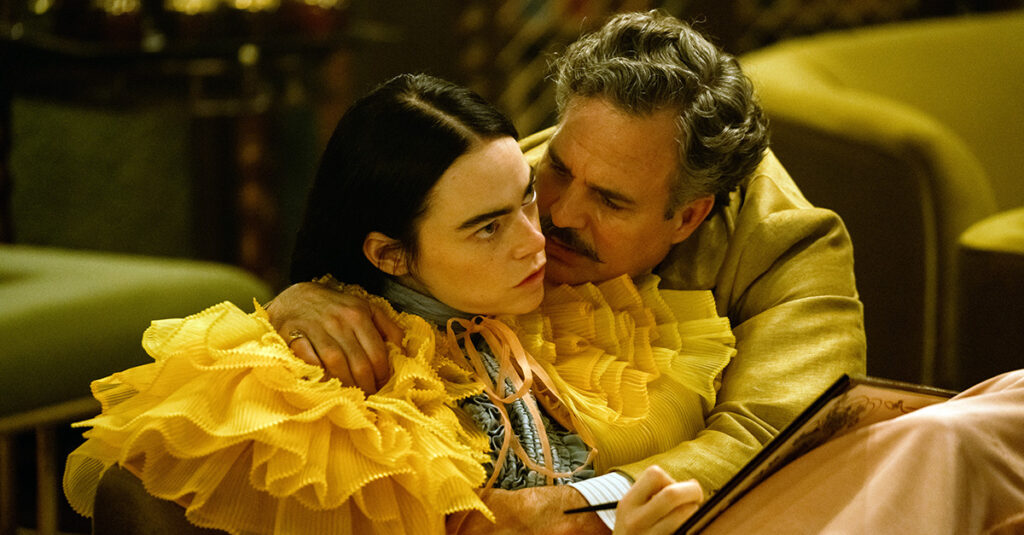
This relationship-conflict map applies to character pieces as well. In Poor Things, the conflict comes from Duncan constantly trying to control Bella, somebody who is fundamentally uncontrollable.
But both movies understand the same principle. Conflict pushes the second act forward.
We know Grace and Rocky cannot save the galaxy unless they learn to communicate. Therefore we are deeply invested in them learning how to communicate.
That’s where yesterday’s script, The Mold, really fell apart. The central conflict between Bri and Mac remained unclear for far too long. We know they used to be together, but we’re fuzzy on who broke up with who and why. We’re also unclear on the role of Bri’s ex and why he matters.
Once conflict within a character AND BETWEEN CHARACTERS becomes muddy, a screenplay can unravel surprisingly fast.
5) You’re probably putting in less effort than necessary
I’ve gotten to the point where, when I read a script, I can teleport into the writer’s mind and see what they were thinking.
A screenplay is not just a story. It’s a breadcrumb trail of the effort the writer put into it.
A lazy sentence tells me the writer doesn’t care about details. And if they don’t care about details at the sentence level, that laziness usually extends into the plotting and character work as well.
A generic scene halfway through the screenplay (some paint by numbers car chase or argument scene) tells me the writer is tiring out. They’re no longer pushing themselves creatively.
Writers think they’re getting away with this stuff.
They’re not.
Readers can feel when the effort level drops. And eventually that drop catches up to the screenplay.
One trick you can use is to rank every scene on a scale from 1 to 10. Be brutally honest. Are those late second act scenes scoring 7s and 8s? Or are they scoring 3s and 4s?
If the scenes are weak, figure out why.
Sometimes you were simply lazy in your scene choice. Other times the issue is structural. Maybe your protagonist no longer wants the goal badly enough. And once that desire weakens, every subsequent scene suffers.
6) Finishing the script is not the prize
I remember when I used to finish writing scripts and feel this huge sense of accomplishment.
But all I’d really accomplished was typing “The End.”
Anybody can reach The End weakly. Anybody can stumble there with half baked scenes and no structure.
The real accomplishment is getting there while giving the screenplay everything you possibly had.
Newer writers especially tend to celebrate completion instead of execution.
So let’s summarize.
Let your idea sit long enough to prove it has staying power. Make sure the concept has enough fuel to sustain an entire screenplay. Outline as much as possible, especially the second half. Build characters whose internal and external conflicts can generate scenes all the way through the ending. Be honest about your effort level. And don’t celebrate simply finishing the screenplay. Celebrate finishing it well.
A couple of final thoughts.
I understand that everybody has time limitations. We don’t all have endless months to work on a screenplay. I get that. All I’m asking is that you put forth the maximum amount of effort with the time you do have. If you can honestly say you did that, then you’ve done your job. After that, it’s up to the script gods.
And if you’re not an outline person, that’s okay. But then you need to become a draft demon. Your early drafts will be about discovery. Figuring out what the movie actually is. Then you refine and sharpen it through subsequent drafts.
But understand that you will probably need more drafts overall than someone who outlines. And if that process works better for you creatively, great. You just need to give yourself the time to do it.
What about you guys? Where do you think screenplays fall apart? And how do you fix the problem?
