
And in circumventing this mistake, does the film accidentally expose the most powerful screenwriting tip in all of history?
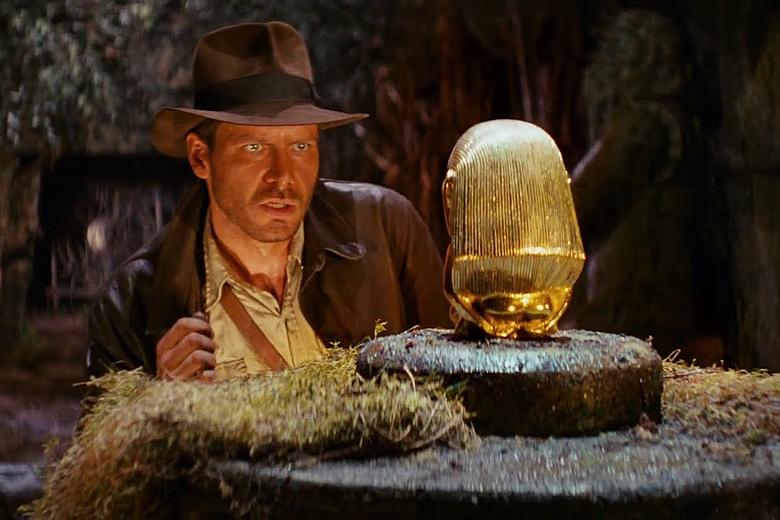
I want to talk about one of the most baffling screenwriting paradoxes of all time. I’m sure you’ve come across this analysis before. You may have found it amusing before hurrying on to the next doom-scroll app of your day. But it’s arguably the most confusing thing in all of blockbuster film history.
Raiders of the Lost Ark, a Top 5 movie franchise of all time, contains a screenplay in which its main character has no influence over the story whatsoever. You’re hearing that correctly. If Indiana Jones never got involved in the search for the Ark of the Covenant, everything the Nazis did would have been exactly the same.
OMG, she’s right!
I will never be able to watch Indian Jones again! 😂 pic.twitter.com/QI9bmlOKYx
— Vince Langman (@LangmanVince) February 25, 2026
At first, it’s kind of a funny revelation. You don’t really believe it. But then the more you look into it, you realize, “You know what? That’s actually true.” Then, if you’re a screenwriter, you have a bit of an existential crisis. If one of the best movies ever features a protagonist who has zero influence on the events of the story… what even is screenwriting, lol?
Make no mistake, this is a big deal. This is the kind of criticism that top-grade critics will drop on movies they hate: “The main character doesn’t even have any influence on the story!” And I’ve made similar criticisms about dozens of scripts I’ve reviewed over the years.
So how can this film not only overcome that critical error? But become one of the greatest movies ever? Before I answer that question, let me chat with you for a sec about why this topic caught my eye today.
I’ve been reading a lot of consultation scripts lately where main characters haven’t been active. Instead, they run the gamut from inactive to passive to neutral to mildly active.
Every one of these scripts feel lacking. Now, is the lack of an active protagonist the only reason? No. But it’s the main reason. And that’s because an active protagonist is like a starship shuttling thousands of people to a new planet. If it stops pushing forward, everyone in the ship dies.
One of the biggest hacks in all of screenwriting is a super-active protagonist. If you have a protagonist who is DESPERATE to achieve their goal and will do anything to achieve it, it is VERY DIFFICULT TO WRITE A BAD SCRIPT. Because the act of relentlessly pursuing a goal ensures that every single scene will have forward momentum. And not just a little forward momentum. A lot!
You see, where scripts tend to die is when forward momentum stops. I bet you’ve experienced it several times this month while watching something. You’ll be watching a movie or a show, and four scenes have gone by and you’re bored. You think, “What’s going on right now? Nobody’s doing anything.” Exactly. The second your main characters aren’t pursuing something aggressively, your script moves into a stasis state.
That doesn’t mean you’re dead in the water. But it means you’re treading water. And the longer you force the reader to tread with you, the closer they get to abandoning you and letting you die. Just like all those losers who trusted that stupid starship.
So, how does this relate to Raiders of the Lost Ark? Well, ironically, despite what I’ve just told you about the lack of impact Indiana Jones has on the plot of his film, Indiana Jones is one of the most active movie characters ever. The man is always moving forward. He is always attempting to achieve his next objective. And he’s always doing it obsessively.
Indiana may not actually have any influence on his own plot. But he’s sure as hell trying to! And that’s everything. This is exactly why having an active hero matters so much. We love active heroes so deeply, so instinctively, that our critical thinking just… shuts off. We’re too locked in to what they’re doing to stop and ask whether any of it actually matters.
You can see the power of active heroes in one of this year’s Oscar hopefuls, Marty Supreme. Marty Supreme has a very wonky plot. It ventures down a lot of weird alleys. But the glue that holds it all together is Marty’s relentless pursuit of his goal. He’s always pushing forward. He has to find a way to compete in the ping-pong championships so he can become champion. That’s all he cares about.
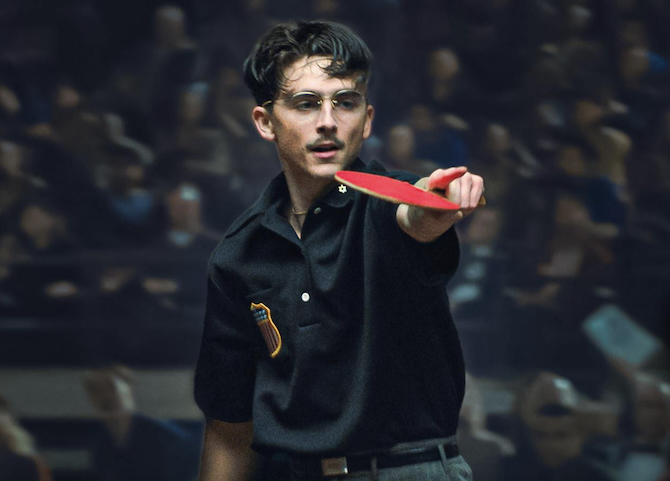
And because he cares about it so much and because he’s always pushing forward to achieve that goal, it smooths over a lot of the film’s less interesting subplots, such as getting a dog back. But even the whole thing with getting the dog back – THAT TOO RESULTS IN MARTY BEING SUPER ACTIVE.
Super active protagonists are the reason, by the way, that the Safdies are one of only a handful of exciting new directors in film. All of their movies contain extremely active protagonists. Look at Good Time. Look at Uncut Gems. Majorly active characters. I haven’t seen The Smashing Machine so I don’t know what’s going on with that character. But I know from the trailers that the movie looks slow and a little boring. So, I wouldn’t be surprised if the lack of an active protagonist is the main reason.
One of the more interesting examples of an active main character is The Big Lebowski. The Dude wants money for his rug that was ruined. This guy lives the most passive life ever. He just wants to be left alone or to hang out and chill. But the Coen Brothers knew that if they made The Dude passive IN THEIR PLOT, the movie would be cooked. So Jeffrey Lebowski becomes the most active passive character ever.
Something to keep in mind is that there are movies that don’t have that “adventure” blueprint. The characters are confined to one area. But that doesn’t mean you get left off the “active protagonist” hook. You still need an active character. And all that means is that, even if they’re stuck in a single spot, they STILL MUST WANT SOMETHING WITH ALL OF THEIR BEING. That’s what makes them active. It’s what’s going on INSIDE OF THEM. Not outside.

Look at The Housemaid. In that movie, Sydney Sweeney’s housemaid character’s only job is to clean the house and take care of the house duties. That is an inherently passive-to-neutral character type. However, the writer makes sure that Sweeney needs to keep this job more than anything. She will literally go back to prison if she is fired. This requires Sweeney to charge around with a fire under her ass and make sure that her employers are always happy. There is rarely a moment in that film where Sweeney is just relaxing.
Another example of this would be Bugonia. Bugonia is pretty much a contained thriller. A couple of guys kidnap the head of a company, are convinced she’s an alien princess, and try to get her to call off her alien species from taking over earth.
80% of the movie takes place in the house, a lot of it downstairs in the basement where the company head (Emma Stone) is being held. So, on the surface, it feels like a passive situation. But Jesse Plemons is DETERMINED to prove this woman is an alien and get her to call off her invasion. This keeps him very active. He’s always trying to move her situation forward.
I’m going to say it again. A super-active character is one of the biggest cheat codes in all of storytelling. And it pains me that I’ve now trained this into some AI writing program somewhere that’s scraping my site for this information. But now you know it too. So, start using it!
Oh, and the lesson to that whole “Indiana Jones doesn’t have any influence on the plot of Raiders of the Lost Ark” issue? It’s that an extremely active character has such a positive influence on an audience that you can actually write a plot that isn’t impacted by that character at all and the audience will still fall in love with your movie. Talk about a screenwriting tip for the ages.
If you’re interested in me consulting on your script and making it amazing, e-mail me at carsonreeves1@gmail.com!
