
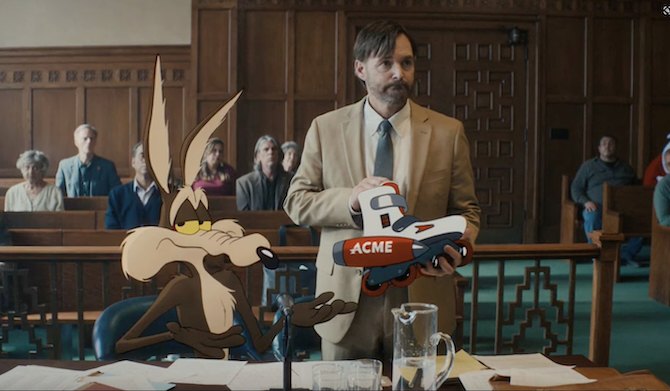
A few weeks ago, I was getting hammered in the comments for dissing Coyote vs. Acme’s box office performance. I’d pointed out (rightly I may add) that, after all the hoopla and grandstanding about how amazing this canceled movie was, that it only made 15 million bucks when it finally came out.
A bunch of you buried me for it. But I’ve been around Hollywood long enough to know that whenever somebody starts telling you that there’s this AMAZING movie that Hollywood refuses to release, or this AMAZING screenplay that nobody will make, that 99% of the time it’s complete and utter bullshit.
I know this because I’m the guy who went back and read all those “legendary” unproduced screenplays. And what I learned was that nearly all of them sucked! They weren’t these misunderstood works of genius. There were extremely problematic at worst, and average at best.
I’ve always maintained that if something is genuinely good, Hollywood will figure out a way to get it made or release it. Trust me. And Coyote vs. Acme proves my point. It did not languish in obscurity. Somebody bought it and distributed it.
Well, I finally watched it. And while I wouldn’t call the movie great, I have to admit that it may contain the single greatest adaptation idea for difficult material that I’ve ever come across. I’m serious. I was blown away by how clever the entry point into this story was.
Imagine walking into a Hollywood producer’s office and the producer says, “There’s this coyote. And he chases this bird.” Silence. Then, “Go!”
THAT’S THE PREMISE YOU’RE BEING ASKED TO BUILD A MOVIE OUT OF!
These cartoons were designed to be two or three-minute little stories where a coyote sets up some elaborate trap, the trap backfires, and that’s it. See you next week. It’s arguably the most two-dimensional premise in the history of storytelling.
But here’s where the genius comes in. Somebody realized that all those Acme products Wile E. Coyote uses, the rockets, the explosives, the catapults, the whatever-the-hell-else-he’s ordering, NEVER WORK. They always malfunction. So what if they were defective? And what if Wile E. Coyote decided to SUE Acme?
I mean, come on. That’s brilliant! All of a sudden, you’ve got a legal thriller. You’ve got a giant corporation. You’ve got a little guy fighting against the system. You’ve got a mystery surrounding why these products keep failing. You’ve got an actual STORY. I cannot remember the last time I saw somebody find such a clever way into material that seemed impossible to adapt.
Naturally, I wanted to know who the screenwriter was because I was ready to declare him a genius. Well, it turns out the original idea wasn’t the screenwriter’s. It came from a 1990 New Yorker humor piece by Ian Frazier called “Coyote v. Acme,” which imagined Wile E. Coyote taking legal action against the company responsible for all his defective equipment. So Frazier deserves the bulk of the credit here.
But then James Gunn got involved and he came up with the idea to create a buddy comedy with a lawyer. Then screenwriter Samy Burch fleshed the whole thing out into a feature length story.
And I loved what they did with the lawyer, played by Will Forte. He’s this classic, almost “Hero’s Journey” type, protagonist who doesn’t believe in himself. He’s a settler. He’s somebody who’s spent his life backing down, accepting less, never fighting for what he wants.
And now he’s paired with a coyote whose entire existence is built around NEVER GIVING UP. That’s a great character pairing! The whole thing is just really cleverly conceived.
BUT HOW DO YOU FIND THAT ANGLE?
Hollywood is constantly buying up stuff that nobody knows how to turn into a movie. Books. Comics. Board games. Toys. Newspaper articles. Some obscure property from 1974 that a producer remembers loving when he was eight years old. But then once they have the rights, they realize, “Oh shit. How do we actually turn this into a movie???”
That’s where you come in. Once you start selling scripts and getting hired for jobs, a lot of your career is going to consist of walking into rooms and pitching your take on material that doesn’t naturally lend itself to a movie.
And you’re going to be competing against a bunch of other writers who are trying to figure out the exact same thing. Which means your job is to come up with a better angle than everybody else’s.
One of the most famous adaptation examples of all time is Charlie Kaufman. Kaufman, who was hired to adapt Susan Orlean’s book, The Orchid Thief, which was about an orchid collector. And he couldn’t figure out how to turn it into a movie. So what did he do? He wrote a movie about a screenwriter named Charlie Kaufman who couldn’t figure out how to adapt The Orchid Thief! And that’s how we got Adaptation.
I mean, that’s one way to solve your adaptation problem. Unfortunately, most of us would get blacklisted if we tried that stunt.
But the larger point remains. All adaptation is is trying to find the most interesting way into a story. And here’s the part I want you guys to understand. We’re actually all adapting our own material. Even when you’re writing your own original screenplay.
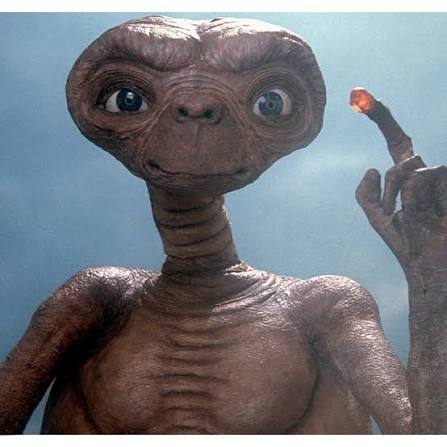
Let’s say you want to write a movie about an alien who shows up on Earth. Okay, great. But what movie are you going to make? Are you going to make E.T., where a little boy befriends the alien? Are you going to make Starman, where the alien takes the form of a woman’s dead husband and we get this romantic road movie? Are you going to make The Thing, where the alien can imitate anybody and suddenly you’ve got this terrifying horror mystery where nobody trusts anybody? Or maybe you’re going to make The Man Who Fell to Earth, where the alien becomes a wealthy businessman. Or Under the Skin, where the alien disguises itself as a beautiful woman and starts luring men to their deaths. Look at how DIFFERENT all those movies are. And yet they all started with essentially the same basic idea. One alien shows up on Earth. There are a MILLION ways into that idea. And your job as a screenwriter is to find the most interesting one.
Which brings me to a movie I was REALLY looking forward to.
ALI G: WHO IZ I?
I told you guys how excited I was to finally get an Ali G movie. I used to LOVE Ali G. Especially during those early internet days when people would post clips of him interviewing politicians and asking them the stupidest questions imaginable. Easily some of the funniest stuff I’ve ever seen.
I always found it strange that Sacha Baron Cohen chose Borat as his big breakout movie instead of Ali G. I always thought Ali G was funnier.
So when I heard we were finally getting an Ali G movie, I was pumped. So I fired the thing up this weekend and… Oh boy.
Oh my.
Oh heavens to Betsy.
The film is a complete and utter failure.
But it’s not all bad because watching this movie proves my very point! Sacha Baron Cohen chose the wrong way into this material.

He took Ali G, this wild, wacky, two-dimensional character whose entire appeal is that he says the most outrageous shit off the cuff, and turned him into a traditional, character-driven protagonist.
You know, the kind of character who has an internal struggle and needs to go on some big emotional journey. So now Ali G is about to become a father. And he’s got to figure out if he’s ready to be a father. And what kind of father he’s going to be. And whether he can handle the responsibility of raising a child. And I’m sitting there thinking…
WHAT THE FUCK WERE YOU THINKING????
This is ALI G! This is the guy who asks Buzz Aldrin if we’ll ever walk on the moon. And now, two minutes later, we’re supposed to sit there and watch him have some thoughtful, sincere moment about the responsibilities of fatherhood?? It doesn’t fit! It doesn’t fit!!!
What’s interesting about this is that, technically, Sacha Baron Cohen is ‘doing the right screenwriting thing.’ Give your character an internal struggle. Give him an emotional journey. Make him grow. Make him confront his fears. I tell you guys to do all the time!
But here’s the problem. Not every character is designed for that.
Ali G isn’t an inner-journey character. He’s an absurd character. His entire appeal is that he says the dumbest things imaginable to people who don’t know how to respond.
You know who understood this? Larry Charles. Charles directed Borat. And what I loved about Borat was that it was just wall-to-wall hijinks. Yes, there was a vague story connecting everything. But the story was there to facilitate the comedy. It wasn’t there to turn Borat into some deeply introspective character who spends half the movie contemplating his emotional shortcomings.
This actually brings us back to something else Coyote vs. Acme got right. They could’ve made Wile E. Coyote talk. Think about how tempting that must’ve been. You’ve got this lawyer who’s going to spend the entire movie with the coyote. Wouldn’t it be easier if they could talk to each other? I’m sure people at the studio pushed HARD for that.
But they didn’t do it. Because Wile E. Coyote DOESN’T TALK. That’s part of what makes him Wile E. Coyote! The second you give him a voice and have him start explaining his feelings, you change the character.
Meanwhile, Sacha Baron Cohen, who directed the new Ali G movie himself, decided to give Ali G this whole fatherhood journey. And point blank it ruined the film. There are still a few funny moments (The therapist character having sex with Ali G in order to steal his DNA – I couldn’t believe what I was watching but I was still laughing my ass off) but then we’d have a 10 minute scene of Ali G in a cab looking forlorn as he contemplated fatherhood.
Which is why I keep coming back to this idea that the most important decision you make as a screenwriter happens BEFORE you write the script. Are you even writing the right version of your movie? Because you can follow every screenwriting rule in the book but if you’re writing the wrong movie, it won’t matter.
THE BOX OFFICE!
Godzilla Minus Zero opened at number one, with an estimated $31 million weekend. Which is a remarkable start for a foreign langue movie. And I’m sure everybody is going to tell me how amazing it is. Just like everybody told me how amazing Godzilla Minus One was. You know what?
NOT GUNNA FALL FOR IT TWICE.
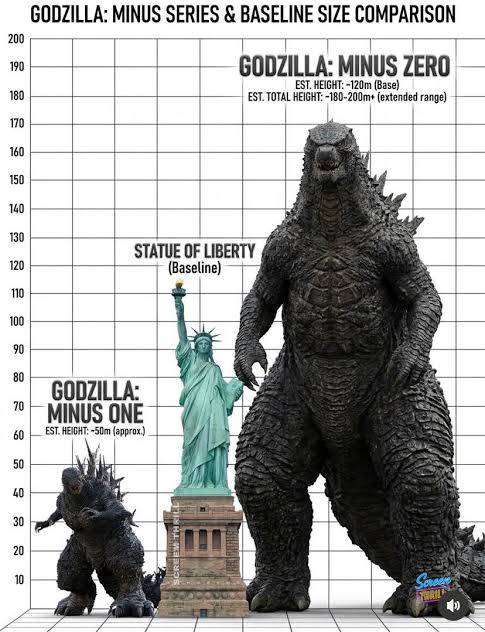 He’s even bigger this time around!
First of all, can we talk about these titles? Godzilla Minus One. Godzilla Minus Zero. WHAT ON GOD’S GREEN EARTH DOES THAT MEAN??? Why are we doing math in our titles????? I know somebody’s going to jump into the comments and explain it to me. I DON’T CARE. You cannot change my mind that these are some of the worst titles in movie history.
WORDS MATTER. We’re writers. And when you give me a title with integers in it, I’m out.
I ended up watching the first Godzilla cause of the great reviews and oh my God. That had to be one of the most boring movies I’ve ever seen. There were these endless stretches of basic, entry-level drama where I was sitting there waiting for Godzilla to show up. And waiting. And waiting.
“But Carson, the human drama is what makes the monster stuff meaningful!” Okay. Okay. But then here’s an idea. MAKE THE HUMAN DRAMA INTERESTING.
Just a thought.
Which brings me to the biggest cheat code in Hollywood: Big monsters sell tickets. If you’re struggling to come up with a movie idea that Hollywood might be interested in, put a giant monster in it and I GUARANTEE your chances of selling the script just went up 100 fold. I’m joking but I’m kinda not.
Now, to be fair, I haven’t seen Minus Zero. But that’s only because I’m still recovering from Long Boredom which I contracted from the first one.
WILD HORSE NINE
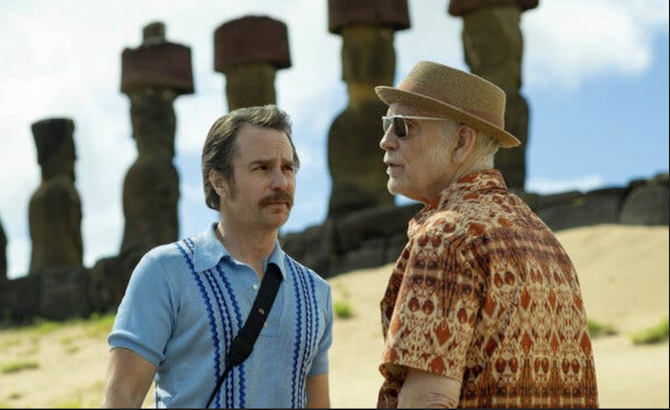
And finally, we have Wild Horse Nine. Apparently numbers are the new letters in titles? I don’t know what to say about this movie other than that it looks like somebody found a time machine, traveled back to 2004, grabbed a couple of random film reels, and brought them back to 2026. I mean, Sam Rockwell and John Malkovich? I feel like I should be watching the trailer on QuickTime.
And the funny thing is, it’s getting crazy good reviews! But let’s be real here. The reason this movie has great reviews is because the people seeing it are ALL THE SAME PEOPLE WHO WERE REVIEWING FILMS IN 2004.
I don’t think Diversity Debbie’s Cinema Corner is rushing out to see this flick. If she and her movie buddy critics were, this RT score would be a lottttttt lower I promise you that.
Anyway, that’s it for this week’s movie-watching experiences. If there’s one thing I want you guys to take away from today, it’s don’t assume that the first version of the story you come up with is the right one. There may be a much better movie hiding inside that same concept, and it’s your job to find it.
Keep writing, people!
