
It’s pretty rare that I have screenwriting revelations these days. I’ve crawled through every little nook and cranny of the craft and discovered almost everything there is to discover.
But the other day, I had a pretty big wowza moment.
Unfortunately, it only applies to a very specific genre. But my rule here on Scriptshadow is that if something excites me about the craft, I’m going to talk about it.
So, here’s what happened. Over the past few weeks, I’ve had several script consultations that were serial killer scripts. Serial killer scripts are one of the most reliable genres in Hollywood. You sickos who go to these things love serial killers. And, therefore, Hollywood loves serial killers.
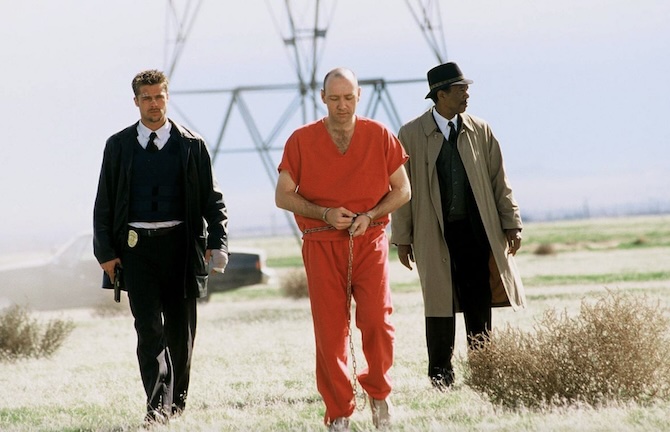
But I feel I can make a legitimate argument that there hasn’t been a great serial killer movie in 30 years. That’s when Seven came out (1995).
Now, before everybody starts firing at me, yes, there have been decent serial killer movies. Zodiac. American Psycho. Prisoners. Longlegs. But none of them became the defining serial killer movie of their generation the way Silence of the Lambs and Seven did. For a genre this popular, that’s weird. How can you not create another classic serial killer movie in thirty years???
And it was through reading these consultation scripts that I finally figured out what the problem was.
One thing I always try to do in consultations is provide examples from other movies. If a writer is struggling with a specific script problem, I’ll point to another movie that solved that problem well. But whenever I read serial killer scripts, I run into the same issue. I go searching for recent examples and come up empty. It’s Lambs. It’s Seven. And then it’s everything else.
But as I started comparing these scripts, I noticed something interesting. The writers weren’t obsessed with the investigation. They were obsessed with the killer.
Every script had pages and pages dedicated to the killer’s psychology, philosophy, rituals, childhood trauma, worldview, elaborate murder methods. Meanwhile, the investigation itself was always undercooked or meandering. The clues were generic. The detective work was repetitive. The second act limped along. And after seeing this over and over again, I started asking myself the question: Where did writers learn this?
I’ll tell you exactly where.
Silence of the Lambs broke the serial killer genre.
Hear me out.
The actual serial killer in Silence of the Lambs is Buffalo Bill. He’s the killer Clarice is trying to find. The movie is fundamentally an investigation. Clarice is racing against time to locate Buffalo Bill before he kills his latest victim. That’s what traditional serial killer stories are built around. The investigation. The search. The clues. The race to stop the next murder.
But Lambs introduced something entirely new in Hannibal Lecter. What made serial killer Lecter so brilliant is that he wasn’t the villain of the story. He was a helper. That setup allowed Thomas Harris to create one of the most memorable characters ever put on screen without taking attention away from the investigation itself. Clarice is still pursuing Buffalo Bill. The story is still moving forward. The investigation remains the engine.
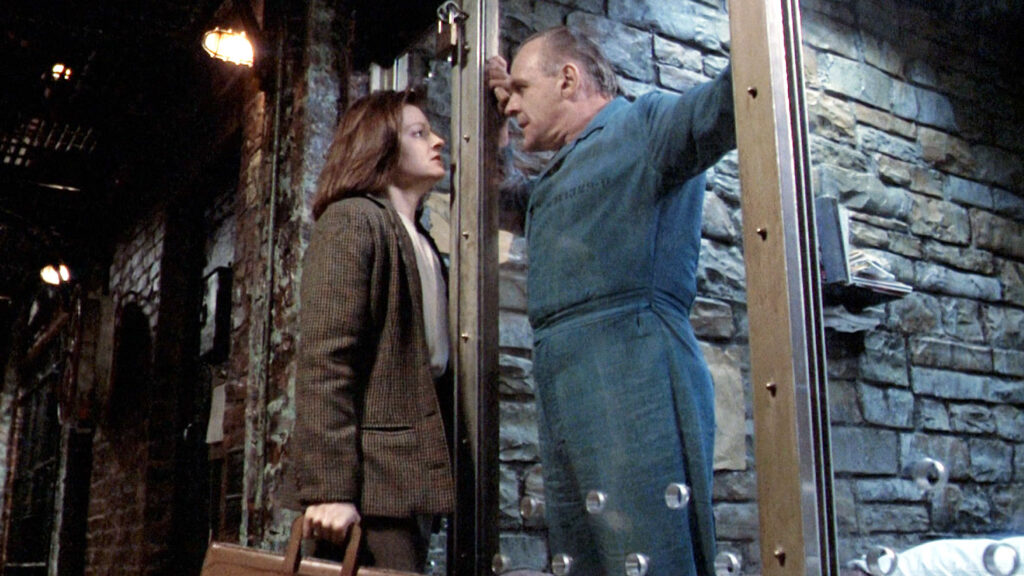
The problem is that everyone who came after learned the wrong lesson. They looked at Silence of the Lambs and concluded that the reason it worked was Hannibal Lecter. So they started creating their own Hannibal Lecters. The goal was no longer to write a great investigation. It was to create a killer so eccentric, so memorable, and so actor-friendly, that some movie star would want to play him and chase an Oscar.
As a result, the investigation became secondary. The detective became secondary. The story became secondary. Everything revolved around the killer.
Once I noticed this, I couldn’t unsee it. Every serial killer script started looking the same. The writer had spent months constructing this elaborate killer. But when I got to page 50 and had to use crazy glue to keep my eyelids open, I would later ask the writer, “Okay but where’s the cool mysterious unpredictable constantly-evolving-in-interesting-ways investigation?” The response was always some form of, “Uhhhhhhhhh…”
Which is why so many serial killer scripts die in the second act.
Because the second act is the investigation.
That’s the movie.
So, if it’s not working, nothing’s working.
Which is why Seven is so fascinating.
Andrew Kevin Walker and David Fincher somehow avoided this trap. Seven isn’t interested in creating a flashy serial killer showcase. John Doe barely exists for most of the movie. The focus is on Somerset and Mills. The focus is on the investigation. The focus is on uncovering the next horrifying piece of the puzzle. The investigation becomes addictive.
Then, when John Doe finally arrives, he lands with maximum impact because the movie hasn’t spent two hours trying to convince us how interesting he is.
I truly believe this is why the serial killer genre has struggled for the last three decades. Writers think they’re writing killer movies. They’re actually writing investigation movies.
If your investigation is weak, it doesn’t matter how many weird quirks your killer has. It doesn’t matter how disturbing his philosophy is. It doesn’t matter how many hours you spent coming up with a cool nickname for him. The movie is still going to stall because we don’t spend two hours watching a serial killer movie to admire the killer. We spend two hours watching because we want to know what happens next.
And “what happens next” comes from the investigation.
So if I were writing a serial killer script today, I wouldn’t spend six months creating a killer. I’d spend six months creating the greatest investigation I could imagine. That’s the lesson Seven understood. And it’s the lesson the overwhelming majority of serial killer writers since then have forgotten.
