
It’s Thanksgiving Week! Gobble gobble
So it shouldn’t be a surprise that Hunger Games: Sunrise on the Reaping did so well ($120 mil opening weekend). I pointed it out to you guys in the newsletter. I said Dune looks like a movie designed to inspire suicide. Sunrise looks like an, at times harrowing, at times exciting, emotional rollercoaster. That’s the most reliable type of movie to get people into the theater. And, also, Jennifer Lawrence 2.0 makes a cameo. :)
We had our own Sunrise on the Reaping here at Scriptshadow over the weekend where 10 scripts took each other on in the Better Than The Black List Showdown. Only one of those scripts received enough votes to be the official Scriptshadow representative against the top Black List script and that script is… Vehicular, from Carol Clippinger!
Title: Vehicular
Genre: Thriller
Logline: Shaken after being acquitted of vehicular manslaughter, a bombshell movie star seeks peace at her remote Tahoe vacation home where she hopes to salvage her career with a few puff piece interviews, unaware that her new, decades-younger assistant is related to one of the crash victims and is out for revenge.
As soon as the Black List comes out, which will probably be Monday December 7th, I will review the top script on the list. And then the next day, I’ll review Vehicular. Carol, the hopes and dreams of many a Scriptshadow reader now rest on your shoulders. No pressure! :)
So, over the weekend, I stumbled upon one of those classic movie photos. You know the one. Bo Derek running down the beach in the Dudley Moore movie, 10. It’s an iconic image. Everybody’s seen it. Even if you’ve never seen the movie, you recognize the shot.
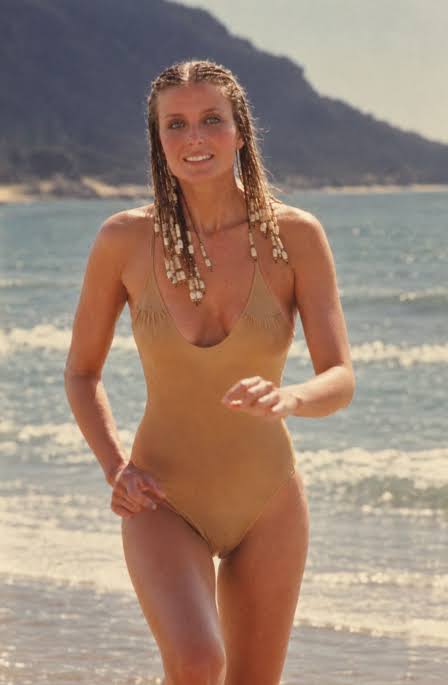
And I said, you know what? That sounds like a fun movie. I’m gonna watch it. I’d seen the film 20 or so years ago, but I didn’t remember much about it. So I thought, let’s have some fun and see what this thing is all about.
So I booted it up.
The movie is about Dudley Moore’s character, George, a Hollywood composer who’s just turned 42 and is going through a classic midlife crisis.
He’s married to Julie Andrews’ character, Samantha, and while there’s nothing particularly wrong with their marriage, they’ve been together for so long that there isn’t a lot of spark left. As a result, he spends the days ruminating on whether this is it, that there is no more excitement in his life, particularly when it comes to women.
This is actually a strong setup for a character-driven movie. Because it’s all about character transformation. You’ve got a clear character flaw: A man feels lost in life, unsure whether there’s anything exciting left to look forward to. Which is what all good movies are about – characters pushing up against their flaws, recognizing those flaws, and either succumbing to them and never changing, or overcoming them and becoming better people.
And I like this flaw. I think writers work too hard to create unique flaws for their characters. But when you’re talking about flaws, you actually want to go with the cliche ones. Because those are the most universal flaws. Which means those are the flaws the largest number of people are going to identify with.
If your character’s flaw is that they’re afraid to ride in helicopters, that may be unique, but it’s not a flaw a ton of people can identify with, and therefore, they’re not going to feel any emotional lift in the climax of your movie when your hero is finally able to get in that helicopter and take a 10 minute trip around the city.
So I started watching this movie, and almost immediately, I got a sense that I was dealing with a bad writer. Now, I understand that this movie came out in 1979. And screenplays didn’t move as fast back then. But even with that understanding, this script was meandering as shit.
It sets up exactly what I just said. George is going through a midlife crisis. But then the script keeps telling us that. Again. And again. And again. Every scene is repetitive. He sees a young woman jogging on the beach. He sees two young women jogging in the street. He talks to his neighbor friend. Who talks to him about life. Then he looks through his telescope and we get this seven-minute scene where he’s spying on an older neighbor who has younger women over. He talks to his neighbor again, who talks to him about life. And scenes like this go on and on and on.
I immediately began to understand why everybody knows this iconic image of Bo Derek running down the beach, but absolutely nobody remembers anything about this movie. It’s because the script is garbage.
Look, I can understand a script that starts to meander in the second act. That’s something all writers struggle with. Even some classic movies have 10 or so minutes of second act meandering. But when you’re meandering FROM THE VERY FIRST SCENE?? Boy, is your script in trouble.
However, the moment I knew this script was cooked was a scene between George and Samantha. It happens about 30 minutes into the movie. The two are in their bedroom, getting ready for bed, when Samantha brings up something that happened earlier. She overheard George refer to a woman as a “broad.” And she didn’t like that.
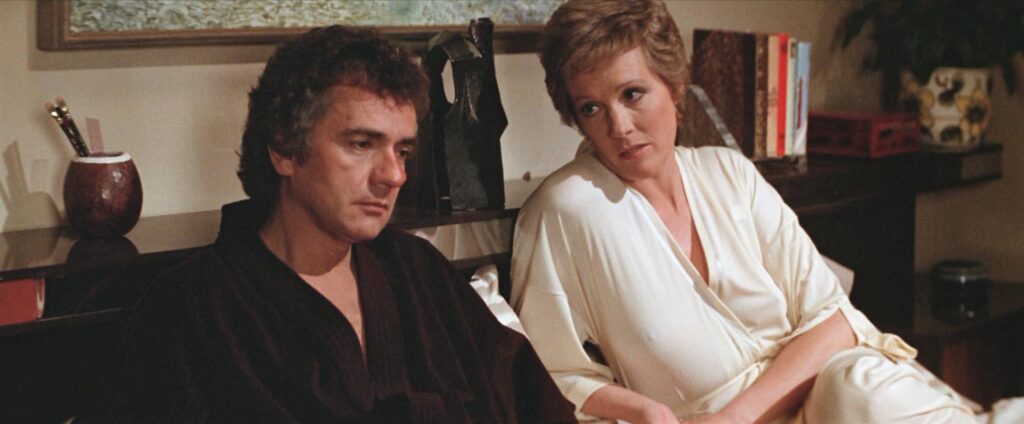
So she proceeds to tell him she doesn’t like that word, how she thinks it’s demeaning to women. And he says, well, I don’t see anything wrong with it. And she repeats that she doesn’t like that word. And he says nothing. And she says she really doesn’t like that word. And he says I don’t see anything wrong with it. And she says she really really doesn’t like that word.
This goes on…
FOR SEVEN MINUTES!!!
It’s a seven-minute scene of two characters debating whether the term “broad” is appropriate to use.
So how was it I knew the movie was cooked at that moment? Because the scene has absolutely nothing to do with pushing the story forward. It’s a dialogue scene that, even in the most generous interpretation, has barely anything to do with the story.
I suppose you could make a half-baked argument that the scene is meant to give reason for George to check out on the marriage and pursue his perfect “10,” aka Bo Derek. But you didn’t need the scene to establish that. You’d already established it through several other scenes, particularly during the birthday party she threw for him, which clearly shows he’s not committed to this marriage anymore.
So what happened here? What was the big mistake this writer made? Here it is. And it’s something you’ve definitely done yourself. The only reason the scene was in the movie was because the writer wanted it to be. Not because it was essential to the story. Not because it actually made the movie better. But because the writer wanted that scene in the movie. And the reason he probably wanted this specific scene in his movie is because he’d had the exact same conversation with someone in his own life and he said, “That was an interesting conversation. I’m going to put that in a screenplay.”
Okay. BUT WHAT DOES IT HAVE TO DO WITH YOUR MOVIE????
This got me thinking about something. Sometimes longer dialogue-driven scenes in scripts, even ones that aren’t necessary for the story, work. So, what’s the difference? How do you know if you’ve written a “don’t say broad” dialogue scene, that just caused the reader to send your script to the virtual trash, or an insightful memorable dialogue scene?
The answer is: THEMATIC RELEVANCE.
The problem with the “don’t say broad” scene wasn’t just that it didn’t move the plot forward. It was that, thematically, it had nothing to do with the movie. If their conversation had been tied to George’s flaw in some way, at least it would’ve been thematically relevant.
Maybe they have a conversation about whether people can ever really be happy with what they have. Or whether the excitement you feel at the beginning of a relationship is something you can ever get back. Now we’re talking about something that connects to what George is going through. And I know what some of you are going to say: “That’s on the nose, Carson!” Well I’m assuming the writer has the command of craft to be able to write those scenes off the nose. For example, when they discuss whether you can ever get that “beginning relationship” excitement back, maybe they’re talking about a couple who lives down the way. So they’re talking about the other couple, but what they’re really talking about is themselves.
The point is, the only way that long dialogue scenes that don’t push the story forward in your script can work is if they’re exploring the central conflict of the movie.
That’s the lesson.
And this scene was especially insidious because it was THEMATICALLY ADJACENT. You could almost convince yourself that it belonged. The movie is about this married guy having a midlife crisis who becomes obsessed with a younger woman. And here’s his wife talking about how this word is demeaning to women.
Hey, they’re both about women! It connects!
Except it doesn’t.
The thematic thread has to be more specific than that. You can’t write a movie about greed, then insert a 7-minute scene where two guys discuss why George Washington appears on the 1 dollar bill and rationalize: “Well, both subjects are about money.”
No! If you’re writing a movie about greed, give me a scene where two guys are having dinner. One orders a burger. The other orders a steak. When the food arrives, the burger guy immediately regrets his decision. He wants the steak. So his friend offers to trade. Great! Problem solved. Except just as he’s about to eat his steak, the guy notices another table getting lobster. And suddenly, he wants that instead.
That’s a scene about greed. And here’s the crazy part. You could actually INSERT THE DIALOGUE ABOUT GEORGE WASHINGTON BEING ON THE ONE DOLLAR BILL here, and now it works! Cause the scene itself is thematically exploring greed. It doesn’t even matter what the characters are talking about. That’s how you sneak stupid “don’t say broad” dialoge into your script if you absolutely must.
But to stop your entire movie for a seven minute scene about demeaning words that, if you eliminated it, your movie would be THE EXACT SAME MOVIE but seven minutes faster?? That’s one of the bigger screenwriting mistakes you can make.
Anyway, I was so curious about this writer and what his career looked like that I decided to do a little research afterwards.
It turns out the writer-director was a guy named Blake Edwards. And he directed one really standout movie, Breakfast at Tiffany’s. After 10, though, he never wrote or directed anything of significance again. He directed The Pink Panther and the Pink Panther sequels, but obviously those were comedic movies that weren’t significant on a cinematic level. That’d be like if David Fincher made The Hangover 4. People wouldn’t give him props for that.
But the thing I found most interesting about this Blake Edwards guy was that Julie Andrews was his real-life wife!
Which, in retrospect, makes SO MUCH MORE SENSE. Cause it means that bedroom scene was A) clearly a conversation these two had had themselves, and B) that scene is all about Julie Andrews (and nothing about the main character, George). Of course he gave her a seven minute pointless scene where she got 90% of the dialogue.
Some other interesting things I learned about the movie: Jack Lemmon was Edwards’ first choice for the lead, but he wasn’t interested. Then George Segal was cast, and he ended up leaving right before filming started. Why? Because he was pissed about how Julie Andrews’ character was getting more and more screen time.
Then Dudley Moore came in and replaced Segal at the last minute.
But was I right in, after watching the “broad” scene, declaring this writer incapable of writing a good movie? Edwards would go on to make something called S.O.B. in 1981. Victor/Victoria in 1982. Blind Date with Bruce Willis in 1987. And then some random movie called Skin Deep in 1989. You decide.
I’m actually glad I watched this film again. Had I not, I would not have learned that lesson about thematic relevance. It is okay to write a dialogue scene that doesn’t move the plot forward in your script ONLY IF IT HAS THEMATIC RELEVANCE. If you don’t have that? If you’re writing a dialogue scene because you and a buddy had that exact conversation and you found it so amusing that you wanted to include it in a screenplay? I pray that you think twice about including it. It may very well be the choice that destroys your script.
