
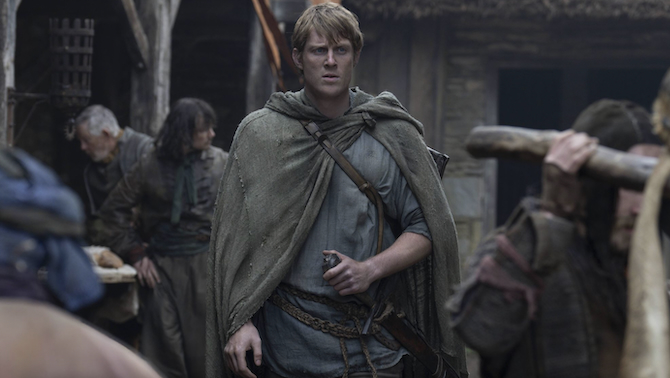
Does anybody really know why Scream 7 made 60 million bucks? The answer is no. So instead of focusing on that, I’m going to focus on the success of a certain underdog show, Knight of the Seven Kingdoms. Some people are saying this is already the show of the year. Cancel all voting. The decision has been made. With scores like 9.5 and 9.6 for episodes on IMDB, it’s a hard case to argue against.
A few weeks ago, I talked about how risky this show was. It took this giant franchise and eliminated almost all of its giant variables. You’re never going to see a dragon on Knight of the Seven Kingdoms. What’s funny about the success of the show is that this is exactly what the people at Lucasfilm originally said they were going to do with Star Wars on TV. They could finally tell these small intimate character-driven stories. And then they just completely freaked out and went in the opposite direction. Meanwhile, the entire budget of Knight could fit into the cost of one episode of Andor.
Why is this relevant? The answer to that is something it’s taken me 30 something years to figure out. Which is that franchises are built on characters, not on spectacle. And the mistake that 99% of them make is they never restock the character cabinet. Don’t get me wrong. They try. But they try in the same way that I try and cook fish for dinner. I put in solid effort. But am I determined to make the best fish dinner ever? No. And when it comes to billion dollar franchises, you have to try and create the best characters ever. That’s not an exaggeration. Great characters are part and parcel with the best franchises of all time.
This is the first time in a long time that I’ve seen a big franchise truly say “screw everything else. we’re going to build a story on character alone.” But that approach is a blessing in disguise. Because when you know that no spectacle is coming to save you, you have no choice but to build characters who can carry a show all on their own. It really makes you think: What kind of characters do audiences truly fall in love with?
And the most time-tested archetype is the underdog. So Knight of the Seven Kingdoms built two of them. The giant teddy bear of a man, Dunk, and the defiant undersized boy, Egg.
A common question I ask writers in my screenplay consultations is: Would we still want to watch your protagonist even if you stripped away this story that was happening around him? And, with these two, the answer is a resounding yes. The world kicks them around so much that we’re determined to see them overcome that adversity.
This is why I think, if Lucasfilm were smart, they’d hire twenty writers, shut down for two years, and come up with 200 characters. Really draw out who these characters are, what makes them likable or interesting, what flaws are holding them back. And then, at the end of the process, vote on the Top 10. I GUARANTEE YOU if they did that, they’d come up with characters ten times as good as any characters they’ve created in the last decade.
Cause Lucasfilm has lost sight of the fact that Star Wars was not built on spectacle. It was built on character. And until they refill the character coffers, they’re deluding themselves that they’re going to make another good Star Wars movie.
Getting back to Knight of the Seven Kingdoms, I suggest everybody here watch it. It’s only 6 episodes long. Which is another great creative choice the show made. It knew how long its story was and wasn’t going to artificially stretch it out and dilute things for more episodes (cough cough, Andor).
But what you’re watching the show for is to get to those final two episodes. Cause the final two episodes are really special, each in their own way. Unfortunately, there’s no way around giving you these screenwriting tips without discussing the specifics of the episodes. So major spoilers follow.
In the 4th episode, Dunk beats up one of the members of royalty, I think a Targaryen (I’m not a Game of Thrones nerd so bear with me). So he’s slotted to be executed. However, he can challenge the guy to a duel, which he does. But the Targaryen kid he attacked is a wuss, so he invokes the Rule of 7. What that means is that the kid and six other Targaryens will take on Dunk and six other fighters he recruits.
The situation is a joke. The Targaryens are far superior fighters, of course. So destruction is a formality. But Dunk isn’t a guy who gives up (yet another likable trait about him) and he goes around town, trying to recruit fighters. The writing cleverly pays off many of the people Dunk met along his journey since the first episode, and he’s able to get five other fighters together.
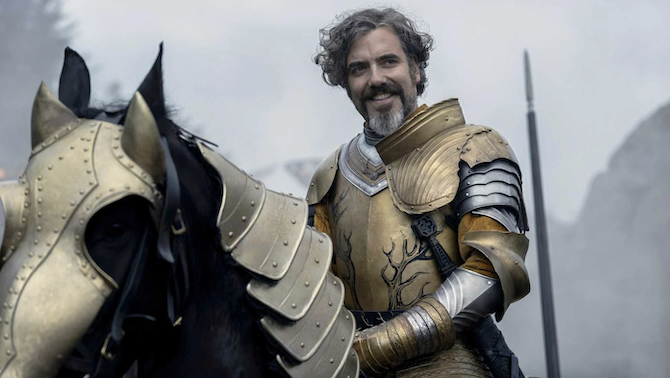
Unfortunately, the rules state that you must have seven fighters. Any less and you forfeit. So, here’s where the major screenwriting lessons begin. We’re on the day of the fight. We’ve reached the battlefield. Dunk has minutes left to somehow find another fighter.
So he makes a plea to the galley. In a Braveheart-like speech, he begs someone to be brave and join him. And after this emotional speech, this giant man stands up. Dunk’s plea actually worked. He’s got his seventh guy. And then this giant man lets out a giant fart. The whole galley laughs. The man was fucking with him. Dunk will have to forfeit.
What the writers do so well here is they make you believe that our hero is safe, that he’s found his solution. And then they rip that solution away from us. And what we feel is, “Oh my god, what now?” I cannot emphasize how powerful that question is. When you have a reader asking, “Oh my god, what now?” They genuinely have no idea how your hero is going to survive. That’s storytelling gold right there. That’s when you have the reader in the palm of your hand.
But it gets better.
One of Dunk’s fighters shows up and he’s acting strange. As he’s getting his battle armor prepared, Dunk asks him a question about how he’s going to fight. And the guy says, ‘that’s not relevant anymore.’ And then he takes his horse to the other side of the battlefield. He’s switched sides to the Targaryens!
This is true excellence in writing.
“Oh my god, what now?” has just turned into “Holy shit, how the fuck is he going to get out of this??”
So many writers are TERRIFIED of doing this because it means extra work. They’re already unsure of how they’re going to solve the “one knight down” problem. Now they’ve got to find TWO KNIGHTS in five minutes! Writers don’t want to do all that work. So they never create that level of doubt, despite the fact that that level of doubt turns drama into super-drama.
But it gets better.
I don’t want to make this post 5000 words long so we’ll jump ahead. Against all odds, Dunk is able to get his two extra knights.
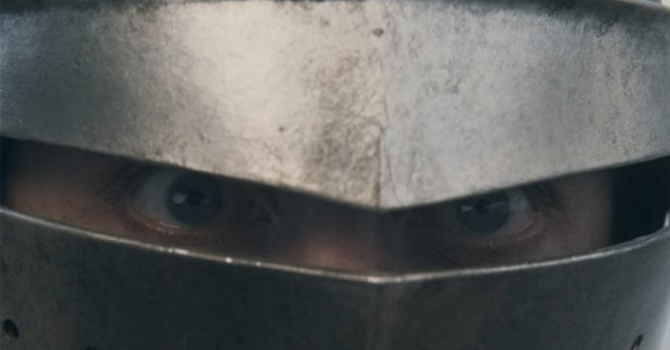
So, when the battle starts, the very first thing that happens is Dunk gets slammed off his horse. I mean he gets obliterated. The man doesn’t even get in one good swing. And then, as he’s stumbling to get up, he gets whacked in his helmet by a mace, tumbling to the ground again. And then he gets hit again. And then he gets hit again. AND THEN HE GETS HIT AGAIN.
Every time he’s hit, he becomes more and more injured. More unable to move.
And now we’ve taken “Holy shit, how the fuck is he going to get out of this??” and turned it into, “Holy Christ, this man is done for, there is no way in any scenario even with plot armor that he can get out of this.”
Keep in mind, I don’t know anything about the actual book covering these characters so I don’t know if Dunk dies in the book. I was genuinely convinced he was toast. Cause there was absolutely nothing he was doing that indicated he could survive.
But it gets better.
Dunk finally stumbles into a showdown with the Targaryen kid. And this kid just wallops him. He stabs him in the leg. He stabs him in the stomach. He stabs him in the eye. If Dunk’s situation was abysmal before? It had now turned calamitous.
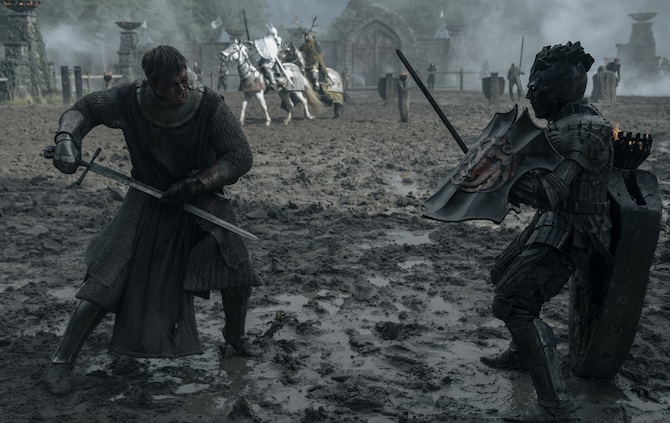
I’ve never been so sure that someone was a goner.
And again: THAT IS STORYTELLING NIRVANA. It is the place where you most want your reader – convinced that there is no way out.
The crazy thing is, the writers add SIX TO SEVEN more moments that make Dunk’s situation EVEN WORSE. So it keeps getting worse for him. I haven’t seen a writer create that level of uncertainty for the hero since Osculum Infame, which is why I fell in love with that script.
Since there’s no way for me to cover the next screenwriting tip without spoiling the episode’s ending, I’ll just say that, against all odds, somehow, Dunk succeeds. But like any well-written story, there are scars that will live on forever in his life. Good people in the seven die. It’s not all ponies and roses by any means.
It’s a great example of how to push your hero to the limit and convince the reader that they won’t survive, so that when they finally do, it’s the best feeling in the world.
Look man, there aren’t many movies or shows these days that can truly make me feel something. Only because whenever I read a script, I’m always aware of the screenwriting matrix as I’m reading. I know what the writer is doing at all times and am judging whether they’re succeeding or failing.
But this battle? I was completely and utterly lost inside of it. I was so worried for Dunk and convinced he was toast. I was just hoping he somehow someway would find a way to survive.
Okay, moving on to the final episode. I’ve never seen a final episode like this! It was short. It had almost zero story to it. It only existed to wrap things up because ending the show after the Rule of 7 battle would’ve been too abrupt.
As a result, I’m watching this final episode with a lot of curiosity. Basically, Dunk just goes around and says bye and thank you to everyone he met on his journey. I was trying to identify some sort of structure that was holding the episode together.
And then I finally realized what the episode was about. It was about: Are Dunk and Egg going to end up together or is this it for them? It’s a powerful question. But there’s no doubt that it’s a tiny story engine to build your season finale around. I would go so far as to say, this is the tiniest story engine I’ve ever seen for a season finale.
But then it clicked. This was a show built on character, always had been, and so of course it ended on character. What’s remarkable is that it pulled that off inside a franchise the size of Game of Thrones, where audiences show up expecting spectacle, shock, something enormous. And yet the finale asked nothing more than a simple question about who these two people are to each other, and it was enough. More than enough. That only works if you’ve done the foundational work first, if you’ve built characters so vivid and so specific that the audience is genuinely invested in the answer. Do that well enough, and you can get away with the impossible.
Did you guys watch Knight of the Seven Kingdoms? What did you think?
