
Understanding this one TV writing trick gives you a gigantic advantage in feature writing
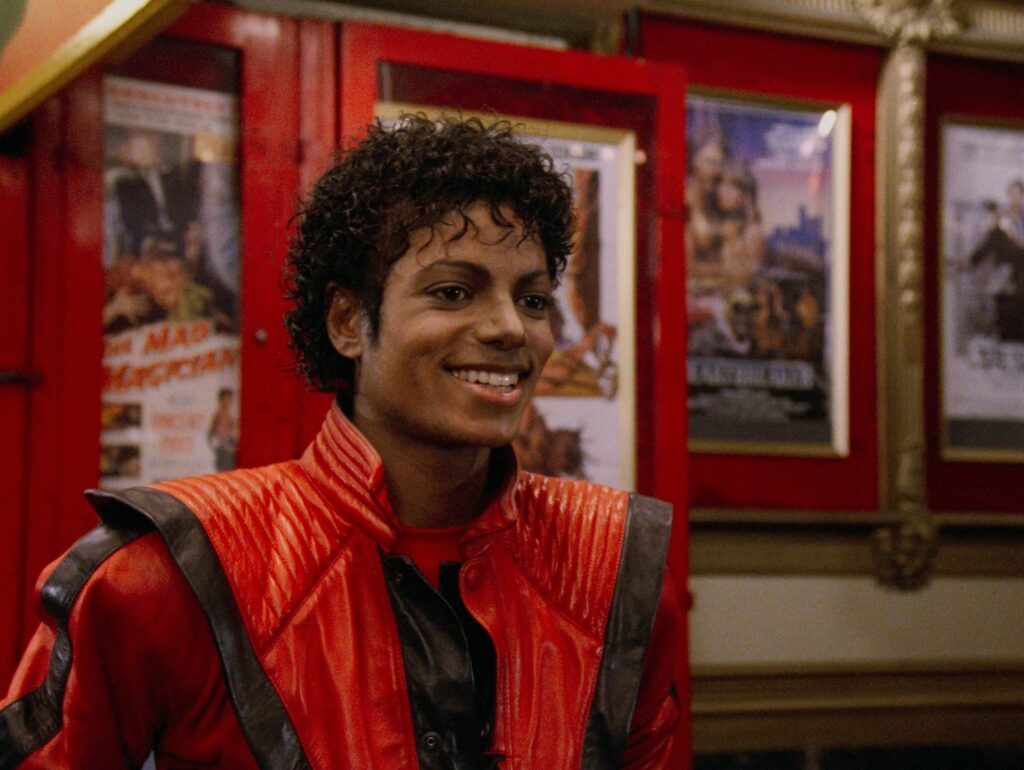
I’m confused by Hollywood’s shock that “Michael” is doing so well at the box office. He’s literally the most popular pop star in history. And he had one of the most interesting lives ever. Of course a movie about him is going to do well. Especially when you consider how great his songs are. That alone gets people to the theater.
I don’t know if I’ve ever talked about this on the site, but I was briefly involved in developing a musical biopic. I know, I know. Ironic with how much I hate them. But the opportunity arose and I saw it as a fun challenge.
What I learned is that these movies are all slam dunks. They always make money. But the reason why you don’t see them getting made that much is because they’re so hard to get made. Especially if it’s a band. Because the band always ends up hating each other (don’t expect music biopics of The Police or Pink Floyd anytime soon). There’s always one band member who refuses to have his likeness used. It’s incredibly hard to get everyone on board.
Which was the case with the project I was on. It was a two-member band and the two hated each other. And don’t even get me started on what writing the script looks like. Each member of the band is, obviously, going to want their character to look as good as possible, get a ton of attention, have the best lines, have the best moments, etc.
On top of that, if you wait for your solo singers or your band members to die, now you’re dealing with the estates. Which can be even worse. Cause they may be controlled by multiple people (the five kids of the singer), and all of those people are going to have different opinions. So getting everybody to sign off is near impossible.
This is also why, when these movies do get made, they’re so vanilla. Because the people involved, whether it be the living singers or the estates of those singers, can veto the script. So, if you put anything even mildly negative in there, it gets vetoed. Which is why you’re seeing all this talk over the weekend about how sanitized “Michael” is. Of course it’s sanitized! They wouldn’t have approved it otherwise.
Whenever you see one of these movies get made, it really is a miracle.
So, how did this get made? My guess is that they needed the money. The Michael Jackson estate is notorious for being in debt. That’s usually the only way that you can get these things made. If all the people involved are really hurting for money. And this looks like it’s going to make them PLENTY OF MONEY.
I opted not to see the Michael Jackson biopic mainly because the movie I’m imagining in my head is the exact same movie that I would’ve seen if I bought a ticket. So why go see the movie if I’ve already seen it?
It is a case study in the paradox of concept-generation. On the professional side of Hollywood, everyone’s looking for the fresh new thing. But on the consumer side, a large portion of the world is okay with going to see exactly what they expect to see. There are people just like me who already know what this movie is going to be and that’s exactly why they go. It’s strange because those two approaches don’t line up and I’m not sure how to reconcile them. I just know that TO GET SOMETHING MADE, because you have to push it through the professional side of Hollywood first, you should be trying to write something fresh.
Okay, let’s move on to my current TV obsession, the second season of Beef. Beef follows the manager, Joshua, of a ritzy country club, and his strained relationship with his wife, Lindsay, who wants him to quit and focus on the Air BnB project they’d agreed to make their business when they got married.
It also follows a young naive couple who work at the club, Austin and Ashley, who have used a violent argument video they secretly recorded of Joshua and Lindsay, to blackmail themselves into better jobs at the club.
In episode 3, Ashley learns that Austin, whom she helped con his way into a physical therapy job at the club, may be giving physical therapy lessons to the attractive Korean assistant of the club’s Korean owner. Freaked out, she manically charges down the street, and accidentally falls down a steep hidden hill where she gets badly injured. This leads us into episode 4, where Austin takes her to the ER. The entire episode takes place in the ER, as they wait to get Ashley into a room.
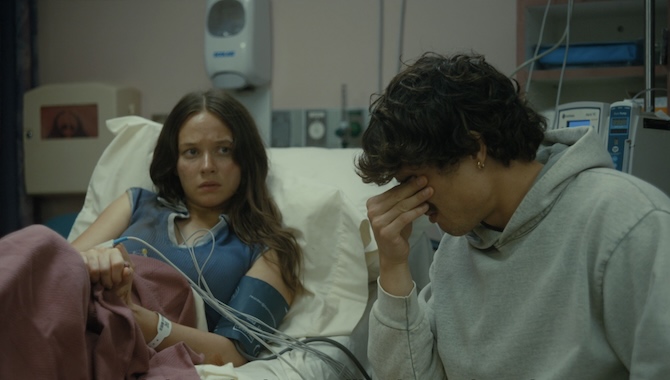
For those unfamiliar with TV writing parlance, this is called a “bottle episode.” This is an age old practice whereby, to save money, the show writes an episode that is limited to a single location. The reasoning is not dissimilar from why I advocate writing contained horror or thriller scripts. Because it’s cheaper!
The reason I bring up the bottle episode is because bottle episodes are rarely designed to move the plot forward. Their job is to create as entertaining an episode as possible under the less-than-ideal circumstances, allowing the production to extend its season out to the full number of episodes contracted, while saving money for the bigger flashier episodes.
In almost every form of storytelling, the most prioritized directive is TO MOVE THE STORY FORWARD. Each scene must move the story closer to its destination. In feature writing, this is a must. In TV writing, it’s “do as well as you can.” And in bottle episode writing, it’s “if you can push any of the story forward great, but if not, that’s okay too.”
This is where you’re challenged the most as a writer. How do you keep things entertaining if you aren’t moving the story forward? If you can learn to do this, you are a major force in the feature screenwriting world. Because it means that, should the thrust of the story be taken away from you, you can still make things entertaining. For example, if Indiana Jones isn’t allowed to search for the Ark of the Covenant for a scene, you would be able to make that scene entertaining still. And TV is where you get to practice this skill.
How do you do it? I’m going to tell you right now. So take notes!
If you don’t have forward story momentum in a scene, you must move to your second most dependable dramatic option: CONFLICT. You must make sure there is conflict in the scene. By conflict, I do not mean characters yelling at each other (although that is an option). By conflict, I mean anything that’s out of balance between the characters in the scene.
What happens is a sort of “pseudo-forward-momentum” is created by the characters speaking to each other, since it creates the hope that they will figure things out and everything will come back into balance.
Let’s say fictional couple Dan and Shelly are at a dinner party. Dan doesn’t like that his wife drinks a lot at these parties. So, during the party, he publicly makes passive aggressive comments about her drinking. Shelly is embarrassed. After the night is over, they drive home and that’s where we write a scene. We write the scene of these two getting ready for bed.
Notice how, technically, there is no overarching goal for either character that’s pushing the story forward in this scene. Indiana Jones is not trying to find the Ark. And yet, you can still write an entertaining scene. You achieve this through imbalance.
Shelly is upset about Dan embarrassing her at the party. Dan is upset because she always drinks too much. These two are living in imbalance in this scene. So maybe Shelly brings it up. Or Dan brings it up. Or maybe neither brings it up. They just go about their nightly routine. Just the fact that there is imbalance in their relationship in this moment creates forward momentum. Because we want to see if (we are hoping) they can bring their problem back into balance.
And that’s pretty much all there is to it. The caveat I’d add is that you do the work to get these scenes WAY BEFORE THE SCENES. So, ideally, you want to create an imbalance in the relationship early on, and then that way, whenever you need a scene, you can put those two in a situation and we’re going to feel that imbalance start to move. It might move in a negative direction. It might move in a positive direction. But it’s going to move itself regardless. And the entertainment comes from us hoping that the imbalance is resolved.
So, in Beef’s fourth episode, the primary unresolved issue is that Austin has been secretly giving physical therapy to the Korean assistant at work. Ashley knows there’s some romantic interest on the assistant’s end. And it’s starting to seem like there’s interest on Austin’s end as well.
This gives us our imbalance and the majority of the episode’s entertainment structure is built around this imbalance. For example, Austin goes to the vending machines, leaving his phone with Ashley. The assistant happens to text Austin at that moment, except Ashley has his phone. So Ashley starts texting “as Austin” to try and extract information of any wrongdoing from the assistant.
There’s a lot more that goes on than that. But most of the interactions are built around that issue getting resolved. And since getting anything resolved feels like progress, it creates the illusion of a “forward-moving” story even if the plot itself hasn’t moved forward at all.
To be clear, when you’re writing a feature script, you should be trying to move your story forward in every single scene. So, for example, in Star Wars, every scene ends with characters a little closer to their goal (get to Alderran for the good guys, find those droids for the bad guys) than they were before.
If you can’t do that for whatever reason, then you can use what they do in TV writing as a substitute. Make sure there is conflict in the scene between your characters. And then, simply play out their interaction in a way where we, the reader, can hope that we’re getting closer to bringing things back in balance. And, by the way, it rarely does come back into balance. That’s what keeps us watching: The hope that this time will be different.
All right, folks. Get back into those scripts and keep writing because the Blood & Ink Showdown deadline is Cinco de Mayo!
