
Also, is the wokest movie of the year also its best??
A question I get asked a lot, especially by people who aren’t in the movie business, is “Why did they make that movie?” Something completely awful was financed, produced, and ended up in theaters and people rightly have no clue how it happened.
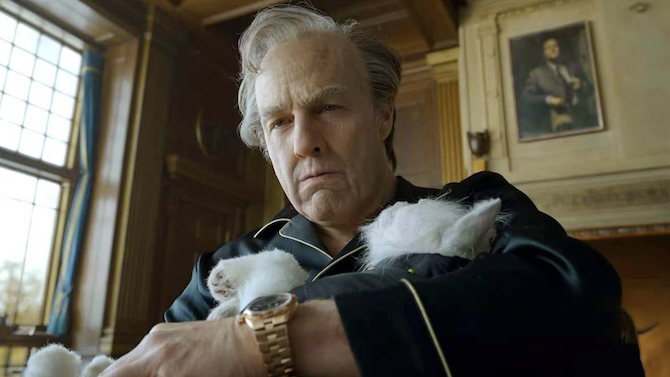
I don’t think there’s a better example of that in the past five years than Digger. Digger cost 180 million dollars to make. And it’s a satire. Why do I point out the genre? Because .000000000001% of America will pay to see satires. Whatever the opposite of making money is, producing a satire is that.
So, I’m going to tell you how Hollywood works. Because once you understand what’s really going on here, you’ll realize why this was made.
So, Warner Brothers wanted Tom Cruise in the WB fold. They want to start making movies with him. Pull him into their orbit. The number one way to get a movie star into your studio is to fund a big Oscar bait vanity project. In other words, they knew they were going to lose money on this. But if Cruise is now going to make half-a-dozen four quadrant movies with them, losing money on Digger was worth it.
And that’s why we have Digger. Which is ironic because Paramount, where Cruise currently resides, just bought Warner Brothers. So, they would’ve had him anyway.
I don’t know if Digger is any good. I know I’ll never watch it. I know it’s inspired by Dr. Strangelove, the most overhyped movie ever. I know this director made this movie more for himself than for audiences. And I know Cruise made it more to win an award than to entertain people. And guess what? Audiences can smell that shit a mile away. They know you didn’t make the movie for them. So they don’t show up.
I don’t think audiences were wrong to avoid this movie.
But there’s a different movie I think they’re deadly wrong to have avoided. Although I understand why they did.
This movie is woke-coded. I know that word triggers people but there really isn’t a better way of saying it. You see the trailer and it’s playing to a very specific audience, likely because they started putting this film together before the woke backlash began.
And while I’m usually the first on the eye-rolling list when a woke message film arrives in cinemas, you guys told me this movie was awesome and I listened. I went into it knowing absolutely nothing.
I’m talking about Forgotten Island. Which, unfortunately, seems to have already been forgotten. Hey, maybe we can work that into the advertising campaign!
So, why did this woke film work while so many others didn’t? The answer is so simple, it’s almost embarrassing that all these other films overlooked it. Forgotten Island ALWAYS PUTS THE STORY FIRST.
It really is as simple as that. You can put whatever messaging you want in your film. Liberal. Conservative. But if it’s the priority over the story, audiences will ALWAYS reject it. Because audiences aren’t dumb. They can tell what you’re trying to do.
Forgotten Island is awesome because it ALWAYS puts the movie first.
The story takes place in the Philippines and follows Jo and Raissa, two girls who become best friends in grade school. Jo is the wild one. Give her a bag of flaming hot Cheetos, a case of illegal energy drinks, and a bag of fireworks, and she’ll give you the best night of your life. She lives with her grandmother while waiting for her father to bring her to America.
That day never comes.
Raissa is the smart one. She’s got the academic future. Meanwhile, Jo’s more interested in whatever adventure they can get into that afternoon. We watch them grow up together, creating memories, which they commemorate with little charms on matching bracelets. Every new experience gets its own little item. Eventually, they’re carrying their entire friendship around on their wrists.
But after high school, Raissa announces that she’s going to Caltech in America. For her, it’s the necessary next step. Flaming Hot Fireworks Nights only get you so far in life. For Jo, it’s the end of her life as she knows it. This is her other half. And she’s about to lose her forever.
On their final night together, they find a magical sand dollar that opens a portal to Nakali, the mysterious island Jo’s grandmother used to tell them about in stories. They go through it, and this is where the movie makes a choice I was not expecting.
It turns into The Hangover. They wake up after what appears to have been the craziest night of their lives, and neither of them remembers what happened (hence: Forgotten Island). They’ve lost the sand dollar, aka their ticket home. So now they have to retrace their steps across the insane island, figure out what happened, and find the thing before Raissa misses her flight to America the next morning.
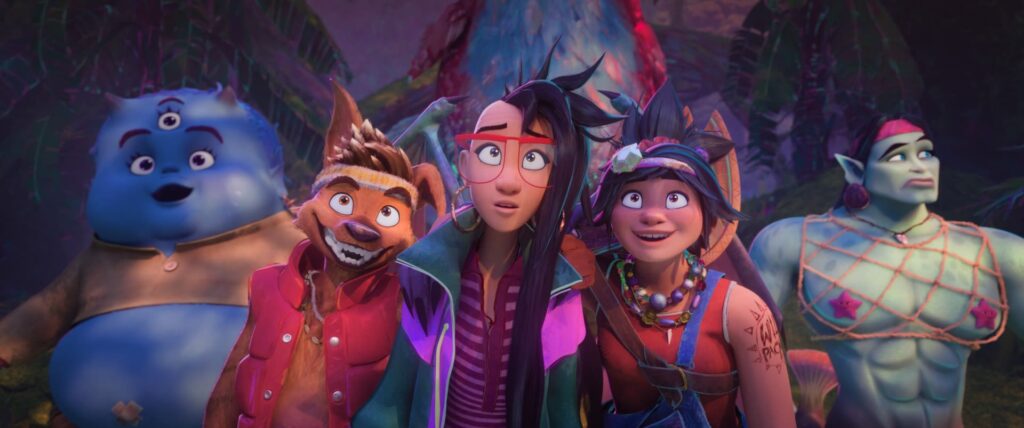
Along the way, they collect this assortment of bizarre companions while dealing with a terrifying witch-type creature called the Manananggal. And when I say bizarre, I mean BIZARRE. There’s a devil baby. There’s a self-obsessed merman. There’s a giant parrot-looking creature. There are beings in this movie that I don’t even know how to describe.
This isn’t your standard animated adventure where you meet a talking rabbit, a talking reindeer, then a slightly larger talking rabbit. The creatures draw from Filipino folklore, which gives the movie a whole collection of things that make you feel like you took acid, ketamine, and ayahuasca all at once. That results in a both wonderful and maddening experience.
But the reason why I wanted to talk about this movie today is because it has a killer screenwriting lesson embedded in it. Which is: If you get your audience on board with your characters early, it will pay insane dividends for the rest of the screenplay.
Forgotten Island does this in its opening stretch and should be studied by all screenwriters for how to execute the process of making the reader fall in love with your heroes.
It shows Jo and Raissa meet and then we watch their friendship develop over the years. It was clearly inspired by the first ten minutes of Up. You see the fun. You see the adventures. You see all the shared experiences. But you also see the pain. Which is important. If you’re writing one of these montages, you can’t just give us the peaks. You need the valleys as well. We see Jo lose her grandmother. We see what it means to have someone beside you when the person who raised you is gone.
By the time this opening is over, you feel like you’ve grown up with these girls. Which means you’re ready to go anywhere with them. That includes an insane island full of crazy creatures, many of which make you feel like you’re losing your mind.
When you establish your main characters like this, it allows you to make tons of mistakes throughout the script and the reader will keep forgiving you. You can make an occasional cliché choice. You can get a little clumsy with your plot. You can introduce a few annoying secondary characters, which this movie definitely does.
But we’re already invested in the people taking us through it so none of this hurts the story. That’s why Forgotten Island can throw a devil baby into the mix and I’m still going with it. Jo and Raissa are the core. I’m following THEM because I grew up with and fell in love with them.
Now, I know somebody’s going to read this and say, “Great advice, Carson. Just write amazing characters. Why didn’t I think of that?”
I’m not saying it’s easy. I’m just saying that the writers who sit down before writing a script and think, “How do I want my characters, my main characters, to be seen by the audience? What do I want them to think of my main character? And then what can I do to get them to think that? What kind of scenes can I write? What kind of situations can I put them into that will create that feeling that I want the reader to have?”
If you are having those discussions with yourself, you are on your way to doing what today’s writers achieved. Because they clearly had those discussions then went out and executed. It all starts with a plan. Creating characters and how you introduce those characters and what you show us in the first few scenes that those characters have has an insane influence on the reader and their interest in the screenplay.
And like I said, it helps you when you make those inevitable bad creative choices. Nobody’s going to write a perfect screenplay. We’re all going to do something that doesn’t work at some point in our script. My favorite screenplay ever is Back to the Future and I absolutely HATE the scene when Marty dresses up like Darth Vader to convince his father to execute his plan. It’s cheap. It’s lazy. It’s the only scene that feels like nobody put any thought into it.
But it doesn’t matter because we love Marty and his dad so much so we overlook it.
Here, the plot is pretty wonky if you think about it. They get to this island and the second they get there, they’re trying to get off of it. An island they’ve been hoping to find their entire lives. So that plot point doesn’t work. And I’m not convinced that the Hangover plotline was the best choice either. It provides plenty of GSU. But it feels weird that instead of experiencing the island along with them when they get there, we’re told that experience is already over.
I will say that all of this is paid off in a really strong way later on. But that doesn’t take away the feeling you have in the moment of arriving on this island and learning that we weren’t even with our characters for the first ten hours they were there.
But the point is, the character setups were so strong that I went with it. And I guarantee you, if those setups had been weak, I would’ve been out the second the two woke up on the island. That’s the power of prioritizing your character setups.
And I love how they pay it all off. Underneath all the weird creatures and crazy imagery is a very simple fear: What happens when the person who’s been your whole world moves on?
Jo wants to hang out and party forever. Raissa wants to take the next step in life. And neither of them knows exactly how to do that without losing what they have. That’s a movie. You can put as many insane creatures around it as you want because the thing at the center is something we understand and care about.
So, of the two big movies that bombed these past two weekends, stay the hell away from the pretentious satire and fully embrace the woke animated film. It may just be a Top 5 film of the year.
