
Genre: Horror/Thriller
Premise: A medical courier delivering an organ to a hospital finds himself pulled into a quickly deteriorating scenario involving a rapidly growing number of monsters and zombies.
About: Zach Cregger strikes again, improving on his flawless resume. His Resident Evil film just opened higher than any Resident Evil film in history, with 60 million, as horror continues to thrive. Cregger says producer Roy Lee asked him if there were any video game properties he’d want to adapt and Cregger said Resident Evil. He then wrote the script with Shay Hatten, who he describes as his “good buddy.” Hatten popped onto the screenwriting scene about 6 years ago at a super young 25 years old. He had a couple of scripts on the Black List before joining the John Wick franchise and writing on a bunch of those films. I suspect that with Cregger’s time being stretched thin these days, he elected to bring on a co-writer, unlike with his first two films.
Writer: Zach Cregger and Shay Hatten
Details: 95 minutes
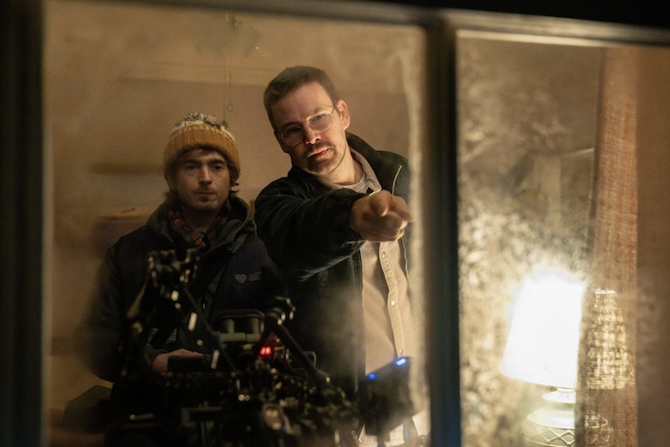
Zach Cregger has been listening to all this chatter about the new plucky crew of YouTube filmmakers who are supposedly the next generation of horror and said, “Hold my kombucha, chumps.”
It’s actually insane that this movie has done so well. Think about what Resident Evil used to be. This was a MAJOR action franchise. Guns. Armies. Explosions. Elaborate set pieces. And now the movie that’s shot out of a cannon to become its highest opening weekend grosser is basically ONE GUY running around by himself. A guy who doesn’t know how to use guns. A guy who’s never been in a situation remotely like this. Just some dude trying to survive.
It speaks to the magic of screenwriting, and specifically the choices we make BEFORE we start writing the script. Sometimes the most important creative decision isn’t what happens on page 60. It’s deciding what version of the movie you’re going to write in the first place. Those choices determine whether your movie feels fresh and exciting or like something we’ve seen 25 times already.
Because when you saw the trailer for this Resident Evil, you didn’t think, “Been there, done that.” You thought, “Wait, what is this??” And I talk about this all the time, but that’s the name of the game. You have to find a fresh way into whatever story you’re telling. If audiences know exactly what they’re getting, they’ve already started tuning out.
Resident Evil follows Bryan, a medical courier whose job is to transport organs from one hospital to another. But Bryan isn’t doing this because he’s some noble crusader. He’s a glorified Postmates driver who needs straight cash, homie.
Tonight, his girlfriend just told him her pregnancy test came back positive. Bryan’s clearly in denial about it but he knows he has to go home and talk to her. That is until the hospital offers him double pay for a super urgent delivery to Raccoon City General Hospital. Bryan decides, “Okay, I’m in.”
The problem is Raccoon City is up in the mountains, it’s nighttime, there’s a snowstorm, Bryan doesn’t have chains, and his car is barely staying on the road. Then, just when he thinks things can’t get worse, a woman comes flying out of the forest and Bryan SLAMS INTO HER.
Bryan, to his credit, isn’t the kind of guy who’s going to leave a bleeding woman in the middle of nowhere, so he puts her in his car and figures he’ll take her to the same hospital he’s heading to. A cop eventually stops them and agrees to take the woman himself while Bryan follows. Sweet. Problem solved. Until the cop’s car goes flying off the road into a field. Bryan goes down to investigate and discovers that the cop is dead and the woman he just rescued is now trying to kill him.
Bryan somehow survives that encounter and makes it to a nearby farmhouse, where things get really weird. He gets attacked by a dog that suddenly sprouts appendages. The people associated with the house aren’t welcoming either. Bryan is beginning to understand that something VERY BAD is happening.
But he still has his package, he still believes it’s time-sensitive, and therefore he still has to get to that hospital and get his money! Which means that while every instinct is screaming, “DON’T DO THIS!” Bryan keeps heading toward the place where all the monsters seem to be coming from.
Once Bryan finally gets to Raccoon City, he discovers that the entire place is falling apart. He briefly hooks up with a couple of Umbrella employees where he learns that his mysterious package is actually an ingredient scientists at Raccoon City General need to complete an antidote.
But then Bryan gets infected himself, which gives the delivery a much more personal ticking clock. Bryan fights his way through sewers, monsters, and an ooey-gooey maternity ward, finally reaching the scientists who can complete the antidote. But will they finish it and cure him in time? Or are Bryan’s future plans as a dada officially kaput?
Resident Evil is a horror movie that does something I honestly didn’t think you could do. It turns horror into a thriller. The conventional wisdom with horror is that you need to slow things down, milk the suspense, let the audience sit there and wonder what’s coming next.
Think of one of my favorite horror movies, The Others. You’re wandering around this giant house, you enter a room where every piece of furniture is covered by a sheet, and then you take your sweet time wondering if something might be underneath one of those sheets. That’s horror.
Thrillers are the opposite. They’re about MOVEMENT. They’re about getting somewhere, doing something, solving something, surviving something. Somehow Zach Cregger has figured out how to make those two things coexist.
Because this movie is MOVING. Our hero is driving down highways. He’s stranded in a field with a crazy woman. He’s racing to deliver his package. He’s constantly encountering some new problem that forces him forward. Early on, Cregger will still hit the brakes when he needs to deliver a killer horror sequence. But what’s interesting is that, as the movie goes on, even the horror sequences start becoming thriller-like. There’s less lingering, less waiting, more GO GO GO.
Cregger also does something I wish more writers would do. Whenever I’m evaluating a screenplay, I ask myself: If you gave this concept to 100 professional screenwriters, what movie would 95 of them write? With Resident Evil, I think 95 writers would’ve written some variation of the original game. Two cops arrive at a house. Something seems off. They investigate. They find increasingly disturbing things. Eventually they discover this is bigger than the house. There’s an underground facility. There’s a corporation. Monsters. BORRRRRRRRRINNNNGGGGG. You just lost the assignment. That pitch is so weak you don’t even get your parking validated, loser.
When you’re going up for an assignment, whatever direction those 95 writers are going to take, THAT’S THE VERSION YOU DON’T TAKE.
Instead, Cregger embraces the five-percent version. Forget the cops. Our hero is an organ courier who’s been dropped into the worst possible situation for his skill set. He doesn’t know how to investigate a crime scene. He doesn’t know how to operate a gun. He’s probably the least qualified person on the planet to survive this, which immediately makes him more interesting to watch.
On top of that, making him a courier gives the story something horror movies rarely have: a ticking clock. He thinks he’s transporting an organ that has to reach its destination within an hour. So before a single zombie needs to show up, we already have a goal, stakes, and urgency. Get the package there. Someone’s life depends on it. And HURRY UP.
There’s another sneaky-good screenwriting lesson buried in all this. We reveal that he’s not transporting an organ at all. He’s transporting a serum that can cure what’s happening. A lot of writers think that once they’ve established the stakes of their movie, they’re locked into those stakes. They’re not. You can eliminate your original stakes halfway through the story. You just have to REPLACE THEM. Preferably with something bigger. That’s what happens here. The original “save this one person’s life” stakes disappear, but by then Cregger has replaced them with stakes involving a whole lot more people.
Now, I’ve heard the word “classic” thrown around with this movie, and I wouldn’t go that far. It’s very good. But I think we’re starting to see one of Cregger’s weaknesses as a writer, which is that there isn’t a ton of depth to his characters or his thematic exploration. I’m not sure Resident Evil is really trying to say much about the human experience. I’m sure somebody on Reddit can write a 4,000-word dissertation explaining that every zombie in this film represents late-stage capitalism but I’m talking about purposeful thematic exploration. By the end, I wanted this kid to survive, but I didn’t feel like I’d learned much about him.
There is an attempt at a character arc involving his girlfriend, who may be pregnant, and this vague idea that our hero has reached the point in his life where he needs to grow up. But that’s delivered in isolated scenes where the movie essentially stops and reminds us, “Oh yeah, there’s this whole girlfriend/pregnancy/growing-up thing too.”
That’s not character development. Character development works when the story forces the character to confront the thing they need to change. If your character is selfish, don’t have his girlfriend call him three times and tell him he’s selfish. Put him in situations where he has to choose between selfishness and selflessness. The first time, he chooses himself. The second time, he hesitates. The third time, he doubles down and says, “I’m selfish, that’s who I am.” Then, when it really matters, he finally chooses someone else over himself. Now the plot itself is developing the character. That’s the difference between having a character arc sitting next to your story and having a character arc built INTO your story. Resident Evil is incredibly good at keeping its hero moving. I just wish all that movement had been taking him somewhere character-development wise.
I thought the first half of this movie was excellent. I was hoping that the whole movie would be low-budget Resident Evil. So I wasn’t thrilled when it went more “video-gamey” and CGI for its second half. But it still manages to keep the train on the tracks due to all the goodwill it built up earlier. Also, this actor, Austin Abrams, is the best “stumbling and mumbling” actor in Hollywood. Guaranteed there is no one in his league who can stumble and mumble like this guy. He turned it into an art form here.
[ ] What the hell did I just watch?
[ ] wasn’t for me
[xx] worth the price of admission
[ ] impressive
[ ] genius
What I learned: I like the idea of injecting non-genre-friendly elements into particular genres IF YOU HAVE A GOOD GAME PLAN for how to do it. Thriller and Horror aren’t natural bedfellows. Which means if you can somehow make that marriage work, your script is immediately going to feel different. Could you inject tons of urgency into a Drama? Conventional wisdom says no. Which is exactly why, if you pull it off, you might have something special. Uncut Gems comes to mind. Fargo injected comedy into a movie filled with grisly violence. Those two things should’ve fought each other. Instead, that strange combination helped make Fargo iconic. The point is, sometimes the thing you’re NOT SUPPOSED TO DO in your genre is the very thing that can make your script stand out. Pulling this off requires an incredibly high level of skill, though, so don’t engage with this lesson flippantly. I’m just asking you to consider it.
