
Yesterday, I took on Hollywood. Today, I take on Indie-land
Genre: Drama
Premise: A happily engaged couple are thrown a curveball a week before their wedding when one of them admits to something shocking about their past.
About: The Drama got a lot of pushback when it first came out as it was marketed as a mainstream romantic drama. But people only realized that it was an uncomfortable psychological dark comedy once they paid for their ticket. Writer-director Borgli is becoming known as the “Reddit Thread” director, as he seems to build his premises around questions that would generate healthy Reddit threads. In this case, would you marry your fiancé if you learned they were a school shooter? Borgli broke into the indie mainstream space a couple of years ago with his Nic Cage movie, Dream Scenario.
Writer: Kristoffer Borgli
Details: 1 hour 45 minutes
I haven’t been keeping up with the latest season of Euphoria because the whole experiment felt bizarre from the start. The show disappears for four years then comes back with a giant time jump? From a screenwriting perspective, that’s a recipe for disaster. That said, people are definitely talking about it. The reviews have been rough, but social media happily belly-dances after every episode.
Even though I skipped the new season, I did check out The Drama, starring Euphoria’s Zendaya, along with Robert Pattinson, and I honestly can’t remember the last time a movie frustrated me this much. If you’re looking to experience pure cinematic irritation, this thing delivers.
The movie follows Charlie, an insecure British man, and Emma, the woman he falls in love with, after an awkward coffee shop encounter. Their relationship progresses quickly. They get engaged and we jump to one week before their wedding. Then, during a night out with friends, someone asks the question, “What’s the worst thing you’ve ever done?”
Everyone gives uncomfortable answers, but Emma reveals that, as a teenager, she once planned to shoot up her school before deciding not to go through with it. Charlie initially thinks she’s joking. When he realizes she’s serious, the entire movie becomes about whether he can still marry her.
And here’s where the movie completely falls apart for me.
Technically speaking, this is an intense dramatic dilemma. Finding out your fiancé once considered mass murder is obviously high stakes. But drama is not just about stakes. Drama requires relatability. We have to emotionally understand the situation we’re watching.
This premise is so extreme and so bizarre that it breaks the connection between the audience and the characters. Most people can relate to discovering an uncomfortable truth about someone they love. Very few people can relate to wondering whether their fiancé almost committed a Columbine. The idea is so far outside normal human experience that the movie never figures out how to ground it emotionally.
I may not live on a desert planet farming wind and trading dewback saliva, but I understand Luke Skywalker wanting a bigger life for himself than being a farmer. That’s relatable. I have absolutely no frame of reference for deciding whether to marry someone because they almost became a mass shooter. The movie spends two hours trying to convince us this is an emotionally accessible drama, and it never gets there.
You can actually see this problem in Zendaya’s performance. For most of the movie, she looks lost. Nothing feels anchored. Nothing feels lived in. It honestly feels like rehearsal footage at times.
What’s interesting is that the second we get to the actual wedding, her performance becomes believable. She finally feels like a real person. And I think the reason for that is simple. Weddings are real. The tension there is human. The emotions are recognizable. Suddenly the movie is operating in a space we understand.
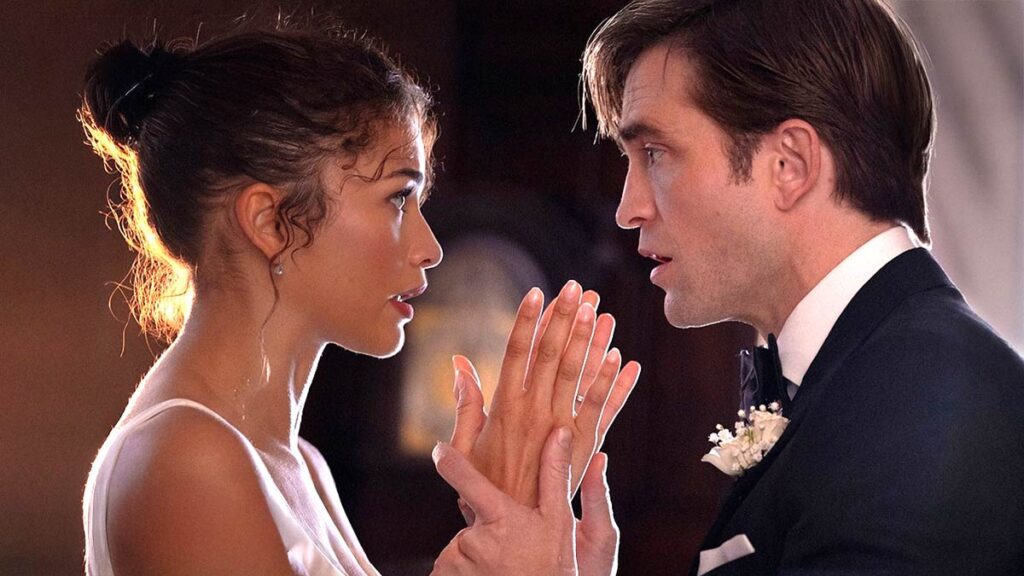
I honestly think director Kristoffer Borgli realized this too, which is why he tries to cover up the first three quarters of the film with film school gimmicks. Endless jump cuts. Time jumps. Fake future scenes. Multiple takes of the same moment. Charlie practicing his vows via voice over while we cut to different timelines. It’s all the kind of flashy artsy bullshit that screams, “I just time-traveled back from NYU circa 1997,” while adding nothing to the story itself.
And then something funny happens. With only a few scenes left before the wedding, Borgli stops doing all of that nonsense and just tells the story normally. And immediately everything improves. It’s almost shocking how much better it gets.
There’s a particularly strong sequence where Charlie has a breakdown at work and confides in a married female co-worker. The emotional spiral escalates and he ends up almost having sex with her before pulling away in horror at what he’s doing.
That setup becomes important at the wedding because the co-worker and her husband are both there, turning the entire ceremony into a ticking time bomb. Has she told her husband? Is she going to tell Emma? Is this all about to explode publicly?
That’s actual dramatic writing. You establish a bomb then force the audience to sit in anticipation of it detonating.
In fact, the wedding section is so much stronger than the rest of the movie that I honestly suspect Borgli originally conceived this as a short film or a contained wedding story and then expanded it into a feature later. Because suddenly everything becomes focused. Planned. Controlled.
There’s a scene during Emma’s father’s speech that perfectly demonstrates this. The father starts talking about Emma growing up, his time as a cop, a missing rifle, Emma’s anti-gun beliefs. Every detail makes Charlie more uncomfortable.
Now here’s the screenwriting problem Borgli faced. Real parent wedding speeches are long. But the only parts of the speech that matter here are the parts escalating Charlie’s anxiety. So Borgli cleverly has the DJ equipment malfunction immediately after the important information is delivered. The speakers pop (sounding like a gun going off), everyone gets distracted, and when we return to the father, he says, “I have more to say, but I’ll save it for later.”
That’s good screenwriting. It’s problem-solving. The writer found an elegant way to extract only the relevant material from the situation without bogging the rest of the sequence down.
We get another strong moment with Emma’s friend Rachel, who learned about Emma’s school shooting fantasy alongside Charlie. When Rachel gives her wedding speech, we’re terrified she might expose Emma in front of everyone. Again, that’s real tension. The audience is squirming because they understand the social danger of the moment.
The frustrating part is that none of this care exists in the earlier sections of the screenplay. Everything before the wedding feels random and underdeveloped. For example, in that ‘almost sex’ scene at the workplace shortly before the third act, that’s the first time we’re shown Charlie’s work! With just 25 minutes to go in the movie! And we don’t even know what he does still! We see him at work but nobody tells us what he does! That’s basic foundational character work you’re screwing up.
This is the kind of thing that exposes weak screenwriting immediately. If you don’t understand the fundamental pieces of your characters, the audience feels it. The script starts floating instead of standing on solid ground.
I was literally talking to a writer about this during a consultation today. He’d written a deeply damaged main character, yet he’d barely thought about the character’s parents. But most emotional damage originates with family. If you ignore that foundation, the character’s pain feels fake because the scaffolding underneath it doesn’t exist.
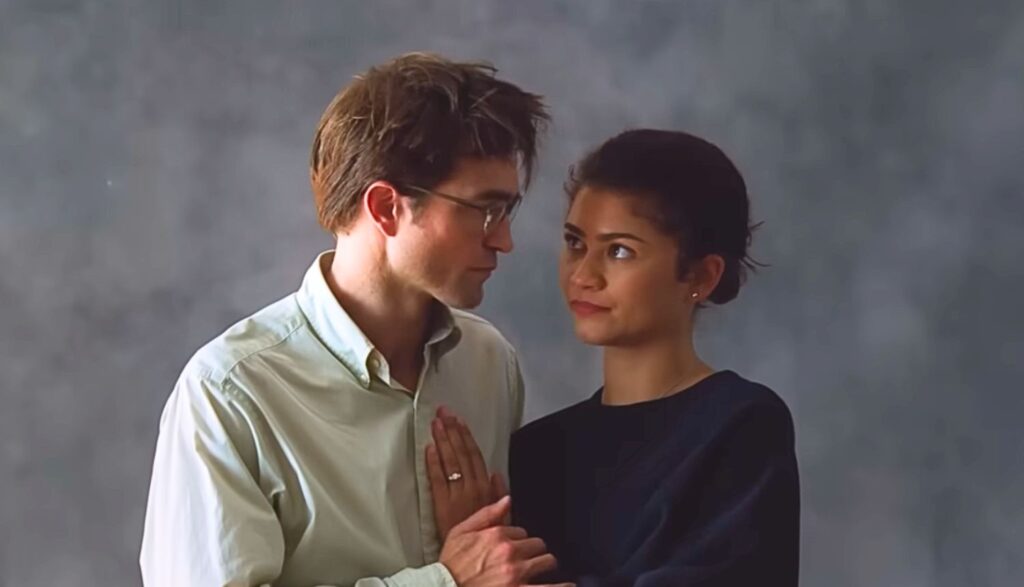
That’s exactly how The Drama feels for most of its runtime. Like it skipped the foundational work and jumped straight to the fun stuff the writer wanted to feature, like this famous wedding photo scene where they’re getting their pre-wedding photos taken despite the fact that their relationship is falling apart. People have mentioned that as a highlight of the movie. I found it to be on-the-nose myself. But the point is, that shouldn’t be your only goal as the writer, to write those fun scenes. You gotta get the blood & sweat annoying stuff down first.
And then there’s the ending. Massive spoiler here.
The movie spends its entire runtime hinting that something catastrophic is going to happen at the wedding. At one point, it even flashes forward to imagery suggesting multiple guests have been shot and killed. So naturally we’re thinking: Does Emma snap? Does Charlie snap? Is the wedding going to become a massacre?
And then… nothing happens.
Which leaves you sitting there wondering why the movie spent so much time building toward an explosion it never intended to deliver. It ultimately feels like confirmation that Borgli never figured out how to connect the pre-wedding movie to the wedding movie.
The result is a bizarre mash-up of genuinely strong dramatic writing trapped inside a much weaker, self-conscious art film. Sometimes impressive. Often unbearable. Never fully cohesive.
[ ] What the hell did I just watch?
[x] wasn’t for me
[ ] worth the rental
[ ] impressive
[ ] genius
What I learned: We all love writing the scenes that we thought about when we first conceived of our idea. Like the wedding photo scene here. But the scenes that make a script work are the workhorse ones, the ones that establish your characters, establish the plot, set up a situation we can relate to. Those foundational pieces are what’s going to make your script feel genuine and real.
