
This movie is a game changer for the documentary industry. But is it actually a good movie?
Genre: Documentary/Drama/Comedy
Premise: Documentarian Nathan Fielder moves in with the infamous Elizabeth Holmes, founder of a multibillion-dollar tech startup, Theranos, who was ultimately convicted of defrauding investors.
About: This movie is turning into one of the biggest documentary success stories in history. After a trailer that went mega-viral, You Can See Everything opened to $15 million this weekend on just 850 screens, making it the biggest opening for a non-musical documentary since Fahrenheit 9/11 back in 2004. A24 gave Fielder and co-director, Oppenheim, extraordinary creative freedom to make the film. They could spend years filming, and if they didn’t come up with something worthwhile, they didn’t have to release anything. Fielder said the studio essentially told them they could throw the whole thing away. In one of the strangest demo announcements of movies in years, 70% of You Can See Everything’s audience was under 25. That means that a bunch of 20-somethings sat through a 3 hour documentary in theaters, something the industry had recently conceded was impossible.
Writers: Nathan Fielder and Lance Oppenheim
Details: 3 hours
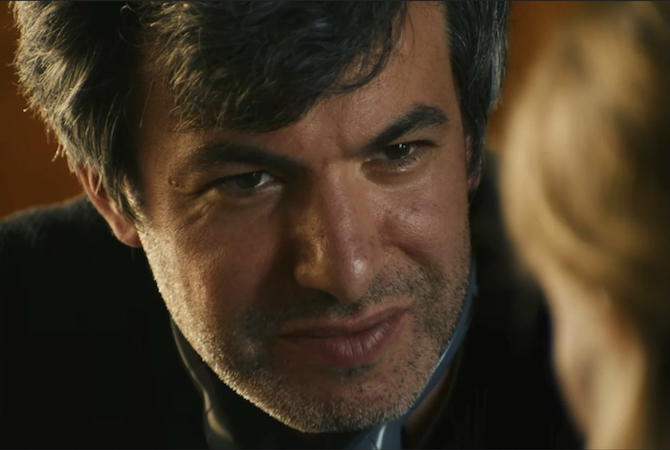
Before I get into this review, I must point out that You Can See Everything may be the future of theatrical documentary filmmaking.
Because first of all, the movie made 15 million bucks. Which is the equivalent of three times that in the narrative box office world, because documentaries make no money. And they especially don’t make money theatrically anymore. So clearly, this is a huge opening for a documentary film.
That got me thinking. How did this film achieve this when all these other documentaries make nothing?
To answer that, you have to understand why people don’t see documentaries in the theater anymore. The answer is because you can go to YouTube, type in “Charles Manson,” and get 50 documentaries about Charles Manson that you can sit there and watch all day long if you want.
This has happened because making documentaries is cheap now. And guess what? It just got even cheaper. The most recent documentaries I’ve been watching online have started using AI for insert shots or to recreate video. And while you’re aware that it’s AI, there’s no question that it’s a level up from what these no-budget documentary filmmakers used to have to do, which was go with stock images. Or stay on whatever documentary subject was speaking in a publicly accessible video.
Now you can actually recreate exactly what they’re talking about.
So the question then becomes, if you want to make a documentary that actually makes money and premieres in theaters, how do you do that?
You Can See Everything gives us the answer. You have to expand the documentary format into something we haven’t seen before.
Now, Nathan Fielder’s ability to do this is on another level. But I want to make clear that you don’t have to be a genius filmmaker who knows how to work his way into the documentary in a meta and entertaining way to pull this off. You just need to find an angle that expands the documentary format into something weirder or stranger or different from what we’ve seen before. And I think it’s all up for grabs as far as what you can do.
But I do think that filmmakers inserting themselves into these movies is one avenue. Becoming sort of the star of the documentary. Because you can almost create a franchise out of that. It’s similar to what Michael Moore used to do. You didn’t come to Bowling for Columbine just to learn about Columbine. You also came to see Michael Moore challenging Charlton Heston about guns.
And Nathan Fielder has taken that one step further by adding his quirky sense of humor and meta advancements, like bringing in real movie stars to play the roles of characters when he doesn’t have access to his documentary subjects.
That’s the sort of inventiveness you want to embrace in this new world of documentary filmmaking. Because if you’re just making by-the-books, by-the-numbers documentaries, forget about it. Just put your stuff up on YouTube. Cause I guarantee you no one’s paying 15 bucks in a theater for it.
Okay. Now let’s talk about the actual movie.
I went into this confident that it was going to be my favorite movie of the year. Ever since I found out about You Can See Everything six weeks ago, I’ve been desperately counting the weeks until it comes out. I love Nathan Fielder. He’s probably up there as one of the top five creative minds in Hollywood.
Nathan comes into Elizabeth Holmes’ life 36 days before she’s scheduled to go to prison for defrauding investors in her Theranos business, where she supposedly developed a blood-testing technology where people could prick their finger, put a blood sample into a machine, and test for hundreds of different things.
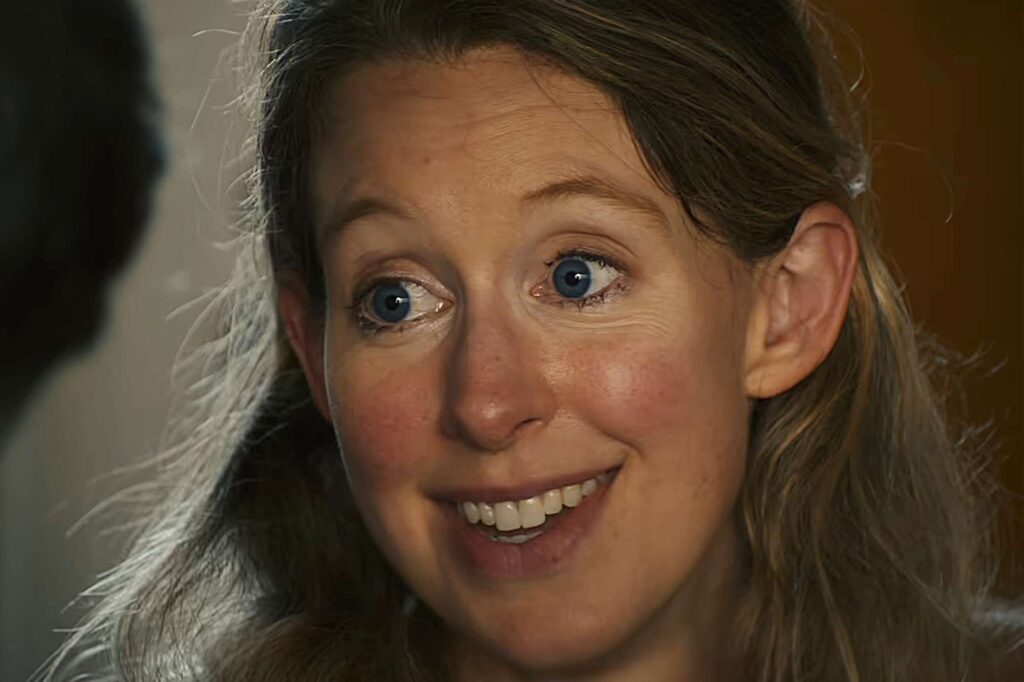
This had the opportunity to disrupt a medical testing industry worth hundreds of billions of dollars. So it was a big deal. And supposedly she knowingly said it could do some things that it couldn’t do. But this documentary is about Elizabeth claiming she’s always told the truth and that she’s innocent.
When Nathan comes into her life, she has a relatively new partner, Billy. Billy becomes a very big part of the documentary in that he’s taken the driver’s seat of both this relationship and this business, because they want to start up Theranos again, but a new version of it.
So Nathan starts living with Elizabeth and Billy in his beach house. They have two young kids with them. And Nathan’s goal appears to be to get to the bottom of what happened at Theranos. He wants to know if Elizabeth knowingly lied or not.
Because she’s always claimed that she didn’t lie. And actually a big moment in the documentary is Nathan asking her, “Have you ever told a lie?” and Elizabeth Holmes saying, “No.”
That becomes a central theme of the film. Truth. Not long after that moment, we learn about an infamous New York Times article. In it, Elizabeth Holmes says, of the fictionalized TV shows of her story, “They’re not playing me. They’re playing a character I created.”
And this quote becomes a big deal in the movie because Elizabeth Holmes swears that this line, which ends up going viral and sort of becoming an unofficial slogan that defines her, is something she never said. And she recorded all of the interviews that she did for people and claims that that line is nowhere to be found on any of the recordings.
But The New York Times says it was, so Nathan Fielder tries to talk to The New York Times and see if they can find the actual recording of her saying those words. And The New York Times can’t find it. Which begs the counter-question to Nathan’s assumption that Elizabeth lied to the world: Was this just one big smear campaign?
Nathan digs and digs but the more he talks to Elizabeth, the less sure of the answer he is. Which leads him to lose the plot a bit. If Elizabeth is innocent, then what is this movie really about? To give you some context, Elizabeth Holmes contacted A24 and said I’m open to being documented. And A24 went to Nathan and Lance and said, “Do you want to do this?” And Nathan decided, “Sure,” and ran out there to Elizabeth and Billy’s beach house to get to work. But there was a strange catch. Elizabeth only had 36 days left before she was sent to federal prison (screenwriting tip alert: ticking clock!).
So when Elizabeth heads to prison, Nathan loses his documentary subject. In the process, he also loses his narrative. But Nathan has this unexpected other character he’s left with: Billy. So I think Nathan decided, okay, we couldn’t prove that Elizabeth was bad. But we’ve got this guy over here who’s a weirdo and he says a lot of douchey stuff. Let’s go all in and make this an “Elizabeth Holmes’s husband is a psycho” documentary.
There’s a scene earlier in the doc where Nathan may have realized this was the way to go. Elizabeth is in the kitchen making eggs. She’s whisking them in a bowl, talking to Billy, and at one point Billy just takes the bowl out of her hands and starts whisking them himself. But faster.
And Nathan immediately stops everything. “Whoa, whoa, wait a minute. Why did you just take the eggs from her?” The moment gets a big laugh in the theater. And Elizabeth explains that Billy thinks she doesn’t whisk them enough and that the eggs taste better when they’re whisked more.
Ah-ha, Nathan seems to realize. Billy is the controlling evil villainous husband here! I mean look at this guy. He can’t even let his wife whisk some eggs without taking control!
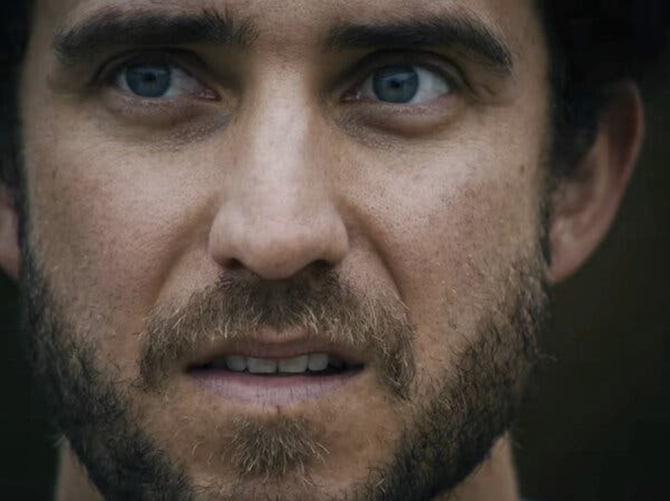
This annoyed the hell out of me. Billy and Elizabeth have been together for a few years now. They have two kids together. And for all we know, they’ve had this exact same conversation 80 times already.
Maybe Billy has politely asked her to whisk the eggs more 50 different times. Maybe he’s let her do it her way a hundred times. Maybe he’s having a particularly busy morning and doesn’t have time to get into the whole egg-whisking debate again, so he just takes the bowl and does it himself.
I could see myself doing that. I could see my partner doing that. When you’re around someone 24/7, you’re going to have moments like this. Now, maybe Billy really is a controlling asshole. But my point is, we don’t know that from a two-minute exchange. Yet the movie treats this as some world-changing moment.
Not to fear, though. Cause Nathan now makes it his mission to deliver on that narrative. He highlights that, once she goes to prison, Billy takes over Elizabeth’s Twitter account. He makes decisions for her. He’s aggressive. He’s opinionated. He’s the kind of guy who doesn’t really care what anybody thinks about him.
And let’s be real about this. Hollywood gets all up in their underwear about this kind of man. A man who takes charge in a relationship, who makes decisions, who doesn’t apologize for being masculine.
Here’s a question. What if, after everything Elizabeth has been through, after being dragged through the media for a decade, after losing her company, after facing hundreds of millions of dollars in debt, after knowing she’s about to go to prison, she actually loves the fact that this guy has come into her life and said, “You know what? I’ll handle this.” I’ll make the decisions. I’ll deal with the press. I’ll deal with the bullshit. You don’t have to worry about it.
Isn’t it possible that she finds that incredibly attractive?
Because whenever Elizabeth talks about Billy, she is over the moon in love with him. She loves that he takes charge. Yet the film seems determined to convince us that this is a bad thing.
**MAJOR SPOILERS FOR SECOND HALF OF MOVIE FOLLOW**
Which brings me to Amanda Seyfried, someone who may have low-key just become the biggest villain in Hollywood. No wonder she was cast in Mean Girls.
Nathan brings Amanda into the documentary as a, sort of, “Elizabeth Holmes expert,” the reason being that Amanda played Elizabeth Holmes in the Hulu series about Theranos’ downfall. At first, Amanda is there to recreate scenes to help Nathan understand Elizabeth better, particularly because he no longer has access to Elizabeth.
But eventually Amanda becomes a much bigger part of the story. When Nathan shows her some footage he’s shot of Billy and Elizabeth, she’s horrified. She concludes that he’s controlling. That he treats Elizabeth terribly. And that she’s a victim of Stockholm Syndrome.
At one point, while she and Nathan are driving to see Billy, she actually says, “Let’s break these two up.” And she has this weird little sinister smile on her face when she says it. And I’m thinking, wait a minute. Who the hell are you??? You don’t know these people. You haven’t spent years with them. You don’t know what their relationship is like when the cameras aren’t rolling. Yet you’ve decided that you understand Elizabeth Holmes’s relationship with her husband better than Elizabeth Holmes???
I mean isn’t the whole point of empowering women that they get to decide what they want? What if what this particular woman wants is a guy who takes charge? What if she doesn’t want to make every decision? What if she loves having somebody in her life who’s willing to shoulder all the responsibility?
There’s actually a shocking little moment when Amanda first meets Billy. She’s spent all this time getting worked up about how awful this man is. She’s ready to tear his head off. And then she meets him in person, shakes his hand, and the very first thing she says is, “Oh my God, you’re really tall.” And for that one split second, her whole demeanor changes. She almost seems mesmerized by him, momentarily forgetting that she’s supposed to despise this guy.
It’s a fascinating moment because it gives us a glimpse into the difference between the masculine traits people criticize in the abstract and how they actually respond to those traits when they’re standing in front of someone who embodies them.
Amanda’s able to recover though and, once they all sit down at a table, gets back on message and accuses Billy of being controlling. Boy did the ladies in my theater like this moment! You didn’t hear cheers that loud in an Avengers showing.
But Billy has this line during the argument that I thought was one of the best lines of the documentary. He says, “I don’t care what you think, Amanda. You’re an actress.” And Amanda shrivels up quickly after that. Because he’s right. She doesn’t have any special authority to tell people how to live their lives.
Imagine somebody who’s never met you, who’s watched a few edited videos of you and your spouse together, showing up at your house and telling you that your relationship is wrong. How would you respond?
And then there’s another moment where Billy starts talking about how much anger he has inside him. He says he has hate in his heart. He has revenge in his heart. It’s more evidence that he’s the second coming of Patrick Bateman.
But let’s add some context. Imagine the person you love more than anything has been dragged through the mud in the media for ten years. Imagine you have two children with this person. Imagine that EVERY. SINGLE. DAY. you have to watch people attack her, mock her, and say things about her that you know aren’t true.
Wouldn’t you be angry? Wouldn’t you have some hate in your heart for those people?
Look. I don’t even like Billy. He seems like a jerk. But I can also see why Elizabeth loves him. He’s confident. He’s decisive. He’s willing to say things other people are afraid to say. He doesn’t seem concerned with being liked.
What’s interesting is that Nathan, begrudgingly, seems to come to the same conclusion. He spends all this time trying to figure out Billy’s angle. Why would this wealthy guy voluntarily get involved with a woman who’s hundreds of millions of dollars in debt and about to go to prison? Why would he take on all this stress? What’s his real motivation?
Nathan keeps looking for an answer and eventually comes to the conclusion that he’s terrified to admit because it’s the least interesting answer for his documentary. Which is that the two actually love each other. Which is what we’re left with. Nobody knowingly lied. And these two are driven by love.
I walked away from this movie frustrated. Not necessarily because of what I just shared. But because the movie seems to be at war with itself and isn’t sure how to end that war. In many ways, it feels abandoned. Like the documentary version of The Empire Strikes Back, but if there was no slated Return of the Jedi to follow it. So I actually flirted with giving this movie a “wasn’t for me.”
But when I got home, I spent 7 straight hours looking up reviews of the film and that’s when I realized that this documentary had a hold on me that very few movies ever achieve. I know I will never forget about this film or certain scenes in it. And while I wouldn’t say the movie leaves me feeling satisfied, I will say that anybody who loves movies should see it. Because it gets under your skin in a way that’s worth studying. And the intensity within its presentation is so affecting that I think that it may even challenge The Odyssey for best film of the year at the Oscars.
What did you guys think?
[ ] What the hell did I just read?
[ ] wasn’t for me
[ ] worth the read
[ ] impressive
[x] genius
What I learned: One of the reasons I ultimately liked this movie is because of how desperately Nathan wants to find the truth. His investigation may shift from Elizabeth to Billy but his determination to get answers never wavers. Watch the trailer below. Look at how badly Nathan wants to find the truth from Elizabeth.
