
Make sure to grab a feature screenplay consultation or logline consultation over the weekend!
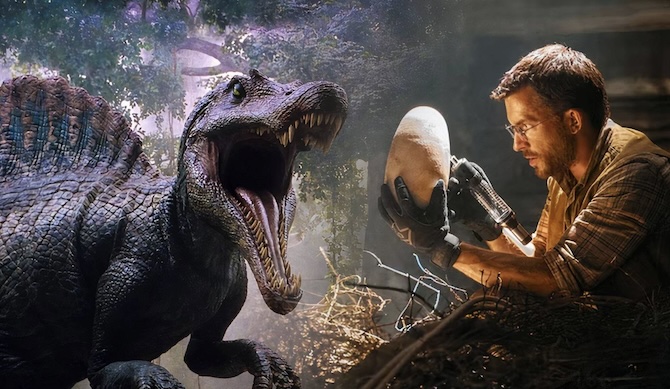
When they announced this new Jurassic Park movie seemingly minutes after the latest trilogy had ended, I threw up my arms in frustration, went out on my balcony, screamed at the Hollywood sign, “NOOOOOOOOOOOOOO!”, and proceeded to get a visit from the police 15 minutes later telling me that some of my neighbors were “scared.” I explained to them that, yeah, they should be scared! Typically it takes five years before rebooting a franchise. Jurassic Park just did it in five minutes!!
You see Mr. Officer, one of Hollywood’s biggest mistakes is that they don’t build movies around scripts. They build scripts around movies. This is despite the fact that the best movies we’ve ever seen have come from building the movie around the script. It RARELY works the other way around. To be frank, it only works when they get lucky!
So when they don’t even PRETEND that they’re going to sit down and take a bunch of pitches and find the best one and have the writer write it, I say go F yourself. Cause that means you don’t care about us. Okay officer?
I’m happy to report that I’m now on a special list for LA County titled, “Suspicious People to Look Out For.” Whatever. Here I am trying to save the movie industry. If I have to publicly humiliate myself on that hill to do the job, then by gosh, I’m going to do it!
However, as I began collecting data on the movie’s performance, I was shocked to watch it climb up the box office charts, finishing as the number 2 live action movie of 2025. And I was pissssssed about it. Because it meant audiences were willing to show up for a bad movie, reinforcing this toxic belief studios have that you can just keep feeding the masses crap and they’ll buy it. This would surely lead to more quickly produced franchise entries that sucked.
I eventually forgot about Jurassic World Rebirth and went on with my life but then last week it showed up on Netflix and I thought, “Well, it’s free now. And there are literally no other movies streaming at the moment. Let’s check it out.” I crossed my arms, fired up the Roku, and dared the movie to entertain me.
You know what?
It did.
Mikey likes it! (Bonus Scriptshadow points if you know that reference)
How in the world did this happen?
As per usual in these parts, I sat in silence while listening to the gentle sounds of Youtube-generated waves for twenty minutes before the answer emerged.
Universal made one big change with this film. They decided to make one awesome Jurassic Park movie and who the hell gives a shit about a franchise that comes after it. I realized that the second they took that path, it freed them up to explore all sorts of cool story possibilities that weren’t available to them had they designed a trilogy.
They essentially made their version of “Aliens meets Jurassic Park.” A bunch of mercenary types go to the Jurassic equator, which houses the last of the dinosaurs, to collect some blood samples in the hopes of turning the result into a miracle life extension. Their plan goes astray when a family on a boat throws up a mayday signal.
You might be saying, “But Carson, that plot isn’t anything special.” It isn’t. It’s actually quite simple. And that’s the point. You want simple plots in these movies. These films fall apart fast once you start stacking plotlines one on top of the other. Plot overload creates fuzzy story engines.
Let me explain something to you about screenwriting when it comes to big concepts. Your plot’s only purpose is to become a vessel that allows you to explore what’s unique about your premise as easily as possible.
In other words, the plot’s job here is to make it as easy as possible to get our characters into as many cool dinosaur-led set-pieces as possible. And that’s exactly what it did.
Our first dino set piece is a giant dinosaur fish-thing attacking a small sailboat. And it’s great! What I loved about it was how simple it was. So many of these set pieces these days are big and busy and convoluted. You don’t know what’s going on half the time. Here, it’s simple! Big fish try to knock over boat. That’s it! So it keeps swimming around and bumping the boat. And it keeps getting worse and worse for the family on the boat. And it’s riveting! I was on the edge of my seat.
The second set piece is just as good. Even though it ups the complexity, it still keeps things simple enough that we understand the scenario. That’s the trick here. You can get more complex with a set piece AS LONG AS YOU EXPLAIN TO US WHAT’S HAPPENING AND WE ARE CRYSTAL CLEAR ABOUT IT. If we’re only 80% there when it comes to understanding the scene, that means the maximum we can enjoy the set piece is at 80% of what you’ve created.

So here, we’ve moved to the mercenary boat. The family has been saved by the mercs. And these five semi-big dinosaurs start swimming around the boat in a menacing way. And the dinosaur expert quickly explains that these are special dinosaurs that actually team-up with other species of dinosaurs to hunt. And so they’re helping that big scary fish hunt this ship. And that’s it! That’s the scene.
And it’s great! Cause it’s so clear. The mercs are trying to outrun the dinosaurs. The dinosaurs are whizzing around the boat and try to snatch up the humans in their mouths. Guardrails are broken, humans are holding on for their lives. Hungry dinosaurs get closer and closer. It’s good old fashioned set piece storytelling without all the excess nonsense that has destroyed the Marvel Universe with their abysmally over-constructed fuzzy set pieces.
And I have to give props to David Koepp, who came up with the concept and wrote the script. I’ve always seen Koepp as a glorified studio stenographer. He’s never written anything that’s had any major impact on me. But he kicks ass here. Because he understands what I said earlier. Which is that these huge concept movies are not about anything other than building a story that creates great set pieces.
The T-Rex set piece here is a show-stopper. It’s better than the T-Rex jeep scene in the original movie. And again – I know I’m beating a dead dinohippus here – but it’s because it’s so simple. It’s just a T-Rex stalking the family on an inflatable raft down the stream. So the T-Rex is sort of dancing around from side to side on the stream as it picks at this strange contraption full of potential hors d’oeuvres. It’s actually quite brilliant spatially. The T-Rex is on the right side, then the left side, at one point when the water gets deep, it swims under them.
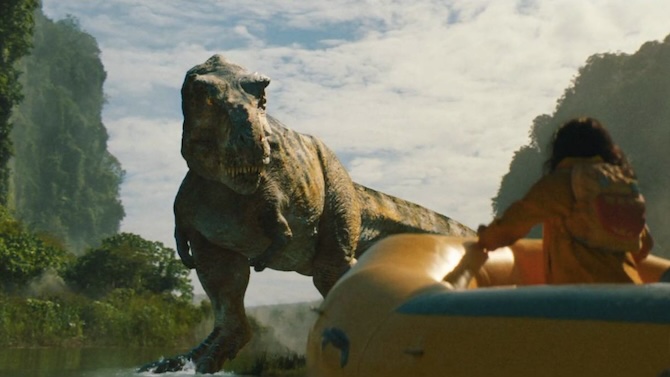
But the point is, it’s such a simple setup. And that creates clear GSU. If you do that for your set pieces, you’re winning most of the time.
Another thing Koepp did that impressed me was he created two different groups of people to follow on the island. This allowed him to create twice as many set pieces.
I think what Koepp realized, possibly in early drafts, was that if he only followed a team of mercs, that they would be able to stand their ground against the dinosaurs. I mean they have giant guns and weapons. By creating a family as well, he could place characters into situations that the audience genuinely didn’t think they could survive. Like that T-Rex scene. You’re sitting there thinking, “There is literally no way they can survive against this thing.”
So, let’s ask the most important question of all here. Or, at least the most important question in my Universe. What does this mean for Star Wars? Cause I want to save Star Wars. And when a big franchise does a good job, I ask if the same approach might be able to resuscitate my favorite dying franchise.
The big “what I learned” from Jurassic World Rebirth is that when you don’t have to worry about trilogies, you can just create a good singular story concept. And that’s when I realized, this is the same track that Star Wars is already taking. Both Mandalorian & Grogu and Starfighter are standalone movies. So, maybe I’ve been too hard on them. Maybe they did the same thing as Koepp – just figure out what the best story to tell is and tell it.
If that happens and those movies are awesome, I’ll be the first to cheer, just like I’m cheering this movie on now. I suggest all of you do the same. Fire up Netflix and enjoy yourself a heck of a well-written action-adventure film.
Genre: Indie/Drama/Horror/Thriller/Sci-Fi
Premise: A server shows up for her Waffle House shift only to find that one of the customers is a threatening scary man with a list of rules for the evening.
About: There’s a lot to unpack here so stick with me. I created this review BEFORE I looked up the details about the script. All I knew is that it was a Black List script and that it was being made by Plan B, Brad Pitt’s company. However, after I read the script and did the research to find out more about the project, I could not find anything regarding this script getting purchased by Plan B. The only indication that Plan B was involved was in the Black List listing. However, I learned that there really is a Waffle House Index. It was created by FEMA and used to gauge disaster severity. If Waffle House closes or serves a limited menu, damage is extreme. So, I guess that was the genesis of the idea. But here’s where I think the Black List got mixed up. Within the real Waffle House Index, there’s a real “Plan B.” Plan B refers to emergency backup response plans activated when conditions overwhelm normal operations. In other words, I think the Black List thought that meant Brad Pitt’s Plan B production house bought this script. Maybe they did. So I’m still not positive. But it was probably a mistake. Anyway, that will provide context when you read this review, which I wrote before I knew any of this.
Writer: Andrew Nunnelly
Details: 105 pages
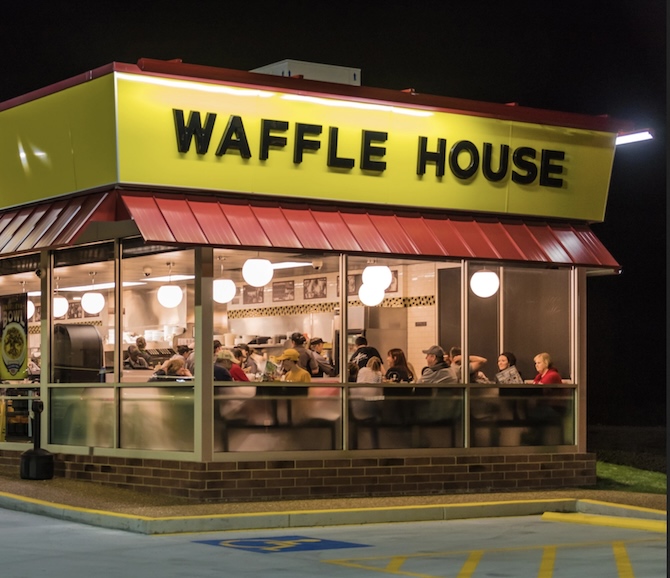
The Waffle House contains one of the funniest, and also most transformative, memories of my life. Heck, it might have even turned me into an adult.
My college tennis team was traveling through the south playing a bunch of schools. One night, while staying at a motel, we were all starving, as we often were. And there was this Waffle House across the street that stated on its billboard: “All you can eat – $5.99.” I’m not sure even the words “tons of beautiful naked ladies” would’ve had more power over us in that moment. So we scuttled across the highway to engorge ourselves.
Keep in mind it’s almost midnight. And we’re in the middle of nowhere. But we might as well have been walking into Times Square on New Years Eve when we opened the door to this place. I’m talking wall to wall people. We had to wait twenty minutes just to sit down.
Giddy at anticipating my first Waffle House experience, I looked around and noticed something interesting. There was only one waiter for the entire diner. There had to be 200 people in here. The waiter was a big tall black gentleman who somehow looked like he was having a blast in spite of the chaos he’d been thrown into.
Now, because there was only one waiter, we had to wait a long time to order. How long, you ask? You’re probably thinking half an hour, right? No. An hour? Yeah, I wish. Come on, it couldn’t have been more than 90 minutes? We had to wait TWO HOURS just for the waiter to come to us.
Now, the good thing about waiting that long was that we all had TONS OF TIME to look through the endless Waffle House menu. Each of us had carefully memorized our complex orders of eggs and biscuits and toast and burgers, all of which were smothered in various ingredients specific to the Waffle House universe. Dare I say waiting that long made the process of ordering almost euphoric, seeing as we were finally going to eat like kings.
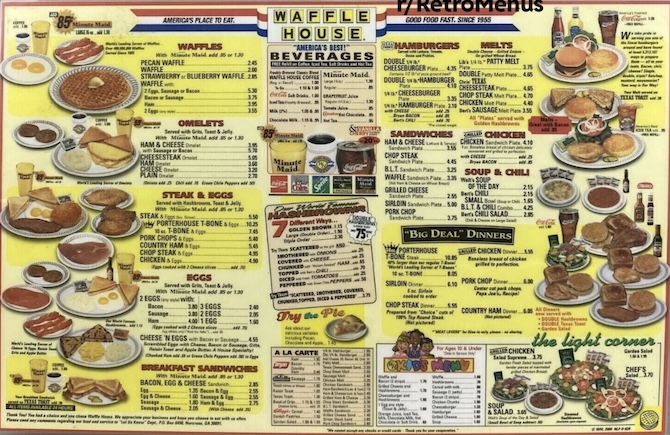
So, when the waiter finally came to us, I found it odd that he didn’t actually have a notepad with him. There were eight of us on the team. How was he going to memorize all our orders?? Maybe this is how The Waffle House worked? The waiters all had ‘A Beautiful Mind’ level brain recollection?
Well, we laboriously began giving him our “all you can eat” orders one by one. Each of us had picked like five things on the menu. And being stupid college students, we’re adding and subtracting certain things from each item (“Oh, and no pickles on the burger…”).
I have to give it to this waiter. He was so patient in the way he listened to every single word – for an order, mind you, that probably took as long for us to say as the length of time we’d been waiting for him to finally get to us.
And after we were finally finished, he looked all of us in the eyes, smiled, and without pretense said, “You got it. 10 waffles.” And walked off.
Now, in this younger version of myself, I had never experienced anything like this. That a place could promise something and just totally lie. The shock of realizing that I would not be eating all I could eat that night for $5.99 was devastating. So I was baffled. I was frozen. I was confused. And then I looked around and I noticed that every single customer in this establishment had a single waffle on their plate.
That’s when I noticed the most shocking detail of all. I had to peer back at an awkward angle to see it but my eyes followed our waiter into the back area where I then watched him begin cooking our waffles. That is correct. This man was the waiter AND THE COOK for the entire restaurant full of 200 people.
For those who don’t understand what the Waffle House legend is about. That sums it up.
Jane is a late 20-something server at a North Carolina Waffle House. We’re told in the description of the screenplay that this will be the worst day of Jane’s life. In fact, she’s already struggling not to cry.
She shows up on her night shift where she says hi to her gay co-server, Tommy. Tommy senses something is off with Jane but she doesn’t want to talk about it. Jane starts her shift where she mostly deals with regulars.
There are two stoner dudes and a stoner girl. There’s an Amazon guy with his young daughter. There’s the town drunk. Oh, and there’s “Scrubs Guy” who has been trying to drum up the courage to ask Jane out forever. Jane already knows he likes her and she might even like him but right now she’s just trying to get through her shift.
Her shift gets considerably more difficult, though, when a dude in a poncho pulls a gun on her and says that he’s got ten rules. The rules are weird. Jane must call herself “the helper.” If the helper doesn’t act normal, everyone dies. Eggs must always be runny. The guy basically threatens to kill everyone if Jane doesn’t do what he says.
But the guy is oddly laid back about the whole thing and when Amazon Guy gets a chance, he pulls out his own weapon and shoots Poncho. In his dying breaths, Poncho tells Jane that there’s a secret magical bunker underneath the freezer in the back and everybody needs to get in there right away because the end of times are coming.
After he dies, a nuclear explosion happens in the far off distance. This is followed by flooding and crocodiles coming up and snatching customers away. Jane, meanwhile, is all up in her feelings as we learn that, earlier that day, her mom died after a long bout with cancer. So Jane is really super depressed about it.
Jane and Scrubs guy work together to stay alive amongst all this madness (spoilers) only for a spaceship to eventually arrive and Scrubs Guy to say he’s some sort of alien and the time has come for Jane to move into the next realm or something. Because she’s special. Will she do it? Do you care? Grab that script to find out!
The script doesn’t work.
I actually spent a long time sitting around and trying to figure out why it didn’t work. After an elongated period of chilling, I finally figured it out. The script is built as this really wild ride. I mean you’ve got mass shooters, the New World Order, people predicting the future, nuclear explosions, secret Waffle House bunkers, mass flooding, giant crocodiles, spaceships.
I actually like all those things. And, if they were built into the right movie, I’d love it.
The problem is that the main character here is written like she’s starring in Manchester By The Sea. Her mom died earlier that day. She can’t stop talking about the cancer and what it did to her. Almost everybody else in the story is super serious and/or depressed as well. Which completely sours all the fun that could’ve come from these wild plot developments.
This is the rare time I would tell a writer: TOO MUCH CHARACTER DEVELOPMENT.
How can you possibly have too much character development? THIS IS HOW. When your wacky, fun premise is contrasted against a “For Your Consideration” campaign for the lead character.
The two worlds just never meshed. In fact, they were always at odds. And that’s what I was feeling during each scene but couldn’t put my finger on at the time. Good scenes are supposed to flow. They should feel effortless to the reader. That’s not to say there shouldn’t be conflict or bumps in the road. But they should feel intentional and purposefully constructed. These scenes always felt like they were battling themselves. And the character vs. plot issue is probably why. Maybe there was some other stuff going on too but that was the main reason.
“But Carson: Plan B liked it.”
Correct. So what does that mean? How can we learn from this, because despite me disliking the script, it IS a success story in the script world. A huge production company snatched it up. So, what’s going on there?
My guess is that they liked the character development aspect. Because that’s what they’re known for. They like making intimate character explorations. And maybe they thought, this is the first time we can do that and turn it into something bigger.
But they’re wrong. The movie’s never going to work. How do I know? Because I’m right 99% of the time when I read a script about whether it will turn into a good movie or not. The collision of a deep independent character piece and a wacky invasion movie just aren’t going to come together in holy matrimony. They’re both going to leave each other at the altar.
The only thing that can save this movie is if they embrace how weird and fun it is. I mean, if you’ve got nuclear explosions and crocodiles and aliens and you’re asking me to watch a super serious cry-fest about a mom who died of cancer? You haven’t executed your script properly.
[ ] What the hell did I just read?
[x] wasn’t for me
[ ] worth the read
[ ] impressive
[ ] genius
What I learned: If the tone of your characters is too far away from the tone of your plot, your script will be at odds with itself in every scene.
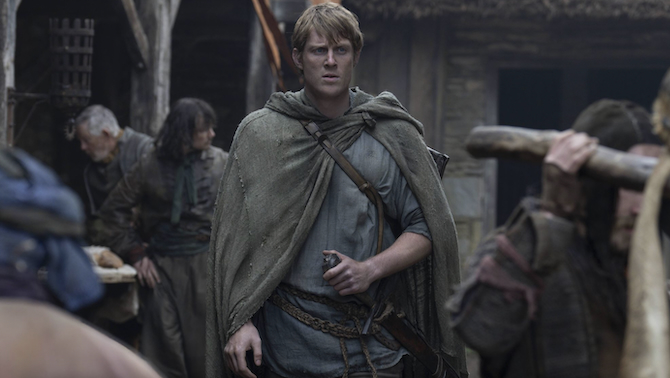
Does anybody really know why Scream 7 made 60 million bucks? The answer is no. So instead of focusing on that, I’m going to focus on the success of a certain underdog show, Knight of the Seven Kingdoms. Some people are saying this is already the show of the year. Cancel all voting. The decision has been made. With scores like 9.5 and 9.6 for episodes on IMDB, it’s a hard case to argue against.
A few weeks ago, I talked about how risky this show was. It took this giant franchise and eliminated almost all of its giant variables. You’re never going to see a dragon on Knight of the Seven Kingdoms. What’s funny about the success of the show is that this is exactly what the people at Lucasfilm originally said they were going to do with Star Wars on TV. They could finally tell these small intimate character-driven stories. And then they just completely freaked out and went in the opposite direction. Meanwhile, the entire budget of Knight could fit into the cost of one episode of Andor.
Why is this relevant? The answer to that is something it’s taken me 30 something years to figure out. Which is that franchises are built on characters, not on spectacle. And the mistake that 99% of them make is they never restock the character cabinet. Don’t get me wrong. They try. But they try in the same way that I try and cook fish for dinner. I put in solid effort. But am I determined to make the best fish dinner ever? No. And when it comes to billion dollar franchises, you have to try and create the best characters ever. That’s not an exaggeration. Great characters are part and parcel with the best franchises of all time.
This is the first time in a long time that I’ve seen a big franchise truly say “screw everything else. we’re going to build a story on character alone.” But that approach is a blessing in disguise. Because when you know that no spectacle is coming to save you, you have no choice but to build characters who can carry a show all on their own. It really makes you think: What kind of characters do audiences truly fall in love with?
And the most time-tested archetype is the underdog. So Knight of the Seven Kingdoms built two of them. The giant teddy bear of a man, Dunk, and the defiant undersized boy, Egg.
A common question I ask writers in my screenplay consultations is: Would we still want to watch your protagonist even if you stripped away this story that was happening around him? And, with these two, the answer is a resounding yes. The world kicks them around so much that we’re determined to see them overcome that adversity.
This is why I think, if Lucasfilm were smart, they’d hire twenty writers, shut down for two years, and come up with 200 characters. Really draw out who these characters are, what makes them likable or interesting, what flaws are holding them back. And then, at the end of the process, vote on the Top 10. I GUARANTEE YOU if they did that, they’d come up with characters ten times as good as any characters they’ve created in the last decade.
Cause Lucasfilm has lost sight of the fact that Star Wars was not built on spectacle. It was built on character. And until they refill the character coffers, they’re deluding themselves that they’re going to make another good Star Wars movie.
Getting back to Knight of the Seven Kingdoms, I suggest everybody here watch it. It’s only 6 episodes long. Which is another great creative choice the show made. It knew how long its story was and wasn’t going to artificially stretch it out and dilute things for more episodes (cough cough, Andor).
But what you’re watching the show for is to get to those final two episodes. Cause the final two episodes are really special, each in their own way. Unfortunately, there’s no way around giving you these screenwriting tips without discussing the specifics of the episodes. So major spoilers follow.
In the 4th episode, Dunk beats up one of the members of royalty, I think a Targaryen (I’m not a Game of Thrones nerd so bear with me). So he’s slotted to be executed. However, he can challenge the guy to a duel, which he does. But the Targaryen kid he attacked is a wuss, so he invokes the Rule of 7. What that means is that the kid and six other Targaryens will take on Dunk and six other fighters he recruits.
The situation is a joke. The Targaryens are far superior fighters, of course. So destruction is a formality. But Dunk isn’t a guy who gives up (yet another likable trait about him) and he goes around town, trying to recruit fighters. The writing cleverly pays off many of the people Dunk met along his journey since the first episode, and he’s able to get five other fighters together.
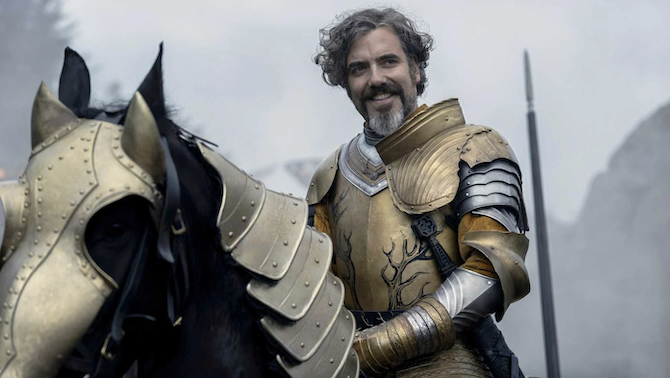
Unfortunately, the rules state that you must have seven fighters. Any less and you forfeit. So, here’s where the major screenwriting lessons begin. We’re on the day of the fight. We’ve reached the battlefield. Dunk has minutes left to somehow find another fighter.
So he makes a plea to the galley. In a Braveheart-like speech, he begs someone to be brave and join him. And after this emotional speech, this giant man stands up. Dunk’s plea actually worked. He’s got his seventh guy. And then this giant man lets out a giant fart. The whole galley laughs. The man was fucking with him. Dunk will have to forfeit.
What the writers do so well here is they make you believe that our hero is safe, that he’s found his solution. And then they rip that solution away from us. And what we feel is, “Oh my god, what now?” I cannot emphasize how powerful that question is. When you have a reader asking, “Oh my god, what now?” They genuinely have no idea how your hero is going to survive. That’s storytelling gold right there. That’s when you have the reader in the palm of your hand.
But it gets better.
One of Dunk’s fighters shows up and he’s acting strange. As he’s getting his battle armor prepared, Dunk asks him a question about how he’s going to fight. And the guy says, ‘that’s not relevant anymore.’ And then he takes his horse to the other side of the battlefield. He’s switched sides to the Targaryens!
This is true excellence in writing.
“Oh my god, what now?” has just turned into “Holy shit, how the fuck is he going to get out of this??”
So many writers are TERRIFIED of doing this because it means extra work. They’re already unsure of how they’re going to solve the “one knight down” problem. Now they’ve got to find TWO KNIGHTS in five minutes! Writers don’t want to do all that work. So they never create that level of doubt, despite the fact that that level of doubt turns drama into super-drama.
But it gets better.
I don’t want to make this post 5000 words long so we’ll jump ahead. Against all odds, Dunk is able to get his two extra knights.
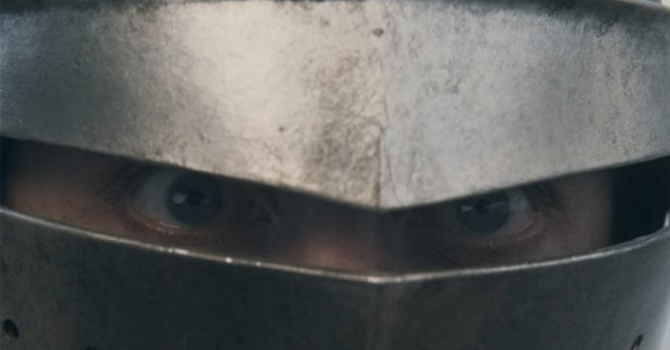
So, when the battle starts, the very first thing that happens is Dunk gets slammed off his horse. I mean he gets obliterated. The man doesn’t even get in one good swing. And then, as he’s stumbling to get up, he gets whacked in his helmet by a mace, tumbling to the ground again. And then he gets hit again. And then he gets hit again. AND THEN HE GETS HIT AGAIN.
Every time he’s hit, he becomes more and more injured. More unable to move.
And now we’ve taken “Holy shit, how the fuck is he going to get out of this??” and turned it into, “Holy Christ, this man is done for, there is no way in any scenario even with plot armor that he can get out of this.”
Keep in mind, I don’t know anything about the actual book covering these characters so I don’t know if Dunk dies in the book. I was genuinely convinced he was toast. Cause there was absolutely nothing he was doing that indicated he could survive.
But it gets better.
Dunk finally stumbles into a showdown with the Targaryen kid. And this kid just wallops him. He stabs him in the leg. He stabs him in the stomach. He stabs him in the eye. If Dunk’s situation was abysmal before? It had now turned calamitous.
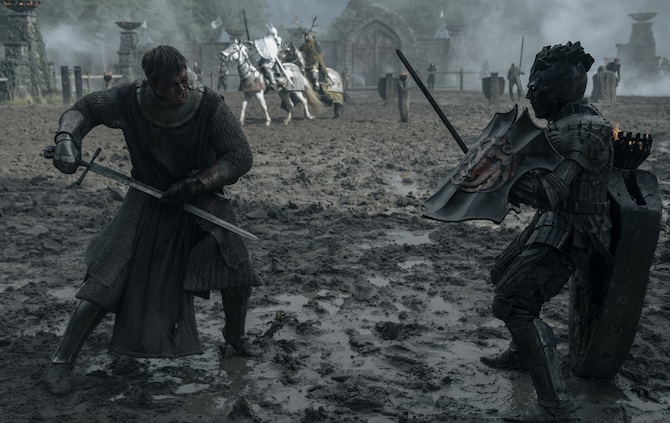
I’ve never been so sure that someone was a goner.
And again: THAT IS STORYTELLING NIRVANA. It is the place where you most want your reader – convinced that there is no way out.
The crazy thing is, the writers add SIX TO SEVEN more moments that make Dunk’s situation EVEN WORSE. So it keeps getting worse for him. I haven’t seen a writer create that level of uncertainty for the hero since Osculum Infame, which is why I fell in love with that script.
Since there’s no way for me to cover the next screenwriting tip without spoiling the episode’s ending, I’ll just say that, against all odds, somehow, Dunk succeeds. But like any well-written story, there are scars that will live on forever in his life. Good people in the seven die. It’s not all ponies and roses by any means.
It’s a great example of how to push your hero to the limit and convince the reader that they won’t survive, so that when they finally do, it’s the best feeling in the world.
Look man, there aren’t many movies or shows these days that can truly make me feel something. Only because whenever I read a script, I’m always aware of the screenwriting matrix as I’m reading. I know what the writer is doing at all times and am judging whether they’re succeeding or failing.
But this battle? I was completely and utterly lost inside of it. I was so worried for Dunk and convinced he was toast. I was just hoping he somehow someway would find a way to survive.
Okay, moving on to the final episode. I’ve never seen a final episode like this! It was short. It had almost zero story to it. It only existed to wrap things up because ending the show after the Rule of 7 battle would’ve been too abrupt.
As a result, I’m watching this final episode with a lot of curiosity. Basically, Dunk just goes around and says bye and thank you to everyone he met on his journey. I was trying to identify some sort of structure that was holding the episode together.
And then I finally realized what the episode was about. It was about: Are Dunk and Egg going to end up together or is this it for them? It’s a powerful question. But there’s no doubt that it’s a tiny story engine to build your season finale around. I would go so far as to say, this is the tiniest story engine I’ve ever seen for a season finale.
But then it clicked. This was a show built on character, always had been, and so of course it ended on character. What’s remarkable is that it pulled that off inside a franchise the size of Game of Thrones, where audiences show up expecting spectacle, shock, something enormous. And yet the finale asked nothing more than a simple question about who these two people are to each other, and it was enough. More than enough. That only works if you’ve done the foundational work first, if you’ve built characters so vivid and so specific that the audience is genuinely invested in the answer. Do that well enough, and you can get away with the impossible.
Did you guys watch Knight of the Seven Kingdoms? What did you think?
And in circumventing this mistake, does the film accidentally expose the most powerful screenwriting tip in all of history?
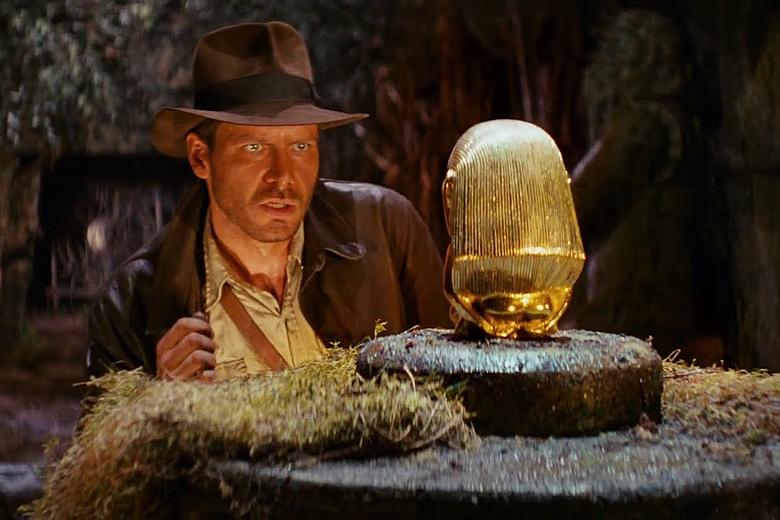
I want to talk about one of the most baffling screenwriting paradoxes of all time. I’m sure you’ve come across this analysis before. You may have found it amusing before hurrying on to the next doom-scroll app of your day. But it’s arguably the most confusing thing in all of blockbuster film history.
Raiders of the Lost Ark, a Top 5 movie franchise of all time, contains a screenplay in which its main character has no influence over the story whatsoever. You’re hearing that correctly. If Indiana Jones never got involved in the search for the Ark of the Covenant, everything the Nazis did would have been exactly the same.
OMG, she’s right!
I will never be able to watch Indian Jones again! 😂 pic.twitter.com/QI9bmlOKYx
— Vince Langman (@LangmanVince) February 25, 2026
At first, it’s kind of a funny revelation. You don’t really believe it. But then the more you look into it, you realize, “You know what? That’s actually true.” Then, if you’re a screenwriter, you have a bit of an existential crisis. If one of the best movies ever features a protagonist who has zero influence on the events of the story… what even is screenwriting, lol?
Make no mistake, this is a big deal. This is the kind of criticism that top-grade critics will drop on movies they hate: “The main character doesn’t even have any influence on the story!” And I’ve made similar criticisms about dozens of scripts I’ve reviewed over the years.
So how can this film not only overcome that critical error? But become one of the greatest movies ever? Before I answer that question, let me chat with you for a sec about why this topic caught my eye today.
I’ve been reading a lot of consultation scripts lately where main characters haven’t been active. Instead, they run the gamut from inactive to passive to neutral to mildly active.
Every one of these scripts feel lacking. Now, is the lack of an active protagonist the only reason? No. But it’s the main reason. And that’s because an active protagonist is like a starship shuttling thousands of people to a new planet. If it stops pushing forward, everyone in the ship dies.
One of the biggest hacks in all of screenwriting is a super-active protagonist. If you have a protagonist who is DESPERATE to achieve their goal and will do anything to achieve it, it is VERY DIFFICULT TO WRITE A BAD SCRIPT. Because the act of relentlessly pursuing a goal ensures that every single scene will have forward momentum. And not just a little forward momentum. A lot!
You see, where scripts tend to die is when forward momentum stops. I bet you’ve experienced it several times this month while watching something. You’ll be watching a movie or a show, and four scenes have gone by and you’re bored. You think, “What’s going on right now? Nobody’s doing anything.” Exactly. The second your main characters aren’t pursuing something aggressively, your script moves into a stasis state.
That doesn’t mean you’re dead in the water. But it means you’re treading water. And the longer you force the reader to tread with you, the closer they get to abandoning you and letting you die. Just like all those losers who trusted that stupid starship.
So, how does this relate to Raiders of the Lost Ark? Well, ironically, despite what I’ve just told you about the lack of impact Indiana Jones has on the plot of his film, Indiana Jones is one of the most active movie characters ever. The man is always moving forward. He is always attempting to achieve his next objective. And he’s always doing it obsessively.
Indiana may not actually have any influence on his own plot. But he’s sure as hell trying to! And that’s everything. This is exactly why having an active hero matters so much. We love active heroes so deeply, so instinctively, that our critical thinking just… shuts off. We’re too locked in to what they’re doing to stop and ask whether any of it actually matters.
You can see the power of active heroes in one of this year’s Oscar hopefuls, Marty Supreme. Marty Supreme has a very wonky plot. It ventures down a lot of weird alleys. But the glue that holds it all together is Marty’s relentless pursuit of his goal. He’s always pushing forward. He has to find a way to compete in the ping-pong championships so he can become champion. That’s all he cares about.
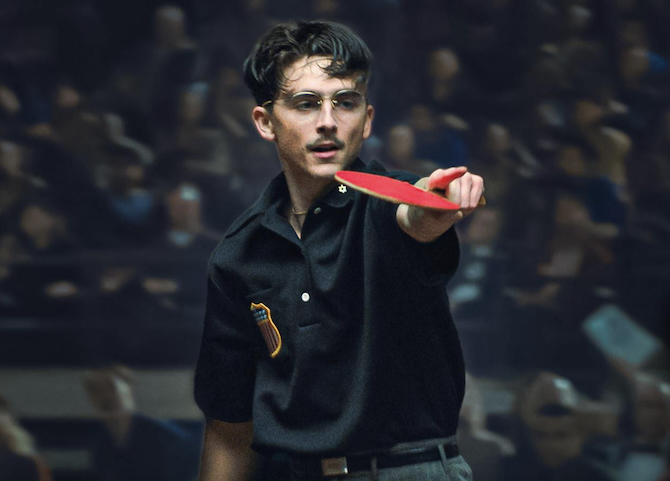
And because he cares about it so much and because he’s always pushing forward to achieve that goal, it smooths over a lot of the film’s less interesting subplots, such as getting a dog back. But even the whole thing with getting the dog back – THAT TOO RESULTS IN MARTY BEING SUPER ACTIVE.
Super active protagonists are the reason, by the way, that the Safdies are one of only a handful of exciting new directors in film. All of their movies contain extremely active protagonists. Look at Good Time. Look at Uncut Gems. Majorly active characters. I haven’t seen The Smashing Machine so I don’t know what’s going on with that character. But I know from the trailers that the movie looks slow and a little boring. So, I wouldn’t be surprised if the lack of an active protagonist is the main reason.
One of the more interesting examples of an active main character is The Big Lebowski. The Dude wants money for his rug that was ruined. This guy lives the most passive life ever. He just wants to be left alone or to hang out and chill. But the Coen Brothers knew that if they made The Dude passive IN THEIR PLOT, the movie would be cooked. So Jeffrey Lebowski becomes the most active passive character ever.
Something to keep in mind is that there are movies that don’t have that “adventure” blueprint. The characters are confined to one area. But that doesn’t mean you get left off the “active protagonist” hook. You still need an active character. And all that means is that, even if they’re stuck in a single spot, they STILL MUST WANT SOMETHING WITH ALL OF THEIR BEING. That’s what makes them active. It’s what’s going on INSIDE OF THEM. Not outside.

Look at The Housemaid. In that movie, Sydney Sweeney’s housemaid character’s only job is to clean the house and take care of the house duties. That is an inherently passive-to-neutral character type. However, the writer makes sure that Sweeney needs to keep this job more than anything. She will literally go back to prison if she is fired. This requires Sweeney to charge around with a fire under her ass and make sure that her employers are always happy. There is rarely a moment in that film where Sweeney is just relaxing.
Another example of this would be Bugonia. Bugonia is pretty much a contained thriller. A couple of guys kidnap the head of a company, are convinced she’s an alien princess, and try to get her to call off her alien species from taking over earth.
80% of the movie takes place in the house, a lot of it downstairs in the basement where the company head (Emma Stone) is being held. So, on the surface, it feels like a passive situation. But Jesse Plemons is DETERMINED to prove this woman is an alien and get her to call off her invasion. This keeps him very active. He’s always trying to move her situation forward.
I’m going to say it again. A super-active character is one of the biggest cheat codes in all of storytelling. And it pains me that I’ve now trained this into some AI writing program somewhere that’s scraping my site for this information. But now you know it too. So, start using it!
Oh, and the lesson to that whole “Indiana Jones doesn’t have any influence on the plot of Raiders of the Lost Ark” issue? It’s that an extremely active character has such a positive influence on an audience that you can actually write a plot that isn’t impacted by that character at all and the audience will still fall in love with your movie. Talk about a screenwriting tip for the ages.
If you’re interested in me consulting on your script and making it amazing, e-mail me at carsonreeves1@gmail.com!
Genre: Horror/Thriller
Premise: A mild-mannered American analyst climbs the ranks of a ruthless London investment firm, only to discover a horror more frightening than the industry itself: the insatiable monster awakening within him.
About: This was a big sale that had 8 bidders. Netflix won it. It will star their new male lead darling, Taron Egerton (Carry-On). The movie will be produced by Safehouse, which made one of my favorite movies last year, Novocaine! Writer-director Halil Ozsan was the lead singer of a band called Poetry for Pornstars, who once opened for Guns and Roses.
Writer: Halil Ozsan
Details: 117 pages

If you want to outsmart the market right now, a tiny little lane that may prove fruitful is writing anything that leans into an exploration of masculinity. The media has spent the last decade doing everything in their power to destroy masculinity. And, finally, the pendulum is swinging back in the other direction.
I’m personally working with a writer who’s writing a show for a major cable network and the show explores masculinity on a deep level. And the network is obsessed with that. It feels like they care more about that theme than the plot and the characters!
In fact, I would go one step further. I would say that if you’re a horror writer, come up with a clever concept built around toxic femininity. I have ZERO DOUBT that a clever horror premise built around that subject matter would sell in seconds. Not something that’s hateful, though. It’s got to be clever.
That whole approach is exactly what’s landed this project a deal. It’s all about masculinity. So let’s get into it!
We’re in modern-day London. American, Petey, is married to his sweetheart of an English wife, Charlie. She loves him more than anything. But she can’t seem to see him for who he really is. Charlie is a weak feminized version of a man. He cowers away when bad guys attack his wife on the train. He allows men at work to bully him around. His testosterone is so low, he can’t even get his wife pregnant.
Petey has just started a new job at Sterling-Wolfe Investment Bank, one of the biggest banking firms in the world. He’s an assistant to a trader and his job amounts to getting coffee for his boss, Jackson, a real alpha male.
Petey ends up getting so frustrated with his lack of aggression that one night, he gets out of bed and just goes running. He ends up naked and passed out in the middle of nowhere. But when he gets home, he feels something… different within him.
The first thing he does is ravish his wife (for the first time in months). He then flirts with the hottest scariest female trader in the company, Alexis. He then embarrasses Jackson in a board meeting, going over his head and suggesting a risky trade that a client ends up loving. All of a sudden, Petey is on everyone’s radar.
But Petey also has a growing appetite… for flesh. First it’s his own wife. As well as Alexis, who he starts having sex with. But it isn’t long before he’s taking night jogs and eating fellow joggers. And here I thought I was flexing by getting a double-double animal style 10 minutes before In & Out closed.
After Petey executes an illegal game-changing trade at his company that makes them tens of millions of dollars, Jackson realizes that Petey is officially coming for his job. So Jackson announces that it’s war. Well, Petey’s new persona takes that declaration very seriously and ends up eating Jackson! I guess that’s one way to get a promotion!
(Spoilers) Eventually, Petey’s now-pregnant wife takes the blinders off and realizes that Petey’s gone absolutely insane. After having the baby, she straight-up leaves him. That’s okay. Petey still has his game-changing trade that’s going to turn him into a generational super-employee at Sterling-Wolfe. That is until Alexis runs off with the money. Leaving poor Petey alone, broke… and hungry.
I want to talk about STORY DESIGN today.
Story Design is: How your story is put together.
And I bring this up because in our recent discussions about AI, I’m realizing that AI is really bad at this. What AI seems to be built on, in the storytelling department, is that classic 1980s 3-Act structure popularized by Syd Field.
The problem with the Syd Field approach is that, when you follow it exactly, it gives you a “correct” movie. But also a very predictable and forgettable one. That’s not to say you shouldn’t use the 3-Act structure. I’m a huge advocate of the 3-Act structure.
But the genius of impressive screenwriting is the little ways in which you make your screenplay messy. That messiness is what makes it human. And Alpha is a great example of that.
Alpha’s first act is its own story. It literally has its own three acts. We meet this guy who’s trying to start a new life. He’s weak and lacks any masculinity. He goes through his daily routine. And we see him get kicked around by life. Then we seem him engage with some animals. And then he turns into this Alpha Male version of himself by the end of the first act.
Normally, you’d do this as you’re telling the entire story. So, you’d have him at work a lot longer before this alpha side of him took over. But the first act is literally its own contained story about a man turning into an animal. And it’s a little bit weird. And some screenwriting professors would probably call it wrong. But that’s exactly why it works. Because it’s a little messy.
And you may say, “Well, how do I make a script that’s messy but not so messy that the whole screenplay falls apart?” I’ll explain how to do that in a second.
But first, another good example of this is The Housemaid. I just watched it the other day. It’s a fun movie! It’s campy and silly. But it knows exactly what it is and executes it perfectly.
Spoilers if you haven’t seen it yet. But The Housemaid has this late Act 2 twist whereby we learn that the wife has been setting up the maid the whole movie so that she’d get stuck in her place with her abusive husband. And it creates this really messy narrative that forces the last 30% of the movie to turn into something completely different from the first 70%.
But that messiness works for the movie. It makes it a little bit weird. And this is something that AI just isn’t ever going to understand. Us humans are human because of our imperfections. Same goes for our screenplays. Our screenplays become living breathing things because of their imperfections.
Now, how do you make something messy that doesn’t fall apart because of its messiness?
The answer, actually, is simple. CONSISTENCY IN YOUR MAIN CHARACTER. As long as you have a main character with some sort of flaw or inner conflict that they’re battling with over the course of the movie, then they’re going to be the CONSTANT that smooths over any messy VARIABLE that pops up in the narrative.
Petey and his battle with his masculinity help smooth over any quirky script problems because he’s interesting enough that we want to see what happens next with him. And that’s it! It’s as simple as that.
If Petey all of a sudden started struggling with his stubbornness in Act 2, the reader’s going to get confused. They’re going to say, “Wait, who is this character again? What are they about? They were about masculinity a second ago. Now they’re focused on being less stubborn?” That’s how character inconsistency rears its head.
I thought this script was pretty good. It made some respectfully risky creative choices. Petey has this pregnant wife. Yet he’s having sex with Alexis. Hollywood doesn’t usually do that sort of thing in a mainstream movie.
I do think Alpha wants to be American Psycho but with a werewolf. But I don’t think it’s smart enough to accomplish that. It’s still an entertaining script, though!
Screenplay Link: Alpha
[ ] What the hell did I just read?
[ ] wasn’t for me
[x] worth the read
[ ] impressive
[ ] genius
What I learned: Please, all writers, spend one day of your life to figure out the difference between “its” and “it’s,” as well as “there,” “their,” and “they’re.” Your writing will look SO MUCH MORE PROFESSIONAL.
