
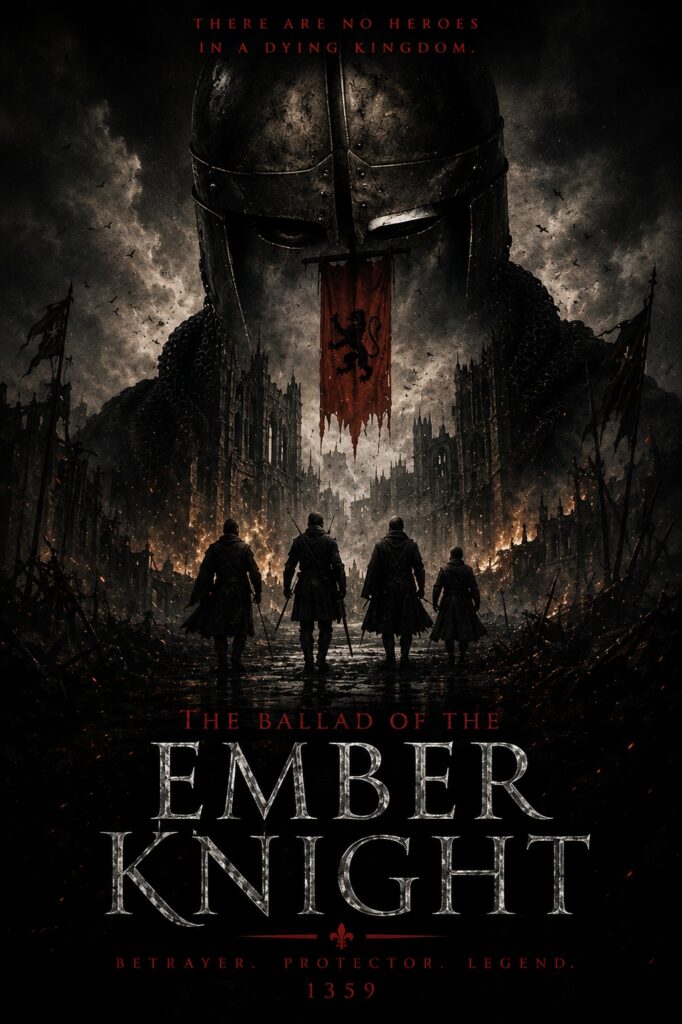
If you’re not familiar with the journey of The Ballad of the Ember Knight screenplay, the now notorious 186 page behemoth, and how it came to me, the short version of the story is that Kieran and Brennan sent it to me for a script consult. I loved it. I put it in my Top 25. I reviewed it. This put it on Aaron Kaplan’s radar. He read it right away and wanted to sign the brothers. He brought on Scott Stoops, who works for him.
Aaron and Scott then started sending the script around town and it was getting good feedback immediately. People really liked it. Eventually, just last week, Sony pulled the trigger for nearly a million bucks, I think because they didn’t want anyone else to start bidding on this thing and drive the price up.
This is a remarkable accomplishment for Kieran and Brennan. It is SO RARE, even if this were 20 years ago, for newbie writers to sell a script to a major studio for this kind of money. AND WITH NOBODY ATTACHED. I think that’s the most shocking part of this. Is that they didn’t even have an attachment. And they were still able to sell a script for near 7 figures to a major studio. It’s unheard of.
So, major props to Kieran and Brennan for pulling this off. It’s an amazing feat for writers without any credits and who were, just several weeks prior, unrepped (they’re now also repped by CAA).
Now, when I posted my review of the script, I noticed that it was getting mixed reviews from you guys. Some people really liked it. Others thought it was overhyped. So, I want to make it clear what I SAW that made me know the script was special.
One of the things almost every writer in Hollywood is trying to accomplish is to write an anti-hero protagonist who’s still likable. Who we want to root for. Writers constantly struggle to get this balance right. The writer either gets the “anti” part right, but the character ends up being extremely unlikable. Or they get the “likable” part right, but it steals away all of the character’s edge.
These guys created the perfect anti-hero. The ember knight (the hero of the story) is that pinpoint mix of both “anti” and “likable” and, when I saw that, I immediately knew that A-list actors were going to die to play this part. And, no doubt, that’s what Sony saw as well. They were fine with buying a script with no attachments (unheard of in this day) because they knew it would be so easy to get an A-lister to want to play this role. And then once you have that, you have a movie.
Now, truth serum activated, did I think this script would sell? Honestly, I thought it would have a tough time. Because of the page count and because the writers were unproven. That’s usually where studios draw the line.
But it goes to show what I always tell you guys. If you write something that’s really good, it will get noticed. And it will do something for you as a writer. Maybe not a 7 figure sale. But it will give you opportunities to start moving up the ladder. So let this be a reminder for you to keep pushing, to keep writing. Because sooner or later, your skill reaches the required level to deliver the goods. And I want everyone who’s in the High Concept Club Contest to let that light a fire under you. Cause I think one or two of you is going to be experiencing this same thing next year.
Okay, in honor of this news, I want to re-post my newsletter interview with Kieran and Brennan. This was right after they got signed with Aaron Kaplan (and Scott Stoops came on as well). Here it is.
A top Hollywood lit manager says he wants to talk to you guys. How the heck do you prepare for that call?
Kieran: Um, (laughs), we don’t really. We just go with it.
Brennan: With an open mind.
K: Yeah, with an open mind. The phone call was like two minutes long and then we set up a Zoom call for later. And so that’s how it happened. It came together very quickly.
So that others can prepare for this moment themselves, what did Aaron and Scott talk about on that call? What did they want to know about you?
K: They wanted to know our story pretty much.
B: How we got into writing.
K: How we got into writing. Which we were very brief on. How we came up with the idea. They really started pitching themselves to us, first off, more than anything. So, it was a very interesting spot for us to be in…
B: (laughs)
K: Our whole career, we were trying to get in and just have people read our script. And now it’s like, they read the script. They loved it. And now they’re pitching themselves to us. That was very much what the call was like. Not the other way around.
B: It wasn’t too onerous on us.
K: Yeah, we never felt like we had to prove ourselves to them. Whether that was right or wrong, I don’t know. But it worked out.
How did they pitch themselves to you?
K: It was a bit like, “This is the team we manage. The movies we like. These are the clients we manage and the types of careers we’re trying to sculpt. This is what we’ll be able to offer in terms of sending the script out.” I mean, Aaron read the script in one night. He then gave it to Scott, who read it the next night. And we were like, “Wow, you read our script and you liked it? We’re sold!” (Both of them laugh). But yeah, he talked about some of the things they produce. For example, they represent Jeremy Slater, who wrote Mortal Kombat 2, and talked about how this is what we want to do for all our writers. Which was exciting to hear.
B: And they gave us an idea of what people would expect from us. How they would look at us based on this script. The boxes we would be placed in, which is relevant for how we’d approach sending them future scripts.
K: Yeah, and honestly, they were just really nice. We got a great feeling from them.
B: Yeah, we got the feeling that we could actually work together.
Was there anything Aaron and Scott asked you that caught you off guard or was it smooth sailing?
K: Not really. I guess one thing that surprised us was they talked about sending it to certain producers first. In our mind, we thought it would be actors. So we thought we’d go out to a Henry Cavill, for example. So, it’s an example of us learning the process.
How long was the meeting?
B: About an hour.
Oh, wow. Can you take me through the process of trying to get the script noticed before you sent it to me?
K: Yeah, we sent it to friends, just for feedback.
B: One of the big problems we ran into in regards to sending the script to competitions or the Black List is that a lot of them did not accept scripts above a certain length. So we couldn’t actually send it out to people.
K: Yeah, that was the problem. We didn’t have anywhere to send it. We would send out abbreviated versions to people. Like the first half. And then we’d send that to the Black List.
B: We started splitting it up into episodes and send the first one out as a pilot.
K: And obviously, it didn’t work that way. And we’re sitting around, trying to figure out our next steps and I thought, “Oh wait. Carson.” Which wasn’t an easy choice. Cause you’re not cheap.
B: (laughs)
C: (laughs)
K: Yeah. We knew it was a tough sell but we also had a lot of confidence in it. With that said, we had no idea you would like it so much.
B: Yeah, that was shocking. To be honest, you were a hail mary. We’d given up on that script being accepted anywhere.
K: We’d mentally shifted over to a much more marketable script — an action comedy. The frustration of this script made us really focus on something that would be easy to push out there.
What was your lowest moment as a screenwriter before this breakthrough?
B: Austin.
K: Yeah, Austin. When we went to the Austin Film Festival.
B: We had another script, The Man Who Came From the River.
K: We were finalists with that.
B: We didn’t win.
K: Right from the start, the people we thought were there to help us said, “We’re not reading scripts.” “Nobody’s signing anybody right now.” “Good luck out there.” Beyond that, we got one or two leads from the competition that didn’t go anywhere. And that was when it hit us: we’re kinda screwed here.
B: Even if we get a finalist position in one of the most prestigious contests, nothing happens.
K: Yeah, so that was a really low point. Not that the script was amazing or anything but just sort of the message we were getting and the fact that we had placed so high and that nothing at all came from it was discouraging.
B: And then we started sending various iterations of that finalist script over to the Black List. But we kept getting the same scores back. There was an early version of the script we sent them before Austin that was garbage. Yet no matter how much we improved it, we kept getting the same scores back.
How many scripts have you guys written?
B: We’re on our third now.
K: Yeah, we only have two scripts written together.
And then, Kieran, you wrote scripts before that, right?
K: I wrote one and a half scripts before that. I wrote an action script back in 2013. And then I wrote a post-apcolyptic adventure script that I got 90 pages into but ultimately abandoned.
B: We’ve only been doing this for about two years.
I gotta say it, guys. One of the first pieces of screenwriting advice you learn is: Keep your script under 120 pages. What the hell happened??
K: We tried! We do a big outline before each script. We make sure all the major plot points are there. We know what’s going to happen in all the key areas of the script. It actually looked like a normal-sized movie in that initial process. But since we essentially have two main characters, we had to double everything. And that beefed up the page count. And then when we started writing it, it just naturally got longer and longer.
B: The weird thing about this script is we really did try hard to cut it down. Every time we went into it, we’d try to cut more. But then, somehow, stuff got added instead, and it just kept getting longer and longer (laughs).
K: It wasn’t the plan. It just kind of happened.
A big reason I liked this script so much was how it felt like a Hero’s Journey tale. But I still haven’t asked you this. Was the the Hero’s Journey on your mind when you wrote this? Or was that just a coincidence?
B: Not specifically. I’ve always seen it as a Grail Quest. The Grail Quest is Joseph Campbell’s main thesis and inspiration. By no means were we following Joseph Campbell’s 22 points, or whatever it is. But it just kind of came out that way naturally.
How long did it take you to write Ember Knight? Time-wise and how many drafts?
K: The first draft was, what? (looks to Brennan) Six months? The second draft we were writing every day for several months. The draft you eventually received was the sixth draft I think.
B: It’s hard to count drafts because you’re always editing.
K: Yeah, and also we were jumping back and forth, rewriting our first script at the time. And we’d go back and forth between the two.
What was the hardest thing about writing this script? What issue did you keep coming back to?
K: The page length.
B: (laughs) We used to obsess over it. We haven’t been thinking about it as much lately. But that was always what was on my mind early on. It was honestly eating at me.
K: I mean the story is pretty straightforward. So the plot wasn’t hard to manage. Oh, the Hermit. The Hermit was tricky. But look, we had previously written a time-travel script and that was way harder.
B: That was so tricky.
I tell writers, don’t mess with time travel unless you want to drive yourself insane.
K: Never ever again.
What’s one thing about the script that maybe doesn’t seem like a big deal but you think is essential?
B: (note: Both Brennan and Kieran had previously informed me that Brennan does all the dialogue in their writing) I’ve got a weird one. There were no conjunctions back then. No “don’t.” No “can’t.” And you don’t realize what that does to language when you remove those. It completely changes the way you write dialogue. “Is not” has a completely different feel than “isn’t.” It was a challenge because in a place where I would’ve mindlessly placed “don’t” in a line, I would now have to put “do not.” And so many times I realized that it didn’t sound right. The rhythm of it. The flow of it. It’s can be jolting when you don’t use a contraction.
K: I didn’t even know that. (Laughs) For me, I just had so much fun writing this script. I didn’t have any of those problems.
I gave you notes on the script myself. What was the note I gave you that resonated most and why?
B: The Hermit
K: Yeah, you telling us that the Hermit wasn’t working was great because deep down, we knew we hadn’t figured him out.
B: And he’s definitely the most difficult character.
K: I would tell Brennan exactly what I needed the Hermit to be like in a scene and he would go off for a week, write this amazing poem-like monologue for him that perfectly encapsulated what I asked for, only for me to realize that I was wrong and he needed to be a different way in the scene. Brennan was not happy in those moments.
B: (laughs) No, I wasn’t.
K: And then also you pointed out to us that not every reader can be dropped into 14th century France and know what’s going on. We weren’t being clear enough about the setup. So that was helpful. We went back in and altered some of the exposition to make sure that you understood what was going on in France at the moment, how Britain was involved, where we were in the timeline. It’s easy to forget that stuff as writers, because we know our world so well.
Do you know what comes next with you guys and your new managers? A strategy call?
K: We’re going to pitch them some ideas. We’re going to strategize for what to focus on when we go out for general meetings.
B: Also, we’re going to get notes from them about the script. Aaron and Scott are both going to give us some notes.
K: Yeah, I mean we just signed over Memorial Day weekend. So we haven’t had much time together.
And what do you plan to write next?
B: We want to finish our action-comedy next. That should take a month or so.
K: And then we’re looking at sci-fi. We have a 2-part big sci-fi idea. A dystopian world set 100 years in the future. The trick is we’re trying to imagine what people who read Ember would expect from us next.
That’s awesome, guys. This has been a blast. Keep me updated so I can share your successes with the Scriptshadow community!
B/K: Cool. Will do!
