
As we get closer to the Blood & Ink deadline (that would be Cinqo De Mayo), we’re going to have to, you know, finish our scripts. I could write a book on finishing scripts. There’s actually a lot to it. But for the purposes of today’s article, I want to focus on the final act. Because, chances are, as you approach finishing, the area of your script that’s going to be the least complete is that ending.
It’s an issue I’ve always had with the screenwriting process. We get so caught up in writing that first act (we keep going back to it to improve the opening scene and set up our heroes better and make sure the inciting incident is perfect) that the other two acts don’t get nearly as much of our time. Which equates to an uneven “percentage of time spent on each act in a screenplay” ratio.
Time Spent on First Act: 60%
Time Spent on Second Act: 25%
Time Spent on Third Act: 15%
If you want to know why so many movies fall apart, this is the reason. And it’s why almost every Hollywood movie freaks out about the third act during production and brings in a writer to rewrite it AS THEY’RE SHOOTING THE FIRST TWO ACTS OF THE MOVIE.
It’s because they didn’t put in the time when originally writing the script to make the ending good enough that people wouldn’t question it. Cause people only question bad or average third acts. They don’t question anything when that third act is awesome.
Look at Back to the Future. Arguably the best third act in the history of cinema. They weren’t rewriting that during production, I can promise you that. They notoriously rewrote that script until they got it right and THEN went into production with it.
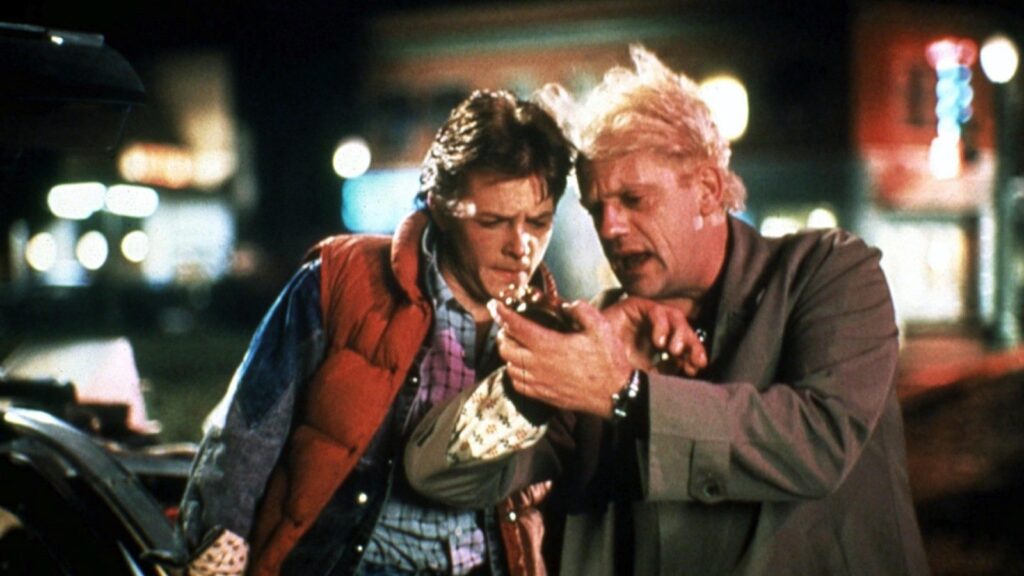
But how is my saying, “You need to spend way more time on your third act” going to help you now? Well, lucky for you, I’m going to give you a little hack on how to massively improve your third act without having to spend another one thousand hours on it. And Back to the Future is actually the perfect movie to use as inspiration for this screenwriting hack.
The key to massively upgrading your third act is this: PAYOFFS.
Payoffs are your secret weapon for turning a bad third act into an awesome one. Because the mistake that so many writers make is they just write a logical conclusion to their story. It’s enough to get the job done but it doesn’t contain any of those moments that emotionally invigorate the reader.
You can create those moments by simply setting up things throughout the first and second acts, and then paying them off in the third act. And the great thing is? There’s no limit to how many payoffs you can use. Readers and audiences absolutely love payoffs. The setup and payoff formula always feels clever. The reader feels like they’ve earned something because they’re rewarded for paying attention earlier. It makes readers feel smart cause they had to add a couple things up. It’s very rare that a setup and payoff doesn’t work.
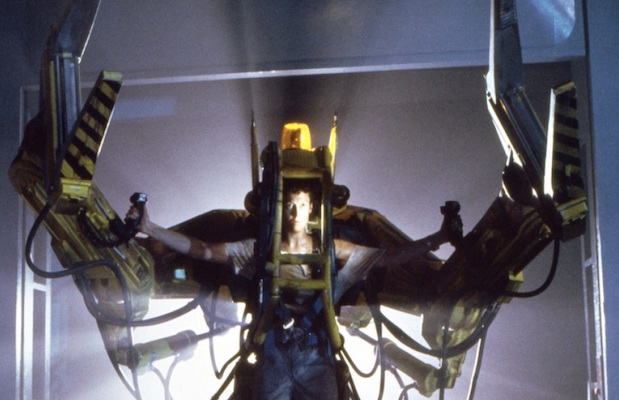
And here’s why this is relevant to the position you’re in now. Because you can retroactively add setups. For example, if you’re writing a movie about marines going to a planet to take down aliens and you’re at the end of your story and you don’t know how to end it but you think, “You know what? It would be really cool if I could put my hero inside a big mechanized suit and have her battle the mother alien that way.”
Perfect! All you have to do is write that scene then GO BACK TO THE FIRST ACT and set it up. Write in your hero, in this case Ripley, telling one of the marines that she can operate one of those mechanized loader suits, show her doing it, and now you’ve just set up that ending.
Would Aliens have still worked had there never been a setup scene for that construction loader suit? Sure. But when you create the setup scene, it operates as this line connecting the earlier part of the screenplay to this part of the screenplay, and, therefore, it makes the story feel unified. Or, to put it more bluntly, it doesn’t feel like the writer was just making up the ending as he went along.
I brought up Back to the Future earlier because I don’t think it’s a coincidence that the best third act in history also has the most third act payoffs in history. If there’s ever an argument to be made about how important payoffs are to making a third act great, look no further. It’s one payoff after another here.
- The Photograph Restoring
- George overcoming his cowardice to knock out Biff
- The entire Enchantment Under the Sea Dance Set Piece
- Marty’s guitar skills required to make his parents kiss again
- Doc refusing to read the warning in Marty’s letter (then changing his mind)
- Marty’s mom acting like a slut despite earlier painting herself as a nun
- The lightning striking the clock tower
And these are just some of the big ones. There are a million smaller payoffs that come into play in that film as well.
So, how do you apply this to your own script and your own ending?
Well, as you’re trying to figure out how to make your third act work, don’t think two-dimensionally. Think three-dimensionally. For example, if you’ve written a slasher film and you’re looking for a final location to create the big showdown between your hero and the killer, don’t just ask, “What’s the best location to have this showdown?” Ask, “Is there a location that’s either already set up, or that I can set up retroactively, that would make the location more powerful?”
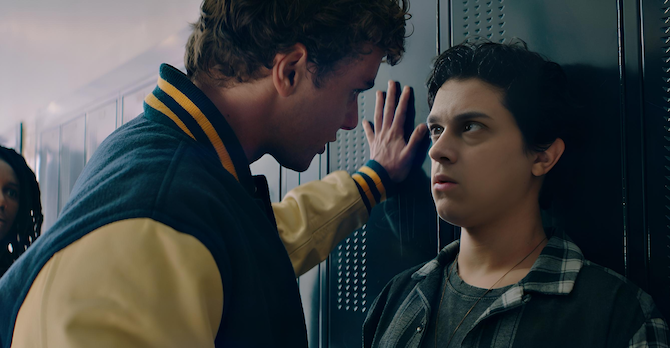
I remember a couple of years ago, I was consulting on a slasher screenplay that was dealing with this exact issue. A lot of the backstory revolved around the killer’s years at high school and him getting bullied. Twenty years later, he was taking out his bullies one by one. And the writer placed his big climactic ending in this random place. I think it was a loading dock or something. And I told him, “Are you crazy?? The climax needs to happen at the high school!”
That’s where you want your head for all of your creative choices as you’re writing that third act. You’re trying to connect back to as many moments in the story as you can. When you first add these to your script, many of the connections will be clunky. But you can rewrite them quickly, smoothing them out more and more each time. And the next thing you know, you’ve got a third act with 5-10 payoffs and your script feels way more interconnected and planned than your competition. And the ending’s just better. We enjoy it more.
And even if you aren’t struggling with your ending, I can promise you that it would benefit from a couple more payoffs. Again, you can’t add enough setups and payoffs in a movie. Audiences absolutely love them.
So what are you waiting for? Get to it.
