
Or is it?
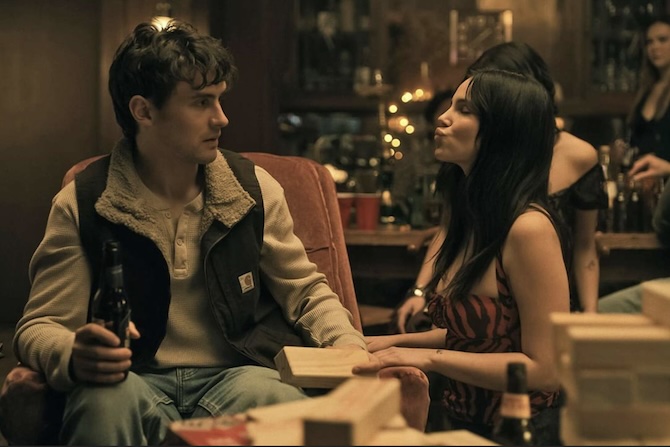
It has been a loooonnnnnnnnnnnnnng time since the directing industry had a revolution.
There used to be new filmmakers popping up everywhere. Every couple of years there was some exciting new voice (Tarantino, Rodriquez, PT Anderson, Richard Linklater, the Coen Brothers, Steven Soderbergh, Spike Lee, Wes Anderson, Darren Aronofsky, David O. Russell) that everyone had to know. Somebody whose movie had the industry buzzing. Somebody who made older filmmakers sweat. It happened so often we assumed it would always happen.
And then one day, somebody turned off the water.
When was the last time people got genuinely excited about a new director? Jordan Peele? That was ten freaking years ago, dude!
Sure, there are talented filmmakers working today. The Safdies are badass. The Daniels rock. But outside of the Hollywood ecosystem, people could care less about these guys.
Which is why a revolution was desperately needed. For years, Hollywood treated YouTube as the kiddie table. It was where people made reaction videos, gaming streams, low-budget green screen video podcasts.
Then, one day, a group of these YouTubers said, “We’re ready to make real films now.” Chris Stuckmann. Markiplier. Curry Barker. Kane Parsons.
And people started paying attention. Not because these movies were masterpieces. But because for the first time in forever it felt like the beginning of something was upon us.
So the question becomes: Is this the filmmaking revolution we’ve all been waiting for?
I watched all four of these filmmakers’ films to find out.
But before we get into that, I want to talk about something Michael De Luca said recently. De Luca, who currently runs the film division at Warner Bros., was asked about these YouTube folks and he gave a surprisingly aggressive answer.
He said that these creators have spent years building a relationship with their audience. They’ve uploaded enormous amounts of work online. They’ve received praise. They’ve received criticism. They’ve been forced to see, in real time, what people respond to and what they don’t, and they use that information to hone their craft.
De Luca then contrasted them with the old established directors he works with. According to him, an old guard director would rather get dropped into the middle of Rodeo Drive naked than sit with a test audience at a 10am Burbank screening of his latest movie.
The more I thought about that, the more fascinating his comment became. Because I think De Luca may have identified the biggest difference between the old generation and the new.
The old generation was built on the idea that the director was king. The director was the overarching authority on everything. The director received inspiration from the heavens and anybody who questioned what he said was challenging the nature of art itself.
The YouTube generation grew up the opposite. They posted their work. People told them it sucked. Then they posted more work. People told them it was better. Then they posted more and more and more. And they repeated that process hundreds of times until they got really freaking good.
The old model was built on authority.
The new model was built on connection.
Which is why I think these four filmmakers are so interesting. Because whether this particular group succeeds or fails, they may represent the first wave of a completely new talent pipeline. So let’s look at their movies and see what we’re dealing with.
Let’s start with Chris Stuckmann and his film, Shelby Oaks, about a woman investigating the disappearance of her sister, who vanished while filming a YouTube ghost-hunting show.
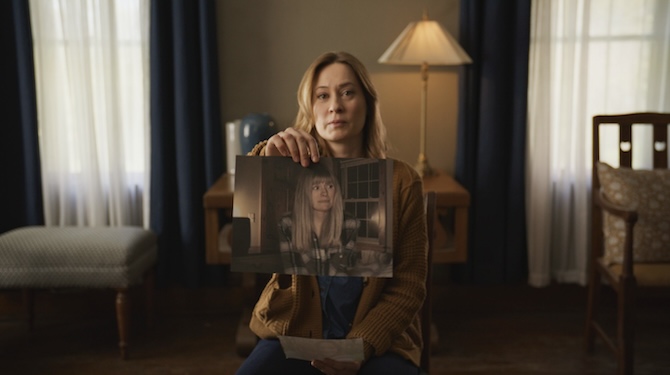
Of the four filmmakers on this list, Stuckmann may have had the hardest road of all. For years, Stuckmann built a career on reviewing movies. Analyzing them. Breaking down what worked and what didn’t. Identifying flaws. Explaining why certain choices succeeded and others failed.
Then one day he had to make one himself. That’s a terrifying position to be in. Because no filmmaker is going to be judged more harshly than the guy who’s spent years judging everybody else.
Every criticism you’ve ever made becomes a loaded gun sitting on the table. You can’t use the clichés you’ve complained about. You can’t make the mistakes you’ve pointed out in other films. You can’t hide behind excuses because you’ve spent years telling those filmmakers why those excuses aren’t valid.
The lane becomes incredibly narrow.
I think Stuckmann understood the challenge. You can see him trying his ass off to avoid making a conventional movie. Shelby Oaks mixes traditional narrative storytelling with found footage and docudrama style interviews.
The problem is that effort isn’t the same thing as life. Somewhere along the way, this movie became completely inert. I kept trying to figure out why because the setup should work. A missing person mystery is one of the most reliable story engines out there.
But the movie sputters more than the rusty 20 year old Toyota Corolla I had in high school. The found footage elements feel oddly dated. The directing avoids urgency. The documentary interviews keep stopping the story right when it should be building. Within twenty minutes, you’ve checked out.
I think the problem is that Stuckmann spent years analyzing storytelling. But analysis and creation are not the same skill. When you’re creating from a place of instinct, you’re chasing ideas. When you’re creating from a place of avoidance, you’re chasing mistakes. Those are different energies.
I know this personally because whenever I try to write creatively, my mind is bombarded with all the “dont’s” and “no’s” and “avoids” that I warn you guys about week after week. How can you create when you’re scared of every choice that pops into your head?
Creativity flourishes through creation. And Review Brain destroys that. I noticed that in Shelby Oaks. I’ll use a tennis analogy. The best players in tennis try to win. The weakest players try not to lose. This is the definition of a “try not to lose” movie.
Then we’ve got Markiplier and his film, Iron Lung, about a convict placed inside a tiny submarine and sent to explore an ocean of blood in a distant future where much of humanity has disappeared.
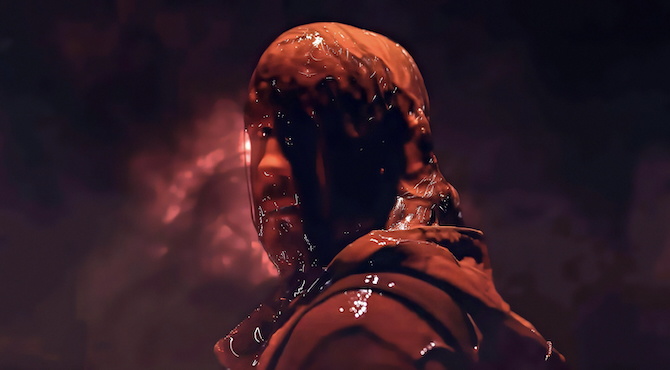
If Chris Stuckmann’s problem is excessive caution, Markiplier’s problem is the opposite. This guy doesn’t care if you’re confused. He doesn’t care if you understand what’s happening. He doesn’t care if you’ve been properly briefed on the rules of the world. He barely seems interested in explaining anything.
Iron Lung throws you into a tiny metal submarine, locks the hatch, and says, “Good luck.”
The movie opens by informing us that many of the stars are gone. Okay. Why? No clue. The ocean is blood. Okay. How did that happen? No clue. We’re supposedly carrying out a mission. Cool. What’s the mission? Also unclear.
The entire movie operates like that. You’re constantly searching for footing.
Now, normally, I hate this approach. As you know, I’m a story guy. I want goals. I want motivations. I want setups and payoffs.
And yet… I sort of understand why people are responding to Iron Lung. Because unlike Shelby Oaks, which often feels trapped inside its own fear, Iron Lung feels alive.
Messy. Confusing. Half-baked.
But alive.
The closest comparison I could come up with was imagining a young David Fincher being forced to make a movie in twelve days with no money and only partial access to the script. It’s rougher than a back-alley joy ride in a car with no shocks.
But if I had to choose between a filmmaker who’s making interesting mistakes and a filmmaker who’s terrified of mistakes, I’ll take the interesting mistakes every time.
Next we have Kane Parsons, whose path was very different from these other two. He helped create an internet phenomenon. Backrooms started as a picture, then a series of atmospheric short stories, and then it got into Parsons’ hands, where it became a series of short videos. Weird. Atmospheric. Unsettling. The kind of thing made to spread online.
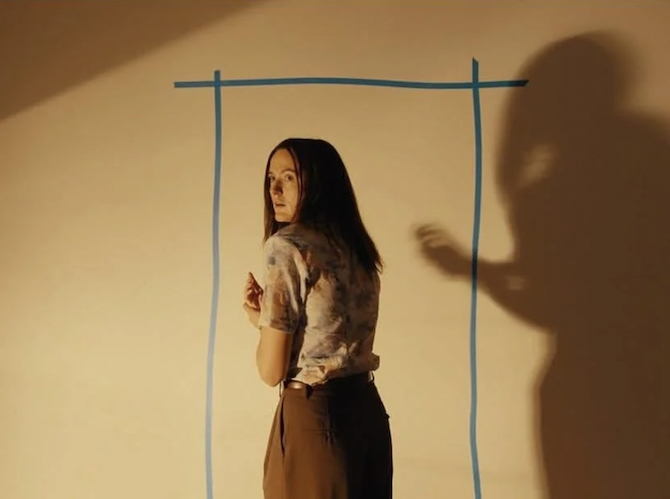
Unlike the others, Parsons wasn’t working with a tiny budget. He was handed 15 million dollars. That’s a completely different challenge. Suddenly you’re dealing with producers, executives, actors, departments, schedules, notes. All the machinery that comes with professional filmmaking.
Through that all, Parsons had to deliver what he knew the audience wanted, which was that strange unsettling feeling they got from the short films, but in a real environment. Backrooms has the distant influence of a young David Lynch. Like a confusing nightmare that wants to destroy every corner of logical thinking in your brain.
And it works more than it doesn’t. Because unlike Iron Lung, where the lack of structure feels accidental, the lack of structure in Backrooms feels intentional. At least most of the time.
While I think Backrooms is easily one of the strongest films in this group, I also think Parsons remains the biggest question mark. Is he just a filmmaker who got really good at doing this one specific thing and that’s all he’s got? What does a non-Backrooms Kane Parsons movie look like? Cause when I’m trying to imagine it, I imagine a juvenile concept and an inconsistent execution.
You gotta remember something: Kane Parsons has nothing to do with the creation of Backrooms. Somebody else came up with the idea. He was just the best guy at making videos of it. And as anyone in this business will tell you, concept is king. We’re all searching for that rare gem of a great concept. If you aren’t handed the shiniest diamond of them all like you were with Backrooms, what do you have? The answer to that question will define his career. Full-stop.
Finally we get to Curry Barker and his film, Obsession, about a young man who makes a wish that his female crush will fall in love with him, which she does, but the wish works so well that she becomes crazily obsessed with him.
Of the four filmmakers, Barker is probably the most traditional in that he cares just as much about the script as he does the directing. As I pointed out in my review of the film in the June newsletter, that makes sense, since his father has a screenwriting podcast.
Obsession is a strange entry into this foursome because it feels the most like a movie you’ve seen before. And so you would think that would work against it. But it never does.
I think what Barker did a great job of is he understood that good horror premises have a simple hook but you need to balance that simplicity with some sort of extreme. Because if you have a simple premise and you also have an uninspired execution, your movie will be forgettable.
Barker knew that he was going to let this actress go crazy and that that would be the balancing point to even out the simplicity. And he was right. Now, every single actor in Hollywood wants to work with him.
So what does all of this mean? Is the YouTube revolution real?
Sadly?
No.
I only think one of these guys is going to have a career in Hollywood. And that’s Curry Barker. This guy did the time. He made tons of shorts. He learned the craft. He had good people in his life emphasizing the importance of writing. He’s the full package.
But the other three? I have a lot of doubts that they’ll make it past their next movie. Markiplier needs to find a screenwriter he likes. If he does that, he might have a shot. Cause his directing skills are pretty good.
Kane Parsons seems heavily chained to the Backrooms universe. I’m not convinced he knows anything about storytelling outside of that. He’s young so he has a lot of time to mess up and learn. But these super young dudes can flame out hard when they hit their first bout of adversity. Need I remind you of the name, Josh Trank?
And then you have Chris Stuckmann, whose creative ceiling appears to be barely high enough to stand up under. I didn’t see a single thing — directing, casting, lighting, acting — that he did well. All of that stuff was subpar. Your first movie has to show SOME SORT OF “I’m awesome at at least this ONE thing” quality. But he didn’t even have that one thing he was good at.
Which means this revolution is more hype than reality.
But we might be missing the bigger story. That the revolution isn’t this new group of filmmakers. It’s this new pipeline to find talent.
For years, Hollywood searched for new talent in all the same places. Film schools. Assistant jobs. Mailrooms. Nepotism. Film festivals. The indie film circuit. Where has that gotten us in the past decade? I’ll tell you where. To, arguably, the worst decade of film ever.
Hollywood spent decades assuming YouTube was beneath them. Then this month happened and suddenly they had to confront reality. Not that these kids could direct. But that they could direct movies THAT MADE LOTS OF MONEY. And that’s the one language Hollywood cannot ignore. Cause believe me, they don’t want this new revolution. They don’t! They would prefer it go away because it means rewriting the rule book and they hate how much uncertainty comes with that.
The revolution is that those graphene gates the studios have put in front of all of their lots have finally been removed.
Hollywood’s about to get a lot more interesting.
