
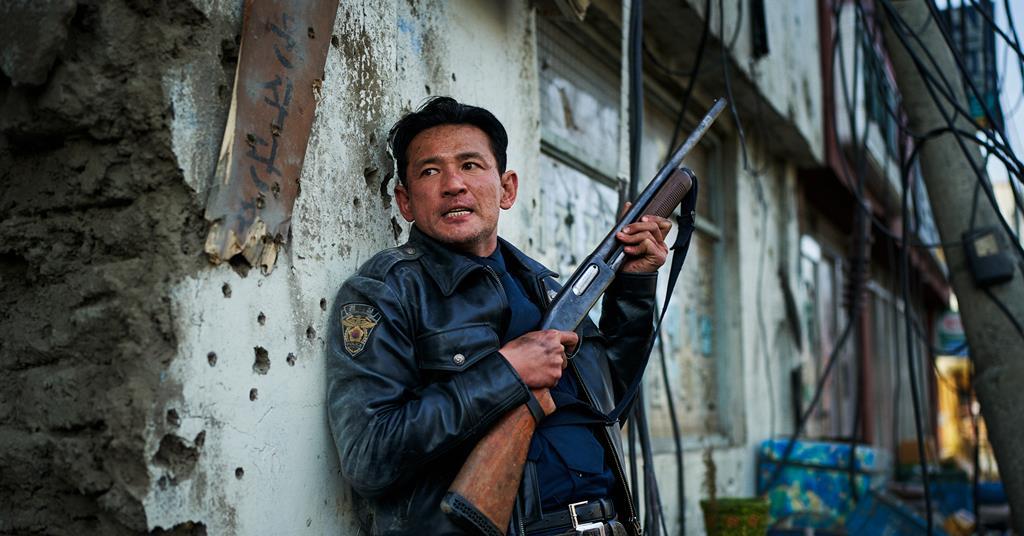
So I finally saw this movie Hope over the weekend. It’s a Korean monster movie where something terrifying invades a large town, and that’s all I knew about it. But I was curious because it initially got a lot of attention when it premiered at the Cannes Film Festival earlier this year.
If you haven’t heard of the movie, Hope is the name of the large harbor town where the story takes place. It starts off with this police chief looking into the strange, violent death of a cow. He’s quickly pulled to another spot outside of town where another cow has been brutally killed.
Then some locals find a human arm hanging from a tree, and now they know that they’re dealing with something much more serious than a random animal attack. The police chief heads back into town, where he discovers that a lot of local stores have been destroyed, and lots of people slaughtered.
From there, it turns into this relentless pursuit of whatever’s responsible for this carnage, which eventually turns out to be a monster. And our police chief and deputy do everything in their power to stop it. And that’s the movie. It’s very straightforward.
I’m going to go on the record and say that this movie gets messy. But it’s about as beautiful as messy gets. So, there’s still a lot to learn. Starting with how it deals with suspense, something that has become a lost art in Hollywood.
Hollywood these days seems to have totally forgotten how to use this storytelling tool, particularly in relation to monster reveals. Because if you go back to the greatest monster-reveal behind-the-scenes story ever, Jaws, that story became huge specifically because Spielberg had originally planned to show a lot more of the shark throughout the movie.
But the shark had all these mechanical issues that have been well documented. So they couldn’t show it nearly as much as they wanted to. They had to rely on things like the fin, the barrels, and underwater point-of-view shots, and wait until roughly 80 minutes into the movie to give us our first full look at the shark.
Ironically, that became one of the most celebrated things about the movie. How long Spielberg made us wait to see the monster. And so that became this sort of calling card in Hollywood for a while. You had to wait to reveal the monster. You had to wait, wait, wait, wait, wait, because Jaws did it.
And the irony was that Spielberg hadn’t originally planned to withhold the shark that long. He was forced to because the thing didn’t work. And this raises a fascinating question about being an artist and the choices we make. Because we’re constantly asking ourselves, are we making the right choice? Is this the best possible way to tell this story?
And here’s one of the greatest filmmakers of all time, making one of the greatest movies of all time, and one of the defining creative decisions came about because he couldn’t execute his original vision. Think about that. It can fuck with your head, no doubt.
But the glazing of revealing the monster later dimmed over time as audiences and studios became less and less patient. We started revealing the monster earlier and earlier. It got so bad that we actually started revealing it BEFORE the movie started, in the trailer!
But then Hope comes along and reminds you of the power of waiting to reveal the monster, which is that it creates this incredible, sustained line of suspense. The monster in Hope isn’t revealed until minute 45. And because we’re so conditioned to meeting these monsters early, sometimes in the very first scene, it feels like hours have passed. It’s a reminder of just how powerful suspense is.
Because we’re so curious what this thing is, because we’re so determined to find out what has wreaked all this havoc, there’s no way you can watch this movie and turn it off before minute 45. There’s just no way. And that’s how you know you’re doing suspense right. The viewer is incapable of turning off your movie because you’ve pulled that line of suspense so taut that they HAVE to keep watching.
And the trick to stretching suspense that long is to give the viewer tastes. You want them to hear the danger. You want them to see objects thrown by this thing. You want them to see movement through windows. But you don’t want them to actually see the danger itself.
Hope does all of that, and it does it so effectively, that by minute 45, we’re DYING to see this thing. And then we finally see it, and it’s like, wow.
But that wasn’t the only great thing about this movie. I think one of the problems with suspense, and specifically suspense involving a monster reveal, is that movies always need an engine underneath them. They need something that’s driving our interest in what’s going on.
And suspense is one of the greatest ways to achieve that. So Hope achieves that for the first 45 minutes.
But what happens when you reveal the monster? What happens when the suspense is over? What do you do then?
That’s where a lot of writers fall apart. And I think where Hope elevates instead of falls is that this monster is unlike any monster we’ve ever seen before.
Let me take a quick detour and point out that familiarity can be useful in storytelling. If you write a movie about zombies, for example, there’s an advantage to having those established rules. Because we already understand how zombies work, and that allows the writer to play with those rules, reinvent them, expand them.
So I’m not saying you should always create an original monster. But this movie shows you what happens when you give us something we’ve never seen before. Because this monster doesn’t make sense.
It’s got long hair, yet it’s covered with lesions. It’s gigantic. It’s extremely muscular. And it’s insanely fast. We don’t know what we’re looking at.
And so that creates A SECOND ENGINE moving forward from the first one, which is that now we have to figure out what the hell this thing is. I’ve never seen anything like this before. Now I want to know what we’re dealing with. Where did it come from? Why is it here? What does it want?
So once again, I’m pulled in, and I need to keep watching. I need to keep turning the pages. That brings me to the monster itself. This is one of the best monsters I’ve seen in movies in a long time. And I’m going to tell you why.
It’s because I find that most writers put muzzles on their monsters. They realize that if they make their monsters too powerful, they’ll kill the protagonist right away and the movie will be over.
So they put muzzles on them. Or they give their heroes plot armor. The monster backs away at just the moment it’s about to kill someone for some unknown reason. Or a military helicopter shows up at the exact moment the monster’s about to kill our protagonist and shoots the monster back.
And the problem with this is that once you do it a few times in your script, we know the protagonists are fine. We know they’re never really going to be in trouble. And the harm that does to your screenplay is immeasurable.
Because in a script where there’s a monster and the reader feels safe, you’ve already failed. I just read a consultation script this week where this was my main note. Your monsters are not scary. I do not fear them. They are not enough of a danger to our protagonist.
If you want to know how to create a monster that is truly terrifying, just throw in Terminator 2. Throw in Terminator 2 and watch the T-1000.
Watch how relentless that thing is. Watch how it will stop at nothing to destroy our protagonist. There is no convenient plot armor. There’s just a Terminator desperately trying, doing everything in its power, to hold this thing back.
But other than that, the thing is insanely terrifying and unstoppable. And that’s what you want your villain or your monster to feel like. You want it to feel unstoppable.
Hope’s monster reminded me of the T-1000, and it’s the first time in a long time that I’ve encountered an antagonist, villain, or monster that reminded me of that level of intensity. There’s this terrifying scene early on where our police chief sprints onto a street, and this thing is chasing him, and it comes sliding around the corner and starts chasing him at this absolutely terrifying speed.
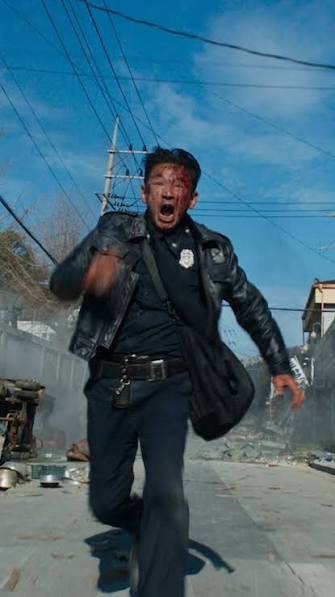
And I remember feeling so much fear in that moment for our protagonist. So please stop putting muzzles on your monsters, guys. This movie shows you the advantage of taking the muzzle off.
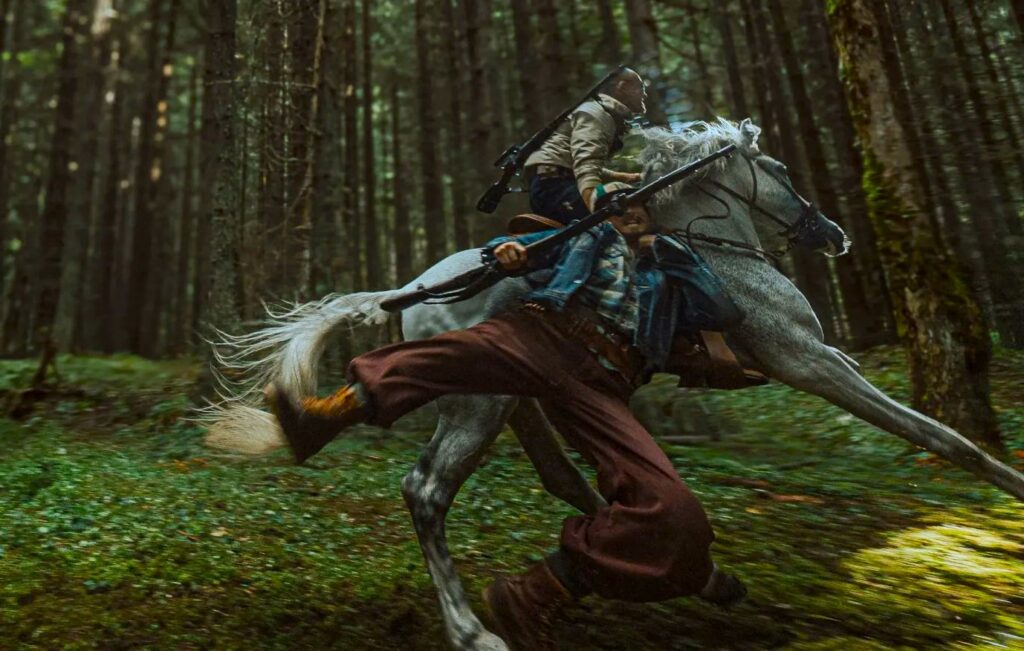
Unfortunately, structurally, Hope is kind of a mess. After we attempt to figure out what this thing is (they dissect it), a group of secondary protagonists stumble upon a crashed ship in the forest. And that’s when we realize there are more of these monsters. So don’t get comfortable yet. But it does introduce a new line of suspense (where are the other monsters if not in their ship) that revs things up again.
The problem is that Hope repeats itself a lot. We’ve already seen creatures try to kill our characters. And these new ones aren’t that different from the old one. Too much repetition can kill a script and whoever wrote this didn’t realize that a 160 minute movie is way too long. This is why one of the first things you learn in screenwriting is to GET RID OF THE FAT. Which, in this case, means get rid of the repetition.
Had the writers and filmmakers sat down and had a genuine discussion about this, getting rid of 45 pages (which would’ve taken the movie down to 1 hour and 55 minutes) we’d be talking about an all time classic. Movies with visually aggressive storylines should never be long.
In spite of this, the movie is still a treat because of everything I mentioned above, as well as, it just FEELS different. The point of view here, no doubt inspired by the region the movie was born out of, gives it a flavor none of us has tasted before. And it tasted good!
