This may low-key be one of the best dialogue tips on the planet
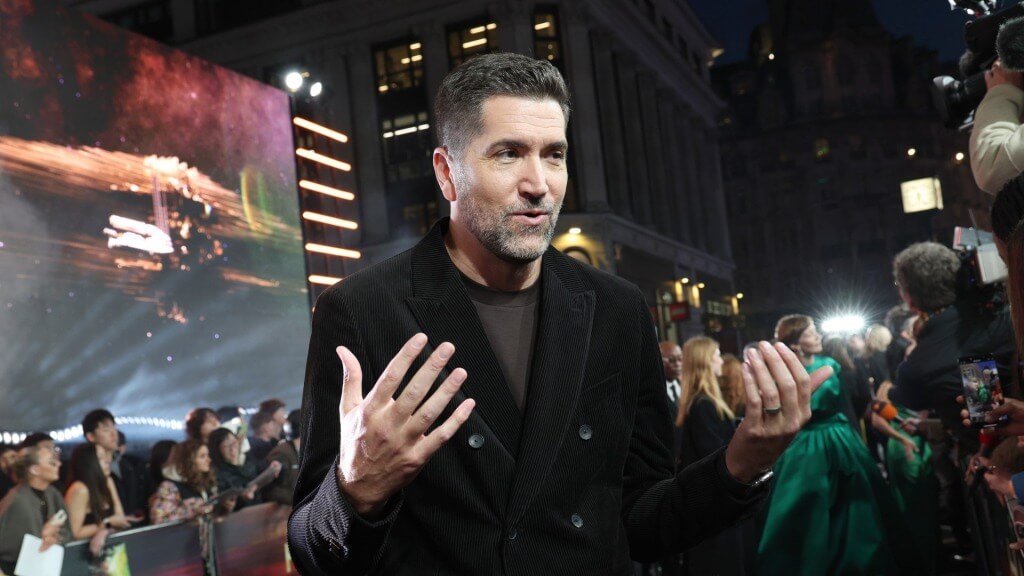
So, the other day, I was watching an interview with Drew Goddard for Project Hail Mary. I’ll be honest, I don’t read or watch a lot of screenwriter interviews these days. Mainly because I don’t learn anything new from them anymore. But this is one I wanted to check out because I think this guy is one of the best writers in Hollywood. He took two very hard books to adapt and made great movies out of them. And, if I’m being honest, after reading the book, I didn’t think this one was going to be very good. I thought the alien stuff had the potential to be a movie killer. Which is something I’m going to talk more about in this month’s newsletter. Stay tuned.
But getting back to Drew, he said something that struck me. He was asked how difficult writing dialogue was for this film and he immediately replied, “Dialogue is easy if you get the outline right.” Now, if I were a beginner screenwriter, I would hate that advice. Because outlining and dialogue don’t connect in any obvious way. But, having the benefit of hindsight of reading a million scripts and writing an entire book on dialogue, I can now tell you that this is one of the best pieces of advice for writing dialogue that you’ll find. And I want to break down why.
The first thing you need to understand is why we write an outline in the first place. Most people will tell you it’s a way to plan your story out. That’s obviously part of it. But the sneaky important reason you write an outline is to set up a story that always has FORWARD MOMENTUM. You’re making sure there is always an ENGINE underneath every sequence of your story. Because if you resolve a major thread early on in your script and you don’t replace it with a new engine, there’s nothing pushing your story forward. Which means your story will sit there, languishing, unclear where to go or what to do.
That’s what an outline should be doing. Making sure that each act has momentum. Making sure that you’re threading in plots and subplots that are always pushing things forward. How do you do this? The easiest way is to create characters with goals. A goal that spans the entire story, like Liam Neeson’s goal to save his daughter in Taken, is the easiest way to accomplish this. But not all stories are like this.
So if goals fade, you need to replace them with new goals. Or you need to switch the focus onto another character who has a goal. At first, in Star Wars, Luke Skywalker has no goal other than to get off his farm one day. So what’s the engine driving that section of the story? It’s Darth Vader trying to find those droids to retrieve the Death Star plans. Only once Luke’s parents are killed does he now have a goal – to help Obi-Wan deliver the Death Star plans to the Rebels.
You can, of course, have multiple characters pursuing multiple goals, which is the best case scenario, because it supercharges your story engine. But as long as at least one major character has a goal, and that goal has some level of importance behind it, it will be enough to keep the engine revving and keep the story moving along.
So, how does this relate to dialogue? Well, if you have a strong outline, and you’ve used that outline to make sure that there’s a strong engine underneath each part of your story, then we get to the real nitty-gritty of how this all works. Creating engines for pieces of your story ensures that each individual scene is moving the story forward. More specifically, the characters in the scenes want something (their “goal”). That want, that desire to get something (often from the other person) is what creates good dialogue.
Why is this? Well, one of the elements of strong dialogue is that, when a character speaks, he’s speaking because he wants something. That want is what gives his speech direction. Now the scene has a point. Main Character wants something. Will he get it or not? In that scene, because the character is speaking to achieve something, every line of dialogue will have purpose. And then, when he either succeeds or fails at achieving the goal, the scene is over.
When Goddard says that poor outlines result in poor dialogue, what he’s saying is that the opposite chain of command occurs. The outline is thin. There are parts of it where you don’t yet know what’s going to happen. This creates large gaps in the story where no clear engine is pushing the story forward. When you try to write a scene inside one of those gaps, characters often don’t have clear goals. Or if they do have goals, they’re weak. When you try to write dialogue inside a scene like that, it becomes infinitely harder.
Think about it. What does a character say if they don’t want anything?
In fact, if you’ve ever had that scene in your script where you’re constantly trying to rewrite the dialogue because it never quite feels right, there’s a good chance that that section of the script is weak, which is creating a lack of a story engine, which is weakening the goals inside the individual scenes, and if you try and place two characters speaking inside one of those scenes, you’re basically guiding lambs to the slaughter. Why are these characters speaking if they don’t have anything to say?
What then often happens, is you start trying to jestermaxx your dialogue. You try to make the jokes funnier. You try to liven up the observations and hot takes, pushing with everything you’ve got to make the conversation entertaining. Sometimes you even come up with some really clever stuff. But deep down you know the truth, which is that your characters are just babbling at each other. And when people read that scene, they’re not praising your dialogue for being clever. They’re bored out of their mind because nothing’s actually being said. That’s the dirty secret of dialogue. Nobody cares unless you’ve written an entertaining story where people need to say things to move storylines forward. And if your outline isn’t in place to make sure that that’s always happening, no amount of clever dialogue is going to save your script.
How does this look in practice? Let’s say you’re writing a scene about a young man meeting up with his father. The two don’t have the best relationship. They haven’t seen in each other in a while. The young man is struggling in life. He and his girlfriend are close to getting kicked out of their apartment. So he’s called this meeting with the intention of asking his dad for money.
It’s easy to write good dialogue for this scene. Why? Because the young man has a clear goal and the goal is important.
How would you write this scene? Well, the son knows he can’t come right out with, “I need money.” He’s got to at least pretend he cares about his father’s life a little. So he might ask his father what’s going on right now. Maybe ask about mom. Ask about work. The ultimate goal of getting money from the dad is buying time in the scene. The subtext is strong since we know he’s only saying all this other stuff to make the money ask feel more organic. That’s the ideal situation for a scene. Clear directive. Resistance from somewhere that creates doubt. You can write a million different variations of that scene and most of them will work.
Now let’s change the setup a bit. Let’s just say it’s a 22 year old young man meeting up with his father after they haven’t seen each other in a while. The son doesn’t want anything. The dad doesn’t either. It’s just them reconnecting after a long time.
I want you to imagine writing that scene. Notice how much more difficult the plan for the scene becomes. Where do you even start? You can start with, “Hi,” then awkward silence. Yeah, there’s something here because of the scarred relationship. But without establishing what each character wants, chances are you’re going to have these two mumbling at each other for two and a half pages and call it a scene. You’ll justify it by saying it’s “true to real life” but readers don’t care about that shit. They care about being entertained. And a vague meeting scene between father and son without any real direction is not entertaining.
I want to make something really clear here. Because when most screenwriters think of dialogue, they think of flash. They think of trying to make the dialogue as interesting as possible. In reality, though, what the reader really cares about is being pulled into the emotion of the scene. They want to wonder what’s going to happen next. And so “great lines of dialogue” are not what’s going to win them over. What’s going to win them over is: This character wants something important and, therefore, I want to see if they get it.
As long as you have that, your dialogue can be pretty barebones and readers will still be pulled into your scene.
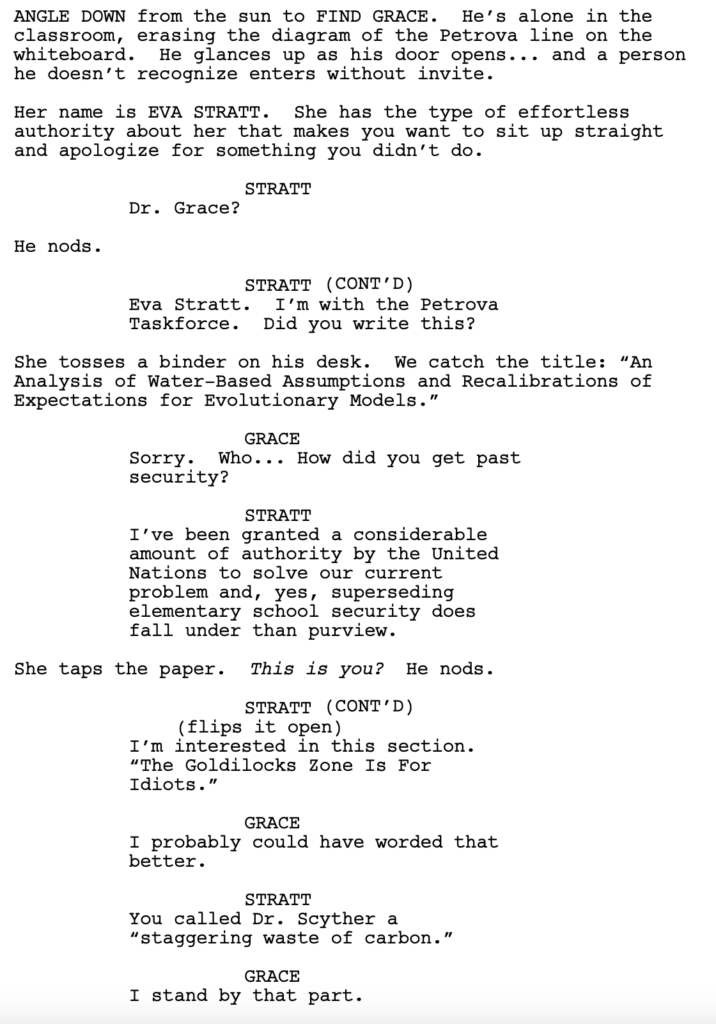
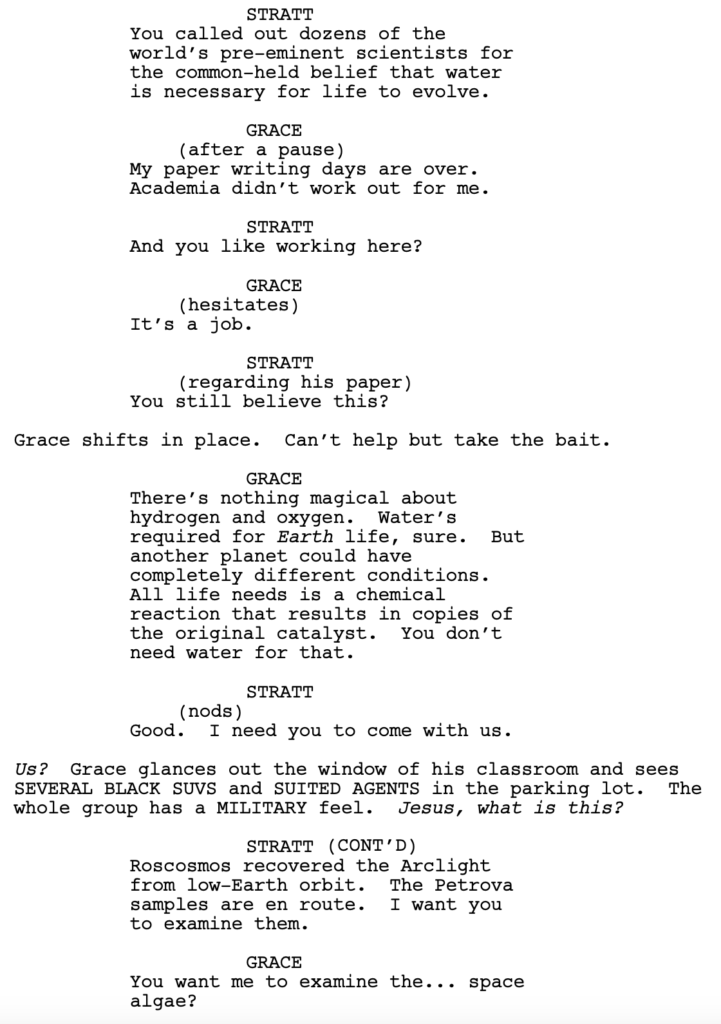
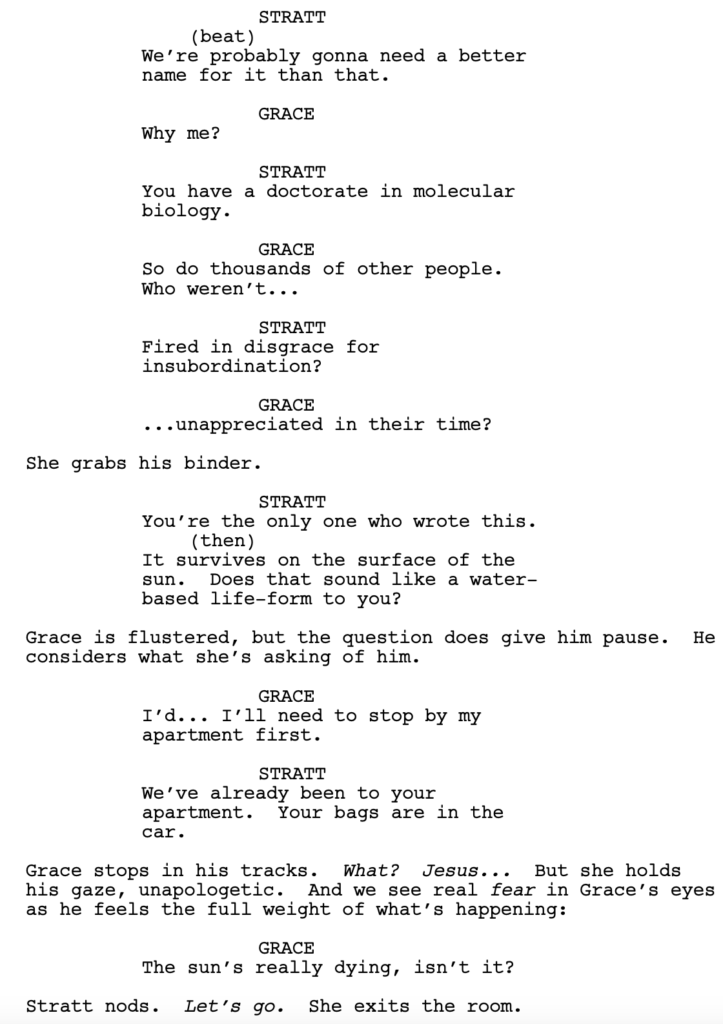
Again, this all goes back to the outline. Make sure that every section in that outline, that takes you from page 1 to page 100, from Act 1 to Act 3, from Sequence 1 to Sequence 8, all of it needs at least one primary character with a strong goal. That will ensure that each section has a powerful engine running beneath it. And every scene you write within that section will have a character with a goal in it, which’ll make your dialogue write itself. I’ll leave you with a very simple example of this from Project Hail Mary. This is where government worker Eva first shows up to Grace’s work to recruit him. She has the goal. The goal drives the dialogue. Happy weekend!