
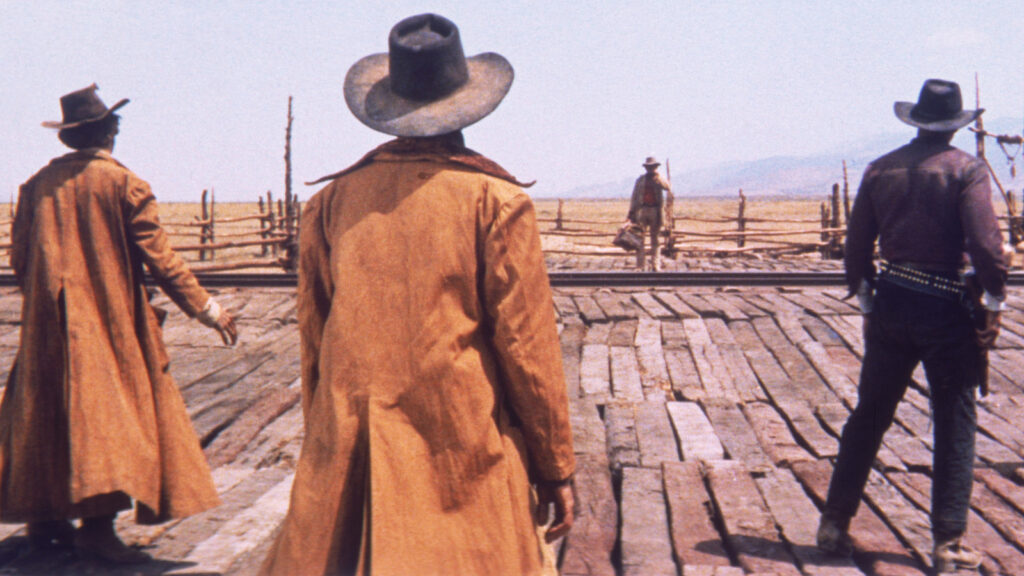
This was one of the more delightful entry-reading Showdown experiences I’ve ever had. There were so many fun entries.
Also, a lot of you seem to know what I like because there were some VERY Carson-specific entries. My favorite was probably this one: “Five years before his fateful encounter with Han Solo, a young Greedo is forced to choose between his dream of becoming the galaxy’s preeminent ‘Tatooine Jazz’ musician or following in his scumbag father’s footsteps by taking over his fledgling bounty hunter business.” I can’t include it in the official competition though since it’s got no shot of being made.
Also, kudos to those of you who used the taglines and crossover pitches to cleverly add context to what kind of show it was. In a couple of cases, that’s why I chose your entries.
I have NO idea who’s going to win this week. I’m very curious which logline you guys anoint as the winner. If you haven’t played the Showdown game before, read all the entries below and, in the comment section, vote for your favorite. Feel free to tell us why you chose it over the other entries as it will help writers get better.
Voting closes on Sunday, 11:59pm Pacific Time!
Next month we have MEGA-SHOWDOWN.
But for this weekend, it’s all about the PILOTS.
Good luck everyone!
Title: The Formers
Genre: Workplace Comedy
Logline: After a mass casualty event wipes out the U.S. government, a group of long-retired Washington luminaries are called out of retirement to assist the young, new White House staff running the country – if they can put aside their petty squabbling and old-school attitudes long enough to help.
Crossover Pitch: Veep x The Office
Tagline: Sometimes old dogs can teach new tricks
Title: PROJECT INNOCENCE
Genre: Legal Thriller
Logline: A headstrong first-year law student fights her way onto her school’s nationally recognized “Innocence Project” – led by a brilliant and charismatic professor – only to discover that her professor may not be who he seems and the convict they’re trying to free may not be that innocent.
Title: Funny Money
Genre: Drama
Logline: When a hapless stand-up comedian unknowingly passes off an ultra-high-quality counterfeit hundred-dollar bill known as a “superdollar,” he stumbles into the middle of an international criminal conspiracy with a bankrupt Native American casino chairman, a dogged Secret Service agent, a North Korean spy and a diabetic cartel enforcer with an insatiable sweet tooth.
Crossover: Fargo x Barry
Title: PLAYWRONG
Genre: 30 min Period Comedy
Logline: A troupe of struggling actors fight for relevancy for their small, dingy theatre located directly across the cobblestone street from Shakespeare’s Globe Theatre at the height of its fame.
Tagline: Hath thou heard of us? (Carson note: Best tagline of the entries!?)
Title: Boozeville
Genre: Half-hour comedy
Logline: Fleeing scandal, a dainty and demure English paleontologist moves to a tiny, extremely remote Australian outback town in search of a big dinosaur discovery – but first she must win over the locals.
Crossover pitch: It’s Always Sunning in Philadelphia meets Crocodile Dundee
Title: The Diary of Molly Winters
Genre: Horror
Logline: Two weeks after a high school loner mysteriously disappears in the woods of northern Washington, a determined guidance counselor attempts to uncover the young girl’s fate by interviewing four of her seemingly unconnected classmates who got lost in those same woods…and showed up three days later with the missing girl’s body.
Crossover Pitch: It meets True Detective.
Title: BARBARA DANIELS, SUPER MOM
Genre: Drama
Logline: Suburban Wife and mom of two, Barbara Daniels is seemingly the perfect Stepford woman – besides the secret Dominatrix Dungeon that she runs, unbeknownst to her family and friends.
In the vein of “Weeds”
I spent a good hour debating whether I should include this last entry. I mean, classifying your genre as “Transgressive Medieval Fantasy” alone gets you points for boldness. In the end, it’s too original of an idea not to include. So, it’s in the running.
Title: FLESH PAINT
Genre: Transgressive Medieval Fantasy
Pilot Logline: In a twisted dark age where the price of creating art is dismemberment, a blueberry-picking serf with an extraordinary talent is blackmailed into painting an erotic portrait of the king’s imprisoned daughter.
Remember, TODAY (THURSDAY) IS THE DEADLINE FOR PILOT SHOWDOWN! Do you have a pilot to submit to the contest? Best five loglines will be featured on the site and you guys will vote for the winner, which gets a review next week.
Here’s how to enter!
What: Pilot Showdown
I need your: Title, Genre, and Logline
Optional: Crossover Pitch, Tagline
Competition Date: Friday, June 21st
Deadline: Thursday, June 20th, 10pm Pacific Time
Where: Send your submissions to carsonreeves3@gmail.com
===========================================
Okay, onto our screenplay rewrite! If you’re new to the site, we’ve spent all year writing a script. We’ve since moved on to the rewrite process. We are in the sixth and final week of rewriting our SECOND DRAFT. Below, you can jump to every post that led us here.
Week 1 – Concept
Week 2 – Solidifying Your Concept
Week 3 – Building Your Characters
Week 4 – Outlining
Week 5 – The First 10 Pages
Week 6 – Inciting Incident
Week 7 – Turn Into 2nd Act
Week 8 – Fun and Games
Week 9 – Using Sequences to Tackle Your Second Act
Week 10 – The Midpoint
Week 11 – Chill Out or Ramp Up
Week 12 – Lead Up To the “Scene of Death”
Week 13 – Moment of Death
Week 14 – The Climax
Week 15 – The End!
Week 16 – Rewrite Prep 1
Week 17 – Rewrite Prep 2
Week 18 – Rewrite Week 1
Week 19 – Rewrite Week 2
Week 20 – Rewrite Week 3
Week 21 – Rewrite Week 4
Week 22 – Rewrite Week 5
On this sixth and final week of our 2nd draft rewrite, I want to remind you what’s important about your rewrite and what’s not important. Because what I’m learning from you guys is that you place the majority of your focus on parts of the rewrite that don’t matter all that much.
The reason for this is probably that rewriting is one of the most nebulous parts of the craft. It contains the least amount of clarity as far as what to do.
The other day I was helping a writer prepare for a second draft and we went through all the problems and talked through all the solutions and I thought we were good to go. I said, “Aim for 4 pages a day and you’ll be done in a month.”
But he said, “Hold on. I’m not writing from scratch. I’m going to be rewriting certain characters. I’m going to be changing scenes. I’m going to add mythology and detail. Don’t I need a different metric than ‘pages per day?’
I thought, ‘you know what, he’s right.’ Cause if you have to reimagine your main character – changing his tone from passive to active, changing his flaw from arrogant to obsessive – that’s a nuanced rewrite that doesn’t cater to the “pages per day” metric.
That’s why rewriting always feels messy. It’s not like painting a house.
It’s like painting a house, and planting a garden, and setting up a monthly spending budget, and keeping your marriage fresh, and fixing your car, and saving money for your kids’ college. It requires all of these unique skills to get to the finish line.
So, since we’re running out of time, I just want to remind everyone what’s most important in a rewrite. If you get just two things right, you can end up with a great draft.
Don’t get caught up in unimportant minutia that doesn’t affect the overall reading experience.
I know we all want that great dialogue but you shouldn’t be spending 4 hours on making the dialogue perfect in a two-page scene that’s mostly exposition. You’re wasting time doing that. Nobody reads a script and says, “You know, I really liked your script but some of your exposition was weak so I have to pass.”
Ditto description. It’s not that description isn’t important. But if you’re writing, say, a comedy, and you’re obsessing over describing your main character’s bedroom perfectly? That’s not why somebody reads a comedy script. They don’t read it for the excellent description of each and every location.
So that’s wasted time. Especially because over the course of the (minimum) 5 rewrites you’re going to need to get your script into shape, that scene that you spent all weekend perfecting might be cut later because that subplot wasn’t working.
Save all your dotting of the I’s and crossing of the T’s for your polish, which we’re getting to soon. But, at this stage, you’re rewriting. And when you rewrite, you want to get two things right above all else.
The first is the characters.
You want to make sure your main characters are clear. We understand…
a) their defining character trait
b) what they want
c) what their primary flaw is
d) and they must have some personality.
The reason most scripts fail is because characters are unclear, bland, or both. If, however, you nail your characters, it hides ALMOST ALL THE OTHER PROBLEMS IN YOUR SCRIPT. Cause we readers LOVE hanging out with characters we like or find interesting. And we don’t really care if the plot those great characters take us on is perfect.
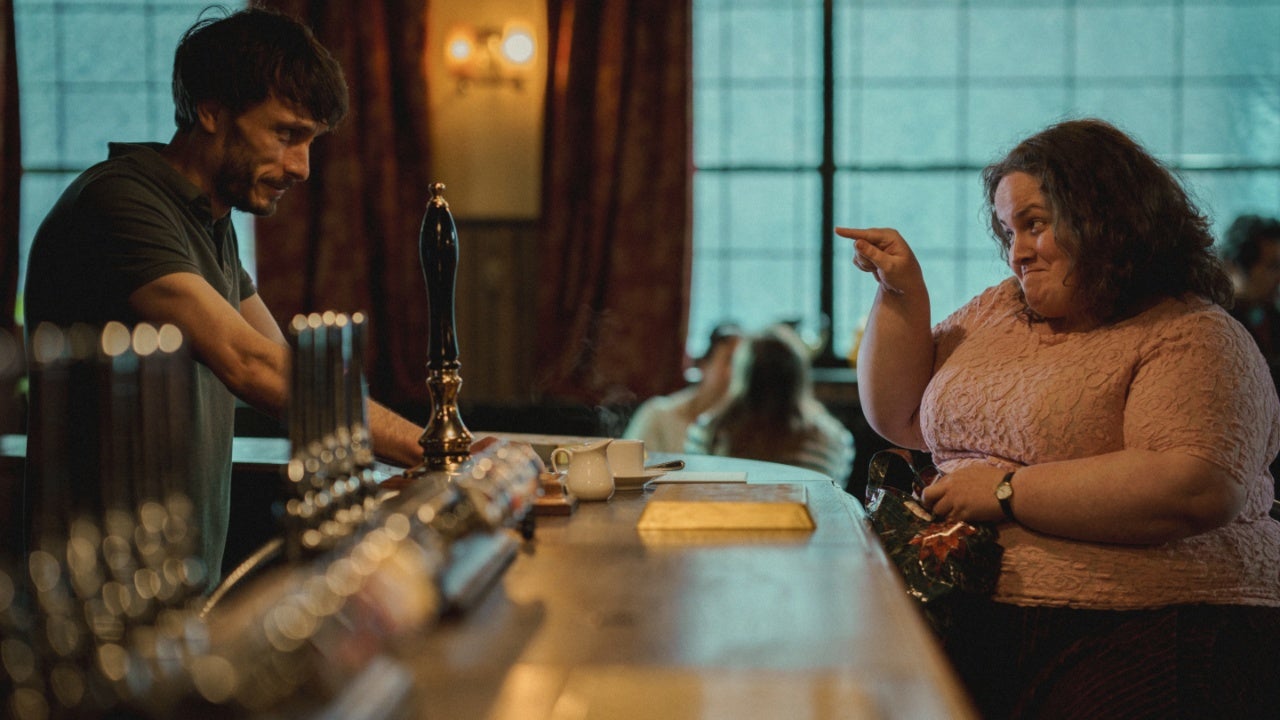
Baby Reindeer has a wonky-as-hell plot. It jumps all over the place. The goals keep resetting. Martha leaves the story for large chunks at a time. But none of that matters because the two main characters are so compelling.
Almost as important as your main characters is your main character relationships. It is SPECIFICALLY the unresolved-ness of the primary relationship in your story that makes the reader want to turn the page. If two people are in love and they’re happy and they’ve got no problems, why do I need to turn the page? Their lives are set.
It’s only when relationships have that unresolved nature that we want to keep reading. Readers and viewers inherently want to hang around until something is resolved. So make sure that’s there in your primary relationships.
The second MUST-HAVE in a script is that you must deliver on what your concept promised. Or, another way to put it is: You gotta give’em what they came for.
So, if you’re writing a movie like Bad Boys, you better give us 4 inventive funny-as-hell set pieces. If you’re writing a movie like The Hangover, you better give us at least three hilarious characters. If you’re writing a movie like Inside Out, you better give us some really clever and funny explorations of emotions. If you’re writing Mad Max, you better give me some road-warrior car chases that we’ll never forget.
There are a lot of things you can do in rewrites that are going to improve your script. You can cut scenes that aren’t needed. You can combine characters so the story’s more streamlined. You can set up your hero’s objective more clearly. You can remind the reader of the stakes throughout the story. You can try to come up with more imaginative scene locations so all your scenes don’t take place in apartments, coffee shops, and work cubicles.
But none of those compare to:
- Getting the characters right.
- Delivering on the premise you promised.
So, let that be your guiding light if you feel lost during your rewrite. If you’re focusing on all this little stuff – STOP. We’ll get to the tweaking in the polish. But now, you just want the stuff that matters to be as good as possible.
Genre: Sci-Fi Fantasy (TV Show – Episode 4)
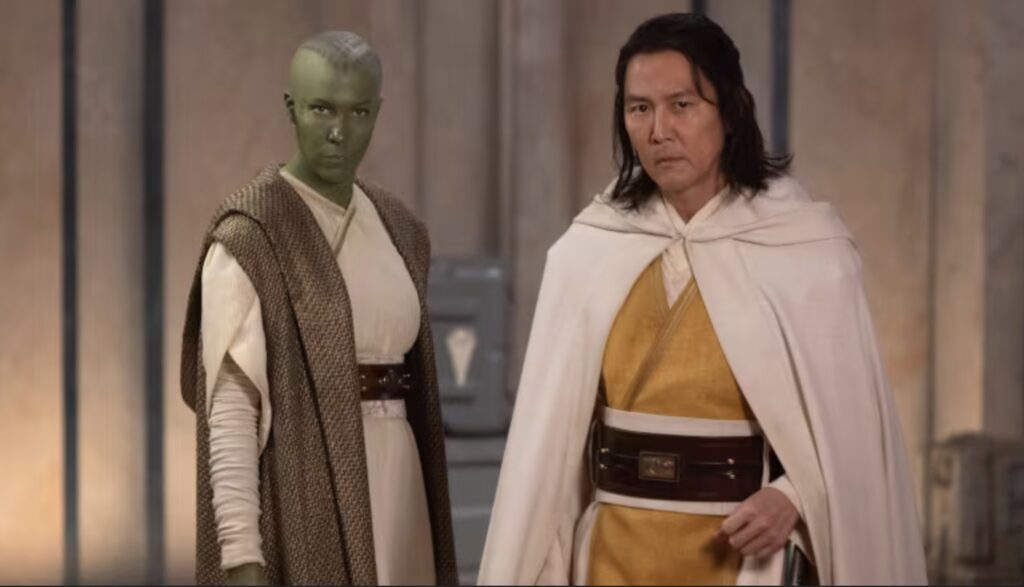
Premise: As evil twin Mae searches out another Jedi to kill on a forest planet, her good sister, Osha, joins the Jedi in the hopes of stopping her before she gets there.
About: You are looking at THE most talked about TV show of the year behind Baby Reindeer. Unfortunately, it’s for all the wrong reasons. To understand why The Acolyte is creating so much darkness in the universe, you must remember when it was greenlit. It was greenlit at the height of every social movement in the US. So it was a no-brainer season committal at the time for Lucasfilm. But, four years down the road, that vision of humanity doesn’t feel as fresh anymore. And hence, the show is getting attacked more than any other show in history. Today’s writers, Claire Kiechel and Kor Adana, have written for some good shows! Watchman, The OA, Mr. Robot. Can they counter the evil forces of online hate?
Writers: Claire Kiechel and Kor Adana
Details: About 30 minutes

What Disney has done – and what all the big studios are doing nowadays – is create divisions devoted to fake social media accounts so they can counter online dissension.
So it’s no surprise that Disney is going all in, online, trying to combat the hate being levied at The Acolyte. This is just one account that popped into my Twitter timeline today.
I learned something very early on at Scriptshadow. Which is that you can’t beat the internet. If the internet wants blood, you can’t pretend they don’t. Disney is giving it their best shot because they have enough money to do so. But they’re going to find out the same thing I did.
You can’t make people think something that isn’t true. You can’t seriously convince us that The Acolyte is an amazing show. I can buy some people thinking it’s a decent show. But a great show? Come on. Now we know you’re some AI bot deep inside Disney’s digital farm.
If you’re one of those people who’s struggling with The Acolyte, don’t worry! I am going to tell you how to fix Star Wars TV just as I fixed Star Wars movies on Monday.
But before we go there, let’s recap this episode.
Osha says bye to the one friend she made within the Jedi group, Jecki. Seems like there’s a potential love story brewing there. But before she leaves, Master Sol (Squid Game dude) learns that her evil sister Mae is headed off to kill the Wookie Jedi, Kelnacca (played by the same actor who plays Chewbacca by the way). They’re going to try and stop her and believe Osha can convince Mae to stop her serial-killing ways.
The episode, then, follows a dual storyline. Mae and her goofy friend, Qimir, head into the forest to look for Kelnacca. Sol, Osha, and the other Jedi get to the planet a little later and begin their hunt for Mae before she can do any damage.
Along the way, Mae has a realization that she doesn’t want to be bad anymore. She’s going to turn herself into the Jedi. So she allows Qimir to get caught in a trap and leaves him! I’m not sure why she does this. It’s not like he was making her kill Kelnecca. And this is where you start to see some cracks in the storytelling (potential spoilers follow).
Later in the episode, both the Jedi and Mae meet up to find that Kelnacca has already been killed… BY A LIGHTSABER SLASH! They turn around to see Mae’s evil masked up mysterious master (say that five times fast) arrive and pull out his lightsaber. Smilo Ren then force dust-attacks the Jedi and we cut to black. In other words, the reason we nonsensically left Qimir in his trap was to split those two up… because Qimir is secretly Smilo Ren.
All right. I’m trying to use my powers of screenwriting analysis to see through all the Acolyte hate and judge this show fairly.
What does today’s episode do well?
Well, we do have structure here. We have a goal: Mae is going off to kill this Chewbacca-like Jedi. Does that goal have stakes? That’s not as clear. I mean, we know she wants to kill it. But do we sense the importance of her needing to kill it? I don’t think we do. And if we don’t see why something is important, it’s hard for us to care.
Also, Mae is bad. So her goal is bad. Audiences aren’t as excited to get behind a character pursuing a negative goal as they are a character pursuing a positive one. These are things you have to think about as a writer. Because, if you don’t understand that the audience might not be onboard with your character’s goal, you need to figure out how to counteract that.
Which, to the writers’ credit, they do. And this is what I believe Leslye Headland is bringing to the series. She understands screenwriting. So, she adds this dual-goal narrative where we have the Jedi (including Osha) going after Mae. Their goal *is* a positive one. It’s to stop this killing of a fellow Jedi.
And that second journey does contain stakes, or at least higher stakes than Mae going after the wookie. We’ve met Kelnecca. We kind of like him. So we don’t want him to die! That gives the reader some desire to keep watching the story.
But is it enough?
It isn’t because I still didn’t care as much as I needed to for the story to work.
Why don’t I care enough about what’s happening?
That’s a great question that should be applied to any screenplay you write. If you’re a screenwriter who sends a script out and the script’s strength is the plot, yet readers still aren’t responding to it, it almost always means that they’re not connecting with the characters.
What sucks about that problem is that there are levels to what “connecting with the characters” means. Sometimes, I think the characters in a script are solid. I connect with them to the tune of 7 out of 10. Which is pretty good. But 7 out of 10 gets you a pat on the back and a dog treat at the end of the script. It doesn’t get anyone saying, “Oh my god! I have to tell somebody about this script now.” Or, in this case, “Oh my God, I can’t wait to break this episode down in my script review.” To get there, you need 8 out of 10 characters or higher.
There isn’t a single character in The Acolyte who is higher than a 7 out of 10. The twin sisters are where Headland has focused the majority of her energy and they just aren’t that interesting. Mae locked her sister in a room and tried to kill her in a fire, which felt overtly forced and therefore false. Which is the kind of stuff that weakens the characters in the audience’s eyes. If you’re not being trutful with what characters do, we stop seeing them as real people.
Star Wars thrived specifically because it leaned into crystal clear archetypes. The naive young hero with big dreams (Luke). The old mentor (Obi-Wan). The trickster (Han). The “Shadow” (Vader). The characters in this show are way more nebulous. We do have a trickster, in Qimir. But I couldn’t tell you what archetypes Osha or Mae fit into if you offered me a million bucks to do so.
The reason why that matters is because the more muddled a character’s essence and purpose is, the less invested in them we become. Cause we don’t understand them. It’s easy to convince yourself, as a writer, that vagueness equals “complexity.” But you can use whatever word you want. If we’re not clear on exatly who these characters are, we don’t give a crap about their goals, about their journeys.
Like Mae in this episode says, out of nowhere, “I don’t want to kill this Jedi. I changed my mind. I want to go help the good Jedi instead.” That’s the kind of thing an unclear character would say. Because if you understood who this character was, then something way more intense then a fleeting change of heart would cause an action like that.
What’s interesting about that is that Headland pitched this movie as “Frozen” in the Star Wars world. And we clearly see that with these two sisters. But Frozen actually didn’t have a well-conceived broken-sister relationship at the heart of its story. Elsa ran away because she was afraid her new powers might hurt her sister. It’s not like they hated each other or anything.
Then the movie was about bringing them back together. But the reason that movie is a classic has little to do with the conflict in that relationship and more to do with the greatest soundtrack for a Disney movie in over a decade.
Which means Acolyte is using that same weak sister-division story engine except without all the great music to hide that relationship’s deficiencies.
So how do we fix this and Star Wars TV in general? Well, I can’t fix this show. It’s too late. But I can fix future Star Wars shows. Oh, yes I can.
Star Wars has always been strongest when there’s urgency at the heart of the story. It was there in Star Wars and there in Empire. It was also there in Force Awakens.
It’s part of the franchise’s DNA.
I’ve noticed that these shows are weak mainly because there’s little momentum to them. We’re never moving forward fast enough, like the movies. Now, this is a problem that TV deals with with every show. And the way it handles this problem is by leaning into character conflict as much as possible.
So, you may watch a scene that barely moves the plot forward in a TV show. But we’re still into it because there’s tons of conflict built into the dynamics of the characters. That’s why one of my favorite shows ever, Lost, worked so well, despite its plot having to slow down so much. There were tons of characters who had unresolved conflict with each other. I always loved, for example, when Jack and Sawyer had a scene together.
But there’s a caveat to that working. You actually have to give a crap about the characters. And we don’t have that here. It’s not for lack of trying. I know for a fact that Leslye Headland tried to create the best show possible. But she built that twin relationship on a faulty foundation. Is there anyone who really cares whether these two twins make up or not? Come on. Be real.
So, what Star Wars needs to do on the TV front is pull a “24.” Not literally. But they need to build a show around urgency. And that way, it’s going to feel a lot more like Star Wars.
Cause they still haven’t figured out how to have two Star Wars characters casually talking in a scene and it work. Star Wars wasn’t built for “casual.” Watch the very first scene in this episode to understand how that plays out. Osha says bye to Jecki after her Jedi practice. The scene is the definition of casual and something we don’t need. But they need to fill up that episode somehow so they put it in there.
Some of you will be happy to hear that it is officially my last Acolyte review. I’m morbidly curious about what happens next but I’m no longer going to subject you to these experiences. May the Force be with you. Always.
[ ] What the hell did I just read?
[x] wasn’t for me
[ ] worth the read
[ ] impressive
[ ] genius
What I learned: If you feel like you’ve got a good concept, a strong story, and an exciting plot, yet people tell you your script is boring or slow – an analysis that makes no sense at all? That almost always means they’re not connecting with your characters. Don’t settle for 7 out of 10 characters. They won’t get you anywhere. What does a 10 out of 10 character look like? Both the characters in Baby Reindeer. Ken in Barbie. Logan Roy. “Wonka” has about 8 characters who are an 8 out of 10 or better. If you want people to really be engaged, that’s what you bring to the table on the character front.
Can Fukunaga pull off his version of Heat?
Genre: Period/Crime
Premise: Set in the dirty streets of Manhattan circa 1977, a summer when a serial killer known as the Son of Sam was terrorizing the city, a group of cops try and rob the three biggest gangsters in the city, all in one blackout-filled night.
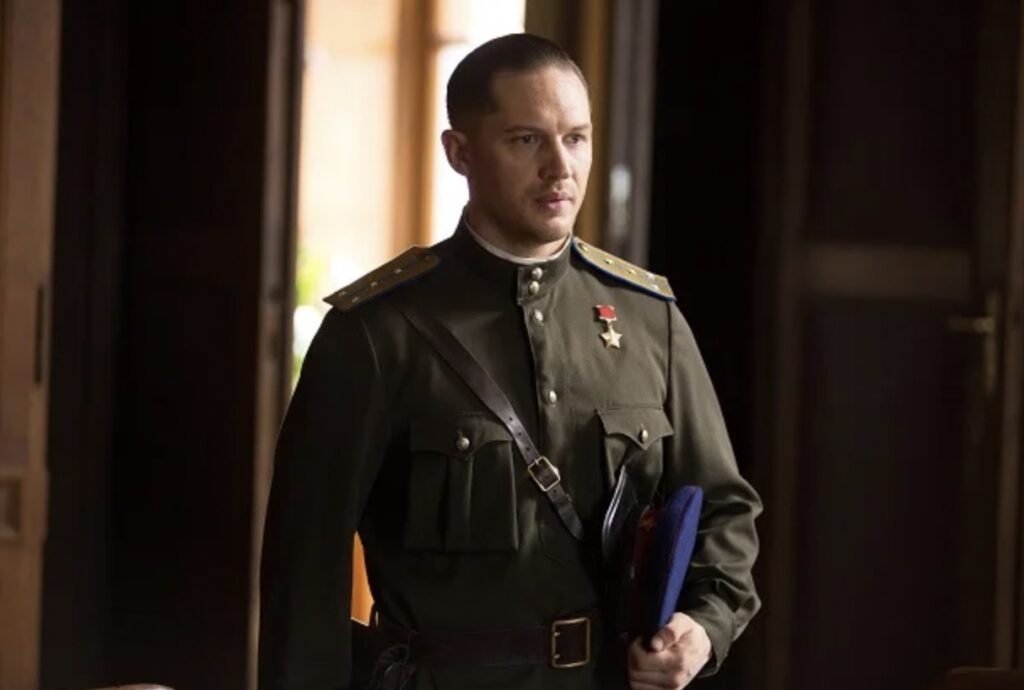
About: This was a hot package that sold at Cannes this year. It’s got James Bond director Cary Fukunaga directing from a script he rewrote. It also has Tom Hardy and Mahershala Ali in the lead roles.
Writer: Cary Joji Fukunaga (based on script by Frank John Hughes)
Details: 127 pages
What do I always say?
Everyone who gets into this screenwriting racket is doing so for one reason and one reason only – to rewrite their favorite movies.
Fukunaga wants to make his “Heat.”
How did he do??
It’s 1977, New York City, a notoriously scorching year in The Big Apple. Like a Global Warming preview. That Son of Sam guy is out there killing women left and right. Hey, it could be worse. Could be Game of Thrones and he’s killing kids.
Our story focuses on best friend cop partners Ray Butler and Eddie Boyle. Ray is a recovering alcoholic who is weeks away from finishing his self-imposed 6-month sober goal which will allow him to move back in with his wife and daughter. For the first time in a long time, Ray is back on the straight-and-narrow.
Irish cop Boyle has a kid of his own coming soon. But, unlike Ray, he’s not afraid to spice it up now and then, mostly through taking bribes. Hey, it was the 70s! Bribing was a thing back then.
The problem is, New York is falling apart. This super hot summer has led to a boiling point with the people in charge. In a week, they’re going to indict every dirty cop in the city. And both Boyle and Ray are on that list. Their careers are effectively over after that.
So Boyle’s got an idea for while they’re still cops. Steal from the three biggest crime names in the city, all in one night. Sammy Yin’s gambling parlor. Mob boss Carmine Galante’s safe house behind his pizza joint. And drug lord Nicky Barnes’ money pickup van.
Their plan is simple. Ray, Boyle, and three other guys are going to walk in with their faces covered but their badges up, which will cause all of the bad guys to freeze, and they’ll take the money without any pushback. That’s the PLAN mind you.
They head out early in the night to begin the robberies and that’s when THE ENTIRE CITY EXPERIENCES A BLACKOUT. Half of the guys want to bail but Boyle thinks it’s a sign from God. Tonight was supposed to happen. So… away they go!

The first question I want to ask you guys is: Is this a good hook for a movie?
The blackout thing.
My take on hooks is that they should introduce something clever into the story – something that, when you hear it, you get goosebumps. Take Back to the Future for example. If it’s “A high school kid accidentally takes a time machine to the past and has to find a way back again,” there’s no real hook to that.
The hook is that he disrupts his mom and dad’s meeting, making his mom fall in love with him rather than his father, threatening his very existence. He now has to convince his dorky dad to grow some balls and get his mom back, all before it’s time to go home. That’s the clever part.
When the big hook hit in this script – the blackout – I wasn’t sure if it was a good thing or a bad thing. That indicates it’s not clever. Does darkness help with cover? Does it mean that the targets are all going to be easier to access? I was at a loss.
Now, once we see the crime on the streets start rising… then I understood the blackout thing better. This is going to make things difficult for them. Which is good! That’s what you want to do to your characters. You always want to make things harder for them.
But let’s back up for a second. Because today’s script, ironically, had a similar problem to yesterday’s House of the Dragon season premiere. Setup. Lots and lots of setup.
How much setup?
Let’s put it this way. We don’t even discuss the 3-Ring Robbery until page 50! Normally, you want to hit that around page 15. At the latest, page 30 (end of the first Act for a 120 page script).
But this script had 30 characters it needed to set up. When you have that many characters, it takes time. Let this be a warning to all of you with high character counts. It takes time to set up all those characters. And unless you’re a master at setting up characters, whereby every one of them is set up in some entertaining way, then most of those character intros are going to feel like setup (aka, boring). They’re not going to be entertaining for us to read or watch.
Which is a shame because I think this could be a good movie if they got everything moving along quicker.
It is said that the error of the spec writer is that he moves everything along too fast – because he’s trying to keep bored readers from closing his script. But the error of the writer whose feature is being made, like this one, is that he moves everything along too slowly.
Why keep the plot moving when you know people are stuck in the theater watching it regardless of whether the story’s fast or not? Also, there’s hubris when you’re talking about a writer-director with Fukunaga’s success. You start to believe your shit smells like Lysol and you don’t think you’re beholden to the classic rules of storytelling. “I’m going to take my time because I’m a genius.”
That gets you in trouble every single time. Never underestimate how quickly audiences can get bored. And Fukunaga is testing that with his, ‘wait until page 50 for the inciting incident’ gamble.
Things DO get exciting after that point. We’re building suspense before the big night. So we’re invested then. And, of course, the 3-pronged robbery itself is fun. The question is, will people mentally check out before that arrives?
Fukunaga would probably say, “You know what Carson? F&^k off. I’m making a cool movie here.” Which I get. This *IS* a cool movie. And he’s obviously tapping into the way movies used to be made. This is a 70s/90s crime action cop thriller. It’s going to look really cool.
I just get annoyed when writers inflate their first acts to ridiculous sizes because they’re shooting themselves in the foot. You could have something so much better if you picked up the pace.
This script does not have to be 127 pages. But Fukunaga probably looked at the running time of Heat (2 hours and 50 minutes!) and said, “I’m going to do exactly what they did.”
By the way, quick funny Heat trivia: Al Pacino’s cop character in the movie is a coke-addict but they decided, after they shot the film, to cut that part of his character out. The problem was, Pacino’s entire persona was created as this coked-up insane cop. So anybody watching the movie is flat out confused why this cop is acting insane the whole movie for no reason!
After watching that last Acolyte episode, I have to have some consistent standards in the way I rate these things. That got a ‘wasn’t for me’ and this is so much better written than that. So it’s a ‘worth the read.’ It just needs to get its act together quicker!
[ ] What the hell did I just read?
[ ] wasn’t for me
[x] worth the read
[ ] impressive
[ ] genius
What I learned: For a character’s dialogue, use the name they are called most often by everyone else. So if your character’s name is Eddie Boyle, and everybody calls him “Boyle,” don’t use “EDDIE” for his dialogue blocks. It’s confusing to the reader. This is why all of Eddie’s dialogue in this script is denoted by his last name, “BOYLE,” yet all of Ray Butler’s dialogue is denoted by his first name, “RAY.” Cause those are the names everybody calls them in the script. It can get confusing if nobody ever calls Boyle “Eddie,” yet all his dialogue blocks start as “EDDIE.” We’re like, “Who’s Eddie? Nobody ever says “Eddie” so who could he be?” And if you think we’re going to magically remember all first and last names that you introduce and therefore always be clear about who’s who, then you have never read a 128 page script with 30+ characters in it before.
What I learned 2: (MAJOR spoiler – don’t read if you plan to see the movie) If you want to attract those big movie stars who also consider themselves “serious” actors to your script (guys like Tom Hardy, Denzel Washington – not guys like Tom Cruise or Will Smith), kill them off in the end. Serious actors LOOOOOVE dying at the end of movies. I can almost guarantee that the second Tom Hardy read that Boyle died, he was in.
And a review of House of the Dragon!
I was watching The Critical Drinker talk about The Acolyte yesterday. By the way, it’s impossible to trust these guys anymore. They make SO MUCH MONEY from trashing Star Wars that it’s in their best interest to trash it whether it’s good or not.
But, anyway, he was asked what he would do if he ran Lucasfilm. He said the first thing he would do is fire everyone. Get rid of the rot. As over-reactionary as that sounded, he’s probably right. A lot of the people in Lucasfilm right now aren’t focused on the most important thing for Star Wars – which is to make the best Star Wars stories possible.
I think that most of them do care about good stories. But to varying degrees, they’re also focused on things like diversity and using stories to promote alternative lifestyle choices. Which is noble. But what people in Hollywood constantly forget for some reason is that – THIS STUFF IS HARD.
It’s really really really hard to write a good story. REALLY HARD. The more I do this, the more I realize just how difficult writing something good is. And if your focus isn’t 1000% committed to that, and that alone, you’re probably going to fail.
I don’t think Acolyte is that bad. The last episode is actually pretty well-structured. It’s just that it’s constructed within a flashback that you don’t need. So the whole episode feels unimportant.
But I do think that Leslye Headland and, to a certain extent, Kathleen Kennedy (since she greenlit this show so vociferously) are more committed to the overall message behind the show than they are writing the best story possible. And because they’re focused on that, they’ve written a show that doesn’t attract male viewers and, according to a lot of the data, isn’t attracting straight female viewers either. So who’s left to watch the show?
Which is why I think Critical Drinker is right. You can’t have this message-first thinking if you want to write good Star Wars movies. You just can’t. It’s hard enough to write something good WHEN THERE ARE NO RESTRICTIONS. So, yes, you probably need to fire everyone. Even Dave Filoni. I know everybody loves him. But I think we’ve all realized at this point that his talents are relegated to animation. Not live-action.
But what then? We’ve fired everyone? What next?
I actually don’t think who you hire to replace Kennedy is a big deal. As long as they’re someone whose only goal is to make good Star Wars movies, that’s what matters. Because, then, every decision they make will be motivated by that directive. That alone will result in better movies and shows than have been made under this regime.
But here’s the golden ticket. Here is what’s going to lead to the success of Star Wars going forward. You need a great new trilogy. None of these one-offs that are floating around, and then, if they work, maybe we do more. That’s mostly how the last trilogy was made.
Instead, you bring in the top 50 writers in Hollywood and you have them all pitch their next Star Wars trilogy. You then hire the writers of the five best pitches. You tell them, this is going to be a Battle Royale. Over the next 2-3 years, you will develop all five projects individually. At the end of 3 years, whoever’s project rises to the top, that’s the trilogy we go with.
Now you may say, “Do you really think A-list screenwriters are going to dedicate themselves to a 3 year development process where it’s not even guaranteed that their movie will be made?” Yes, you know why? Cause you’re going to pay all of them 5 million dollars each. Trust me. They’ll do it. And you can do that because you’re Lucasfilm.
The reason paying 25 million bucks to write one great trilogy is financially smart is because a good Star Wars movie can make 25 million dollars in a third of a day at the box office. So you’ll get that money back and a lot more.
The issue with all these Star Wars projects is that you announce them 3 years ahead of time and then, whatever script you come up with, even if it’s bad, is what you’re stuck with. This eliminates that problem. Not only are you not stuck with a bad script, but you get 5 choices.
This is the way.
It is the only way. Because The Acolyte is causing massive damage to the Star Wars brand. It is trending for all the wrong reasons. Screenwriting is here to save the day if you let it. Will you let it, Star Wars? Or are you going to put your head in the sand and pretend like none of this is happening?
There’s been a lot of talk about bad Star Wars writing lately.
But people say that and 99% of them have no idea what it means. They vaguely point out that the “dialogue” is bad and that’s their definition of “bad writing.”
So a good way to create context around “good” and “bad” writing is to show what good writing looks like. And to understand why it’s good.
That’s the attitude I had going into tonight’s viewing of House of the Dragon, Season 2, Episode 1.
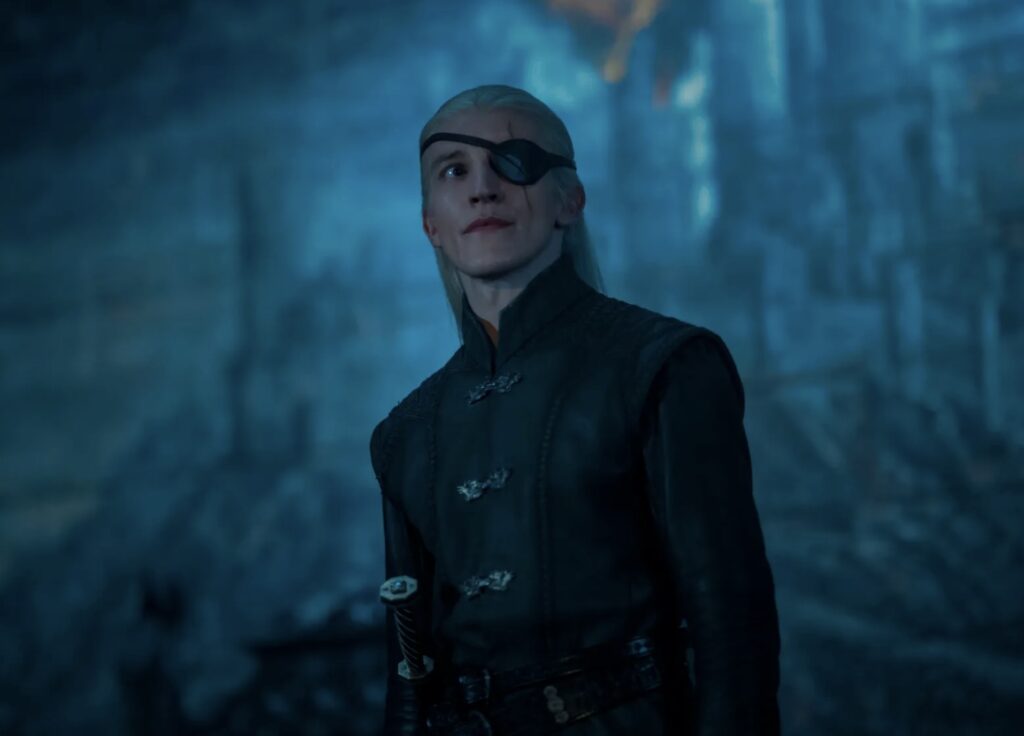
I wanted to be able to point to something that definitively conveyed good writing. Was I able to find it? I’ll tell you in a sec.
Most of my viewing experience of the premiere had me trying to remember who was who and how everyone was related. What makes it tricky is that when I see blond-haired people, I expect them to all be one family. And when I see brunettes, I expect them to all be one family. But the brunette kids in this show are members of blond-haired Rhaenyra’s clan and the blond kids are Queen Alicent’s. Or, at least, they’re part of her kingdom.
So that was confusing. But anyway, writer Ryan Condal took a huge gamble this episode. The entire episode is setup and exposition. We’ve got a lot of people in small rooms (sometimes big ones) talking about the upcoming war between the two kingdoms.
As I was watching it, I was thinking, “Come on guys. You need to give me a scene that I can point to and say, “This is clearly better than the writing in The Acolyte.” But I wasn’t getting it.
There was the hint of a good scene early in the episode when the new king flirts with a “Joe Pesci in Goodfellas Do I Make You Laugh” moment. He nearly makes one of his cabinet members embarrassingly take his young child for a pony ride during the meeting. But they stop before it happens. I don’t know why. I think it’s because this new king isn’t Joffrey. He’s supposed to be kind of good.
Which leads to my first complaint about the show, which is that there’s nobody who’s bad!!! This is the exact mistake Star Wars has made. Every character lives in the middle now. They’re all “gray” rather than good or evil.
But Star Wars flourished when it was clear who was good and who was evil. Its downfall is connected, in a lot of ways, to everyone being gray. The audience loves to root for the good guy and against the bad guy. That’s what takes us on that roller coaster of emotions that all good stories achieve. If our emotions always live in that middle area, we’re never really feeling anything.
I was getting more and more frustrated about this as the episode went on. But then, as those of you who saw it know, we got that whopper of an ending. Believe you me, this was a calculated move by Condal. He knew he could not write one hour of exposition and setup unless he gave us the ending of all endings. Which is exactly what he did.
(Spoiler) If you haven’t seen it, Prince Daemon hires two dumb assassins to kill the 18 year old heir to the throne. These two idiots infiltrate the castle and get to the sleeping quarters. But there’s no heir there. There are, however, two young children sleeping, one a boy, and therefore the 4th heir. The killers decide that one of them will do. But since they’re young, they don’t know who the girl is and who the boy is. So they demand the mother tell them. The mother then must choose who to save basically (she can lie if she wants). A true Sophie’s Choice.
And unlike in other shows, nobody comes at the last second to thwart their plan. A 4 year old kid gets his head cut off. Luckily we only hear noises. But they’re not pleasant!
By the way, they use a clever little writing trick here. They prep the audience for something they’re okay with. Killing this 18 year old dude isn’t going to move the “grossed out” needle. So we feel safe in a way.
Then, when we get to the room and we see the kids, we realize this is waaaaayyyy worse. And that’s when we internally say to ourselves, ‘Nooooooooo. They’re not really going to do that. Noooooooooo. No no no no no way.’ If Condal had prepped us for this moment, we would’ve been more ready. It hits us hard specifically because he waited to spring that on us at the last second.
So, I’m on board! They did it. And even though I didn’t get my scene that I wanted to use to demonstrate good writing, I got something close – a writer who clearly understood how much exposition he had to pack into the first episode, and what he would have to offer the audience in order for them to excuse that exposition.
Can’t wait til next week! :)
