
DC falling, documentaries rising, ancient characters coming back from the dead, and two Hollywood superstars bombing like it’s 1941
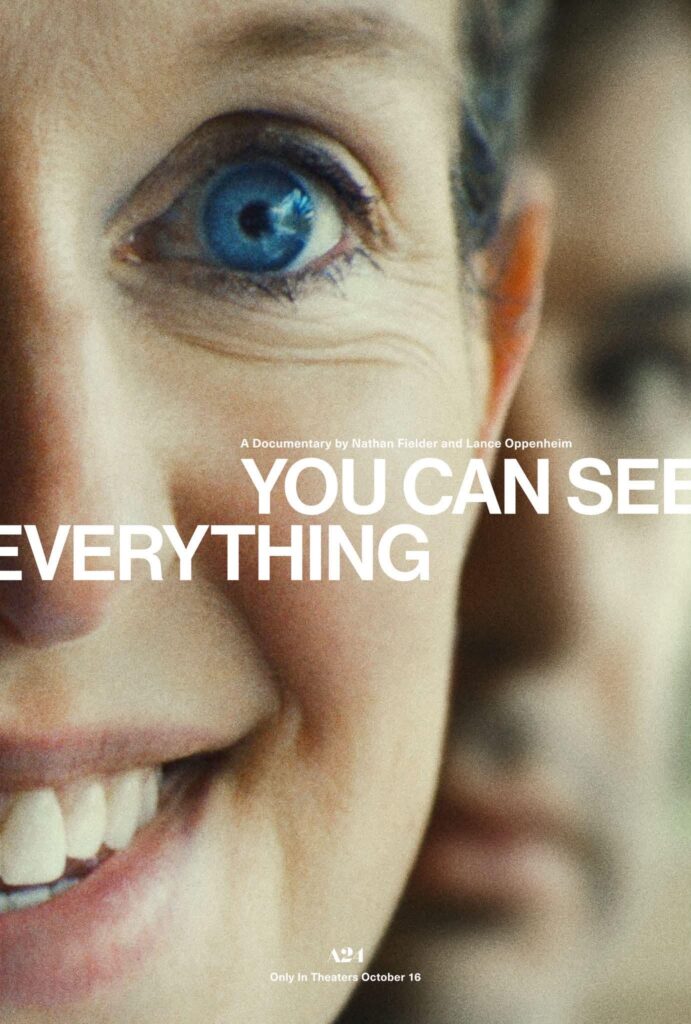
How crazy is it that a documentary is doing this well at the box office. You Can See Everything is continuing to break records. If I’m being honest, I don’t know what records are being broken, but I keep seeing that people say that on the internet, so I’m assuming it must be true.
So, what’s happening here? Why is this movie in the weakest performing genre almost beating DC movies with 100 times their marketing budget?
Well, one of the things co-directors Nathan Fielder and Lance Oppenheim said is they would shoot a scene, then afterwards everybody, them and the crew, would discuss it, and every single person had a different opinion on what had happened in the scene.
That’s when Nathan realized that there might be something to this. Because when he went into shooting, he wasn’t sure if there was a movie here. And even as he talks about it now, he says, “Even after we shot, we didn’t know if we had a film.”
But the film appears to be about the different perspectives people take from it. Because everybody’s having the same experience that Nathan and Lance and the crew had, where they watch a scene and they come away with two completely different perspectives on it.
Like in my review, I point out that Amanda Seyfried comes off as completely awful, and someone comments she comes off as the best thing in the movie. And people think that Elizabeth Holmes is lying a scene, then other people think she’s absolutely telling the truth.
The famous Who’s on First scene, people think she’s a master manipulator as she says that she has no idea why it’s funny, and I think it’s obvious she’s not hip to that kind of humor and just doesn’t get it.
But what’s happening is that the fact that people have such differing perspectives is creating conversation outside the movie, and that is extremely rare nowadays, that people really talk about movies after watching them.
Another neat aspect about the film is people believe there are all these hidden Easter Eggs that are telling you the truth about Elizabeth Holmes. They think that Nathan has hidden the answer of the film, because the film leaves you with no clear answer, but people now think Nathan has left these Easter eggs in the film and in the marketing that are revealing what he knows.
One Easter Egg I found, and I haven’t seen anything about this, so I’m actually very proud of myself for discovering it, is I looked at the poster up above and I was wondering why they decided to choose it. Cause I don’t think it’s a very good poster. Then I looked closer and I realized that a big part of the movie is Elizabeth Holmes’ big, bright, blue eyes. But when you zoom in on her eye there, you see that she’s wearing a contact lens, and the implication is that it’s a color-corrective lens to make her eyes very, very blue.
If she’s doing that, if she’s lying about the color of her eyes, then what else is she lying about? She’s probably lying about everything.
The funny thing is I don’t think she’s a liar at all. I think she’s no different from any other CEO of any other company. No CEO is going to walk into a financier meeting and say, “Oh, these are all the things that are wrong with my product.”
No, they’re going to hype the product. They’re going to tell you why it’s awesome and oversell it. That’s literally what all CEOs do all the time. And that’s all she was doing. And to claim that she was deceiving anyone, well then you got to put every single CEO on earth in prison, because all of them do the exact same thing for a literal living.
I think the movie’s great, though, and it’s really cool that this non-traditional movie is getting so much attention. It’s rare that this happens, and it’s fun to watch.
On the flip side, we have Klara and the Sun and the now confirmed completed downfall of Taika Waititi. I don’t think I’ve ever seen someone who was so high fall so far so fast. I mean, one day, he had all of Hollywood wanting to do whatever he wanted to do, and the next, he had Klara and the Sun.
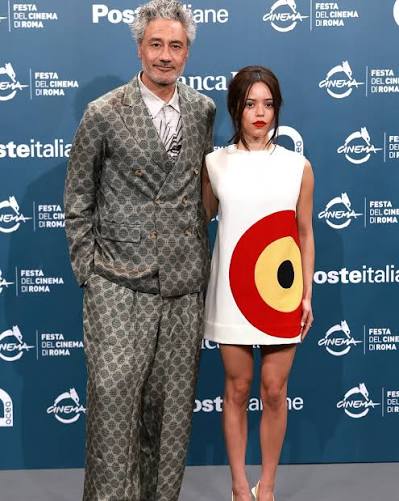
I don’t think it helped his cause that he cast Jenna Ortega, who also flew too close to the sun and, like Icarus, fell to Earth. They both made their big mistakes that led to their downfalls around the same time. For Taika, it was Thor: Love and Thunder.
Which was, I mean, if you want to see a movie that shows why screenwriting matters and why you can’t just make shit up as you go along, go watch that movie, because it’s the perfect exemplification of very poor writing and a lack of structure and a lack of a plan and a lack of a foundation in the screenplay that you’ll ever see.
Jenna Ortega’s downfall was more self-inflicted. She had that press tour where she basically told everybody that she did everything. She did the writing, she did the choreographing, she told the cinematographer where to put the camera, she ran craft services. She did it all.

That is one of the fastest ways to make every single person who works on movies hate you. Because if you’re going to take credit for everybody else’s work, they will hate you.
And it used to be in Hollywood that you could get away with this. You could because the stars were so important to movies that on set people had to shut up and take it.
But nowadays, with social media and the fact that stars aren’t as big as they used to be, they don’t have the power anymore. And your star power alone, your fanbase, can’t shield you from all of that. And so that trickles down from your jobs to the internet and people stop going to see you.
And it’s too bad because I read Klara and the Sun and it was a good book, and it had this perfect balance of sweetness and sadness. Which used to be Taika’s brand. JoJo Rabbit is an excellent script and an even better movie. But the guy has lost his confidence or his mojo or something because all you need to do is watch 10 seconds of that trailer to know that they screwed it up. You can tell the movie doesn’t work immediately.
There are actually two movies I wanted to see this weekend but wasn’t able to. I wanted to laugh, so I wanted to see the Ali G movie. I realize we’re 20 years late on this movie have any buzz at all but I still think that the Ali G character is hilarious. And even if Sacha Baron Cohen is probably just doing it for a paycheck, it’s hard to find movies that make me laugh, and I knew this movie would. I mean, this jacket alone makes me laugh.

But it’s playing in barely any theaters! Luckily, I heard it’s coming out on Amazon Prime quickly, so I’ll be looking forward to that.
The other movie I wanted to see was Wildwood, which is the only movie out there that’s actually got better critic and audience scores than You Can See Everything, which is not an easy task.
But I had trouble finding this one as well. The only place it was playing near me, at the Grove, had very strange showtimes, to the point where I thought there was something wrong with AMC website. But I double and triple checked, and it was just weird showtimes. I guess this is the side of Hollywood they never talk about. When you have the tiny distribution company, you don’t get any of the good theaters, any of the good showtimes.
But this one, I mean, if you haven’t seen the trailer, the trailer’s amazing. It looks like the modern-day version of The Chronicles of Narnia, a real adventure.
And then finally you have Clayface, which made $24 million this weekend. It’s not looking good for WB or DC or James Gunn. Because he chose these movies. He chose these characters. And they’re not doing well.
You can see what Gunn’s vision was for the DC universe. It was, A, Superman – just get the Superman movie right. And then he asked the question, “What are the most interesting characters that I can build a movie around?” And let’s not go to the obvious candidates. Let’s find those stories that have the most interesting comic characters.
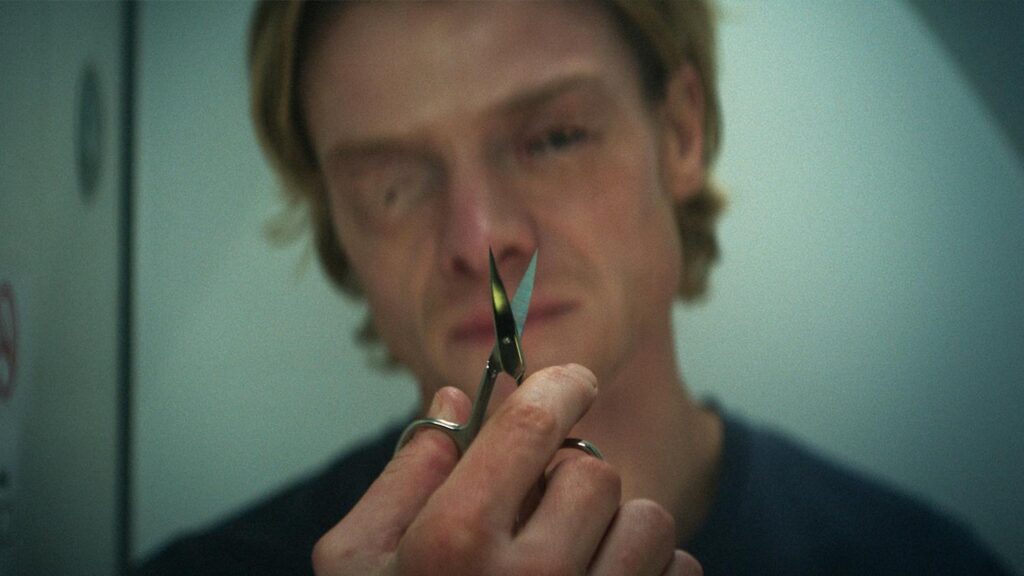
And when you look at Clayface, it’s no doubt a very interesting character on the surface. It’s Vanilla Sky, the Tom Cruise film from 2o01. You’re beautiful, and then you get this terrible face, and you fix it, but then it’s unpredictable when the ugliness is going to come back. That’s a very compelling character. So I understand what he was thinking.
Then Supergirl as well! Supergirl was all about this drunk woman who lost her family and stewed in her own misery and in her own substance abuse as she ignored the world, and then she’s tasked with saving it. And that too is objectively an interesting character. So I can see where he was coming from, from a screenwriting perspective.
But his whole thing was: ”We’re not making movies until the scripts are great.”
And both of these scripts don’t look to be great. Clayface got a 75% Rotten Tomatoes score. And that’s what it looks like. It looks like an average ass movie.
And the problem here is that, and what a lot of people who are playing defense for Clayface are saying is, “Well, it’s not a superhero movie. It’s a horror movie.” Well, okay. That’s fine. But if you’re going to be judged by the horror movie space, well, guess what? Resident Evil made $60 million its opening weekend. Backrooms made $80 million its first weekend. So you don’t really have an excuse here, because you’re not even scoring well in the horror department.
The reason I have no interest in seeing it is two-fold. And I sense that a lot of people feel the same way. One, the actor has a fairly weird face. It’s not a face I want to watch for 2 hours. And two, the movie looks off-putting. I don’t know how else to explain it. So, why would I want to feel put-off for 2 hours?
It sucks because if you take away all the Hollywood glitz and glamour and all the BS, I think you’re looking at a man in James Gunn who’s honestly looking for good stories to tell, for good characters to build movies around.
Unfortunately, it isn’t just about finding a great character and a great plot. You got to – and I talked about this in an article recently – you got to connect it together in a way where it feels like this well-constructed living breathing organism, rather than just something you plot out the beats for and then make your character change over the course of the story. That’s not enough. You got to make it something that we feel.
I know this because the script I get emailed about the most, by far, is Osculum Infame, and people are constantly asking me about it. They’re just obsessed with it and it’s because Bernd, the writer, he just… he wrote something special, and it just all connected, and it just all did everything it was supposed to do, and it found that way to not just be something on paper, but reach out and pull the reader into its world.
It’s so hard to do that.
Have you guys seen any of these films? What are your thoughts? In the meantime, I may just check out the first episode of Carrie tonight. Why not? It’s free on Amazon. The TV pickings have been so slim that if this doesn’t work, I’m stuck waiting another year for White Lotus Season 4 to come out!
An advanced screenwriting method that takes your screenplays to the next level!

When I first started writing screenplays, I didn’t know what the hell I was doing when it came to writing scenes. I mean, I knew what a scene was in the abstract. I knew that characters were supposed to talk to each other and things were supposed to happen. But as far as how to actually construct a scene? It was total guesswork and I mainly operated on feel.
Then, somewhere along the way, I read a screenwriting book that said every scene should have a beginning, a middle, and an end. Or, in storytelling parlance, a first act, a second act, and a third act. And that was a revelation to me. A scene should be its own miniature movie!
Suddenly, I had a system. I had rules. I had something I could actually apply when I sat down to write a scene. There was only one problem. When I went back and started studying some of my favorite movies, I noticed that a whole bunch of their scenes didn’t follow this rule.
Some scenes were only half a minute long. Some were nothing more than a character walking into a room, learning a piece of information, and leaving. Some started right in the middle of a conversation. Others ended before the characters had resolved anything. Where were the three acts in those scenes?
And the more I studied them, the more I realized that the advice itself seemed to contradict another famous piece of advice: Enter a scene as late as possible and leave as early as possible.
Wait, hold on a second. If I’m supposed to enter a scene as late as possible, doesn’t that sometimes mean skipping the beginning? Let’s say two characters are meeting at a coffee shop. The beginning of the scene might be them arriving, ordering coffee, sitting down, and getting comfortable. The middle might be them discussing the problem they’re there to solve. And the end might be them finally reaching a decision.
But what if the only thing I need from that scene is the decision? Why would I waste two pages setting everything up when I could start right before the decision is made, get the information I need, and move on?
And what about those tiny scenes whose only purpose is to get us from one part of the story to another? Am I really supposed to give every one of those scenes its own three-act structure? It didn’t make sense. So, for a while, I was stuck.
I still believed in the beginning-middle-end approach. I liked how it forced you to think of a scene as a complete dramatic unit instead of just a bunch of people talking. But I couldn’t reconcile that belief with what I was seeing in actual movies.
Then, eventually, I realized something. The beginning-middle-end rule was right. I was just applying it to the wrong thing. See, sometimes a scene really is its own miniature movie. It has a setup, a development, and a resolution. Everything happens in one location during one continuous stretch of time.
But other times, that miniature movie is spread across multiple scenes. Maybe three scenes. Maybe four. Maybe five. And when you combine those scenes, something interesting happens. They form a complete story.
The first scene sets up a problem. The next couple of scenes develop that problem, complicate it, make things worse. And the final scene brings everything to a head. Beginning. Middle. End. It’s the exact same principle! The only difference is that instead of applying it to one scene, you’re applying it to a sequence of scenes.
And that’s when everything clicked for me. I didn’t need every individual scene to have three acts. I needed every dramatic unit to have three acts. Sometimes that unit was a single scene. Sometimes it was five scenes working together.
Suddenly, all those movies I’d been studying made sense. The short scenes weren’t breaking the rules. They were parts of larger dramatic units. They didn’t need to be complete stories because they were contributing to a complete story. Once I understood that, I had a much more flexible way of constructing screenplays. Instead of forcing every scene into the same rigid structure, I could move back and forth between two approaches.
And the best part was that I no longer had to sacrifice pacing to satisfy some arbitrary structural requirement. If a scene only needed to be ten seconds long, it could be ten seconds long. If a scene needed to be eight pages long, it could be eight pages long. The only thing that mattered was whether the larger dramatic unit was doing its job. And that brings us to the screenwriting approach I want to talk about today, which I call…
THE ACCORDION METHOD
The Accordion Method is a way of constructing scenes where you can either compress your beginning, middle, and end into a single scene or stretch them out across several scenes. Just like a real accordion, you can push it all the way in or pull it all the way out, depending on how much room you need.
So let’s start with the accordion pushed all the way in. A great example of this is the first time Clarice meets Hannibal Lecter in The Silence of the Lambs.
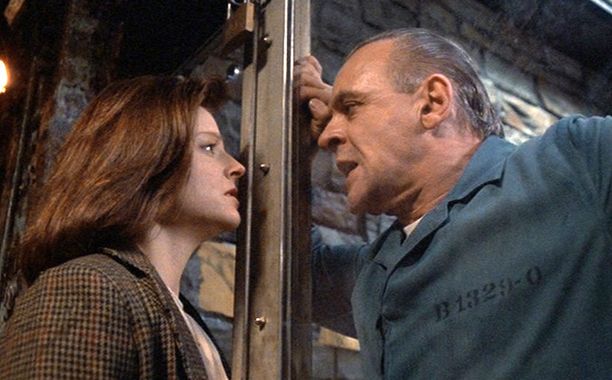
The scene starts with Clarice approaching Lecter in his cell, hoping to persuade him to complete a questionnaire. She has a clear goal. Which is important to point out. Scenes that have a beginning, middle, and end are stronger when a character enters them with a goal. We know what the character wants and we can measure everything that happens against whether they’re getting closer to or further away from that goal.
Next comes the middle of the scene, which is where the conflict takes place. Clarice tries to get Lecter to cooperate, but Lecter has other plans. He starts probing her insecurities, analyzing her background, and psychologically turning the interrogation around on her. This is the meat of the scene. It’s where the resistance (the conflict) comes from. Clarice wants something and Lecter isn’t going to make it easy for her.
Finally, we get our ending. After their unpleasant exchange, Clarice walks away, seemingly having failed in her mission. But then Lecter calls her back and gives her a clue that could help with the Buffalo Bill investigation. And that’s our climax! Clarice came in wanting something from Lecter. Lecter resisted her, creating conflict. And in the end, despite all that resistance, she walks away with a valuable key to the next stage of the story.
Beginning. Middle. End.
Now, when I was coming up with the Accordion Method, a question I asked myself was, “Why can’t you just make every scene have a beginning, middle, and end?” And the most obvious answer I could come up with was: Some scenes are too short for a beginning, middle, and end.
But after doing some research, I realized that just isn’t true. I bring this up because I think every writer should go into every scene with the intention of giving it a beginning, middle, and end. If the story doesn’t allow for it, I’m okay with that. But one thing you cannot blame is a lack of time. You’d be surprised at how much story you can stuff into a small amount of space.
A great example of that is a scene from Jaws that occurs 12 minutes into the movie. Chief Brody is on a car ferry when Mayor Vaughn approaches him, along with a couple of other local officials.
The setup is simple. Brody wants to close the beaches because a young woman has just been killed in what he believes was a shark attack.
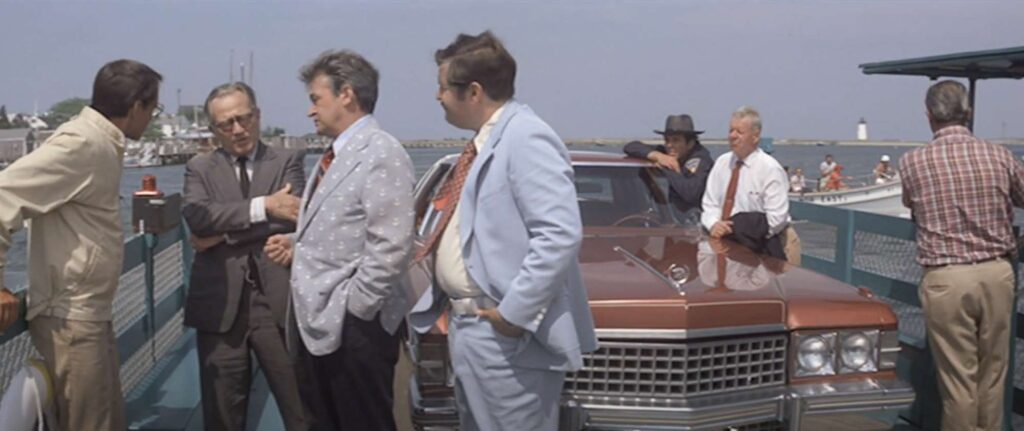
Next comes the middle of the scene, where we introduce our conflict. Mayor Vaughn doesn’t want the beaches closed. It’s a summer tourist town. Closing the beaches would be disastrous for business. So he and the other officials push back against Brody, suggesting that maybe the girl wasn’t killed by a shark at all. Maybe it was a boating accident.
This is what you’re doing in the middle of your scenes. You’re introducing obstacles that prevent your character from achieving their goal. Brody wants to close the beaches. The mayor and his buddies don’t want him to. So we have conflict.
Finally, we get our climax. The mayor effectively overrules Brody. The beaches are staying open. Brody is frustrated, but there’s nothing he can do about it.
And that’s it!
Beginning. Middle. End.
And you know how long the scene is? Just one minute and forty seconds long.
So don’t tell me your scene is too short to have a beginning, middle, and end. If it’s good enough for Jaws, it’s good enough for you.
Okay, so now that we’ve learned how to write a scene with the accordion pushed all the way in, let’s learn how to write one with the accordion extended out. All that means is that instead of giving our beginning, middle, and end to a single scene, we’re going to spread them out over several scenes.
For this example, we’re going to go back to the OT trilogy and look at Return of the Jedi.
Five minutes into the movie, we see R2-D2 and C-3PO walking through the desert on Tatooine. We learn that they’re on their way to Jabba the Hutt’s palace to deliver a message.

Right away, we have a goal: Deliver the message.
Again, just like with individual scenes, when you’re writing a sequence of scenes, it’s always helpful to start with a character who has a goal. That goal gives the sequence purpose. It gives us something to follow.
Now, there’s something important I want you to notice about this scene. It’s almost entirely expositional. R2-D2 and C-3PO are walking through the desert, talking about Jabba the Hutt, how dangerous he is, and what they’re getting themselves into.
This is where a lot of amateur writers get into trouble. They need to convey exposition so they write a scene where two characters walk around talking about stuff the audience needs to know. But because there’s no dramatic purpose behind the scene, it feels like exactly what it is: an exposition dump.
Here, however, that exposition is being delivered in the midst of a pursuit – the characters’ ultimate goal. These two droids are on a mission. They’re trying to get somewhere. So even though the scene itself is two characters talking, there’s forward momentum. And just to convey how this fits into the accordion method, the scene itself DOES NOT HAVE REAL CONFLICT. IT DOESN’T HAVE A CLIMAX. But that’s okay! Because this scene is the beginning of our larger dramatic unit.
Next, the droids arrive at Jabba’s palace where they’re confronted by a giant metal door. A little gatekeeper droid pops out, and they have to convince it to let them inside. Now we’re in our second act – the conflict portion of our story. Our characters have a goal, but we’re going to start putting obstacles in their way. The gatekeeper droid is our first obstacle.
Eventually, they’re allowed inside, but they’re not out of the woods yet. They encounter Jabba’s right-hand man, Bib Fortuna, who isn’t particularly interested in letting them see his boss. Another obstacle!
Then they face their biggest obstacle yet. Jabba the Hutt himself! Jabba is this giant, disgusting, intimidating creature surrounded by criminals and henchmen. He’s the embodiment of conflict.
The droids deliver their message, which turns out to be a hologram of Luke Skywalker offering to negotiate for the release of Han Solo. And as a gesture of goodwill, Luke offers the two droids as gifts. Which comes as a surprise to C-3PO, who had no idea he was part of the deal!
That brings us to our final scene, where R2-D2 and C-3PO are taken into the back of the palace and handed over to the droid supervisor, who assigns them their new jobs as servants. And that’s the ending to our sequence!
Our characters started out with a simple goal: deliver a message to Jabba the Hutt. They encountered a series of obstacles along the way, each one bringing them closer to their objective. And finally, they delivered the message, only to discover that they’d been given away as part of the deal. Beginning. Middle. End. And that’s the Accordion Method!
Notice how much freedom that gives us. That opening desert scene doesn’t need its own three-act structure. It doesn’t need some artificial conflict where C-3PO and R2-D2 get into an argument that has to be resolved before they reach the palace. Its job is simply to establish the mission and provide some exposition. The subsequent scenes then build on that mission, introducing obstacles and moving us toward the resolution.
So what are the rules of the Accordion Method? There are really only three.
1-Give your dramatic unit a goal – Whether that unit is one scene or five scenes, we should understand what the character is trying to accomplish.
2-Create conflict, build toward a resolution – Introduce obstacles, create conflict, and eventually bring the situation to some kind of resolution. Success or failure, it doesn’t matter. What matters is that the dramatic unit feels complete.
3-Don’t force every individual scene to be complete. – This is the whole point of the method! Sometimes a scene’s only job is to introduce a problem, deliver a piece of information, or create a complication. It doesn’t need its own beginning, middle, and end as long as it’s contributing to a larger dramatic unit that has one.
I know that once I learned this method, it became easier for me to see where writers were losing readers. Because bad writing includes a lot of these scenes that don’t have any structure around them. They’re just empty scenes that the writer has some small individual purpose for (stick in some exposition, establish camaraderie between characters, introduce a new character). The Accordion Method allows you to make those scenes part of a larger sequence that keeps your reader entertained. It’s very powerful when you master it so start giving it a shot right now!
A big six-figure script sale comes from another Scriptshadow reader!
Genre: Horror
Premise: When a scientist ventures deep into the Amazon rainforest in search of a rare fungus that could save her dying daughter, she finds herself trapped high above the jungle floor, hunted by a terrifying creature that lives among the treetops.
About: Today’s script sale is one of those dream scenarios for scriptwriters. This thing sold fast! And since it comes from a Scriptshadow reader, I’ve got the inside scoop. More details below.
Writer: Brandon Feldman
Details: 98 pages – First Draft
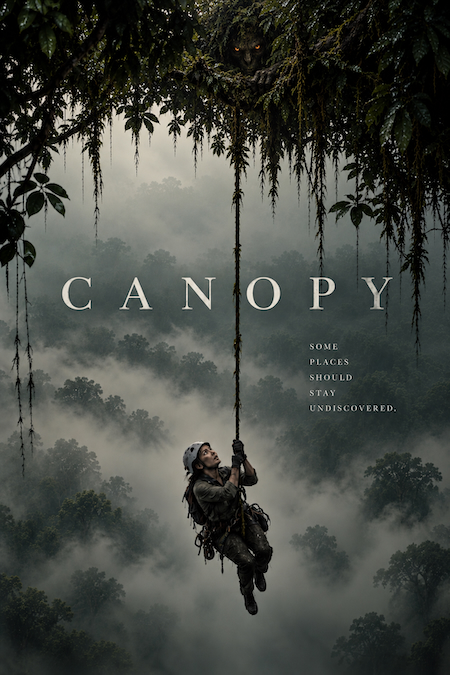
Today’s review is a special one because I’ve known Brandon for a while now. I’ve given him notes on several of his scripts and, as a matter of fact, I was supposed to give him notes on this one but the darn thing sold so fast, he never got a chance to send it to me! (get notes from Carson!)
So I reached out to Brandon and said, “Okay, you have to tell me how this happened.” And he was more than happy to share.
Brandon has been writing comedy scripts with his writing partner, Ben Agron, for about 15 years. They’ve had some success, the biggest being a rom-com they wrote called Manimony, about a woman who owns the world’s biggest dating app and needs her ex-husband off her payroll so she uses the app to find him a new wife.
But a few years ago, Brandon started writing horror scripts on his own. Canopy was his third horror attempt. Now here’s where this story gets crazy. Brandon came up with the idea for Canopy in late July and ended up selling it in October!
How did this happen?? Well, he started by pitching the idea to his writers group. All of them loved it. This is a detail I think a lot of aspiring screenwriters will overlook. Brandon didn’t just come up with an idea and start writing. He tested the idea first. You guys know how much I preach this. It’s the whole reason I created The High Concept Club Contest. I want writers to know whether they have a good idea before they spend six months writing the script.
So Brandon spent August outlining the script. His final outline was forty pages long. He then sent that outline to his manager, who liked it enough to tell him to go write the script. And Brandon proceeded to write the entire thing in five weeks, finishing in mid-September.
How was he able to write it so fast? Because he had a 40 page outline! I keep telling you guys, the more you outline, the easier the writing process becomes. If you’re someone who routinely gets stuck in the middle of your scripts, consider outlining. And if you’re already outlining and still running into trouble, consider making your 5 page outline a 20 page outline. The more specific you are, the easier it is to know where to take your story.
Anyway, before Brandon’s manager even had a chance to read the script, Brandon uploaded it to the Black List to get a feel for where it was. He ended up getting an 8 out of 10 on his first evaluation. For those of you who don’t know, an 8 on the Black List gets your script included in their newsletter, which goes out to industry professionals.
That newsletter went out on a Monday and Brandon’s script got something like 20 downloads. By that night, a producer had already emailed him saying he loved the script and wanted to send it to Netflix.
Oh, and just to show you how wacky the Black List is, Brandon’s second evaluation eventually came back. He got a 4! Just goes to show how inconsistent that site is but for Brandon, it worked out. He now had buzz.
Around this time, Brandon’s manager got back from vacation, read the script, and said, “Yeah, let’s take it out.” So his manager started sending it to producers and production companies. Meanwhile, one of Brandon’s buddies sent it to a producer who eventually took it to Sony. Another friend sent it to David Boxerbaum at Verve.
This is the great thing about having a script that you know is good. All those favors you’ve been saving up? Now’s the time to use them. Because you know you’re using them on a script that’s worth it. I’ve seen so many writers waste favors on bad scripts, and in a lot of those cases, you never get another shot with that contact.
By the end of that week, they were assigning territories and had multiple studios reading the script. And in the end, Netflix won out. Canopy was sold. Which meant from the moment Brandon came up with the idea to the moment he sold the script, just 15 weeks had passed.
FIFTEEN WEEKS!
This is the kind of script sale story you used to hear about in 1997. Not 2026! Certainly not in an industry where everybody keeps telling us that nobody’s buying anything anymore.
And here’s the craziest part. It was one draft. No notes. No rewrites. A huge congratulations to Brandon. And now, finally, I get to read it. To Brandon’s credit, when I told him I was going to review it, he said, “Be as brutal as you want.”
Careful what you wish for. :)
Laurel Reed is a scientist whose young daughter is dying from a rare disease. Deep in the Amazon rainforest, there’s a fungus that grows on the bark of these enormous trees and research suggests it could help treat her daughter’s illness. So Laurel heads into one of the most remote parts of the world with her fellow scientist, Cole, to find it.
A local guide sends them off in the right direction and the two finally reach their destination, a group of gigantic trees, some of them 250 feet tall. They split up, each climbing a different tree, and eventually reach what’s known as the canopy, this upper section of the rainforest where branches and vines form almost a second forest floating above the first one.
Laurel finds her fungus, which is great. But then they both discover something that isn’t so great. Hidden inside the trees is a structure made of HUMAN BONES. Laurel quickly loses contact with Cole and before she can reach him, this creature that looks almost exactly like the bark of the trees comes out of nowhere, grabs Cole, and yanks him up into the darkness.
Laurel realizes she needs to get the hell out of here. Except that’s easier said than done when you’re 175 feet above the ground and there’s a giant tree monster who wants to turn you into bone soup. So Laurel starts making her way down, dealing with bullet ants, pumas, and these evil little monkeys that seem determined to make escape life as hard as possible.
Meanwhile, the creature is moving through the trees, sometimes so well camouflaged she can’t even see it. But she soon finds out that the creature refuses to go to the forest floor. Which means if she can just get to the ground, she’s safe.
But just when Laurel is getting close , human blood starts dripping on her. She realizes somebody might still be alive up there and makes the decision to CLIMB BACK UP.
Girrrlllll. No you didn’t.
That’s where she finds Kenji, a Japanese scientist from the cold open, who’s been woven into this horrifying architecture of bones and branches. He’s begging to die, but Laurel insists on saving him. And that’s when Kenji drops a bombshell. There isn’t just one creature. There are TWO OF THEM. A big one and a smaller one. So now Laurel has to figure out how to get them both down before these things turn them into their next construction project.
There’s fifteen years of craft on display here, no doubt.
The writing is hella confident. Brandon understands character, he understands cold opens, quick plot setups, how to create a sympathetic protagonist, how to place that protagonist in a high-stakes situation that’s unique, and he knows how to stretch a potentially thin situation out into the 3-act structure.
Conclusion: Brandon knows his shit.
I think one of the reasons his writing group loved this idea is that it takes us somewhere we haven’t been before. There was a time when simply taking an audience somewhere unfamiliar was worth something. It’s why James Bond movies were such a big deal back in the day. They took you to exotic locations most people would never get a chance to visit. And even if the story wasn’t great, you still got something out of the experience.
That’s what Brandon does here. Instead of giving us the 5,000th horror movie about a haunted house, or the 5,000th masked psycho chasing us around, he takes us into one of the most remote rainforests in the world.
We’ve got bullet ants out here. You don’t see those in San Francisco. We’ve got strangler trees, weird little monkeys, evil spiders, mega-snakes, and enormous trees that practically have their own ecosystems. All of that is interesting before you even introduce the horror element.
Another thing Brandon does really well here is his setups and payoffs. This is pretty impressive for a first draft, by the way. We’re told about the bullet ants ahead of time. We’re told about the little tamarin monkeys. We’re introduced to the strangler tree and the jungle cats. And all of these things eventually come back into the story.
Now, I did have a few issues with the script.
I struggled to understand exactly what a canopy was. I always felt like I had about a 75 to 80% understanding of what Brandon was describing but I eventually had to look it up. And even then, I was a little confused. The best way I could understand it was that it’s sort of an upper-forest version of the ground. Considering it’s the title of the movie, I would’ve liked more clarity there.
Another issue I had was Cole. Cole is a weak-ass character. And look, I get it. When you’re writing a first draft, you’re usually focused on making your main character as good as possible, and the supporting characters get overlooked.
But Cole doesn’t have much of anything going on. He doesn’t have a memorable personality or an interesting relationship with Laurel. And I’m not saying he needs to be her husband. But he needs SOMETHING. Because right now, he’s another scientist whose sole purpose is to be sacrificed.
The other issue is the dying daughter storyline. This is one of the trickier things to pull off in scripts like this. You want your protagonist to have a personal reason for going on the journey. And an easy way to create those personal stakes is to give your hero a dying kid.
But the more you think about this particular storyline, the less sense it makes. Laurel’s daughter only has months to live. So even if Laurel finds this fungus, they still have to study it, develop the medicine, and put it through trials. Meanwhile, her daughter has months to live if she’s lucky.
And to Brandon’s credit, he acknowledges this. We get a flashback where Laurel’s husband says, what are you doing? Even if you find this thing, it’s not going to save our daughter in time. And Laurel’s response is basically, I HAVE TO DO SOMETHING. I can’t sit here and watch my daughter die. And you know what? I kind of bought that. Not completely, but enough.
Now, if Brandon had sent this script to me for notes, there’s one big creative note I would’ve given him. And I’m curious what you guys think of it.
Late in the script, Laurel is trying to escape the creature and she finds herself in this terrible situation where there’s a puma below her and the creature above her. The creature eventually goes after the puma and kills it easily.
I would’ve changed this. I would’ve made this puma the KING OF THE JUNGLE. Whatever the biggest, meanest jungle cat you can find in the Amazon is, that’s what this thing needs to be.
And when the creature attacks it, I want an EPIC BATTLE. I want these two animals going at it like it will be talked about for generations. And preferably, I’d find a way for the fight to get close enough to Laurel that she could actually contribute somehow. Maybe she helps the puma at a critical moment. And the big important creative change is that the puma would WIN. It kills the creature.
Now, why would I do that?
Because there’s a moment shortly afterward that didn’t make a lick of sense. Laurel is finally getting close to the ground. She’s practically home free. And then blood starts dripping on her. She realizes there’s a person up above her somewhere who might still be alive. So she climbs back up!
I’m sorry but come on. This woman just watched a giant monster kill her partner. She watched it easily kill this puma. She’s spent the last however many hours trying desperately to escape it. And now, when she’s finally about to escape, she’s going to climb back UP into the monster’s territory to save some rando?????
NOT. A. CHANCE.
But in my version, the creature is now DEAD. So now, when she sees the blood dripping from above, it makes sense for her to go back up. If somebody’s still alive up there, she’s going to try and save them.
So she climbs back up and finds Kenji, the Japanese scientist from the opening scene. And Kenji is in bad shape. He’s been woven into this horrifying architecture of bones and branches. And as Laurel tries to free him, Kenji is freaking out. He’s telling her they need to get out of there. And Laurel says something like, “Don’t worry. It’s dead.”
Kenji looks at her. “What?”
“The creature. I watched it die.”
Kenji stares at her, confused. “What do you mean you watched it die?”
“I saw it. It’s dead.”
And then Kenji says…
“There’s two of them.”
Now, in the current script, Kenji also reveals that there are two creatures. But he tells Laurel that there’s a big one, which is the one we’ve been seeing, and a smaller one that we haven’t seen yet. I would REVERSE THAT.
Because in my version, Kenji would say…
“There’s a small one.”
A beat.
“And there’s a big one.”
And that’s when Laurel realizes…
The creature that’s been terrorizing her this entire movie? THAT WAS THE SMALL ONE!
Which means the big one… IS STILL OUT THERE.
And we haven’t even seen it yet.
Now that’s a third act.
Because one of the most important things about writing a movie like this is that things have to keep getting worse. The closer we get to the ending, the more desperate the situation should become.
The spiritual predecessor to this movie, Predator, does this as well as any movie ever made. Things keep getting worse and worse and worse. And while Brandon flirts with that philosophy here, he doesn’t fully embrace it. This would change that.
Because now Laurel’s gone from thinking she’s survived the monster to realizing she hasn’t even met the real monster yet. That’s gettin me to lean all the way the fuck forward for act 3!!!
Look, there’s no way to predict with any certainty which scripts are going to get this kind of traction. Which ones are going to get passed around town, create a bidding war, sell almost immediately. But if I were a betting man, and this script came across my desk, I would’ve bet that this was one of those scripts. It’s a great premise and an extremely solid execution.
[ ] What the hell did I just read?
[ ] wasn’t for me
[xx] worth the read
[ ] impressive
[ ] genius
What I learned: One of the most important things about writing a horror script like this is creating a monster that’s not only terrifying but also believable. Because the more believable the monster is, the more we buy into the story, and the more scared we are for our hero. This Canopy Monster feels like something that could actually exist. We’re deep in the rainforest, far away from civilization, where it’s not hard to imagine some undiscovered creature living in the trees. And the creature isn’t designed in some crazy, over-the-top way. Every aspect of it is designed to exist in this environment (camouflage, bark/moss skin, eyes that see in dark, strong arms, weak legs). I’m not saying every horror movie monster has to be realistic. But the more reality you can build into your monster, the scarier it’s going to be. Because what’s scarier than something that might actually exist?
This movie is a game changer for the documentary industry. But is it actually a good movie?
Genre: Documentary/Drama/Comedy
Premise: Documentarian Nathan Fielder moves in with the infamous Elizabeth Holmes, founder of a multibillion-dollar tech startup, Theranos, who was ultimately convicted of defrauding investors.
About: This movie is turning into one of the biggest documentary success stories in history. After a trailer that went mega-viral, You Can See Everything opened to $15 million this weekend on just 850 screens, making it the biggest opening for a non-musical documentary since Fahrenheit 9/11 back in 2004. A24 gave Fielder and co-director, Oppenheim, extraordinary creative freedom to make the film. They could spend years filming, and if they didn’t come up with something worthwhile, they didn’t have to release anything. Fielder said the studio essentially told them they could throw the whole thing away. In one of the strangest demo announcements of movies in years, 70% of You Can See Everything’s audience was under 25. That means that a bunch of 20-somethings sat through a 3 hour documentary in theaters, something the industry had recently conceded was impossible.
Writers: Nathan Fielder and Lance Oppenheim
Details: 3 hours
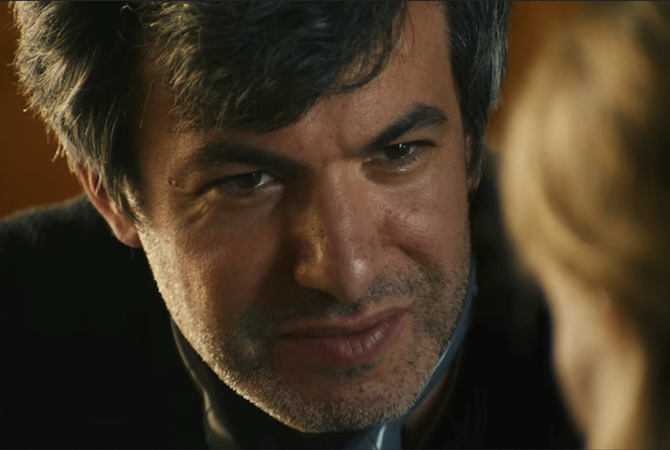
Before I get into this review, I must point out that You Can See Everything may be the future of theatrical documentary filmmaking.
Because first of all, the movie made 15 million bucks. Which is the equivalent of three times that in the narrative box office world, because documentaries make no money. And they especially don’t make money theatrically anymore. So clearly, this is a huge opening for a documentary film.
That got me thinking. How did this film achieve this when all these other documentaries make nothing?
To answer that, you have to understand why people don’t see documentaries in the theater anymore. The answer is because you can go to YouTube, type in “Charles Manson,” and get 50 documentaries about Charles Manson that you can sit there and watch all day long if you want.
This has happened because making documentaries is cheap now. And guess what? It just got even cheaper. The most recent documentaries I’ve been watching online have started using AI for insert shots or to recreate video. And while you’re aware that it’s AI, there’s no question that it’s a level up from what these no-budget documentary filmmakers used to have to do, which was go with stock images. Or stay on whatever documentary subject was speaking in a publicly accessible video.
Now you can actually recreate exactly what they’re talking about.
So the question then becomes, if you want to make a documentary that actually makes money and premieres in theaters, how do you do that?
You Can See Everything gives us the answer. You have to expand the documentary format into something we haven’t seen before.
Now, Nathan Fielder’s ability to do this is on another level. But I want to make clear that you don’t have to be a genius filmmaker who knows how to work his way into the documentary in a meta and entertaining way to pull this off. You just need to find an angle that expands the documentary format into something weirder or stranger or different from what we’ve seen before. And I think it’s all up for grabs as far as what you can do.
But I do think that filmmakers inserting themselves into these movies is one avenue. Becoming sort of the star of the documentary. Because you can almost create a franchise out of that. It’s similar to what Michael Moore used to do. You didn’t come to Bowling for Columbine just to learn about Columbine. You also came to see Michael Moore challenging Charlton Heston about guns.
And Nathan Fielder has taken that one step further by adding his quirky sense of humor and meta advancements, like bringing in real movie stars to play the roles of characters when he doesn’t have access to his documentary subjects.
That’s the sort of inventiveness you want to embrace in this new world of documentary filmmaking. Because if you’re just making by-the-books, by-the-numbers documentaries, forget about it. Just put your stuff up on YouTube. Cause I guarantee you no one’s paying 15 bucks in a theater for it.
Okay. Now let’s talk about the actual movie.
I went into this confident that it was going to be my favorite movie of the year. Ever since I found out about You Can See Everything six weeks ago, I’ve been desperately counting the weeks until it comes out. I love Nathan Fielder. He’s probably up there as one of the top five creative minds in Hollywood.
Nathan comes into Elizabeth Holmes’ life 36 days before she’s scheduled to go to prison for defrauding investors in her Theranos business, where she supposedly developed a blood-testing technology where people could prick their finger, put a blood sample into a machine, and test for hundreds of different things.
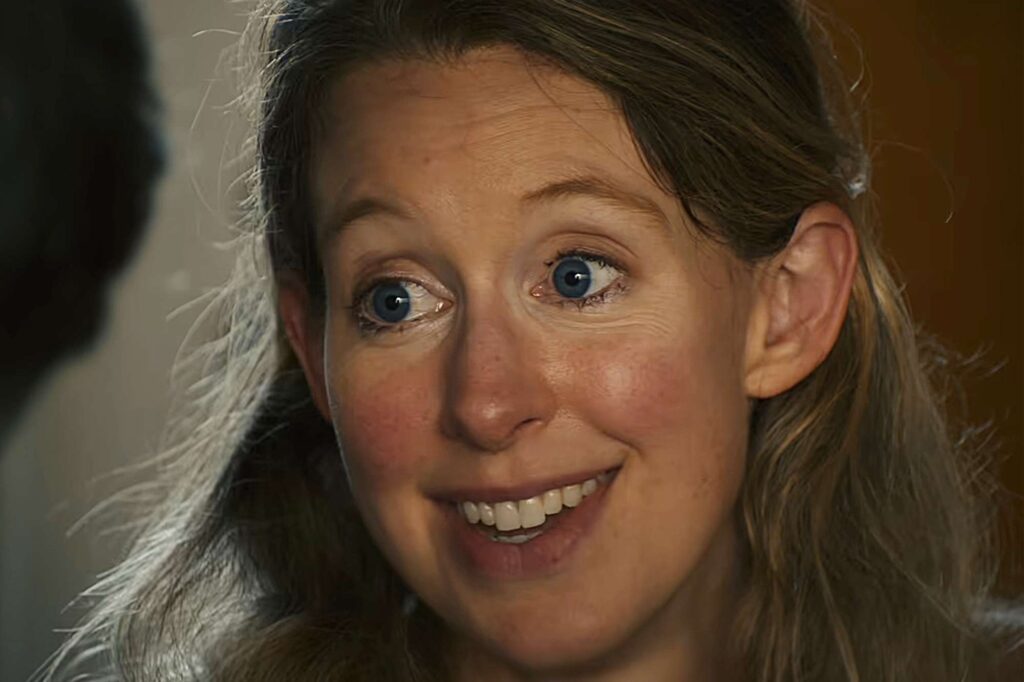
This had the opportunity to disrupt a medical testing industry worth hundreds of billions of dollars. So it was a big deal. And supposedly she knowingly said it could do some things that it couldn’t do. But this documentary is about Elizabeth claiming she’s always told the truth and that she’s innocent.
When Nathan comes into her life, she has a relatively new partner, Billy. Billy becomes a very big part of the documentary in that he’s taken the driver’s seat of both this relationship and this business, because they want to start up Theranos again, but a new version of it.
So Nathan starts living with Elizabeth and Billy in his beach house. They have two young kids with them. And Nathan’s goal appears to be to get to the bottom of what happened at Theranos. He wants to know if Elizabeth knowingly lied or not.
Because she’s always claimed that she didn’t lie. And actually a big moment in the documentary is Nathan asking her, “Have you ever told a lie?” and Elizabeth Holmes saying, “No.”
That becomes a central theme of the film. Truth. Not long after that moment, we learn about an infamous New York Times article. In it, Elizabeth Holmes says, of the fictionalized TV shows of her story, “They’re not playing me. They’re playing a character I created.”
And this quote becomes a big deal in the movie because Elizabeth Holmes swears that this line, which ends up going viral and sort of becoming an unofficial slogan that defines her, is something she never said. And she recorded all of the interviews that she did for people and claims that that line is nowhere to be found on any of the recordings.
But The New York Times says it was, so Nathan Fielder tries to talk to The New York Times and see if they can find the actual recording of her saying those words. And The New York Times can’t find it. Which begs the counter-question to Nathan’s assumption that Elizabeth lied to the world: Was this just one big smear campaign?
Nathan digs and digs but the more he talks to Elizabeth, the less sure of the answer he is. Which leads him to lose the plot a bit. If Elizabeth is innocent, then what is this movie really about? To give you some context, Elizabeth Holmes contacted A24 and said I’m open to being documented. And A24 went to Nathan and Lance and said, “Do you want to do this?” And Nathan decided, “Sure,” and ran out there to Elizabeth and Billy’s beach house to get to work. But there was a strange catch. Elizabeth only had 36 days left before she was sent to federal prison (screenwriting tip alert: ticking clock!).
So when Elizabeth heads to prison, Nathan loses his documentary subject. In the process, he also loses his narrative. But Nathan has this unexpected other character he’s left with: Billy. So I think Nathan decided, okay, we couldn’t prove that Elizabeth was bad. But we’ve got this guy over here who’s a weirdo and he says a lot of douchey stuff. Let’s go all in and make this an “Elizabeth Holmes’s husband is a psycho” documentary.
There’s a scene earlier in the doc where Nathan may have realized this was the way to go. Elizabeth is in the kitchen making eggs. She’s whisking them in a bowl, talking to Billy, and at one point Billy just takes the bowl out of her hands and starts whisking them himself. But faster.
And Nathan immediately stops everything. “Whoa, whoa, wait a minute. Why did you just take the eggs from her?” The moment gets a big laugh in the theater. And Elizabeth explains that Billy thinks she doesn’t whisk them enough and that the eggs taste better when they’re whisked more.
Ah-ha, Nathan seems to realize. Billy is the controlling evil villainous husband here! I mean look at this guy. He can’t even let his wife whisk some eggs without taking control!
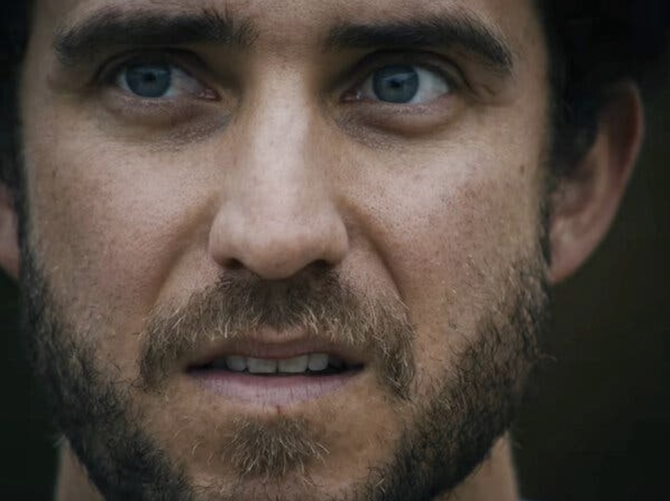
This annoyed the hell out of me. Billy and Elizabeth have been together for a few years now. They have two kids together. And for all we know, they’ve had this exact same conversation 80 times already.
Maybe Billy has politely asked her to whisk the eggs more 50 different times. Maybe he’s let her do it her way a hundred times. Maybe he’s having a particularly busy morning and doesn’t have time to get into the whole egg-whisking debate again, so he just takes the bowl and does it himself.
I could see myself doing that. I could see my partner doing that. When you’re around someone 24/7, you’re going to have moments like this. Now, maybe Billy really is a controlling asshole. But my point is, we don’t know that from a two-minute exchange. Yet the movie treats this as some world-changing moment.
Not to fear, though. Cause Nathan now makes it his mission to deliver on that narrative. He highlights that, once she goes to prison, Billy takes over Elizabeth’s Twitter account. He makes decisions for her. He’s aggressive. He’s opinionated. He’s the kind of guy who doesn’t really care what anybody thinks about him.
And let’s be real about this. Hollywood gets all up in their underwear about this kind of man. A man who takes charge in a relationship, who makes decisions, who doesn’t apologize for being masculine.
Here’s a question. What if, after everything Elizabeth has been through, after being dragged through the media for a decade, after losing her company, after facing hundreds of millions of dollars in debt, after knowing she’s about to go to prison, she actually loves the fact that this guy has come into her life and said, “You know what? I’ll handle this.” I’ll make the decisions. I’ll deal with the press. I’ll deal with the bullshit. You don’t have to worry about it.
Isn’t it possible that she finds that incredibly attractive?
Because whenever Elizabeth talks about Billy, she is over the moon in love with him. She loves that he takes charge. Yet the film seems determined to convince us that this is a bad thing.
**MAJOR SPOILERS FOR SECOND HALF OF MOVIE FOLLOW**
Which brings me to Amanda Seyfried, someone who may have low-key just become the biggest villain in Hollywood. No wonder she was cast in Mean Girls.
Nathan brings Amanda into the documentary as a, sort of, “Elizabeth Holmes expert,” the reason being that Amanda played Elizabeth Holmes in the Hulu series about Theranos’ downfall. At first, Amanda is there to recreate scenes to help Nathan understand Elizabeth better, particularly because he no longer has access to Elizabeth.
But eventually Amanda becomes a much bigger part of the story. When Nathan shows her some footage he’s shot of Billy and Elizabeth, she’s horrified. She concludes that he’s controlling. That he treats Elizabeth terribly. And that she’s a victim of Stockholm Syndrome.
At one point, while she and Nathan are driving to see Billy, she actually says, “Let’s break these two up.” And she has this weird little sinister smile on her face when she says it. And I’m thinking, wait a minute. Who the hell are you??? You don’t know these people. You haven’t spent years with them. You don’t know what their relationship is like when the cameras aren’t rolling. Yet you’ve decided that you understand Elizabeth Holmes’s relationship with her husband better than Elizabeth Holmes???
I mean isn’t the whole point of empowering women that they get to decide what they want? What if what this particular woman wants is a guy who takes charge? What if she doesn’t want to make every decision? What if she loves having somebody in her life who’s willing to shoulder all the responsibility?
There’s actually a shocking little moment when Amanda first meets Billy. She’s spent all this time getting worked up about how awful this man is. She’s ready to tear his head off. And then she meets him in person, shakes his hand, and the very first thing she says is, “Oh my God, you’re really tall.” And for that one split second, her whole demeanor changes. She almost seems mesmerized by him, momentarily forgetting that she’s supposed to despise this guy.
It’s a fascinating moment because it gives us a glimpse into the difference between the masculine traits people criticize in the abstract and how they actually respond to those traits when they’re standing in front of someone who embodies them.
Amanda’s able to recover though and, once they all sit down at a table, gets back on message and accuses Billy of being controlling. Boy did the ladies in my theater like this moment! You didn’t hear cheers that loud in an Avengers showing.
But Billy has this line during the argument that I thought was one of the best lines of the documentary. He says, “I don’t care what you think, Amanda. You’re an actress.” And Amanda shrivels up quickly after that. Because he’s right. She doesn’t have any special authority to tell people how to live their lives.
Imagine somebody who’s never met you, who’s watched a few edited videos of you and your spouse together, showing up at your house and telling you that your relationship is wrong. How would you respond?
And then there’s another moment where Billy starts talking about how much anger he has inside him. He says he has hate in his heart. He has revenge in his heart. It’s more evidence that he’s the second coming of Patrick Bateman.
But let’s add some context. Imagine the person you love more than anything has been dragged through the mud in the media for ten years. Imagine you have two children with this person. Imagine that EVERY. SINGLE. DAY. you have to watch people attack her, mock her, and say things about her that you know aren’t true.
Wouldn’t you be angry? Wouldn’t you have some hate in your heart for those people?
Look. I don’t even like Billy. He seems like a jerk. But I can also see why Elizabeth loves him. He’s confident. He’s decisive. He’s willing to say things other people are afraid to say. He doesn’t seem concerned with being liked.
What’s interesting is that Nathan, begrudgingly, seems to come to the same conclusion. He spends all this time trying to figure out Billy’s angle. Why would this wealthy guy voluntarily get involved with a woman who’s hundreds of millions of dollars in debt and about to go to prison? Why would he take on all this stress? What’s his real motivation?
Nathan keeps looking for an answer and eventually comes to the conclusion that he’s terrified to admit because it’s the least interesting answer for his documentary. Which is that the two actually love each other. Which is what we’re left with. Nobody knowingly lied. And these two are driven by love.
I walked away from this movie frustrated. Not necessarily because of what I just shared. But because the movie seems to be at war with itself and isn’t sure how to end that war. In many ways, it feels abandoned. Like the documentary version of The Empire Strikes Back, but if there was no slated Return of the Jedi to follow it. So I actually flirted with giving this movie a “wasn’t for me.”
But when I got home, I spent 7 straight hours looking up reviews of the film and that’s when I realized that this documentary had a hold on me that very few movies ever achieve. I know I will never forget about this film or certain scenes in it. And while I wouldn’t say the movie leaves me feeling satisfied, I will say that anybody who loves movies should see it. Because it gets under your skin in a way that’s worth studying. And the intensity within its presentation is so affecting that I think that it may even challenge The Odyssey for best film of the year at the Oscars.
What did you guys think?
[ ] What the hell did I just read?
[ ] wasn’t for me
[ ] worth the read
[ ] impressive
[x] genius
What I learned: One of the reasons I ultimately liked this movie is because of how desperately Nathan wants to find the truth. His investigation may shift from Elizabeth to Billy but his determination to get answers never wavers. Watch the trailer below. Look at how badly Nathan wants to find the truth from Elizabeth.
I explain why I chose the six loglines for last week’s Amateur Showdown and I go over five loglines that didn’t make it, so that you can see the common logline mistakes that writers make.
It always gets controversial when it comes time for me to pick loglines. Many writers are baffled by my choices, and even more baffled that those choices won over their loglines!
Which is why I like to be transparent here at Scriptshadow and let you know why I choose things (as well as why I didn’t choose the rest). I don’t speak for everyone in Hollywood. But there are some universal truths about well-written loglines and I’m hoping that by adding some context to the choices I made last Friday, you can get a sense of why they may have been chosen over your own.
Of the six choices for Amateur Showdown, I’m going to rank the loglines from my personal favorite to my least favorite. Let’s take a look.
Title: Deer Day
Genre: Horror/Thriller
Logline: When a group of hunting buddies take their pampered teens into the woods for the first day of buck season, they are hunted by killer deer who have a taste for human meat.
Whenever I’m looking to do an Amateur Showdown, I try to find that entry that says, “Okay, we’ve got a showdown now. This feels like a legitimate script.” This was that entry for me. It’s an idea that’s extremely marketable. It fits into a well-known genre. And, most importantly, it sounds fresh. On top of that, it has some irony, which you should all know by now supercharges a logline. And to be honest, it’s something that I have a little personal connection to, which always helps when you’re sending an idea to someone. I went to college in Wisconsin and all anybody talked about was hunting deer, which agitated me. I was like, “Why are you killing these poor deer! What did they do to you??” I didn’t get it. So this script gave me the promise of a little revenge.
Title: Invasive
Genre: Horror
Logline: Held hostage in a garage, a traumatized medic must perform an improvised autopsy on a dead soldier to learn how to defeat an alien invasion.
As you know, I love a good contained premise. And I love a good fresh take on aliens. This gave me both. I will say that I was concerned by the simplicity of the premise. Could this last a full 90 minutes? But that’s the thing about a good logline. The writer gets an opportunity to prove it’s a screenplay. I would have doubts that a writer could make a movie about a girl hanging from a tree for 90 minutes but then I read Osculum Infame. It was the memory of that read that inspired me to give Invasive a shot.
Title: Rockefeller Center Christmas Tree
Genre: Christmas Comedy
Logline: When the Rockefeller Center Christmas Tree burns to a crisp, a ragtag group of misfit landscapers band together to find a replacement before the official tree lighting ceremony. It goes badly.
As I stated in my review, I rewarded this concept because it was the first Christmas concept I’d been pitched in as long as I could remember that felt different. Same but different. Same but different. Same but different. It’s one of the most annoying pieces of advice in the screenwriting world. But this is a good example of how it works. We’ve all seen a group of comedic misfits banning together to achieve some wacky goal. That’s our “same” here. And our “different” is finding a replacement for the Rockefeller Christmas tree. Nobody’s made a Christmas movie about that before.
Title: Gratuity
Genre: Drama/Thriller
Logline: The tranquility of autumn in small-town North Carolina is broken when a sculptor’s hardheaded husband fails to tip a handy waiter, leading to dire consequences.
I’m pretty sure one of the commenters threatened to skewer me on his barbecue for including this logline. “Leading to dire consequences!!??” he comment-screamed. “You better have a really fucking good reason for this Carson after telling us we should never be vague in a logline!!” Look, it’s a fair criticism. Cause I do usually dismiss loglines for vague endings. But this is the complex art of choosing loglines. Just like a script, they are the sum of their parts. And if you like enough of the parts, you can overlook a part that you don’t like. It’s no different than dating. Let’s say you’re only attracted to brunettes. But then you meet this really cool blond who has a great smile and is super positive and funny and you say, “I can make an exception here.” I personally love ideas that start with something tiny that then turn into something huge. That’s what hooked me with this one. Which is the main reason I chose this logline.
Title: Cornelius
Genre: Dark-Comedy
Logline: When his criminal mother returns after a decade, a timid teenage dishwasher who competes as an underground mascot fighter must choose between the biological mother who abandoned him and the controlling, delusional bar owner who raised him.
I always leave a little room in my reading schedule for ideas that are on the weirder side. And this is my kind of weird. An underground mascot fighter. That’s unique. I could see that leading to some really fun scenes. And I liked the “superhero” component of it, whereby he’s a dishwasher by day and this weird fighter by night. But I did worry that the logline didn’t have a strong plotline. A guy choosing between two people being the central plot of your movie is weak. I suspect there’s a better plot to express in the logline. So I’d encourage Cornelius’s writer to find that.
Title: Made Men
Genre: Crime / Heist Thriller
Logline: Four professional thieves with the same face discover they are disposable human reconstructions created to bankroll the original man. To escape his cycle, they must outthink the one criminal who knows every move they were built to make.
I did not choose this one. Scripty did. But this is what Scripty told me. He said he likes concepts that take big swings. And this felt like a 2026 version of Face-Off, a Top 5 all-time movie for Scripty. He also said, “You always tell everyone to come up with a movie idea that allows an actor to play multiple roles” and he’s right. You could see an actor very much wanting to play all these parts. What I told Scripty was that this is one of those ideas that, when I’ve been pitched something similar over the years, the script ends up being messy. You can pick up on the messiness in the logline if you pay close attention. But it’s also one of those ideas that if you’re a really good writer and you have a solid plan to execute the script (as opposed to trying to figure it out along the way), it could be cool.
Okay, now let’s take a look at some of the ideas that didn’t make it.
Title: APPROACHING SUNSET
Genre: Drama
Logline: Billy Wilder and his writing partner Charles Brackett fight with each other, the studio and all of Hollywood to make their perverse masterpiece “Sunset Boulevard.”
I want to emphasize that everyone in Hollywood has different tastes. And as long as your screenplay clears a certain execution bar (meaning the writing is strong enough that people can judge it on the story itself rather than get distracted by amateur mistakes), your job becomes finding the people in Hollywood who love the same kinds of movies you love to write. This idea is just not my jam. I hate real life stories in general. I think that if you want to tell a real life story, make a documentary. I’m a fiction guy. And so this does nothing for me, even though I love Sunset Boulevard. With that said, these types of scripts get a lot of votes from development execs for the Black List. So, just because I didn’t pick this idea doesn’t mean others wouldn’t.
Title: Sunsetting
Genre: Dark Romantic Comedy
Logline: When a terminal heart diagnosis suddenly makes sex fatal, a silver fox tricks his therapy-obsessed, sports-betting-addicted son into a cross-country road trip for one last fling with the one who got away – a grieving widow who still resents their broken engagement from 50 years ago.
This is a great example of an idea that, on the surface, sounds like it could make for a decent movie. But the way the logline is written makes me wonder if the writer has fully figured out what their movie is yet. The logline begins by telling us that our hero could die if he has sex. But that setup is never paid off. Instead, we take a detour that introduces us to the hero’s son, who we then learn has an addiction that seems totally irrelevant to the rest of the concept. And then we’re told he has to trick his son to go on this trip with him. We’re not told why he needs to trick his son or why he even needs to include his son. And then we’re off to find this “one who got away” woman, which vaguely hints at this idea that our hero might be trying to commit suicide? He knows he will die the next time he has sex so he wants to make sure it happens with the one who got away? Then again, there’s a good chance that that’s not what the writer was intending you to think at all. There are a lot of funny little elements here. But they don’t come together as a whole. And that’s what loglining is all about. Taking these individual pieces and making them feel like they belong in the same movie.
Title: The Prototype
Genre: Action
Logline: Falsely accused of murdering a grizzled detective’s son, a street-smart wheelman steals a prototype car believing it contains the evidence to clear his name. To survive, he must convince the grieving cop to stop hunting him and instead ride shotgun to take revenge on the real killer.
When I said that 90% of the entrants needed to order a logline consult (e-mail me at carsonreeves1@gmail.com with the subject line “logline” if you want one – they’re only 25 bucks) this is a good example of why. This title is evocative. It gets your imagination going. And when we find out that it’s a prototype *car* we’re talking about, that makes it even cooler. Yet none of this logline is about the cool prototype car and how that plays into the story. Instead, we get a generic story about some murdered guy and a dude who has to clear his name. You’ve literally run away from the coolest thing about your idea in your logline, and instead focused on the generic thing that’s in every movie! You’d be surprised at how often I see this in loglines. The goal of a logline is not to tell everyone what’s the same about your movie. It’s to tell them what’s different. More prototype car!!!
Title: CAPTAIN DANGER AND THE TERROR CROWN
Genre: Action Adventure
Logline: A war-haunted smuggler races across the 1933 Caribbean with a scientist to destroy her ground-breaking shell-shock cure before her financier weaponizes it to plunge entire armies into their worst nightmares.
A common mistake we all make as writers is assuming the reader knows what we know. Sometimes, that’s okay. If we say our story takes place in a “small town,” we can assume the reader has a good idea of what that might look like. But sometimes writers make much more specific assumptions and that’s where they get in trouble. You can occasionally get away with this in the script itself because there’s so much context that follows. But in a logline, it’s deadly. The second I got to “ground-breaking shell-shock cure,” I checked out. Cause I have no idea what that means. And since the rest of the story is built on top of that idea, I’m completely lost. I don’t understand how weaponizing “shell-shock” makes people experience their worst nightmares. You guys HAVE to get feedback on these loglines or you’re going to send stuff out to producers that has no shot. Cause here’s the frustrating thing. The first part of this logline intrigued me. I was into it! And then those four words killed it.
Title: Not By Blood
Genre: Elevated horror, action
Logline: To save her dying species, the last vampire and the amnesiac man she rescues must learn to trust each other before an immortal butcher – or her violent secrets – destroy them both.
I kind of like the amnesiac trope. However, it has to be integrated into your story in a clever way. And here, it doesn’t seem that way AT ALL. It feels like the writer just threw in an amnesiac because, hey, amnesiacs make stories more interesting, right? Well, no. Not unless there’s something about this particular situation that makes having an amnesiac exciting. And I’m not seeing what that is. The next mistake is introducing some random villain, the “immortal butcher,” like we’re supposed to know who that is. What does that even mean? That’s the kind of thing that needs context. You can’t just drop a name like that into a logline and expect us to understand why we should care. And then there’s the issue of stopping the logline dead in its tracks with those dashes to throw in a piece of information that adds absolutely nothing. You should never EVER interrupt the momentum of a logline unless what you’re adding makes the movie sound more exciting. If it doesn’t, get rid of it. This logline needs a complete overhaul before it’s ready to properly promote the script.
And there you have it. Feel free to debate these loglines as well as my analysis of them. And I’d also encourage you to share your own loglines and get feedback. Any feedback you get from others is going to be valuable. There are often problems with a logline that are impossible for the writer to see, but immediately obvious to someone else. Have an awesome weekend everyone. I’m off to see You Can See Everything, a movie I’m absolutely DYYYYYYING to see. I’ll have my thoughts for you on Monday assuming I can get into what will surely be a ton of packed theaters.
