
Genre: Dark Comedy
Premise: When his criminal mother returns after a decade, a timid teenage dishwasher who competes as an underground mascot fighter must choose between the biological mother who abandoned him and the controlling, delusional bar owner who raised him.
About: A few weeks ago, I held an Amateur Showdown for all you aspiring screenwriters out there. The voting was really close. Two weeks ago, I reviewed the winning script. But today’s script was just one vote away from winning. And ever since The Ballad of the Ember Knight lost on an Amateur Showdown, resulting in me only finding out about it when the writers hired me for a consultation a year later, I’m a bit more curious about the scripts that don’t win these things. Hence, we get today’s review…
Writer: Jamie Porter
Details: 95 pages
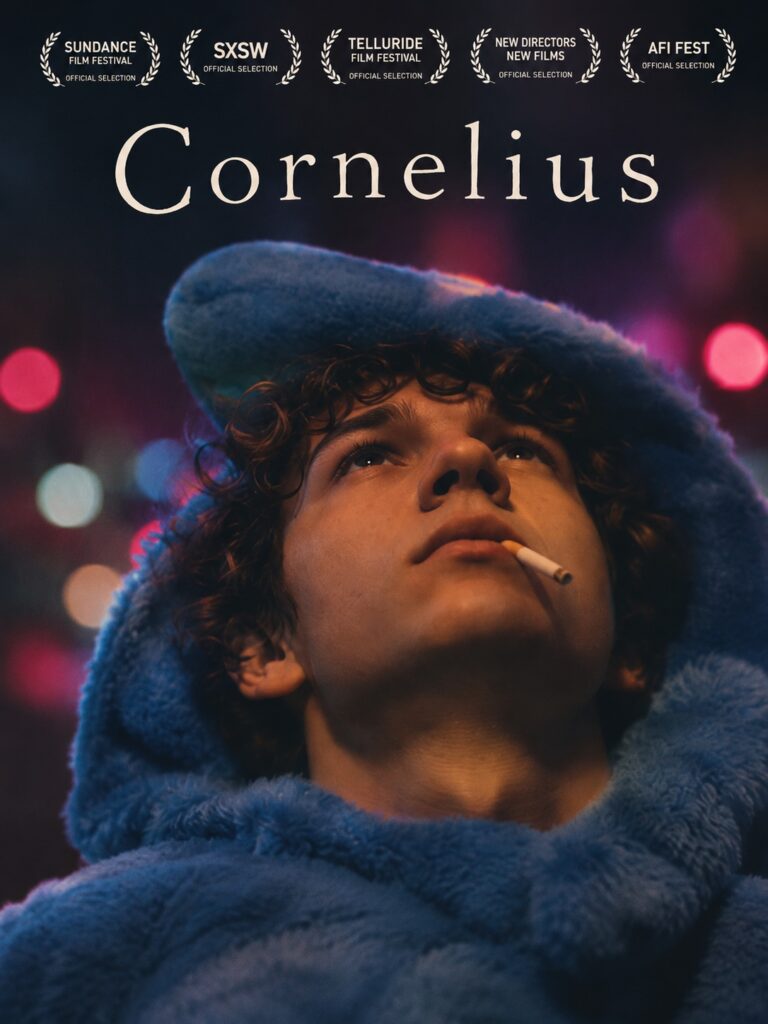
I always like to give unique scripts a shot. So, when I was picking screenplays to compete in the Amateur Showdown, I was excited to find this one. It scratched that “weird” itch that makes me think of movies like Being Charlie Kaufman and The Squid and the Whale. Those scripts can turn into really good indie movies. Do we have another one of those today? Let’s find out…
17 year old beanpole Cornelius competes in an underground fighting league where grown men dress up in animal mascot costumes and beat the crap out of each other. Cornelius fights as a dolphin and is one of the league’s rising stars.
Greg, who’s obsessed with bleak sad Hungarian films, is officially Cornelius’s coach and unofficially his father. The two are also close with Halpert, a 72-year-old widower who’s barely hanging onto his life and runs the fighting league. Before he dies, Halpert wants to expand the league.
One day, Cornelius’s estranged mother, Sanni, shows up. Sanni is a very unhappy miserable woman so it’s not clear why she wants to reconnect with Cornelius. But it may have something to do with her ex-boyfriend. If she comes to him with Cornelius, maybe he’ll want her back.
Eventually, Cornelius meets Milky, a weird young girl who seems to understand him in a way no one else does. The two begin hanging out and, all of a sudden, Cornelius isn’t as interested in mascot fighting so much.
As the championship nears, Sanni does something catastrophic to destroy the league, leaving Greg and Halpert scrambling to save it. But will Cornelius even want to fight if they do?
The character study.
It’s when you strip away the big, sexy concept, the exciting plot, and you tell a slow, mostly intimate, story that focuses on the characters themselves.
So it goes without saying that if you’re going to write a character study, as is the case with Cornelius, you gotta give me some great character development.
I believe that Jamie believed he was giving us that. But I would argue that he didn’t get there. And it’s a rather involved explanation as to why so hang with me and I’ll do my best to explain it.
Let’s start with Cornelius himself.
He is the titular character.
But he’s not the main character.
That’s not unheard of for a movie. But it’s frustrating if you’re the reader. Cause you go in assuming that’s the case and then all of these other characters are getting way more attention and you’re thinking, “Well, wait a minute. Who’s the main character exactly?”
At first, it appears to be Greg. He’s taken Cornelius in. He’s pushing him to be this great fighter. Readers gravitate towards characters who are ACTIVE. And let me explain why. Because screenwriters hear that advice a lot: “Make your character ACTIVE!” But I’m not sure they understand why it’s important.
It’s important because active characters are PUSHING THE STORY FORWARD. Let’s take Jeff Lebowski. The fact that he has to go out and try to get the money back for his ruined rug FORCES THINGS TO HAPPEN IN THE STORY that push it forward.
Now imagine that nobody had pissed on Jeff Lebowski’s rug. He wouldn’t have to do anything. He wouldn’t have to go anywhere. And what would that result in? No story. No plot. A character hanging around his apartment all day.
So that’s why you want active characters.
Unfortunately, Greg is active in name only. He wants Cornelius to win. He wants to make a small fighting league a little bigger. But that’s pretty much it. That’s the extent of this character’s contribution to the story. Outside of that and his love for Hungarian movies, he’s too thin.
Then we have Sanni. I don’t know if I’d call Sanni the best character in the script because she’s unlikable in God-like proportions. But she disrupts a lot of things and, therefore, is the main source of drama in the story. Character studies NEED DRAMA. Too many screenwriters don’t know this. They think: Just create interesting characters. No. You need some sort of plot where dramatic events unfold.
My issue is that she doesn’t feel truly connected to Cornelius in any real-world convincing way. We later find out they’re not even related. She adopted him. Which makes it confusing why she would’ve abandoned him. I just never got the feeling that Jamie understood this character other than that she was a disruptor.
Eventually, Cornelius begins to break away from what everyone else wants for him when Milky comes along. But even as he starts making his own decisions, he still comes off as thin. Because when you strip everything away, what’s really happening here? A horny 17-year-old boy meets the first girl who wants to have sex with him, and suddenly he doesn’t want to fight anymore.
Is that a deep exploration of character? What are we learning about Cornelius beyond the fact that he’d rather have sex than fight? What deeper part of himself is being challenged? We get this late-arriving art storyline that seems designed to give Cornelius some of that missing depth. But rather than growing organically out of who he is and what he’s been through, it feels like another funky idea the writer has thrown into an already overcrowded script full of funky ideas.
And I kept coming back to: Who is the main character here? Cornelius starts to emerge as the main character as we near the finish line. But for the first half of the script, I don’t know if I knew a single thing about Cornelius. You can’t develop a character ONLY in the second half of the screenplay.
All of these characters need more depth. A tragic childhood backstory and one quirky characteristic each is not enough development. Real character depth comes from establishing who a person is, identifying the thing that’s holding them back in life, then putting them through a journey that forces them to confront that thing.
I just watched Coyote vs. Acme, and Will Forte plays this bottom-of-the-barrel lawyer who’s given up on life. He’s a coward who’s known for settling every case that comes to him. Then he’s dragged into this ridiculous case where he can’t settle. And over the course of his journey, he has to decide if he’s going to continue being this guy who rolls over and accepts defeat or if he’s finally going to stand up and fight for something.
THAT’S character depth because we understand what the character needs to improve then we build a story around repeatedly testing him in that area. You want to introduce your character at a point in their life where, if they keep going down the road they’re on, they’re killing their own soul. And the movie is their last-ditch chance to change that.
That’s what makes a character journey compelling. We’re watching someone fight for their soul!
Nobody in this script really cares all that much about anything. Greg cares the most but what he’s fighting for is thinner than the pancakes I made this morning. And everyone else is just depressed and dying. Cornelius is the closest we get to a character transformation but he was set up so poorly – so passively – that we never, or I should say I never, cared about him.
Part of the problem is Jamie focused on the wrong thing. He put too much importance on the quirkiness. Giving Greg a backstory where he was left at a baby giraffe zoo as a child. Sanni almost ran away with a circus musician. Cornelius and Milky make art with blood. Backstories that all have some insanely unique element (your wife didn’t just die. She died climbing Mount Kilimanjaro).
These things may feel like good writing choices because they’re unique. But they’re also insanely unrelatable. To get the audience to understand your characters, they have to relate to what they’re going through. Nobody can relate to being 7 years old, told to swim under the ice in a lake, then come out the other side to find out that your parents have left you there. That doesn’t happen in the real world.
Generally speaking, you get one wild creative choice in a script (a kid fights in an underground animal mascot league) and that’s it. With everything else, try to keep it realistic.
I’m not going to lie. This one was frustrating. I kept waiting for it to find its footing. But there was never a moment in the script where I wasn’t aware that it was being written. With that said, if you are a fan of movies like The Squid and the Whale or, even, Little Miss Sunshine, you might like this one. Check it out, form your own opinion, and tell us what you think in the comments.
Script link: Cornelius
[ ] What the hell did I just read?
[x] wasn’t for me
[ ] worth the read
[ ] impressive
[ ] genius
What I learned: If weirdness could be measured on a 1-10 scale and you’re naturally a 6, don’t try to write a Level 9 Weirdness script. Stick closer to your natural level. Maybe push yourself to a 7 or 8. But the further you stray from your natural sensibility, the more inauthentic your writing will feel. Because at a certain point, you’re no longer drawing from your own imagination. You’re drawing from what you think a weirder person’s imagination looks like. And that’s the difference between being genuinely weird and trying to convince everyone you’re weird.
