
Genre: Horror
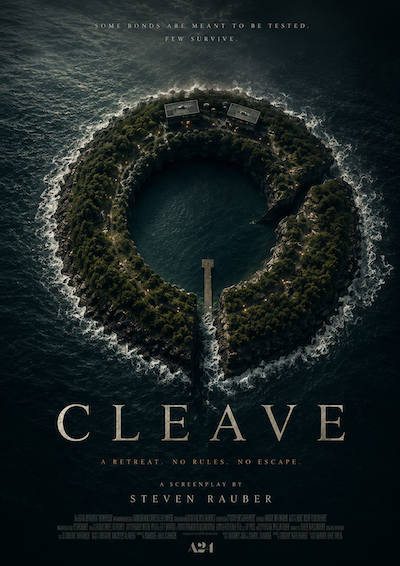
Logline: At a couples retreat for failing marriages, a husband and wife face an extreme form of therapy that requires purification through pain. As the therapy grows increasingly brutal, it becomes clear that their hosts have no intention of letting them leave alive.
About: For those new to the site, last year I did a pitching contest called Blood & Ink. Anyone who wanted to could pitch me movie ideas. I then accepted the best 100 of those ideas into a contest. The writers then wrote those scripts. And, ever since, I’ve been reviewing them, looking for the best one. Already, one script, Wildman, written by Jacob Rainer, got him a manager and possibly more. Stay tuned.
Writer: Steven Rauber
Details: 105 pages
I figured I’m never going to finish these Blood & Ink entries unless I review them, so for this week, I’m doing five Blood & Ink script reviews. And possibly five more next week. The goal? To find one good script. And with the streak that Scriptshadow’s on right now, I’M FEELING GOOD ABOUT IT!
Gotta keep getting writers reps. Gotta keep getting writers sales. Let’s turn this industry upside-down, baby!
Now, quick aside here. I know Scripty held his own pitching session this weekend. I would STRONGLY advise you to ignore any encouragement he gave you. Scripty’s favorite movie is Mac & Me. He eats salsa for breakfast. So that should tell you what kind of taste you’re working with.
Okay, let’s get into today’s script!
When we meet Martin and Leigh Langford, they’re in a marriage therapy session, trying to hash out, for the umpteenth time, why Leigh had an affair. They’re so deep in their unhappiness with one another that even their therapist has gotten sick of them.
So, she recommends that if they really want to save their marriage, they attend the most intense couples retreat in the world, an off-the-books program held on its own private island. They’re reticent about it, but they really do want to save their marriage, so they agree to go.
They arrive at the island retreat, called “Continuum,” and soon meet the other couples. Howard and Susan are the oldest, in their 50s. Then there are a couple of fit Aussies, Brock and Tara. And finally, the youngest duo, influencers Zane and Nikki.
Leading the retreat are Kip and Celeste. Right off the bat, they throw a shock collar on Zane and start electrocuting him. Later that night, they drug everyone, dump them in the middle of the forest, and force them to find their way back.
From there, the couples are subjected to lie detector tests. When Leigh is the only one unfazed by the exercise, refusing to hide anything the way the others do, it sets Kip and Celeste off. Now they’re determined to break Leigh and Martin, eventually throwing them into a holding cell.
Next, the couples are put in cages. And in a separate cage is Dominic, the guy Leigh cheated on Martin with. Each cage is rigged with a device that delivers a Mike Tyson-level punch right to the gut. Martin is given ten “punches” and told he must use all of them, either on Dominic, his wife, or split between the two. Martin uses every one on Dominic. Dominic dies.
At that point, Martin and Leigh are like, “We’re outta here.” But the staff won’t let them leave until they complete the retreat. During the next exercise, Brock is placed inside a giant web of ropes and inadvertently twisted to death by the other participants. Yet the more of these brutal exercises Martin and Leigh survive, the more alive they begin to feel, reigniting their passion for one another.
Finally, they’re faced with one last elaborate challenge, one that very few couples both come out of alive. But, spoiler alert, Martin and Leigh succeed. This enrages the staff, who we learn are all survivors of previous Continuum retreats whose spouses did not make it out of this exercise alive. They pressure Kip and Celeste into taking the final challenge themselves to prove the whole thing isn’t rigged. Will the two evildoers survive? Or will this be the last Continuum retreat ever?
Cleave is a hard script to categorize.
It doesn’t contain that “it” factor that allows it to stand out from the pack. But it’s not another one of these forgettable by-the-book scripts either. It’s stuck somewhere in between, and that’s what’s so frustrating about it.
Whenever I’m struggling with a script, I start with the main characters. Do I like these people? And if not, do I find them interesting? If the answer to both of these questions is “no,” you’ve got your answer right there.
Because if you’re not on board with the characters in a script, then every single scene is tainted by that lack of interest. And when it came to Leigh and Martin, I found them to be just… for lack of a better term… blah. They didn’t move the needle either way. They didn’t display any likable traits. And I didn’t find them or their relationship that interesting, to be honest.
Which is probably frustrating for Steven to hear because, technically, he did the right thing. He introduced the two of them in a marriage counseling session to establish that they had marriage problems. That’s what you want to do in a script. You want to introduce the characters quickly, establish their problem quickly, so you can then thrust them onto their journey where they will attempt to resolve that problem.
Textbook screenwriting there.
And yet, if we don’t like the characters, it doesn’t matter. So, I went back into that first scene and I asked, “Why?” Why don’t I like these characters? The answer was immediately obvious. They’re both miserable.
We meet them in this therapy session. They’re mad. They’re sad. They’re exhausted. They’re at the end of their rope. We are being introduced to zero positive qualities and, therefore, it’s quite easy not to like these two. Or, at most, feel nothing towards them, which is probably closer to what I felt. I didn’t dislike them. I just didn’t feel anything towards them.
For those who are veterans of the site, you will know that there is a similar script to Cleave in my Top 25. It’s called The Process. I loved that script. Out of curiosity, I went back to that script to figure out why I cared so much more about that couple than this one. I got my answer immediately.
Instead of introducing his couple in an angry therapy session, which increases the chances that we dislike them, the writer, Levin Menekse, comes up with a rather clever way into his retreat. The main character couple actually believe their marriage is great. They’re only going because the wife’s upscale law firm is making them go. They want to make sure that the people working at the company have strong marriages.
That takes so much pressure off the writer because now he can just focus on you liking the main characters as opposed to setting up their problems. That script’s opening scene is the married couple going over the legal agreement for the therapy weekend and making fun of how aggressive the contract is. In other words, they’re joking around. Levin is making us like these two.
Now, does that mean you can’t start your broken-marriage movie with a therapy session? Of course not. It just means you have to be aware of how that choice is going to affect the reader and write accordingly. That’s a huge part of screenwriting: anticipating how the reader is going to interpret each choice you make, then shaping those choices so they create the exact response you want.
Once we get to the island and the therapy begins, Steven runs into another problem in that he’s trying to create these villains (the couple who run the therapy) and he leans into how evil they are right away. I mean, there’s no ambiguity here. From day 1, they’re putting shock collars on people.
This made the villains on-the-nose and the more on-the-nose you make characters, the harder that character is to believe. So I didn’t really believe these two were real.
I think where Steven saved the script is that he creates several tests that are quite original. Where scripts like this fall apart are when they conduct obvious tests, which there are a couple of. The characters are put through a lie detector test, for example. But even there, Steven creates a twist. The spouse is rigged with a shock lapel. So, if you lie, your partner gets electrocuted.
But some of these other exercises were pretty inventive. At one point, someone gets tied up in this elaborate web of rope and all the other couples have to work together (communicate – a big part of becoming a better partner) to untangle him. But they can only do so from a distance, each holding a part of the rope, and if they screw up, the rope gets tighter around the tied-up character rather than looser. And if you really screw up, it can get tight enough to kill him.
There were several tests like that that were very original. And I also thought that the villain couple got better as the story went on. The irony is that, because we didn’t really have anybody to root for (as I mentioned above, we didn’t love our heroes) a lot of our emotional focus was on hating this evil couple. So, by the end of the movie, I really wanted to see the evil couple go down. To Steven’s credit, he writes a strong final scene for them (note to Steven: But make it so the couples force Kip to take the test. Kip should not volunteer).
So, how do we fix this problem? I’m fine with establishing Martin and Leigh’s troubled marriage right away. But once they realize they’re in trouble on the island, that should be when you work to make us like them. Audiences enjoy when two people who don’t like each other team up for the sake of getting out of a bad situation. So, lean into that here. They put aside their issues for the time being, come together as a team, which now allows you to focus on their positive traits, which should make them a lot more likable.
For these movies to truly work, we gotta feel like we went through an honest exploration of a marriage between two people we cared about and genuinely wanted to see come out the other side together. And I never got there with these two. We got some inventive tests for them to endure along the way. But, unfortunately, that wasn’t enough to save the script.
Script link: Cleave
[ ] What the hell did I just read?
[x] wasn’t for me
[ ] worth the read
[ ] impressive
[ ] genius
What I learned: Be careful about getting too comfortable in a script like this. Once you establish the pattern of the story and stick with that pattern the whole way through, unless everything else is firing on all cylinders, we’re eventually going to get bored. That’s why I always recommend throwing a whopper of a twist or reveal into a script like this. For example, so much of this story is focused on the destruction of the marriage through Leigh’s affair. So what if we learn, shocker of shockers, that Martin was having his own affair before any of that happened? A reveal like that would turn everything on its head and force us to reassess everything we thought we knew about the marriage. And I’m not saying that’s the perfect reveal. But that’s the kind of shock you need to throw into a story like this. Because, for me, the emotional trajectory stayed too consistent the whole way through. I wanted the script to shake things up more, surprise me, and force me to recalibrate how I felt about these characters.
