
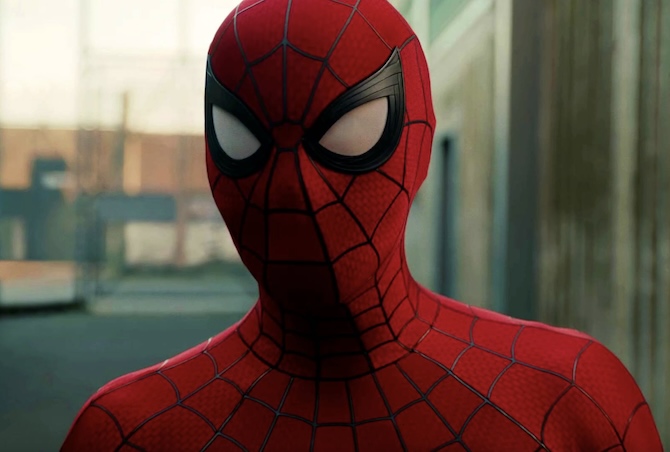
Say goodbye to Hollywood doom and gloom talk.
Over this past month, two movies have made 3.6 billion dollars at the box office.
Ironically, those two movies have become huge for exactly the opposite reasons. One is the ultimate zeitgeist popular culture everybody from age 8 to age 80 can go see it and have fun film – Spider-Man. And the other is the adult challenging narratively complex period piece that is The Odyssey.
And I think that’s a good way to look at Hollywood. We have those two main options as writers. We can give them the exactly what they want concept or we can give them what they don’t know they want yet.
Each choice has its own challenges.
You’d think that writing a movie for everyone is easy. You’re literally just writing what everybody likes. But Spider-Man is the diamond version of that film. Disney came out with a movie called Moana not long ago that was supposed to perform just like Spider-Man did. And it bombed. So, it’s never as easy as it looks.
I do think that making a more challenging Spider-Man movie helped. They took some pretty big creative story risks here. Keeping the villain hidden most of the movie. Making the character sad and lonely. Creating this big metamorphosis within the character. Shifting the movie late to almost make the villain, Jean Grey, the main character.
I’m not saying it all worked. But it’s a better movie than if they would’ve played everything right down the middle and made it a basic silly fun Spider-Man movie.
With The Odyssey, the risk is the idea itself. Nobody is making these movies right now. And that’s why I think it was a hit.
The Odyssey has been sitting there for decades, waiting for someone to make it, and nobody touched it. For legitimate reasons. It’s a period piece that costs a ton of money. And period pieces are huge gambles because when they don’t work, they SUPER BOMB. It’s not like Masters of the Universe, which can bomb theatrically and still make a considerable amount of that money elsewhere. Epic period pieces rarely break out. Especially these days.
So the lesson is, you either take the risk within a safe concept or you take the risk on the concept itself.
I have no doubt that’s a big reason why Ballad of the Ember Knight sold. There are literally ZERO scripts out there like it. It had a lane all to itself.
Now, you still have to write a good script. You can’t just say, “My script is different, therefore you have to buy it.” You always have to deliver. And these guys did.
I’ve gotten into a lot of discussions about the script over the last week, and people are constantly asking me what I saw in it that I think helped it sell. I’ve thought about that a lot, and the answer I keep coming back to is: the storytelling.
I used to go on and on about storytelling on this site until I looked back at a month of posts and realized 90% of them were about storytelling. So I moved on. But I should probably talk about it more because good storytelling is a huge reason this script sold, and the lack of good storytelling is what dooms so many of the screenplays I read.
Too many writers are just trying to hit the beats they’re supposed to hit. They know they gotta achieve “this” by page 5 and “that” by page 15 and “this other thing” by the end of the first act. Then they need that great character introduction scene. Then they need their midpoint. Then they need their low point. Etc., etc.
But all of that stuff is just the entry point. It’s the framework that allows you to tell the story. Ideally, those page numbers and beats are sitting somewhere in the background of your head while the creative part of your brain is focused on one thing:
HOW DO I MAKE THIS AS ENTERTAINING AS POSSIBLE?
That happens on two levels.
First, you’re trying to make the scene you’re writing right now as entertaining as possible. And by “entertaining,” I mean you should be able to make a strong argument that there’s no way the reader is going to stop reading before that scene is over.
Second, you’re building the larger story so that when the scene ends, the reader has a reason to keep going.
That’s really where Ballad of the Ember Knight distanced itself from other scripts.
We have this mysterious knight who we don’t have all the answers about. So we want to keep reading to find out more about him.
Then we meet this teenage boy whose father, the king, has been killed. Which means the boy is now king. But he has to get to the city to claim his crown. Meanwhile, the man currently controlling the country wants to be king himself. So if any of his men find the boy, they’re going to kill him.
Then the Ember Knight runs into the boy and his guard.
Here’s where the storytelling really kicks in.
We know the Ember Knight killed the boy’s father. The boy doesn’t.
The guard may or may not know. He’s suspicious of the Ember Knight. But these three need each other to get through this broken country where people are trying to kill them for different reasons.
Look at how many reasons we now have to keep reading.
We want to learn more about the Ember Knight. We want to know if the guard recognizes him. We know that, at some point, the boy is going to find out that the Ember Knight killed his father. Well, OF COURSE we want to keep reading to see what happens when that bomb goes off.
And on top of all that, people are hunting them. So there’s potential danger on literally every next page.
That’s why the script could still work at 190 pages. The O’Dey brothers made sure you always had a reason to turn the page. That’s good storytelling to me. You give the reader a strong reason to turn the page. Or, even better, you give them multiple reasons.
What most screenwriters are doing instead is checking boxes. They want you to know that they know they gave you the inciting incident. They introduced the protagonist correctly. They got out of the first act on time. So there’s this subconscious attitude of, “I did it the right way. I get credit for that, right?”
No.
That’s not how this works.
I’ve been thinking about this a lot lately and I believe you should always lead with instinct, with your eyes on entertaining the reader. Then you fall back on structure, formula, and screenwriting basics.
I like to think of those things (the nuts and bolts screenwriting stuff) as following your creative instincts a few blocks behind. You want them close enough that they can catch up when you need them. If the story starts wandering, structure can come in and straighten things out. If the pacing starts dying, your screenwriting fundamentals can tell you why.
But they shouldn’t be leading the parade.
Your creative side should be leading because that’s the side that’s going to come up with the weird choice, the exciting choice, the dangerous choice, the thing we haven’t seen before. Your logical brain is much better at making sure the story works. But it’s rarely the part that comes up with the thing that makes somebody say, “Holy shit.”
So let your creative instincts run out in front.
Then let structure chase them.
Anyway, I want to find more great scripts. I want to help you guys sell more scripts. But I can’t do anything for you unless you give me the goods. I’m going to try and review 4 more Blood & Ink scripts this week. It’s a busy week for me so it’s going to be tough. But maybe we find the next gem there.
I hope all of you are working hard on your High Concept Club screenplays. Only a few of you have come to me for outline help. I think that’s a mistake. The people who have sent me their outlines and got my feedback can tell you in the comments how much it’s helping them. It’s free feedback, people. Come on!
I’m still thrown by this movie I saw over the weekend, Miracle Mile, from 1988. It’s really stuck with me for some reason. It’s a freaking INTENSE movie. Maybe I’ll check out that director’s other movie later tonight (Cherry 2000).
In the meantime, back to reading!
