
The genuine blueprint for writing a great screenplay

So I was reading this consultation script recently and I really wanted to like it. It had all these elements that I’m into.
And the thing is, I did enjoy it. It had some fun moments and I was mostly curious what would happen next.
But the thing about screenplays that take over the town, that shoot to the top, that sell for a million bucks, that get fast-tracked into production, is that you don’t just “enjoy” them. You fall into them. They become an extension of you. The two of you fuse into one singular organism.
People always ask me, “Carson, why don’t you write scripts? You know everything about screenwriting.” It’s true. I know enough that I can write one of these good scripts. I can hit the proper beats, set everything up, create a reasonably compelling main character, give them a goal, throw obstacles at them, and construct a story where people will probably keep turning the pages.
But that’s not what results in the screenplay we’re talking about here.
We’re trying to write the script where, at some point, the reader loses awareness that they’re reading a script at all. They’ve become so completely absorbed in the story that the script doesn’t even exist anymore. The characters feel real. The situation feels real. You’re no longer analyzing anything. You’re just THERE. That’s a different ballgame. And figuring out how to get there has become something of a life’s work for me.
Unfortunately, I’ve learned that there’s one gigantic component of this that is extremely difficult to control. Every once in a while, something magical happens where all the elements you’ve chosen for a story start interacting with each other in this perfectly harmonious way. The concept, the characters, the relationships, the plot, the voice, the theme. Everything starts feeding everything else, and suddenly the story becomes more than the sum of its parts.
I want you to hone in on that phrase: MORE THAN THE SUM OF ITS PARTS.
That’s the screenplay that fucks.
And today, I’m going to show you how to give yourself the best possible shot at writing one.
99% of the screenplays I read are PARTS. And some of those parts are great. Great character. Great scene. Great midpoint. Great dialogue. Great climax. But they’re not summing. They’re not interacting with each other in a way where they start to feel like one living breathing organism. A screenplay cannot break into the stratosphere unless it eventually becomes more than the sum of its parts.
But here’s what’s annoying. Before you can get to the sum, you first need those parts!
Which is why I want to reinforce the foundational parts of a good screenplay. It all starts with the concept. I know that “good concept” is subjective. But after reading through thousands of ideas for the High Concept Showdown, you notice patterns. Most weak concepts are undercooked, too familiar, too obvious, the stakes aren’t high enough, or there simply isn’t enough conflict built into the idea.
But there’s another reason you want a great concept that I don’t think gets talked about enough: A GREAT CONCEPT WRITES THE MOVIE FOR YOU.
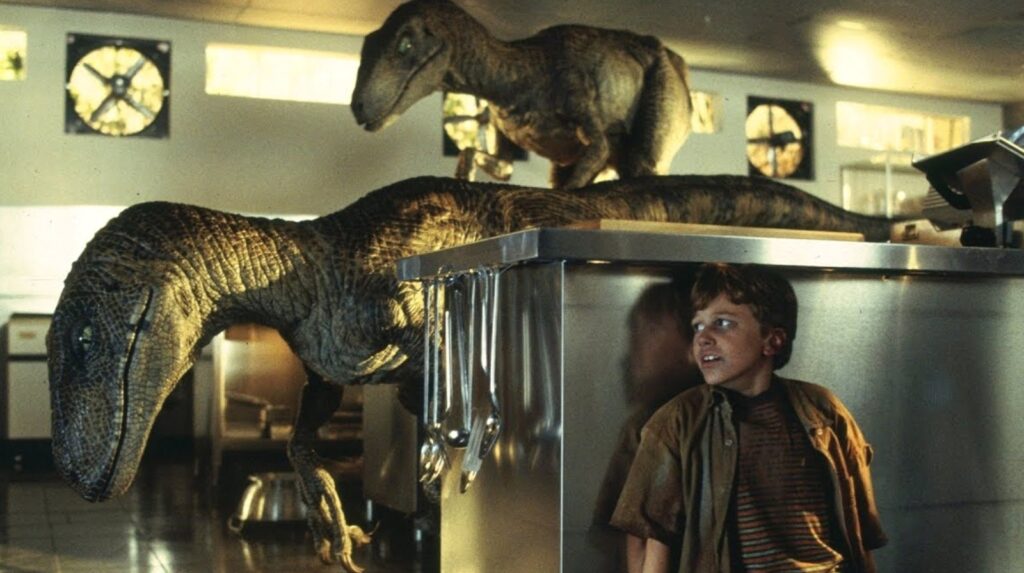
If your concept is, a group of people visit a state-of-the-art theme park filled with dinosaurs, only for the security system to fail and the dinosaurs to get loose, I already have scenes. I have people trapped in cars while a T-Rex approaches. I have velociraptors hunting people in buildings. I have characters trying to restore the power. I have people attempting to escape the island. The concept is generating situations before I’ve written a single page.
Compare that to: Two friends travel around the world trying to figure out who they are. Okay. What’s scene 12? I don’t know. What’s scene 27? I don’t know. What’s the midpoint? I don’t know. You’re going to have to invent everything because the concept isn’t generating anything for you. And since a screenplay is going to have 40 to 50 scenes, you’re essentially asking yourself to come up with 40 to 50 great ideas in a row.

Why put yourself in that position? Do the hard work up front, come up with the great concept, and let that concept start generating scenes for you.
The other thing I want from the concept is IMPORTANCE. Whatever’s happening in this story should be the most important thing that has ever happened to these characters before. That doesn’t mean the world needs to be ending. Losing your family’s restaurant can be just as emotionally important to someone as saving New York from a time-traveling alien invasion.
Look at Braveheart. William Wallace isn’t having an interesting six months in Scotland. His wife is murdered. That event sends him into war. This is THE defining event of his existence. Your story should feel like we’re meeting your character at the moment their life can never go back to what it was before.
Once you have that, I want a great main character. And “great” doesn’t mean likable. It doesn’t mean funny. It doesn’t mean they need to be some flamboyant larger-than-life personality. It can mean all these things if need be. But most importantly, we want our main character to be INTERESTING in some way.
A good way to measure this is, if you removed your plot, would we still be interested in watching your main character?
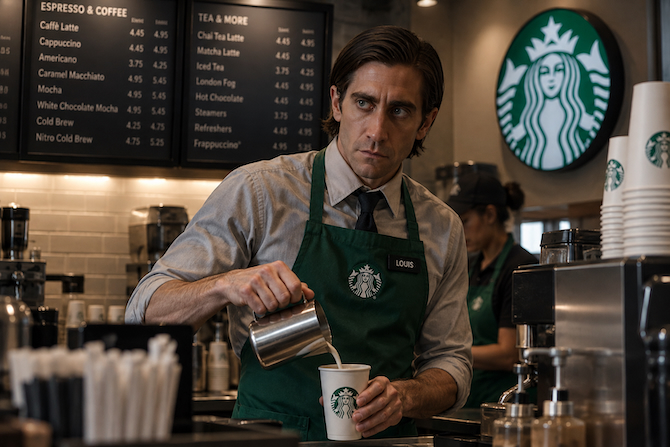
Louis Bloom from Nightcrawler is a great example of this. Take away the nightcrawling, the car accidents and murders and news stations, and Louis is still fascinating. He has insane ambition, a bizarre self-help language, a transactional understanding of human relationships, a complete lack of boundaries. I could watch Louis Bloom work at a Starbucks and still be entertained. And baby, I got receipts for that claim…
Your character obviously doesn’t have to be that extreme. But there should be some sort of internal conflict inside of them that would still exist if you removed the entire plot. If the serial killer disappears, if the aliens leave, if the heist never happens, this person still has something they’re wrestling with. The plot shouldn’t be the only interesting thing about them.
Then I want RELATIONSHIPS. Relationships are secret weapons that are vastly underutilized in screenwriting. Because relationships are stories unto themselves. Every unresolved relationship creates a plotline of uncertainty that the reader must keep reading to resolve.
Good Will Hunting is one of the best examples of this ever. There’s Will and Sean. There’s Will and Skylar. There’s Will and Chuckie. There’s Will and Professor Lambeau. All four relationships have different unresolved questions attached to them. Will has to decide whether he’s going to let Sean in, whether he’ll become vulnerable with Skylar, whether to stay in the familiar world he shares with Chuckie, and whether he wants to become the genius Lambeau so desperately wants him to be.
So now I don’t only care about the plot. I care about what happens in FOUR different relationships within that plot. If you can create two or three really compelling unresolved relationships in a screenplay, it becomes exponentially harder to put down.
Then there’s the plot. Interestingly, I don’t think the plot has to be amazing. But it can’t be predictable. One of the fastest ways to lose a reader is to let them get 20 to 30 pages ahead of you. Which happens in 90% of the scripts I read. I get bored because I know what the next scene is before you’ve even written it. As well as the next one. And the next one.
This doesn’t mean you need to be M. Night every ten pages. It just means you need to occasionally knock the reader off balance. You need to do something that makes them realize, “Oh, wait. Maybe I DON’T know where this is going.”
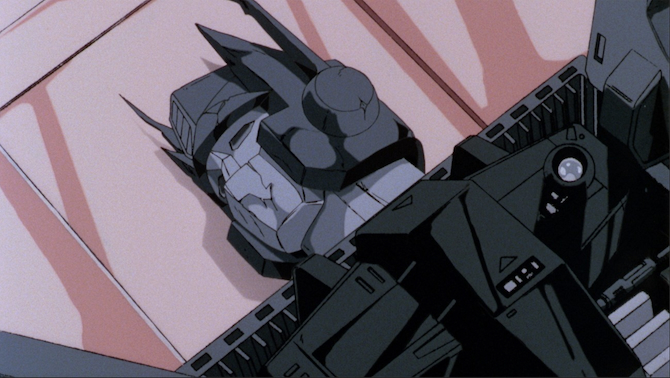
I was reading an article about the re-release of the animated Transformers movie from the 80s. One of the most infamous decisions in that movie was killing off Optimus Prime early on. Imagine being a kid watching that movie in 1986. WAIT. WHAT??? You just killed OPTIMUS PRIME??? Whatever you thought this movie was, you were wrong. And once a movie proves it’s willing to do something you never thought it would do, you stop feeling like you’re ahead of the writer.
Next, we get to VOICE. Voice is tricky because writers hear “voice” and think they need to reinvent the English language. You don’t. There are probably five screenwriters working today who have voices so distinct that you could remove the title page and know who wrote the script within five pages. Everybody else exists somewhere in the same realm.
The goal isn’t to sound radically different. It’s to sound JUST DIFFERENT ENOUGH. Aaron Sorkin has this stage-like quality to his writing. Jordan Peele mixes social awkwardness, comedy, horror, and racial observation. Then you have Zach Cregger, who enjoys disrupting traditional storytelling patterns.
With voice, there should just be something about the combination of your sensibilities, your humor, your observations, your characters and the unique way you look at the world which comes through in the way you choose your concept, plot, story points, characters and dialogue. Again, you don’t have to reinvent the wheel. Almost the opposite. You have to open up the restrictions within yourself that often keep those quirky aspects of who you are locked up.
And then we arrive at what I consider the final helping on the Thanksgiving plate. Your story should be ABOUT SOMETHING. Don’t worry. I don’t mean politically. Although it can be if you want. I’m talking more about humanity. What do you believe about people? What are you curious about? What bothers you about the way we behave? What have you noticed about love or greed or ambition or loneliness or family or friendship or jealousy or success?
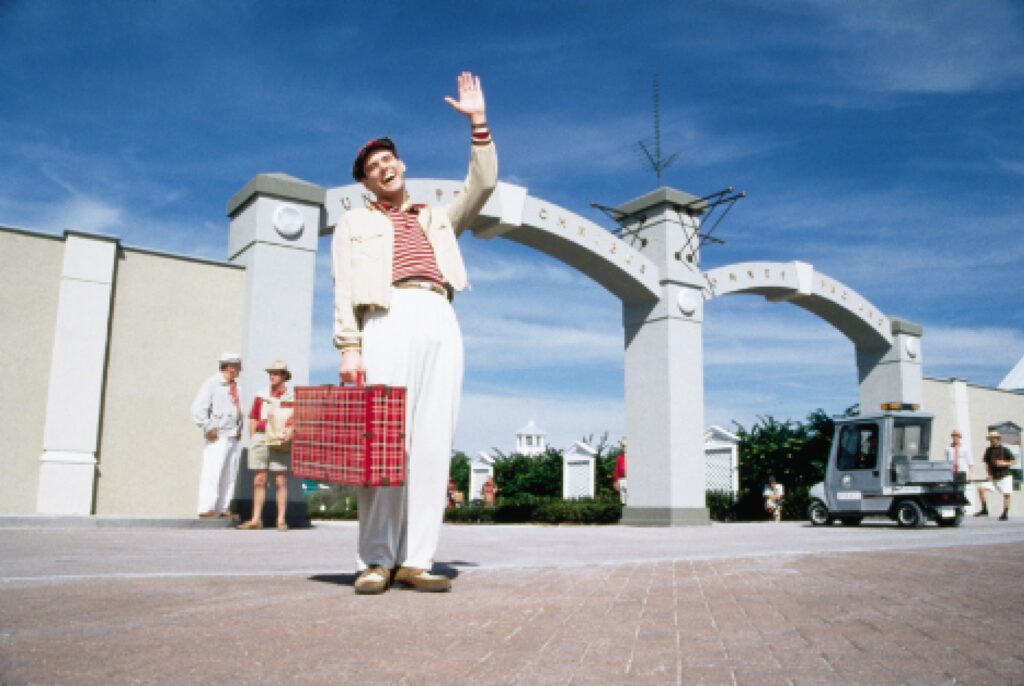
The Truman Show is one of my favorite examples of this because it’s got such a great setup for a movie. A guy slowly realizes that his entire life is actually a television show. You can watch that movie purely for the concept and have a good time. But underneath that are questions about freedom, fear, comfort, and whether you’d rather live in a safe artificial world or take your chances in a scary real one (something that’s more relevant today than ever, btw).
Readers are constantly trying to connect the dots. We want to understand why you told us this story. We learn this when we’re children. The earliest stories we’re told have a moral to them. The boy who cried wolf isn’t just a fun story about a kid playing pranks. We’re being taught something about lying and trust.
As we’ve gotten older, we’re still looking for those morals in the stories we’re told. You can absolutely write a movie whose only goal is to entertain people. I would argue that Resident Evil is just that. But when you’re exploring something about humanity, you have a better shot at making the reader see that screenplay as an extension of them.
Okay.
So you’ve done all of that. You’ve created all those parts.
Congratulations.
YOU’VE WRITTEN A GOOD SCREENPLAY.
But this next part is how you make it great.
You ready?
The big secret?
YOU FUSE THE PARTS TOGETHER so that the script becomes MORE THAN THE SUM OF ITS PARTS.
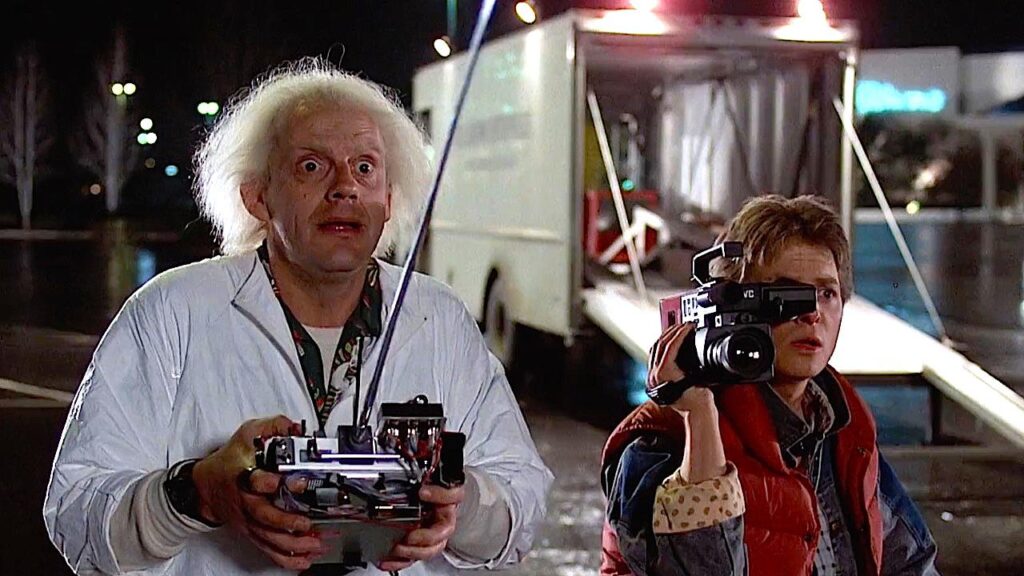
Back to the Future may be the best example of this I know. You can certainly break that movie apart and admire all the individual pieces. Great concept. Great protagonist. Great supporting characters. Great relationships. Great set pieces. Great ticking clock. Great climax.
But that’s not why Back to the Future is Back to the Future.
What’s amazing about that screenplay is how difficult it becomes to separate one part from another. Marty travels into the past, which is the concept. But the concept puts him in direct contact with his parents, which creates the central relationship problem. Then Marty accidentally prevents his parents from falling in love, which turns the relationship problem into the plot. Now Marty’s own existence is at stake, which turns the relationship into stakes. The disappearing photograph then takes those stakes and turns them into a visual ticking clock.
And look at George McFly. George isn’t simply “Marty’s dad,” some character off in his own little character box. George’s weakness affects Marty’s life in the present. Marty then meets the younger George and realizes who his father actually was. Marty’s actions help George change. George’s change then alters Marty’s life when he returns to 1985. Character, relationship, concept and plot are all feeding each other.
Then you’ve got Biff. Biff isn’t merely the villain of the 1955 section. He’s bullying George in 1955 and still bullying him 30 years later. So defeating Biff isn’t just an obstacle Marty has to overcome to finish the plot. It’s connected to George’s character arc, which is connected to Marty’s family, which is connected to what Marty’s own life will eventually become.
Even Doc isn’t sitting outside of this web. Marty’s relationship with Doc creates the mechanism through which the time-travel concept works. But Marty also knows Doc is going to die in 1985, which creates ANOTHER unresolved relationship and another goal. Now Marty isn’t merely trying to get home. He’s trying to save his friend. And the movie finds a way to connect THAT to the mechanics of time travel.
That’s what I’m talking about when I say the sum becomes greater than the parts. Pull on one strand of Back to the Future and five other strands move.
That’s when a screenplay becomes ALIVE.
And this is where that final component comes in. Rewriting.
Your first job is to build the parts. Get the concept working. Get the protagonist working. Find the relationships. Figure out your plot. Figure out what the movie is actually about. Those things have to be strong because weak components aren’t suddenly going to become amazing just because you connect them to other weak components.
But once those pieces are strong, your next job changes.
Now you start looking for CONNECTIONS.
Can this character flaw affect that relationship? Can that relationship complicate the plot? Can something you established in the concept force the hero to confront their flaw? Can the villain somehow be connected to what you’re trying to say thematically? Can an object that currently exists just to solve a plot problem also become emotionally meaningful to the character? Can something that happens on page 15 come back on page 95 in a completely different context?
This is why you read so many scripts with the “correct” ingredients that still leave you cold. They haven’t done the connecting.
Which leads us to our final FINAL ingredient. It still doesn’t guarantee a great script. But it’s a multiplier without a doubt. You should love the story you’re telling.
I know that sounds corny, but it’s real. Because screenplays are long, they’re hard, and if you’re going to spend the agonizing number of hours required to find all these connections we’re talking about, you’re only going to do that if you love the story you’re telling. You’ll stop connecting if you only kind of like the script.
Writing a great script is really fucking hard. There are no guarantees. But this is the closest thing I’ve found to a formula that gives you a legitimate shot at it. Use it wisely. And have a happy weekend! :)
