

Good news. The final newsletter of the year will be landing in your inbox in the next couple of days, so keep an eye out. There will be a Blood and Ink update, some Osculum talk, and a script review from a writer who created one of my favorite scripts of all time. It’s going to be juicier than a Jack In The Box breakfast burrito.
As for today, I want to swan dive into a pool of industry chatter because it feels like I’m the only person in town who isn’t bothered by Netflix kicking Warner Brothers into its ocean of content.
This has been on the horizon for a long time, people. I wrote an article ten years ago about the streaming wars that were coming. The key word was WARS. That meant casualties. It was never going to stop with streaming platforms. Studios were always going to get pulled onto the battlefield. This latest power grab was telegraphed the second Amazon bought MGM.
The question I asked myself when everyone else started losing their minds was simple: Does this really matter? So let’s break it down.
The biggest concern I keep hearing is that this is the death of theatrical. The theory is that Netflix will dump every new Warner Brothers movie directly onto their service. Goodbye theaters. Goodbye popcorn. Goodbye happiness.
Here is the truth. That is never going to happen with anything IP driven. There is too much money to be made. But even if it did happen one day, is it truly the apocalypse everyone is making it out to be? Is it so dreadful to imagine yourself watching Matrix 7 on your seventy inch television in the comfort of your living room?
I used to be Christopher Nolan levels of “all-in” on theatrical. I believed the cinema was a sacred temple. Then two things rewired my brain. The first was an interview James Cameron gave a couple of years after Titanic came out. The film was about to premiere on network television for the first time and I was shocked to hear that Cameron was deeply involved in the television edit. As far as I was concerned he had already climbed Everest. He had made the hardest film ever shot. Why did he care so much about a broadcast version of the movie?
Yes, television edits were more complicated back then. There were built-in commercial breaks so you had to protect moments that landed right before the cut. There was also pan and scan, which meant your widescreen frame was crushed into a square and certain parts of the image had to be sacrificed. I could understand Cameron not wanting to leave those choices up to a thirty dollar an hour editor.
But it was Cameron’s answer to a simple question that completely changed the way I thought about theatrical. Someone asked him why he cared so much about this television edit. His answer stunned me. He said more people were going to watch his movie on television, in one night, than had ever watched it in theaters.
Paradigm shifted. Every week during Titanic’s run I was reading headlines about how it was the biggest film of all time. I assumed that if billions of dollars were being made then surely an un-toppable populace of people had seen the movie. Apparently that total could be topped easily.
Once I learned that, any preciousness I had about movies needing to be in the theater faded away. If you couldn’t control the fact that most people were going to wait for your movie to hit television before they saw it, then why sweat it? Why sweat where the person enjoyed your film?
Several years later, I had a second epiphany that sealed the deal. I went to see one of the Transformers movies in the theater. There is no film franchise more engineered for the theatrical experience. It is spectacle. It is sound. It is the full weight of two hundred and fifty million dollars exploding in front of you.
And I was bored out of my mind.
That was it for me. A bad film is going to bore you in a theater and it is going to bore you on your couch. A great film is going to move you in a theater and it is going to move you in your house. So, again, who cares where you watch it?
Now, are there going to be movies that would be genuinely better to watch on the big screen? Sure. There will be a few every year. And guess what? THEY’RE STILL GOING TO BE ON THE BIG SCREEN. That’s not going to change. I PROMISE YOU Netflix will give Christopher Nolan’s movie a proper theatrical release. Granted, him threatening to kill Ted Sarandos’s entire family if they don’t will have an influence. But superhero movies, Star Wars movies, Harry Potter movies – they’re all going to get theatrical releases. Theatrical will never die. It will just exist for the movies that make a lot of money for the studio. And that’s pretty much how it already is.
The more interesting conversation regarding Netflix buying Warner Brothers is whether Netflix meddles with the creative structure at Warner Brothers. That’s the real danger.
Netflix is notoriously bad at generating IP. Their strategy has always been to empower the filmmaker regardless of talent then stay out of the way. It sounds romantic. But all the great movies you remember were forged through the gauntlet of development. People pushed back. People challenged choices. Ideas were sharpened under pressure until the edges were clean.
Netflix loves being hands off with projects like The Old Guard, which is precisely the sort of movie that needs every possible voice in the room to push back. They do the same thing with legendary directors except in those cases the directors swindle Netflix into financing the one project they’ve been carrying around for twenty years that no studio will make it because it is both boring and uncommercial. Here’s looking at you David Fincher’s Mank and Alfonso Cuaron’s Roma.
The only valuable IP Netflix has ever created is Stranger Things. And that’s not even a movie property.
Warner Brothers, on the other hand, has spent decades building a system that develops scripts into actual stories that resonate with audiences. They know what they are doing. Netflix needs that. Netflix has leaned so heavily on its algorithm that it has lost touch with anything that connects on a human level. Everyone who has ever studied screenwriting knows that the secret sauce to making movies work is the human condition. You need a character who feels like someone you know. Someone who connects with you beyond the runtime. The algorithm cannot measure that.
So Netflix, if you’re listening? Stay far away from the creative structure at WB.
Of course, here’s the funniest part of all this.
It will probably never happen.
We are looking at two or three years of court battles and anti trust challenges. But even if it does go through, I promise you it will not affect your moviegoing life anywhere near as much as you think it will.
Don’t worry folks. Be happy. :)
Today I will share the single most important screenwriting tip you will ever learn

A little update.
Technically, I’m supposed to be on vacation for two weeks but that vacation fell apart for a couple of frustrating reasons. The problem is, my mind hasn’t accepted this yet and, therefore, I’m in denial. My brain is in vacation mode.
However, I have been doing consultations. And an issue keeps popping up in these consultations that I need to share with you guys so you don’t make the same mistake.
But before we go there, we’ve got to talk about Troll 2 (on Netflix). Because Troll 2 makes this same mistake in its very first scene. Which means that the lack of understanding in this key area of screenwriting is ubiquitous. It’s even happening in Norway!
I loved the first Troll and I just wanted to have a good time with the sequel. I wasn’t expecting anything groundbreaking. Just entertain me.
And Troll 2 tries to do that. It lives inside that 1997-1999 Hollywood box office era where you had these big ideas with lavish production with things just getting destroyed! Does it give the film a dated feel? Sure. But I was open to time-traveling back to that era, as long as I enjoyed myself.
The story follows this scientist lady, Nora, who is sort of like Ripley in Aliens in that she’s had experience with trolls before. So the Norway government hires her because they’re having trouble understanding this (currently solidified) troll that they captured. They need her insight.

What they were not expecting was that Nora, in her first opportunity at being alone with the troll, would sing it a troll lullaby favorite, which then WAKES UP THE TROLL. The troll then struggles free and bursts out of the secret underground hideout, where it goes racing across the land and wreaking havoc.
Nora and a team consisting of soldiers and scientists hop in a helicopter and begin chasing this thing around. But I guess the troll’s presence signals some other hibernating troll that it’s time to wake up, because another troll, this one angrier than the first, emerges and makes it his mission to beat up Troll 1! So now the humans are chasing two trolls!
This culminates in the two trolls fighting each other in a Mano a Mano battle in the city canal. And only one troll is going to make it out alive. Once that happens, the humans are going to have to decide whether they need to eliminate that survivor or coexist with him. The end.
Okay, so what’s this magical piece of advice that very few screenwriters are aware of? Pay close attention because this might be the single most important screenwriting tip you ever learn.
Here it is…
When writers sit down to write a scene, 90% of them look at that scene THE WRONG WAY. What they do is they say to themselves some combination of the following…
“I need to set up this character here.”
“I need to set up this plot point.”
“I need to make sure that the reader understands this key piece of information.”
“I have to hint to the audience that this character could be the killer.”
“I need to establish the chemistry between these two characters.”
“I need to hint at this backstory.”
“I have to remind the reader of that story thread I haven’t mentioned in a while.”
The writer has this list of things he wants to do in the scene he needs to write… and then he writes it. And he makes sure that he gets all of those things in. Once he does this, he then spends every subsequent rewrite of that scene trying to make it a little more entertaining. He tries to make it the best it can possibly be.
And because he approaches things in this way, his scenes are never good.
You want to approach your scenes IN THE EXACT OPPOSITE MANNER.
The first thing you should do before thinking of ANYTHING ELSE about your scene is ask: “How can I write the most entertaining scene possible?” That’s it. Figure THAT OUT first AND THEN once you’ve come up with a scene design that leads to an entertaining scene THEN you can inject your laundry list of needs into the scene. NOT THE OTHER WAY AROUND.
This will ensure that you always have an entertaining scene. Period.
The opening scene of Troll 2 is the perfect example of a writer doing this the wrong way. The scene, for some stupid reason, is set 30 years before the main timeline and takes place in a small Norway home with a father reading his daughter a book about trolls.
And you can feel the writer approaching this scene with Method 1 (the incorrect way). “I need to set up that trolls have always been a part of this woman’s life.” “I need to set up that the mom has cancer.” “I need to set up that she has lived in this house her whole life.”
The words “I need to set up…” are the devil in screenwriting. They are legit evil.
UNLESS!
Unless they come after you orchestrating an entertaining scene idea! Then it’s okay. But here, it’s this boring scene we’ve seen a million times in a million movies that doesn’t have any dramatically compelling moments. It is literally allll setup, and therefore boring as shit.
So, how would you create an entertaining scene here, Carson? I don’t know! Get creative. What kind of scene would entertain *you*?
It doesn’t need to be World War 3 levels of entertainment. The level of entertainment you can offer is always relative to the situation. We’re in a small home in the middle of nowhere. What can we do with that?
Maybe someone knocks on the door, late, when nobody should be around for miles. That sounds like it could lead to an interesting scene. And in just two seconds I’ve already come up with a more entertaining idea for a scene than this bore-fest of a father reading his daughter a book before she goes to bed.
Again, if you go into every single scene starting with this question: “What situation can I create to come up with the most entertaining scene possible?” your scripts are going to be MILES AHEAD of 99% of screenwriters. Seriously! Because even professionals don’t know this advice. They set up all this stuff in a scene then retroactively come up with just enough entertainment surrounding it to get by.
Congratulations, you are now a very good screenwriter. Just by reading this article.
Certainly, armed with his knowledge, you could’ve written a better version of Troll 2.
How was the rest of the movie?
It was pretty bad.
Honestly? The script made no sense. Who was this other troll? Why was he around? It was clearly just to create another troll for the first one to fight with.

But you know what? I already knew it wasn’t going to work. How? Because of that first scene. If you prove to me in your first scene that you don’t know how to prioritize entertaining the viewer, then I know you won’t be able to properly entertain me later.
Which is too bad because Troll 1 rocked!
Maybe I’ll go watch that again.
Genre: Drama
Premise: Recently dumped Ezra Green accidentally brings a terminally ill woman home to Bridgehampton for a long weekend with his eccentric family. Don’t judge–he needs to cope with his estranged father who just got out of white-collar prison.
About: This script finished with 10 votes on last year’s Black List.
Writer: Jeremy Leder
Details: 105 pages
 Logan Lerman for Ezra?
How’s my new Black List script-picking strategy going? For those who didn’t read last week’s review, I have a new strategy for taking on the highly uncertain quality of Black List scripts. I read the first page of two scripts and go with whichever one has the better writing.
Today’s two scripts are A Band of Wolves, about a rival tribe’s raid and a woman who must befriend a wolf to survive the aftermath, and this script, Bridgehampton.
I was hoping that Wolves would win, cause it sounded more like a movie than Bridgehampton, but then I read Wolves’ first page

One of the clearest indicators of a weak script is a cold open presented as a major event, despite being entirely ordinary. It’s made worse when the writer slaps on the movie title immediately after, as though emphasizing the significance the scene failed to earn.
When I see the above in a script, the script will be bad 99.9% of the time. That made choosing between the two easy. But now it’s up to Bridgehampton to prove I made the right choice.
30-something Manhattanite, Ezra, just got dumped by his girlfriend and is in relationship mourning. His sister, Stella, is dealing with the fact that she’s fallen out of love with her husband, Brooks, who’s so much of a dummy, maybe she never loved him in the first place.
The two are heading back to their mother’s giant mansion for the weekend because their father is getting out of prison after engaging in some Bernie Madoff scam that lost thousands of people their life savings.
A day before heading there, Ezra meets a pretty girl named Harper at the coffee shop and she tells him straight up she wants to have sex as soon as possible. So they go back to his place and have sex. Afterwards, he asks her to be his date for the weekend. She reluctantly says yes. Not long after, he learns about her secret, which is that she’s dying.
Once everybody gets to the mansion, it’s really about the unhealed breach of trust between Ezra and his father. We find out that Ezra worked for his dad and that the dad had secretly used Ezra’s name to put together a lot of shady deals, which nearly got him sent to prison as well.
Since that happened, Ezra has been steadfast in that he’ll never talk to his father again. It takes Harper, who has more perspective, since she’s at the end of her life, to convince him that holding grudges is stupid. (spoiler) But before Ezra can have the big conversation, someone attacks his dad. And now the family must spend the end of their weekend praying that daddy makes it through.
Noooooooo…
My perfect undefeated streak for how to pick good Black List scripts has ended.
The streak ends at 1.
:(
Bridgehampton, unfortunately, fell victim to the old “crazy family” series of tropes that focuses on a family so wacky ya just can’t get enuf of’em! Except, you can. And by page 30, you do.
These types of scripts are a trap. You need to be one of those Level 6000 “super-amazing-voice” screenwriters to pull them off. You need to have that “once in a generation” thing going for you.
The story’s structure works like this: you introduce a family loaded with unresolved issues, place them inside an artificially compressed timeframe, then give them no real goals. Instead, we’re simply waiting for their broken relationships to sort themselves out.
When you use this kind of structure, all the pressure shifts to the dialogue and moment-to-moment scene writing. There’s no suspense, no mystery, no plot movement. The script ends up building set pieces out of the family walk, the trip to the store, the night out. Ordinary activities that aren’t inherently dramatic.
These scenes can only entertain if the writer’s talent elevates them, because there’s not enough natural dramatic tension to make them compelling on their own.
In case you were wondering, here’s the first page of Bridgehampton…

Ironically, I liked that we jumped into the plot right away. Someone’s getting dumped. And then in the next scene, we’ve got conflict between a couple. There’s actually a ton happening in this one page, which is why I chose it.
As for the selling point of the screenplay, which is terminal Harper, I don’t think that aspect of the script worked. In many ways, it’s a red herring. This isn’t about Ezra and Harper at all. It’s about Ezra and his family, specifically his father. Harper just operates as a wild card, a “larger than life” element who’s supposed to give the script some edge. But she never quite fits into the story in an organic way.
This issue was telegraphed early on. We meet Harper on a train giving out pre-created post-it notes to random men with her number on them.
Let’s think about that for a second. Cause if you really want to get into the nitty-gritty of screenwriting, this is a topic where you can do so.
On the one hand, the act creates mystery and then, later, we see it as a setup for the eventual payoff that she’s terminal.
BUT – let’s ask the tough question here. Would someone do this in real life? Would any woman, cancer-stricken or not, fill up a stack of post-it notes with her number and hand it out to men throughout the day?
No.
Never.
Her entire character begins with an inauthentic action. And because readers put so much weight on how they first meet a character, we immediately see her for what she is: a mystical falsehood. She doesn’t feel like a real person.
Now, you might argue, “But this is the movies. You’re allowed to create bigger, more fantastical actions than in real life.” And that’s true. You are. In Being John Malkovich, there’s a 7½th floor in the protagonist’s office building. Do 7½th floors exist in real life? No they do not.
But this is where writing becomes tricky. You have to understand the tone of your screenplay and make sure every creative choice stays within that tonal boundary. Being John Malkovich literally takes us inside a man’s head, so a 7½th floor doesn’t feel out of place. Here, we’re watching a real family spending a real weekend together. In that world, a terminally ill girl whimsically handing out “fuck me” cards just doesn’t fit the tone.
If I were guiding this script, the first thing I would do is get rid of Harper. She’s not necessary for the story AT ALL. In fact, if you took her out of the story, it’s exactly the same. Literally nothing changes.
I would also change the dad’s situation so he’s going to prison rather than coming back from it. A character returning from prison in this scenario isn’t inherently interesting. Good stories emerge from things that go wrong, not things that go right. Him coming home is something going right. Also, if he’s about to go to prison, the family gathering suddenly has purpose.
The kids, all of whom rely on the family money, come home for the weekend so everyone can confront what’s about to happen to the family fortune. Their lives are on the verge of a major shift.
It’s still not a premise I’d personally write, but it’s stronger than what we have now. As written, the story is basically: “Dad’s back from prison, so let’s get drunk and argue for three days.” There’s no purpose to it because there’s no actual goal. Changing the dad’s circumstance would at least give the story that clear driving goal.
As I sit here, I wonder how good that Wolves script was.
[ ] What the hell did I just read?
[x] wasn’t for me
[ ] worth the read
[ ] impressive
[ ] genius
What I learned: You don’t need to be a once-in-a-generation writer to write a good thriller script, a good action script, a good horror script, a good adventure script. You need three things. You need a good concept. You need enough experience to know what you’re doing (have written at least 5 scripts). And you need to be willing to work harder than the next writer. That’s it! With scripts like this, you need to be extremely talented (top .1% of professional writers) to make them work.
In the immortal words of LL Cool J, “DON’T CALL IT A COMEBACK!”
Or maybe do!
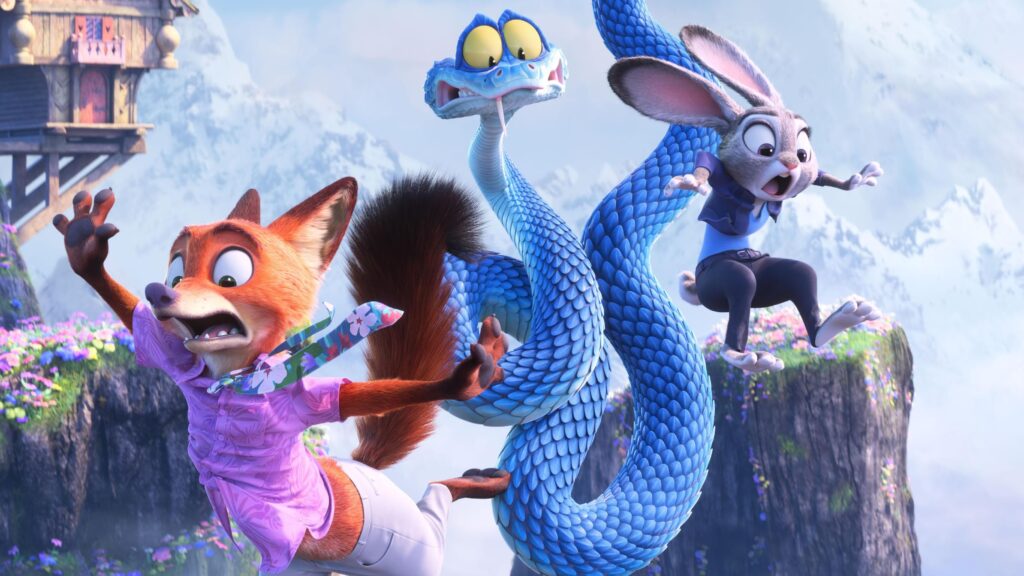
The box office is firing on all cylinders as it hits the home stretch of 2025. First Wicked For Good killed it. And now Zootopia makes a half-a-billion dollars worldwide in a single weekend!
Oh, and if you think that’s all, I hear there’s a new James Cameron movie coming out. Those calling for the end of Hollywood are, all of a sudden, scrambling to rewrite their headlines.
It seems like there was something for everyone this weekend.
The musical theater crowd went to see Wicked for the 46th time. Young families went to see Zootopia. Millennials and Gen X binged part 1 of 7 of the final season of Stranger Things.
I’d say it’s a pretty good time to be a content lover.
And me? Well, I didn’t watch any of that stuff. I plugged in Bugonia and got my brain warped. I know indie films aren’t interested in becoming box office titans. But do you think that they could’ve chosen ANY TITLE IN EXISTENCE that had less appeal than “Bugonia?” Just hearing that title makes me never wanna watch a movie again, much less this movie! Sometimes I think these indie outfits go too far in their indie-ness. Just give your movie a fucking normal title!!! You could’ve made another 5 million bucks had you just done that. More on Bugonia in a bit.
Let’s handle Wicked first. Do you know that the author of the Wicked books just announced a prequel to Wicked, titled, “Galinda: A Charmed Childhood?” And you KNOW they’re greenlighting that movie in the next 48 hours. Lol. I love how shameless Hollywood is.

But can you blame them??
Nobody knows where the next hit is coming from. Like Steven Spielberg famously said: The only sure thing in Hollywood is a sequel.
Or, apparently, a prequel to a prequel.
As for Zootopia, trying to figure out which of these Disney movies is going to be the next Finding Dory and which is going to be the next Buzz Lightyear is like trying to predict who’s going to win the Super Bowl. You have no idea. Or at least I don’t.
But I will say this about the Zootopia formula. It has two big things going for it that increase the likelihood of ADULTS wanting to take their kids to the movie. Cause that’s part of the deal when you write animation. If you write it like too much of a kiddie flick — think Transylvania — then you limit how many adults want to suffer through that. So if you can sneak in some successful adult movie tropes, you can change that.
Here we have a 2-hander. 2 people teaming up for the same goal. This is every cop movie ever. It can be used in other genres as well. We love a great pairing, which we get with Judy (the bunny) and Nick (the fox). It’s a little more exciting than going with a single hero. Also, the right pairing ensures you’ll have conflict in every single scene, since the characters in these 2-handers are always at odds with each other.
Secondly, we have AN IRONIC pairing. The irony is what gets the adults interested. Sure, you could have paired a bunny with a badger and kids still would’ve come. You could’ve paired a fox with a horse and kids still would’ve come. But neither of those pairings would’ve been intriguing to adults. It’s the irony of pairing a fox with an animal that foxes usually eat that intrigues adults.
Finally, you have a good old-fashioned investigation mystery storyline. Which is no different than Knives Out, or any number of crime mysteries. So that’s a bonus THIRD THING that brings in the adults.
If you do that right, you can pull in 100, 200, even 300 million dollars more than if your animated film was a straight kiddie movie.
So, if you factor all that in, it’s not a surprise at all that the film did gangbusters business. So, good for Zootopia. There are some Disney franchises I wish could be publicly executed but Zootopia is the epitome of what a Disney animated film should be. It’s pure entertainment. No overt messaging. All about the fun. I will see it the second it hits Disney Plus.
Okay, let’s get into what I really want to talk about, which is ALIENS.
Let’s start with the documentary, Age of Disclosure. If you’re on the fence about whether aliens have visited earth, this documentary pretty much erases all doubt. 37 high-ranking government officials come clean and say they know there’s some sort of intelligent species on earth. Why they’re here is still unclear. But they’re definitely here, and this documentary exposes that. If you’re new to the topic, this movie will literally blow your mind.
Speaking of movies about aliens, guess what Bugonia is about? ALIENS! It’s about these two small-town beekeepers, one of them mentally retarded, who kidnap the CEO of a bio-industrial corporation that plagues our food with countless chemicals and, our lead kidnapper believes, is responsible for giving the rest of his family cancer and killing them.

The lead character, Teddy, played by Jesse Plemons, has kidnapped Michelle, played by Emma Stone, because he believes she’s an alien and wants her to introduce him to her leader so he can demand that they stop poisoning their food.
The best way I can describe this movie, which I’m only halfway through (I’m going to finish it tonight), is that it’s uncomfortable. In particular, you feel very uncomfortable about Don, Teddy’s cousin, who’s retarded. And Teddy is manipulating him to believe all this and Don knows it’s not right and keeps asking if they can stop but Teddy manipulates him with love and false morality, essentially forcing this retarded cousin to help him do this thing that will ruin his life. It’s highly uncomfortable, which is why I needed to split it into a 2-night viewing experience.
On the screenwriting side, if you’re going to write a movie like this, you have to have a theme. You have to have a message. And this movie has one. It’s demonstrating how the abundance of media can prey on our propensity to latch onto conspiracy theories.
It used to be, back in the day, if you had an offbeat conspiracy theory, you would read about it in some alternative magazine, read a book about it, talk to a couple of friends about it who think you’re a little nuts, and then you were done. There was nowhere else to look to indulge that addiction.
But nowadays? The rabbit hole of even the rarest conspiracy theory is endless. There’s always another Reddit thread about it, always another Youtube video, always another podcast. We see that here with Teddy, who indulges in this very specific alien conspiracy theory about Andromedans coming to earth and infecting the food supply to control the people.
There’s this one scene where he’s riding his bike to work and listening to this podcast about Andromeda, and you can just tell that this is his whole life. He doesn’t spend a single moment not studying this. And it’s made him crazy.
So, the point is, if you’re going to go away from writing something commercial, your movie has to say something. Because, otherwise, why wouldn’t you write a movie that had a much better chance of making money?
What I will say about this script is that they were smart in how they set the plot up. With these weird indie movies, it’s tempting to leave all structure and form behind and just write whatever weird shit you come up with. But, if you do that, you write a movie like Under the Skin. Which is an experimental film.
Here, we have a kidnapping at the center of the story. Which makes the movie part crime genre. Which is a familiar genre. It’s a familiar setup. That increases the likelihood of the movie connecting with a broader audience. In this case, that didn’t happen. I think the marketing made it look too weird. But if they had cut a trailer focusing on the kidnapping crime aspect, and built the marketing around that alone, it would’ve done much better than it’s doing.
Okay, on to Pluribus!
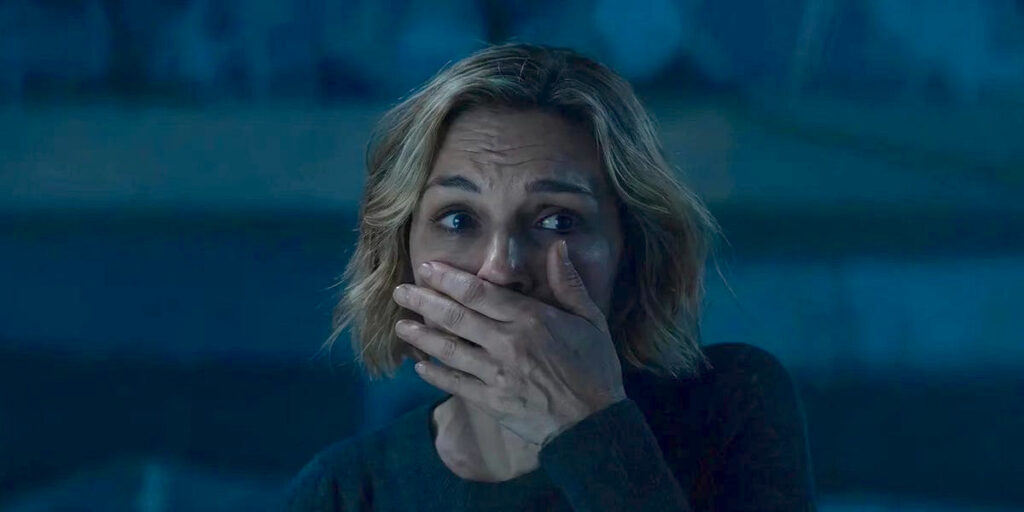
I’m still on the Pluri-bus! HONK HONK!
I’m so freaking fascinated by this show. But not for the same reasons as everyone else. I’m definitely still into the mystery of what’s going on.
But I’m way more into the mystery of how the writers are going to manage this highly nontraditional story. Gilligan has created one of the most inert story engines ever.
The show is basically about a woman hanging out at her house and being frustrated.
You know how you can tell a script has a weak story engine? They use a lot of “bump in the night” plot beats. “Bump in the night” plot beats are when the story is moving at such a slow pace that the only way to create any excitement is to have something go bump in the night. This is metaphorical, of course, and just means anything that pops up out of nowhere to jolt the story. But I’m shocked at how many literal times in this show Gilligan has used “bump in the night” plot beats.
One happens in this episode! Carol is going to bed and hears a bump outside. She gets up and runs outside to see wolves eating her trash. In a previous episode, the lights in the city go off (bump in the night). In another episode, someone unexpectedly arrives (bump in the night). I believe there are two more literal bumps in the night in episode 2.
There’s so little for your hero to do that the only thing to get them to do something, is to bring in a bump from outside.
So, if you’re bringing in a lot of bumps in the night to your script, that’s typically a sign that your plot is weak. You need a more active story engine.
Having said that, I have a theory that Gilligan, who’s a very good writer, knows this, and enjoys the challenge. He’s already conquered this realm of TV storytelling so he’s decided to see if he can win it on hard mode. He created this deliberately slow plot and now he’s challenging himself to make super slow plots entertaining.
For the most part, he’s succeeded. Like I said, I’m still into the mystery. But the show does feel like it’s teetering on the edge of a cliff and, at any second, could fall into the valley of boredom. I applaud him for taking that risk though and hope he keeps the show teetering rather than falling. Cause, ironically, the teetering is where the fun is at, as it’s the definition of unsafe.
Oh, and one final thing: TROLL 2 COMES OUT ON NETFLIX MONDAY! If you haven’t seen the first one, treat yourself to it now! I guarantee you’ll love it.

I am thankful for all of you guys and, therefore, on Black Friday, I’m offering a 50% discount on screenplay consultations. If you want one, e-mail me at carsonreeves1@gmail.com. Your script doesn’t have to be ready yet.
I am thankful that the central actors on Stranger Things are going to be getting an extra salary bump now that they’re eligible for Social Security.
I am thankful that my plan to clean my place until it’s spotless is still on for its completion date of December 31st and that I am going to begin any day now.
I am thankful for each and every meme that’s come out of the Ariande Grande and Cynthia Erivo Wicked For Good press tour.

I am thankful that writing remains the cheapest of all the artistic endeavors and all we need to write a screenplay is a 99 cent notebook and a 10 cent pencil.
I am thankful that, on the writing front, AI turned out to be a flash in the pan, and hasn’t advanced to the point everyone thought it would by now, which is writing half the movies in Hollywood.
I am thankful that I live in a city where I can go outside and play tennis on Thanksgiving Day, something I could not do when I lived back in Chicago.
I am thankful that they are making a Gremlins sequel with the original director and that Key and Peele are writing it.
I am thankful that I have held out for an entire six months so far to watch F1 for free, on Apple TV, because when I originally heard it was being produced by Apple TV, I assumed it was going to premiere on the service and, each subsequent weekend since it hit theaters, I had continued to assume it would be coming out on the service since, again, it was an Apple TV production AND I HAD APPLE TV. I am determined to wait through the next two months while it’s a $19.99 rental, and then the subsequent two months, when it’s a $5.99 rental, until it is finally available for free, on Apple TV, where I assumed it would be this whole time.
I am thankful for Jeff Goldblum singing “Popular.”
View this post on Instagram
And I am thankful that Sidney Sweeney’s Christie bombed so she can now go back to making movies where she’s hot again.

What are you thankful for!!!???
