
In the vein of Dude, Where’s My Car and Pineapple Express, we get… like, uhhh, whoa mannn, what is this review about again? Oh yeah! Huh huh huh. The Aliens Are Stealing Our Weed!
Genre: Comedy
Premise: When two best friend pot-farmers wake up one day to find their entire crop of weed gone, they quickly come to realize it was the work of aliens.
About: Today’s script comes from Ryan Firpo, half the writing team for the upcoming Marvel flick, The Eternals (the other half is Ryan’s brother, Kaz). Ryan wrote and directed a short film called, Ten Years, in 2016, about a 10 year marriage reunion in Vegas that doesn’t go as planned. The short generated a lot of buzz, leading to Kevin Feige seeing it and hiring Ryan and his brother to write Eternals. The Firpos used that buzz to finish in the top spot for the 2017 Black List with their script, Ruin, which I reviewed here. Gina Rodriquez and Paramount are teaming up for “Aliens.”
Writer: Ryan Firpo
Details: 420 pages (just kidding – 111 pages)
Readability: Mostly fast

Sources on this one say it was picked up because Paramount thought it fell in line with other Paramount comedies like “Anchorman,” “Airplane!” and “Blazing Saddles.” Absurdist wild comedy has not generally done well here on Scriptshadow. But you guys know I like me some aliens. So maybe aliens stealing weed is going to change all that!
20-something best friends Candice and Izzy are living out in the middle of Nowhere, Washington, growing weed, buuuddddyyyy. Candice is like the weed-growing version of Walter White. She’s an Ivy League biologist drop-out who’s using computers to create the perfect strain of weed, what she calls, “Candizzy Chronic.”
Candice and Izzy share their ten acres of land with Cheech and Chong. I mean, the characters’ names are Bob and Jerry. But make no mistake, they will be played by Cheech and Chong. Or whoever the names of the actors who play Cheech and Chong are. Bob and Jerry always come by and, like, steal their weed. But it’s all good. They’re harmless. And at least they provide feedback on the strain, which they think is righteous, brother.
Once the crop is completed, weed buyer Reggie Sanchez shows up to test it. It takes him less than two seconds to declare Candizzy Chronic the best strain of weed he’s ever smoked, yo. He wants to buy the entire crop. Yeah baby! After years of raking dirt, Candice and Izzy are about to rake in the cash.
Except that the very next day, the weed is gone! Candice and Izzy charge over to confront their primary suspects, Bob and Jerry. But the clueless morons say all their weed has been stolen too! The rookie investigators realize that Reggie Sanchez must have done it, and they know where he’s going – Cannacon in Seattle. So off they go!
They find Reggie there, secretly follow him to his room, and then watch as he takes his human skin off to reveal that he’s an alien! WTF!!! Freaked out, Izzy says they HAVE to go to the FBI. “Do you know what they’ll think of us if we tell them an alien stole our weed?” Candice counters. You’re right, Izzy says. We have to go to the one person in the government we know, DEA Agent Mike. Who happens to be Candice’s ex-fiance!!!
Mike thinks this is obviously a made up story stemming from smoking too much Mary Jane. But after the girls beg him to help, he reluctantly comes back with them to their stolen crop. While Mike’s investigating, he looks up to see…. A flying afro??? Yes, it’s a flying afro. The group chases the afro, finally catches it, and figures out it’s some sort of drone that scouts land for good marijuana.
They allow the drone to lead them back to the alien mothership, where Frank, a 100 million year old alien, explains that in order to save humanity from killing each other, they’re going to drop the world’s weed supply into all the volcanos and hot box earth for the next 200 years to chill everyone out. Will Candice, Izzy, Bob, Jerry, and Mike go along with their plan? Or will they stop the aliens???
I still think that the best jokes come from conflict.
When there’s no conflict, the characters are just riffing, pushing out try-hard jokes, and while some hilarious writers are able to make this work, it’s often eye-rolling stuff.
You need legitimate conflict for laughs.
That’s why Pineapple Express was so successful. It wasn’t two best friends running around making pot jokes. It was a normal guy and his drug dealer. They lived completely different lives and had completely different life experiences, which is what created the conflict.
Where that really helps you out in a script is when your pairing encounters a high-stakes choice, one where if they make the wrong decision, there’ll be dire consequences. That’s when two people with diametrically opposing views on life pays off. Because they’re going to have two completely different solutions, and that’s going to result in a lot of laughs.
Candice and Izzy are best friends. There’s zero conflict there. Like none. And so they basically just agree with each other the entire movie. And, sure, there are some funny exchanges. But I’m telling you, it’s really hard to keep the joke quality high when the conflict is nonexistent.
That’s why I loved the choice to bring Mike in, the ex-fiance. He contributes some legitimate conflict to the dynamic. There’s a lot of unfinished business between him and Candice, which creates a lot of subtext. Candice had a normal life and an amazing future and ran off to start a pot farm. Mike can’t understand that choice. And he carries that grudge into every conversation.
But even then, Firpo ends up mining that conflict more for drama than comedy. I would’ve liked it if, for example, Izzy saw Mike as a threat to her current friendship with Candice. If he wins her back over, she could leave Izzy. So you’d have the two sort of fighting over Candice in a way. Or you could’ve had Mike be an asshole who had dumped Candice. And Izzy is now super-protective over Candice. You could’ve gotten a lot of humor out of her being an asshole to Mike.
To Firpo’s credit, he does go deeper than most comedy writers on the character front. He attempts to create this whole backstory where Candice had this Ivy League education and perfect future and the husband of her dreams, but she ran away from it all. She’d always used weed during the relationship to escape her feelings. Now she used weed, in the form of a career, to escape a future with Mike. So she’s used weed to avoid everything in her life and her journey is about facing up to that issue.
But even then, it doesn’t really matter, because a comedy script is nothing if it’s not funny. And this didn’t have any five-star knee-slappers. In fairness, Firpo is targeting a younger demo. Paintball shots to the balls and flying afros are probably going to be funnier to your average coed. Only had a few chuckles myself, though. So I wouldn’t recommend this.
[ ] What the hell did I just read?
[x] wasn’t for me
[ ] worth the read
[ ] impressive
[ ] genius
What I learned: There are exceptions to this rule, of course (Dumb and Dumber comes to mind), but you generally have two choices when you create a pairing for a comedy. Either make them two people who do not like each other and don’t want to be together (The Other Guys) or two people with diametrically opposing views of how to live life (a staunch conservative and knee-jerk liberal, for example). If you pair up two best friends who generally see the world the same way, you’re leaving a lot of laughs on the table.
Genre: Comedy
Premise: (from Black List) A high school senior attempts to get their principal fired after observing racist behavior, but she quickly learns he won’t go down without a fight.
About: This script finished with a whopping 25 votes on last year’s Black List and was snatched up by Lebron James’ company. The writer, Cat Wilkins, graduated from the MFA Screenwriting Program at UCLA.
Writer: Cat Wilkins
Details: 109 pages

I love scripts that pit the student body against teachers/principals. Election remains one of my favorite comedies ever. Ferris Bueller’s Day Off is in my all time Top 25. And Bad Education remains one of my favorite scripts ever written. So if Two Faced is even a fraction of those films, be prepared for some slobbering.
Joy Robinson, a 17 year old black girl, attends the nearly all-white high school, Glen Cove High. Joy has her sights set on one thing and one thing only – the Haines Foundation Scholarship. Because her family is so poor, the Haines Scholarship, a scholarship for minorities, is the only chance of Joy getting into college.
Luckily, Joy’s biracial best friend, Draya, has a father who’s best friends with the principal of the school, Jerald O’Donnel, a 46 year old white man who dresses like a “mobster,” and who is so beloved at their school, he might as well be “George Clooney.” Jerald is going to write Joy a recommendation for the Haines any day now.
Joy’s other best friend is Rayne, the president of the yearbook committee. While looking through old yearbooks to figure out what to do with this year’s, they run across an old picture of Jerald when he went to Glen Cove. And he’s in black face! Joy is initially upset but Rayne calms her down. She encourages Joy to go ask Jerald about it. Maybe he’ll express remorse and apologize.
So that’s what Joy does. The next day, she goes to Jerald’s office, shows him what she found, and he is, indeed, remorseful. He also takes the yearbook from her and starts shredding the page of him in black face. Later on that day, Jerald tells Joy that he’s giving the Haines Foundation Scholarship to someone else. A white kid!!! Now Joy is really pissed.
So Joy gets together with besties Draya and Rayne (who hate each other) to find more evidence of Jerald’s racism. They break into his house and strike gold. Jerald recently attended a party with a bunch of white people and EVERYONE was in black face. And they all took polaroids of themselves, just in case at some point in the future someone would need proof of this event, I suppose.
Joy and Rayne write an article about it in the school newspaper, publishing the polaroids, and all of a sudden Jerald is public enemy number 1. But he isn’t going down easy. Jerald calls a school assembly and informs everyone that he has cancer! “What kind?” Someone asks. “Colon cancer that’s spread to my brain,” he replies. Instantly, the school loves Jerald again, leaving him free and clear of any racism charges.
Joy and her crew have one hail-mary. Jerald is having dinner at Draya’s place that night. Maybe they can get Jerald to admit to Draya that he’s lying about his cancer. They tape a wire onto Draya and off she goes, leading to an odd scene where Draya attempts to get Jerald to admit he doesn’t have cancer in the company of a bunch of people who didn’t know he had cancer in the first place. Magically, she’s able to do it. Which turns out to be the beginning of the end for this monster, allowing Joy to live happily ever after.
I always used to wonder why, in high school movies, they would put characters on the newspaper committee or the prom committee. When I was in high school, I never knew anybody on those committees. But now I realize how valuable it is in that if your character is on a committee, it means they are working towards a goal – getting the next paper out, getting the yearbook done, putting prom together – and if they have goals, that means they must be active in order to achieve those goals. And characters who are active are always more interesting than characters who are inactive. Two Faced helped me see how valuable that was.
As for the script itself, it never quite achieves what it’s trying to because of how sloppy it is. I liked all the characters. They were harmless and fun. Some of the best scenes are of them riffing, trying to figure out what to do next to take down Jerald.
But the script is the 2,845,671st comedy script on record to fall victim to the “because this is comedy, it means I’m allowed to be sloppy” approach. There’s this belief in almost every comedy script I read these days whereby pivotal plot beats, motivations, and logic don’t matter.
There is only one condition under which plot beats, motivations, and logic don’t matter in a comedy. And that is if the script is absolutely effing hilarious. Unfortunately, only .000000001% of comedy scripts are absolutely effing hilarious. Which means you should assume that yours falls short of this standard and make sure that you have all the technical stuff on lock.
Even in a comedy, a principal who’s just been accused of racism in the school paper with tons of evidence wouldn’t be able to call a school assembly that very same day, tell everyone he has cancer, and the whole school buy it. Teenagers today are so social media savvy and so interconnected that they smell shit like this out within seconds. We have real life examples that prove this, like Kevin Spacey coming out to deflect from the accusations against him. The internet literally called him on it within 5 seconds. So to sell us on this idea that the entire school would be this stupid doesn’t fly.
And that doesn’t even get into how we got here in the first place. Which is that Joy and her friends found evidence of secret black face parties that Jerald not only attends but takes incriminating pictures during and holds onto them. For what? Is he getting off on them? It’s beyond suspicious that anyone, even the dumbest person in the world, would do something like this. Of course we all know why he did it. It’s so the main character could obtain evidence from him that pushed the plot along.
That’s not good writing. I say this all the time but I’ll say it again. You need to make things HARD FOR YOUR HERO. Not easy. It would be like if James Bond needed to deactivate the bomb at the end of the movie, looked over, saw a drawer slightly ajar, opened it, and saw that the villain had accidentally left the deactivation code on a piece of paper.
By the way, you don’t make it hard just because it pleases script nerds like me. You make it hard because it’s actually a lot more fun when the hero has to work for the solution. That way, when they solve the problem, it feels earned. Handing Joy the perfect evidence is too easy.
I also thought the writer missed a lot of dramatic opportunities. For example, when Joy comes to Jerald with the old yearbook picture, Jerald tells her, a few hours later, that he’s giving the scholarship to someone else. Wouldn’t it be a lot more interesting, from a character development point-of-view, if the scholarship remained on the table throughout the movie? Doesn’t that make every decision Joy makes harder? She has to choose between doing what’s right – exposing this man’s racism – or doing what’s right for her family – getting that scholarship and lifting her family out of poverty. Tough choices like that always make characters more interesting.
Scripts like Election and Bad Education worked because of the sophistication behind the writing. You got the sense that the writers understood the world, the rules, and how to plot in a way where it was both believable but also entertaining. Two Faced feels like the younger spazzier brother of those scripts. It has some fun moments but, overall, it’s too sloppy for its own good. It wasn’t for me, unfortunately.
[ ] What the hell did I just read?
[x] wasn’t for me
[ ] worth the read
[ ] impressive
[ ] genius
What I learned: When you write a script, you’re constantly running into moments where you can do one of two things –
1) You can write what you need to happen in order for your plot to work the way you want it to.
2) You can write what that character would actually do in real life.
90% of the time, you should go with number 2. Sometimes you have no choice but to go with number 1 because, ultimately, you have to steer the truck towards the destination. But number 1 usually gives you false story beats. Number 2, because it’s based in honesty, always feels more realistic. The moment I gave up on Two Face was when the principal gave someone else the scholarship the second Joy came to him with the yearbook. Why would Jerald do this? How does he benefit from pissing somebody off who now suspects he’s racist? Doesn’t that make that student even more angry? Doesn’t that make them set on exposing his racism (which is easier to do in 2021 than ever brefore)? There is no doubt in my mind that, in reality, Jerald would give her the scholarship to appease her. That’s what I mean by choice number 2. Your character should make the choices that they would make in real life, the ones that actually make sense.
Has a Daniel Craig James Bond film finally won me over???
Genre: Action
Premise: James Bond is pulled out of retirement to hunt down the owners of a dangerous new virus that can target its victims through their specific DNA profile.
About: There probably isn’t a movie that has been more hurt by the pandemic than James Bond’s latest jaunt. The movie had rolled out practically its entire promotion when it was suddenly delayed. And, since then, they’ve been notably gun-shy about when to open it. They finally took their shot over the weekend and it didn’t go well. While films like Venom and Shang-Chi have nearly reached 100 million in their opening weekends, No Time To Die cleared only 56 million. It turns out there was way too much time to die. It’s a sour note on the franchise’s best run ever. But hey, that’s the pandemic for you!
Writers: Neal Purvis & Robert Wade, Cary Fukunaga, Phoebe Waller-Bridge (characters by Ian Fleming)
Details: 165 minutes!

I think James Bond’s weak box office in the wake of recent over-performers Shang-Chi and Venom is telling the market something. Which is that, at this moment, audiences don’t want real life. They want fantasy. Now I know chasing around DNA-specific viruses and hunting down burn victim gardener villains who wear baby masks isn’t real life real life. But Bond is about as close to a “real life” blockbuster as we get these days. And audiences have told you exactly how they feel about that.
Which is too bad. Because in a market that’s becoming increasingly dependent on fantastical characters acting within fantastical worlds, James Bond, in a 180 turn from a decade ago, has become the one unique option on the menu. There’s nothing else like him out there in 2021. So to see audiences turn on him in favor of CeeGeeI McSpecialEfects is a little disheartening.
However, we now know what people want at this point in the pandemic and that is pure escapism. Take us far far away from the real world so we can forget about all this craziness for a couple of hours.
Now, as you know, I’ve had a rough go of it with my buddy Bond these last 15 years. I have not been his BFF. Heck, I haven’t even been an acquaintance he can borrow a couple of bucks from. So, naturally, I wasn’t expecting to be wowed by the latest installment. Let’s see if a bionic eyeball, a face that got stuck in the toaster for too long, and a scene politely borrowed from Silence of the Lambs won me over.
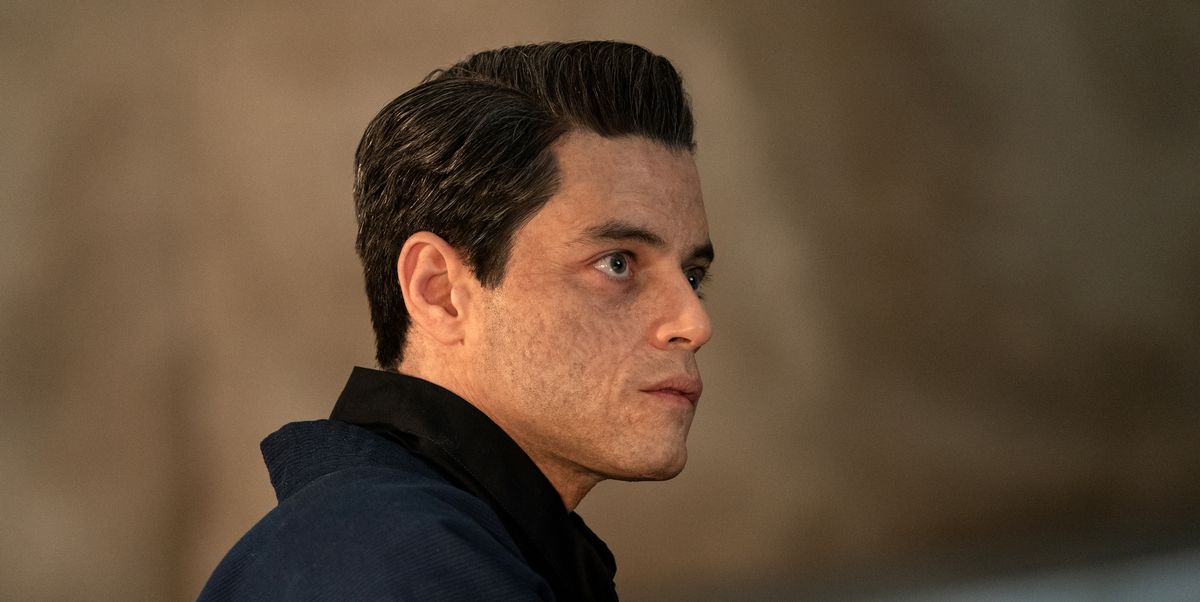
If you haven’t seen the film, James Bond is retired and traveling the world with his wife, French psychiatrist Madeleine. While visiting the grave of an old flame, the grave blows up, and Bond barely survives. Convinced that Madeleine set up him, he leaves her.
Five years later, Bond is lured out of retirement to find a terrorist in Cuba. He and a local female agent, Paloma, infiltrate a SPECTRE party, which stops mid song, as a spotlight reins down on Bond. They knew he was coming! A mist then appears in the air and everyone around him starts dying, even though he’s okay.
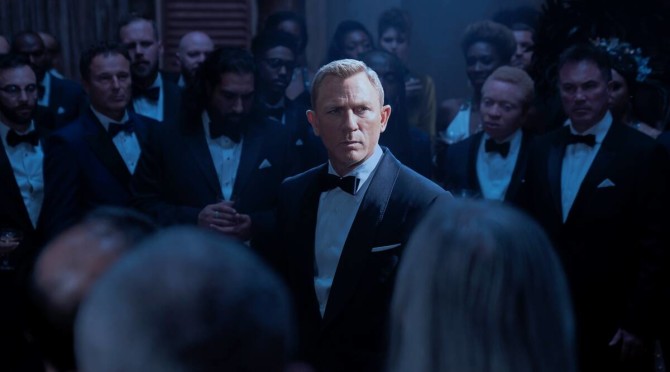
Bond and Paloma fight their way out and Bond now has no choice but to rejoin MI-6. His first mission is to visit his nemesis, Blofeld, in a psychiatric hospital, to find out what that misty stuff was all about. But Blofeld will only talk to him if a specific psychiatrist is present – Madeleine!!!
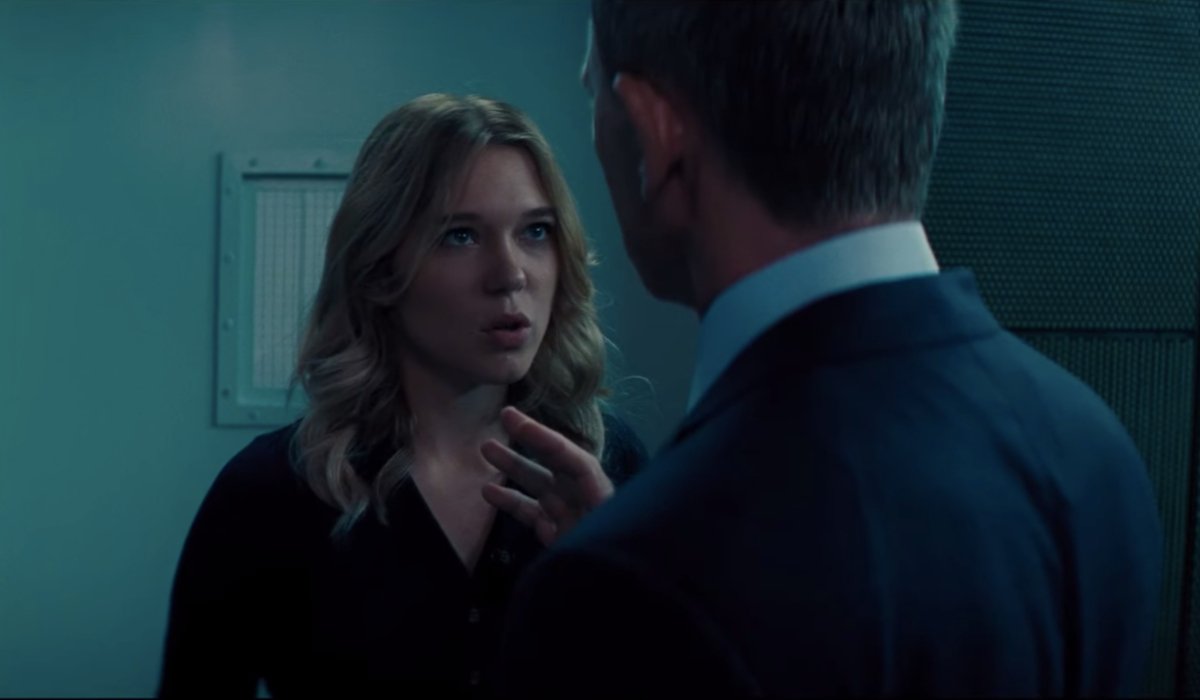
Bond then accidentally kills Blofeld with the same thing that killed the rest of SPECTRE. It turns out that someone’s developed a virus that is DNA specific. You can program it to kill only certain people. While Bond takes that in, Madeleine and her previously hidden 5 year old daughter (don’t worry, we’re told right off the bat it’s not Bond’s) are kidnapped by Lyutsifer Safin, a guy who never wears sunscreen, who has unfinished business with Madeleine. Bond will have to go to Lyutsifer’s secret island to get her back… AND SAVE THE WORLD!
One of the themes of my screenwriting advice is to surprise the reader. Give us things we’re not expecting. It’s one of the hardest things for a screenwriter to do because your mind is hardwired to use stuff you’ve already seen before. Something that’s previously existed is always going to be more prominent in your head than something that has never existed. It takes discipline to ignore that known image, that familiar plot beat, that twist, that turn, from previous movies and come up with your own.
So I have to say I was impressed with how much Fukunaga surprised me. He didn’t do anything earth-shattering. But it became clear to me during many of the movie’s scenes that he was actively trying to keep the viewer off balance. And I loved that.
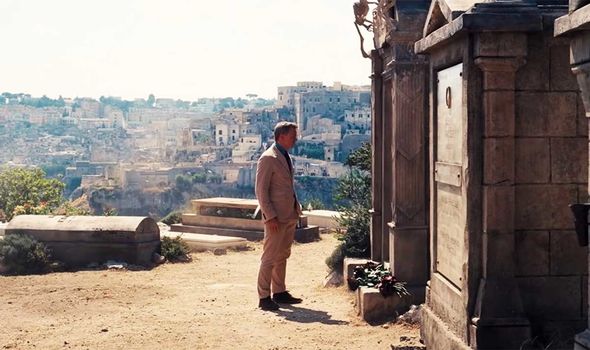
The first moment this occurred was when Bond went to the grave site of his old girlfriend. I loved that Fukunaga leaned into the dramatic music, the sadness of the moment, all the cliches that usually come from visiting a grave in a movie. I was right on the cusp of falling asleep. And then the front of the grave blew up, launching Bond backwards 30 feet. As soon as that happened, I sat up, and I said, “Okay, we have a movie now.”
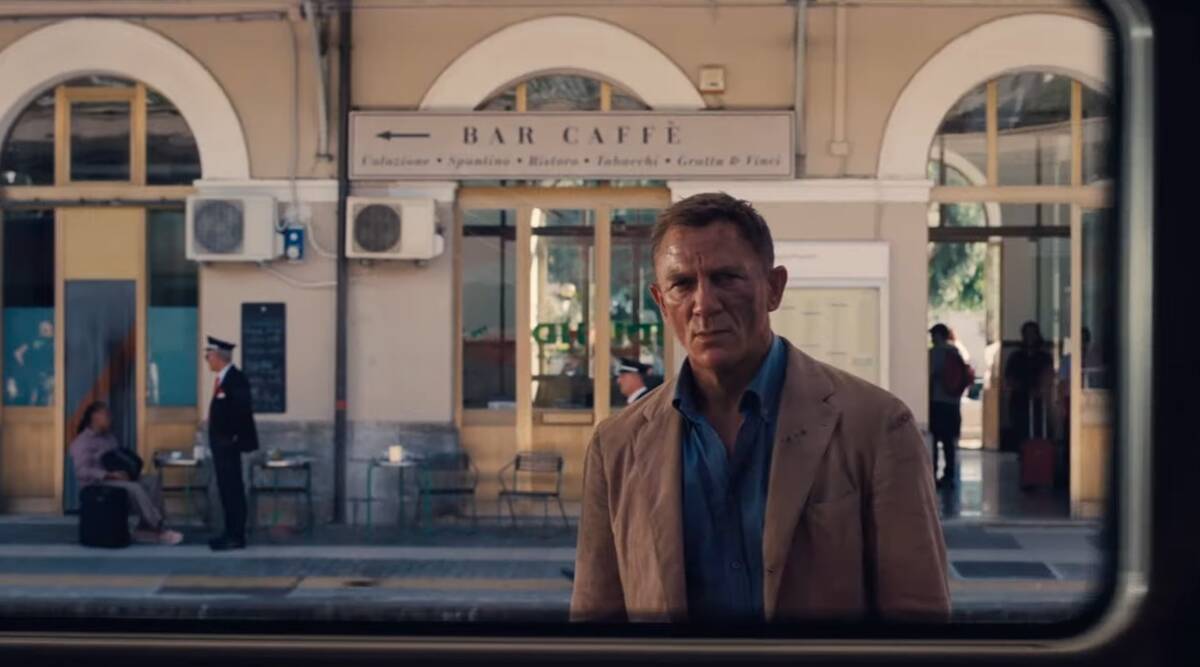
The second time this happened was when Bond drove Madeleine to the train station after he believed that she deceived him. We’ve seen many “One lover leaves another lover on a train” scenes before. So I loved that this played out the exact opposite way of how all those scenes did.
In this version, these aren’t two lovers sadly leaving each other. It’s two people breaking up. And the person outside the train isn’t chasing anybody. He’s standing still. It’s the person inside the train, Madeleine, who’s running backwards through the cars to try and convince James with one last look that she didn’t deceive him.
Again, it’s not a crazy good scene. And I’m not sure anybody noticed this but me. But there’s a bigger point to be made here. Which is you could tell Fukunaga and the writers worked really hard to try and make these traditionally stereotypical moments feel fresh and different.
The third time this happened was when Bond went to Cuba to infiltrate the SPECTRE PARTY. When he gets to the heart of the party and everyone backs away as a spotlight washes over him, again, I thought, this is really unexpected. Usually, in these scenes, Bond (or Bourne, or Wick, or Turetto) expertly executes his mission until all hell breaks loose. I was constantly jolted out of my assumptions in No Time To Die and that kept this Bond more exciting for me.
The set pieces were all really good as well. A lot of them don’t transfer well to the page, unfortunately, because they’re built on the uniqueness of the location. Like when Bond is zipping up and down those tiny hilly streets in Italy(?). If you would’ve asked someone how that scene read in script form, they would’ve told you they were bored.
Luckily, there was one relevant “writing choice” set piece we can learn from. That happens after Bond came back to see Madeleine at her rural house, noticed that bad guys were coming, and jumped in the car with her and her five year old daughter. I know it seems, on the surface, like a mundane decision to have the daughter in the car during the chase. But we’re used to seeing chases where it’s only the hero behind the wheel, or the hero with someone in the front seat. We don’t often get kids in the car. And I noticed I was way more into the chase as a result. I was terrified for that little scared girl. It just goes to show there’s always a choice around the corner than can super-charge your scene. So push yourself and ask, “Can I do more with this scene?”

The reason I’m not scoring No Time To Die off the charts is because it still has the same problems as every Bond film. There are so many moving parts to the plot that you need to take a local University course on the movie to keep up. From Project Heracles to Blofeld to SPECTRE to Lyutsifer Safin, I’d consistently get lost as to where Bond was headed and why. It wasn’t as bad as previous Bond films for me. But it’s always hard to enjoy something when you’re never quite sure what’s going on.
**MAJOR SPOILER**
As for Bond dying, I don’t have much of an opinion on it to be honest. It’s not like Han Solo dying where you know he can’t come back. Everyone knows Bond will be back in three years. And they don’t even have to explain why he’s all of a sudden alive again because it will be a different actor playing him and we’ll all just go with it. Also, Bond has never been a real person to me. He’s a wish-fullfiment version of the ideal man, a fantasy of sorts. So I don’t hold any particular emotional connection to him. I guess it makes sense in that it’s the death of Daniel Craig playing the part. But I don’t know. It didn’t do much for me.
In the end, I liked the latest Bond. It’s packed with some really good set pieces and lots of unexpected moments. Worth the price of admission for sure.
[ ] What the hell did I just watch?
[ ] wasn’t for me
[x] worth the price of admission
[ ] impressive
[ ] genius
What I learned (spoiler edition): If you want to sell a twist, LIE HARD to your audience. I actually learned this trick all the way back in Shawshank Redemption. When Andy gets that tiny rock hammer and Red says to us, “Make no mistake, Andy couldn’t do anything with that hammer. It would take a man 600 years to dig a tunnel with that tool.” As soon as he said that, I slumped my shoulders and thought, “Dammit! I thought he was going to escape.” Same thing here. When we meet Madeleine’s daughter, one of the first things Madeleine says to Bond is, “She’s not yours.” It’s so direct and blatant that we buy it wholesale. Which makes the twist that she IS his daughter a shock.
The story behind Squid Game is almost as compelling as the story in it.
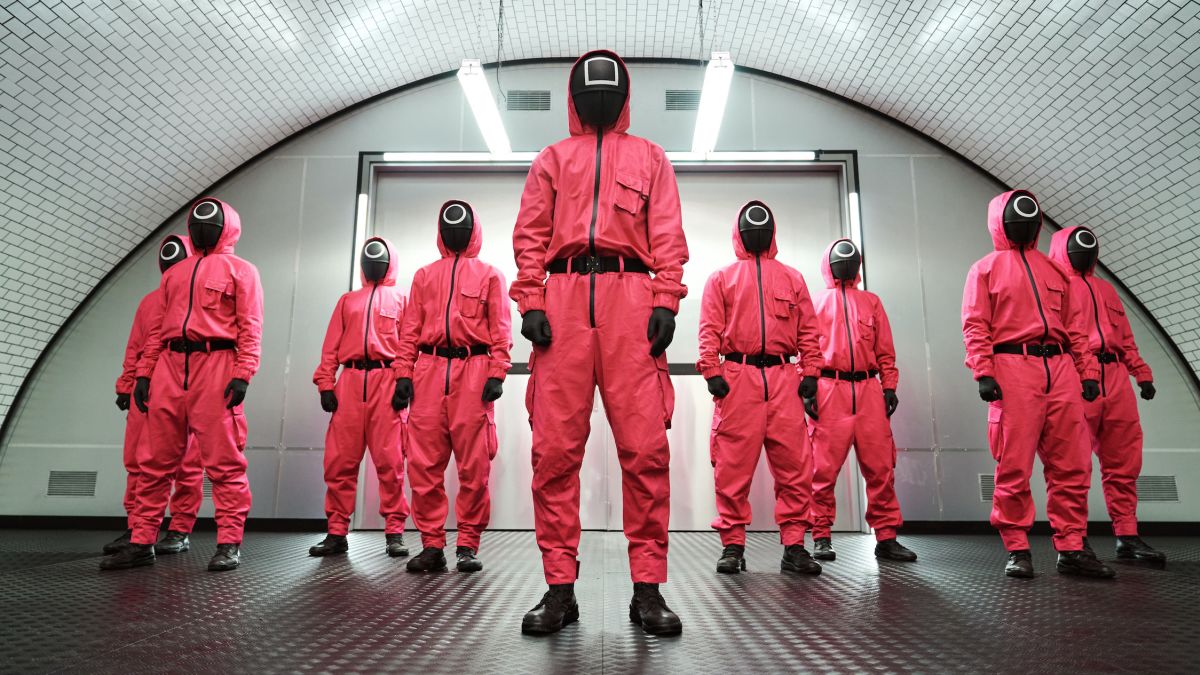
Squid Game is a sensation.
Ted Sarandos, Netflix’s content guy, says that the show is on track to become the most watched piece of entertainment in Netflix’s history.
Full disclosure, I watched the first episode and a half of Squid Game and I didn’t think it was very good. Korean cinema can be kind of goofy, in my opinion, which can sometimes take me out of the story.
There was an early scene, for example, where a business man plays a weird game with our protagonist where he drops an envelope on the floor and if it doesn’t land just right, the other guy gets to hit him. The protagonist proceeds to lose 60 times in a row and the other guy just keeps hitting him afterwards. Quite frankly, I thought it was one of the dumbest scenes I’d ever seen. It yanked me right out of the show and I couldn’t get back into it.
There were some other issues I had as well. Why do the people get to vote to stop the game? That’s lame. It’s so much better if they’re forced to play it. I gave up watching after the people were allowed to quit.
BUT. That does not change the fact that Squid Game is a runaway success. I’ve seen several of you praising it in the comments. And the internet loves it (I recently read that the squid game hash tag has been shared 22 billion times on TikTok, which I guess means everyone in the world has used the hashtag 3 times each). I texted my brother (who has zero interest in Hollywood) to see what he thought and he said, “I haven’t seen it but the world is screaming at me to watch this, so I will.” And that’s the current pull of the show. Everybody knows about it. Everybody is going to check it out if they haven’t already.
But, as was brought to the world’s attention this week, the creator, Hwang Dong-Hyuk, has been pitching the show to Hollywood for ten years and they all told him it wouldn’t work. He was so broke at one point, he had to sell the very laptop he was writing the script on!
So what happened here? Writers love a good “the studios were wrong!” story. But were they wrong? Was this a guaranteed hit that the studios missed?
Let’s dig into that question.
One of the things I’ve found is that if you’re an unknown writer and you have a really unique vision – your story is going to look different than anything else out there – it’s hard to convey that on the page. I remember when Zach Braff was trying to get Garden State made and nobody gave him the time of day because the script was so bad. However, after he made a strong visually unique film, everybody was surprised as to how Garden State could’ve been rejected. Well, it was rejected because there was no way to show everyone what the movie would look like using just words.
Which is clearly what’s happened here. Squid Game is all about the look. The dudes with the weird masks and these ridiculous colorful game sets – the second you see that on Netflix’s home page, you’re intrigued. And if you’re intrigued, you’re going to check it out.
But let’s not pretend like it an obvious hit and everyone who passed on it was dumb. There wasn’t any way to know the show was going to look the way it does. If this had been a graphic novel first, I have no doubt that it would’ve been optioned and made into a movie (or a show). But if he was just pitching this as a script, of course people are going to say no. It’s big, it’s expensive, it’s weird, and the writer is unknown. That’s like a quadro handicap on your screenplay.
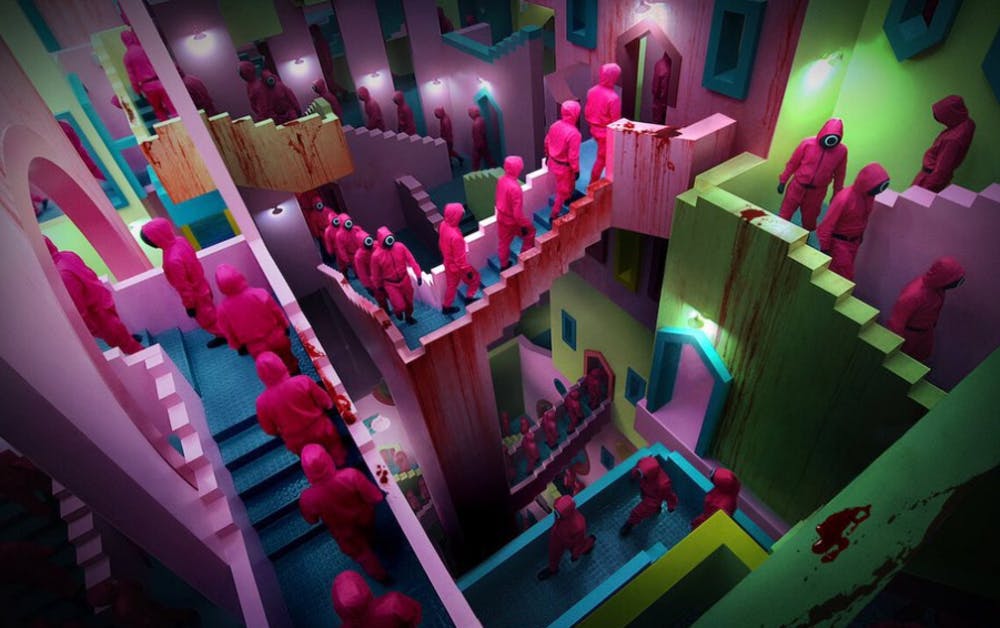
The reason I bring this up is because, if you’re a writer trying to break in, having some groundbreaking visual palette for your movie isn’t going to matter one iota in script form. That’s for the directing side of things. It’s why directors will shoot short films as proof-of-concept. But nobody’s going to be able to see that in a screenplay.
Which is why you should be conceiving of ideas that work first ON THE PAGE and then ON THE SCREEN. Not ideas that jump straight to the “on the screen” part. That’s a little confusing so let me parse it out for you. A Quiet Place is a script that works on the page. It’s got clear high-concept rules (you can’t make a sound or you’re dead) and a highly marketable story (horror film, monsters that hunt you, family that’s trying to survive). Cloud Atlas is a script that does not work on the page. You could argue it doesn’t work on screen either. But it definitely looks beautiful. And that’s the lesson here. If your script is highly dependent on how it looks, you shouldn’t be writing that as an unknown screenwriter. Nobody’s going to be able to see what you see (unless you’re a writer-director and shoot a proof-of-concept short).
Where we venture into the gray zone is when we look at Squid Game’s concept. Squid Game has a very high concept pitch. It’s a bunch of poor people playing deadly children’s games to win millions of dollars. Shades of The Running Man and The Hunger Games. To be clear, that *does* work on the page. So I’m not sure why that didn’t sway Hollywood more than it did other than maybe the writer was originally pitching Squid Game as a movie and it didn’t read well as a feature, combined with the fact that he was an unknown, which always makes things more difficult.
Let’s also not forget that, as is the case with every giant hit, there’s a fortuitous aspect to it. Steven Spielberg is Steven Spielberg in large part because when he came out with Jaws, the world was experiencing an overwhelming number of shark attacks. When Hwang Dong-Hyuk first pitched Squid Game ten years ago, we weren’t in the middle of a pandemic that was taxing everyone’s bank accounts. The second the pandemic came along and everyone started losing their jobs, Netflix greenlit Squid Game.
There are a few final writing lessons I can take away from Squid Game. The first is that screenwriting is a marathon. It isn’t a sprint. I can count the number of people who have “made it” within five years of starting screenwriting on two hands. And, in almost all of those cases, it was because that person had a family member in the business. Ten years, as scary as that sounds, is a realistic number when it comes to screenwriting success. That doesn’t mean you have to starve for ten years. You can have a job and pursue screenwriting in the meantime. But try to put 2-3 hours a day into it if you really want to get good.
Next up, high concept remains your best bet for success. Some people may look at Squid Game and say, “Wow, Hollywood is effed up. They rejected this awesome show for ten years.” But another way to look at it is, kudos to Dong-Hyuk for coming up with such a high concept that it could be pitched long enough whereby it never got old. A lot of writers come up with ‘of-the-moment’ ideas and, as soon as the moment is over, their scripts are worthless. A big high concept timeless idea is something you can pitch for years no matter how many times you get rejected.
Finally, write about what’s affecting you RIGHT NOW. That tends to create the most authentic exploration of character. Dong-Hyuk was dirt poor ten years ago. He was just trying to survive. So he came up with an idea that explored the depths a person would go to to become financially stable. I don’t think Dong-Hyuk would be able to write Squid Game today. He’s rich now. He doesn’t feel that same desperation. That same destitution. As much as I love concept, you ultimately have to write characters that the average person connects with. And this is a big part of the equation for doing that. Write characters that are versions of you and what you’re going through right now in your life.
I’m curious what conclusions you’ve drawn from Squid Game’s success. While you write out those comments, maybe, just maybe, I’ll give this show a second chance. :)
Genre: Horror
Premise: A troubled young surgeon travels to a desolate peak to climb the mountain where her father suffered a mental breakdown years earlier, only to realize halfway up the rock wall that she might be subject to the same fate.
About: This one was on last year’s Black List. Another brand new writer!
Writer: Arthur Hills
Details: 104 pages
Readability: Fast

You guys know how much I love Free Solo. So it’s time to Free Solo ourselves a mountain climbing script review! Join me! Oh, and if you think you can write a better horror script than today’s, make sure you enter the Halloween Horror Showdown!
28 year old Sloane is just about ready to become a surgeon. In fact, we see her operate on one of her first patients, under the watchful eye of a veteran surgeon, only to accidentally let the blade slip and paralyze the guy she’s cutting open. Oops!
Sloane goes home to her boyfriend, Stephen, and laments about paralyzing this guy. We also learn, during this time, that the anniversary of Sloane’s father’s death is coming up. Her father used to be a great climber until one day when he climbed a mountain called Lytta’s Peak and went crazy on it.
Sloane thinks it’d be a good idea to climb the peak herself and finally face the trauma of her father’s death. Sort of like what Reese Witherspoon did in that movie about the girl who walked a 500 mile trail. But unlike Reese, Sloane isn’t going by herself. She’ll be joined by her boyfriend, Stephen, Stephen’s attractive friend, Mia, and the youngster of the group, 24 year old sexual dynamo, Luna.
Off they go to Lytta’s Peak, where Sloane immediately starts seeing things. She sees people in white clothes walking through the forest (but not appearing on her iPhone screen). She sees Mia and Stephen kiss, even though a second later they’re not there. She keeps finding these circles everywhere with a bunch of random designs carved inside.
But things really get nuts when they’re on the side of the cliff and Mia goes plunging to the forest floor. Hashtag Mia’s dead. Around this time, we learn that both Sloane’s dad AND Sloane have SHADOWS that are on the mountain with them. And their plan is to kill everyone climbing the mountain. Including Sloane herself! The only way to defeat them is to get to the top.
“Peak” started out strong and is a good example of how to set up character while keeping things entertaining. The script begins with a teaser. We see a person falling from a mountain. But we don’t know who they are. We’re not close enough to identify them. This creates an immediate mystery that we want answered (and that keeps us reading!).
This is followed by Sloane visiting her father at the psychiatric hospital. One of the best ways to set up characters is through SHOWING. You show us he’s at a psychiatric hospital. You show us that he’s emaciated and worn down. We immediately know where this character is at. Ditto Sloane who’s developing as a character by the writer simply showing us what her family situation is. She has a dad who’s in a psychiatric hospital. That takes a huge toll on someone which creates a richer deeper character in the eyes of the reader. On top of that, the scene is filled with the conflict of the dad not quite being “all there,” despite Sloane desperately wishing he was. It’s heartbreaking.
The next scene happens four years later where Sloane is getting her first chance to operate under the eye of an experienced surgeon. We see how exhausted she is beforehand. So she crushes and snorts some adderall to get her adrenaline pumping for the surgery. Again, another SHOWING moment.
We then watch her operate on this guy and the surgery is the best scene in the script, easily, because she starts bleeding from her nose because of the adderall, which is dripping into her mask, all while she’s making an incision right next to the guy’s spine. Any sudden move could paralyze him for life. It’s an intense scene that really draws you in. Again, this is the goal with writing. You want to set up WHILE entertaining. You don’t just want to set things up and that’s it.
A couple of scenes later we’re driving to the mountain. This section is entertaining as well because the writer sets up that Stephen and Mia are really close. To the point where Sloane is suspicious of their relationship. This creates a ‘dramatic irony’ situation within the car where Mia playfully chats away with Stephen with Sloane watching on, trying to pick up cues if there’s more there than friendship.
In that case, it’s the CONFLICT – Sloane disliking and being suspicious of Mia – that keeps the reader entertained. If you don’t think that’s worthy of mentioning, let me just say that I read tons of scenes like this where the writer doesn’t make any attempt to create conflict within the ride, so all the characters are doing is babbling on, setting up exposition, trying to be funny. These are always less entertaining than scenes where the writer is actively looking to inject conflict into the conversation.
So I was encouraged after those first 20 pages.
And then the writer made the same mistake so many writers writing “Is my protagonist going crazy” storylines make. Which is to start injecting that classic repeated beat of something weird happening (sees someone dressed in white walking through the forest, sees Mia and Stephen kiss) only for it to be in her head. And it just ruined the story for me.
I don’t know why writers think this is interesting. Once you establish the character is seeing things that aren’t there, we know every weird thing that happens from now on is going to be another hallucination. Where’s the suspense in that? The mystery? We, the reader, are now ahead of you, since we can predict these things. And the second the reader gets ahead of the writer, the script is cooked.
I don’t want to completely undersell the story because this idea of peoples’ shadows orchestrating death and mayhem is kind of cool. And it does get rid of some of the story’s predictability. But it wasn’t cool enough to win me over.
There’s a broader topic to explore here about first and second acts. There are writers who are good at first acts and bad at second acts. There are writers who are good at second acts and bad at first acts. But there aren’t a lot of writers who are good at both. And that’s because the requirements for each are so different.
The first act is about setting up the plot and characters then sending your hero off on their journey. The second act is double the length and about pushing your hero towards their goal, throwing obstacles at them, giving us compelling twists and turns, and, of course, exploring all of the relationships in a compelling way, including the main character’s relationship with himself.
To nail that second act, you have to stay away from repeated beats as much as possible. Once you establish a pattern, you risk boring the reader. That happened here with all the, “What’s that! Did you see that!???” fakeouts.
Look, I’m not saying that any script about going crazy is going to suck. I loved Black Swan. I liked Taxi Driver. I like The Shining. But it’s a pretty short list from there on out of ‘going crazy’ movies that are good. And I think that’s because, ironically, ‘going crazy’ movies need a higher level of SOPHISTICATION to be convincing compared to other genres. And all three of those movies showed a lot of sophistication in the way the craziness was built into the story.
Mileage may vary here if you’re into ‘going crazy’ narratives. You might like this because it’s kinda fun. But once I figured out the story’s pattern, I got bored. So it wasn’t for me. P.S. I feel VERY confident that we can find a better horror script than this for Halloween Horror Showdown. Which would mean we’d find ourselves a Black List script. So get writing!
[ ] What the hell did I just read?
[x] wasn’t for me
[ ] worth the read
[ ] impressive
[ ] genius
What I learned: I would strongly suggest that you never end your movie with your character waking up strapped to a bed in a psychiatric hospital. It’s just so obscenely cliche at this point. I’ve read that ending more times than I can count.
