
One of this generation’s greatest screenwriters hits us with a new TV show on HBO. Does he deliver??
Genre: TV Pilot – Drama
Premise: “Here, Now” takes a Portland-based Brangelina-type family – a trio of multicultural adopted children – and asks how they approach life once they’re all grown up.
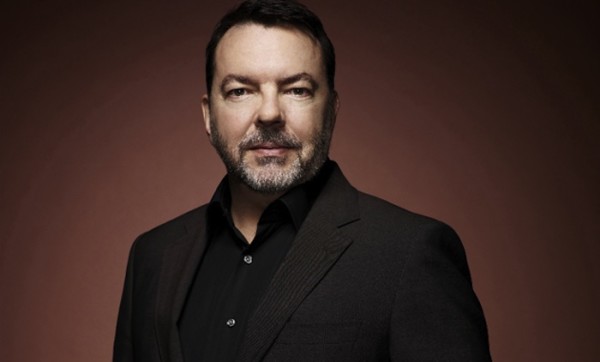
About: HBO’s golden child and Emmy award-winner Alan Ball (True Blood, Six Feet Under), who is also an Oscar winner (American Beauty) is finally bringing a new show to the network. But the family drama space is getting crowded. With smart well-written hits like Hulu’s “Casual” and NBC’s “This is Us,” can Ball still stand out in the space he pioneered?
Writer: Alan Ball
Details: 61 pages
Back in the late 90s, the game changed for spec scripts.
What happened was that, for the first time, people in Hollywood started utilizing chat-rooms to discuss screenplays.
The reason this was a game-changer was because, up until this point, the people who controlled Hollywood’s opinions on screenplays were agents.
As a writer came close to finishing a script, his agent would hype the script up to producers and studios. By the time it was ready to go out, a bunch of interested buyers were eagerly waving their checkbooks.
The pressure became so intense to get the new hottest thing that studios would make bids on scripts that they hadn’t even finished reading, just to beat the other guy. A great concept and a good first act could result in a high six figure sale.
When the chat rooms came around, however, the gig was up. Assistants would get on these digital information-sharing networks and they would blow through the hype. If a script was bad, this secret cabal would expose it.
Hollywood was never the same after that. You couldn’t bullshit anyone anymore. You actually had to write something good. And what these chat rooms exposed was the fact that mostly everything wasn’t good. Without hype to distort opinions, you’d be lucky to get a, “Eh, it wasn’t terrible.”
This new reality continued for a couple of years until one script arrived that blew all these impossible-to-please readers away. That script was American Beauty, by an unknown writer at the time named Alan Ball.
Every reader came back with the same reaction: BRILLIANT!
And that’s how American Beauty became the poster child for writing scripts in the internet age. No more bullshit. If you want to sell something, it needs to be good.
This is why, when Alan Ball writes something, everyone in town wants to read it. And I’m no different. I’m a monster fan. If I could only invite five screenwriters throughout history to a dinner party, Ball would be on that list.
So to say my expectations are high today would be an understatement. However, I have a funny feeling that Ball will meet them.
26 year-old Duc (pronounced “Duke”) is a life coach and member of a very odd family. Audrey, the mother, and Greg, the father, took the Brangelina route of building a clan. They adopted kids from all over the globe.
There’s Duc, who’s Vietnamese. There’s Ramon, who’s from South America. And there’s Ashley, who’s African. Completing the family is 15 year-old Kristin, a self-proclaimed pudgy pasty white girl who’s not nearly as hot as she wants to be. Kristin was an unexpected addition, the only biological child in the family, making her, ironically, the black sheep.
The plot for the pilot is built around Greg’s 60th birthday party. Greg, who fucks a Japanese escort every week, can’t handle how quickly life has gone by. And he doesn’t want to be reminded of it with some giant birthday bash.
But his problems aren’t as bad as Ramon’s. Ramon has enjoyed being a sexually adventurous gay man for the last few years of his life when he starts seeing the numbers “11:11” everywhere. At first he thinks nothing of it, but they appear so frequently (we watch as his treadmill inexplicably gets stuck on 11:11 for a full 30 seconds) that he’s starting to think something is wrong.
Meanwhile Ashley, who’s happily married (to the ideal white man), is secretly a coke-fiend who loves to play as close to the fire as she can get without getting burned. Case in point, she’s found a new boy-toy in 18 year-old Randy, a male model. She convinces him to join her at Dad’s party tonight, with the caveat being that he can’t tell her husband that she invited him.
Once the party gets started, everyone lets loose. Kristin, who’s decided it will be funny to wear a horse-head the entire night, takes a liking to Randy. Ramon brings home a coffee barista he’s been flirting with, and the two promptly sneak away to have sex. Greg is trying not to have a mental breakdown and, with a little alcohol, seems to be in better spirits.
But everything unexpectedly goes to hell when Ramon’s 11:11 vision takes a turn for the worse. So much so, that it will change his, and his family’s, life forever.
If you want to get better at creating rich interesting characters who pop off the page, there’s no one better to study than Alan Ball.
Ball knows that if we don’t feel the characters on the page, or on the screen, we won’t care what the fuck happens to them. And the thing is, he’s so focused on that, that he barely needs any plot to tell his story. Every single person here is so fascinating that THEY become the story.
It’s in stark contrast to yesterday’s script, which was so plot heavy that all the characters got lost in the muck. It’s a great reminder that proper character creation allows you to be less plot-focused. And since plotting’s always a bitch, that’s a huge advantage.
One of the nice lessons I learned with today’s script comes from something we were just discussing last week – SETUPS AND PAYOFFS.
Normally, setups and payoffs are done through plot. But Ball reminds us that you can utilize them through character as well.
The best example of this comes from Kristin, the 15 year old biological daughter in the family. Kristin hates how she looks so much that she creates fake Facebook profiles with pictures of beautiful women, just so she can get attention from men somehow. Kristin desperately wants someone but believes nobody would want her.
So later, during the party, when Kristin is wearing her horse mask, she runs into a dejected Randy, the model, who’s since been rebuked by Ashley, Kristin’s older sister. Kristin’s character has been so well set up at this point, that before she’s even approached Randy, we’re freaking the hell out, saying, “Oh shit oh shit! She’s going to get the model! She’s going to get the model!”
The ensuing interaction is one of those script moments that, without proper setup, would’ve come off as mundane. Instead, it’s a highlight.
This is the power of Alan Ball. He gets it. He has such a strength for taking potentially boring ubiquitous things – like Greg’s fear of getting old – and creating powerful characters to explore those things, that we feel like we’re dealing with it for the first time.
Here, Now is a pilot that achieved something unthinkable to someone who reads everything. It made me feel something. It made me think. It actually has something to say about the world and people and how we experience life. It’s quite the pilot and definitely lived up to expectations.
[ ] What the hell did I just read?
[ ] wasn’t for me
[ ] worth the read
[x] impressive
[ ] genius
What I learned: When you write a TV pilot, really really really focus on character. People have to see your characters and say, “I want to spend time with these people every week.” If your characters are in any way bland or even “just above average,” we’ll have no interest in your show. So here are three suggestions to get you started in this department.
1) Give each character a great description. Don’t worry if it’s a little long. Again, characters matter more in television so the rules in regards to describing them can bend a bit. Here’s a description of a character in Here, Now: “Barista HENRY BERGEN (20) is behind the counter in BLACK PANTS, WHITE SHIRT and some sort of VEST with a NAME TAG. Beard, tattoos. Cocky, handsome, gravitates toward a simpler existence. Doesn’t need much, appreciates what he has.”
2) Within the limitations of your story, introduce each character with a memorable action that defines who they are. I see too many passive character introductions in screenplays. Within the context of the scene, make me interested in your character when I meet them. When we meet Ashley, she is berating an employee for an action that cost her company a huge chunk of time. It immediately sets the tone for the character.
3) Give your characters MOMENTS they shine in the areas they shine in. So if you have a character with a wicked tongue, give her a scene where a department store cashier shames her and she retaliates by telling her off in some clever way. If all you’re doing is serving the plot and not giving your characters these moments, they’re going to disappear on the page.
Bonus Question: Who would be the five screenwriters throughout time that you would invite to your dinner party?
Today’s writers take the most classic love story of all time and ask, “What if Romeo art tho The Huntsman?”
Genre: Period/War/Romance
Premise: A new take on Romeo and Juliet that expands the famous Capulet and Montague feud into a full-scale war.
About: This script was picked up last year by Sony and Joe Roth, who is looking to expand his Huntsman franchise with a take on Romeo and Juliet that’s in the same spiritual universe. While The Huntsman sequel did not do well, Romeo and Juliet is its own property and, therefore, still has a chance of being made. If Neil Widener and Gavin James, the writers of today’s script, sound familiar, it’s because they’re blowing up big time. The two are writing San Andreas 2 and Now You See Me 3. But unlike the high profile overnight success stories you read about on some screenwriters, Widener and James’s success is more tied to reality and what the majority of screenwriters experience. Widener has been at the game for 15 years and James nearly a decade.
Writers: Neil Widener and Gavin James
Details: 113 pages
I want to ask an honest question.
Is there any purpose to Valentine’s Day other than to guilt men into buying something for their significant other?
I’ve never met a man who was like: “YES! VALENTINE’S DAY! WOO!” In every case, the man goes out to buy something or sets up a dinner so that their girlfriend or wife doesn’t make their evening a living hell.
Unless, of course, it’s less than 3 months into the relationship. Then, of course, guys are all about Valentine’s. I’m all for other points of view. But this has been my experience.
And with that, let’s review a script about Romeo and Juliet!
It’s 1945. I mean 1495. Northern Italy. France is on a tear, taking over every country it can get its grubby croissant-smeared hands on. And it’s got all of Italy except for one section. Verona!
That’s where the regal Capulets are warring, once again, with the crude and dirty Montagues. But these are not the Capulets and Montagues you are familiar with. These families encompass entire armies. And their war has been going on for generations.
When the Montagues find out that the Capulets are planning to marry off their princess, Juliet, to France’s Prince, which will allow them to crush the Montagues for good, Prince Romeo, a young Braveheart-like figure, comes up with a plan. Go to the Ball announcing the marriage and assassinate Juliet.
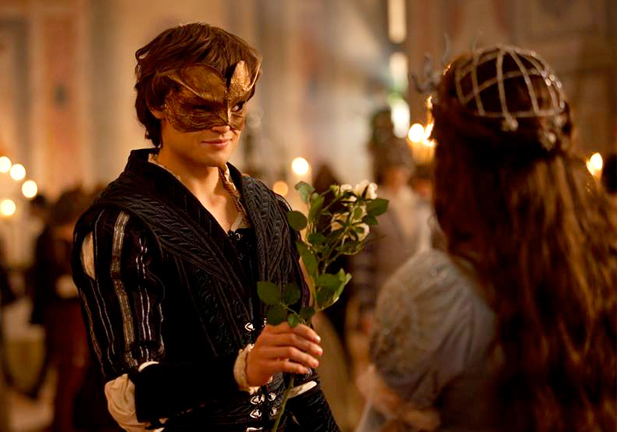
Everything’s going swell until one of those dances where everyone wears masks. Juliet and Romeo unknowingly get paired up, and it takes less than a couple of minutes and one kiss for the two to fall in love.
When Romeo realizes moments later who his new love is, he’s torn. But not torn enough to kidnap Juliet back to the Montague fort, where Romeo is chastised for not keeping it real. He and Juliet escape into the forest then secretly get married in the hopes of uniting the Capulets and Montagues so they can fight off the French.
But since this is Romeo and Juliet, you can guess how well that turns out, and where our famous young couple ends up. Or can you!?
While there are some compelling topics of discussion when it comes to Verona, I want to ask what I believe to be a far more pressing question for screenwriters.
What is it about Romeo and Juliet that allows it to be so popular generation after generation?
This is a question screenwriters should be asking for every story that’s still told after a century. There is something in the DNA of these stories that appeal to audiences no matter how much the world around us changes.
The easy answer with Romeo and Juliet is love. Love is universal. It’s always been around and always will be. But let’s be honest. Watching two people in love is fucking boring.
When it comes to drama, it isn’t the love that entertains. It’s what stands in the way of that love. If you can create a strong obstacle that keeps two lovers apart, you can tell a good story.
But I’m going to take that one step further. A strong obstacle is nice. But an IMPOSSIBLE obstacle is better. Because it creates a situation that the audience is genuinely compelled by. How the hell is our copule going to end up together when this impossible obstacle is in their way?
And Romeo and Juliet has one of the greatest impossible obstacles of all time – two families who hate one another. It is clear from the beginning that this relationship is doomed. And that’s exactly why we watch. Because we hope, against hope, that they’ll somehow find a way.
Contrast that with, say, one of these dopey modern day romantic comedies where the obstacle is, I don’t know, money. One lover is rich while the other is poor. Sure, that creates some doubt. But it’s far from feeling impossible. And that’s what you’re shooting for when you’re writing one of these: THE IMPOSSIBLE OBSTACLE.
What’s interesting about Verona is it proves that even a great setup such as Romeo and Juliet is not impervious to the trials and tribulations of screenwriting. While Verona sticks with our general conceit, even amping it up from a feud to a war, it makes a mistake I see often when you expand a smaller story.
It gets lost in its plotting.
There is so much plot here, I couldn’t stay engaged. We have the Montagues taking on the Capulets. We have France coming in. We have France trying to align with the Capulets via marriage. We have a Ball announcing the marriage where Romeo while try to assassinate Juliet. We have the two escaping into the forest. We have them being shunned by the Montagues. We have them secretly getting married so the families can unite against the French. We have them having to go back and tell the Capulets they’re married. And it keeps going from there.
Plot is fine. But when every other scene exists only to explain a new direction that the story is taking, it feels less like entertainment and more like work. I’m sitting there going, “Okay, where are they at now and what do they have to do again? Is it tell their dads they’re married?”
In order to understand how to avoid this, you need to understand the two components of plot.
The first is logistics. Plot is there to tell us where we’re going and why we’re going there. On its own, it guides us, but it doesn’t entertain us. That’s where the second part of plot comes in: entertainment. Each moment when we’re told where we’re going and why we’re going there should be FUN. The reveal should excite us, entertain us. If all plot is doing is saying, “Characters must go from A to B,” we’re gettttttinnnnngggg sleeeeepppppyyyyy.
So Verona’s over-plotting could’ve worked if the plot beats weren’t so technical. They needed more entertainment value to keep us excited about the story. Or at least me excited. I tend to bet bored easily.
So that was my main gripe here. Verona was well structured and I loved that they found a new take on an old story. But the plot bogged us down without giving me enough moments to say, “Ooh, that was cool!”
[ ] she loves me not
[x] she gave me her number but didn’t respond to my text
[ ] we’re going on a date
[ ] we kissed
[ ] she loves me
What I learned: Let me give you an example of plotting that uses only logistics, and plotting that uses logistics and entertainment. What movies am I going to use? Star Wars movies, of course! An example of plotting that is only logistics is the Tax Federation stuff in The Phantom Menace (for those who’ve forgotten, and I don’t blame you, the Intergalactic Tax Federation is blocking trades out of Planet Naboo). Tax blockage is information we have to log in order to understand what’s going on. But beyond that, it contains no entertainment value. On the flip side, when Luke, Obi-Wan, and Han Solo get to Alderran to deliver their message, only to find out it’s been blown to bits and that a strange space station is there in its place, that’s plot that’s doing two things. It’s moving the story along AND it’s an exciting plot point that entertains us. So always make sure your plot beats are doing both.
Congrats to Mini-Shorts Contest winner, Nick Morris, for his short script, “DO NOT OPEN” It’s a fun little exercise in suspense. Nick wins a First Ten Pages consultation from me. I enjoyed doing this so much, we’re going to do another one next weekend. Stay tuned!
Genre: Sci-fi
Premise: (from Black List) When futuristic technology renders the Federal Witness Protection Program obsolete, the U.S. Government begins using Time Travel to hide high-profile witnesses in the past. When a security breach occurs, a U.S. Marshal and her witness struggle to find their way back to the Present Day while evading assassins.
About: Writer Mark Townend has been writing and directing shorts for over 15 years. He recently had his biggest break yet, adapting Anthony Bordain’s novel, “Bone In The Throat.” That got him some attention, which allowed this spec to get in front of a lot more eyes, which helped it make the Black List, with 8 votes.
Writer: Mark Townend
Details: 106 pages
Grrr…
An unexpectedly busy weekend has kept me from baring witness to 200 blood-splattering murders.
I’m speaking, of course, about my inability to get over to Arclight and watch me some John Wick 2! I wanted to see dogs being kidnapped, John Wick getting angry, perfectly choreographed kills, and a Keanu Reeves and Lawrence Fishburne reunion dammit!!
Instead I was stuck staring at a computer screen all weekend.
So to say that I’m angry is a goose-down-filled-pillow of an understatement, muchacho. I knew, under such circumstances, that any script I reviewed had little chance with me. So I needed to tilt the odds in the script’s favor.
That meant NO BIOPICS!
It meant NO TRUE STORIES!
You guys know by now that when I want to be entertained, I need a good old fashioned high concept science-fiction script, like the kind they used to send out five times a week in this town!
Why am I using so many exclamation points!
I don’t know!
On to the plot summary!
It’s the year 2033. Manhattan. Katherine Teller is a US Marshall and a member of one of the most cutting edge projects of the time – Operation Bygone.
You see, in the future, it’s impossible to hide. Every step you take, every whisper you make, is recorded somewhere, logged to something, GPS’d to somewhere, and anybody with half-a-brain can download a hack-pack and find you.
This means that protecting criminals waiting to testify against high-profile gangstas is impossible. Well, it was impossible. Operation Bygone allows us to time travel into the past. A U.S. Marshall escorts the testifier into the past somewhere, where they hang out until the trial, then jump back to the present when it’s time.
Nick Prentis is a medium-level white collar criminal. When he’s caught for pulling a Jordan Belforte, the government tells him they don’t want him. They want the guy he reports to, top dog Leon Vasseur.
Nick reluctantly agrees to testify against Vasseur and is sent back to the year 1972 with Katherine. While at first everything seems fine, a mysterious tough guy named Corbin finds out where Nick and Katherine are staying and attacks.
This sends Nick and Katherine on the run, where they realize there must be a mole in the system. They ditch their trackers and enact the contingency protocol, a secondary system that only Katherine knows the location of. If they can get to it, they can get back to the future. If they can’t, they’ll be stuck here. With Corbin. And Corbin doesn’t like company.
One of the reasons they don’t make these movies anymore is because we no longer live in a high-concept driven marketplace. Audiences have moved on to SPECTACLE as the driving force behind their ticket-buying choices.
We can get plenty of high-concept stuff at home. Like the show I’m watching now, Utopia, about an unreleased comic book that has the potential to dismantle society. Very high concept, but devoid of spectacle.
Does this mean that high concept is dead? Of course not. High concept is still better than low or no concept, as it will create curiosity, which in turn gets people to theaters. The difference is that these movies can’t be bad anymore. They have to have the execution that backs up the concept. And most writers either don’t know how to do that, or don’t want to put in the work to do it. They figure, “My concept’s good, so I don’t need to nail the execution.”
In other words, the market doesn’t allow movies like Face/Off to do well anymore.
Anything that isn’t spectacle-driven needs to be really good. Because word-of-mouth is the only thing that’s going to give these movies legs. A perfect example is Hidden Figures. That movie should not have done well by any box office metric standards, and yet it’s made over 100 million dollars.
So where does this leave Contingency Protocol? The script is pretty good. I don’t know if it crosses into “very good” territory though, which is where you need to be to have a successful film in this genre.
My whole question whenever I read a script like this is, “Does it exploit its concept?” Is it building its characters, its scenes, and its plot around the uniqueness of the idea?
For example, you have several chase scenes here through 1972 New York. Okay. But you could have a chase scene through New York in 2033. How are you taking advantage of your concept by writing that scene? It just being a different time period isn’t enough.
In Deja Vu, the highest selling spec script of all time, and a concept that also covers two time periods, they have a car chase where our hero, who’s in the PRESENT but wearing goggles that allow him to see into the PAST, is chasing a car from the past. There’s no car physically in front of him. He can only see it through the glasses. That’s a chase that takes advantage of its concept.
And that’s not to say that every scene needs to do that. But enough scenes need to do it so that it feels like you’re taking advantage of your concept. This is why Back to the Future is the gold standard in time travel high concept. There isn’t an element in the script that DOESN’T take advantage of its concept.
With that said, as Contingency Protocol goes on, we start to see more of a connection between the past and the present THROUGH THE CHARACTERS. There’s this whole plotline where Katherine’s future family is threatened by the fact that her husband’s grandfather is an ignorant cop who’s been assigned to stop them. If she hurts him, she completely alters her future.
There’s also the mystery of, “Who’s the mole?” I wanted to know who was selling these guys down the river. It’s funny how just one intriguing mystery can keep a reader turning the pages.
That kept me engaged enough to want to get to the end. Combined with the old school high concept premise, it placed Contingency in ‘worth the read’ territory. But I think if it’s going to be the kind of movie people recommend to others, it has to go deeper into its world and exploit its concept a lot more.
[ ] What the hell did I just read?
[ ] wasn’t for me
[x] worth the read
[ ] impressive
[ ] genius
What I learned: Could the scenes you’re writing take place in any other movie? If your scene feels too interchangeable, then you’re either not exploiting the uniqueness of your concept or the uniqueness of your characters. The opening of La La Land is a good example. Anybody can write a scene where the main character is stuck in his car, bumper to bumper traffic, going to be late for work or just wants to get home. I’ve seen that scene a million times before. But I haven’t seen all the characters all of a sudden step out of their cars and start singing and dancing. That’s a scene that’s specific to the concept of La La Land.

So as you know (or at least, you better know), the Scriptshadow Short Script Contest is happening as we speak! You have until March 12th to get your entries in. The winner gets their short film produced here at Scriptshadow and premiered here on the site. It’s going to be YUUUUGE.
But you know me. I’m impatient. I live in a world of instant gratification and I feel like being gratified. So we’re going to have a mini-short contest right here and right now.
Here’s how it works. Write a short that includes AT LEAST TWO of yesterday’s “Best Bang For Your Buck” tools. That is, in case you forgot…
1) setup and payoffs
2) dramatic irony
3) showing and not telling
4) an underdog
5) a ticking time bomb
Post your short in the comments (you can write it inside the comment or include a PDF link). Page count is open but I recommend staying under 5 pages.
Whichever short gets the most up-votes by Sunday 10pm Pacific Time will be the winner. That short will be officially entered into the contest free of the 2-shorts rule (so you can still enter TWO MORE shorts via e-mail submission).
You’ll get your short in front of our director. And to top it all off, I’ll give you a FREE FIRST 10 PAGES consultation on any feature or pilot you’re working on.
So get to work and good luck!
NOTE: MAKE SURE TO SORT COMMENTS BY “NEWEST” SO YOU CAN SEE ALL THE NEW SHORTS THAT COME IN.
Last month I was reading a script that wasn’t very good and I asked myself, what could make this script better? The answer to that question sounded something like this: more original characters, more active characters, characters with more depth, less on-the-nose dialogue, higher stakes, more unique choices, a better handle on structure, a second act that doesn’t repeat itself, more obstacles to overcome, a flashier villain… and the list goes on.
The point being, this writer needed to spend more time learning the craft.
So then I thought, well that’s kinda lame. I mean, yeah, they do need to learn this stuff. But what if there were some things they could do RIGHT NOW that could leave a big impact on their script.
That’s what gave me the idea for today’s article. There’s lots of screenwriting tips out there, lots of lessons, lots of tools. But what tools give you the BIGGEST BANG FOR YOUR BUCK? That means you don’t have to do a lot, and yet you get tons of upside through the application.
So after you read this, bust open that script you’re working on and incorporate a few of these immediately. And because I enjoy a flair for the dramatic, I’ll be listing our Bang For Your Buck tools in reverse order, with the best tip coming last. Here we go!
NUMBER 5: TICKING TIME BOMB (OR “TICKING CLOCK”)
I just completed a consultation script the other day that had way too slow of a second act. Months were going by with no end in sight. I was getting bored. And I thought, if only there was a ticking time bomb here, the story would feel so much faster.
A ticking time bomb is any looming moment that spells doom. And here’s something a lot of Scriptshadow readers don’t know. A ticking time bomb is not limited to the entire narrative. It can be used for single acts, single sequences, even individual scenes. If you’ve got a boring talky scene between two characters, add a ticking time bomb!
Let’s say you’re writing a teen comedy like The Edge of Seventeen and you have a conversation between your leads in one of their bedrooms that’s boring no matter how you arrange the dialogue. Pull the scene out and place it outside of school, five minutes before the first bell rings. Give the talk some importance (it’s a conversation that needs to be had), and make it so if the hero gets in after that bell, he gets detention all weekend. Watch that very same conversation come alive. Ticking time bombs give you so much for so little when you know how to use them.
NUMBER 4: UNDERDOG
Granted this is something you’ll probably have to do at an earlier stage in the writing, but underdog characters are so beloved by audiences that using them is almost like cheating. You barely have to do anything and the audience is rooting for your hero.
If you look at the 10 highest grossing movies of 2016, 7 of them are led by underdog characters (Rogue One, Finding Dory, The Secret Life of Pets, The Jungle Book, Zootopia, Suicide Squad, Sing). Not every story is right for underdogs (Batman vs. Superman), but it sure helps when they are.
NUMBER 3: SHOW DON’T TELL
Welcome to one of the most common mistakes beginner AND intermediate screenwriters make, and one of the easiest ways to identify a newbie. If a writer’s characters are always solving problems with what they say, rather than what they do, I know the script is in trouble.
But here’s the great thing about “show don’t tell.” It isn’t just about looking less newbie-ish. It actually MAKES YOUR SCRIPT BETTER. Even a lazy use of showing tends to outclass an inspired use of telling. It’s why one of the first tasks they have you do in film school is shoot a movie without sound.
I was watching the pilot for the British TV show, Utopia, last weekend. In the first scene, these thugs enter a comic book shop, and one by one, kill everyone in it. Then, just as they’re about to leave, one of the thugs bends down, and we see that a young boy is hiding under one of the stands.
We could’ve easily turned this into a dialogue scene. “What are you doing under there, little guy?” “Nothing.” “What comic is that you’ve got?” “X-Men.” “Yeah? You like X-Men?” And blah blah blah. But no, they don’t do that. The thug, who’s been working his way through a box of candy the whole scene, extends the box of candy out to the boy, a psychotic look on his face. And the last shot is of the boy reaching forward to take a piece. Then we cut out. It’s a much better scene because of the showing.
NUMBER 2: DRAMATIC IRONY
Ooh, this is a good one. Dramatic irony is the act of letting the audience know something the hero (or the key character in the scene) does not know, and typically that something is bad.
So let’s say a surgeon is doing a routine appendix surgery on a patient and the patient unexpectedly dies. We then cut to the patient’s wife, who’s casually reading a magazine in the waiting room. We stay on the surgeon, as he gulps, and slowly moves towards the wife to tell her the bad news.
This is dramatic irony. We know the wife’s husband is dead before the wife does. This lets us play with the reveal, as the surgeon comes up and asks to speak with the wife. And the wife launches into an opinion about an ad in the magazine she’s reading. And the surgeon is looking for the right moment to butt in. And so on and so forth. And we just play that dramatic irony out.
Dramatic irony ALMOST ALWAYS WORKS. It’s really hard to fuck up if you know what you’re doing. (bonus tip: The more that’s at stake in the scene, the better the dramatic irony will play).
NUMBER ONE BANG FOR YOUR BUCK SCREENWRITING TOOL… SETUPS AND PAYOFFS
Not only are setups and payoffs one of the easiest things to learn, but they’re mind-bogglingly effective. You could introduce the dumbest plot beat ever. But if it’s a payoff to an earlier setup, the audience will gleefully cheer, “Of course! Because of the thing earlier!!!” There’s something about connecting two things on their own that sends audiences into a euphoria.
I divide setups and payoffs into two categories. Power setups and payoffs and Fun setups and payoffs.
Power setups and payoffs work by introducing something seemingly innocuous, not drawing too much attention to it, but just enough attention so that it’s remembered, and then later, have that seemingly innocuous thing be the solution to a key plot point.
One of the best examples of this is when the Crazy Clock Tower Lady in Back to the Future barges in between Marty and his girlfriend right before they’re going to kiss, and screams, “Save The Clock Tower,” before launching into the Clock Tower’s history, which includes it being destroyed when lightning struck it over 30 years ago.
Then, later, when Marty is thrown into the past and he and Doc are trying to find a substitute for nuclear energy and Doc confesses that the only thing in the 1950s that has that same kind of power is a bolt of lightning, but unfortunately there’s no way to tell when and where they’ll strike, Marty holds up the Save the Clock Tower flyer and says, “We do now.”
Fun setups and payoffs don’t affect the plot but never fail to leave a smile on the audiences’ face. Another example from Back to the Future is when, in the present, Marty’s mom throws a sheet cake down welcoming “Uncle Joey” back from jail. “We have to eat this ourselves. Uncle Joey didn’t make bail again.”
Then later, when Marty is in the past and visits his mom’s house, he sees Uncle Joey as a toddler in his playpen. Marty leans down, “Better get used to these bars, kid.”
Back to the Future is actually the best movie to watch to study setups and payoffs. But the point is, by setting something up early and paying it off later, the audience feels like they’ve been a participant in the movie, creating the illusion that they’ve broken through the fourth wall. It makes them feel good. And you barely had to do anything to get them to feel that way.
