
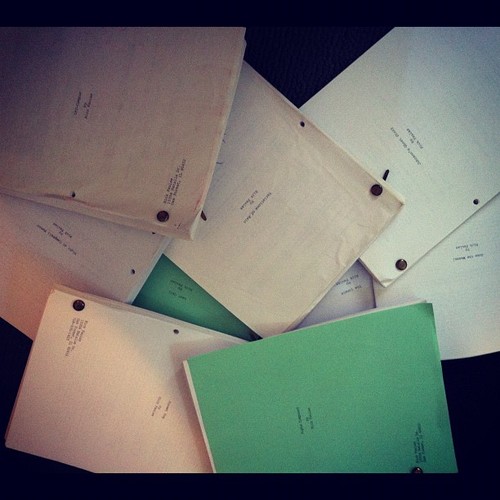
This is your chance to discuss the week’s amateur scripts, offered originally in the Scriptshadow newsletter. The primary goal for this discussion is to find out which script(s) is the best candidate for a future Amateur Friday review. The secondary goal is to keep things positive in the comments with constructive criticism.
Below are the scripts up for review, along with the download links. Want to receive the scripts early? Head over to the Contact page, e-mail us, and “Opt In” to the newsletter.
Happy reading!
TITLE: Winning Isn’t Anything
GENRE: Drama, Dark Comedy
LOGLINE: A struggling baseball team owner must finish the season or lose his lease, while corrupt politicians, small town con artists, and a high stakes wager between rival mobsters conspire to stop him. Inspired by actual events.
WHY YOU SHOULD READ: Almost everyone knows that feeling of pain so deep that it momentarily becomes laughter before reverting to tears. That’s what it felt like to write this script. It’s not just a “based on true events” story – but it should resonate with readers because it runs the gamut of characters that we know (the suburban guy and his family down the street), to those we’d dare to know (the Mafia). You ever want something so badly that you ignore the signs all around you that say “Stop”? That’s what this script is about, and that’s how it felt at times to write it. Often painful, occasional tears that blurred the keyboard, but in the end rewarding.
TITLE: Day 666
GENRE: Self-Contained Psychological Horror
LOGLINE: A demonic outbreak leads the Smith family into their backyard bunker, where they hope the above threat starves to death before they do.
WHY YOU SHOULD READ: I have three brothers, two of whom have degrees in writing, one of whom has degrees in producing, so I am always able to get initial notes from them. Two responses were quite positive and one was mixed, at best. The thing is, I’m not sure who is right. Although I like the script, I don’t know whether it is good enough to continue working on, or whether or not I should move on. Recently, I have become very paranoid about everything I write, and I have reached an impasse with this script. Any help would be greatly appreciated. Really, I’d just like to know if I can write a solid script.
TITLE: A Hand’s Reach
GENRE: Drama
LOGLINE: A crack dealing yet intellectual seventeen year-old must choose between university offers or the only life he has ever known.
WHY YOU SHOULD READ: I am not a Page winner nor a Nicholl finalist (I’ve actually never even submitted anywhere except here) but am a writer of honesty and genuineness. I believe it’s necessary for characters such as the protagonist to have their voice heard no matter the decisions they make in life – right or wrong…. or maybe I’m just biased because the script hits close to home. That’s why I leave the rest to you. I sent the script to two script consultants in L.A. who praised the character work, particularly the protagonist. One of them even gave it a rare “Excellent” grade, stating he can sometimes go a year without giving one.
Not bad for someone’s first script.
TITLE: Cipher
GENRE: Sci-fi
LOGLINE: Framed for the murder of a mafia boss, a futuristic courier has four hours to fight his way through hostile gang territories to deliver his message that will prevent an all out turf war.
WHY YOU SHOULD READ: Yeah, it’s basically a futuristic version of The Warriors but with cyborgs, mutant tigers and four-armed chainsaw wielding maniacs. So, you know, better. Hoping I’m passing the Hollywood litmus test of “it’s X but different” here. I put a rough draft of this up on the tracking-board forums and it ended up being requested by three management companies as well as a producer reaching out to me. This is the latest draft and I’m hoping lightning will strike twice.
TITLE: Moira
GENRE: Supernatural
LOGLINE: A former hard-partying exotic dancer vows to win back the “love” of her life, by supernatural means if necessary.
WHY YOU SHOULD READ: So I was living in Seattle, watching a ton of movies — “Near Dark”, “Chasing Amy” and “Closer” in particular — and reading Diablo Cody’s novel “Candy Girl”. One night after a very smoky bottle of sangiovese (ok, maybe two), I hammered out a 45-page treatment of what would eventually become “Moira”.
Something really fascinated me about the idea of a person changing themselves entirely based on what they believed the object of their affection would want in another human being, only to learn that that reinvention was based on a lie. Where would he or she go from there?
Get Your Script Reviewed on Scriptshadow: To submit your script for an Amateur Review, send in a PDF of your script, along with the title, genre, logline, and finally, something interesting about yourself and/or your script that you’d like us to post along with the script if it gets reviewed. Use my submission address please: Carsonreeves3@gmail.com. Remember that your script will be posted. If you’re nervous about the effects of a bad review, feel free to use an alias name and/or title. It’s a good idea to resubmit every couple of weeks so your submission stays near the top.
Genre: Dark Thriller
Premise: (from writer) When a child killer is sentenced to death under dubious circumstances, the investigating detective discovers that the very man being executed holds the keys that can solve the crime.
About: (from writer) You mentioned in this week’s review of Escape From Tomorrow, “If you can find a way to break the rules in an interesting way, to create an excited discussion around your film or script, then the doors to Hollywood will open right up.” This script does just that! It’s a genre bending story that catches most readers off guard. — Just a note; it placed in the top 15% at Nicholls this year and finished in the top 10% in the PAGE AWARDS.
Writer: Shawn Davis
Details: 111 pages
Okay, I want to apologize here. In last week’s newsletter, I said that “Gravity Kills” was going to be the Amateur Friday script, when I meant to put “What Doesn’t Kill You” in there. Apparently I think anything with the word “kill” in it is the same thing. The biggest apology goes to Thomas, who wrote Gravity Kills. I’m incredibly sorry for the mix-up, buddy. Hopefully I’ll get to review your script another time.
Now that we got that screw-up out of the way, we can discuss what REALLY matters. Star Wars 7 in 3-D!! As in NO, Star Wars is NOT supposed to be in 3-D!!! Why would you go through all the hassle to be the last studio project to shoot on film if you were going to make it 3-D? I’m thinking JJ and Iger (Disney prez) struck a deal – “We’ll let you push the date back to the end of 2015, but you gotta give us 3-D.” The only silver-lining in this is that I think JJ did it for the screenplay. He knows it’s not ready to shoot. He knows they need more time to get it right. Star Wars isn’t just the creation of a story. It’s the creation of an entire universe. Imagination (TRUE imagination) takes time. So if the big reason we have Star Wars in 3-D is for the script, then JJ, 3-D it is.
What the heck am I talking about Star Wars for during Amateur Friday?? Because Star Wars is big enough that it can be talked about in any post. And since lots more Star Wars news is coming over the next couple of years, no post is safe!
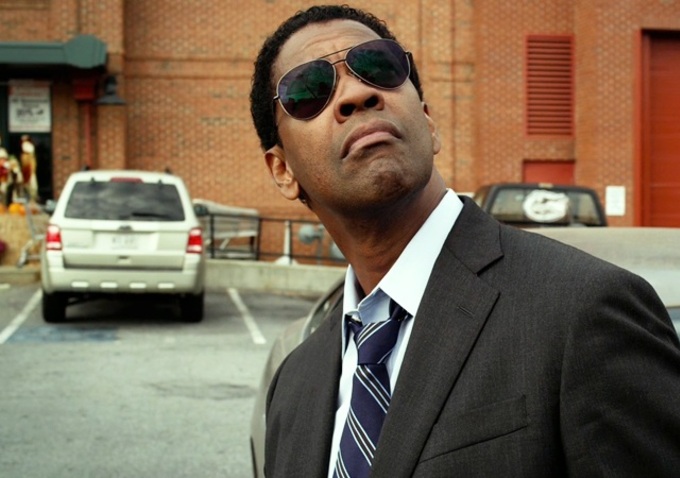
“What Doesn’t Kill You” focuses on Clive Washington, a 45 year-old African-American detective with salt-and-pepper hair (hmm, I wonder which actor Shawn had in mind here) who’s had a rough month. He was involved in a skirmish that ended up getting another cop killed.
But that’s just the beginning of his problems. Three little sisters were murdered a couple of months back and they just found the bodies. All signs point to a lonely bachelor named Derek who splits his time between watching really sick porn and buying drugs (porn and drugs – not good for you, folks).
Derek doesn’t stand a chance with his city-appointed lawyer and gets the death penalty. To add insult to injury, a new law just passed that allows killers of multiple people to be revived after the execution, so they can be executed again. The state finds these killings so brutal, they want Derek to die three separate times.
When Derek is hit with his first execution, his “metaphysical body” is transported to the house where the killings took place. It’s here where we find out Derek isn’t the killer. It was someone else, a mysterious man in a black mask. Derek must gather as many clues as he can before he’s revived the first and second time to prove that he isn’t the killer (he gets a day between each execution).
In the meantime, Clive is starting to have doubts that Derek’s their guy. But what can you do when you’ve already technically executed someone? Derek is not legally alive. So you can’t turn him loose. This seals Derek’s fate, but that doesn’t stop Clive from trying to find the real killer before he continues his killing spree. And if you think you know who the killer is and what’s going to happen here? Think again. “What Doesn’t Kill You” keeps ya guessing until the very end.
Whenever you open a script, you’re always looking for something unique – a new voice, new concept, characters you haven’t seen before, a unique execution (no pun intended). You get that with What Doesn’t Kill You. I have some problems with this script, most notably the fact that it’s needlessly violent in a lot of places (brutal descriptions of violent acts against little girls often go too far). But if Shawn can dial a lot of that back, he may have something here. This reminded me a lot of Prisoners. And I think it may even be better than that script.
Here’s the catch, though. This “execution/revive” thing has to be real. Although it sounds made-up, I’m very trusting of the writer and wondered, “Could this law have snuck in there without me knowing it?” When Shawn had the characters talking about the lone inmate in recent history upon which is was tested, I thought, “Hmm, I vaguely remember reading something about that… I think.” So I googled it but got nothing. If it’s indeed made up, I don’t know if this script can work. You can’t just make up a huge law like that and expect the public to go along with it. I’d love to be proven wrong though. Can anyone think of one? (Double Jeopardy was a real law, albeit used liberally in the film)
What was cool about that though, was it gave the script that “wild card” element a procedural needs to stand out. Seven had the really bizarre killings. Lambs had Hannibal. But no one’s really been able to catch that wild-card element since. This is definitely a wild card and is the main reason the script feels so different. Remember that without the wild-card, you have a cop chasing clues looking into a murder. We can see that every night on TV.
(spoilers) Besides the graphic violent description, another squeaky wheel is Derek’s character. Derek hasn’t done anything terrible (by “terrible” I mean hurt or kill anyone). But he is introduced looking at young girls online. Later, we’re asked to essentially root for this guy. And kudos to Shawn because he almost makes us do it. But we’re not going to get over that kind of thing. So he probably needs to dial that way back or take it out.
The thing is, it’s kind of essential to the story. We have to believe this man is our killer. And the fact that he looks at young girls online is the main reason he gets convicted for killing these three young girls. Screenwriting occasionally puts us in this position, where we’re forced to talk out of both sides of our mouth. We must make Derek likable enough to root for later, but terrible enough that it’s believable he’d get convicted. That’s some of the toughest stuff to make work.
The thing is, (major spoilers) Derek’s fingerprints and hair were planted on the scene. So if you just made him watch really fucked up porn (not little girls) and those two pieces of evidence put him at the scene of the crime, I think that’s enough to convince the police (and us) that he did it.
What I really have to give Shawn credit for is the out-of-body stuff. Technically, it shouldn’t have worked. You have your main character having an out of body experience. Then Derek has them three times while dead. It feels like we’re giving the story too much string – that it’s getting too “out there.” But it worked for me. I’m not sure why, but it did.
This script definitely needs a few tweaks, but I think we’ve found a cool new voice in Shawn Davis.
Screenplay link: What Doesn’t Kill You
[ ] what the hell did I just read?
[ ] wasn’t for me
[xx] worth the read
[ ] impressive
[ ] genius
What I learned: When dealing with extreme violent acts, do what directors do. Show the raised bat then cut to the next scene. There’s no need to show the swing and hear the thump. It’s too much. Remember at the end of Seven, we never saw Gwyneth Paltrow’s head (although I’m sure plenty of middle-aged women would’ve wanted to).
 Screenwriters need to be aware of International Box Office
As I’ve said before, one of your jobs as a screenwriter is to keep an eye on the market. You have to know which specs are selling, and which specs-turned-films are doing well. This doesn’t mean you should chase trends (“Another vampire movie got purchased! Maybe I should write a vampire movie now!”). Just that you should use the data to your advantage. There are some production companies, for example, who are looking for the next big trend. So by confirming no one’s purchased a jet-fighter spec in awhile, you can feel safe that YOUR jet-fighter spec is going to feel fresh and new. The point is, use the information out there to make better decisions.
What I thought I’d do today is highlight all specs-turned-films in the top 50 of the 2013 box office. That means no book adaptations, comic adaptations, video game adaptations, sequels, or original screenplays that were developed in house at studios. Some of these are tough calls because while they may be original scripts, they’re not necessarily specs (“Mama,” for example, was based on the writer-director’s own short film). I’ll use my best judgment for those films on the fence. Afterwards, I’ll highlight the major spec sales over the past month. I say “major” because I don’t want to include the tiny sales or the options. While I’m not devaluing those deals, I don’t think we’re interested in them. So, let’s take a look at the market!
SPECS-TURNED-FILMS
(the number in front of the film indicates its ranking at the box office this year)
8 – Gravity
Genre: Action
$220 million domestic
$428 million worldwide
Notes: I’m not sure I’d call this a spec. More a writer-director project, even though there was a second writer on the project. Still, it’s original material, which means it will influence the market.
11 – The Heat
Genre: Comedy
$159 million domestic
$229 million worldwide
Notes: Comedies are the spec world’s best friend!
12 – We’re The Millers
Genre: Comedy
$149 million domestic
$264 million worldwide
Notes: Surprised this did a little better worldwide than The Heat. Maybe the family angle made it a little more relatable?
14 – The Conjuring
Genre: Horror
$137 million domestic
$179 million worldwide
Notes: I’m pretty sure this was a spec but they obviously had to buy some rights to the real-life participants of this film. So it’s not a traditional spec sale.
15 – Identity Thief
Genre: Comedy
$134 million domestic
$173 million worldwide
Notes: Man, this script was not good. But, a nice twist on the traditional ‘wacky’ and ‘straight-laced’ pairing by making one a woman. Reminded me that it’s a great idea to update old material (in this case, Midnight Run) by changing the sex of one of the principles.
19 – Now You See Me
Genre: Comedy/Heist/Thriller
$117 million domestic
$351 million worldwide
Notes: The magic film was one of the bigger surprises of the year. And the film tore it up worldwide. I remember when I reviewed it as a spec way back in the day!
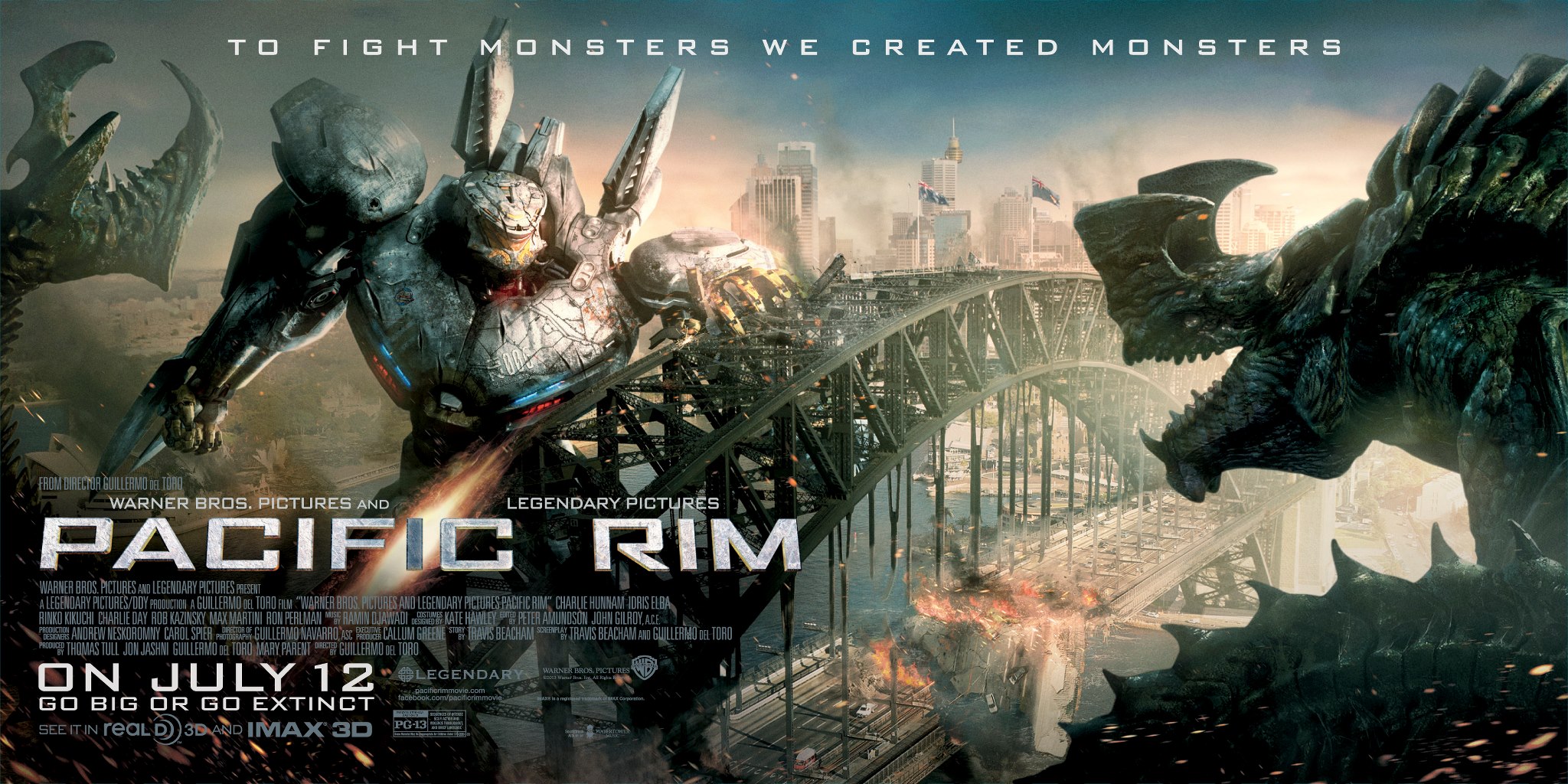
24 – Pacific Rim
Genre: Sci-fi
$102 million domestic
$407 million worldwide
Notes: You see how well action/sci-fi travels internationally? Wowzers. The biggest jump from domestic to worldwide yet. I remember this being a big spec sale.
25 – This is the End
Genre: Supernatural Comedy
$101 million domestic
$124 million worldwide
Notes: This is a spec sale, but a really unique one, with tons of actor attachments drawn into the story. Still, they had to work for it, creating a short film first to get people interested.
26 – Olympus Has Fallen
Genre: Action
$98 million domestic
$161 million worldwide
Notes: Interesting how this action flick didn’t travel. Might have something to do with the “rah rah save America” message. I’m guessing this didn’t play in China.
27 – 42
Genre: Sports
$95 million domestic
no worldwide release??
Notes: This was a writer-director project with the purchasing of rights for Jackie Robinson’s story, so this isn’t your typical sale. Also, it goes to show that baseball movies don’t travel, probably because no one else in the world understands the f*cking rules.
edit: Sorry, boxofficemojo.com seems to just not be carrying the worldwide gross for some reason. Not sure why. Baseball’s rules are still confusing though!
28 – Elysium
Genre: Sci-fi
$92 million domestic
$284 million worldwide
Notes: This is a writer-director project, so not a typical spec. Lots of people came down on this film, but it’s important to note that while it made $25 million less domestic than Blomkamp’s first film, District 9, it made $75 million more worldwide.
31 – Oblivion
Genre: Sci-fi
$89 million domestic
$286 million worldwide
Notes: Liked the script better than the film. Either way, it was nice to see a simple sci-fi concept with a clever interwoven mystery do well on the spec market.
36 – White House Down
Genre: Action
$73 million domestic
$205 million worldwide
Notes: HUGE spec sale. 3 milllllion dollars. Solid script. This would’ve done better if it were released before Olympus and had more inspired casting.
45 – The Purge
Genre: Horror
$64 million domestic
$87 million worldwide
Notes: This script is part of the new horror trend. Micro-budget ideas that have big hooks.
47 – Prisoners
Genre: Drama/Thriller
$60 million domestic
$108 million worldwide
Notes: Million dollar spec sale. The only drama spec sale on this list! And it sold four years ago.
 MI6
MI6
RECENT MAJOR SPEC SALES
Section 6
Genre: Action/Period
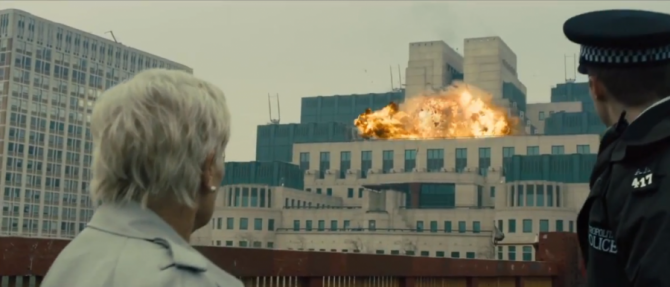
Premise: The origin story (set back in the early 1900s) of Britain’s intelligence agency, MI6.
Notes: Another HUGE spec sale. 1.2 million I think it went for. 4-studio bidding war (the dream!). Nobody seems to know who this writer is. Some speculate he/she is using an alias.
Incarnate
Genre: Horror
Premise: An unconventional exorcist who can tap into the subconscious of the possessed meets his match when a 9-year old boy is possessed by a demon from his past.
Notes: A new twist on exorcisms, mixing the supernatural with the technological. This was reviewed in my newsletter recently. If you’re not on it, what the heck is your problem!
Hyperbaric
Genre: Action-Thriller
Premise: Pitched as “Training Day” meets “Das Boot.” A traumatized sailor must confront the fear that cut short his promising navy career when he’s forced to pilot a homemade drug submarine.
Notes: In my book, I note how there hasn’t been a submarine movie in awhile (they come out once every five years or so) so it’d be a good idea to capitalize on that. Someone listened!
Reminiscence
Genre: Sci-fi
Premise: In a Bladerunner-esque Manhattan, Nick Bannister is a futuristic “archaeologist” who helps clients relive and often get lost in their happiest memories. But when one of his client’s memories holds clues that implicate a wealthy and powerful family in drug trafficking and murder, Nick finds himself on the run to unravel a series of mysterious crimes which continually lead back to the very woman he loves.
Notes: Huge sale. Like 1.5 or 2 million dollars? A footnote on this sale is that the writer, Lisa Joy, is screenwriter Jonathon Nolan’s wife (brother of Christopher Nolan).
Patient Z
Genre: Zombie
Premise: In a post-apocalyptic world, a man with the ability to speak the language of the undead interrogates zombies with the hopes of finding Patient Zero and a cure for his infected wife.
Notes: This just recently sold for mid-six figures. The writer, Mike Le, came on the site awhile back to talk about pitching. It appears his writing did the pitching this time around.
Okay, so what can we learn from all this? Well, the most obvious answer is, check the genres. Look which genres are selling and doing well at the box office. It’s comedy, horror, sci-fi, action, and thrillers. If you want to sell a script (and I know I’m beating a dead horse here), those are the genres you want to write in. If you’re saying, “But what about dramas?? What about Captain Phillips and The Butler?” Well, you just answered your own question. All dramas are being written in-house and they’re either adapted from a book or from a real-life story.
I was actually surprised to see a full FIFTEEN spec sale scripts in the Box Office Top 50. The spec script is never going to compete with IP but that’s an encouraging number. It’s also important to note the worldwide grosses of all these films as this is the studio’s new obsession. In Pacific Rim’s case, the film made three times more overseas than it did here. Action and sci-fi tend to travel well. Comedy and horror don’t. Which is okay, because comedy and horror are a lot cheaper to make. But if you can come up with a big juicy fresh action film idea that’s well-written? My friends, you are going to cash in. So what do you think? Did you guys conclude anything from this list? Or do you subscribe to the “Fuck it, write what you’re passionate about” approach?
Genre: TV (comedy)
Premise: A group of young struggling tech entrepreneurs find their fortunes turned upside-down when one of them hits on a genius new way to compress data.
About: Spearheaded by one of the funniest writers ever, Mike Judge, “Silicon Valley” is the latest half-hour show coming to HBO. Co-writers Dave Krinsky and John Altschuler worked with Judge before on King of the Hill, and also penned the 2007 Will Ferrell comedy, Blades of Glory. The two also have a comedy with Steve Carell called Brigadier Gerard about a horseman during the Napoleanic wars. Keeping a busy schedule, they’re also eating their spinach in order to write Popeye for Sony.
Writers: Mike Judge, John Altschuler & Dave Krinsky
Details: 38 pages – undated
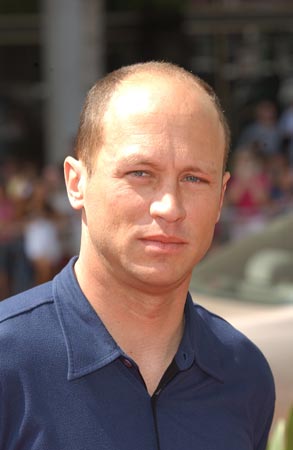 Mike Judge
There are a few people out there who have created movies so good, they get a lifetime pass with me. That means I will read anything or watch anything they do, no matter how many missteps they make. Mike Judge is one of those people. I love Office Space so much that he could make a movie about old women knitting and I would camp outside the movie theater the day before the movie came out, wearing an old woman costume and carrying an industrial-sized ball of yarn.
Truth be told, I wasn’t the biggest fan of Idiocracy or Extract. They had their moments, and Judge still stuffed some funny characters in each, but it was the structure that doomed them. I don’t think that’s his specialty. Especially with Extract, which peaked at the midpoint then stumbled to the finished line.
Luckily, TV isn’t about plot so much as character. So it fits him well. I mean, I’m not even a fan of trailer trash humor, but I’ve probably seen half of all the King of the Hill episodes because every other episode there’d be at least one thing that would put you on the floor laughing.
So just like Jar Jar has a life debt with Qui-Gon, I have a life debt with Mike Judge. Let’s see what’s going on in this genius’s head.
20-something Thomas has been couch-surfing at one of the many “tech frat” houses that dot Silicon Valley. You know what I’m talking about – the kind of place where Jesse Eisenberg and Justin Timberlake partied in the movie, The Social Network.
But, unlike Mark Zuckerberg, Thomas isn’t doing so hot. The owner of the house, a mildly successful “White Urkel” named Erlich, has told him that unless he can start paying rent, he’s out on the street. And out on the street for Thomas means going back to St. Louis and giving up on his Silicon Valley dream.
Thomas’s friends in the house include a young Indian guy who loves Rugby, a black guy who still wears braces, an Asian guy who can’t say anything without swearing 7 times, and a dude named “Big Head,” who, rather unsurprisingly, has a big head. All these guys are rooting for Thomas to figure it out, but it doesn’t look like it’s going to happen.
Well, not so fast. After a series of fortuitous events, Thomas’s app (a music app that cross checks your music against other artists’ music to see if you’re stealing from them) ends up in the hands of two of the biggest billionaires in Silicon Valley. But not for the app’s original purpose (upon which everyone agrees sucks, except Thomas). Rather, his app cuts down a song’s default file size by half!
All of a sudden, Thomas is being offered 30 million dollars from one billionaire and the opportunity to grow a gargantuan company from another. In both cases, though, neither man seems to care about what Thomas wants most – to change the world. So he does the unexpected. He turns down both men, joins his buddies, and starts a new company of his own.
My first impression of Silicon Valley was… where’s Mike Judge???
I was having a hard time seeing his voice here. Judge is known for creating really out-there hilarious characters. Yet all the characters here are standard. Not necessarily cliché (I’m not sure I’ve seen a non-stop swearing Taiwanese character before) but bland.
If you look at Office Space, soooooo many of those characters stood out. There isn’t a single character who stood out here. And what’s weird is that it doesn’t even seem like they were trying to make them stand out. Where was the irony (a straight-laced white guy who loved rap)? The unique dialogue quirks (“Ummm, yeahhhhh”)? The strange obsessions (a weirdo who’s in love with a stapler)? The wacky mannerisms (The stapler guy always talking in whispers and mumbles)? There was absolutely NONE of that here.
This leads me to believe that Altschuler and Krinsky probably did most of the writing here. I’m also basing this on the fact that Silicon Valley focuses on the one thing Judge is uninterested in, plot. The pilot here is very plot-centric and almost set up like a movie. Our main character has a goal (figure out how to sell his app), stakes (if he doesn’t, he’s kicked out of the house) and urgency (he’s got until the end of the month to do it).
Now, you know how much I like my GSU but something’s off here. The script was so constricted trying to hit all the plot beats, that it could never stop to breathe or have fun. Maybe it’s because they only had 30 minutes to fit the story into and therefore HAD to structure it tightly. But in this case, it felt like it sucked all the creativity out of the situations and the characters.
I was also a little confused by our main character’s purpose. Thomas is a very idealistic person, always saying that he came to Silicon Valley to “change the world,” not make money. That ideology even determines the course of the show, as he turns down money and fame to “change the world” with his friends. But how is he changing the world with a music app?
Yeah, I know the app helps musicians, but that’s a far cry from “changing the world.” This reminded me of a common problem writers run into. They come up with a plot solution that solves a big problem, but it doesn’t gel correctly with the other aspects of their story. This Trojan-horse music app solution solves a key plot problem. It gives our main character a legitimate sounding “failed” idea that can later turn into a believable “big” idea. But it does so at the cost of not matching up with our main character’s ideology.
The writer then faces a challenge. Does he reconstruct the plot point to better fit the character (which, if he wants to make it good, is going to take a long time)? Or does he leave it that way and fudge the difference? Most writers pick the latter because… well, because it’s easier.
The thing is, the latter never works. If you’re hearing that little voice in your head telling you, “This isn’t working. I need to fix it,” that voice is right 99.9% of the time. If you see it, readers will see it. It sucks, having to rewrite something that’s clever and smart and took you a long time to come up with. But I’ve said this before and I’ll say it forever: Nobody ever said screenwriting was easy.
I realize I sound like a frenzied stock broker screaming, “Sell sell sell!” today but Silicon Valley isn’t a bad script. It’s just not exceptional. It needed more quirks, more interesting characters, and it needed to have more fun. I did wonder a couple of times, however, if I misread the tone. There’s a chance that the reason there aren’t a ton of laughs here is because this is positioned as a dramedy as opposed to a comedy. If that’s the case, then I came in with the wrong expectations, which obviously affected my opinion. I guess we won’t find out until the show hits the air. And because it’s Judge, I’ll be there to find out.
[ ] what the hell did I just read?
[x] wasn’t for me
[ ] worth the read
[ ] impressive
[ ] genius
What I learned: One thing I learned here is that if your plot and structure are too tight, they begin to constrict the flow of the story. And that can be deadly for a comedy, which needs to feel fun. So when you’re writing comedy, yes, make sure the structure is in place, but also know that it’s okay to let your characters loose here and there, to let a scene flow, to not only be consumed with plot exposition and hitting all your beats.
What I learned 2: Four qualities that make your characters funnier are a) irony b) mannerisms c) obsessions and d) dialogue quirks/phrases.
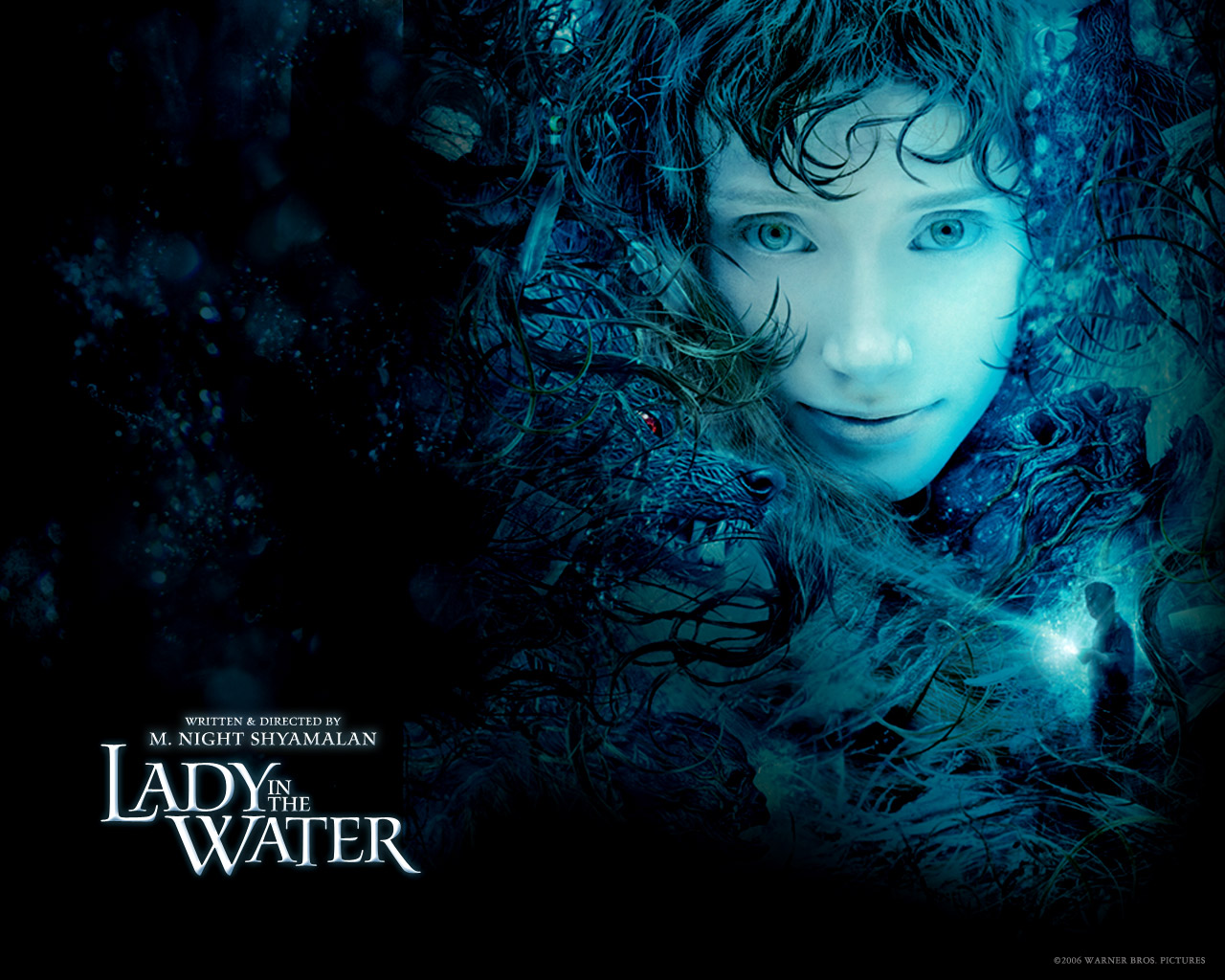
I don’t think there are five directors in history who have had as unusual of a career as M. Night Shyamalan. He came out of the gate with two hit movies and everyone was anointing him the next Steven Spielberg. He’s since directed six films that the majority of people consider to be really bad (with the exception of maybe Signs). That’s resulted in a huge backlash against him. But I think the real reason there are so many M. Night haters is that he’s so defiant about his script’s problems. While he never comes out and says it, his m.o. after a flop is to insinuate that critics and audiences don’t “get it.” Maybe if M. Night had some humility and took himself a little less seriously, he’d endear a lot of those fans to come back to his side (or at least not spend half their day pounding him on message boards). I picked “Lady In The Water” to analyze because I believe it’s the moment audiences first began to realize that M. Night may be a one-trick pony. Sure, his next film (The Happening), was worse. But I think this one represents a lot of what’s wrong with Night as a writer. I remember watching it and just thinking, “What WAS that??” For those who didn’t see the film, it’s about a middle-aged sclumpy apartment building manager (“Cleveland,” played by Paul Giamatti) who’s visited by a strange girl (named “Story” – no, I’m not kidding) who seems to have arrived via the pool in the middle of the complex. In order to get her back to her world (the “Blue World”), Cleveland will need to learn about her strange universe and enlist the help of all the tenants in the building. It’s really bad! Let’s dig in.
1) Never place symbolism or theme above story – This is Night’s Achilles heal. He’s said in the past that a story must meet something like 7 criteria for him to make it, and most of that criteria involves theme and symbolism. Let me make something clear to you: If you ever write something where theme or symbolism is more important than story, you will never sell your script. You may impress your old English professor. But you will not sell the spec. With specs, story ALWAYS comes first. Write a good story, and then have theme and symbolism SUPPLEMENT that.
2) Listen to criticism – For some odd reason, Night continues to make the same mistakes over and over again (prioritizing theme and symbolism being one of those mistakes), despite nobody going to see his films anymore. As a writer, it’s your job to LISTEN to what somebody is saying when they critique your screenplay. Too many young writers blow this off, believing the reader “didn’t get it.” It may not be that they didn’t get it. It may be that you didn’t present the information in a way that allowed them to get it. So always listen to criticism and even if you don’t agree with the critic, try to understand why they’re saying what they’re saying.
3) Criticism Example – Let me give you an example. A long time ago, I wrote a script about a guy who was dying of brain cancer who had to jump into the future to get it fixed. Things don’t go cleanly when he gets there. There’s a lot of chasing around – double-crossing – that kind of thing. Almost everyone who read the script felt that the hero was too selfish. A producer eventually suggested, “Instead of him trying to save himself, why not have him try to save someone else?” I immediately dismissed his suggestion. I couldn’t imagine it. I just couldn’t. I’d built this character from the ground up and there was no way in my mind I could see him as someone other than what I created. So I stubbornly wrote a few more drafts MY WAY, but that same criticism kept coming back. I eventually put the script down, picked it back up a year later, and saw exactly what everyone was talking about. The hero was definitely too selfish. So I changed it from him going to the future to save himself to him going to the future to save his wife. The script instantly got better. I’m not saying that every critique will be right. But if you’re hearing the same thing over and over again, get away from the script (maybe not for a whole year, but for a little bit) come back, and try to see that critique through fresh eyes.
4) Don’t drown your story in mythology – Mythology is the world and rules behind that story you’ve created. If you try and make your mythology too extensive, it will become bigger than the story, and begin to drown it. This was the downfall of Lady In The Water. There were narfs and scrats and water people and tree people and eagles and madame narfs and rules upon rules upon rules of how this universe was supposed to work. It was too much. Too confusing. And eventually the audience checked out because they couldn’t keep up with it all. I’m not saying extensive mythology can’t be done. That Harry Potter franchise did okay. But, it’s very hard to do well. Focus on keeping only the relevant aspects of the mythology in the script. And if it’s still too much, consider simplifying it.
5) Quirky for quirk’s sake is a recipe for disaster – In Lady in the Water, we’ve got a guy who only works out with one arm!!! So he’s got a tiny left arm but a really big muscular right arm. There is no story reason for this to happen other than it makes him WACKY and QUIRKY. When you do this, the reader feels the writing. He notices you, the writer, typing away. If you’re doing your job right, the reader will never think of you. He will be so wrapped up in your story that he isn’t aware its even been written.
6) Beware coincidences when writing screenplays – A woman from another world shows up in an apartment complex pool, and it just so happens that a couple of Korean residents in that complex know an obscure Korean fairytale that contains all the details of this woman’s past and what she needs to do to get back home. Coincidental? Of course. And again, it makes us think of the writer. Stay away from coincidences. They are bad and do terrible things to your story.
7) The “fate” excuse isn’t good enough – “But no,” the writer says, “The Korean residents knew the fairy tale because fate brought the lady in the water in touch with them!” Whenever you’re using the “fate” reason to explain story holes or fill in story gaps, the script begins to feel LAZY. Think about it. It’s such an easy solution. It gives you carte blanche to have a million coincidences happen, which kills any suspense your story may have. The “fate” angle can work if it’s used selectively and cleverly, but when it’s used lazily, it kills your story.
8) Beware the close cousin of coincidence: convenience – When the story needs to move quickly, our water nymph girl knows the exact answers to all the tough questions about her world (“Oh yeah, a scrat? This is how you defeat it.”). Other times, when we need to give Cleveland something to do, she all of a sudden has no clue of what’s going on (“Which person am I supposed to meet here? Beats me!”). How convenient, right? Convenience is yet another sign of lazy writing.
9) Use gas on your emotional beats, not nuclear power – Night has a real problem with this. His moments can’t just be sweet emotional connections between people. They have to have an added element that REALLY. HITS. YOU. OVER. THE HEAD. So there’s this potentially nice scene where Cleveland must heal Story. He’s on the ground with her in his arms. She’s dying. And as he’s about to talk her back, the seven women behind him all place their hands on his back! Give. Me. A break! Your emotional beats should be powered by gasoline. Not a nuclear reactor.
10) Silly/goofy choices – I don’t really know how to convey this tip in a way that will help people. Because we all live in our own reality. What’s amazing to us may be boring to Joe in Kansas. What’s cool to us may be lame to our best friend. Having said that, I read so many amateur scripts where writers make the goofiest silliest choices, and they don’t seem to realize it for whatever reason. M. Night suffers from a really bad case of this. He had a scene in The Happening where characters ran from the wind! He had a scene here where a ten year old boy extracts key story information from a cabinet full of cereal boxes! He’s got a character here who has one huge muscled arm and one regular one! Obviously, in Night’s universe these choices aren’t goofy. But the rest of the world disagrees. So to avoid this mistake, you have to step out of your shoes, read through your plot, and ask, “Would people perceive this choice as silly?” And be honest with yourself. Even better, ask your friends (only the ones who tell you the truth). Because I see things like this ALL THE TIME and I ask, “What were they THINKING?” Not enough writers scrutinize their choices. Don’t be one of those writers.
