
note: scroll down for today’s review
Ugh, just what we need. Another freaking list right? Well, in light of trying to figure out my own “Green List”, as well as after bouncing around the internet the last few days, reading through Nikki Finke’s comment section, along with my own and others, there seems to be a section of Hollywood that believes a lot of scripts were overlooked for The Black List in order for agencies and production companies to get their own projects on the list. In fact, they even started a “Black List 2.0” in Finke’s comment section. It quickly got swallowed up in the discussion. However, I thought, why not give the idea some legitimate attention?
I don’t know if these complainers are the bitter “our script didn’t make it” minority, or if this is a legitimate claim. I, for one, have found that most of the scripts on The Black List were really good. But hey, if it’s true. If there are some truly great unknown scripts that didn’t make it because the writers didn’t have the connections, let’s hear about them. When The Black List started, almost all of the scripts on it were unproduced. Getting back to the spirit of that, let’s see if we can’t come up with a list that contains some of today’s true unknowns.
I want to make clear that I am in no way doing this to discredit The Black List. I’m one who thinks that what Franklin is doing is great, and that anything that promotes the writer or helps a project get made is a good thing. Think of this more as a (totally unaffiliated) companion piece. I want to celebrate more of the great scripts bouncing around town that, for whatever reason, didn’t make the original list.
So leave your Top 5 (in order) here in the comment section, or e-mail them to me. Requirements are loose, but basically I’m asking, readers, CEs, producers, anyone who has access to scripts in the pipeline, etc., to list their 5 favorites from the year that didn’t make the 2009 Black List. If no one lists anything, I’ll assume that there isn’t that glut of mythological great scripts floating around.
note: I am keeping an eye on IP addresses in the comment section. So please refrain from pumping up your great screenplay on multiple lists. I’m not saying it isn’t great, but that’s not what this exercise is about.
Genre: Comedy
Premise: After a woman sends an indignant email to her new beau, who’s gone radio silent post sex, she discovers he’s comatose in a Mexican hospital and races south of the border with her friends in tow to intercept the email before he recovers.
About: This is the number 8 script on 2009’s Black List. The casting cabinet has Isla Fisher placed neatly on the shelf to play Wesley. Rapoport has a bit of a reputation for writing raunchy female dialogue and situations, the kind of stuff that would make even the girls of Sex and The City blush.
Writer: Ellen Rapoport
Details: 112 pages (June 23, 2009 draft)

To prepare you for Desperados, one should know that the opening scene contains horse fucking. One should also know that the words, “enormous horse penis” are used. I’m just trying to acclimate you to the weather here. Everyone’s calling Desperados the “female version of The Hangover,” and I can confirm that tone and storywise, that’s exactly what it is. But is it as good as The Hangover, a script that made the original Scriptshadow Top 25 way back when? Or was the comparison just a brilliant marketing tool, culminating in a sweet spot as one of the official best screenplays in town?
Wesley is a cute 30-something lawyer who’s spent way too much time in the gym, pushing and pulling and shaping herself to be ready for the moment she meets Mr. Right. Problem is, she hasn’t met him yet, and she’s right on the cusp of that horrible female stage where you become the angry bitter single version of yourself. You know, the kind of guy/girl you always made fun of as a kid? But she decides to give the penis-bearing ones one last chance. And it ends in the worst blind date ever. But then, almost magically, she runs into Jared, a dreamy 37 year old Adonis with a personality as perfect as his smile. Jackpot!
The two go out a few times, and against her best friends’ (bitchy Brooke and Optimist Kaylie) wishes, Wesley has sex with him. Walking on air, she’s already hearing wedding bells. But then Jared doesn’t call. And Wesley gets so freaked she goes through that psycho stage where you check the person’s Facebook page 90 times a day to see if they’ve made any updates, confirming they’re living their life just fine and ignoring you in the process. When 24 hours turns into five days, Wesley’s had it. With the rage of all the failed relationships she’s ever had wrapped inside her, she sends him the mother of all “fuck off” e-mails. The problem is, is that Jared calls a few minutes later, calmly apologizing. It seems that he’s been in a car accident in Mexico, and he’ll be holed up in the hospital for a couple of days.
Oops.
Wesley, Brooke and Kaylie realize the only way Wesley has a chance of keeping this guy, is if they jet to the Mexican hotel Jared is staying at, break into his room, and delete the e-mail off his computer before he gets back from the hospital. So they jump on a plane and actually FLY TO MEXICO. To DELETE AN E-MAIL.
In what becomes a cross between The Hangover and Forgetting Sarah Marshall, the three friends hang out at a plush vacation style Mexican hotel, while Wesley runs around trying various ways of getting into Jared’s room. In addition to that, she must deal with that disastrous blind date she had the night she met Jared – the occasionally charming Huck – as by the father of all coincidences, he’s taking a vacation at the very same hotel!
This is easily the script’s sweet spot and where a lot of the laughs are. In one scene, Wesley wraps herself in nothing but a skimpy towel outside of Jerod’s room, hoping she’ll be able to convince the maids that she’s been locked out of her *own* room. I won’t give everything away, but I will say the scene ends with a naked Wesley in the bathroom with a curious 14 year old boy, who are then interrupted by the boy’s mother.
In between attempts to delete that incriminating e-mail and get back to LA, Wesley repeatedly and reluctantly bumps into Asshole Huck. Problem is, after a few run-ins, Huck doesn’t seem so much like an asshole, and even though she’s head over heels for Jared, there’s something kinda cool about this guy. After awhile, it’s clear she’s developing feelings for him, but she ignores them in order to pursue the man she believes she’s supposed to spend the rest of her life with.
What I liked about Desperados is its theme of how we present ourselves. The way we introduce the perfect version of us to everyone, hoping that if we trickle out our faults at spacious enough intervals, that the other person won’t notice, or be in too deep to turn back. It’s such a deceptive but common tactic that it almost makes you wonder if you’ve ever given anyone the “real” you. And if you’re not giving people the real you, can you even call the relationship real? I think it’s an interesting debate and by no means does Desperados dig that deeply into it, but definitely scratches the surface.
I also liked how Rapoport explored the notion of ‘how crazy is crazy?’ And how the relative notion of crazy is always in the eye of the beholder. Wesley is out there passing judgment on the fucked up shit people do every day. Yet she’s the one flying to Mexico to delete an e-mail from a guy who isn’t even officially her boyfriend. It gets you thinking about some of the crazier things you’ve done for a guy or a girl, and how in the moment those ideas seemed totally rational.
The only thing I didn’t like about Desperados, and what kept it from what I was sure would be an impressive rating, was the ending. Rapoport wrote herself into a bit of a corner with the two guys, and at the end, she has to find a way out of it. The reasoning for why one of the guys falls out of the running is the only time in the script where the writing felt forced. And because this took me out of the story at such a critical moment, I couldn’t help but lose some of my enthusiasm for it.
But hey, this is still a really funny – sometimes even hilarious – screenplay. I’m thinking 8’s the perfect spot for it on this year’s list.
[ ] What the hell did I just read?
[ ] wasn’t for me
[x] worth the read
[ ] impressive
[ ] genius
What I learned: (spoilers) I talked about this after my review of “The City That Sailed.” But since that review disappeared, let’s discuss it again. It’s hard to create a story based on a relationship when the people in the relationship are never together. In this case, you have Wesley and Jared who, because of the plot machinations, can’t meet up til the end. This makes a lot of writers, as well as producers and directors, nervous, because they don’t have their male and female leads together ever. Not only is that going to disappoint audiences (imagine Pretty Woman if Julia Roberts and Richard Gere weren’t around each other for 90% of the movie), but what actors want to play parts where their characters never act opposite one another? This is why a lot of writers add in a second love-interest. And usually, because audiences want to see their leads onscreen together, this love story becomes the main love story, which is exactly what happens in Desperados (with Huck). The key is to understand this problem (my lead characters are never together) before you write the script, because I guarantee you you’ll have to deal with suggestions later that your main characters are never together, and therefore you need to write in another character (or completely change your story). In the end, I think Desperados made it work because it was always less about the relationship and more about the comedy. But it’s still a slipperly slope, and I try to avoid stories like this when I can, cause they’re always tricky.
Genre: Drama/Independent
Premise: A disturbed man with a good heart is tormented by his talking pets, who convince him to do things he’d rather not do.
About: This is the number 3 script on the 2009 Black List. For those of you scratching your heads and saying the name “Michael R. Perry,” sounds familiar, that’s because it is. We reviewed one of his older scripts here called, “Twenty Billion,” which he wrote with Steven Gaghan and Michael Tolkin. Perry’s been around for awhile, writing and producing for TV shows like Millennium, The Practice, NYPD Blue, and House M.D. Not surprising at all, since this script shows a command of the craft I haven’t seen in a long time.
Writer: Michael R. Perry
Details: 112 pages (January 28, 2009 draft)
 If this cat should start talking to you, please seek help immediately.
The Voices is a gooey and glorious dip into darkness. It bites when you expect it to bark. It bleeds when you expect it to heal. It’s one of those rare experiences where, no matter how many millions of words you’re read in your lifetime, you have no idea what to expect next. The characters are always odd, saying and doing things that don’t quite feel like things normal people say and do. Yet in this universe, it all makes perfect sense. Part Dr. Dolittle, part American Psycho (try using that mash-up as a pitch), I can say with complete confidence that I’ve never read a script like The Voices before, nor do I ever expect to again.
Jerry Hickfang is one of those guys who looks normal at first, but ya get the feeling he has a few loose screws up in the attic. He’s just started working at a massive bathroom fixture factory, sealing up shower molds so people like you and I can stay clean during our day job. Jerry is nice and polite, if a little too eager to bond with his new co-workers.
If you had any doubt that Jerry was strange, that goes away once he gets home (home is an abandoned Bowling Alley attic by the way). It’s there that we meet Jerry’s two pets, Mr. Whiskers the cat and Bosco the dog. Mr. Whiskers gives it to you straight, condemning your life choices at every opportunity and never leaving any doubt that the world is a horrible place, and that you’re likely doing horrible things in it. Bosco is much nicer, constantly supportive of your choices and goals. If Jerry has a nice day, Bosco’s the one to congratulate him. Oh, did I mention I know this because Jerry’s animals talk to him? Yes, ever since Jerry has been a child, dogs, cats, socks, and random inanimate objects talk to him. Jerry hears voices.
But hey, what’s a little harmless conversation about last week’s The Bachelor with your poodle if no one’s getting hurt, right? Things seem to be going just splendid anyway. Jerry’s been invited to the company picnic, where he befriends Katie from accounting, a beautiful invigorating spirit who I couldn’t help but think should be played by that new secretary from The Office. Katie likes Jerry, but not nearly as much as Jerry likes her. When Katie recruits Jerry to help teach the Macarena to everyone, he interprets it as a sign of true love (as crazy people usually do). This, unfortunately, is seriously bad news for Katie. Because when crazy people meet girls in movies, they tend to end up killing them later.
So late one night, when Jerry’s cruising around after the carnival, he runs into Katie, whose car has broken down. Naturally, he takes this as a sign of fate. Katie isn’t nearly as convinced, but she’s game for some fun and the two go on an impromptu date. But when a 5 point buck smashes through their window, the mood goes south pronto, and a freaked out Katie darts into the woods. Jerry races after her, and in a clumsy scuffle to settle her down, he accidentally stabs and kills her. Jerry runs home, where he seeks advice from his talking pets. Bosco thinks he should go to the police right away. And naturally, Mr. Whiskers believes that choice is the stupidest fucking idea on earth. Jerry decides to keep his trap shut.
Back at work, people become suspicious about Katie’s absence, but no one knows the two went out together, so as long as they don’t find the body, Jerry’s fine. Mr. Whiskers picks up on this and encourages Jerry to dispose of the body, so Jerry drives out to the woods and brings it back. He then chops it into pieces for disposal, and throws the severed head in the fridge. This is when things got kinda freaky. Because you hear about this sick shit on the news, yet here, we’re getting an ongoing play by play of exactly how the killer is thinking while he’s doing it. And because there’s a certain amount of sympathy we have towards Jerry, and because we know that Jerry didn’t mean to do it, everything he does makes sense on some level.
The problem for Jerry is that “the voices” stop peddling their candy-coated rhetoric and start getting nasty. If he’s already killed once, they argue, why not kill more? Jerry doesn’t want to hurt anyone, but his pets are his only true friends, and he takes their advice dearly. So Jerry asks a second girl out from work, and we watch hopelessly as this new relationship evolves, knowing full well there’s only one way it can end, despite Jerry’s best intentions. The fallout from that relationship leads to a host of other complications that snowball out of control, until Jerry’s forced to deal with just how fucked up in the head he is – starting with the issue of his cat and his dog carrying on daily conversations with him.
The biggest achievement of The Voices is the aforementioned sympathy you gain for a character who’s, essentially, a serial killer. He continues to kill innocent people, yet his rationalization behind each kill makes sense in the context of his situation. It makes you wonder, “Is this the kind of stuff that goes on in a real serial killer’s head? Do they too hear these voices?” Since we, as human beings, survive by rationalizing our most devious behaviors, is it okay to sympathize with someone for doing something horrible if that person truly believes they’re not being horrible? Jerry never wants to kill anyone. Yet people seem to get killed around Jerry. I guess the point I’m trying to make is, “Why the hell am I rooting for a serial killer???”
Part of it is Perry’s mastery of tone. He molds it and shapes it just like Jerry molds those shower stalls. Because the characters and situations here exist in a slightly sillier/heightened universe, Perry is allowed to get away with more. This is a universe where the Macarena is the movie’s soundtrack, where characters live in bowling alleys, and of course, where dogs, cats, and severed heads speak. This slightly offbeat world helps cushion the impact of some of the more outrageously violent moments, allowing us to enjoy them, instead of the more natural response of being sickened.
It’s hard to find much wrong with The Voices. I guess the deaths were a little repetitive (all the victims seemed to run into the forest – although I guess that could be used for comedic effect). The theme of God comes on strong in the final act, yet its presence is pretty scattershot in the first two. And on a more real-world note, I felt sorry for these poor pets Jerry was obviously neglecting (the healthy happy talking pets he sees are not even close to what the real pets look like). But this was such a fresh unique read, I bandied about whether I should add it to my Top 25. For now I’m going to keep it off. But I might throw it up there in a few weeks, after I’ve had time to let it sink in.
If this sounds like something you’d in any way be interested in, drop what you’re doing and read it now.
[ ] What the hell did I just read?
[ ] wasn’t for me
[ ] worth the read
[x] impressive
[ ] genius
What I learned: I often talk about “What’s driving your story?” What is the main thrust at any given moment that keeps your reader turning the pages? Most of the time, it’s a character with a strong goal (i.e. Find the Arc, save your daughter, kill the terrorists) or a mystery (The Ring, Sixth Sense, The Hangover) or maybe your character is being chased (i.e. Enemy Of The State, The Bourne movies, Star Wars). But there are also lesser known devices you can use to drive our interest. And one of them is used here. The “train wreck” approach. Basically, it’s providing a scenario we know is going to end badly, so we have to keep watching to see how it ends. Here, we know Jerry is crazy. We know all of this is going to blow up in his face. So we keep watching to find out when and how it happens. It’s no different than the sick anticipation we have creeping up the highway as we wait to see the big car wreck. We have to look. It’s not as popular of a device, but it can definitely be used effectively in the right hands.
For those of you consumed with all the Avatar chatter coming in after the big London premiere, you may have missed out on some way bigger news. Yeah, I’m talking about the release of this year’s Black List. I gave my thoughts on the list’s entries on Friday, and Saturday I did a quick breakdown of genres and agencies that made the list. You may want to check it out if you have any aspirations for making the list in the future. I know some of you have been asking questions about the list and the voting process and some more insider knowledge. I tried to recruit a Black List voter from my Facebook page but without success, so I’m going to make my plea now. Are there any Black List voters who wouldn’t mind answering some reader questions? If so, please e-mail me (we don’t have to use your real identity).
Anyway, in celebration of the list, we’re going to be doing Black List reviews all the way until the end of the year. My personal goal is to have all the Black List scripts read by March, when I can give a more thorough and accurate analysis of the scripts chosen. Today, Roger tackles L.A. REX, a 2009 Black List Top 10’er, based on a novel by the same writer, chronicling his experiences as a real life L.A. Cop. Here he is with the review.
P.s. For those wondering about the Logline Contest. The top 25 will be announced next Monday, December 21st, at 6pm Pacific Time. Today I read a great first 10 pages from someone and it got me pumped to read more. Overall, I have about five entries that are leading contenders. But it’s only 10 pages so far. It’s easy to fade. And the slow-burning scripts are only going to get better.
Genre: Crime, Action
Premise: Rookie LAPD officer Ben Halloran gets partnered with scarred and tobacco-spitting Officer Marquez, and the unlikely team hit the streets of L.A. on the brink of a gang-rivalry explosion amid run-ins with the Mexican mafia, brutal gang murders, and corrupt cops.
About: The novel was written by a former LAPD Homicide Detective. Joseph Wambaugh describes it as “the 21st century noir thriller, what Apocalypse Now was to 20th century war movies…” After the book hit the literary scene, it was optioned by Scott Rudin Productions and Paramount Pictures. Beall also has another project set up at Dreamworks, about a cop who’s also a zombie, called “Xombie.”
Writer: Will Beall, based on his novel
Details: 128 pages
 I wouldn’t want to meet this guy in the streets. (this is Carson talking btw)
One of the reasons I bought Will Beall’s novel, “L.A. Rex”, was because of the Robert B. Parker blurb on the back. Last year, when I was going through a difficult time, a good friend gave me a grocery sack full of tattered Parker novels, and I was hooked. During that time, I read “L.A. Rex”.
It’s fucking good.
Will Beall’s not only a real South Central L.A. cop, he’s also a real writer. He’s got a real gift for language, and it sticks to your brain like homemade napalm days after reading it. And you know, he kicked through the door of the literary scene, guns blazing.
From Chandler to Cain to Mosley to Ellroy, Los Angeles has a remarkable noir mythology. When I see a first novel with a brazen title like “L.A. Rex”, of course I’m going to buy it. After all, it’s as if the author is saying, “My L.A. noir book is so fucking good it’s going to tear through the pantheon of crime writers and their canon like a goddamned Tyrannosaurs Rex.”
That takes cajones.
And only an author who has worked the streets of South Central L.A. could come up with a nightmare like this. Every sentence is like a preamble to violence, and the Scarface-like ambition of the characters (and their disregard for human life) creates a shadow of dread that stalks the reader from page to page.
How’s the translation from novel to script, Rog?
It’s pretty damn good. But it ain’t pitch-perfect. There’s so much knotted-up plot to distill into 120-ish pages, and the relationships between the bevy of characters are so complicated that trying to tell this story with clarity in a screenplay couldn’t have been an easy task. I mean, when you have chapters of back-story that add weight to the way a character glances at another character, you’re in for a helluva writing assignment.
It’s not light reading.
However, if not as good as the novel, this script experience is as savage and chaotic as being thrown into a dark hole full of crazed pit-bulls.
What’s the story?
Miguel Marquez is the type of oldschool police officer that gangbangers fear, respect, and loathe. An urban samurai, he’s fearless, brutal. When we meet him, Marquez and his rookie engage a group of bank robbers who are suspiciously armed with automatic weapons and other military-style firepower.
In bullet-ridden in media res, we’re not only cast into a six-page action sequence, but we’re thrown into the head-on collision with Beall’s shrapnel-strewn poetry-prose. When it comes to language, this guy is a performance artist. It’s bloody good, but as the script wears on, you get the sense that he shoulda varied his stroke, because by the end you decide, man, he overwrote the shit out of the A/D lines.
Anyways, Marquez loses his rookie in the violence and he almost dies himself, only to be saved by his old pal, LAPD Detective Bae Chuin, described as a “wry Buddha with a comb-over.”
We’re then treated to a Departed-esque credit sequence paralleling the history of LA race riots with our hero’s trials and tribulations at the LA Police Academy. By the time we reach images portraying the evolution of modern-day gang culture, our hero, Ben Halloran, graduates the Academy.
In true Training Day-fashion, Ben is apprenticed to Marquez, who still bares the fresh scars of losing his last rookie. Quickly, Marquez dispenses wisdom to Ben about surviving the streets of South Central, “Go home alive and apologize later. Or play nice and go home in a box.”
Marquez runs Ben through his urban version of the Kobayashi Maru by having Ben try to arrest a drunk wino. Only thing is, the wino is a dirty brawler that Marquez has paid to beat the shit out of Ben. Just when you think Ben is just another standard green rookie, he surprises both Marquez and the wino with some dirty moves of his own.
The plot kicks into gear when Marquez fixes his sights on a member of the Boot Hill Mafia, a banger named Deandre. Ben surprises Marquez again in the ensuing chase sequence. It starts out like something from a Dennis Lehane novel.
Following suspect in his car. Suspect makes a break for it.
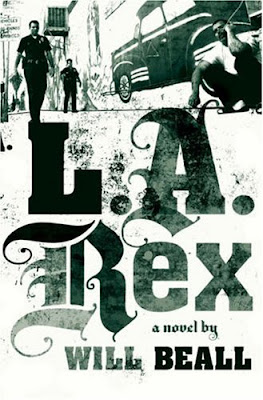 Click the picture to buy the book.
 Then it gets nuts as it turns into a footrace that could have been pulled out of “Point Break” or “City of God”, heatshimmer poverty and all. There’s ghetto parkour, angry dogs, pissed-off Latinos with aluminum bats, helicopters, and willingly jumping into freeway traffic.
It ends when Ben and Deandre crash through a skylight into the hideout of an Eme bagman named Wizard. And you see, Wizard has been tortured and murdered. His corpse has been rotting here for a while. And this is bad news, because, Eme is LA’s all powerful Mexican Mafia.
Someone’s disturbing the gangland balance of power by torturing and murdering Eme bagmen.
And Ben and Marquez charge into the LA underworld looking for Wizard’s killers. It’s a just-the-tip-of-the-iceberg situation as Marquez learns that Ben might be a key figure in the unfolding bloody brouhaha.
What’s the La underworld in this story?
In short, it’s fucked up. If this is supposed to be an accurate depiction of LA’s underbelly, then I’m never leaving the confines of my house.
Case in point: When Marquez goes knocking on the door of MS-13 Country next to the LA River, there’s a nightmarish factory set-piece that involves our two cops battling machete-wielding MS-13 warriors. Thrown into the mix is a fucking bear-trap (no, I’m not joking), homemade napalm (gasoline mixed-with sugar), and guns. It’s a nasty few pages that gets the blood-pumping.
There’s Darius, the super-intelligent commander of The Boot Hill Mafia, whose drug and music empire is the center sprawl of this unsavory crime world. In the book, Darius is actually the other main character besides Ben, and theirs is a journey of brotherhood that turns into bloodshed and competing interests.
He doesn’t have a lot of time in the script. I guess the main thing is that he owns a jaguar. Not the car. The cat.
Let me say that again.
Inside Darius’ mansion/castle, is a jaguar.
And this jaguar does some very nasty things in the 3rd act to one of our major characters.
Darius is the type of guy that owns vintage African weaponry, watches Dolemite, and kills and serves talent managers as barbecue to uppity musicians who try to get out of contracts with Darius. Darius also has a bodyguard named Jax that likes to scalp people. The fact that Darius owns such weaponry might mean that there’s a fucking sword fight in the 3rd act.
There’s also Carcosa, the leader of Eme, who we discover that Ben is working for. That’s right, Ben is a mole in the LAPD that works for Eme, the reasons of which I will not go into here. Carcosa is the type of psychopath that likes to use Vanilla Ice-like musicians named Sasparilla Whiskey as piñatas.
The heart of this script is discovering the intricacies at play in the crime triangle between Carcosa, Darius, and Ben. Who is trying to double-cross who, and why? But the key puzzle pieces are the dirty cops that may want control of this underworld for themselves.
Cops Marquez may have a history with.
As you can glean, there’s a lot of conflict in this script, and it’s hard not to get caught and confused in the cross-fire of it all. So much so by the time you reach the 3rd act you may not be sure why characters are making the decisions they make.
Why do you think the novel is better?
In the script, I felt lost trying to keep up with Ben’s story. That never happened in the novel.
Darius’ story is just as important as Ben’s, and sadly, in the script, it’s been moved to the background. The novel equally focuses on both characters, and I was disappointed the script didn’t do the same. Following dueling protagonists worked to great effect in Monahan and Scorsese’s “The Departed”, and to me, that seemed to be the default template to follow.
Adapting this novel into a let’s-follow-one-protagonist (a la the trusted but formulaic spec script mold) journey suffocates the story. To fully understand Ben’s motivations, we have to understand Darius. We have to experience their story as an audience.
In the novel, the whole story hinges on so much stuff that happens in the back-story. What does that mean for this script adaptation? Unfortunately, all the important details are lost in the forced flashbacks. And sadly, it creates a protagonist that we can’t fully connect to.
For instance, the plot hangs off of Ben’s decision to join the LAPD. While the novel convinces us why, the script isn’t so convincing. In this iteration, it just seems confusing. You can’t help but ask yourself this question: You can hide from a drug lord by joining the LAPD? Really?
In the book, it’s emphasized that Ben really doesn’t have a choice. He belongs to Carcosa.
And this is a lot of stuff we learn in Darius’ Dickensian back-story. Without Darius’ perspective to help us navigate, we get lost in Ben’s journey, and sadly, all the crazy shit he chooses to go through isn’t as visceral as it could be because we don’t understand why exactly he’s there in the first place. Hell, some of Ben’s dialogue conveys that he doesn’t even know why he’s in this mess in the first place.
Psychologically, things get even more convoluted when we realize that Ben must choose between three competing father figures: Carcosa, Marquez, or his biological dad, a sleazy lawyer named Big Ben. It’s a clusterfuck of ethical and moral dilemmas that gunk up the sense of conflict.
It’s too much.
Want to open up this story?
Go back to what worked for the novel. Braid Darius’ story into Ben’s. It needs a parallel linear narrative that keeps moving forward. A novel can easily move back and forth in a non-linear fashion. With a screenplay, it’s trickier because a script depends so much on forward momentum that emphasizes action. And there’s a concrete time limit you’re forced to adhere to. In this case, the flashbacks feel like info dumps. And that’s no bueno.
Despite its flaws, the script for “L.A. Rex” is a compelling and must-read. This is a powerful effort for a first screenplay. If its weakness is the plot, its strength are its vivid and garish characters, its unrelenting and chaotic action, and its grotesque atmosphere. The use of language is at times brilliant.
I think if the flaws in the script are addressed so that it doesn’t lose the power of the novel, “L.A. Rex” has the potential to be the “Layer Cake” of L.A. crime films.
[ ] What the hell did I just read?
[ ] wasn’t for me
[x] worth the read
[ ] impressive
[ ] genius
What I learned: Beall has an amazing ear for dialogue, and this script has dialogue exchanges in it that could only possibly come from a writer who worked as an LAPD police officer for 10 years. And there’s a lot of it. In fact, Beall does an interesting thing. He uses dual column dialogue formatting trickery. Not to convey that characters are talking over each other, but so he can fit in more dialogue. Instead of reading down, you read it left-to-right, kinda like a comic-book. The effect of course, is that a 128 page script reads like its 180 pages. Is this going to be a new trend? I’m not sure. Although I was a bit put off by the format at first, I got used to it. But part of me thinks the script could be just as good if its pared down. Sometimes less is more.
First, I’d like to congratulate everyone who made the Black List. Despite all the bickering that accompanies the selection process as well as the lobbying that goes on with the list, it’s still a prestigious compilation. Somewhere between 30-40% (a ridiculously high number) of these scripts will be turned into movies, and a produced credit can lead to a long career for a writer, so to say this list doesn’t matter is ridiculous. I spoke to some of the writers who made the list and they are thrilled beyond belief. Because the list comes together so fast, it’s difficult to know if you’re really on it until it’s released. So the writers are finding out at the same time we are. I know of a few instances where the writers didn’t even think they would make the list, and they ended up finishing near the top. Talk about a nice surprise.
The only bad news that accompanies the list is how few women made it. Last year, only 11 women out of 107 scripts made the list. This year, only 10 out of 97. Yikes! I know there are more male screenplay writers than female, but it would be nice if we could get this number up in future years.
There’s always a lot of noise about how the big agencies dominate the list, and oh how they dominate. But it may be less of a conspiracy than you think. The reason these big agencies dominate is partly because they have more contacts, so when it comes time to send their scripts out, they send them to more people than, say, a smaller agency has access to. But the “main” main reason they dominate the list? Their scripts are better. I can’t tell you how many times I checked the agency representing the great script I just read and it rang up either WME, UTA, or CAA. Those companies’ standards are so high, that they just don’t have a lot of bad material. It isn’t often I read a great script that doesn’t come from one of the top six agencies (not saying that doesn’t happen though). So which of those agencies finished tops in the Black List awards? That would be mega-agency William Morris Endeavor. In 2008 the formally separated company had 47 entries on the list. In 2009, it had 36. Next up was UTA, with 28 entries in 2008, and 23 in 2009. CAA was third with 22 in 2008, and 13 in 2009. ICM, Gersh, and Paradigm rounded out the 4, 5, and 6 positions in both years. Only a smattering of smaller agencies and non-represented writers made the list.
But I guess the biggest question is, what *kind* of script should you write to make the list. Well I did some breaking down of this year’s and last year’s list. This is what I found out. Best shot at getting on the Black List? Write a comedy. Comedies dominated both the 2008 and 2009 list with 25 scripts on each. If you’re not a comedy guy, write something in the cop/crime genre. There were 15 cop/crime related scripts on this year’s list, and 13 on last year’s. Thrillers are a good bet as well, representing 13 and 12 scripts on the last two Black Lists. And even though it pains me to say it, find your life to chronicle people. Biopics/true stories are always represented well on the list, with 12 this year, and 10 last year. For some more detailed information, I’ve listed all the genres from the past two Black Lists below. Keep in mind, on tricky to tab scripts, I split up the genres. For instance, on something like “L.A. Rex,” I would label it both a book adaptation and a “cop/crime” flick. There were also some entries where the genre wasn’t clear, so I had to take my best guess. So this is by no means a perfect breakdown, but it should give you a good idea of where everything lies.
2009 BLACK LIST – 97 SCRIPTS
1) Comedy – 25
1) Cop/Crime – 15
2) Thriller – 13
3) Biopic/True Story –12
4) Dark Comedy/Quirky Independent – 9
5) Book Adaptation – 9
6) Period – 6
7) Sci-Fi – 4
8) Horror – 6
9) Love Story – 3
10) RomCom – 2
11) Action/Summer Movie – 2
12) Family – 1
13) Straight Drama – 2
14) Political – 1
15) War – 1
2008 BLACK LIST – 107 SCRIPTS
1) Comedy – 25
2) Dark Comedy/Quirky Independent –16
3) Book Adaptation –13
4) Cop/Crime –13
5) Thriller –12
6) Biopic/True Story –10
7) Action/Summer Movie – 8
8) Period – 6
9) RomCom – 5
10) Love Story –3
11) Sci-Fi – 2
12) Horror – 2
13) Straight Drama – 2
14) War – 2
So, like, go write that comedy you’ve been thinking about and stalk that UTA agent you know. We could be talking about your script next year. Let me know if there’s more information you’d like to know. Or heck, do some breaking down yourself and e-mail it to me. If it’s relevant, I’ll put it up.
