
Search Results for: F word
Genre: Action/Drama/Thriller
Premise: A veteran covert operative seeks redemption for his dark deeds, devoting himself to helping others where injustice has been done.
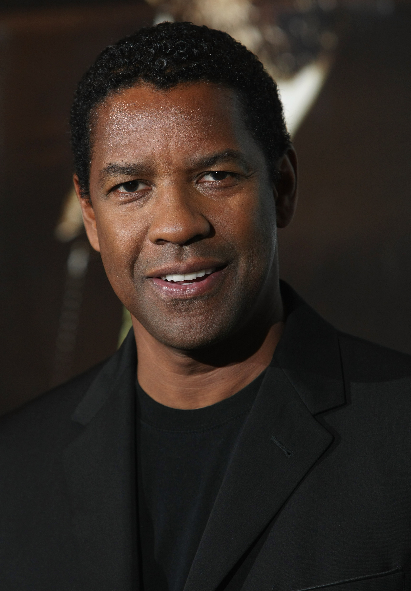
About: This first draft made a lot of noise in Hollywood for being so amazing for a…well, a first draft! The project has Denzel Washington attached to star (who’s perfect for the role by the way) but took awhile to get its director. It started with Nicholas Winding Refn hot off his “Drive” success. But rumors swirled he wasn’t thrilled with the direction they were pushing the project in and bailed. More directors came and went, including Rise of the Planet of the Apes director Rupert Wyatt. The studio finally decided to team up a proven combination, bringing back Denzel’s “Training Day” director, Antoine Fuqua, to do the job. They’ve also since rewritten the female lead (the waitress) to a younger girl, which Chloe Moretz will play. I found that to be a strange choice but it looks like they’re going the Taxi Driver route, and since this has the same kind of tone, it shouldn’t affect the script much assuming the part is written well. I have to admit I’m kinda shocked Wenk wrote this, as he’s the screenwriter of one of my least favorite scripts of last year, The Expendables 2. He also wrote The Mechanic and 16 Blocks. Wenk was born in 1952 in New Jersey and went to NYU.
Writer: Richard Wenk (based on the TV show created by Richard Lindheim)
Details: 106 pages – 1st draft
Something strikes you right away when you open The Equalizer. The writing is so sparse it borders on anorexic. Yet somehow it still contains a ton of information. To me, that’s the essence of great screenwriting. You want to convey a ton of information but you don’t want the reader to have to dig through a mountain of text to get to it. It takes years to perfect that, and still to this day, there are only a few dozen writers who can pull it off. Add Richard Wenk to that list.
I mean here’s his opening scene:
AN ALARM CLOCK
Hits 5:30 AM and goes off.
BEDROOM
Grey morning light. Alarm still BUZZING because the room’s empty.
Bed already made. Tight enough to flip a quarter. Room Spartan and immaculate.
(We then cut to the bathroom where we’ll meet our hero)
This miniature scene gives us key information about our main character. It’s 5:30 AM and he’s already up. Not only that, but his bed has been made. Not only that, but it’s “tight enough to flip a quarter” on. The room is also “Spartan” and “immaculate.” Our character clearly has his shit together getting up this early and keeping his room this nice. And with that tightly made bed, it’s a good bet he has a military background. We also get a little visual flair: “Grey morning light,” to give us a better feel for the room. All of this takes an eighth of the page to say. Wow.
So what’s The Equalizer about?
Robert McCall (“Middle aged, middle class, middle of the road looks.”) works at the local Home Depot. He’s one of those guys who keeps to himself, and it isn’t hard to figure out why. This dude’s got a dark history. Except we don’t know what that history is yet. That’ll come up later. In the meantime, we see McCall helping an overweight employee, Ralphie, with his lunch choices. He seems genuinely interested in helping Ralphie kick his unhealthy eating habits.
After work, he goes to his usual diner where he spots his only friend, if you can call the local hooker who offers a few nice words before going to earn her paycheck every night a “friend.” But McCall sees something different in Teri. He knows there’s more going on there and if she can just get out of this profession somehow, she can reach that potential.
Naturally, then, McCall is devastated when he finds out Teri was beat to within an inch of her life by her pimp, a local Russian crime boss who’s got “Don’t Fuck With Me” written all over his face. Unfortunately for him, McCall fucks with those kinds of faces.
To McCall’s credit, he offers a fair deal. 5 grand. To give Teri her freedom forever. But the boss and his half dozen thugs just laugh at McCall. Boy was that a mistake. This is the first moment where we see what McCall is capable of. With unimaginable speed and beauty, he dismantles and kills everyone in the room within 45 seconds.
The next day he sees how happy Teri is to be free of that world and he realizes – for the first time in a long time – the kind of power he wields. There are so many people out there just like Teri who are being used and taken advantage of. There’s nobody out there to stand up for them. Until now that is. McCall has just found his McCalling.
What McCall doesn’t know is that he just wiped out the Russian mafia’s entire east coast team. And that makes the mafia’s CEO, Valdimir Pushkin, very very angry. He wants this McCall taken care of to send a message to any rival families not to fuck with Pushkin’s people. Which naturally means there’s going to be a monster showdown. The Russian mafia’s biggest baddest men versus one man. The only man who can take them on all on his own. The Equalizer!
Holy shit was this a good screenplay. I have so many good things to say about this script, I don’t know where to start. First of all, the dialogue was great! I’ve read so much bad dialogue this week and it’s usually because characters are talking to each other in literal, obvious, on-the-nose, saying-what-I’m feeling, sentences. What’s cool about the dialogue here is that characters talk around things, even though they’re talking about them.
Like how McCall and Teri are talking about the book he’s reading (The Old Man And The Sea) but what they’re really doing is flirting, getting to know each other better, trying to see if the other likes them as much as they like the other.
And speaking of McCall’s reading habits, The Equalizer had this perfect little quirk that McCall is trying to conquer the “100 books you should read before you die” list. Not because it makes his character more interesting. But because his wife died and SHE was doing the list. He’s trying to accomplish what she never could. I just thought that was such an interesting way to get into backstory about one’s wife dying. Usually characters will come out point-blank and say something like, “My wife died six months ago,” and that’s it. It’s so generic that it never registers. We never feel the pain because no specificity has been put into it. Those books were that specificity that made the backstory of his wife dying real.
And then there was the character of McCall himself. He was just so damn likable! Who doesn’t love a guy who goes around evening the score for the people who can’t do it themselves? Hero-likability (or dare I say “loveability”) was hardwired into this script, which made you want to follow McCall through anything.
When he takes down that room of Russians, mark my words, that’ll be one of the coolest crowd-pleasing scenes of the year. Just the moment when he’s about to walk out of the restaurant with the Russians taunting him, and instead of opening the door, he LOCKS IT – that has to be one of the most badass moments ever!
I’ve heard a few people complain that McCall never really encounters any resistance in the script. There’s “no doubt” that he’s going to win every time. What’s strange is that I’ve had this same complaint about a lot of scripts. But it didn’t bother me here for some reason and I don’t know why. I think it’s because I liked McCall so much and I hated all these lowlifes so much, that all I cared about was them getting their due. I didn’t need resistance. I needed him to put them in their place.
This is such a surprising script in that the setup is so generic. I mean, give this to 999 other writers, they would’ve written a generic piece of garbage. But Wenk is that one in a thousand screenwriter who knew what to do with it. This is cream of the crop screenwriting here. I don’t have anything bad to say about the script. Find it if you can and read it now!
[ ] what the hell did I just read?
[ ] wasn’t for me
[ ] worth the read
[xx] impressive (Top 10!)
[ ] genius
What I learned: Notice the double dose of likage Wenk hits us with right away to make sure we’ll love McCall. At first, his co-workers make fun of him (we’re always sympathetic towards people who get put down/bullied by others). Then McCall goes to lunch and helps an overweight co-worker stay on his diet (we’re always sympathetic towards people who help others). Remember guys, don’t just make your hero likable. Make him double-likable.
Get Your Script Reviewed On Scriptshadow!: To submit your script for an Amateur Review, send in a PDF of your script, along with the title, genre, logline, and finally, something interesting about yourself and/or your script that you’d like us to post along with the script if reviewed. Use my submission address please: Carsonreeves3@gmail.com. Remember that your script will be posted. If you’re nervous about the effects of a bad review, feel free to use an alias name and/or title. It’s a good idea to resubmit every couple of weeks so your submission stays near the top.
Genre: Biopic
Premise: (from writer) The true story of Bobby Riggs, The Battle of the Sexes, and how the mafia may have influenced the most famous tennis match in history.
Why You Should Read: (from writer) Rigged combines something you love (tennis) with something you hate (biopics). Like chocolate covered raisins. It’s also tailor-made for an A-list actor (Paul Giamatti?), has clear GSU and features some of the most intense tennis scenes this side of Bridesmaids. Is this the first amateur biopic to get a “Worth the Read” by Carson?”
Writer: Andrew Parker
Details: 94 pages
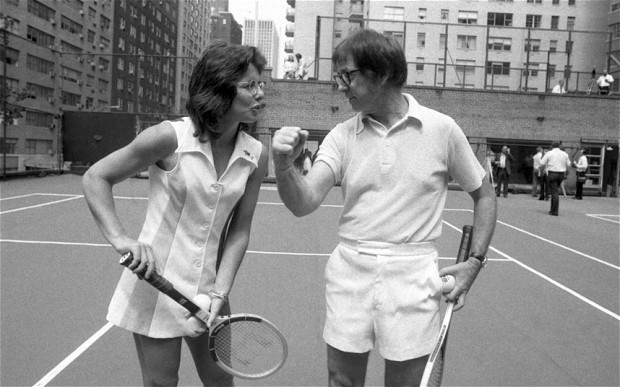
As I was a tennis nerd in another lifetime, I’m very familiar with this match. It’s one of the most important events in sports history. It showed that the girls could hang with the guys. Well, sort of. I mean, throwing an aging out-of-shape weirdo (as Riggs was) to compete against one of the best women in the world in her prime wasn’t exactly the best way to prove anything. But when King won, it really helped people take women more seriously in the sport and gave Women’s Rights a healthy push as well. Now, women’s tennis is the most lucrative female sport in the world. In all the major tennis championships, women and men get paid the same amount of prize money. There is no other sport that does that.
Now if you’re looking for a heavy facts-driven honest interpretation of the “Battle of the Sexes” spectacle, writer Andrew Parker would probably suggest you look somewhere else. “Riggs” is light and fluffy most of the way through, which is both an advantage and a fault.
It’s 1971 and Bobby Riggs, a former Wimbledon champion now in his 50s, is bored with life. He works for some big boring company. His boss is his step-father. In order to get through the days, he comes up with inventive games and calls his bookie to put money on all the major sporting events. Yup, Riggs is both a lazy bum and a gambler. A winning combination!
At some point, Riggs realizes “real work” isn’t his thing and decides to head west to have fun with his life again. So he leaves his wife and son to… well, hustle people I guess. Riggs isn’t the kind of guy who’s always got a plan. That is until he watches a women’s tennis match on TV and realizes that he could probably beat the socks off of them. And people would probably pay to see him do so.
So Riggs puts on his promoter shoes and starts telling any TV network that will have him that women suck. They need to stay in the kitchen and work on being pregnant. And that any man, even an aging old grandpa like himself, could beat them on a tennis court. He backs up his talk when he beats the number 1 female player in the world, Margaret Court (One of the best tennis names ever). And then he challenges Billie Jean King. Fearing that if she loses it will set women’s rights back 20 years, King is reluctant at first, but finally comes around.
In the meantime, Riggs’s betting is getting out of control, and some shady mafia buddies are on his case for the 100 grand he owes them. This forces Riggs to go out and promote the hell out of the match in order to get as many people to watch it as possible (it is reported that over 90 million people eventually watched the match), so he can get them their money.
But in a twist, his mafia buddies tell him at the last second that they want him to throw the match. They figure they can make a hell of a lot more than the money Riggs owes them that way. Riggs starts to buckle under all the pressure and goes into a tailspin, drinking and partying. By the time the match arrives, he’s not in shape, and ends up getting embarrassed in straight sets by King. He wanted a re-match, but King wouldn’t give him one. The two remained friends until Riggs’s death in 1995.
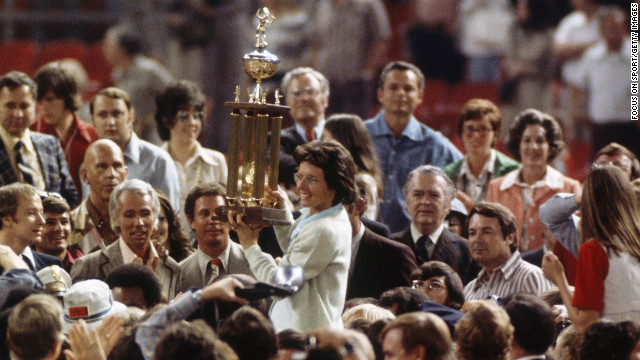
Ahhh! I long for the days when tennis was relevant, when the sport actually took chances and put together stuff like this to drum up interest. Now we got bore-snores like Azarenka and Novak Djokovic. Also, all the players like each other. They’re all best buds. They hug and hang out after the match. I wouldn’t be surprised if they showered together and scrubbed each other’s backs. Back in the old days, with McEnroe and Conners, after a match you threw your racket at your opponent’s face! It was fun to watch people play because people didn’t like each other dammit!
Where were we? Oh yeah! This script. So I thought Rigged was pretty good. The first thing I noticed was that it didn’t read AT ALL like a biopic. You know how I am when I see that word. “Biopic.” It’s the equivalent of a deadly thirsty man hearing the words “desert.” I just see insurmountable blocks of text and thousands of overly dramatic scenes about daddy didn’t hug me enough. Double fault on that.
This script is really clean. The writing is so sparse you find yourself 20 pages in within minutes. And for the most part, that approach worked. I love how Parker made Riggs funny. He’s a hustler. He’s a bit of a slimeball. And he doesn’t take life too seriously. So when he’s fucking around with his co-worker or trading barbs with his older bro, I was usually smiling.
But this was also the script’s biggest problem. When we did want there to be meat, it wasn’t there. And big moments were relegated to half-page snapshots. For example, Riggs just decides to leave his family to go hang out on the West Coast. He tells his wife and is out of his family’s life within five lines. WTF????
I’m thinking there’d probably be a little more build-up, conflict and thought involved before making that decision, particularly because he’s not just leaving his wife. He’s leaving his son! Speaking of, the son here is just a-okay with everything! Dad can’t hang out but wants to drink with his friends instead, no problem! Dad wants to leave him and his mom for years, no problem! I mean this kid was the most well-adjusted cool-with-anything kid I’d ever met! We clearly needed to dig into that more. I usually see these types of problems with sub-100 page scripts. There’s not enough fleshing out. “Rigged” was no exception.
The other major problem is that Rigged looks at the less interesting side of this battle. I mean, Riggs has so little at stake compared to King. King was playing for half the world. Riggs was playing to pay back his bookie. There was something so empty about that. And I’m not saying Parker should spin around and cover King instead, because that would make this a much more serious script and I liked how Rigged was sort of a light-hearted comedy. But if you are going to focus on Riggs, we need a better reason why winning this match is so important to him. He doesn’t have to figure it out right away. But he needs to figure it out at some point so that when he steps on that court, we care about him.
Then also, this ending makes Billie Jean King look TERRIBLE. I mean this basically says, “The only reason Riggs lost this match was because he tanked for his bookies.” I know there’s that moment in the match where Riggs decides, “No, I’m going to try to win,” but it was practically a throwaway moment. There was no conviction to it. So we didn’t believe it.
You also point out that Riggs was really out of shape and hadn’t practiced at all. Again, this takes everything away from King’s win. And you have to understand that the people who are going to see this movie are the people who love the fact that King won this match and changed the world. To finish with a finale that basically says, “Riggs gave her the match,” isn’t going to go over well. This needs to be rewritten SOMEHOW to emphasize that Riggs gave this his all and tried 100%. I don’t know if that means getting rid of the bookies or what. But it needs that ending.
And maybe you can kill two birds with one stone here. Riggs was known as an ultra-competitive guy who hated to lose. I’d love to see more of that infused into his character. Make it this guy’s fatal flaw, his Achilles heal. Not only will you get some of that depth I’m asking for, but then you can really highlight this in the final match, and emphasize how this guy is giving it his all.
I’m going to give this script a BARELY worth the read because I think it has a lot of upside and I like Parker as a writer. I just want him to infuse a little more meat into his work. It needs that meat if we’re going to care during the final match.
Script Link: Rigged
[ ] what the hell did I just read?
[ ] wasn’t for me
[x] worth the read
[ ] impressive
[ ] genius
What I learned: When you’re conceiving a concept, look at every angle of the concept to make sure you’re exploring the most interesting one. For example, you might have your mind set on a movie about a cop who’s hunting down a drug dealer who’s wreaking havoc on the town. But maybe telling the story from the drug dealer’s point of view, making him an underdog who’s trying to provide for his family, might make the better story.
Genre: Wes Anderson
Premise: Adapted from a French film, “My Best Friend” is about an unlikable middle-aged art dealer who’s come to the realization that he has no friends, and so goes about trying to find one.
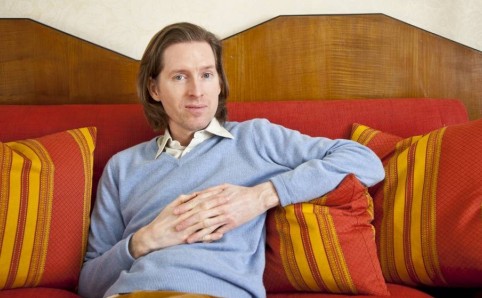
About: Wes Anderson wrote this script for Imagine Entertainment over at Universal. It’s one of the few scripts (it may even be the only script) Anderson’s written without the intent to direct. However, in subsequent interviews, he’s professed how much he loved writing it, leaving a tiny door open that maybe one day he’ll direct it. As for why it hasn’t been made into a film yet, it may be that they’re banking on that slim chance. But my money’s on the fact that it was written in 2009, and in 2010, the French-adapted comedy Dinner For Schmucks bombed big time, pretty much putting the kibosh on any French comedy imports. The trend seems to have shifted towards the “lots of lesbian sex” import genre. So if they can bring someone in to change the characters into female nymphomaniacs, they may have something on their hands! Anderson’s newest film, The Grand Budapest Hotel, comes out next month. But if you’re jonzeing for some immediate Wes, check out the trailer for his new horror film!
Writer: Wes Anderson (based on the French Film written by Patrice Leconte)
Details: 95 pages, First Draft (Aug 3, 2009)
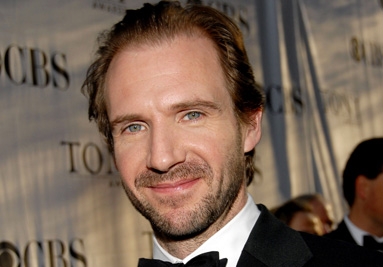 Fiennes would be the perfect lead in this Anderson movie as well!
So I was going through my script pile last night and I came across this old forgotten Wes Anderson script. It occurred to me, as I picked it up (“digitally” picked it up mind you) that I’d never actually read a Wes Anderson script. Or if I had, I didn’t remember doing so. I found this reality to be problematic, since Anderson is such a force on the Indie film scene. But what could I possibly learn from some reject Wes Anderson script anyway? If it’s this forgotten, it couldn’t be any good, could it? Let’s find out!
Nicholas is an art dealer with zero honor. He is oblivious to the way he fucks people over, which is fine when you’re 25 and have time to mature and change your selfish ways. But Nicholas is 46, and a life of fucking people over has led to a lonely existence, an existence he hasn’t become aware of until recently.
Currently, Nicholas is buying up all the paintings in town from a particular artist, Moses Rosenthaler, who he has it on good authority is going to die soon. After he dies, Nicholas will host a showing of all the Rosenthalers and make a killing. Yup, like I said, this isn’t the kind of guy you want to bring home to your parents.
Nicholas is also a bit of a scammer (surprise surprise) and doesn’t have any money. This forces him to team up with a fellow art dealer, Lucinda, an older woman he doesn’t like but who has money. He lets her in on his Rosenthaler secret and she agrees to put up half the loot.
That night, Nicholas invites Lucinda to his birthday party. She comes and is amused to find that nobody’s actually shown up. She points out the obvious to Nicholas, that he has no friends, which he vehemently denies. They get in an argument, and Lucinda makes a bet that if he can prove he has a friend within a week, she’ll give him all the Rosenthalers for himself. If he loses, she gets all of them. He agrees.
Nicholas enlists taxi driver and aspiring artist, Zbigniew, to drive him around town to find one of these friends. In every way Nicholas is socially moronic, Zbigniew is a social superstar. He can charm an entire room with an anecdote or joke, whereas whenever Nicholas speaks, people get scared and run away. Upon seeing Zbigniew’s talents, Nicholas hires him to teach him “how to make friends.”
It’s a ridiculous request and Zbigniew tries to say no, but Nicholas is so darn insistent that Zbigniew has no choice. Nicholas looks for friends first on his payroll, from his lawyer to his psychiatrist, but comes back empty-handed. He even goes back to someone from 6th grade who he thought was his best friend, only to find out that he’s actually his mortal enemy (because Nicholas doesn’t even understand the basic definition of the word “friend,” he doesn’t realize that terrorizing someone over the course of their childhood would actually make that person hate him).
Eventually, of course, Nicholas begins to realize that he’s enjoying his time with Zbigniew, and that he may be the friend he’s been looking for. Unfortunately, as soon as Nicholas realizes he can use Zbigniew to win the bet, he screws it all up, potentially losing everything in the process.
 Wes Anderson
One thing I’ve found with these French comedies is that they often operate under 1980s American Comedy rules, where the setup doesn’t have to be logical. You get silly stuff like Brewster’s Millions. That’s the biggest hurdle “My Best Friend” faces. Nicholas and Janice make this bet that he can’t find a friend, yet never define exactly what that means. Is a “friend” someone he hangs out with every Saturday night? Someone who calls him back within a day of his voice mail? The script never defines this, and it’s a huge problem.
The flimsy setup also begs questions like, why can’t Nicholas just pay some random dude 5 grand to pretend he’s his friend? And I hate that. I hate when the rules of the story aren’t defined, because then there’s too much wiggle room for the writer to bullshit. And that’s exactly what you saw here. Once Nicholas tells Lucinda that Zbigniew’s the friend, she starts rambling off all this stuff about how he has to prove it. (“Um, then he must steal something for you!”) Okay, so the final act is Zbigniew having to steal something to prove that Nicholas is his friend?? What???
There’s an old saying in screenwriting. If there are problems in the third act, it’s because of problems in your first act. This is the prototypical example of that. We have a weird misconceived “Zbigniew tries to steal a painting” climax because the rules of what “a friend” are are never stated. This forces the characters (and by extension the writer) to make those rules up in the last act, which feels lazy and results in a sloppy finale.
But here’s why I still liked this script. The characters were great. And I think Wes Anderson gets shortchanged on characters because everything takes a backseat to his unique production design and quirky sense of humor. But he’s so damn good at creating comedic characters. Nicholas, as this clueless asshole, never fails to amuse, because he’s so damn dull when it comes to understanding friendship. Zbigniew needs to teach him how to actually talk to people. Just talk! And Nicholas still figures out a way to screw it up.
What I found clever about this was that we have one of these potential script-killing problems in “My Best Friend” (the main character is a total asshole), yet Anderson brilliantly offsets it by pairing him up with the most likable person on the planet – Zbigniew. He’s kind, earnest, passionate, active. The guy loves art but he can’t create it for the life of him. Yet he still tries. How could you not root for that guy?
And I think what this script does that a lot of good scripts do, is you’re so into the characters, you don’t really think about the plot. You’re just in the moment with these two people. Laughing and enjoying their company. So even though the plot here is flawed, it doesn’t matter as much because you just want to see these two guys “get together” at the end.
And you know, that’s kind of the genius of this story. It’s essentially a romantic comedy. It takes your typical rom-com premise (guy and girl team up to find a guy the love of his life, but the two end up falling in love with each other in the process!) and hides it within a bro-mance. Brilliant!
I don’t know if they can ever make this without Wes Anderson directing. It has his fingerprints all over it. Trying to get someone else to interpret it is going to send the film into “Community Season 4” territory (when creator Dan Harmon left) – a badly plagiarized imitation. The thing is, I believe this would be one of Wes Anderson’s best movies if he made it. It’s a little more mainstream than his typical fare, yet still has that unmistakable quirky bent his films are known for. If I were him, I’d consider it. It’s a really good script. (The script is out in the ether. People have it. So if you want to read it, ask around in the comments).
[ ] what the hell did I just read?
[ ] wasn’t for me
[xx] worth the read
[ ] impressive
[ ] genius
What I learned: If you’re having trouble with your third act, go back to your first act and make sure you’ve clearly set up your protagonist’s goal, as well as the rules for achieving that goal. If you know that Indiana is going after the Ark, you probably know your climax is going to involve him and the Ark. But if you’re vague about it (i.e. Indiana is going after miscellaneous “treasure”) figuring out your final act is going to be a lot tougher. Here, we never defined the rules behind what “friendship” means, so the ending was sloppy in defining how the bet was won.
Genre: Drama/Sci-fi
Premise: After a small plane crashes, three survivors start to experience weird sensations along with heightened awareness. When the government comes in to investigate what happened, the survivors get the feeling that there’s more to their crash than they’ve been told.
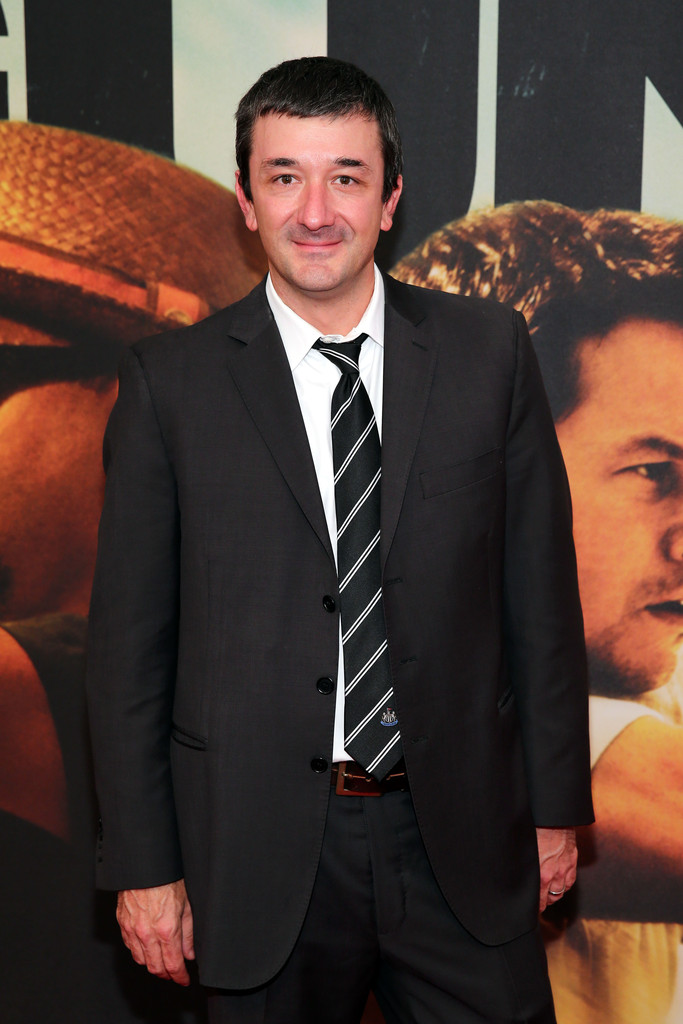
About: This is one of the new pilots (no pun intended) over at AMC. It was written by Blake Masters, who created the show “Brotherhood” on Showtime, about the Irish mob. Masters was actually one of those blessed/cursed writers who spent a long time in Hollywood selling scripts and TV projects, yet getting none of them made. “Brotherhood” started out as a movie before his agents asked if he could turn it into a TV show. He did, and Showtime loved it so much they snatched it up immediately. His career has since taken off (he also wrote last year’s “2 Guns” starring Denzel Washington and Mark Wahlberg) and is only getting better. If that doesn’t get you excited, Jonathan Demme, who directed Silence of the Lambs, is directing the pilot episode!
Writer: Blake Masters
Details: 62 pages – 3/15/13 draft
 David Morrissey, who played The Governor on “The Walking Dead” will play the series lead, Lewis.
Uhh, if you’re writing about plane crashes and science fiction, COUNT ME IN! Why am I 30% convinced every time I step on a plane that it’s going to go down? Besides of the fact that it’s a TUBE OF STEEL and that TUBES OF STEEL shouldn’t be able to fly! There are too many physics variables working against it. Too many things that have to go right in Newton’s Laws of gravity. Seriously, airplanes can’t even land in the right airport anymore! How are they supposed to stay in the sky?
For that reason, I LOVE reading scripts ABOUT plane crashes because – and yes, I’m aware of how warped this sounds – I enjoy watching others suffer in a plane crash. Because it gives me joy that I’m not one of those people. That in some strange way, despite it being fiction, I survived!
Now when you combine these plane crashes with sci-fi, I mean, come on. You’re talking about a mix of ingredients so powerful that they can do no wrong. Do I need to mention a certain couple of star-crossed lovers? Two island-soaked friends torn by their inability to give to one another but who were secretly and always in love except that that PESKY SAWYER had to keep messing it all up by being so darn charming and rogueish? Yes, I’m talking about Jack and Kate! I’m talking about Lost. Plane Crash + Sci-Fi = greatest show ever. Every time. Always. That equation ALWAYS works. Except for The Event. And Fringe. Otherwise, history proves that this combination is failsafe.
Line of Sight follows Lewis Bernt, who’s all bernt out when he realizes his wife’s been cheating on him – doing the whole sleazy hotel meet up thing to really hammer home the sliminess. But Lewis, a NTSB plane accident investigator, is going on a hunting trip with his friends this weekend and the last thing he wants is to get in some big fight with his wife before he leaves.
Oh, but get this. Juicy gossip warning. The guy she’s cheating on him with? His friend Walker? He’s PILOTING the plane that’s taking them on the hunting trip! Scandalous right? Yeah, them and four other friends are taking a small plane out into the wilderness. And when Lewis arrives, he lets Walker know that he now knows the secret.
Along for the ride are Lewis’s good friends Tony, unambitious to a fault, David, a “cerebral goofball,” and two other hunting dude types. Well, the plane gets ready to leave but before it does we cut to black, and the next thing Lewis knows, he’s woken up in a plane crash. He’s alive, as are Dave and Tony, but everyone else is dead. Except for Walker, who’s missing. Nobody remembers what happened. Especially the dead guys.
A rescue team helicopters in to, literally, pick them up, and as Lewis is being pulled up, he sees the wreckage. It’s all wrong. It’s presented as a horizontal crash, but there are no skid marks consistent with a horizontal crash. This simply can’t be. It’s impossible. But before he can take anything else in, he’s flown to the hospital.
While in his hospital bed, Lewis starts seeing a lot of suspicious people milling about. Mostly government types. Lewis’s job is crash inspection, and he knows that these people shouldn’t be here. When they do get around to him for questioning, it’s clear that they’re intrigued by he and Walker’s issues, and that that may be where they’re starting their investigation.
Oh, but that’s not even close to the real issue. The real issue is that the three survivors start experiencing messed up shit. Tony just stares off into nothingness for hours at a time. Dave has become a super-genius with the ability to do “how do you like them apples” type math equations. And Lewis is feeling all this heightened shit happening around him. He can hear things in the wind, see patterns in mundane things. Life’s gettin’ all trippy for these three.
Eventually, Lewis starts looking into his crash, and finds odd facts associated with it, like that there are 4 times as many plane crashes on the date of his crash than any other day. And that there’s a pattern in the frequencies of those crashes. The reality is, these three survivors are changing. Into what? It’s not clear. Nor is it clear why the government is so intrigued by the accident. I suppose the real question is, what is the government keeping from Lewis about the crash? What are they keeping from all of them?
 Writer Blake Masters
Here we have a show clearly inspired by the likes of Close Encounters of the Third Kind and the plane crash film, Fearless. Which I say as a compliment. You have three men, divinely affected by this experience, who are trying to find meaning after it happens. I think that’s a good setup for a TV show. So does it work?
For awhile.
I loved the setup here. I loved the spooky mystery behind Lewis waking up in a crashed plane with three days of his life vanished. I love that we don’t know what happened that caused the crash, whether it was supernatural or logical (did he get in a fight with Walker and that caused the plane to go down?). I was really into all the questions for about 30 pages.
But I’m going to be honest, as we entered that second half, I began to get frustrated. Tons of things were happening, questions were being brought up, seemingly by the second, and nothing was being answered. I know people say Lost did this every episode, but Lost was more deliberate about each question. The questions in Line of Sight seemed to be thrown out at us willy-nilly, almost off-the cuff.
Dave leaves a screwdriver at the table while screwing something. It continues to stand up. Lewis stares at and obsesses over strawberries for no reason. We have crazy dudes going on and on about “frequencies.” They then get hit by a car. Everyone hears music in the wind. A crossword that was completed with letters mysteriously turns to all numbers. People are able to walk across highways without looking or stopping and not get hit. People get stopped for doing 135 miles per hour and the officer lets them go for no reason. Everyone has itchy hands. People are writing down random equations on paper. People are building machines worth half a billion dollars. The FBI and other government agencies are watching our survivors.
It just felt like TOO MUCH. I think laying out mysteries is great. But if you start throwing one down every other page, sooner or later you’ve spread yourself too thin and we’ve lost interest. How is Mystery 13 compelling if I know in 5 pages it will be usurped by Mystery 19? I think this script just needed to SLOW DOWN. If you try to cram too much crazy shit into your story, it starts to feel desperate, like the kid with the skateboard doing trick after trick in front of the new girl at school saying “Look at this! Look at this!” Desperation is never attractive.
With that said, there were some good things to talk about here. I loved that we started right away with a problem, and not necessarily the kind of problem you’d associate with this kind of show. I believe writers feel pressure to go big with their teaser, especially if they’re writing in the supernatural or sci-fi genre. But sometimes the best open is just to create a good old-fashioned (but intriguing) character problem.
In “Line of Sight,” we start with Lewis going to grab his wife’s phone out of her purse and finding a hotel card instead, a hotel card that clearly implies she’s been cheating on him. Lewis doesn’t confront his wife right away (why do that? You’d destroy all the suspense!) and instead gets ready for his hunting trip. When he gets on the plane, he heads up front where his friend Walker is, and promptly tells him that he knows he’s fucking his wife. End of teaser!
Not a single sci-fi element to be found, and yet you can bet your ass we’re staying around until after the commercial. So never underestimate using the HUMAN COMPONENT with your opening. You can create something just as intriguing by exploring two people as you can exploring a bank heist or a plane crash or a car chase.
I also loved some of Masters’ descriptions. He’d come out with one every few pages that I’d never seen before that perfectly encapsulated that character. For example, here’s a character named Edgar’s entrance: “Jensen spots a THICK SET MAN (let’s call him EDGAR) standing beside a town car. His tie flaps in the wind but the rest of him is rooted deep in the earth, solid and unmovable.”
I mean how awesome is that? I love how Masters doesn’t necessary tell you about the man himself to describe him. He talks about the stuff surrounding him (his tie, the earth). I thought that was really clever.
But you wanna know the moment I turned on the script? It’s when the crazy character came up to Lewis babbling about “the frequencies,” then he steps backwards and gets RAMMED INTO and killed by a car. I’ve seen that type of scene so many times in these movies/shows, that I lost confidence in the script right there. When I see moments that have been used so many times before in a genre, it’s almost always an indication that the writer didn’t work hard enough to differentiate his script from the pack. If we get that scene we’ve already seen before, we’re bound to see plenty of other scenes we’ve already seen before as well.
Line of Sight had the feeling of a dying campfire, with everyone desperately rushing around to throw twigs and newspaper onto it in the hopes of keeping it going. But everyone knows it’s a only a matter of time before it dies out. It’s not badly written. It has some nice moments. But it packs way too many questions into its 62 page flickering flame. Space out those questions in future episodes, and maybe we can keep this fire going.
[ ] what the hell did I just read?
[x] wasn’t for me
[ ] worth the read
[ ] impressive
[ ] genius
What I learned: Start a scene out on something other than your characters. This is more of a directing move, but you can use it in your script as well. Remember, just cause you have 2 (or 3, or 4) characters in a scene, it doesn’t mean you have to start on them. Find something else in the room, something relevant to the scene or interesting, and start on that instead. Masters does this early on, in the previously mentioned “Lewis looks in his wife’s purse” scene. Instead of starting on Lewis and his wife, Masters starts on the purse, and we only HEAR Lewis and his wife talk in voice over. Eventually, Lewis’s hands enter the screen and start looking through the purse. It’s a slightly more interesting way to write the scene that gives it a visual edge over the straightforward “master shot” we usually envision when we come into a room.
 “The Sequence what??”
Edit: A couple of people in the comments section have told me that someone (Chris Soth) already uses the term the “mini-movie method,” so I’m changing the terminology back to the original “Sequence Approach.”
Why is writing a script so difficult? I can answer that easily. Because there are a lot of damn pages to fill! Specifically, it’s that second act that kills everyone. That’s where the enormity of the story hits you, and when a lot of writers realize they don’t have enough to fill up all that space. I mean when you think about it, writing a first act isn’t that hard. You set up your characters, introduce your concept, get the plot rolling. Anybody can do that. But as soon as you get past those first 30 pages, you find it harder and harder to move on. All of a sudden filling up even five pages feels impossible. You just want to get to the damn end so you can resolve the story.
I recently got to thinking, “What’s the problem here? What is it about that vast amount of white space that trips people up so much?” And I realized it’s the lack of structure within that space. It’s a little like wanting to be a doctor and thinking about all that schooling you need. 10 years. 10 YEARS! How the hell are you supposed to get through that?
But when you start breaking it down into years and then semesters and then classes – in other words, into MANAGEABLE CHUNKS – it starts to feel doable. And it’s the same thing with screenwriting. You need to find a way to break those 120 screenplay pages down into manageable chunks.
This brought me back to a screenwriting philosophy I keep gaining more and more respect for as time goes by: “The Sequence Approach.” This is not my creation. I learned about it through Paul Gulino’s book, “The Sequence Approach,” (the only book I link to on the site besides my own) and he learned it because it’s how pre-1960 Hollywood used to format their screenplays. Now I never liked that name: “The Sequence Approach.” It sounds too mathematical for a craft that’s supposed to be creative. But it is what it is so it will have to do!
Now like I said, our big problem here is the fact that when we look at a screenplay as a whole, it’s too big. Even if we break it down into 3 acts, that’s still 50-60 unstructured pages we have to fill up in that second act. It’s too daunting! We need a way to create manageable chunks within that framework, portions small enough that they don’t intimidate us.
The Sequence Approach basically states that instead of writing one giant 110 page story, we write eight 12-15 page smaller stories. Think about it. Everyone can write a 15 page short, right? That’s easy. And if you can write one 15-page short, you can write eight 15-page shorts.
All you have to do is come up with a movie concept that features a protagonist with a goal, then write 8 mini-scripts with that protagonist (or in some cases, supporting characters) pursuing 8 linked mini-goals. The pursuit of these mini-goals will last 12-15 pages each, and be little mini-scripts in themselves, with their own setup, conflict, and resolution. Let me show you how it works in action.
I thought up a movie idea not long ago that I kinda dig. It’s not great, but it will serve our purposes for this article. Here it is:
TITLE: Trust Fund Dan
GENRE: Comedy
PREMISE: A 40 year old trust fund baby who’s been living off his dead parents’ money for the past 20 years, is informed that an overlooked banking error from 1990 has resulted in the termination of his trust fund. For the first time in his life, he’ll have to get a job and learn to live in the real world.
So before you write your script, you want to lay out all eight of your sequences and write out the objective of your protagonist within each. Each of these eight objectives will drive the story forward until the next sequence arrives. In addition to listing the goal of your character in each sequence, list the purpose of the sequence itself (a general breakdown of where you want it to go) along with any other ideas you may have. So this is how the sequence outline for Trust Fund Dan might look like:
Sequence 1
Goal: Dan tries to put together the ultimate party.
Purpose: Establish that Dan is rich and lives off his trust fund. The purpose of this sequence is to show how easy Dan’s life is and how out of touch he is with the real world. Sleeping in, getting his next stash of pot, and attending parties are really his only three obligations. Establish, as he calls people and puts together this lavish party, that he’s a moron who’s never worked a day in his life and doesn’t even understand the concept of money. At the end of the sequence, he’ll get the call from his lawyer and learn that all of his money has been taken away.
Sequence 2
Goal: Dan tries to get his money back.
Purpose: Now that it’s gone, Dan desperately tries to figure out what happened and how to get his money back. He goes to the Trust Fund lawyers, the banks, everyone associated with his money, to figure out what happened. But because he’s so stupid and knows nothing about the real world, he fails to understand any of what they’re telling him. But the consensus is clear: He’s broke. He asks his friends for money, but finds out that none of them were his real friends. They were just leeching off him. At the end of the sequence, he doesn’t even have enough money to buy food. He realizes he needs to get a job.
Sequence 3
Goal: Dan tries to get a job.
Purpose: Much like the scenes in Step-Brothers, these scenes will show just how clueless Dan is about “jobs” and how the real world works. Have fun with these scenes. He goes through a montage of job interviews and makes a complete fool out of himself. He finally gets stuck as a part-time janitor at a local community college.
Sequence 4
Goal: To figure a way out of this mess.
Purpose: When Dan realizes just how shitty real work is and how little he gets paid, he starts plotting a way back to his life of luxury and invests in every get-rich quick scheme he can find. From spending his entire month’s pay on scratch-off lottery tickets to starting up sketchy internet businesses that rely exclusively on porn advertising. His scary co-janitor, a former gang-member, even enlists him in a vague business venture that involves something about “credit cards.” He fails at everything because he doesn’t know anything. He also occasionally runs into a very pretty teacher there who he instantly falls in love with.
Sequence 5
Goal: To ask the teacher out (or find a way to spend more time with her).
Purpose: Because Dan has no idea how to manage money, he’s unable to pay rent and is kicked out of his apartment. He is now officially homeless and starts secretly living at the college. In his pursuit of the teacher, he starts hanging out in her lectures and, for the first time, starts to actually learn something. Because he’s also the worst janitor ever, he’s always in danger of being fired. But he eventually convinces the teacher to go out with him on a date (which should be a funny scene, since he won’t be able to pay for it).
Sequence 6
Goal: To get back on his feet.
Purpose: Despite the teacher starting to affect how Dan sees the world (she helps him see the value of hard work), Dan finds out that his little co-venture with his fellow ex-con janitor buddy has panned out! They’re bringing in the dough! Dan quits his janitor job and starts spending money like crazy again, taking the teacher on an extravagant date of the likes he used to experience all the time. Dan’s on top of the world again and he couldn’t be happier. But alas, he has no idea that his “business” involves stealing people’s credits cards, and at the end of the sequence, he’s arrested and thrown in jail. Mortified at what he was doing, the teacher leaves him.
Sequence 7
Goal: To figure himself out.
Purpose: After a short stint in jail, Dan’s mysteriously bailed out. It’s his lawyer, who informs him that he was able to pull off a miracle and retain half the money from the original trust fund, enough for Dan to live comfortably for the rest of his life. Dan should be excited, but he isn’t. For the first time, he wants to know what he really wants out of life. He finds out more about how his parents earned their money, how hard they worked for it, and again that theme of “the value of hard work” is hit upon.
Sequence 8
Goal: Get the girl back.
Purpose: Dan decides that instead of wasting money on a bunch of stupid boring shit, he’s going to invest it in a degree and pursue a real career. So he enrolls at the college he was a janitor at. He enrolls in all of the teacher’s classes, but she ignores and rebuffs all his advances. In the end, he pulls out of all of her classes and focuses on getting a degree. Finally, he’s learned to appreciate the “value of hard work.” By chance, one day after school, he sees her in the parking lot and her car won’t start (Her car not starting will be set up multiple times throughout the script. This will be the big payoff). He smiles. Walks towards her. Cut to black.
So this is obviously a rough and tumble outline of the story. But that’s exactly what it’s supposed to be. It’s a first run-through. The idea is to get your 8 sequences down so you have a game plan in place. As you get started on the script, you’ll add more detail to each sequence, move things around, and add scenes and characters. I might make Dan’s Trust Fund lawyer a bigger character, for example. I might have him befriend a few of the kids at the college and give those characters some arcs of their own. I might make some of these sequence goals more concrete (Number 7, “To figure himself out,” feels a little vague. I’d like to improve upon that). I’d try to introduce the love interest earlier somehow. All of that will be added as you either write your script or do successive drafts of your outline.
Now it’s not always going to be this simple. Each script is different. Things get tricky when there isn’t a clear goal for a sequence, which is the case, for example, with a lot of romantic comedies. I don’t recall any sequence goals in When Harry Met Sally. But in that case, you’d still divide your script into 8 smaller scripts. You just need to work harder to figure out what each of those smaller stories will focus on. A story is easiest to tell when the main character is trying to achieve something. But since you don’t always have that, you might instead say, “The opening sequence in When Harry Met Sally is about Harry and Sally getting to know each other.” In other words the “goal” is transferred over to you the writer. You write the 15-page sequence where Harry and Sally ride to New York together with a strong emphasis on getting to know each other. The idea here is that by breaking everything down into these manageable chunks, it’ll be easier to create some element of focus for each “chunk,” and therefore you should be able to get through the entire script more easily.
There ya have it, an easy-peasy way to write a script. Try it out. You may be surprised at how simple it is!