
Search Results for: F word
Genre: Thriller/Drama
Premise: A young woman comes to live with her estranged sister who is married to a mysterious and dangerous man.
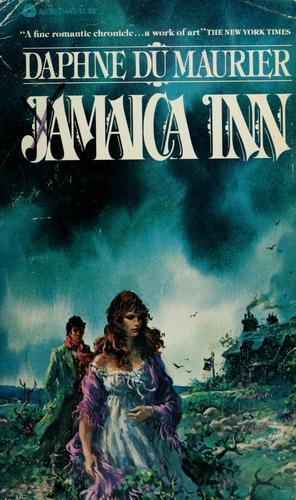
About: Jamaica Inn was a best selling novel back in the 1930s which was eventually made into a film directed by Alfred Hitchcock. The script appeared on last year’s Brit List, which is the British equivalent of the Black List. Rebecca Hall, the actress who played Ben Affleck’s girlfriend in The Town, is said to be circling the lead role. Daphne du Maurier, the author of the book in which the screenplay is based on, also wrote the novel “Rebecca,” which was turned into the movie that won an Oscar in 1940, and the short story, “The Birds,” which of course Alfred Hitchcock went on to direct as a film.
Writer: Michael Thomas (based on the novel by Daphne du Maurier)
Details: January 1, 2010 draft – 124 pages (This is an early draft of the script. The situations, characters, and plot may change significantly by the time the film is released. This is not a definitive statement about the project, but rather an analysis of this unique draft as it pertains to the craft of screenwriting).
Whenever you read a script where the main font is something other than Courier, a bevy of red flags pop up and usually means one of three things. You’re reading a script by the Coen Brothers. You’re reading a script by a novelist who is writing their first screenplay. You’re reading a script by someone who’s never written a screenplay before. Now if it’s option number one, you’re still in good shape. If it’s option number two, chances are you’re going to get a lot of extensive prose accompanying a story that takes way too long to get going. And if it’s option number three, you’re in for a long afternoon my friend.
My guess is that we’re dealing with door number two. Thomas definitely has a way with words. When he described a room or a setting or a person, I could feel myself being transported into the story. But the prose was such a priority that the actual storytelling suffered. Transitions between scenes were confusing, setups of scenes were muddled, and I wasn’t always sure what was going on within the scenes.
For example, I didn’t know until I went over to Wikipedia that one of the main characters, Joss, was a ship marauder who, along with his band of hoodlums, would kill everyone on a ship and steal the loot. When I was reading the actual script, we’d just all of a sudden inexplicably be on a ship with a bunch of people throwing a bunch of other people off, and I honestly had no idea where any of it was coming from. I eventually chalked it up to one of the characters having some recurring nightmare, as that’s the only logical conclusion I could come up with at the time. Again, this was due to the way that scenes just sort of bled into each other without any defining purpose or structure.
Now I suppose it’s fair to ask if this is my fault or the screenwriter’s fault. Here’s what I’d say to that. When you write in a non-industry-standard font, the reader doesn’t trust you, because they assume you don’t know what you’re doing. So when those weird moments happen, the reader is less likely to chalk it up as their fault and more likely to chalk it up as yours. If the formatting is correct – had the presentation been consistent with industry standards – then the reader is more likely to go back and reread something to figure out what they missed. Because of the presentation, I wasn’t willing to do that. And that’s usually the case with most readers. They just don’t have time to dick around.
Having said that, it’s important to note a couple of things. This script appears to be developed in-house, which means it’s being written for only the producers. Also, I admit I’ve seen quite a few screenplays off The Brit List using a font other than Courier. So I’m wondering if they don’t use Courier as a standard font over in the UK? Maybe somebody from across the pond can clear that up for me.
Anyway, it’s time to tell you the plot. I’m guessing the story begins back in the 1930s, though I couldn’t tell you for sure because no date is given in the script. I’m just going off when the novel was written. As those of you who read the site know, not giving the date of your story is a huge pet peeve of mine, but I’ve ranted about it before so I’m not going to do it again. A young down on her luck woman, Mary, has come to the city to live with her sister, Patience, at the Inn that her husband owns. When she gets there, she learns that said husband, Joss, is an alcoholic evil brood of a man.
Her sister is also a shell of her former self. Once beautiful, she is now shriveled and thin and haggard, the result of years of constant abuse. As Mary tries to reconnect with her sister, she encourages her to see what she’s become and to think about leaving her husband. But what Mary will soon find out is that Joss is not an easy person to run away from.
He begins treating Mary much like he treats his wife, but Mary is not as easily scared, and does her best to stand up to Joss. However, her bravery starts to dissipate when she sees Joss kill a man. On top of that, Mary realizes that nobody ever actually checks in to the Jamaica Inn. Which brings up the question, how the heck does Joss make any money?
Of course, through the help of Wikipedia, we learn that Joss and his band of buddies rob incoming cargo ships and that’s how he makes his dough. If all of this wasn’t enough to handle, Mary finds herself sexually attracted to Joss, a temptation she must constantly battle but one in which she has little control over. I guess that’s one way to go about proving to your sister that her husband isn’t right for her. The Jerry Springer approach.
So again, my big problem with Jamaica Inn was that I was never quite sure what was going on. The emphasis seemed to be on the prose and not on the storytelling. I can’t emphasize this enough for young writers. Readers don’t care how well you can describe what a tree looks like in the morning mist. They care about how you craft your story. They care about how you create drama. They care about how you create conflict. They care that you can tell your story in a clear and concise way. I’m not going to say that the way you choose your words isn’t important. If I were writing the beach scene in Saving Private Ryan, I would use descriptive visually arresting words and phrases. But as far as everything else, just tell the story. Don’t describe to me the sound Private Vin’s pants make when they rub against each other. Save that stuff for your novel.
I think there’s some good things about the script. Rebecca Hall is a hot actress at the moment and has her pick of the litter. So her interest in this is telling. Both of these female lead roles are juicy and the kind of stuff upper echelon actresses don’t get a chance to play very often. I also thought the relationship between Mary and Joss was interesting. On the one hand she was terrified of him and on the other she was attracted to him. I’m not sure it totally made sense but there was definitely an intriguing chemistry between the two whenever they had a scene together.
The thing that will either make or break this movie is clarity. On the page, I wasn’t exactly clear what was going on with all of the ship stuff. But I think onscreen, when we see the faces and the people involved it’s going to be much easier to follow. Still, I’m hoping that they addressed the confusion surrounding that whole storyline and that they don’t make it feel like a dream sequence, which is how I interpreted it in this draft.
The truth is, I was really hoping this was going to be a ghost story. When you have an Inn that nobody comes to, I think you’re hoping for a bigger payoff than that the owner goes off and loots ships. Or at least that’s how I felt. So with the payoff being disappointing and the writing being too confusing, I can’t say I would recommend this. But I will say that the idea has potential.
[ ] What the hell did I just read?
[x] wasn’t for me
[ ] worth the read
[ ] impressive
[ ] genius
What I learned: Remember, whenever you have a slow build to your story – and what I mean by “slow build” is that no real goal emerges in the story for a long time – you have to use other storytelling methods to hook the reader in the meantime. Slow builds are really dangerous because readers are impatient people. So you want to think long and hard about how else you plan to keep them interested. Here, there are two things. There’s the mystery of what’s going on at the Jamaica Inn, and there’s the unique conflict between Joss and Mary (Do they hate each other? Do they like each other?). Now whether those are enough to keep one’s interest is up to the individual reader. But the point is, you need something there to keep the reader interested until the real story kicks in.
We’re back for Day 4 of Star Wars Week. To find out more, head back to Monday’s review of The Empire Strikes Back.
Genre: Sci-fi/Fantasy
Premise: (from IMDB) Anakin Skywalker shares a forbidden romance with Padmé Amidala while his teacher, Obi-Wan Kenobi, makes an investigation of a separatist assassination attempt on Padmé which leads to the discovery of a secret Republican clone army.
About: Lucas was a little shaken by the response to his screenplay for The Phantom Menace, so was reluctant to write Attack Of The Clones. He ended up writing a couple of drafts and then gave off the final draft to Jonathan Hales, a writer on Young Indiana Jones, who had little experience writing theatrical films. Hales finished his draft a week before production began.
Writers: George Lucas and Jonathan Hales (story by George Lucas)

Of the three prequels, Attack Of The Clones probably had the best chance of becoming a real movie. There’s definitely a lot more going on here than in Menace. You have an assassination attempt. You have a much more interesting dynamic in your Jedi pairing. The set pieces are more interesting. But much like The Phantom Menace, there’s too much junk you have to sift through to find the gems. By far, the biggest fault of the screenplay is its treatment of its love story. If you ever plan to write a love story, watch this movie to see how not to do it. Lucas has referenced numerous times how this storyline was his “Titanic.” And that’s a great place to start because I want to show you just how inferior this love story is to Titanic.
Probably more important than what happens during the love story, is how you set up that love story. Your job as a screenwriter is to set up a situation that mines the most drama out of the relationship. In Titanic, we have a poor drifter falling for one of the richest women on the ship, who also happens to be engaged – and oh, they’re on a ship that will eventually sink and kill most of the people on it. I can safely say that’s a situation that will bring out a lot of drama. Now let’s look at Attack Of The Clones. Anakin and Amidala are told to go hide out on her planet.
I want you to think about that for a second. Hiding out on a planet. There is no goal here. There’s no engine driving the story thread. There’s nobody after these two. There is no urgency. There are no stakes. You’re simply putting two characters in an isolated location and asking them to sit and wait. Is there any drama to mine from that situation? No. This means that before our characters have a single conversation, their love story is doomed. There is no way for it to be interesting. Contrast this with The Empire Strikes Back, where the entire love story takes place on the run with our characters constantly in danger. That’s how you want your love story unraveling.

Next up is the dialogue. This is a huge mistake that a lot of amateur screenwriters make. They believe that if the characters are telling each other that they love each other, that the audience will by association feel that love. Wrong. Actually, the opposite is true. We feel love through actions. We feel love through subtext. The time when we least feel love is when two characters are professing it to each other (unless we’re at the end of the movie and you’ve earned that moment).
One of the best ways to convey love is through subtext. Characters are saying one thing but they really mean something else. The best example of this is in The Empire Strikes Back. During that movie, Han and Leia are arguing with each other nonstop. Yet we can feel the desire each has for the other in every argument. Even when Han is directly trying to make a move on Leia, he does it by challenging her. He’s constantly telling her that she likes him, which is far more interesting than if he would’ve sat her down and professed his love for her, which is exactly how all of the love scenes happen in Clones.

Another thing you need with any good love story is conflict. You need things constantly trying to tear your leads apart. Whether it be something between them, an outside force, a battle from within the individual. The more things you can use to tear your lovers away from each other, the more those characters have to fight to be with each other, and those actions will translate over to the audience as love. So look at all the things keeping Jack and Rose apart on Titanic. First they’re from different classes. A poor kid like Jack just can’t be with a rich woman like Rose. It doesn’t happen today and it definitely never happened back then. Also, Rose is engaged. Even if the class thing weren’t an issue, she’s getting married. Also important to note is how much is at stake with that marriage. Rose’s mom needs her to marry to save their financially crumbling family. The two are also constantly being chased by her fiancé’s Henchman. And on top of all that, they’re on a doomed ship, a ship that will sink and likely kill one of the people in the relationship. I mean if you want to talk about things that are trying to rip a couple apart, all you have to do is watch this movie.
Let’s compare that to all the things keeping Anakin and Amidala apart in Attack Of The Clones.
(insert long silence here).
I mean I guess if you were to push me on it, I could argue that there’s something about how Jedi’s are not allowed to love. That, to me, is the only element of conflict keeping these two apart. But the thing is, there are no explained consequences to this conflict. It’s never explored in anything other than words. And Lucas never commits to it. As we’ll see in the next film, their “secret romance” has Anakin sleeping over at her apartment every night. Yeah, they’re trying really hard to keep this a secret. This leaves us with absolutely zero conflict in any of their scenes, putting all the heavy lifting on the dialogue, and since the dialogue is mostly Anakin professing his love for Amidala, this storyline turns out to be one of the worst love stories ever put to film.
This also highlights something I brought up yesterday – the scene of death. Every single scene on Naboo between these two characters is a scene of death. The characters are either talking about their feelings or talking about politics. You will never be able to make those scenes interesting because, again, there’s nothing else going on in the scene and none of these scenes are pushing the story forward.

These scenes of death are everywhere if you look for them. Remember, when you’re writing a story and trying to convey any sort of character development, you want to show and not tell. Now George does a pretty poor job of this in an early scene with Obi-Wan and Anakin, but he does do it. After Obi-Wan and Anakin chase an alien into a bar, the two get into a series of disagreements on how to handle the matter. It’s sloppy and it’s on the nose, but at least we’re showing their problems and not telling the audience their problems.
However, a few scenes later, we’re up with Amidala in her apartment and the entire scene is dedicated to Anakin telling Amidala how he feels about Obi-Wan. This scene of death (two people talking about another person) is violating three screenwriting rules at the same time. First of all, it’s not pushing the story forward at all and therefore is unnecessary. Second, it’s telling us and not showing us. And third, it’s repeating information we already know. Lucas has given us a few scenes now that have shown us that Anakin has a problem with Obi-Wan’s authority. This is the kind of mistake a screenwriter who is writing their first screenplay would make. It’s that bad.
As for the structure of the screenplay, all you need to do is compare it to Empire to see why it fails so spectacularly. Remember how in that movie, we were cutting back and forth between Han being chased and Luke training to become a Jedi? In this movie, the two threads we’re cutting back and forth between are a love story on a planet where there’s no urgency whatsoever, and a procedural where Obi-Wan plays detective, a sequence that also has little urgency. That means instead of two threads with high horsepower story engines, we have one thread with just a tiny bit of horsepower. No wonder the movie feels so slow.

The funny thing is, there’s only a single interesting scene from a screenwriting perspective in the entire movie. And the reason for this is probably that Lucas ran into it by accident. Good screenwriters deliberately structure their screenplays to create these scenes. Bad screenwriters stumble upon them luckily every once in a while, wondering why they’re the only scenes that feel right in their script. The scene in question is when Obi-Wan meets Jango Fett in his apartment. This scene is a good one because there’s so much subtext at play – one of the few times in the prequels that we actually have subtext. Obi-Wan suspects that Jango Fett is the one who tried to assassinate Amidala. Jango Fett knows that Obi-Wan is on to him but must act aloof. This is what creates the subtext. The two are having a somewhat normal conversation, but both are hiding some critical pieces of information that they know about the other.
The only things that actually work in the film are things that were born out of the original films. We’re excited to see Yoda fight for the first time. We’re excited to see a bunch of Jedi’s take on another Army. We’re excited to see Obi-Wan battle Jango Fett. But none of those things are generated through the dramatic components of this particular story. We enjoy them based on nostalgia. Attack Of The Clones is a little better than The Phantom Menace but not enough to garner a better rating.
[x] What the hell did I just read?
[ ] wasn’t for me
[ ] worth the read
[ ] impressive
[ ] genius
What I learned: What I’m realizing with these prequels, especially after yesterday, is that there’s no urgency to them whatsoever. I mean look at this stretch of four scenes early in the movie. We have a scene of the Jedi Council telling our characters what to do. We have a scene where Sam Jackson and Obi-Wan and Yoda discuss how Jedi’s have become arrogant (scene of death). We have that scene where Anakin and Amidala talk about how Obi-Wan is mean (scene of death). And we have a goodbye scene at the ship station with Obi-Wan and Amidala (scene of death). That’s four scenes in a row where the only thing that happens is the Jedis order Anakin to protect Amidala. There are no story engines driving these scenes whatsoever. Everything just sits there. Go watch the first act of Empire. After the 15 minute “Luke kidnapped by Wampa” sequence, we get a fun little scene where the crew jokes around about what happened, and then the very next scene they find out the Empire has spotted them, beginning the next sequence where they have to escape the planet. If Lucas would’ve wrote that sequence? He probably would have added three or four scenes with Han and Leia talking to each other, with Han and Luke talking to each other, and God knows who else talking to each other. When people say to keep your story moving, this is what they mean. They mean don’t write all these unnecessary scenes that you don’t need.
We’re back for Day 3 of Star Wars Week. To find out more, head back to Monday’s review of The Empire Strikes Back.
Genre: Sci-fi/Fantasy
Premise: (from IMDB) Two Jedi knights uncover a wider conflict when they are sent as emissaries to the blockaded planet of Naboo.
About: It is said that Lawrence Kasdan was approached to write the script for The Phantom Menace but that Kasdan felt Empire and Jedi were a step away from Lucas’s vision and believed that Lucas should write and direct the prequels so that they would remain in his voice. Hmmm, that personally sounds like a clever brushoff to me. Other rumors include Frank Darabont and Carrie Fisher being approached to write the script. But in the end, we got George Lucas. Hooray.
Writer: George Lucas
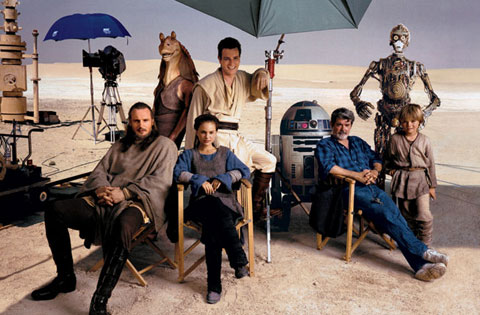
The Phantom Menace is such a poorly told story that as I started compiling the screenwriting mistakes to highlight in this review, I realized there were too many to choose from.
I guess we’ll start at the top. The first problem is the backstory. In the backstory for the original films, rebels were trying to defeat the Empire. It’s simple. It’s powerful. It’s focused. In this movie, we get the taxation of trade routes. In other words, it’s complicated. It’s confusing. It’s unfocused. Now complicated can be good if you have a screenwriter who knows how to navigate complications and who’s dedicated to the extra work required to write something of this magnitude. But George Lucas is neither. He’s openly stated that’s he doesn’t like writing. And since writing even a simple story can take 20-30 drafts to get right, you can only imagine how much effort and how many drafts something complicated would take. And if you’re not committed to all that extra effort, your screenplay’s going to suffer. And this is the main reason the prequels are so bad. Everything here is a first draft idea that was never developed.
Something feels wrong about The Phantom Menace right from the start. We’ve talked about storytelling engines all week and there is an engine here. But unfortunately that engine lacks horsepower. The goal is for two Jedi’s to convince the trade Federation to leave Naboo. In the opening of Star Wars, Darth Vader storms a rebel ship in search of the stolen Death Star plans. In the opening of Empire, Luke Skywalker is kidnapped by a monster and must be rescued. These are both strong and clear engines. Removing a trade blockade from a planet? Borrrrrrrr-ing.
Now to Phantom’s credit, there is one point in the film where things get kind of interesting, and that’s when Obi-Wan and Qui-Gon discover an invasion army. This creates mystery. And it gives our characters purpose. They must now get down to the planet and figure out what’s up. When they get there, they realize the Naboo people are going to be attacked and therefore have to save the Queen. Okay, we actually have a little bit of story going on here. Saving queens is exciting. Right?

Unfortunately, once they escape, they get marooned on Tantooine and things start falling apart quickly. They do actually have a goal on Tantooine, and that’s to get off the planet. But you’ll notice there’s something missing from this sequence that’s been present in every single Star Wars movie up to this point. Urgency. Star Wars added it by making sure the bad guys were always on our tail. Empire did the same, with the Empire always right behind Han. Nothing is chasing them here. We feel like they could be here for months and there would be no consequences.
The thing is, George has a ticking time bomb for the Tantooine sequence – they need to get to the Senate to tell them what’s going on on Naboo before it’s too late. But he doesn’t do a very good job of reminding us of this urgency and the goal itself is so muddled and confusing, that even if he did, we still wouldn’t feel the importance of it. I mean, hasn’t the Trade Federation already taken over Naboo? What does it matter if they get there now or two years from now?
But The Phantom Menace truly dies when our characters arrive on Coruscant (the city planet). This is where I’ll be introducing a new term on Scriptshadow: Scene Of Death.
The Scene Of Death is any scene that exists only to…
a) Convey exposition.
b) Have characters talk to each other about their feelings.
c) Have two people talk about another person.
d) Have two people talk about their views or opinions on things.
Now let me be clear. You can have all of these conversations in your movie. But you have to have them during scenes where the story is being pushed forward. If the only reason the scene exists is to show one of these four things, that scene will draw your story to a complete stop. Now if you’ve had an incredibly intense stretch of really solid storytelling, you can sometimes get away with one of these scenes. But I wouldn’t recommend it. I think there’s always a way to get this stuff in while the story is being pushed forward.

Now your screenplay is in trouble if you write just one of these scenes. But imagine if half the scenes you wrote were scenes of death. Welcome to The Phantom Menace.
This is what happens on Coruscant. The main characters convene in a room and talk about the upcoming discussion they’re going to have with the Senate. Then we go to the Jedi Council where Qui-Gon Jinn says they need to teach Anakin. Then Anakin goes to tell Amidala that he’s saying goodbye. Then we have a boring Senate meeting. Then they go to the Senate committee to ask permission for something. Then Obi-Wan and Qui-Gon Jinn talk. Then Anakin gets tested by the Jedi Council. Then Amidala talks to Jar-Jar about their planet. Then Amidala talks to the Emperor about going back to her planet. Then Obi-Wan and Qui-Gon and Anakin talk to the Jedi Council yet again. Then Qui-Gon Jinn explains what the force is to Anakin. I might nominate this as the worst stretch of scenes in a big-budget movie ever. Out of these 11 scenes, maybe half are scenes of death and the other half so barely move the story forward or are so muddled in their execution, that they destroy any bit of momentum the movie had left. There is no engine underneath this sequence driving the story forward. And there is definitely no GSU. I mean what happened to the storytelling of the first two films?? If somebody wanted something in Star Wars, they went after it themselves. They didn’t go to a Senate committee. Choices George. You have to make interesting choices. Debating anything in a Senate is not an interesting choice.
And the scariest thing? That’s not even the worst part of the screenplay. The worst part of the screenplay is the characters. Even if Lucas had cleaned all this plot stuff up and made each sequence as tight and focused as Star Wars and Empire, it wouldn’t have mattered because we don’t like the characters. Let’s take a look at the six key characters and why they suck.
Qui-Gon Jinn – The mentor character is rarely flashy, but that doesn’t mean he can’t be interesting. I’ll admit that the Obi-Wan Kenobi from the first films wasn’t exactly the coolest character ever. He didn’t do anything outrageous or shocking. But he had this intriguing mystical quality about him and he was very warm. Qui-Gon Jinn is as cold and as boring a character as you’ll find. Part of this is the way Lucas set up the Jedi. He implied in the original films that Jedis were sophisticated and ordered and honorable. Unfortunately, those are all traits that make a character boring. I would probably want Qui-Gon Jinn mentoring me in real life. But I definitely don’t want to put him in my movie if my goal is to entertain people.
Obi-Wan Kenobi – Much like Qui-Gon Jinn, there’s very little going on with Obi-Wan Kenobi. He doesn’t seem to have any character flaws. He listens to and attentively follows everything his mentor tells him to do without argument. And that’s where this dynamic falters. Whenever you pair two people together for an entire movie, you need there to be some sort of unresolved conflict between them. Without conflict, the characters aren’t struggling to find balance. If the relationship is already balanced, then there’s nothing for the characters to fight. That’s going to equal a lot of boring scenes. So you have two characters, both of them with no internal struggles, and no conflict between them. How the hell are you going to make that interesting?
Amidala – Queen Amidala is the worst character in this movie and may be the worst character Lucas has ever created. George tries to create this whole disguise storyline where Queen Amidala disguises herself as a handmaiden. The problem is, there’s absolutely no point to it whatsoever. Had she never disguised herself, absolutely nothing would have changed. This goes back to the use of stakes. If you’re going to disguise someone, ask yourself, what are the stakes to them getting caught? If there are no stakes, then there’s no point in disguising them. If it any point Amidala is discovered when, say, they’re hanging out on Tantooine, what happens? Maybe Qui-Gon Jinn smiles slightly and says, “Wow, you got me.” And that would be it. Look at a movie like Pretty Woman. Watch the scenes where Julia Roberts goes out with Richard Gere to a high-class dinner or a polo match. In those scenes, Roberts is masquerading as one of them. If she gets caught, and somebody realizes that Richard Gere is with a hooker, there are real consequences to that. Maybe the other businessmen don’t deal with Gere. Maybe his reputation takes a shot. Julia Roberts will be humiliated. The fact that George doesn’t realize the importance of stakes in this situation shows how little he understands storytelling.

Anakin – Anakin is a tough character to dissect. Much of our thoughts regarding Anakin have to do with our knowledge of what’s going to happen to him in the future (dramatic irony). Lucas is hoping that just seeing this young happy kid who we know will later become one of the most sinister dictators in the galaxy is going to stir up enough emotions that we’ll be interested in him. And the truth is, Anakin does have some stuff going on. He’s a slave. He ends up having to leave his mother. The seeds are here for a good character. Unfortunately, Lucas really botched the casting. The kid who played Anakin wasn’t a good actor and therefore we just never believed him. I do think that a better casting choice would’ve helped this film tremendously. But it’s also a reminder of a screenwriting tip I’ve mentioned before. It’s probably best not to include a major character under 10 in your script. Finding a good actor who can play a major role at that age is the equivalent of trying to win the lottery.
Jar-Jar – This is going to shock you. Jar-Jar is actually the deepest character in the story. Or I should say, the character whom George Lucas intended to be the deepest. He’s the only character in the group who has a flaw. He doesn’t take life seriously enough. And he doesn’t believe in his worth. That’s what’s led to all of the problems with his people, and why he was ultimately kicked out of the clan. So when you’re talking about unresolved conflict, there’s actually a lot of unresolved conflict going on with this character. Unfortunately, George undercut this with such a goofy annoying character that it didn’t matter. We’re not going to care if a character is able to overcome anything if we don’t like him. So remember, just adding a character flaw isn’t enough. You still have to make that character someone we’ll root for.

Darth Maul – A huge critical mistake that George Lucas made was not including a dominant villain. Not every movie needs a villain. However, if you’re going to write a sci-fi movie, you need a villain. And Lucas actually created a really cool villain here, but ended up portraying him as a nuisance more than a genuine threat to the Republic. The guy barely spoke. He didn’t do anything unless he was told to. He was a weak villain. And if you don’t have someone to point to as the ultimate threat in this kind of movie, then you’re never really scared for the characters. Lucas really should have made Darth Maul a major character with a lot more power. It would’ve helped this movie a lot.
Like I said, I could go on forever with this movie. I didn’t even get to the ending where the bad guys were destroyed by a baffling series of lucky coincidences. I’m just shocked at how much time and effort and money was put into something that was so poorly constructed. If there’s any lesson to come out of this, it’s that this is what happens when you don’t commit to rewriting your script until it’s great. As I struggled to figure out a rating for this film, I realized I couldn’t recall a single moment in the script that worked. For that reason, I have no choice but to give it the lowest rating.
[x] What the hell did I just read?
[ ] wasn’t for me
[ ] worth the read
[ ] impressive
[ ] genius
What I learned: This is why you shouldn’t try and write a complicated multifaceted multi-character epic with politics and secret objectives and dozens of vastly different locations. These are the most difficult movies to write by far. And this is often the result. A bunch of muddled objectives in a muddled plot that’s desperately trying to seem important but none of that importance comes through because it’s all so sloppily executed. To me, The Phantom Menace is an argument for the power of a simple plot. Keep the character goals clear. Keep everybody’s motivations clear. Keep the story goals clear. The first two films were basically bad guys chasing good guys. Even Empire could be boiled down to that. As long as you have that simple structure in place, you can try to find the complications within it. But if you start with an overarching complex story that lacks focus, it’s likely doomed from the get-go.
.
Genre: Horror/Family/Comedy
Premise: A recently downsized father moves his family into a dying town, only to find out that it’s infested with killer mutated insects.
About: This script made the lower third of the 2009 black list. It sold to Paramount earlier that year. The writer, Marc Haimes, used to be an executive at DreamWorks. He also produced The Legend of Zorro and Hotel for Dogs.
Writer: Marc Haimes
Details: 103 pages – October 2009 draft (This is an early draft of the script. The situations, characters, and plot may change significantly by the time the film is released. This is not a definitive statement about the project, but rather an analysis of this unique draft as it pertains to the craft of screenwriting).

Get ready as I plan to fully contradict myself, only to make excuses as to why I’m fully justified in doing so. You see, one of the elements I’ve been trumpeting nonstop on the site – urgency – is a huge part of this screenplay. However, the excessive reliance on this tool brings up an important question. Is it possible to add too much urgency to your script? It’s a strange question because so rarely is it actually a problem. 99.9% of the time, when there’s a pacing issue, it’s that the script is too slow. But the answer is yes, you can push things along too quickly, and Jitters is an example of that. I’ll explain in a second but let’s find out what this is about first.
Off in Nowheresville, USA, some scientist-types have been working on breeding genetically modified bugs. At first it’s just to help some nearby plant life. But the results prove that the potential for these bugs is much bigger. In fact, it becomes clear that some of these insects could be constructed for…duh duh duhhhhhh, military purposes. So they invite some government dudes in to show them (we have moths that can camouflage themselves, tarantulas that can fly, ladybugs that can…think?) and let’s just say a few of the insects get out of their cages and bug these men to death.
A couple of weeks later Walt Hatcher and his family ride into town ready to start their new lives. Besides the wife and baby, Walt has a 13-year-old daughter Kate, who believes every passed minute is a minute you could have been spending saving the world, and a 15-year-old son Jackson, a selfish smart-alec whose number one priority is to make his sister miserable.
As soon as they roll in, they notice that this isn’t going to be like life in the burbs. You see, Walt had a nice job and a nice life but all that went to hell with the economy. Unfortunately, the only jobs left were in the middle of crappy dying towns like this one.
Well, maybe “dying” is a strong word. The insect population around here seems to be doing just fine. In fact, the bug problem is so intense that the entire bug spray shelf at the local hardware store has been cleaned out.
Almost as soon as they get to the house, everybody is off to do their own thing – mainly explore this crapola “town.” Kate runs off to spy on a couple of nerdy kids who build remote control mini-robots and Jackson goes after the hot girl who lives next door. But when Walt realizes that the insects are out for blood (courtesy of the town’s lone homeless man who has uncovered the giant insect conspiracy) he must round up his family and get them the hell out of here before they all become bug food.
I have to give it to Jitters. I was laughing a lot more than I expected to. All the characters here are really funny, especially Jackson. There’s a line he gives early on that perfectly encapsulates his character. A mosquito is caught in the car and everybody’s bickering about whether to kill it or not. Kate, of course, is begging to save it while Jackson nonchalantly offers, “We must kill it. It’s the only way it will learn.”
It’s actually a perfect early scene and one of the classic ways to introduce characters. You present a problem to a group of people and use everybody’s differing reactions to tell us what kind of characters they are. So it’s in this scene that we learn that Katie is the “all life is precious” save the world girl, and that Jackson could care less about anyone.
There’s also a funny scene right afterwards where Jackson follows a hot girl in a white tank top to the freezer section of a convenience store, trying to discreetly tape her on his camera phone while pretending to talk to someone. It’s juvenile and silly and yet it’s something I totally would’ve done when I was 14 so I loved it. In fact, all the character stuff here in the first act is top notch.
Where Jitters runs into trouble is that it moves at the speed of some of these flying insects. I’m not sure what the time frame is, but I think the whole thing takes place inside of 12 hours. Now you know me. I’m Mr. Urgency. So why didn’t this work for me? Well, it’s quite simple. If your whole movie is going to take place in a town, it’s important that we get to know that town. And we never get to know or understand or feel the character of this place because we’re off and running before we’ve even settled in.
For example, we meet the hot girl neighbor and geeky robot building twins, but since we’ve only known them for a few hours, when they find themselves in danger, we don’t care. Had we gone to school with them for a few days or had more than one scene to get to know them, I’m sure we would’ve found ourselves rooting for them because they’re actually solid characters.
I also thought the theme of trying to keep the family together could’ve been better executed. There are times when you’re reading a script and you get to that final act and all of a sudden the characters start spouting out universal themes that up until this point have never even sniffed the story (i.e. “Seize the day.” “It’s better to have loved and lost than never loved at all.”) And you’re asking yourself, “Where is this coming from?” It’s coming from the writer feeling the need to make up for the fact that he hasn’t tried to say anything with his story so far. So he has no choice but to wrap everything up in a bow before it all ends.
I feel a lot of that going on here. When Walt starts talking about how family is the most important thing in the world and that’s why he needs to save the day, I’m sitting there going, when exactly did this become important? I never got the impression that Walt didn’t care about his family at all. And I think the reason for that is, we never spend any time settling into the town. Had we settled into the town, we could’ve showed Walt being more obsessed with work than he was with his family. But since things move so fast, we never get that opportunity.
On the plus side, you don’t really have time to think about all that stuff. The urgency masks a lot of the deficiencies and you find yourself simply trying to keep up with the pace. On top of that, this script is just packed with fun moments. One of my favorites was when the hot girl neighbor tricked Jackson into believing he was being attacked by a giant spider. After she leaves, a real giant spider arrives, and Jackson “isn’t buying it this time” and begins messing with the “fake” giant spider, going into this whole routine of petting it and taunting it. Needless to say, it doesn’t end well.
That’s the true strength of this script. It has this fun lighthearted vibe to it that reminds you of movies like Tremors and Gremlins. It never quite reaches the heights of those films but I can still see this being a really fun silly time at the movies.
[ ] What the hell did I just read?
[ ] wasn’t for me
[x] worth the read
[ ] impressive
[ ] genius
What I learned: I’m going to take a few steps back here. While I’ve been touting the importance of urgency a lot lately, this script reminded me that you first need to build up to that urgency. For thrillers like Buried and Source Code, yeah, you want to sprint right out of the gate. But certain stories, such as this one, require that set up time to pull the audience in. Only then do you want to start upping the urgency with ticking time bombs and chases. Jitters never took the time to settle its characters in and I think that’s why the script feels too fast for its own good.

And you thought yesterday was the apocalypse…
For those fans of Jersey Shore, you know the term “GTL” well. Of course, I don’t watch Jersey Shore so I had to get my “GTL” definition from someone else. But from what I understand, it means “Gym, tan, laundry.” These are the things your average Guido (their word, not mine) needs to survive on a day-to-day basis. Food? Not important. Tanning though? That’s a life or death situation. Now of course, not knowing anything about Jersey Shore, I haven’t heard that The Situation is claiming to have knocked boots with Snooki, who is steadfastly denying the claim, but if I did watch the show – and I don’t – I would probably side with Team Situation on this one. I don’t know why he put Snooki on blast, but everybody knows The Situation don’t lie.
Now, what the hell does this have to do with today’s article? Well, there’s another acronym you should always be pumping your fist to as a screenwriter, and that acronym is “GSU”. GSU stands for “goal, stakes, urgency.” Every single one of your screenplays should have goals, stakes, and urgency. So before you go online to see if the rumors are true that Jwow had some work done to her face, let’s take a look at GSU in action.

Goal – The character goal is the heart of your story. A character must be going after something or else that character is doing nothing. And a character who does nothing is inactive and inactive people are borrrrrrrrrrrr-ing. You think Pauly D sits at home every night reading War And Peace? No! He has a goal – to get as many female numbers at the club as possible! Characters in movies should have the same devoted drive as Pauly D. So in The King’s Speech, the goal is to conquer his stutter. In Black Swan, it’s to conquer the dark half of her performance before the show. Now every once in a while, things get tricky and writers try to incorporate negative or benign goals. In Good Will Hunting, the goal is pretty much to endure the court mandated punishment. That doesn’t allow our character to be very active, so it’s a dangerous road to take. As that movie shows, it can be done, but you need advanced screenwriting skills to pull it off. And very few writers out there have those skills.
Stakes – Once you have a character goal, you can establish your stakes. You do this by asking two very simple questions: “What does my character gain if he achieves his goal?” And “What does my character lose if he fails to achieve his goal?” The bigger the gains and losses, the higher the stakes. Now don’t throw in your hair extensions just yet. Before you lose yourself to the beat, remember this. The stakes only need to be high relative to the character’s situation. So in Star Wars the stakes are the safety of the entire galaxy. That’s pretty high. In Black Swan, the stakes are the lead role in a ballet performance. Which in comparison, seems really low. But because that role is so important to our heroine, the stakes actually feel just as high.
Urgency – I don’t think I need to tell you how important urgency is. It could be the difference between getting to the Smush Room first or getting to the Smush Room second. And as everyone knows, you don’t want to use the Smush Room second. One of the biggest problems I see in amateur screenplays is glacial pacing. The writers don’t understand how to infuse urgency into their story. The most common way to do this is via a ticking time bomb, that point of no return by when your character needs to achieve his goal. You can throw ticking time bombs all over your screenplay so that the pace is always quick. For example, if Sammy and Ronnie meet for coffee and they talk and talk and talk and talk, it’s going to be boring. But if Sammy tells Ronnie at the beginning of the scene that she has to leave in 5 minutes, the scene’s going to have more pep. Also, like stakes, urgency is relative. If I told you I needed to get my wallet back from Snooki’s place, who’s leaving for Vegas at 6 AM, the ticking time bomb is going to be somewhere in the eight hour range. But, if I told you that you needed to trick Snooki into falling in love with you so we could start hanging out with the Jersey Shore crowd, the ticking time bomb would be longer – maybe two or three weeks. The idea is to make the time frame as short as you possibly can relative to the situation.

Now, let’s look at five movies and see how they GSU. Get ready to pump those fists!
BACK TO THE FUTURE
G – The great thing about Back To The Future is that the story is so basic. Therefore it’s a great template for learning screenwriting. The goal here is simple. Marty needs to get back to the future.
S – Back To The Future also does one of the better jobs setting up its stakes, as they’re entirely specific to the situation. What’s at stake is Marty’s existence. If he doesn’t succeed, he will cease to exist. Notice how organic that is to the story. Marty doesn’t just die because they needed high-stakes. He dies because he himself screwed up his mother and father meeting, and now must get them back together so that he can be born. There’s a beautiful irony to that. The more you can tie your stakes into the fabric of the story, the better off you’ll be.
U – I don’t remember the exact time frame here. But I think it’s one week. This is the perfect amount of urgency since it gives Marty and Doc a believable amount of time to take care of the problem but not so much time that it feels easy. This is a problem a lot of beginner writers make. They set the time frame so far ahead that it feels like the main character has forever to solve the problem.
THE GOONIES
G –The Goonies is a great reminder that when you’re writing a high concept idea meant for a mass audience, you want to keep the goal simple. The goal here is to find the secret hidden treasure. That’s it. We’re now on our way.
S – The Goonies also reminds us to push ourselves a little harder when it comes to key story decisions, such as creating the stakes for your story. I think if I were developing this back in the day, I would’ve been fine limiting the stakes to Sean Astin losing his house. But The Goonies did something really clever. They came up with a scenario – a golf course – that made it so everybody was losing their houses. That meant that every single kid on this journey had something at stake. So when you think you’ve figured your stakes out, always go that extra mile and come up with something even bigger.
U – Goonies shows us the power of the super urgent ticking time bomb. We’re not talking a week here. We’re not talking a few days. We’re talking less than a day until the house is signed away. This is why I always recommend condensing your time frame to something as short as possible. Having a week to save the house is still pretty compelling. But it’s not as compelling as only having a day to save your house.

INCEPTION
G – The goal in Inception is to plant an idea into rival Robert Fisher’s mind so that he’s no longer a threat to Saito.
S – The stakes here are Cobb seeing his children again. If he succeeds, he gets to be with them. If not, he’ll probably never see them again (or at least that’s what we’re led to believe). Inception spends a lot of time showing us visions of the kids as a reminder of the stakes but I’d argue that Inception was pretty weak in this category. It’s still not clear why he can’t have his father fly them over to him. And I’m not sure we really believe that if he doesn’t do this now, he’ll never see them again. But if you’re looking at it from a technical standpoint, Inception does have stakes in place.
U – There wasn’t a lot of urgency throughout the first half of the movie, which is why it played out so damn slowly. But once we get into the dreams, Nolan makes sure that the urgency is high. He achieves this mainly with a visual ticking time bomb – the van falling. We know that when that van hits the water, everybody is going to wake up. So if they haven’t achieved their goal by that time, that’s it. Now I still think that Inception fudges the rules in that three levels down they’re supposed to have months to pull off their plan. But since they’re always being pursued, and because Nolan introduces so many visual cues that the dream states in all three levels are becoming unstable, there’s a sense that if they don’t get this done now, they’re going to run out of time. It’s a little bit shaky but it still works. Having said that, if you’re one of the many people who felt like Inception was sloppy, there’s a good chance that the vague stakes and the vague urgency contributed to that.
UP
G – The goal is for Carl to get to Paradise Falls.
S – This is the first of the movies where you can technically argue that the stakes aren’t high. If Carl doesn’t get to Paradise Falls, what happens? Technically nothing. It’s not like he dies. It’s not like anybody loses anything. However, if you look closer, you’ll notice that Up decides to sacrifice physical stakes for emotional stakes. We’ve established that the one thing Carl and his wife were never able to do was to go to Paradise Falls. The point of this journey then is to take his wife to the place she always wanted to go. That’s why the stakes are still high. The trick to making that work is similar to what they had to do in Inception. Whenever you create emotional stakes, you have to do the legwork ahead of time and establish that bond so that we care. How well you pull that off will determine how invested your audience will be. You’ll notice that, emotionally, we’re much more invested in Carl achieving his goal than Cobb , and that’s because that opening sequence did such an amazing job establishing the love between these two. We never really feel that in Inception, which is why the stakes seem so low. Who cares if Cobb is able to see his two kids if we don’t even know them? We never even see their damn faces!
U – The urgency here comes from two different areas, one of which is quite clever. Instead of having a stock timer counting down, Up uses the rapidly depleting hydrogen supply in the balloons as the ticking time bomb. If he doesn’t get to the cliff within a couple of days, he will not be able to get his wife (represented by the house) to the place she always wanted to go. The other is the bad guys (Charles and his dogs) chasing them. Remember that incorporating a chase is a cheap but solid way to up the urgency in any story.

AMERICAN BEAUTY
G – I purposely chose this one as the last example because it doesn’t easily fit the GSU mold. It’s kind of like Sammy Sweetheart in that sense. She’s on the show but she never gyms, tans or laundrys. So I’ll just repeat this warning. If an idea doesn’t fit easily into the GSU mold, be aware that you are now writing in unchartered waters. Good luck. Now let’s see how GSU applies to American Beauty. The goal in American beauty is open ended. It isn’t a tangible objective. Lester’s goal is to get his life back on track (however misguided his belief of what that means is). The reason it still works as a goal though is that it keeps our main character active. Lester goes out and gets a job at the local drive-through. Lester starts working out more. Lester makes friends with people he would never make friends with. Lester buys the car he always wanted to buy. Even though it’s unclear when the goal will be achieved, because it keeps our character doing things, it works.
S – Remember that whenever the goal is murky, both your stakes and your urgency will also suffer, since those variables are direct offshoots of the goal. In this case, the stakes are our hero’s happiness. If Lester is to continue down this path of letting the world push him around, he’s going to be miserable for the rest of his life. For that reason, failure to push forward means accepting defeat. Lester must succeed at obtaining this new life or else he’ll be miserable forever. I’d say avoiding being miserable forever would classify as high-stakes.
U – The truth is, there isn’t a lot of urgency in American Beauty. The official ticking time bomb is one year. We find that out at the beginning, when Lester tells us, via voiceover, that he’ll be dead in a year. This does create urgency later on when we feel his impending death approaching (and the mystery kicks in of who’s going to kill him). But the pace throughout the first half of this script is relatively slow. The question is, why does it still work? The simple answer is that the character work in American beauty is the best of any script written during the entire decade when this movie came out. Most of the relationships here are so volatile or so destructive (Ricky and his dad, Lester and his wife, Lester and Angela) that there is an invisible ticking time bomb ticking away above each of them. We know that sooner or later each of these relationships is going to go boom, and that alone creates the illusion of urgency, even though the physical countdown is relatively slow. I guess the lesson here is that not every movie needs urgency, but you better have the toolset and a damn good plan if you don’t plan to incorporate urgency.
My suggestion to you, after you GTL, is to open up your current screenplay and ask if it has strong GSU. If it’s lacking in any of the three areas, see if you can come up with a solution. Oh, and make sure to check out Jersey Shore tonight to see who’s lying, Snooki or The Situation. Then e-mail me and tell me what happened because I don’t watch the show.