
Search Results for: F word
A modern day city war is an idea that needs to be done and reading through this review, I have to say this idea sounds pretty fucking awesome. This may be an older script, but they should think about making this. It could be insane. You’d need to rewrite it and tone down the 80s derivative cheesiness – approach it more realistically – but once you did that, hell, call Michael Mann and get this thing done. I agree with Roger here in his “What I learned” section. I never understood putting quotes or anything else before the script unless it was something that was going to be placed in the movie. Anyway, here’s Roger Balfour with the review (p.s. One day left for the Top 105 Logline participants. Get’em in people. Get’em in).
Genre: Action
Premise: A Colombian Drug Cartel declares war on Los Angeles when Zack Callahan, a disgraced cop who now works as a forensics technician for the LAPD, singlehandedly discovers the Cartel’s 2.4 billion dollar “Cash Mountain”. Zack reclaims his badge and his gun as he struggles to save Los Angeles from the mercenaries sent to destroy the city and reclaim the money.
About: I would venture to guess this was written in 1989 or 1990. I am not certain. But this is what I do know: Jonathan Lemkin has written for “Hill Street Blues”, “21 Jump Street”, and “Beverly Hills 90210”. He wrote the screenplays for “The Devil’s Advocate”, “Lethal Weapon 4”, and “Red Planet”. He also adapted the Stephen Hunter novel “Point of Impact”, released as the Mark Wahlberg vehicle, “Shooter”. Interestingly, he wrote a modern-day time-travelling werewolf Western called “Howl” that he was going to direct for Warner Brothers. To which Roger asks, what happened to this project and can I read the script, please?
Writer: Jonathan Lemkin

This is a screenplay for men.
Okay, it might be a screenplay for girls too, but only if you’re the type of gal that loves the 80s zeitgeist flick where a cop, pushed into his red zone, embraces the Dirty Harry inside of him so he can defeat the bad guys.
In other words, this is a screenplay for boys and girls who love “Die Hard” and “Lethal Weapon”, the films of Sam Peckinpah, and the music of Ennio Morricone.
It’s also a perfect example of how to write a fucking action movie, and I dare say it, it’s what “Live Free or Die Hard” should have been.
Who’s this Zack Callahan cat? Does he measure up to John McClane or Martin Riggs?
For a guy that considers McClane and Riggs as cinematic father figures, I have to be up front and say ‘No, Callahan doesn’t’.
But he comes pretty damn close. He has charm, he’s excellent at what he does, but he lacks that suicidal, Devil-may-cry edge that gives those characters that extra ‘oomph’.
And that’s the only aspect that holds this script back from an [x] impressive rating.
Although he’s extremely well-written, he’s cut from the same cloth as McClane and Riggs. And rather than feeling original or classic, Callahan feels more like a carbon copy.
But that doesn’t mean I didn’t care about him or that this script is a “Die Hard” or “Lethal Weapon” copycat. On the contrary, there’s some cool stuff in here with some city-wide destruction that made me think of “2012”. While perhaps not on par with the above mentioned cop films, it’s better than all of their sequels.
What about the villain, Escobar?
Carlos Escobar is a strong villain. To continue this cop movie parlance and be succinct, he’s more memorable, more lethal than all of the villains in those two franchises, with the exception being Hans Gruber. And he doesn’t have to perform naked tai chi to achieve this status, either.
Escobar doesn’t monologue, he kills.
In fact, that’s how this script opens. In Colombia. With Escobar garroting the poor guy who made the mistake of laundering a Cartel’s drug money for his own personal gain. This caught the attention of Rafa, the head of the Cartel and Escobar’s boss.
Rafa tells Escobar, “The entire western distribution is backed up. He could have touched every level. I don’t want to leave any of it. I want you to go to LA. Start with that prick banker Collier. Clean up this mess.”
And Escobar is off to LA, where he kills the prick banker (making it look like a suicide) and follows the money trail, killing everyone that dared to meddle with Rafa’s business.
What’s interesting is that Escobar isn’t the uber-villain or the guy that’s in charge. He’s just the guy that cleans up messes and takes care of business. However, he is a mercenary, a force of nature like Chigurh in “No Country For Old Men”.
The trail of corpses catches the attention of our hero, Zack Callahan, a technician for the LAPD’s Scientific Investigation Division. This script gets points for creating a CSI character before CSI hit our television sets. He uses his forensics and ballistics know-how to reveal that Collier, the prick banker, didn’t commit suicide.
When Escobar kills four heavyweight crack dealers in South Central LA, Callahan matches bullet fragments he found in the prick banker with the bullets at the South Central LA crackhouse.
And it’s not long before Callahan becomes obsessed with the case, and using some old-fashioned deductive gumshoe work, manhandling, and state-of-the art crime-scene investigation, discovers the location of “Cash Mountain”.
What, pray-tell, is “Cash Mountain”?
“Cash Mountain” is a hidden treasure-trove of U.S. currency. It’s 2.4 billion dollars of laundered drug money stored in the derelict Bob’s House of Carpet building.
When the money is stored in the Federal Reserve Bank of downtown Los Angeles for safekeeping, a federal feeding frenzy ensues as the city, DEA, ATF, Customs and the U.S. government fight amongst themselves to get a piece of the spoils.
Meanwhile, Escobar is about to remind everyone that the money doesn’t belong to them. In an act that is a declaration of war on Los Angeles, Escobar uses a dirty state-side lawyer to recruit the best (and scariest) team of mercs Cartel money can buy.
It’s understood these are all men Escobar has used before, perhaps on an individual basis. Not this time. Now, they’re joining forces to bring a city to its knees.
It’s a helluva act turn that hurls this story from a forensic caper into a destructive, grand-scale Spaghetti Western. When the mercs arrive in town for the money, it’s not unlike The Four Horsemen of the Apocalypse coming to reclaim what’s always belonged to them.
They are here for their gold, and they are here to destroy Los Angeles.
Who are our Horsemen?
There’s Paul Balor, a hired killer in his fifties that’s survived this long for a reason. There’s Henri Mercier, a wiry and fit Frenchman. Prakorb Puthong, a looks-can-be-deceiving Thai assassin who is very fond of liquid fire. And the youngest villain of the bunch who represents the new breed of contract killer, J. Boone.
At one point in the script, a C.I.A. dude muses, “A three to five man combat team properly armed, with quality intelligence, could bring this city or any other on this side of the iron curtain, to a complete and total standstill in less than three days.”
And he’s right.
Our villains use everything from grenade launchers, surface-to-air missile batteries, rocket launchers, flame throwers, and generally any weapon you can think of to accomplish their task.
The first thing they do is sabotage the two Converter Stations that supply 80 percent of Los Angeles’ power. Men are reduced to dust in the resulting electrical storms and grass fires and the city is cast into darkness.
Next, they wage guerilla warfare on the LAPD, ultimately infiltrating their comm system. When Zack joins the fray, the resulting battle destroys a city block as bullets, napalm and missiles are exchanged with little respect for human life.
The Mayor is reluctant to show quarter as long as the damage to the city is still in the black. He’s convinced he can use the 2.4 billion dollars to turn L.A. around. He could send every kid in Watts to an Ivy League School. He could pave up all the potholes, get rid of the smog problem.
This is his reasoning: Those electrical plants that were blown up? They only cost forty-two mil, each. Fuck ‘em, he’s not giving up the 2.4 billion dollars. He’s still in the clear! That city block that was destroyed? That block was scheduled for demolition, anyways. These terrorists are saving him money!
He is not going to evacuate the city. After all, “We live in LA because we like catastrophe.”
The battle moves to LAX as Escobar and his team destroy the runways and various buildings with mortars. The National Guard is called in. The mercs attack the interstate system with humvees, razor wire, spikes and belt-fed machineguns.
They demolish a congested freeway overpass with explosives and the resulting helicopter, humvee and surface-to-air missile battle interrupts the seventh game of the World Series when it spills into Dodger Stadium, panicking the fifty-six thousand people there.
It’s pretty fucking fantastic.
How’s the 3rd Act?
It’s the classic end-game ‘Give us back our money or we’re going to blow up all of Los Angeles’ scenario. Carlos and his men take control of the Aurora, a Liquid Natural Gas tanker situated in the LA harbor.
He’s going to use its facilities to create a Blehvey, aka A Boiling Liquid Expanding Vapor Explosion if his demands are not met.
Zack teams up with his Captain from SID to try and defuse the fancy bomb Escobar has put together:
The mercs are basically using a mainline located in the subway tunnels as a spark, which they will detonate. The subway system will act as a fuse that ultimately leads to the tanker. Blow up the mainline? Blow up the tanker.
Blow up L.A.
The merc deaths are pretty satisfying. Not your usual 80s action mano-a-mano death-matches, but more like Spaghetti Western duels utilizing the dangerous chemicals aboard the tanker.
The final duel between Zack and Escobar is really cool, and it involves a Panzerfaust 3 RPG anti-tank weapon and a flare. It’s good stuff.
Earlier, you mentioned that Zack is a disgraced cop?
Yes. Zack blames himself for a SNAFU that resulted in the deaths of fellow police officers. The manifestation of his guilt was turn in his gun and badge and take up as a technician for the Scientific Investigation Division.
He also became so OCD and withdrawn his wife divorced him.
The emotional core of $$$$$$ is Zack redeeming himself and reconnecting with his ex-wife.
It allows for some character depth, but make no mistake, this script is all about the Good Guy vs. Bad Guys pyrotechnics.
I really enjoyed how this read like a modern day Spaghetti Western, and I think it’s the highlight of this script that separates it from stories like “Lethal Weapon or “Die Hard” and really gives it an air of being its own thing. It feels like a Sam Peckinpah flick, and if he were still around today, I’d love to see this made with him as director. For an 80s actioner, there’s probably no higher compliment.
[ ] What the hell did I just read?
[ ] barely kept my interest
[xx] worth the read
[ ] impressive
[ ] genius
What I Learned: I’m not sure what to think about screenplays that start with a page full of quotes, as usually they seem pretty extraneous to the reading experience. But this quote kinda fucked with my head and it was one of the reasons that I decided to read the script:
“Imagine drug gangsters murdered Attorney General Dick Thornburgh and his predecessor Ed Meese. Also they kill half the Supreme Court, and then say, another couple of hundred lesser judges, the Editor of the New York Times, and the Mayor of Chicago, and assassinate a presidential candidate, who probably would have won, while he was campaigning.
“That’s about the size of things in Colombia. So, blowing up Los Angeles really doesn’t seem that far out of line…”
This quote is attributed to a Time Article entitled, “Going Too Far”, and it really set the tone for what this script was going to be about. It made me want to read the script. So I would say, if you are going to throw caution to the wind and open up your script with a quote, pick something that’s going to do the work of a logline and make the reader want to dive into the story.
Genre: Independent Drama
Premise: Recently released from the nuthouse, Roger Greenberg moves into his vacationing brother’s home, where he befriends the nanny, who’s 15 years younger than him.
About: From the writer/director of The Squid And The Whale and Margot at The Wedding comes “Greenberg,” Noah Baumbach’s latest film.
Writer: Noah Baumbach

Oh boy. A Noah Baumbach script. Welcome to Depression-ville. I will admit that The Squid And The Whale displayed a writer/director with a unique voice. But Margot at The Wedding was so relentlessly depressing and cruel, I wanted to crawl up in a ball and weep for a fortnight afterward. Not exactly the feeling I like to have when I’m leaving the theater. For this reason, Greenburg wasn’t on my radar. I figured I’d catch it on a bored Tuesday night as a $1 kiosk rental while I spent the majority of my attention scouring useless entertainment and sports blogs (does anybody get their info from traditional websites anymore?)
But this trailer changed all that. I don’t know what the rapidly changing litmus test says about Ben Stiller these days, but I still love him. He’s the only comedian who’s “sold out” yet still maintains the ability to be funny in those sanitized PG-13 family roles. Stiller is actually just what a Noah Baumbach movie needs. Someone who can handle the weightier stuff, but who carries that “It’s all going to be okay in the end” demeanor. The man doesn’t take life too seriously. And that mixes well with a writer/director who obviously does.
Well, I’m happy to report that not much has changed in Baumbach’s sixth film. “Greenberg” is a slow, depressing, sometimes cruel, frustrating, cynical and awkward look at a relationship that never stood a chance from the word ‘go.’ Florence is a 25 year old nanny/housesitter whose wealthy Los Angeles clients are spending a couple of weeks vacationing in Vietnam. Roger, the indie-freely “recently got out of the nuthouse” brother of the family, is going to be staying at the home while the family’s away. This opens up the door for Roger and Florence to have a totally unhealthy and ill-advised relationship. Needless to say, if there were an Awkward Relationships Olympics, anything that Noah Baumbach writes would medal. But Greenberg definitely takes the gold. For example, besides the numerous disastrous attempts at oral sex that occur (seemingly every ten pages or so), we must endure the painstaking trainwreck of conversations that happen afterwards in high-definition detail.
 Noah Baumbach
The relationship actually follows the “guy not ready for commitment” model but does so in the ultra demented Baumbachian universe. Greenberg’s issue is that he doesn’t want to do anything. He just wants to live a normal unattached existence. The problem is, he gets bored quickly, and therefore ends up hanging out with people he doesn’t want to be hanging out with. When things don’t go well, which is always, he bitches to them about being in his life, as his plan is to not be doing anything. Does that make sense to you? Yeah, not me either really. The biggest victim of this compulsive waffling is Florence, who is so vague in her own approach to life, that the two spend the majority of the script dancing around every possible definitive statement in the history of language.
Along the way, the family dog gets sick and the two are roped into keeping the poor pooch alive, at least until the family gets back. Greenberg also ends up connecting with old friends in sort of a “10 years later” version of Garden State. His good buddy Ivan is going through a divorce and Greenberg stammers his way through his version of support. There’s also a backstory about Greenberg being in a band with Ivan and another friend that went south during a sketchy record deal. The still unhealed wounds leave a black cloud over most of their interactions. Since Florence is also a singer, Greenberg starts to get the bug again, and at the ripe old age of 41, wonders if he shouldn’t be giving that old singing career one more try. But if you’re looking for a feel-good comeback story, I don’t think I have to remind you that you’re watching a Noah Baumbach movie.
 Greta Gerwig will play Florence
The toughest thing about a Noah Baumbach piece is that he writes from a place of such deep hatred for the world, of its conventions, its standards, its idiosyncrasies, that unless you harbor that exact same outlook, the script feels more like a blunt object repeatedly smashing against your head than an eye-opening observational piece that reaffirms your beliefs. If Baumbach could balance this hatred out with some more humor, I feel like he could really broaden his audience. I mean even though Larry David writes in a different genre, he writes from that same place as Baumbach. The difference is, he has fun with it. When I put down this script, I felt like I’d been through a 24 hour screaming match with one of my best friends. It was too much for me.
One final note. I really really like this actress Greta Gerwig, who plays the role of Florence, and I think she’s going to blow up soon. She brings something totally unique to the table, unlike anything I’ve seen from any other actress. I’ll be seeing this movie to see her.
[ ] What the hell did I just read?
[x] barely kept my interest
[ ] worth the read
[ ] impressive
[ ] genius
What I learned: Noah Baumbach doesn’t follow any conventional screenwriting practices whatsoever. As a result, you get sort of an awkward strange unfocused story. If that’s where your love of writing lies, then by all means embrace it. However, I will make a promise to you. You will never sell one of these types of scripts if you’re an unsold screenwriter. What Baumbach brings to the table is that he’s also a director, which means the script is more of a package than a standalone screenplay. If you’re going to write this kind of script, I strongly recommend that you plan to direct it yourself. It’s really the only way these kinds of screenplays get made.
 Today’s reviewer – Abby McDonald
Okay, now that we’ve calmed down some from the loglines announcement (I’m still getting e-mails questioning specific loglines. Please. Stop! I don’t know why I liked them. I just did!), I thought I’d introduce you to a new guest reviewer. Her name is Abby McDonald, and she’s a 24 year old British novelist and occasional entertainment critic. Her teen book, ‘Sophomore Switch,’ was published in the States in Spring, and her novel ‘The Popularity Rules’ just came out in the UK. You can learn more about her at her site, read her blog, or follow her on Twitter. Now you should know, Abby is an unabashed fan of chick flicks, so I think we know how this review’s going to go. But let’s listen in anyway.
Genre: Indie/Comedy
Premise: Recovering from her latest break-up, a woman and her best friend drive cross-country to Obama’s inaugeration, collecting the items she left with ex-boyfriends along the way.
About: A victim of Miramax downsizing, this green-lit project has apparently been scrapped before production started. Was due to star Rebecca Hall and Kat Dennings, directed by Richard Linklater. The writer, Emma Forrest, was born and raised in London with an American mother (TV writer Judy Raines) and a British father. She landed a column for the London Times when she was only 15. “It was supposed to be about my generation, but the problem is that I live with a melancholy for things I never experienced, so I would write about Leonard Cohen and pretend that’s what my friends were talking about,” she says. She wrote her first novel, “Namedropper,” at the age of 18 and has since published three more. The extremely talented author was picked by Variety as one of 2009’s “10 Writers to Watch.” (Variety) Emma, who loves to write about every man that comes into her life, says this one is no different. It’s inspired by her relationship with Colin Farrell.
Writer: Emma Forrest.
I love Emma Forrest. At least, I’ve loved her fiction, but it’s been four years since her last novel, and although I’ve heard plenty of tantalizing hints about her screen projects (a pilot for the CW, the rumored Brad Pitt Jeff Buckley bio-pic, a Blacklist script), I’ve never had a chance to read any of it. Until today, when I learned that ‘Liars (A to E)’ has been scrapped by Miramax as part of their roll-backs, and a hopeful email to Carson was rewarded with this script.
And oh, what a script.
Sure, I came to it with some bias, but that just meant I had high expectations– and private fears that maybe Forrest wouldn’t be able to pull off what is clearly something of a quirky story. We all know by now that the skills that work in fiction often don’t translate to the brutal confines of a script, and telling your story in 115 pages when you’re used to having 80,000 words to play around with is a challenge not many authors can meet. So did she?
Absolutely. That’s not to say this script is an easy sell: the Obama election backdrop and many obviously-outdated political references will annoy as many as they charm, there isn’t an easy structure–no clear rising tension, or high stakes– and the character development is subtle, rather than overdrawn. But I’ve read a lot of scripts over the past months: Blacklisted scripts, Top 25 scripts, scripts that sold, and scripts that inexplicably went steaming into production. So, when I say this is a joy to read, it’s not merely because I wanted to like it. ‘Liars (A to E)’ is genuinely engaging, delightful, whip-smart and – most refreshingly – a script about smart women that smart women will love.
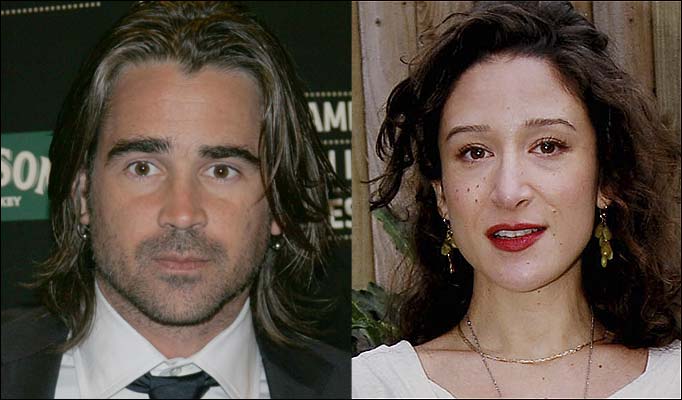
In her fiction, Forrest shines via vivid prose, original characters, and crackling dialogue, and in ‘Liars (A to E)’ she distills those elements down to a truly entertaining mix (with, of course, her trademark Springsteen references). Bacall is a 29-year old failed bakery owner – “small, with 40’s fixtures”. We meet her zipping a plushy bunny outfit over a retro Playbunny costume to greet her fiancee, and that’s a pretty good indication of her character: not so much quirky in the traditional ‘manic pixie’ Kirstin/Natalie/Zooey mould, more an adult woman with flair and humor. Said fiancee, Mark, is a rock-star with a penchant for fingerless gloves and stealing chords from Dylan; he dumps her by page seven, prompting Bacall to drunkenly demand her blow-jobs back, and then embark on her quest to reclaim items kept by all of her ex-boyfriends as she and her friend drive cross-country to the Obama inauguration.
Having despaired for many years about the kind of women we end up seeing on-screen, I’m especially disappointed that I won’t get to witness Rebecca Hall as Bacall, and Kat Dennings as her 21-year old friend (a failed comedienne and author of an earnest (and graphic) book on feminism for the tween set). They’re smart, fun women, but their intelligence isn’t played for laughs, it’s just taken as a basic matter of fact – which shouldn’t even need mentioning, but given that the majority of scripts show women that bear no resemblance to anyone I’ve ever met, well, sadly, it does. There’s a humor in their dialogue that had me howling out loud, (and retyping the many, many choice lines to my own best friend as we read the script together via IM) but what I loved was that their friendship has both natural ease and an interesting dynamic brought on by the gap in age and perspective.
BACALL: Remember your last break-up?
ELISHIA: Yeah. I was nineteen. It’s why I don’t do relationships.
BACALL: So. It will be harder to get through when you’re twenty four. And harder than that at twenty seven. And at thirty, you may feel like you just can’t do it at all.
The men too have their moments. Rock-star Mark, who could easily have been written for Russell Brand-esque laughs, instead is given depth along with his “gay terrorist” keffiyeh, and his scenes with Bacall make us genuinely believe in their love – and her heartbreak. Some of the exes are more comic than finely-drawn (the Irish Catholic-turned-Jewish poet, the druggy former Rock n Roll Hall of Fame guide) but Forrest keeps their scenes brief, and doesn’t labor her jokes for long. In fact, the pace is swift right the way through, keeping you entertained despite the fact that there is little real tension implicit in their travels.
So what’s not to love? Well, the narrative arc of the script meanders through the women’s road-trip as Bacall visits to her various exes enroute to D.C, and while these encounters do eventually shed some light on her romantic history and current issues, the character development isn’t as defined as we’re trained to expect from these kinds of indie movies. There is no grand revelation, or final-act dash to the airport, just a few quiet moments of realization that are easily drowned out by the surrounding noise of inauguration night. And yes: the political content is pretty high. From election night partying (as someone joyfully cries “I’m never going to have to hear about Sarah Palin again!” Oh, how little we knew), to the final celebration itself, Forrest uses Obama, Bush, the idea of our past history and hope for the future as backdrop to Bacall’s quest. I found the political jokes—especially Bacall’s letter to Obama, admonishing him for parading his happy, and attractive domesticity– hilarious, but they might turn off some readers/viewers – particularly since the script is unashamedly left-leaning (as if the casual references to feminism hadn’t already clued you in). Also, the convenient encounters that pepper the script test our suspension of disbelief: a book editor they meet on Amtrack, an Obama staffer they run into in a bar in New Orleans. But since there’s nothing really at stake, the convenience isn’t an insult to any internal logic: more accidents on the road than a vital element driving the plot.
To me, those aspects didn’t diminish the script, and again, I have to underline just how much I enjoyed reading this. Some scripts punch through with the sheer force of their concepts, others click through artfully-constructed narratives and tension; ‘Liars (A to E)’ doesn’t really have any of those, but what it does bring is wonderfully smart comedy, nuanced emotion, and the kind of vivid, interesting women I wish I could read more often.
[ ] What the hell did I just read?
[ ] barely kept my interest
[ ] worth the read
[x] impressive
[ ] genius
What I learned: That you don’t need to push characters too far in order to make them original and memorable. Bacall and Elishia aren’t the usual ‘quirky’ indie movie fare, full of odd habits and either drowning in angst or adorned with perky grins; they’re interesting, and their dialogue – while hilarious and smart – is still believable. Forrest resists the urge to give them clear-cut emotional ‘issues’ that need resolving; balancing development with realistic confusion.
It’s finally here. The Top 100 loglines for the Scriptshadow Logline/Screenplay Contest. If you see your logline below, that means you were selected from nearly 1000 loglines and have until Monday, November 30th, 11:59pm, to send me either the first ten pages of your screenplay, a one-page synopsis (a general rundown of the first, second and third acts), or both. If you want to send me the entire screenplay, that’s fine also, and I’ll only read to page 10. These submissions should be sent to Carsonreeves3@gmail.com (some of you sent loglines to Carsonreeves1 last time. Tsk tsk). The Top 25 will then be announced on December 21st, where further instructions will be given.
If you’re wondering why your logline wasn’t selected (or screaming because you know yours is better than the ones below), here’s a quick list of the possible reasons why I didn’t select you.
1) Spelling and grammar – My experience has been that if someone can’t submit a single sentence without making a spelling or grammar mistake, their script is going to be a chore to get through. Not to say it’s impossible. Just that the odds are highly favorable that that’s the case.
2) Genre – Just like everyone, I have my favorite genres. If you submitted something in one of my least favorite genres, you had an uphill battle.
3) Too vague – “A depressed guy opens a bookstore,” in most cases, isn’t enough information for a logline.
4) Too wordy – Some loglines tried to cram so much information into one sentence, they came off as confusing.
5) Subject matter – This is the big one and probably the most likely reason your logline didn’t get chosen because I’d say at least 75% of you sent in solid loglines. In the end, I had to choose stuff I felt like I would like. So if you didn’t get picked, it doesn’t mean your logline is “worse” than the ones I picked. It just means it wasn’t quite for me personally.
All that said, I made at least one exception to every one of those points. Comedy, Sci-Fi, and Thrillers did well because that’s what I like. But some horror, crime, family, and even a fairy tale, crept their way onto the list. Going through the loglines was both a blast and a learning experience. It reinforced just how important getting your logline right is. You only have a brief moment to catch someone’s attention, so you better make sure it’s perfect. It also reinforces the advantage of having a high-concept screenplay if you’re an unrepresented writer. It’s just so much easier to get people to request your script if you have a great hook.
Anyway, blah blah blah. You don’t want to hear any of that. You want to get to the loglines! So here they are, the Top 100 (plus an extra five I just couldn’t leave off). Who are you putting your money on? (p.s. Any spelling/typo mistakes were probably made by me during the transcribing process)
Title: SWINE HEART HORROR
Writers: Theresa Carey and Bruce Brochtrup
Genre: Sci-Fi Horror
Logline: A mild-mannered Jewish doctor struggles with bizarre personality changes, unfamiliar slaughterhouse memories and increasingly violent episodes after receiving an emergency heart transplant of unknown origin.
Title: Mo Mushi
Writer: Wade Barry
Genre: Dramedy
Logline: Two gay men from San Francisco move to a small Wisconsin town to open a sushi dance club.
Title: Keynote
Writer: Zach Asman
Genre: Dramedy
Logline: An Internet billionaire returns to his hometown to deliver the keynote speech at his old high school’s graduation.
Title: Two Can Play
Writer: Glen Delahave
Genre: Black Comedy
Logline: After suspecting his wife is cheating, a bitter lawyer treats it like any other case and must begin an investigation to gather witnesses, obtain evidence and arrange for an extravagant dinner party at which to present his case to her family and friends.
Title: Antarctic.
Writer: Neil Dave.
Genre: Science-Fiction.
Logline: When an international team of scientists explore a cavern hidden deep beneath an Antarctic lake they discover an organism that predates biological life.
Title: Tasteless
Writer: Adam Conway
Genre: Comedy
Logline: A world renowned taste tester/food critic loses his sense of taste and struggles to discover who he is once his one defining characteristic is gone.
Title: Silent Night
Writer: James Luckard
Genre: Thriller
Logline: With a brutal serial killer stalking Nazi Germany at Christmas, the Berlin detective on the case gets reluctantly partnered with a Jewish criminal psychologist released from Auschwitz to profile the killer.
Title: Synapse
Writer: Matthew Sinclair-Foreman
Genre: Thriller
Logline: During a brain operation, a man has an out of body experience in which he witnesses a murder in the hospital. Debilitated by neurological post-op side effects, he must catch the killer before his investigation turns him into the next victim.
Title: Adult Camp
Writer: Kirk Lilwall
Genre: Comedy
Logline: In an attempt to save his childhood camp from being sold to a large corporation, Ryan changes the target clientele from children to adults. It’s going to be an interesting summer!
Title: Short Term Forecast
Writer: Brad Sorensen
Genre: Comedy
Logline: After discovering a fax machine that can send and receive messages one day into the future, an impossibly inaccurate weather man struggles for career advancement while trying to maintain the space/time continuum.
Title: The Professor’s Daughter
Writer: Josh Mason
Genre: Action/Adventure
Logline: In Victorian London, after Esther witnesses her genius father’s kidnapping, she sets out around the world, using only her wits and her fathers inventions, to rescue him and foil his kidnappers plan to misuse his latest creation. Can she prove that she’s more than just the Professor’s daughter?
Title: Hypoxia
Writer: Daniel Silk
Genre: Thriller
Logline: A woman under Witness Protection awakens on a 747 to discover the pilots and passengers unconscious, the plane depressurized and masked men hunting her. With oxygen and fuel rapidly depleting, she must grapple with surrendering herself to save the 242 people on board.
Title: For Your Eyes Only
Writer: Mukilan Thangamani
Genre: Comedy
Logline: On the eve of a career-defining product launch, a self-centred, misanthropic, food researcher finds her social and professional life turned upside down after the accidental leak of a salacious home video.
Title: Incision
Writer: Patrick Donohoe
Genre: Action/thriller
Logline: A black NYC coroner about to run for public office must struggle to prove his innocence when he is set up by white supremacists as the main suspect in a series of grisly murders.
Title: Valentine
Writer: Norman Szabo
Genre: Thriller
Logline: To escape from her self-destructive lifestyle, a hedonistic young woman impetuously marries a quiet backwoodsman, only to find herself in a primitive world where she must struggle to survive when her husband and the local community turn against her.
Title: Traders
Writer: Hugh Quatallebaum and Joe Graceffa
Genre: Comedy
Logline: Two best friends in a Chicago trading firm are starting to question their relationships with their live-in girlfriends and starting to wonder if maybe the other guy has it better. Then one day, they wake up in an alternate world where….they’ve swapped girlfriends.
Title: Dead Black Clown
Writer: Aaron Golden
Genre: Black Comedy
Logline: Three struggling funk musicians get framed for the murder of a circus clown, thrusting them onto the mainstage of an underground clown war.
Title: For You, My Love
Writer: Tess Hofmann
Genre: Drama
Logline: Despite being a closeted homosexual, an affluent New England family man lives for the health of his marriage — until his oldest son comes out and makes him reconsider his decisions for the first time in decades.
Title: The Fake President
Writer: Crawford Funston
Genre: Comedy
Logline: A whip-smart Senior Advisor — secretly running the White House for a
daft President — suffers a head injury, and wakes up under the delusion
that HE is the President. Denied access, he builds his own makeshift
White House, and begins running the country, setting up a showdown
with the real President.
Title: Give The Drummer Some
Writer: Debbie Boynes
Genre: Dramedy
Logline: A homeless musician rises above the despair of living in the streets
of a Chicago ghetto to become a jazz band leader and the first man of
color to own a luxury hotel in St. Thomas, U.S. Virgin Islands.
Title: Fast Money
Writer: Angelle Haney Gullett
Genre: Drama
Logline: A young girl with a gift for numbers struggles to stay in private school and pull her family out of poverty by taking her first job – as the accountant for her neighborhood drug dealer.
Title: Two Compatible
Writers: Zach Hillesland & Kieran Piller
Genre: Romantic Comedy
Logline: Two genetically related test-tube babies – with two radically different sets of parents – meet in college and start dating, unaware that they are brother and sister.
Title: Girl bites Donut
Writers: Jason Beck and Bruce DeGama
Genre: Black Comedy
Logline: When a struggling pastry shop owner signs away her business to the world’s most evil donut company, she struggles to escape with her recipes – and her life – intact.
Title: Couples
Name: Edward Ruggiero
Genre: Comedy
Logline: The friendships and marriages of three couples are tested after they share a group sex experience while vacationing together.
Title: Fourth and Matrimony
Writers: Geoff Brown and Alex Ball
Genre: Romantic comedy
Logline: When a college football fan falls in love with a girl from the wrong side of their school rivalry, his only hopes of surviving her father’s deranged pre-wedding tests are his seedy best friend and a legendary half-human gridiron terror.
Title: In the Heat of the Dead of Night
Writer: Mike Rinaldi
Genre: Comedy
Logline: A Southern town divided by racism, intolerance, and William Faulkner
must come together to survive an invasion of the walking dead and the
only man who can unite them is a compulsive necrophiliac.
Title: The Legend of Nina Simone
Writer: Jeremy Rall
Genre: Family
Logline: After hearing a legend about the lost recordings of Nina Simone, a young boy teams up with his friends on an adventure to find the treasure in hopes of saving his dying grandfather.
Title: Oh Never, Spectre Leaf!
Writers: C. Ryan Kirkpatrick and Chad Musick
Genre: Horror/Comedy
Logline: After a freak plane crash, an awkward teenage boy must enlist the help of a sexually frustrated dwarf, a smokin’ hot cyborg, and an idiot in a bunny suit to defeat the Nocturnal Wench Everlasting and restore sunlight to the bizarre land of Spectre Leaf.
Title: Senioritis
Writer: A.J. Marchisello
Genre: Black Comedy
Logline: An over-the-hill Principal plays hookie to relive his glory days with a burnt-out high school senior.
Title: Art
Writer: Collin Chang
Genre: Comedy
Logline: When wannabe director Art West forgets his DV camera in the monkey cage he cleans for a living, Freddy, a chimpanzee, creates a “surreal, esoteric masterpiece,” catapulting the now red-hot director into the Hollywood stratosphere, where the only way back to earth is down.
Title: Is that your wife in that celebrity sex tape?
Writer: Kevin Via
Genre: Comedy
Logline: An insecure husband discovers a celebrity sex tape starring his soccer mom-wife and a rock star.
Title: Walking Underwater
Writer: Joe Johnson
Genre: Coming-of-Age
Logline: The disaffected son of a wealthy family comes of age after his father’s death, as he struggles with a complicated love triangle and the shocking delivery of a 23-year-old “dead letter” from the Post Office, which reveals that another man may actually be his real father.
Title: Got Heart?
Writer: Jack Sekowski
Genre: Action-Comedy
Logline: A neurotic organ courier loses the cooler that holds the donor heart for the world’s most popular dog movie star and now must confront all his anxieties, defeat a demented villain who wants the star dead, and locate the heart before the poor pooch is barking at the pearly gates.
Title: Absent
Writer: Tandyn Almer
Genre: Thriller
Genre: With the body count rapidly rising, a retired, cancer-stricken police detective is reluctantly lured out of retirement to assist his son, an ambitious small-town sheriff, with the investigation of a slew of gruesome murders that may be linked to an unsolved high school massacre a decade earlier.
Title: Cure This
Writer: Duré Ahn
Genre: Vampire/Comedy
Logline: A lonesome vampire finds that a cure to his blood-lust and sunny aversion is linked to a revolutionary new treatment for erectile dysfunction.
Title: The Future Prime
Writer: Glenn Forbes
Genre: Psychological Thriller
Logline: Two women, one in the 1960’s and one in the present day, struggle to survive the same serial killer by using a psychological anomaly to communicate across a gulf of time and death.
Title: Belli
Writer: Will Helvestine
Genre: Drama
Logline: The true story of flamboyant trial lawyer Melvin Belli, whose bizarre
courtroom antics earned him million-dollar verdicts and worldwide fame
– and who put his lucrative career on hold to represent Jack Ruby for
free in 1963 Dallas.
Title: Brake
Writer: Tim Mannion
Genre: Paranoid Thriller
Logline: Trapped inside the trunk of a moving car, a newly-hired secret service agent must figure out if his kidnapping is part of a training exercise or an impending terrorist attack.
Title: Genretown
Writer: Omar Najam
Genre: Noir Musical
Logline: Detective Rand McCullens is on a routine investigation of a murder in the noir-borough but when bodies start showing up from the western, comedy, musical and scifi boroughs, McCullens stumbles upon a plot to destroy all of Genretown.
Title: Spying and Lying
Writer: Scott Lowe
Genre: Comedy
Logline: A spy working for a broke Government agency must battle with mobsters, corrupt cops and the Accounting Department denying his expenses when investigating an assassinated diplomat.
Title: Kings of Compton
Writer: Steve Parady
Genre: Drama
Logline: When two brothers, struggling to leave their criminal days behind and stay straight, unknowingly rip off the Mexican Cartel, they rise from the inner city to become major players in the drug trade.
Title: My Two Moms
Writer: Cameron Creel
Genre: Comedy, Romance
Logline: Surprised by his mom’s turn to lesbianism, a popular teen battles his discomfort with her upcoming same-sex marriage and struggles over his crush, the daughter of his mom’s fiancée.
Title: Osiris Revivals
Writer: Anthony Jackson
Genre: Futuristic Thriller
Logline: London, 2045 – a desperate journalist must fight through corruption and hysteria to discover the truth about the world’s first human cryonic revival before he loses the love of his life forever.
Title: Wallaces
Writer: Jameson McCulloch-Faber
Genre: Comedy
Logline: An ambitious, but alcoholic young New York professional inherits his estranged father’s bar in Iowa just in time for the town to ban alcohol. Now he has set up a bootlegging ring in order to make money.
Title: Bible Con
Writer: Ashley F. Miller
Genre: Comedy
Logline: Bible Con — Comic Con for Christians — goes straight to hell when
Jesus and Mary Magdalene fall in love, the keynote speaker turns out
to be an atheist, and the event is besieged by DaVinci Code fans.
Title: The Intake
Writer: Rich Sheehy
Genre: Thriller
Logline: An overly-caring therapist is pulled into a deadly psychological war when a manipulative but needy client confidentially reveals details of actual murders – before they happen.
Title: The Rules of Cusack
Writer: Josh Penn Boris
Genre: Comedy
Logline: John Cusack helps a young man find love using advice from his films. However, problems arise when Cusack falls for the same girl and his perceptions of movie life and real life begin to blur.
Title: Get Motivated
Writer: Stephen Hoover
Genre: Comedy
Logline: When a company motivational camping trip turns into a life and death struggle, a put-upon underling takes action and leads an uprising against his oppressive boss. THE OFFICE meets LORD OF THE FLIES.
Title: Heavenly Bodies
Writer: Ezra Siegel
Genre: Comedy
Logline: Three unlikely teen best friends, one Jewish, one gay, and one Arab Muslim, con their way into Christian summer camp to pursue their crushes.
Title: Marble
Writers: Julie Bourne & Richard Huvard
Genre: Period drama/romantic epic
Logline: Inspired by events of 1914 Marble, Colorado, a mining magnate falls in love with an ambitious newspaperwoman as he strives to deliver the world’s purest marble for the Lincoln Memorial. When labor agitators target the symbolic stone, his obsession to save his town threatens a tragic end to their love.
Title: When the Hurly-burly’s Done
Writer: Jonah Jones
Genre: Sci-Fi Thriller
Logline: Living people are turning to dust everywhere on the planet. A world-wide team of police, spiritualists and scientists, led by a British detective, tries to track down the source. They discover the purpose of life on Earth and the reason for its imminent conclusion.
Title: Untitled
Writer: Jahi Adu Mbwana
Genre: Drama
Logline: A bank computer operator is fired from his job of nearly ten years and finds employment at a local vegetarian health food cooperative.
Title: The Last Stand
Writer: Bruce Spiegelman
Genre: Action/Adventure
Logline: A banished Roman soldier and a desperate young prince lead a band of legendary warriors in a suicidal campaign against the Parthian army.
Title: High School Hero
Writer: Chris Fennimore
Genre: Comedy
Logline: When a former high school football star on the brink of middle age can’t catch a break in life; he sneaks back into high school by claiming to have Rapid Aging Disorder in the misguided hope of reliving his glory days on and off the gridiron.
Title: Just Like Jesse James
Writer: Tim McGregor
Genre: Suspense thriller
Logline: Hearing of a folktale about outlaw treasure buried on the family farm, four cousins take up the hunt but the closer they get to the gold, the more each struggles to trust the others.
Title: Dear Professor
Writer: Jason Matthew Lee
Genre: Dramedy
Logline: At a small liberal arts school, a lonely, middle-aged college professor develops an intimate relationship with one of his female students.
Title: Do Not Delete
Writer: Amy Parrent
Genre: Sci-Fi/ Comedy
Logline: A jaded thirty-something gets her wish to time-travel back to her college days, hoping to change her life. But she must contend with a reluctant time-travel companion, her old roommate, who wants to stop anything from changing.
Title: Redemption
Writer: Matthew Leddy
Genre: Drama
Logline: A police officer who discovers she was adopted, a couple on the brink of divorce and a heroin-addict on the brink of death are all interconnected through one central relative who is ultimately instrumental in bringing them redemption.
Title: Secret Agent Mom
Writer: Dylan McFadden
Genre: Comedy; Action/Adventure
Logline: An assassin turned stay at home mom struggles to keep her former existence a secret from her family when a vengeful ex-associate infiltrates her suburban life.
Thanks!
Title: Stop Our Parents
Writer: CJ Whitehead
Genre: Comedy/Drama
Logline: Disgusted by the thought of becoming stepbrother and stepsister, two rival high school seniors grudgingly team up to break up their single parents’ re-kindled passionate college romance.
Title: Played
Writer: Deborah Peraya
Genre: Romantic Comedy
Logline: A total womanizer transforms his female best friend from clinger to player, finds himself attracted to his new creation but has taught her a little too well.
Title: The King’s Beach
Writer: Andrew A. Paul
Genre: Drama/Fantasy
Logline: After his plane crashes on an empty island, a young businessman finds himself fighting for his life in a fantasy tournament that has a beautiful mermaid as a prize, only to question his faith and the mechanism of his calculated life.
Title: The Murder at Cherry Hill
Writer: Joe Pezzula
Genre: Thriller
Logline: When murder strikes the oldest and wealthiest family in Upstate NY, the prime suspect’s confession reveals a stirring cross section of social class, corruption, and deceit, all of which explode across headlines, resulting in the last public hanging in the region’s history circa 1827.
Title: Gaspard’s Hollow
Writer: John Fischer
Genre: Science Fiction/Thriller
Logline: A disillusioned American army chaplain fleeing the trenches of WWI becomes embroiled in a conflict of a more paranormal sort when he comes across a mysterious village in the French countryside.
Title: Louisiana Blood
Writer: Mike Donald
Genre: Thriller
Logline: When five victims of JACK THE RIPPER turn up in a swamp more than a century after their deaths, thousands of miles from the crime scene, an English Detective and a Louisiana Sheriff form an unlikely duo to unravel the ultimate conspiracy and reveal the Rippers true identity.
Title: Elysium
Writers: Fredrik Agetoft & Magnus Westerberg
Genre: Science Fiction/Thriller
Logline: The world’s first in-orbit spa is on it’s maiden voyage, loaded with celebrities
expecting the pampering of a lifetime, when all communications are lost and
everyone on board has to work together to stay alive in the desert of space and
reveal the dark mystery behind what has happened.
Title: The Pandora
Writer: Najla Ann Al-Doori
Genre: Supernatural horror
Logline: Snatched from their normal lives, three strangers awaken in a mysterious, sinking yacht and must escape before an unknown entity kills them, one by one.
Title: The Mother Load
Writer: Alan Anderson
Genre: Comedy
Logline: Desperate to impregnate his baby-crazy wife; a sterile, wannabe dad carries out a heist at a luxury sperm bank.
Title: Placebo
Writer: Matthew Fuller
Genre: Suspense/Thriller
Logline: When a Private Investigator is tortured by recent memories of a murder he doesn’t believe he committed, he must evade the authorities and follow a trail of broken thoughts to track down the organization that imprinted him with the false memories, to regain his sanity and prove his innocence.
Title: Humans!
Writer: Josh Eanes
Genre: Comedy
Logline: In a world populated by sentient zombies, an outbreak of humans threatens the lives of two ordinary zombie youths, as does an increasingly chaotic military response.
Title: The 8th Square
Writers: Ashley Griffin and Case Aiken
Logline: Post modern fairy tale
Logline: After her father’s devastating suicide, a whimsical 21 year-old “Alice” plunges into a subterranean New York Wonderland that could renew her innocence – or ensnare her in darkness.
Title: Double or Nothing
Writer: Nic Lishko
Genre: Family Comedy
Logline: After losing his job, a father drags his family across the country to secretly compete on a game show to save the family from going bankrupt.
Title: Lazarus The Renegade.
Writer: Bryn Owen
Genre: Science Fiction/Adventure.
Logline: A man awakens after five years in a coma to discover the Earth has been conquered by an oppressive alien race.
Title: Volatile
Writer: William C. Martell
Genre: Thriller
Logline: Eddy lost everything: his job, his house, his wife. Spends his final
unemployment check drinking, wakes up with fresh stitches. Stolen
kidney? Implanted bomb. Anonymous caller gives him six one hour tasks:
Steal a car, steal a suit, steal a gun… assassinate executives from
the company that fired him!
Title: Welcome To Pizza Heaven
Writer: Mitchell Todorov
Genre: Comedy
Logline: After his career in journalism is sabotaged by a co-worker, Scott Streets is forced to reach a new low: working at a pizza place. With the help of his misfit, new co-workers, he decides revenge is the only option.
Title: The Conferencegoers
Writer: Ben Strand
Genre: Comedy
Logline: A dying business man asks his two best friends to join him in a final whirlwind search for love, frequent-flyer miles and free expo swag by attending each other’s business conferences.
Title: Damaged Goods
Writer: Linda Belch
Genre: Action/Drama
Logline: After suffering a traumatic brain injury, an Iraqi war veteran escapes from the mental hospital where he is being held and travels cross country to keep a promise he made to his son.
Title: Killer Parties
Writers: Ben Bolea and Joe Hardesty
Genre: Comedy
Logline: In the frozen Alaskan tundra, where the sun rarely rises, four best friends struggle against the most terrifying experience of their young lives…graduation.
Title: Suicide, Inc.
Writer: Laura Kelber
Genre: Thriller
Logline: In the not-too-distant future, a shadowy organization recruits desperate New Yorkers to become suicide bombers.
Title: Aftermath
Writer: Jared Waine
Genre: Drama
Logline: After a giant monster attack on Miami, three disparate people- a retired sailor, a burnt-out virologist, and a torn rescue worker- deal with love and loss amongst the ruins.
Title: Destination Yesterday
Writer: Dexter E. Williams
Genre: paranormal thriller
Logline: a sacramento businessman discovers – through information provided by a mysterious woman – that his recurring nightmares of a tragic plane crash could be repressed memories of a previous life.
Title: Fetalgeist
Writer: Greg Hart
Genre: Horror
Logline: After surviving a horrific car crash, a pro-life student group seeks shelter inside a long since abandoned yet very much haunted abortion clinic.
Title: We Found Bigfoot
Writer: Robert Ducey
Genre: Drama
Logline: At the height of the 1970’s Bigfoot craze, an obsessed, lonely 9 year old boy living in the heart of Sasquatch country becomes entangled in a hoax which threatens to shatter his family, new friendships, and his innocent belief in the mythic creature.
Title: Run-Off
Writer: Jordan Innes and Mo Twine
Genre: Adventure Comedy
Logline: A pair of mismatched deadbeats embark on an ill-fated rafting odyssey
down the urban toilet known as the Los Angeles River in search of
adventure and a fresh start.
Title: Year of the Octopus
Writer: Mark Bucciarelli
Genre: Drama
Logline: Steve Westly, a middle-aged, out-of-work, sex-addicted architect on the verge of suicide so the two children from his first marriage can collect the life insurance money, has a saving grace, once in a lifetime epiphany.
Title: Faithful
Writer: DN Luu
Genre: Psychological thriller
Logline: When a cocky advertising exec meets and falls for a mysterious woman in white on the Metro train, he soon discovers that she is not mentally well. What he doesn’t know is that his ability to remain faithful to her during this time will determine whether he lives or dies.
Title: The Man With One Arm
Writer: Stephen Fingleton
Genre: Comedy
Logline: A struggling filmmaker gets funding for his long-cherished spaghetti western, but is forced to make it in Belfast, Northern Ireland.
Title: Tainted
Writer: John Henderson (adaptation of “Rising Phoenix” by Kyle Mills)
Genre: Drama
Logline: After the poisoning of the nation’s illegal drug supply leaves thousands dead, an FBI agent’s investigation is crippled by his own biases and the outpouring of public support for the murders.
Title: The Hour of the Hunter
Writer: Alex Gillman
Genre: Action/Thriller
Logline: A man sets out to avenge his family’s murder only to find out that his family never existed. MAN ON FIRE meets THE MANCHURIAN CANDIDATE.
Title: Thorne
Writer: Michael Sposito
Genre: Action
Logline: A lonely, tormented physicist hijacks the world’s most advanced particle collider traveling back in time to save the mother he lost in the 9/11 attacks, but attempts to warn her alert the hijackers to his presence and threaten the lives of millions unborn.
Title: Sea Gypsies
Writer: Kevin VanderJagt
Genre: Drama/Adventure
Logline: Separated across half of Thailand by the chaos of a devastating tsunami, two strong willed captains of an American colligate rugby team fight their better judgment as one struggles to reunite with his teammates while the other attempts to reunite the children of an indigenous gypsy population with their homes.
Title: Snow Blind
Writer: Dan Benamor and Matt Williams
Genre: Mystery
Logline: A man wakes up inside a crashed car in the Arctic Tundra, not knowing who he is, where the gunshot wound in his stomach came from, or why he’s wanted for murder.
Title: The Country On The Corner
Writer: David CC Erickson
Genre: Comedy
Logline: When a debt-ridden 4th grade history teacher discovers his property was declared a sovereign nation after the Revolutionary War, he battles foreclosure and the State Department in a quest to recreate the American dream of independence on
an eighth of an acre.
Title: Swim Star
Writer: Cameron O’Hearn
Genre: Drama
Logline: After his single mother drowns, a detached high-school senior trains to become a swim star in order to ward off thoughts of suicide.
Title: Not Dead Yet
Writer: Emily Blake
Genre: Action
Logline: Twenty years after the zombie apocalypse wipes out life as they know it, a pair of survivors learns they are not alone, and must fix their issues to protect their warrior children on a dangerous journey by boat to save a woman who may be the key to reviving humanity.
Title: Moonsick
Writer: Mike Jones
Genre: Horror
Logline: After their car breaks down in an isolated German forest, two freelance journalists become increasingly divided between obtaining the greatest story of their careers or immediate escape, when the inhabitants of the only village for miles turn out to be werewolves.
Title: “Blade Runner”
Writer: Tormod Berge
Genre: Comedy
Logline: In a world where all Movies are made with pre-existing fanbases, the star of the “Blade Runner” remake, Zac Effron, is kidnapped. The studio sends the writer, Charles Gatsby, and their best team of actors on a rescue mission, taking them deep in to the jungles of South America.
Title: Chasing Hope
Writer: Miriam Adams-Washington
Genre: Drama/Suspense
Logline: After finding a captivating old photo of the grandmother she never knew, an urban teen journeys to the Deep South for answers and stumbles upon family secrets of forbidden love, lies and a fifty year old unsolved murder mystery.
Title: Mimes Of New York
Writer: Stephen Wegmann
Genre: Comedy/Action
Logline: After witnessing the mob murder a local street musician, a wannabe mime decides to master the art so he can exact revenge — little does he know, he is a pawn in a plan set into motion with the reappearance of a long lost mime master.
Title: Sammy Jingles
Writer: Patrick Bonner
Genre: Comedy
Logline: If John Lasseter, Bob Fosse, Weird Al Yankovic, and Santa Claus, each driving their own vehicle, were involved in a high speed, head on collision, this script about a celebrity obsessed toy factory tour guide’s attempt to save a kidnapped Santa would be what was scraped off the curb.
Title: Ground Work
Writer: Patrick C. Taylor
Genre: Action/Thriller
Logline: His flight from LA to NYC canceled in the immediate aftermath of 9/11, an Arab-American hitman must travel across the country to complete a job, facing the most hostile environment possible for an Arab with a gun and a guilty conscience.
Title: The Alien Diaries
Writer: Glenn J. Devlin
Genre: Science Fiction
Logline: While appraising old and rare books at a restored colonial plantation, a book collector stumbles across a series of diaries that chronicle an alien visitation in 1781.
Title: The Devil’s Anatomy
Writer: Craig Feagins
Genre: Horror Thriller
Logline: A detective’s investigation of an insurance fraud in 1890s Chicago becomes a deadly game of cat-and-mouse when he stumbles across the nation’s first documented serial killer, the cunning and bloodthirsty Dr. H. H. Holmes.
Title: A Constant Variable
Writer: Chris Rodgers
Genre: Sci-Fi/Drama/Comedy
Logline: A quantum physics professor finds himself on the outside of his own life, looking in, when he time travels twenty-four hours into the future and gets stuck there.
Title: The Cat Lady
Writer: Lisa Aldin
Genre: Romantic Comedy
Logline: A reclusive young “cat lady” attempts to find new homes for her 22 felines after her uptight neighbor turns her in to Animal Control, but the mandatory cat evacuation could help her experience a meaningful human connection.
No time to chat. Busy putting together the Top 100 loglines. Announcement will be made tomorrow (Monday) at 12:00pm noon Pacific Time. Here’s Roger with today’s review!
Genre: Thriller, Crime Noir
Premise: A serial killer nicknamed “Blitz” is targeting cops in different beats around London, inciting the ire of the sociopathic Detective Sergeant Brant and his notorious anti-87th Precinct Unit.
About: The screenplay comes from Nathan Parker (“Moon”), adapted from the novel of the same name by Irish noir writer, Ken Bruen. Jason Statham has agreed to play Brant, a crude, sociopathic cop while Paddy Considine will be playing Sergeant Porter Nash, an openly gay cop that works with the homophobic Brant. The director is Elliot Lester (“Love is a Drug”). Bruen also struck cinematic gold with “London Boulevard”, which is being adapted by Oscar winner William Monahan.
Writer: Nathan Parker (based on the novel by Ken Bruen)
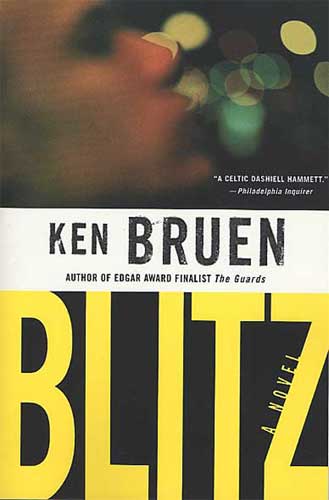
To continue along this crime and noir vein without looking at a Ken Bruen project would be a disservice to all you readers jonesing for a crime fix. After all, ask any modern crime writer who they’re paying attention to in the world of crime fiction, and they’ll all point their fingers across the Atlantic at Ken Bruen.
If you like journeying to the Jim Thompson dark-side every now and then (and believe me, you’ll want to space ‘em out, these babies are grim ), look no further than his Jack Taylor novels.
But if you want a hit of pulp mayhem followed by rails of dysfunction, casual violence, and black humour, then may I suggest the anti-87th Precinct (did you know that Shane Black sustained himself on a diet of Ed McBain novels) Tom Brant novels?
Because “Blitz” is an adaptation of the novel of the same name, just one in a series of short ammo-clip novels that all started with Bruen’s “White Trilogy”.
So what’s the skinny on Brant?
Detective Sergeant Tom Brant is the UK’s answer to Vic Mackey. Or maybe it’s the other way around, because Brant was created four or five years before Mackey, and he sort of makes Vic look tame and unstylish in comparison.
When we first meet Brant, the Southeast London police shrink is attempting to counsel him about his “violent urges”. As a matter of principle, Brant suggests the doctor is gay, physically assaults him, gains the psychological edge, and rubs salt in the wound by ratting out the alcoholic doctor to a Detective Inspector (whilst impersonating the nebbish constable, PC McDonald).
All this he does with brutish style and Celtic panache. Brant is the type of good bad cop (or bad good cop) who sleeps with prostitutes turned informer, murders criminals who escape the system, drugs fellow police officers for sport, and isn’t above watching pitbulls tear apart a man for the purpose of revenge. In other words, Brant is just undiluted, sociopathic fun.

Did I also mention that Brant’s breakfast is always two Club Milks and a tea with two sugars, which he calls a Sid Vicious because in “Sid and Nancy” there’s “this scene where Gary Oldman, wrecked on every chemical known to man, shouts at his record company rep, who’d asked him what he wanted to drink, ‘Cup a tea, yah cunt, and two sugars.’”?
The Bad Lieutenant could take lessons from a man like Brant.
And more importantly, Jason Statham now has a role to sink his teeth into where he doesn’t have to take off his fucking shirt. I’m sorry I’m not sorry, ladies.
The 87th Precinct has an ensemble cast. Who are the rest of our London players?
There’s Chief Inspector Roberts, whose wife dies in a car accident at the beginning of our story. One of the things that Bruen seems to do so easily, and which Parker captures perfectly in the script adaptation, is that he smudges the lines between comedy and tragedy. How many writers can take a sequence where a man whose wife of decades has just died and capture the blunt shock, pity, sadness and humour that humans are privy to in the face of life trauma?
Just look at the scene where someone steals his wife’s urn. It’s fucking brutal, but you can’t help but laugh.
This script shifts and weaves and paints in so many emotional tones you can’t help but marvel at the deft character brush-strokes. A master has been at work, and we know it because it all seems so effortless.
Porter Nash is the handsome, openly gay sergeant who takes the reins from Brant. He’s a new arrival, but he earns the respect of the men and Brant because he’s just that good. There’s an uneasy partnership of necessity and respect between the two men, and it’s cool to watch them work together.
There’s WPC Falls, a black female investigator who is trying to find her place in the unit. She’s failed to make sergeant, and she copes by drinking hard and relapsing into substance abuse. Her favorite past-time in the hellish third act is robbing dealers. Ironically, she’s protective of a teenage punk with the British National Party, AKA Hitler Youth.

PC McDonald is the Superintendent’s star pupil, but more entertainingly, he’s the squad’s scapegoat. It’s fun to watch him blunder. It could also be argued that it’s fun to watch his sanity and resolve disappear as he struggles to stay above water in the real world of cops and murderers.
When The Blitz crashes the party, our notorious unit is cast further into limbo and they all must embrace their personal demons if they want to stop him.
Who is The Blitz?
He’s a hammer-wielding serial killer that targets cops.
It’s bad business, killing cops. Not only are you going to incite the ire of an entire police force, but you’ll have to go toe-to-toe with Brant, and you better be fucking committed to your art if you have to deal with a wild Celt with a badge.
Yet this is the perfect recipe for entertainment, as there aren’t many things more entertaining than watching two psychopaths drunkenly chase each other around London with bullets and hammers.
Add Brant’s seriously disturbed co-workers to the mix, and well, if the resulting “investigation” doesn’t entertain you than I don’t know what will.
How’s it go down, Rog?
Like a shot of Jameson, straight up.
These are good characters, and they have a combustive family dynamic where they support each other’s addictions and bad behavior. They take care of their own, and you can’t help but bond to these people when their life outside of police work crumbles around them.
Or maybe all they have is their police work, their job, and when threatened with “leave”, “time off”, or “vacation” (which any normal person would take considering the personal circumstances), they snarl their way back onto the beat or the chase because life outside of their job is too rough.
It’s too scary to have to face those demons alone.
And capturing The Blitz is exorcism, it’s a grail that justifies their loneliness, their anger, their sadness. Their brokenness.
Brant suffers from some old-fashioned Tennessee Williams blackouts. There’s a scene in the script where he does nothing but stare at a blank wall, his mind and heart numb.
Blank.
A human being whose fuse has burned down on both ends and in this rare moment of vulnerability, where we see something other than the sociopathic bull, we realize that Brant really is human.
He’s paying a price for his sins, and he pays it gladly.
If “Blitz” can be criticized, it’s that at its heart, the plot is pretty familiar territory. This coupled with its ensemble cast makes it feel like an arc or storyline off “The Shield” (or the novel and movie, “Red Dragon”) or any other television procedural.
But this baby is about the characters. It’ll be Jason Statham’s best role and it should appeal to the “Layer Cake” and crime noir crowd. It plays like a crime procedural force-fed through a wood-chipper with a stack of pulpy Raymond Chandler, Jim Thompson and Ed McBain novels.
Simply put, it’s lethal stuff.
[ ]What the hell did I just read?
[ ] barely kept my interest
[xx] worth the read
[ ] impressive
[ ] genius
What I learned: Shoot for ironic relationships between your characters. Blitz is full of ‘em. The most noticeable are the twin satellites of Brant and Nash. Brant is homophobic; Nash is openly gay. They have to work together. Instant conflict. PC Falls is black; yet she looks after a teenage Nazi. Instant depth. Brant kills with a badge; Blitz kills outside of the law. Instant battle of wills. Ironic relationships: They kick things up a notch.