
What’s that old saying?
You don’t know what you’ve got til it’s gone?
No. That’s not it.
The grass is always greener on the other side?
Maybe.
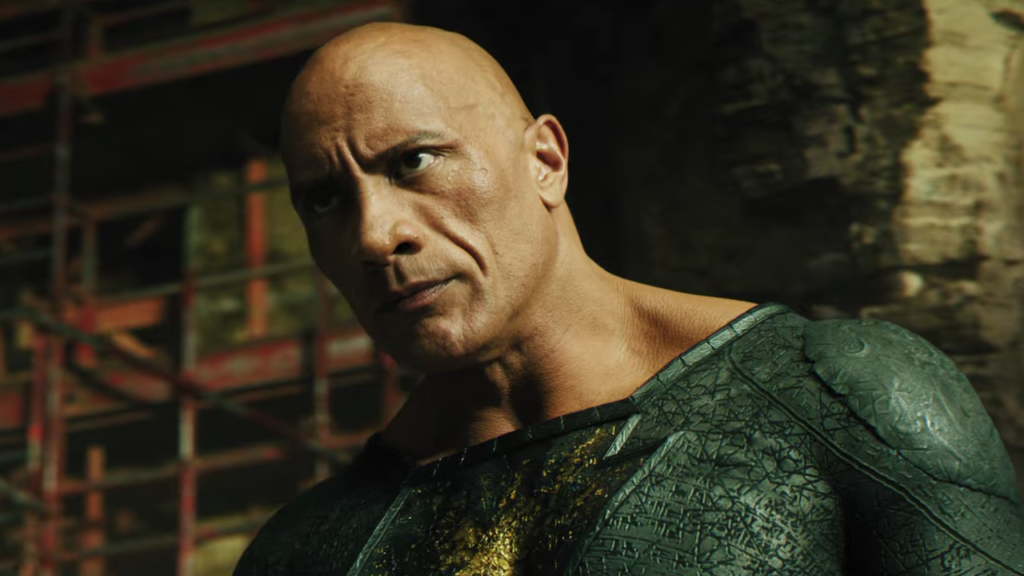
I’m trying to say something about why Black Adam didn’t do well at the box office.
There have been a lot of critiques of superhero movies as of late. They say that they all feel the same. They’re all lowest-common denominator entertainment. You’ve seen one, you’ve seen them all.
While there are definitely issues with Marvel and DC movies, sometimes it takes a superhero flick outside of that space to help you realize just how much better those movies are. While technically part of the DC universe, Black Adam is its own thing. And it’s so generic that nobody went to see it.
This has surprised no one except for the film’s creators.
How did they get it wrong?
We always say that the key to a successful idea is to make one tweak to the formula. Give us “the same but different.” If you spoke to The Rock or anyone working on this film, they would’ve proudly said that’s exactly what Black Adam did. The title character is a superhero who kills people. He’s not all good. That’s what makes him and this movie different!
For this reason, we should all be running out to theaters to watch this film because it’s a unique twist on the superhero formula.
But we aren’t.
Why?
In my newsletter (e-mail carsonreeves1@gmail.com to get on), I talked about the importance of telling the TRUTH as a screenwriter. If you lie to the reader, they’re done with you. Cause if the reader can’t trust that what you’re saying is real, why would they continue to subject themselves to more lies?
The Rock tells us, in the trailer, that he kills people. That he’s not good. But does anybody watching the trailer truly believe that? Do they believe that he’s bad? Not a chance.
First of all, if you were really bad, your movie wouldn’t be rated a safe and cozy PG-13. And, if you were really bad, you wouldn’t have cast The Rock in the lead role. Everybody knows that the Rock has an image to uphold. They all know that he’ll never do anything that bad. So we all know you’re lying to us.
Right there, you’re done. You’re done before we even got to the theater because we know you’re lying. If you were serious about what Black Adam was saying, you would’ve cast Tom Hardy, Christian Bale, Idris Elba, or Michael B. Jordan. You wouldn’t have cast the sweetest most caring guy in Hollywood who actively cultivates a family-friendly brand. You would’ve given the movie an R-rating. You would’ve given us a much darker film, which we would’ve seen in the trailer.
We all know The Rock is going to be The Rock in this film. So the only thing you could claim as different in your movie, you neutralized with the casting. Maybe this is for the better. With James Gunn taking over DC, you get the feeling that he’s going to make a lot more Suicide Squad type movies and a lot less Black Adams.
Yet another high profile piece of fiction was also shown the exit door recently. Westworld got canceled at HBO. I hear a few people complaining about this online. How could you cancel Westworld? Pretty simple. It originally had 12 million viewers an episode. Now it has 4 million.
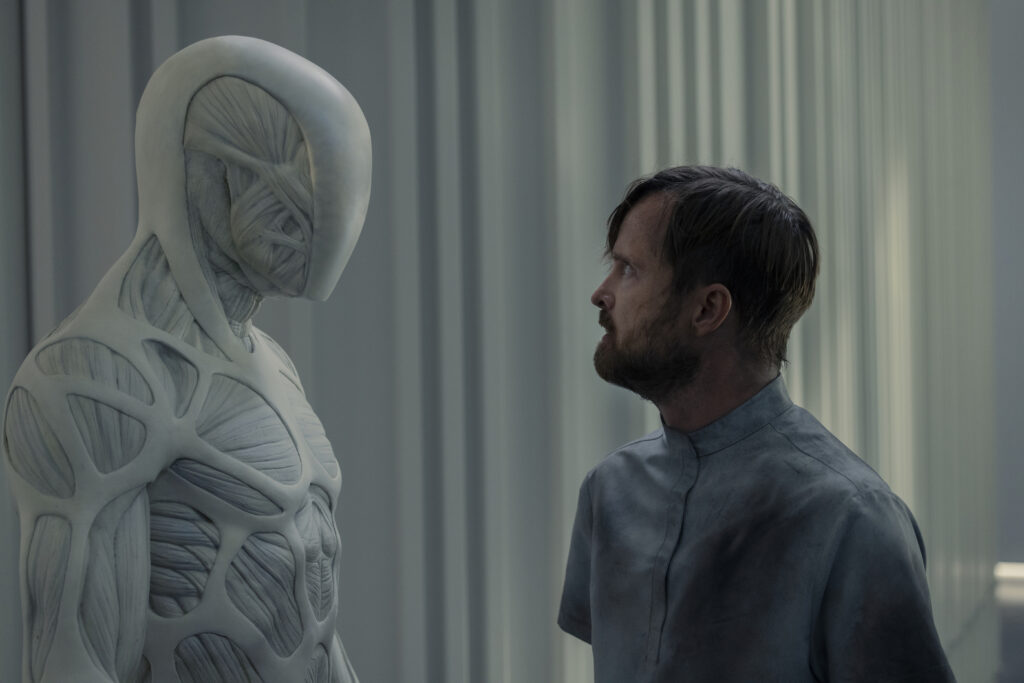
Maybe you can rationalize that drop with a White Lotus budget. But you can’t rationalize it with a Westworld budget.
Look, I’ve said this a dozen times already. You could see Westworld falling apart mid first season. You could see that they didn’t really understand their mythology. And every episode since then has shown the mythology getting sloppier and sloppier.
It’s the same deal as the Rock telling you he’s a bad guy. We know you’re lying. We know, Jonathan Nolan and Lisa Joy, that you don’t really understand this world. And I’m not saying world-building is easy to do. It’s painstaking to flesh out mythology that can support 6-8 seasons of television.
Which is why I tell writers, you gotta do the hard work and figure this stuff out ahead of time instead of putting it off. Cause readers have a sixth sense. They can feel when you’re trying to figure things out on the fly.
One of the reasons the original Star Wars trilogy was so good was because George Lucas’s first Star Wars screenplay was 200+ pages and included all three movies. It wasn’t until people kept pestering him to cut the script down that he finally focused on just the Death Star storyline and took the Emperor stuff out.
Therefore, when it was time to make a Star Wars sequel, he already knew all the mythology surrounding that sequel because he’d written it into the original script.
Naturally, we saw what happened when Lucasfilm took the opposite approach in the most recent trilogy. They tried to figure it out on the fly and that resulted in bizarre moments such as Rey being a Palpatine, Han Solo coming back as a Force ghost, and Snoke being some sort of test tube clone.
You don’t want to f**k with mythology, guys. It’s unforgiving, particularly later in your story when your world and rule-set have to be airtight. And just to reitnerate. You can’t fool the reader. If you’re shaky on some rule or some piece of your mythology, I guarantee you the reader will feel it.
Since it’s been light offerings at the movies, I’ve been looking for films to watch at home and have been frustrated with the options. I know some of you are gung-ho about Terrifier 2 but I suspect that the only terrifying that would happen if I saw that film is how terrified I would be to admit it.
By the way, looking for films to watch is impossible in 2022. Rotten Tomatoes is hit-or-miss. Sometimes I’ll use “Decider.com.” But there’s no place I can just go and they give me three great suggestions. And even after 20 minutes of intensive research, there are always movies that these supplementary sites miss. So since you don’t have any confidence that they’re giving you all the films, you stop going to them.
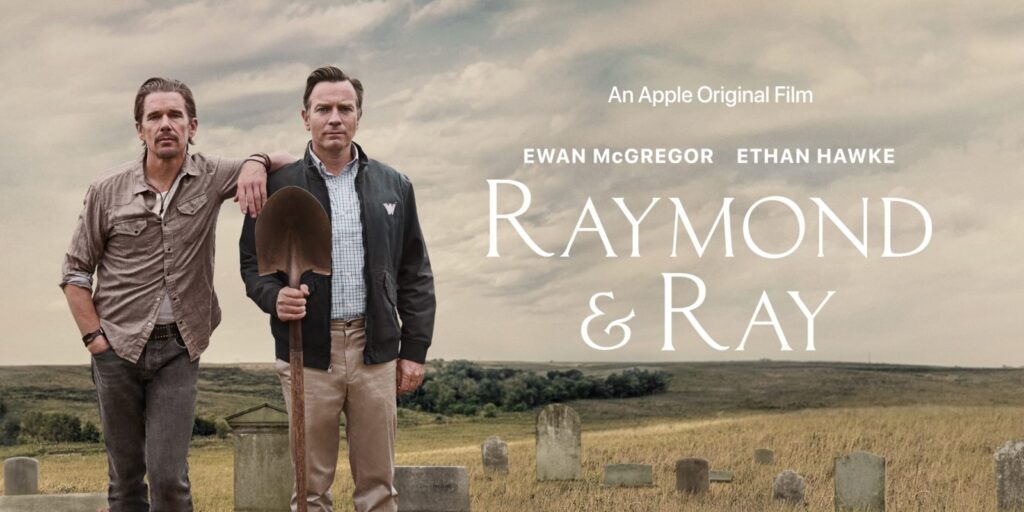
I mean, did you know there was a film out with Ewan McGregor and Ethan Hawke – two great actors! I didn’t. But apparently there is! And it just came out this month! There’s a movie, Causeway, starring an Oscar winner, that just came out. No one’s aware it exists. There’s a movie from the former head of Pixar, the guy who invented Toy Story no less, called “Luck.” Nobody knows about it.
There’s a war movie called “All Quiet on the Western Front” that just came out a week ago. Nobody’s seen it! Just four years ago, every war movie that came out would get a giant marketing push. This one debuted with a whimper. Like a lot of content these days, I have no idea it’s out until it shows up on my Netflix home screen.
You have a film from a filmmaker WHO JUST WON AN OSCAR (for his movie “Green Book”) called “The Greatest Beer Run Ever.” You could take a bullhorn to the intersection of Hollywood and Highland and ask if anyone knows about the film. They’d all tell you they have no idea what you’re talking about.
Granted, some of these movies aren’t good or aren’t made for broad appeal. But you’ve got stuff like 13 Lives, which is a great movie on Amazon Prime, that is just sitting there in digital obscurity. You’d have to look for it to find it. But since no one knows it exists, you don’t even know to look for it in the first place!
This is a growing trend and something I’m worried about. I suspect that the years of 2019 to 2026 or 7 are going to be known as the Graveyard Streaming Years in Hollywood. All of this content is being made that immediately disappears. Is that not devastating?
There’s a show right now called Shantaram, which is based on a novel that sold six million copies. It’s got a legit lead actor in Charlie Hunnam. And it’s got insane production value, as it’s shot on location in Mumbai. Five years ago, this show would’ve had an insane marketing campaign. There would be so much awareness of it. Yet nobody seems interested in letting you know the show exists. Including Apple, who made it!
Lou, Blonde, Day Shift, Senior Year, Rosaline, a Fletch movie, Outer Range, Tokyo Vice, The Sandman, Maid, Black Summer. These are only recent shows or movies that have come out and that you’ve never seen because nobody’s told you they exist. They have been banished to digital purgatory. It’s more terrifying than Terrifier 2.
I almost feel like there should be an entertainment version of the SEC that makes sure that films and shows get a minimum amount of exposure so that people know they exist because it doesn’t make sense to spend 100 million on something and let it die on a below-the-fold 4th line of suggestions on your streamer’s home screen.
We shouldn’t be feeling like we’re all missing stuff just because it’s not being marketed properly. I don’t know if anybody else feels this way but I certainly do.
The good news is, we’ve got a big one next week. In fact, we’ve got tons of big movies coming our way. This is one of the best times of the year for film buffs. I’m curious how they’re going to balance emotion with entertainment in Black Panther 2. If they go too heavy on Boseman’s death, the movie might be a sad experience. I still want to have fun here. But this film is coming at just the right time. We need something big that everyone is talking about. Those releases unify the movie-going public. I’ll definitely be reviewing it Monday.
In the meantime, what the heck should I watch???
And it’s a good one!

I stumbled upon a giant SHOCKING screenwriting lie that was sold to the world back in 2017. I find a freaking new SCRIPTSHADOW TOP 25 SCRIPT! When was the last time I found one of those?? And I include a download link so you can read it yourself. I talk about the writing in House of the Dragon versus She-Hulk. Ted Lasso, Ant-Man, James Cameron, Sydney Sweeney, and the next writer of Secret Wars all make an appearance as well.
If you’re not signed up for the newsletter, e-mail me at carsonreeves1@gmail.com and I’ll send it over!
P.S. – Don’t forget to e-mail me if you want a script or logline consultation. $100 off if you mention this post!!! (carsonreeves1@gmail.com)
Why do Ryan Coogler and James Cameron get to write mega-scripts while you’re obnoxiously constrained by the script-length Gods?

We are about to be hit with two of the longest studio releases of the decade. We’ve got Black Panther 2, clocking in at over 2 hours and 45 minutes. And we’ve got Avatar 2, which is somewhere north of 3 hours.
This got me thinking about the age old question of script length. When I first got into screenwriting, I was told (and promptly ignored) that your script should never extend beyond 120 pages. As time went on, that number dropped to 110 pages.
Despite this unofficial or official (depending on who you talk to) page rubicon, the newbie screenwriter receives mixed messages every time they go to the theater. They’re told their scripts have to be 110 pages as they watch Avengers Endgame arrogantly clock in at 150 pages. How does a young and confused newbie screenwriter reconcile this?
Over time, I’ve learned that the script length question is a nuanced one. There are certain genres that have low page counts and other genres that have high page counts. There are also additional variables that affect page length, all of which make up a complicated picture, one that seems to change depending on which angle you view it from.
But the basic equation works like this…
Character Count + Location Count + Plot Complexity = Page Count
Less characters = less characters to develop = less pages
Less locations = less situations to set up = less pages
Simple plots = less explaining = less pages
The horror movie I reviewed at the beginning of the month, Deadstream, about a single character live-streaming inside a haunted house… that movie was 90 minutes long. And, for those who don’t know, one page of screenplay equals one minute of screen time (this is why screenplays are written in that weird spaced out manner – to match out page time to screen time). So 90 pages is usually where you’re going to be when writing a 1-3 character movie in 1-3 locations.
If you prefer to write non-contained thrillers, you’re going to need more page space. The word “thrill” implies a fast pace which means you’re still keeping the page count low. But these movies have a few more locations and characters, which should put them closer to 100 pages.
“Taken” is a good example of this. Tiny character count (only two main characters – the father and the daughter). Our hero is constantly on the move. Final page count for the script: 101 pages.
If you move over to comedies, these tend to work best in the 105-110 page range. Like thrillers, they need to move fast. And since most comedy plots are bare bones, you don’t need to spend a lot of time plotting. Even the slightly complicated storyline of The Hangover didn’t affect the page count that much, as the screenplay came in at 111 pages.
When you move up to action or action thrillers (Bond, Fast and Furious, Mission Impossible), now you’re tempting the page count Gods, moving closer to that most evil of script overseers: PAGE 120. This is because you’re visiting more locations, which requires more setup, as well as more explanation. And managing any plot big enough that we’re jumping to entirely different cities requires more time on the page. So these scripts will hover around that 120 page zone.
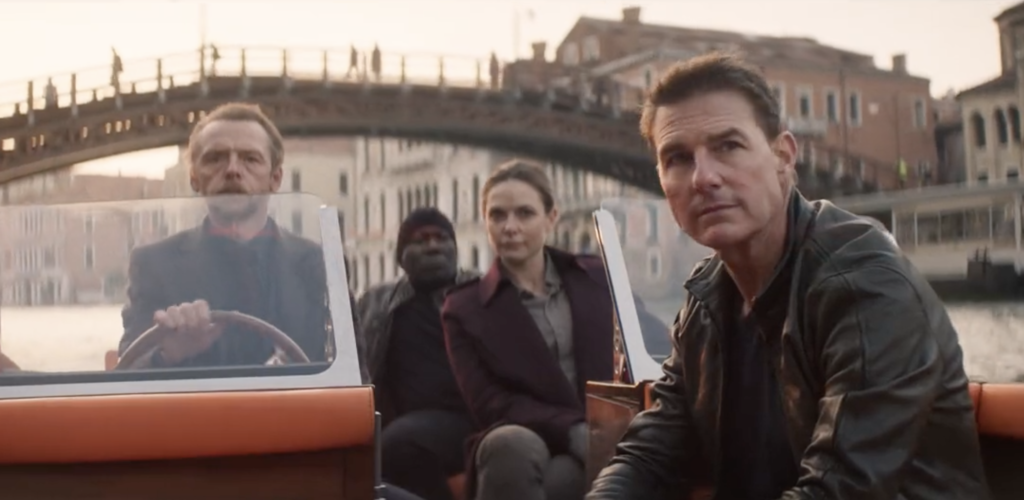
When you add sci-fi or fantasy into that mix, you really start struggling to keep the page count under 120. That’s because in addition to everything else you’re doing, you’re also adding mythology to the recipe. You need scenes that show how your world works (The Matrix spent 25 pages setting up the rules of its world). You also need more description than your average script because you have to explain all this stuff you’ve invented in your imagination. This can really bulk scripts up.
In general, however, the two things that have the biggest influence on your page count are your character count and your plot complexity.
It takes time to adequately set up a character. You need to show who they are in their everyday life. You need to show us what their job entails. You need to establish their relationships with other people. You need to introduce their flaw. That takes time.
If you then have two major characters – or three, or four – you can see how that could start chewing up page space. Cause you have to do the exact same thing for all those characters. This is why movies like Black Panther 2 and Avatar 2 are so long. They’re not only covering Black Panther and Jake. They’re covering the lives of the many many people around them. Like that Ironheart girl (the Iron Man offshoot). She’s going to need 10 pages of setup easy. That’s a lot of pages!
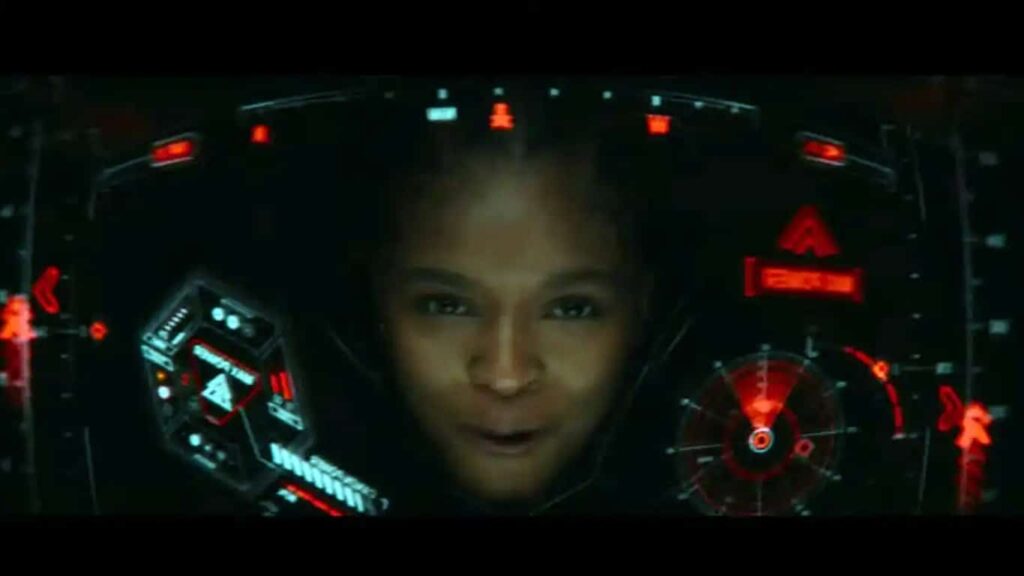
Also, to be clear, when I talk about character count, I’m talking about legit characters who have major roles. I’m not talking about the waitress or some loser who comes in for one scene to provide exposition. I’m talking about characters who have at least five scenes in your movie. The more of those characters you have in your script, the more pages you better prepare for.
The other thing that adds a lot of pages is plot. But it’s not just the plotting itself that brings your page count up. The more complex the plot, the more extensive the exposition. It requires more scenes with characters explaining things to other characters: what’s going on, what they’re after, where it is, how they’re going to get it. And that information is constantly changing, which requires another set of extensive exposition scenes. Watch an Avengers movie and track how often characters talk about what they need to do and how they’re gong to do it. It’s a lot!
Complexity of plot = more exposition, and more exposition is a page-eater. Your Fast and Furious crew discussing how they’re going to break into the White House could take up 5 pages easily.
Bringing this back to Black Panther 2 and Avatar 2: Both these movies have extremely extensive plots and tons of characters. I’m amazed that they’re able to keep the scripts under 300 pages with how much territory they cover.
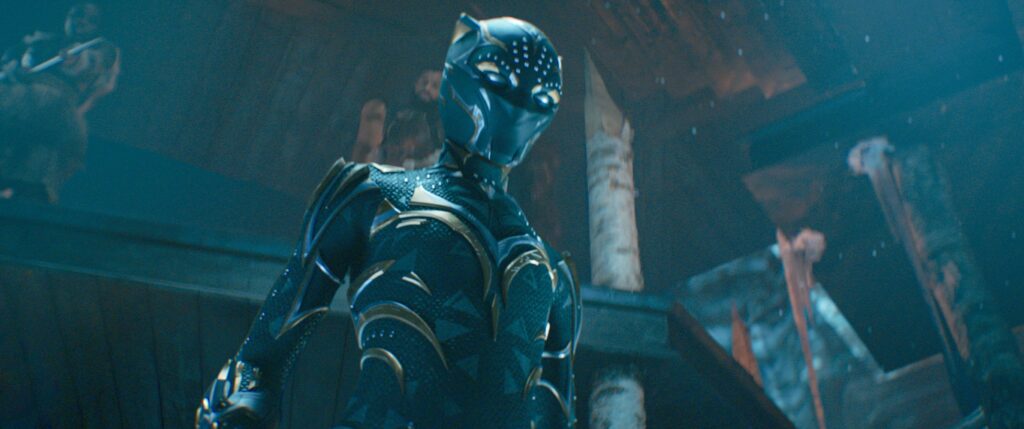
The question then is, why aren’t we allowed to do that in our scripts? This question requires a multi-faceted answer that I don’t have the time to get into. But the bullet points are, you’re writing a script to win a reader over. Ryan Coogler is making a movie to win over an audience. Two completely different scenarios. Look no further than the exit point options for each. Once Ryan Coogler has you at his movie, you’re stuck there. A reader, however, can stop reading your script the second they get bored. And if they’re wavering on page ten and see that they still have 120 pages to go, believe me, they’re going to give up on your script.
But the more nuanced answer is that you *are* allowed to write long scripts. You just need to know all the dramatic tricks in the book to suspend time. One of the reasons Titanic could be 3 hours and 14 minutes is because James Cameron is a master at suspending time. His entire story is built around dramatic irony (we know the iceberg is coming and the characters do not) which creates a strong line of both anticipation and suspense, each of which help us forget time. And that’s just one of the many tricks he uses.
If you know how to do that, then, theoretically, you can write a 300 page screenplay. I’m being serious. If you know how to make time go away in the reader’s head, they won’t check the page length. Cause they won’t want your story to end.
Unfortunately, this is a really hard thing to do. The best authors on the planet struggle to do it every time they sit down and write a book. So it’s going to be extra hard for anyone without a lot of writing experience.
And that’s where the real problems with page count lie. The people who usually write the longest screenplays are the newbies who know the least about screenwriting. They are in that wonderfully ignorant stage where they believe everything they write is gold. But it isn’t gold. It’s trash. Which means that readers are conditioned to think that any long script from another amateur will also be trash. Which is unfair, I guess. But, guess what? Life is unfair.
To summarize, your script’s length will be determined by the genre, concept, and content. More characters equals more pages. More intricate plots equals more pages. So watch out for both. The more you have to explain and describe (think sci-fi and fantasy), the more pages you’re gong to add. Use this information to make informed decisions about which scripts to write.
I’m not saying don’t write a long script. Some stories require more time. But you do want to be realistic and understand that the industry isn’t accepting of longer screenplays from unproven talent. So, if you’re going to write one, make sure you have a plan for distilling and eliminating time to such an extent that the reader never thinks about the page length while reading. They’re too busy enjoying your story.
Good luck!
P.S. – Newsletter coming to your Inboxes tomorrow night with an AWESOME(!!!) script that seems to have been forgotten by time. Oh, and don’t forget to e-mail me if you want a script or logline consultation. $100 off if you mention this article!!! (carsonreeves1@gmail.com)
Genre: Action-Comedy (Family?)
Premise: Two former thieves are having a hard enough time with their fussy newborn baby when a mishap draws them back into their old lives, forcing them to recover a priceless jade bangle, escape their boss’s murderous son and, toughest of all, get their baby to sleep through the night.
About: This script finished with 7 votes on last year’s Black List. The writers, Ted Kaplan and Jenni Hendriks, have written a couple of small novels. This is their first success story in the screenwriting world.
Writers: Ted Kaplan and Jenni Hendriks
Details: 109 pages
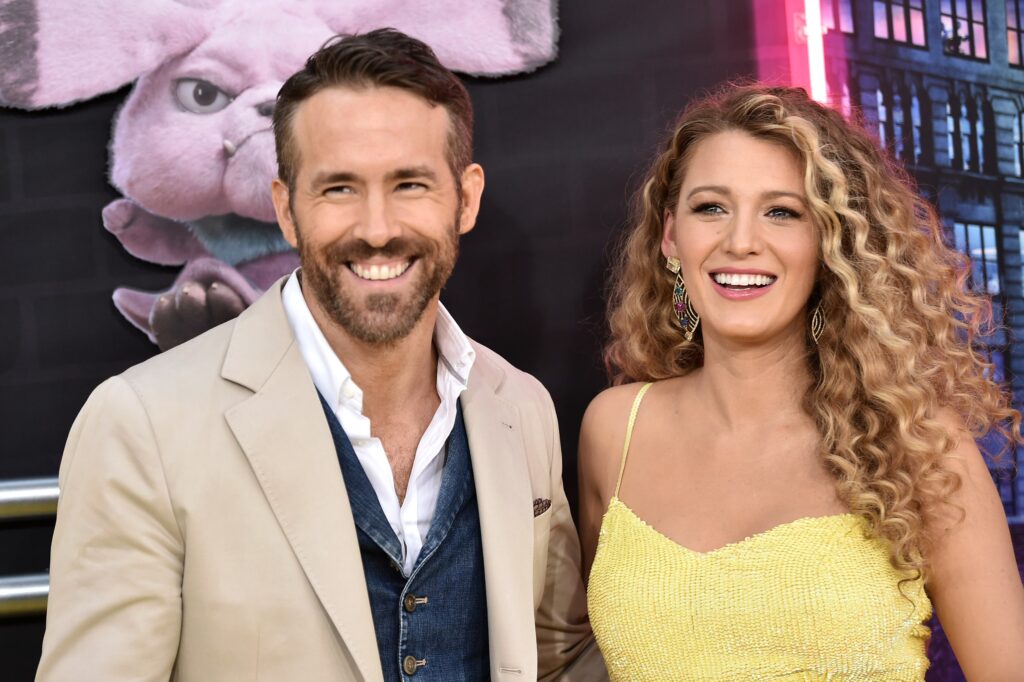 Real-life married couple Ryan Reynolds and Blake Lively for the leads?
Comedy and Action.
If you can master the combination of these two genres, a huge world opens up to you. Cause this is where all the money is made. This is the powerball winning ticket. Not that thieving nickel slot machine.
Look at all the movies that make the most money. Marvel. Star Wars. Fast and Furious. Even Bond. What do they contain? They contain copious amounts of action, and humor!
In other words, these are great writing sample specs to get into the Marvel, the Lucasfilm, and Universal offices so you can pitch your takes on writing one of those movies.
My concern with today’s spec, however, is that it might be too family-oriented, and therefore get pigeonholed in the “lightweight” category. The lightweight action-comedy writers DO NOT get pulled in by Marvel and Lucasfilm. So let’s see which side of the thin cool line Sleep Factor finds itself on.
Mia and Ryan are the ultimate thieving couple. Because they’re in a relationship, they can read each other minds, as Mia utilizes her tech skills to fly drones around the museums they’re casing, pulling security guards along with them, while Ryan slips in and steals whatever they need to steal.
But those days are about to come to an end because Mia is pregnant. Congratulations, Mia. Cut to a year and a half later and these two are lame-o suburbanites who work at both Home Depot and some boring office job.
The two are not dealt a nice baby hand, as their daughter, Penny, can’t strop crying. The sleepless nights are taking years off the couples’ life. The only solution they’ve found to get their daughter to sleep is to drive her around in their car.
One day, when Ryan is coming home from the grocery store, he sees a car robbery taking place and immediately recognizes his wife as the leader of the team. Ryan chases her down then yells at her. She apologizes and says she’s lost her lust for life. That’s the only reason she started doing these late night robberies. And, after some discussion, Ryan admits he does the same thing.
While this conversation is happening, Mia’s very “hip” crew (“JIN-WOO, Korean-American, intense, probably wearing a social justice tee, LOLA, Black, the brains of the operation, and BEX, non-binary, all attitude”) steals the rare extremely valuable bangle bracelet that Ryan stole from his last job, and drive off.
That bracelet belongs to Ryan and Mia’s longtime handler, Joe, who tells them he’s going to kill them if they don’t bring it to him by morning. So off Ryan and Mia go, their baby in tow, to retrieve the bangle. But when the young hip crew make a side-deal with Joe’s biggest rival – the Estonians! – the stakes go up considerably. Do Ryan and Mia still have what it takes? And can they perform this mission with a baby in tow?? We’re going to find out!
Since this script has a lot of car-chasing in it, let’s talk about lanes.
You, the screenwriter, need to know what lane your script is in. You then need to play by the rules of that lane. So, if you’re in the slasher lane, you probably aren’t going to have any car chases. If you’re in the buddy-cop comedy lane, you’re probably not going to have any steamy sex scenes.
Your lane determines the rules you abide by.
I’m not sure Sleep Solution knows what lane it’s in. At first I thought this was a family action movie in the vein of Adventures in Babysitting. But there’s quite a lot of swearing here. And you can’t swear so much in a family movie. So that told me they’re trying to pull in the regular action demographic.
Except which action fans are going to to pay to see a movie about a couple stealing things while trying to keep their baby asleep? It’s not cool enough. I’m sorry but you can dress it up any which way you want. Parents aren’t cool. nd babies aren’t cool.
That leaves the script with a very narrow audience, as far as I can tell. You’re basically aiming for the “young parents” demo. And I don’t know if those people have time to watch any movies, much less this one.
In addition to this, the movie missed out on its best idea. They establish early on that the baby can’t sleep unless it’s in a car driving at least 45 miles per hour. I loved the motivation for this. The baby was in Mia’s tummy during all her wild car chase burglaries. So it makes sense that it feels the need for speed. But that storyline is abandoned early on. There are plenty of times when our couple stops and discusses things. At one point they even pawn the baby off on a babysitter.
Isn’t the best version of this movie a modern-day family-friendly take on Speed? They can’t let the car stop or else the baby wakes up? Admittedly, that would be a very challenging script to write. But I say go with the best hook you’ve got. There’s no true hook here if the baby can be given over to other characters at certain points in the story.
The script also suffers from a vanilla execution.
I’ve struggled with whether the family-friendly comedy can have anything other than vanilla execution. You can’t get too wild in the PG space. But then I always think of Pixar movies. Those films manage to bring in parents, kids, as well as the 18-35 demo. They achieve this because their films are highly imaginative and put a premium on character development.
There’s very little imagination in Sleep Solution.
In fact, there was only one scene that I felt was worthy of a good spec screenplay. Mia and Ryan capture one of the woke crew members and demand to know where the other crew members are exchanging the stolen bangle bracelet..
The scene happens in the back of their car and Bex, the crew member, won’t budge. He’s not giving up the information. So Mia proceeds to change Penny’s diaper in front of him as a torture device. To a 21 year old kid, this is pure hell. He fights it and fights it as Penny goes into extreme detail about the diaper-changing process until it just gets too disgusting and Bex cracks.
I absolutely love when writers do this. They write a scene THAT COULD ONLY OCCUR IN THEIR MOVIE. You have to remember, people, that readers read the same average to slightly-above-average scenes all the time. We’ve become immune to them. One of the most effective tools you have against this is mining the unique nature of your concept.
If Mia and Ryan had threatened Bex with a gun or a knife, we could’ve seen that in any movie. This was the far better, and funnier, option. But that was it. We never get another scene like it again.
Due to the vanilla execution and lack of imagination in Sleep Solution, I can’t recommend it. It has that professional sheen to it that differentiates it from the average amateur script. But in order to get your script beyond the bottom layer of “professional,” you have to push yourself in the execution stage.
A writer once told me about the way his mentor would critique his screenplays. Whenever he encountered a scene, moment, or set piece that felt average or slight-above-average, he would write down: NGE. That stood for “Not Good Enough.” In other words: YOU NEED TO TRY HARDER.
Script Link: Sleep Solution
[ ] What the hell did I just read?
[x] wasn’t for me
[ ] worth the read
[ ] impressive
[ ] genius
What I learned: Again, write scenes that can only happen in your movie because they evolve from your specific premise. A classic famous example of this is the birth scene in A Quiet Place. That scene could only be that effective in that specific environment. Sadly, whenever I see writers succeed at this, they only do it once or twice a script, like here. Push yourself more. Try to come up with five of these scenes — six, seven, ten. The more you’re mining your specific premise, the more original your script is going to be!
A new comedy script is just itching to resuscitate Jennifer Lawrence’s career!
Genre: Comedy
Premise: A woman who can no longer pay her city’s rising property taxes is forced to become a one-time-only escort for a family trying to get their incel virgin son laid.
About: This is J-Law’s next movie. Writer-director Gene Stupnitsky shot onto the scene with his spec, Bad Teacher. More recently, he wrote and directed the really funny, Good Boys. Co-writer John Phillips wrote the spec, Dirty Grandpa.
Writer: Gene Stupnitsky and John Phillips
Details: 113 pages

When you break it down, there was no way for Jennifer Lawrence’s career to keep going at its sound-barrier-breaking pace. In her very first starring role, the indie movie, Winter’s Bone, she got all sorts of high praise for her performance. This lead to The Hunger Games, which became a gigantic franchise, which led to her David O. Russel collaborations, where she was routinely nominated for Oscars.
There are very few people who attain that kind of hot streak and keep it going for more than a few years. She did it for a decade. So it was only natural that she’d come down to earth at some point. It was just a matter of when.
Russel destroying that great “Joy” script was the first nail in the coffin. Starring in that weird unsettling movie by Darren Aronfsky didn’t help. Passengers was a sci-fi movie that audiences couldn’t connect with no matter how much they wanted to. And Don’t Look Up was a curiosity of a movie, but not much more.
I like Jennifer Lawrence. I think she’s one of the few real people in Hollywood. I love the story about how she’d end her acting days on the “Mother” set by watching episodes of Keeping Up with the Kardashians. How many actors would admit that?
But she’s at a crossroads. She doesn’t really have an identity as an actress. So if she’s going to pull herself out of this slump, it’s going to have to be by picking good scripts and good roles. “No Hard Feelings” is sort of a return for Lawrence to her Silver Linings Playbook days. The question is, is it as good of a script as Playbook? Let’s find out, Buster Brown.
Margot, who’s about 30 (she won’t tell us her true age), is a townie in the upscale summer neighborhood of Montauk. The more rich people who move into town, the higher her property taxes get. And it’s gotten to the point where she’s Uber-driving sunrise to sunset to keep her home.
But then her car is repo’d, which means she can’t make any money. What does she do? Her married couple friends are perusing Craig’s List where they find an odd personal ad. A well-to-do couple are offering a car to a woman who can “date” their 18 year old son.
So she goes in for an interview. The between-the-lines conversation is such: You get the car if you have sex with our son. He’s an incel. He’s going to Princeton next year. They’re afraid that if he doesn’t know how to get girls, he’ll be alone for the rest of his life. But, of course, he can’t know that they’ve hired her. Or else he won’t get any confidence from the experience.
Margot doesn’t have to think twice. She needs that car so she signs on the dotted line. She then heads down to the dog rescue organization where our super-nerd incel, Percy, works. Margot plays the flirt card hard. But Percy is so devoid of awareness when it comes to women that he doesn’t understand what’s happening and tries to get away from Margot.
Thus begins an ironically impossible pursuit of this man. Margot is used to getting laid any time she wants. But Percy is like a sensitive flower. He needs to be comfortable with the person. He needs to like them. He needs to hang out with them a lot. All things that Margot has no interest in doing. She just wants to get the bang finished so she can get that car, yo.
As some of you have no doubt predicted, Margot eventually sees beyond the geeky virgin version of Percy to the sweet inexperienced nice guy. So she starts to like him as a friend. But, of course, Percy ends up finding out what his parents did and confronts Margot. She tries to explain her side but the truth is, there’s nothing good about her side. Which means Margot is left alone to examine who she is at this point in her life and what it is she actually wants.
“No Hard Feelings” has a clever opening scene.
It shows Margot’s car being repo’d in front of her house. Margot comes running out to stop the tower. We then quickly learn she dated this guy then ghosted him. Margot puts on the charm, telling the guy she still likes him, please don’t take her car. He’s softening up until, in the background, we see some hot half-naked guy come out of Margot’s front door and start doing squats in the front yard. That’s enough for our tower. He calls Margot a beeyatch and leaves with the car.
Why is this opening good?
It does two things. First, it sets up Margot. She’s obviously a mess. She’s sleeping with new guys every night, having fleeting meaningless relationships. This gives us a great feel for the character. Second, it sets up the plot. That car is her money-maker. With that car gone, she can’t pay the mortgage.
In addition to this, the writers made the tower a former boyfriend. This added an additional entertaining element to the proceedings. Margot isn’t just spouting out plot-related information like a robot. She’s trying to manipulate this guy via their previous relationship in the hopes of getting her car back. It’s a keen way to hide exposition.
Unfortunately, this opening scene is the high point of the script. Nothing afterwards contains as much thought as was put into this scene. Which is a good lesson, by the way. Yes, we all know our first scene has to be great in order to capture the reader. But that doesn’t give you permission to make every subsequent scene less great.
Use that opening scene as a bar to either meet or exceed.
The script has two problems, and they’re unfortunately major ones, as they revolve around the concept and the character. It’s possible to recover from a weak plot at times. It’s possible to recover from a weak relationship in the movie. But if your problems revolve around the concept and the protagonist? You’re in dangerous waters, my friend.
Look, the concept is just unimaginative. I always say that if your concept could’ve been written 50 years ago? It’s probably not fresh enough. Now this isn’t always true. Stiller’s “Meet the Parents” could’ve been set in 1950 just as it could be set today. But this is more of a comedy built around the concept. The concept is supposed to be the highlight. And I’m not seeing enough razzle-dazzle in a 30 year old who has to sleep with a 20 year old for a car.
I was so convinced that that couldn’t possibly be the finished concept that I kept waiting for the real concept to arrive. I thought maybe Percy would secretly be a vampire or something. But no, that’s the concept.
Which brings us to the second major issue, which is that our main character looks really bad here. We’ve got this slutty selfish woman who will bang anything that walks. And she’s going to take advantage of this poor young socially awkward virgin… to get a car! To get a car!!! There’s no way to sugarcoat how unlikable someone like this is.
I suspect that the writers are going for a “forward thinking” sort of “modern feminism” take here – where we’re supposed to like this girl in spite of her flaws. I mean, we’re okay with guys doing this. So it’s time for us to root for girls acting the same way.
First of all, I don’t buy that logic. If this were reversed and it was a male character, I wouldn’t like him either. Actually, we have a fairly recent comp for this in “Red Rocket.” That older character gets in a relationship with a younger character. The difference was he was a genuinely nice guy. And he wasn’t trying to deceive anyone. He really did like the girl. Margot is all about the deception and only wants to sleep with this kid to get a car.
Why would I ever like or root for someone like that?
It got me thinking – what’s the angle here? Why do they think this is going to work? The only answer I could come up with was that Stupnitsky and Phillips were writing their version of The Graduate. This isn’t a comedy in the vein of Bad Grandpa or Bad Teacher. It’s darker and we won’t really see that until we see the way it’s shot. Cause you can shoot these things and score these things to take on a completely different tone. Like the way Risky Business looks like a teen comedy on the page but is actually quite the dark movie in its execution.
But I don’t know, man. I don’t know how you navigate such a repulsive concept and easy-to-dislike main character. It’ll be a challenge for sure. And it’ll probably come down to J-Law’s performance. We’ll see what happens!
[ ] What the hell did I just read?
[x] wasn’t for me
[ ] worth the read
[ ] impressive
[ ] genius
What I learned: Despite my issues with the script, I give the writers kudos for introducing a non-traditional romance. It’s hard to find any romantic relationship in movies we haven’t seen before. This one I genuinely haven’t seen.
