
The movie with the greatest set piece ever is finally getting a sequel!
Genre: Drama/Thriller/Crime
Premise: The lone survivor of a master thief’s crew evades a relentless detective’s shadow across decades and borders, from Chicago heists to L.A. freeways, in a web of betrayal, cartels, and redemption.
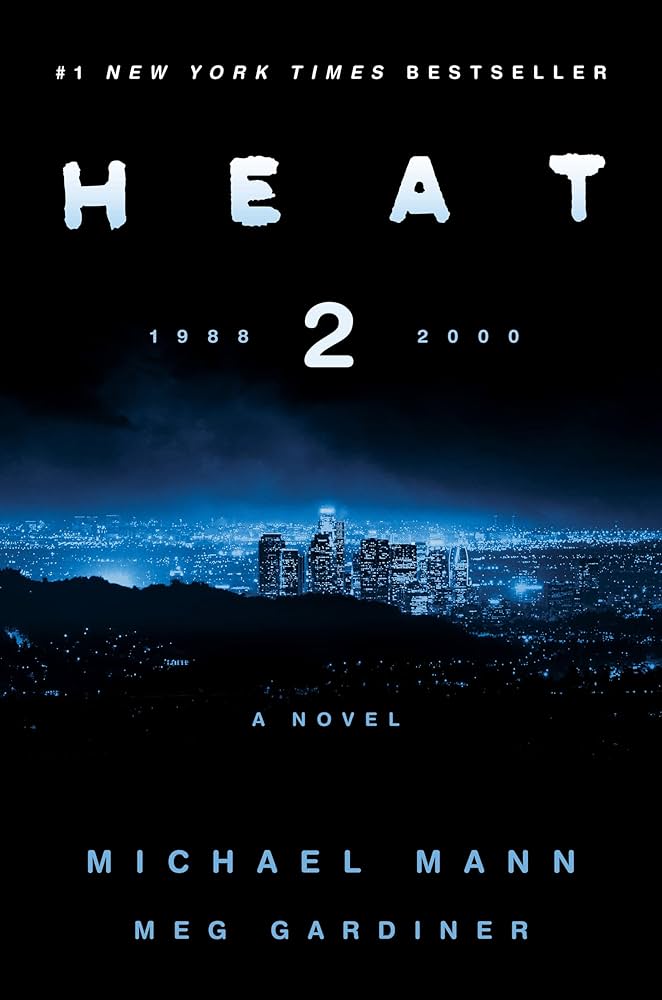
About: Making Heat 2 has become an obsession for Michael Mann. But the plummeting box office takes of movies like Blackhat have left the industry sour on a Mann sequel. So Mann took things into his own hands and wrote a Heat 2 novel, which made the NYT best seller list (side note: to make the list, you generally have to sell at least 5000 copies in one week). With buzz in his corner, Mann secured Adam Driver to play a young Neil (DeNiro) in 2023. But then Ferrari came out and bombed. Mann was up against a new hurdle – recasting icons like Pacino, DeNiro, and Val Kilmer, posed “impossible” hurdles. Warner Brothers, where the script adaptation of the novel was being developed, was not thrilled with the first draft, which, as we’ll talk about in a second, had a lot of timelines! But then a couple of weeks ago, the project moved over to United Artists with Leonardo DiCaprio attached and now it looks like the movie is finally going to happen.
Authors: Michael Mann and Meg Gardiner
Details: 450 pages
One of the prominent go-tos for amateur writers or filmmakers is that IF THEY ONLY HAD the same access to industry contacts that professional writers and filmmakers had, they’d be blowing up local cineplexes with a new movie every six months.
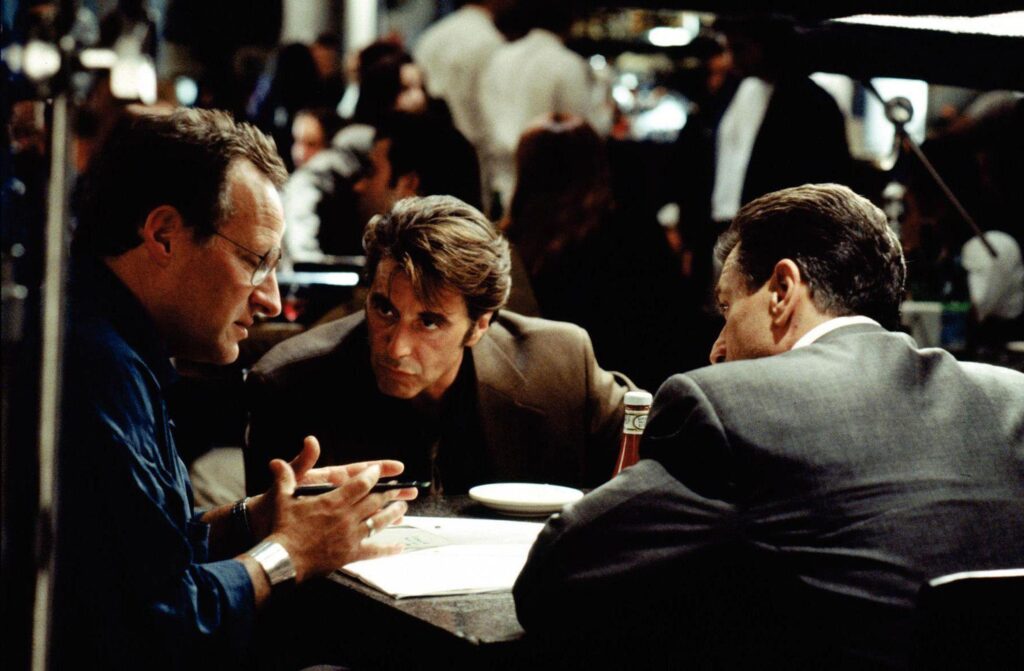
But they don’t realize that the hustle never ends. It doesn’t matter who you are. It doesn’t matter how much success you’ve had. Unless you’ve just made a surprise hit film with a 10x multiple box office return (Get Out), you will ALWAYS have to hustle to get your next movie made. Michael Mann is the perfect example of this. He’s wanted to make Heat 2 for two decades. But no one has allowed him to make it.
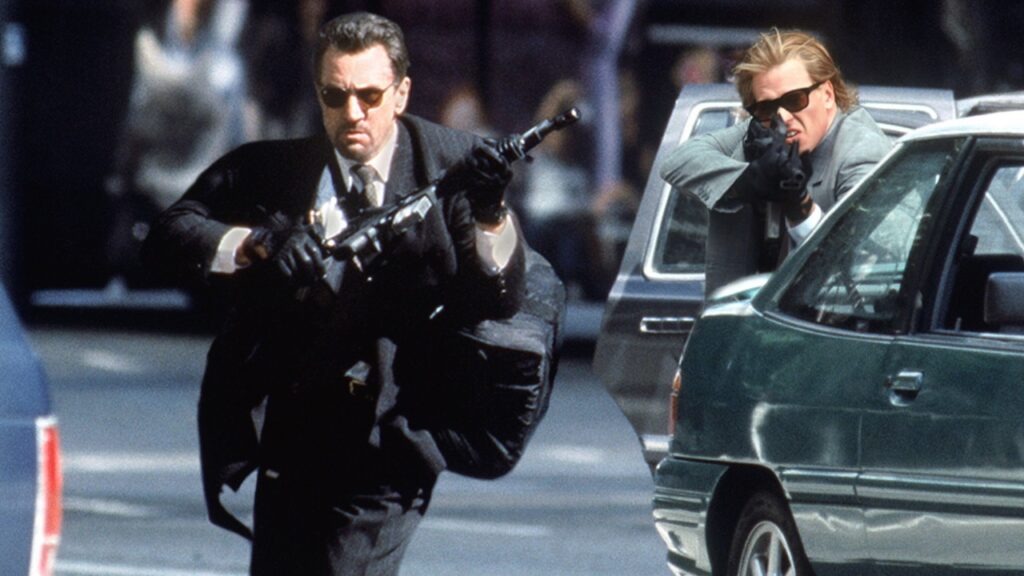
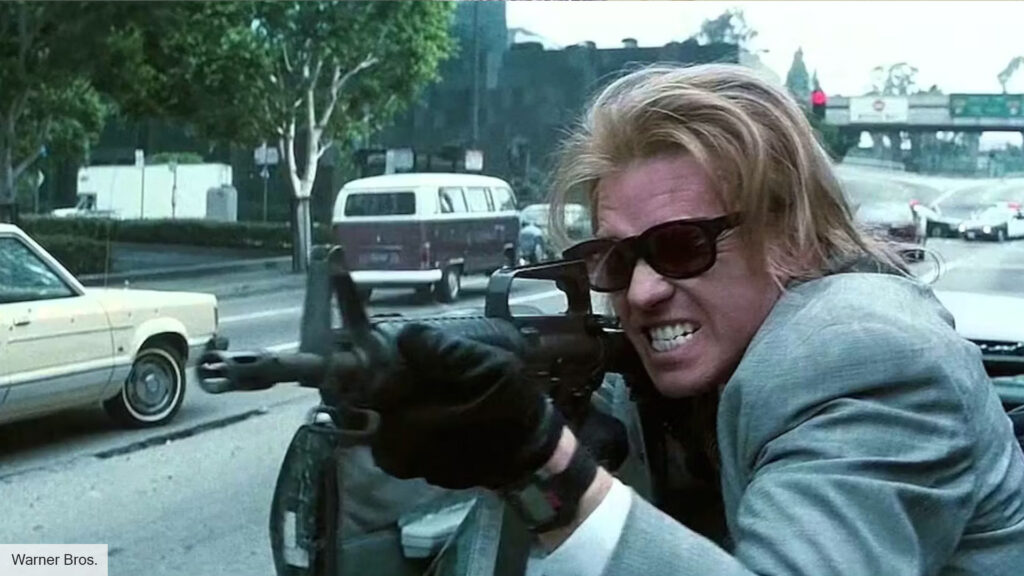
This for a sequel to a movie that features a scene that is more influential to modern filmmakers than maybe any other scene in history. I am talking, of course, about the incredible bank robbery set piece in Heat. How good was this scene? It inspired the entirety of Christopher Nolan’s Dark Knight trilogy. Yes, it’s THAT influential.
Now, obviously, Michael Mann is dealing with different types of problems than the average unknown screenwriter. People have most certainly offered to make this sequel, but with a budget that didn’t make sense. Still, my point is valid. It doesn’t matter what the actual obstacle is. There will always be an obstacle to getting your project made.
It can be said that the people who find success in Hollywood are the ones who stop at nothing to find solutions to these obstacles. Which is exactly what Michael Mann did. There are only so many times you can walk into a room and pitch Heat 2 until it becomes noise to the executives. It’s like trying to sell a house that’s been on the market for 2 years. Nobody wants that house because all they’re thinking is, “well there must be something wrong with it if it’s been sitting on the market for that long.”
So Mann bet on himself and even at his age (82), spent a year of his life writing the novel for Heat 2 to drum up buzz again. And guess what? It worked. Because it got Warner Brothers actively working on it again. Which eventually led to a couple of weeks ago, when Leonardo DiCaprio signed on. And that’s all the investors needed to make this a go-picture.
Heat 2 is a novel with a very wide scope. We start off right after the events of the first film, set in 1995. Chris (Val Kilmer) is the only survivor from the infamous heist team and he’s got to get out of LA immediately or Detective Hanna (Al Pacino) is going to nail him. Some people help him escape across the Mexican border, and he eventually flies off to Paraguay.
We then cut to 1988 in Chicago where a younger Detective Hanna is hunting down some crazy dude named Otis Wardell who breaks into rich peoples’ homes, kills the fathers, and rapes the women, before running off with the loot. He’s truly crazy. Hanna sets a trap for him, which mostly works, as they’re able to kill his entire crew. But somehow, Wardell gets away.
Concurrently in the 1988 storyline, we see the inaugural meeting of Chris and Neil (Robert DeNiro) who become a team and start robbing banks. The team eventually focuses in on a cross-country shipping operation they can rob for 4.8 million dollars. We observe as they slowly put together and, finally, execute that plan.
We then cut to 1996 where Chris has become a security expert at a mall in Ciudad del Este, Paraguay. He gets pulled into some criminal operation that provides an opportunity to make some real money again. But he eventually gets double-crossed and must flee the city.
Finally, the movie culminates in the year 2000, in LA, where Hanna now works. Detective Hanna has become more obsessive than ever when a murdered-woman case he’s working on appears to be tied back to a ghost. Yes, Otis Wardell is back! And when Chris shows up back in LA as well, his criminality tools sharpened from dancing with the craftiest of third world criminals, it will be a giant criminal showdown for the ages on one of LA’s glorious enormous highways.
I’m going to start off by stating the obvious.
THIS BOOK IS INSANE!
I don’t see any scenario by which this movie is under five hours long. Now that I think about it, maybe that’s why Mann hasn’t been able to get it made! At 5 hours and four super-giant set pieces, it’s easily a 200 million dollar budget. Maybe more.
So the question becomes, is this story good enough to warrant that much of an investment?
I’ll say this. It’s better than I thought it would be.
Mann has some of the same issues that Paul Thomas Anderson has. He’s not great with narrative. His scripts can wander. So I was expecting that here. And while there is wandering, each time period has a storyline that clearly builds. So, at least, when we’re in these individual storylines, we’re invested.
My favorite storyline was Otis Wardell. I suspect that this is the role Leo’s going to play. It’s more age-appropriate than Chris, who at times is in his late 20s in this movie. Wardell is a classic 90s villain. He doesn’t just sneak into houses when no one’s home and steal their shit. He actively waits until the family is home so he can sexually assault half of them in the process of the heist. This guy is just a baaaaaaad dude.
Ironically, this makes Detective Hanna a much more enjoyable character. One of the downsides of Heat is that we didn’t really want Hanna to succeed. Cause we wanted Neil to win. But here, Wardell is so bad and Hanna becomes so consumed with taking him down, that we really really root for Hanna in this sequel. I would say he’s the standout character, even above Chris.
As much as I hate to say it, Chris’s storyline is the weakest. Paraguay is a nothing country in the average audience member’s mind. They rarely hear about it. They don’t know anything about it. So it seems like a strange place to build Chris’s story around. I suppose nobody knew about Casablanca before Casablanca came out but something about this storyline feels detached from the rest of the novel. It’s off on its own island and, therefore, feels inconsequential.
My guess is that Mann fell in love with this riverboat shootout in Ciudad del Este and moved hell and high water to shove it into the novel somehow. That set piece here will be the most unique of the movie, I guess. But I’d also presume that when the budget gets written up on this film and they start looking for places to cut, this Paraguay section will be the first to go. Unless they’re committed to the 5 hour version of the story.
All anybody really cares about, though, is, “Are we going to get our 2025 version of the best heist action scene ever?” And the answer is… yes. There’s this big shootout scene on LA’s 105 freeway that sounds like someone said, “How do we do the Heat heist set piece but make it ten times fucking crazier?”
And here’s what’s even cooler about that. Unlike in Heat, where the best set piece was in the middle of the movie, this set piece is the culmination of the movie. All of the storylines collide here. So it’s not just going to be a visceral experience. It’s going to be an emotional one. And therefore has the chance to be historic.
Michael Mann is his own worst enemy. He loves that driftiness. And he doesn’t seem to realize how much it hurts his movies. Does anybody remember Collateral? That was his last good movie and a big reason for that was, he was forced to eliminate the driftiness, cause everything took place over one night.
When he opens himself up to narratives such as this one, it’s like giving cotton candy to a sugar addict. It’s not helping things. Ironically, this is the exact kind of writing THAT WORKS WELL in a novel. So it works here (for the most part). But a movie needs to be focused. So many writers have tried to manipulate the format to embrace their unfocused narratives, determined to be the one writer who figures it out. And it never works. The rumor is that WB was like, “What the fuck is this crazy all-over-the-place script?” when they got that first draft. Which is why they had no issues kicking the project down the street to United Artists. “You deal with this,” they said.
It’s going to be up to someone with some actual writing know-how to guide Mann into a workable draft here. In all honesty, I think what they have to do is a) ditch the Paraguay stuff and b) tie Chris’s storyline to Hanna better. Right now, Hanna’s real beef is with Wardell. Chris is more of a side quest for him. I think that’s dumb. If this movie is really going to cook, those two storylines need to be interwoven much more tightly.
But I liked Heat 2. It’s not perfect but it’s a vibe, man. It’s worth checking out if you are a lover of Heat.
[ ] What the hell did I just read?
[ ] wasn’t for me
[x] worth the read
[ ] impressive
[ ] genius
What I learned: You can’t include it all. We all want to. We love our stuff SOOOOOOO much. But we can’t include it all. The mark of a great writer is someone who is able to cut out something they love because they know the story will be better for it. And, by the way, I’m not referring to this novel. You have more leniency to keep multiple narratives in a novel. I’m talking about the movie. Movies are smaller than you think. They’re only 2 hours long. So you gotta cut things. But here’s why that’s such a good deal for you: It makes you really think hard about what’s important for your story. If you know everything can’t make it in, you will only include the best stuff.
Big spec sale from last week!
Genre: Contained Thriller
Premise: After her father’s death, a young alcoholic woman ventures into the Everglades to get clean, only to find herself trapped in the deadly coils of a giant python, forcing her to fight for her life.
About: This script sold to 20th Century Fox for almost a million bucks. Writer John Fisher, a producer at Temple Hill, wrote the script in secret, afraid of how friends in the industry would react. He went the anonymous route, writing under a pseudonym and posting the script on the Black List site. It gained a ton of traction there, which led to the bidding war that ended with the big sale. This blows out of the water writers’ theories that “you have to know someone” to get a script sold. This person literally knew everyone, and he sold the screenplay as a nobody.
Writer: John Fischer (written as J.W. Archer)
Details: 90 pages
 Aimee Lou Wood for Grace?
Contained thrillers will always be one of the smartest genres for a spec screenwriter to write in. The “thrill” component automatically makes it marketable. And the “contained” part of it makes it cheap to produce.
But “Crush” is not that. “Crush” is a sub-genre within the contained genre. That sub-genre is the ULTRA CONTAINED THRILLER. A contained thriller needs to be at least as big as a room. But ultra-contained thrillers are limited to a tiny amount of space. A coffin in “Buried.” A ski-lift chair in “Frozen.” The top of a tower in “Fall.” And with “Crush,” inside the grasp of a snake.
You’re playing in a different league when you write one of these because the containment is so severe, you have far fewer variables to draw upon for drama. This requires a higher skillset to pull off. The irony is, the best screenwriters never write ultra-contained scripts. They’re usually written by relative newbies. Which makes it rare for one to turn out great.
Here’s to hoping that “Crush” is the exception to the rule.
27-year-old Grace is an alcoholic. When we meet her, she’s barely waking up in her dirty apartment, the kind of place you’d expect a wayward soul with no direction to inhabit. We get the sense, through missed phone calls and text messages, that she may have hightailed it out of her most recent rehab stay.
Through some other visual cues in the apartment, we learn that her father may have recently passed away. So, long story short, Grace isn’t having her best moment in life. Which is why she decides, on a whim, to grab up all her old camping gear and head out to the Everglades. If she’s out in the middle of nowhere, it will be impossible to drink.
And that’s where she goes. She doesn’t just traipse along the outskirts of the Everglades. She marches two long days into the heart of it, to make sure the nearest convenience store might as well be in Egypt.
Funny enough, despite the isolation, she runs into some Instagram influencers who make silly videos about getting bit by things in the Everglades. The group wishes her luck and continues on. That next day hiking is when Grace slips, bumps her head on a rock, and wakes up with a giant python wrapped around her leg.
Before she can get her bearings, it starts dragging her into the forest. Grace is able to grab onto some roots and slow it down, eventually creating a stand-off. The snake seems to be waiting for something. But what? Grace finds out when she’s able to call the National Park Service, which informs her that it’s “scoping you out.” Whatever she does, do not let the snake coil around her chest!
Well that’s just jolly, Grace thinks. But at least now she has the Parks people looking for her. She just has to hold this thing off until they come. But when the snake does, indeed, make its way around her chest, Grace will have to get extra-crafty to stay alive. And when it starts to look like the rescue team ain’t coming tonight, Grace might have to defeat the snake all on her own.

Fischer had a big decision to make as he faced down this screenplay.
It’s a decision that every writer who’s writing a contained thriller faces. Which is: Do I fully commit to the emotional storyline or not?
Why is this question so important with contained thrillers? Because writers know that the big advantage of writing a contained thriller is that the read is going to be fast. Which means readers love reading these scripts. They know they’ll be able to whip through them in less than an hour. Conversely, reading something like One Battle After Another could take up to 4 hours, a reader’s worst nightmare.
But if you not only add an emotional storyline, but you truly COMMIT to that emotional storyline, you’re going to slow your story down. So you’re working against the very thing that’s supposed to be your script’s main advantage.
The solution most writers will use in these cases is to provide lip-service emotional storylines. The storyline will check the boxes of “character-driven” and “emotion,” but will do so in name only. They keep that aspect of the story so lean that the emotion never gets off the page. It’s just there so they can say they did it.
But here’s what Crush taught me. It taught me that you have to risk losing readers if you want to sell your contained thriller. Because a real emotional storyline is the thing that’s going to make a contained thriller stick with a reader.
So, as much as it kills you, and as much as it’s counterintuitive, you have to slow down your script. Which is exactly what Fischer did. The first 30 pages is all set up. Normally you’d get your hero into the grips of the python by page 15. But here we linger on how hard it is just for our hero to get out of bed. We linger on all the unresponded to text messages from concerned family and friends. When Grace is getting ready to leave, we linger on the things she sees that bring back difficult memories, like her father dying.
When a group of friends stumbles upon Grace’s campsite and they share some time around the fire, Grace confides in them, explaining that she’s out here detoxing. When her sister unexpectedly calls while she’s wrapped up by the python, they discuss her addiction. They discuss their father’s passing.
But here’s the key to all of this. THE WRITER COMMITTED TO IT. There’s a HUUUUUGE difference between a writer who commits to an emotional storyline and one who just does it to check boxes. Honestly, if you’re just adding an emotional storyline to check a box, I’d recommend getting rid of that emotional storyline altogether. It’s not worth it if you’re not committed to it.
By “committed,” I mean that I have to smell and taste that the writer is working through some real life shit. That they’re bringing into this story stuff that they have had to work through in the past or that they are working through right now. That creates an authenticity that, all of a sudden, turns a straightforward story into something that moves the reader on some level.
And I get it if you’re afraid to do this. I’m afraid too! I was told when I stumbled into this screenwriting thing: GET INTO THE STORY AS SOON AS POSSIBLE. So every page you’re not yet into your story feels like you’re sabotaging yourself.
To be honest, if you’re struggling with this decision, here’s how I would approach it. If you are a newbie, don’t bother with the emotional storyline. Because it will probably be surface-level. That’s the stuff that takes the longest to learn in screenwriting, in my opinion. But if you are more advanced, definitely take your time and use that time to build up the emotional side of the storyline.
It means everything later on. Think about it. The degree to which this screenplay works is the degree to which you are hoping the main character survives. With a surface level treatment of this concept, I’m probably hoping Grace makes it at a 6.5 or 7 out of 10. But with the emotional version, it’s closer to 9 out of 10, or 10 out of 10. So it makes a big difference.
Beyond that, the script is quite clever. I thought Grace was just going to get wrapped up by this thing and spend 90 minutes trying to poke her arm out of one of the slits between the coils and grabbing something to use as a weapon. Which didn’t sound appealing to me.
But there was some real thought put into this and I think the best part was that Fischer researched how the snake operates and built that into the story, which created a progression of attack that allowed the story to play out over a longer period of time.
For example, it just grabs her leg at first. We learn later, from a phone call to the National Parks, that it’s “assessing” her. They even tell her how to get out of the coil. They also tell her, whatever you do, don’t let it coil around your chest.
It was moments like this that mined the potential of the concept. That opened up this entirely new line of suspense where we’re desperately hoping that the snake doesn’t coil around her chest. And it also created that progression.
And if you want to get into the advanced side of screenwriting, let’s talk about goals and obstacles. Typically in a movie, the hero must go after the goal and then, along the way, they encounter a lot of obstacles. Those obstacles, and whether our hero can overcome them, become the drama that keeps us entertained.
But here, the reverse is happening. The snake is the one with the goal. It wants dinner. Therefore, it is up to Grace to create the obstacles. Which she does. She comes up with little ways to leverage herself away from the snake, sometimes by just a couple of inches, to keep it from delivering its final squeezing blow. And it’s all very effective. I was riveted as the snake progressed its way up Grace, making her chances of survival smaller and smaller.
This allowed relatively basic plot beats, such as Grace calling 9-1-1 and asking for help, to become supercharged. Every minute here is precious. So when 9-1-1 says they have to forward her call to the Parks Department, when there’s only one connection bar on the phone, we’re on pins and needles hoping the call doesn’t drop.
There were other really smart decisions as well. I loved the Parks call where they took Grace through the “rules” of a snake attack. A lot of writers would not have done this. When you don’t do it, the reader is flailing in the dark about what’s going on. Sure, we feel the fear of Grace’s situation. But it also feels untethered and random. And without a set of rules to guide us, we’re just basically hoping she squirms away.
Instead, by having the Parks lay out the rules, it creates structure. They explain what the snake is doing (coiling). They explain how to get out of the coil (take it by the head and slowly twist opposite the direction of the coil) and they explain not to make any sudden movements and not to let it coil around her chest.
Now we have a set of rules to work with! We have structure. We understand what needs to happen. So we can now PLAY WITH THAT. Let’s say there is no “rules phone call” in this script. And you’re a reader like me. You don’t know anything about python attacks or how they work. Well, if the snake starts coiling around her chest, there’s not any suspense. Or at least, there’s not a ton of suspense. Because I don’t know that it’s game over if it wraps around her chest. But with the call, since I now know that, then any inching towards the chest creates a sense of panic and suspense. I’m gripped. I want her to stop it from moving in that direction. That’s what laying out the rules does.
Beyond all this, in addition to Grace having this compelling emotional backstory, she’s a fighter. And we LOVE fighters. Readers LOVE fighters. If you just make your hero a fighter and nothing else, I guarantee the reader will, at the very least, root for your hero. And there’s a good chance they’ll love them. Just as I loved this script!
[ ] What the hell did I just read?
[ ] wasn’t for me
[ ] worth the read
[x] impressive
[ ] genius
What I learned: In a script like this, which is mostly physical and visual, you want to look for ways to throw in the occasional dialogue scene. The reader is craving it. Because it’s tough to read through a ton of description. Also, stories can get monotonous so you should always look for ways to break up that monotony. I thought that Fischer did a great job of that. It felt like every 20 pages, he’d give us a dialogue scene. The Instagram crew who meets her by her camp site. The National Parks guy on the phone. Her sister on her phone. They were placed at just the right times in the story that we needed in order to recharge for the amount of consecutive description we were about to endure next.
Scriptshadow called it the best script of 2024. How did it hold up!??
Genre: Drama
Premise: A Yale professor up for tenure must navigate a rape accusation from her most cherished student against another professor, who happens to be her best friend at the school.
About: After the Hunt was one of the buzziest scripts of 2024. When Julia Roberts hopped on to play the lead role of Alma, the Oscar statuettes began humming into the ethos, beginning their manifestation of Julia Roberts winning a second Oscar. But when the movie “only” received a 6 minute standing ovation at the Venice Film Festival (the best films routinely get over 13 minutes these days), worry began to permeate the post-festival game plan. Then came the critics’ response. The film is hovering around 45% on Rotten Tomatoes, a shocking score when you consider the talent involved (the movie is directed by current indie god, Luca Guadagnino). It is near impossible to get me to the theater for any movie that scores lower than 80% on RT. But I figured, since I loved the script, it would be an interesting case study on what went wrong. Imagine my surprise when I realized NOTHING WENT WRONG. That the movie was actually awesome. What makes this script-to-screen tale even cooler is that the writer came out of nowhere. Nora Garrett had zero footprint on the internet as a screenwriter before After the Hunt changed her life.
Writer: Nora Garrett
Details: 130 minutes
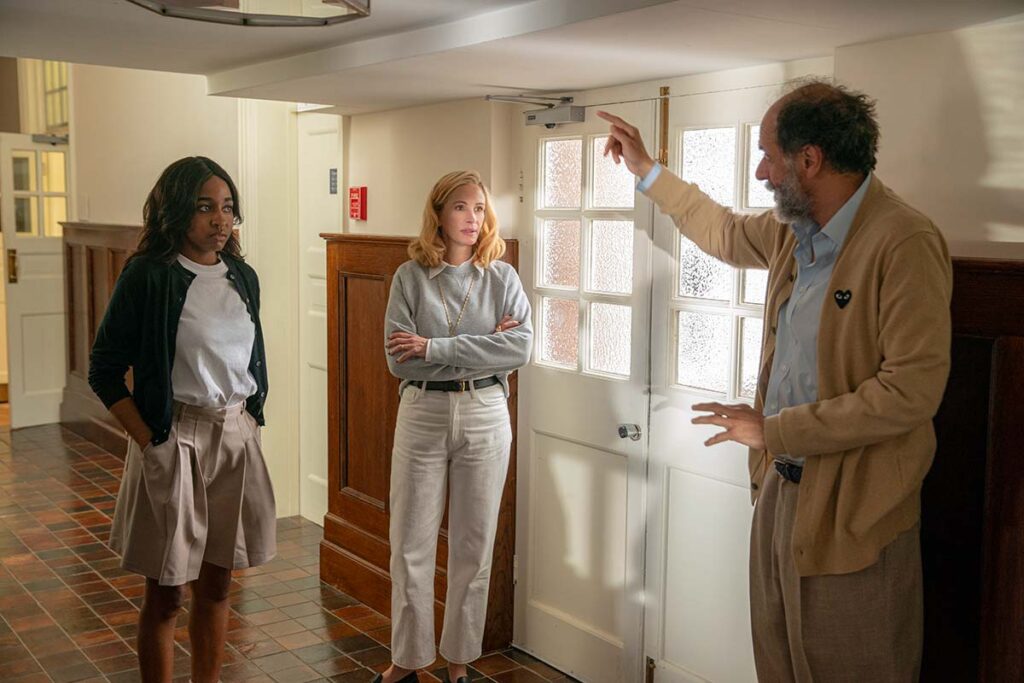
There was a time in Hollywood when studios would make movies and let the audience decide which were good enough to promote as an Oscar contender.
Those days, unfortunately, are long gone. They’ve been replaced with studios treating their “Oscar movies” like Marvel films, planning them 2-3 years in advance. They say, “This will be our Oscar film for 2025!”
They’ll then build marketing campaigns well ahead of time doing everything in their power to manipulate the general audience into believing that their movie is the most important piece of digital celluloid anybody will ever see.
The problem with that is audiences are pretty hip to the game these days. We can smell the manipulation. It smells like old car grease. And so it becomes this frustrating experience of watching a movie we’ve been told is amazing when, in actuality, it’s just some average adult-skewing film with more mature themes than usual.
One Battle After Another is a textbook example of this, and it frustrates me to no end that so many viewers are falling for it. It’s no different than when we thought we loved Chocolate, The Shape of Water, The Artist, or The English Patient. These movies were, at best, average. But the marketing campaigns gaslit us into believing they were masterpieces.
After The Hunt is a stupendous movie. I loved it. But it is not immune from this criticism. This movie wants to win the Oscar even worse than One Battle. At least One Battle has action scenes. This is just people in rooms talking.
But boy are they delicious ‘people in rooms talking’ scenes.
As some of you may know, I reviewed the script a year ago and called it the best script of 2024. The finished film started screening a few weeks ago and the critics were not kind, giving it a 45% Rotten Tomatoes score, effectively ending any chances of it winning Oscars.
What went wrong? It’s hard to tell! I don’t understand why people aren’t loving this film. I’m going to break down several areas that I believe may have caused the critics to sharpen their knives. But it’s disappointing because I think they’ve got it all wrong and are ignoring one of the best movies of the year.
After the Hunt is a simple story. Alma is a beloved professor up for tenure at Yale. Rumors are that her star student, Maggie, is putting the finishing touches on an amazing dissertation.
Alma is married to Frederik, whom she no longer finds attractive, but poor Frederik is in complete denial about it. Alma is best friends, drinking buddies, and flirting buddies with Hank, known around campus as the hot, cool professor.
One night after professors and students mingle at a party, Hank walks Maggie home. The next morning, Maggie comes to Alma and claims that Hank raped her. Alma, in a state of shock and confusion, is far from supportive.
This begins a series of “he said, she said” interactions where Alma, being violently pulled in opposite directions by each party, finds herself trying to gauge what the truth really is. But because her support for Maggie isn’t absolute, Maggie turns on her, putting Alma’s shot at tenure in question.
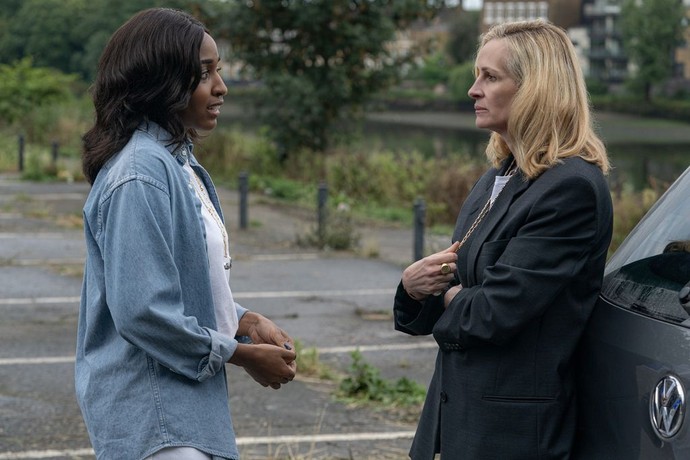
Let’s talk about the first screenwriting reason why I think people aren’t connecting with this film. The main character, Alma (Julia Roberts), is inaccessible. She’s cold. She’s unable to connect with others on any emotional level. She can’t be there for Maggie in her worst moment, she can’t give love back to her over-loving husband, and she’s able to heartlessly cast off Hank, who has fallen in love with her.
It’s very hard to pull people in when their entry point is a person who doesn’t let anyone in. That’s screenwriting 101. If you create a warm main character, we feel warm. If you create a funny main character, we feel good. So that’s definitely something to keep in mind when you write a script.
Now, the reason this didn’t affect me personally is that I am fascinated by these types of characters. I have had people like this in my life. And I can sometimes be this way myself. So that’s another lesson in why storytelling is so tricky. You never know what the audience is going to relate to because everybody’s different. Due to my negative experiences with people like Alma, I carry a higher emotional investment in what happens in this story because I’m hoping that Alma can change. That way I, retroactively, can change the people in my life who were similar to her.
But the point is, I think this was a big reason critics didn’t like the film. Alma put this giant wall up in front of the story and unless you were like me and were really determined to get to the other side, you decided not to scale it.
The next big screenwriting thing that hurt this movie was the back half of the second act. I would actually be surprised if anybody watched the first half of this movie and didn’t love it. It’s an incredibly compelling scenario! Someone accuses a beloved figure of sexual assault. The accuser is obsessed with a professor who just happens to be very close to the accused. That is a PERFECT dramatic triangle.
But 80% of that situation is resolved by the midpoint. Hank has already been fired. So we’re left to wonder: what is the story now? The makers of the film would probably argue that the story is the fallout – it’s about what happens to these relationships “after the hunt.” But the movie doesn’t do the greatest job of signaling that shift. So I think viewers felt a little lost. Like, “Why are we still here?”
There’s no doubt that 65-70% of the way through this movie, things have slowed down A LOT. It made me realize just how much writers struggle to nail the second act! It’s literally a problem in 9 out of 10 movies that I see. I don’t think anybody out there has truly cracked how the second half of the second act of a screenplay is supposed to work.
And it got me thinking: How *does* it work?
Most writers know that the third act is where the script “revs up” again. It’s where your heroes get together and execute that one last push to obtain the goal or take down the bad guy.
So, intrinsically, you would think that BEFORE THAT, things would need to SLOW DOWN. You can’t rev up if you’re already moving fast, right? Therefore, writers allow their second acts to drift off into this little nap as the act nears its completion. There’s no doubt that’s what happened here.
The solution? It’s tricky. Since Garrett is new to screenwriting, she may not understand story engines well yet. This movie is strongest when the story engine is: what’s going to happen between Hank and Maggie? Who’s going to win that battle? Well, Maggie wins it pretty quickly. Hank is out of a job by the midpoint.
So what’s the story engine now? The engine becomes: will Alma get tenure? And the drama comes from how nasty Maggie is going to get with Alma, since Alma didn’t give her full support.
But here’s why the engine sputters. The writer and director completely forgot to remind us how important tenure was for Alma. I don’t even think the average person understands what tenure means or why it would be so important for someone. It’s up to the writer to convey that and to also continuously hype up its importance. We need scenes where we see Alma freaking out or getting angry when her grasp on tenure starts slipping. But there was none of that and, as a result, the end of the second act began to wander.
Had they tightened that up and better established the engine, I think critics would’ve been more favorable.

And if you want to know how to handle second-halves-of-second-acts in general, here’s the trick: Go hard and crash hard. Yes, there needs to be that “lowest point” for your hero at the end of the second act. It is their “death.” And then the third act is their “rebirth.” But the second-half-of-the-second-act should not be a cancer death. It should not be slow and lingering. Instead, you need your hero pushing and pushing and pushing to obtain whatever it is they’re trying to obtain, and then you give them a heart attack. The death needs to be sudden (metaphorically speaking, of course). Even in these slower dramas. In fact, ESPECIALLY in these slower dramas.
Okay, I’ve told you why I think everybody else didn’t like After The Hunt. But why did I like it? Well, for starters, I’m personally drawn to a lot of things here. I love old college institutions and campuses. I find them very romantic and one of the few pieces of real history that America has.
I think the character-writing here was amazing. Just like in the script, every character had something deep going on. You just don’t see that in screenplays these days. They even improved the character of Maggie from the draft I read, giving her more depth. She’s a black woman whose parents essentially run the school, so she has some power. She’s gay. She’s dating someone who’s non-binary. And it all plays into the story. There’s this great late scene where Alma calls her out on all of this. She points out: “you don’t even like this person you’re dating! You just think it makes you look more interesting!”
But what made the movie even better than the script was the performances. The performances here are SOOOOO good. I mean, Julia Roberts isn’t playing as splashy a role as she did when she won the Oscar for Erin Brokovich. But in many ways, it’s a much harder role because it’s so internal. And she does an amazing job of playing this character who’s keeping all of this damage inside while smiling at the rest of the world.
I recently told a writer that the key to writing an Oscar-winning character is to create the biggest gap possible between who they are on the inside versus who they are on the outside. In other words, if they’re extremely damaged, don’t have them act extremely damaged. Have them act happy. And that’s what you get here.
Ayo (who played Maggie) won me over by the end because she really is a good actress. Michael Stuhlbarg almost steals the show playing the “cuck” husband of Alma. He’s so nice and such a good guy and just has no idea that that’s the exact reason why his wife has fallen out of love with him. The way that Stuhlbarg passive-aggressively expresses his anger by cooking with the music volume dialed up to a hundred—he’s just a really fun but tragic character.
But the actor who steals the show, without question, is Andrew Garfield. Andrew Garfield is AMAZING in this. He plays the PERFECT balance between charming professor and potentially creepy guy. He steals every scene he’s in. He should be up for an Oscar for this, but I just don’t know if the Academy has ever celebrated a role like it before. It’s not the kind of role that results in awards, which is exactly why it stands out. In many ways, it’s a throwaway role. He’s there to jump-start this movie that will ultimately be about Alma and Maggie. But he’s just so damn fun to watch any time he shows up.
For example, there’s a scene in the middle of the film where Hank gets Alma to come have Indian food with him so he can explain his side. And as he’s explaining the very thing that could ruin his life, he’s gleefully ordering everything on the menu, flirting with the waitress. And you’re just like, “What the hell is up with this guy!??” You don’t know what to make of him, which is exactly why you want to keep watching him.

There’s another scene later in the story where he goes to Alma’s secret apartment, where they, presumably, used to hook up. It’s a 15-minute scene of just them hashing it out. And he’s so incredibly good in it. I’ve always thought Andrew Garfield was a solid actor. But I came out of this thinking he was a great actor. And he’s a big reason why, even when that second act took its nap, I still enjoyed it. Because he kept showing up.
The final, and probably biggest, mistake they made was miscasting Maggie. Ayo was good. Of course she was good. She’s a good actress. But her image was completely wrong for this part. This girl needed to be stunning, and that would’ve changed EVERYTHING about how we saw the situation. Hands down. It’s a completely different film. And it sucks because this is one of the things that writers have no control over, how a director can undermine a role just by miscasting it. It was the only mistake Luca made, but it was a big one. I think that alone would’ve bolted this up AT LEAST another 30 percentage points on Rotten Tomatoes.
Will you like this movie? That depends. Does this setup sound intriguing to you? If it does, I find it difficult to believe you wouldn’t like it. But if this isn’t a movie or a concept you find any interest in, you’re probably not going to like it. It’s not something that converts people who wouldn’t normally like these types of movies.
But for me, I loved it.
[ ] What the hell did I just watch?
[ ] wasn’t for me
[ ] worth the price of admission
[x] impressive
[ ] genius
What I learned – Here’s Nora Garrett on selling the script in her interview with Indiewire: [Before I sold the script], I didn’t have an agent, I didn’t have a manager. I asked a friend to introduce me to a manager. I thought, best case scenario, the script would become a spec that I would use as an example of my writing, and then I would hopefully get a manager, hopefully some jobs. Because it’s the exact opposite of what everyone tells you to write, it’s an adult psychological drama, it’s very heady. There are a lot of people talking. There aren’t a lot of action sequences. It can feel very play-like. And it’s about a subject that most people don’t want to talk about or touch. But then the woman who became my manager, Sydney Blanke, was very smart about who she sent the script out to. Allan Mandelbaum had just come out of doing “Fair Play,” and was then at Imagine. I had a meeting with a couple of interested producers, but Allan and the rest of the team at Imagine were always the ones who I felt like had just a real creative understanding, and also a really good idea of how to approach getting it made.
I don’t know what ElDave and I are. Are we enemies? Frenemies? Are we brothers who fight in the car the whole time we’re driving on vacation, our parents screaming at us from the front seat that if we don’t stop, they’re turning this car around! Are we sisters who scream at each other all day who then get mani-peddies and ice cream afterwards??
I’m not sure. But I thought it would be educational to make this post regardless.
For those of you who don’t follow Scriptshadow every day, this one requires some backstory. So, let me lay it out for you. Hundreds of writers pitched their horror ideas to make it into a Scriptshadow Horror Screenplay Contest. Only 97 writers made it in.
I then held a First Scene contest where any of the 97 writers could enter their first scene. I picked the best six scenes to feature on the site. One of the contestants, ElDave, didn’t make the cut. So, he posted his scene in the comments section.
A lot of writers liked it. In fact, quite a few of them said they would’ve voted for ElDave to win. It only seemed fair to ElDave, then, that I feature and analyze his scene on the site, which I did two weeks ago.
To summarize, I thought the scene was okay. But I didn’t think it was as good as the six other scenes that had made the First Scene Showdown.
Keep in mind, the main way to successfully get into my contest was to pitch me an idea that I really liked. But I also offered other ways to make it into the contest, one of those being, if your pitch got 15 upvotes from your fellow writers, you were automatically in.
ElDave did not get into the contest via my endorsement. He got in because the writers here upvoted his concept in. I mention that because ElDave repeatedly points out that I never liked his concept to begin with. Which I don’t think is true. I just had a very high bar for making the cut.
Moving on, ElDave responded to my critique of his scene in the comments section, which is something I’m totally fine with. If I’m going to analyze your script, you have every right to analyze my critique of it.
This provides a rare opportunity to respond to the concerns a writer had with my critique. I feel like this is going to help all of us get better. You know those Youtube videos where you have someone responding to a view of someone responding to a video? This is the Scriptshadow equivalent of that.
ELD: For all the complimentary stuff – sincere thanks. I’m mainly going to deal with the perceived issues.
=============================================================
So when I read this opening page, my first thought was, “It’s the old suicidal person on the other line scene and our heroine is going to save them.” It’s a scene pattern I’ve come across a lot.
=================================================================
ELD: I’m ESTABLISHING a 9-1-1 center. As it turns out, they handle a lot of suicides. And again, we’re establishing a routine call here to get our new world bearings because the next call is going to be the weird. So, as a writer, you know that, and you do not want your establishing 9-1-1 call to out-weird your weird that gets the premise rolling. You could make an argument to nuke the opening call and just get to it. But the argument that it must somehow be special belies the purpose of ESTABLISHING SCENES.
I have mulled that over but right now I feel it is more advantageous for the reader to see normal Zoey for at least 60 secs.
SS: This is an interesting point. Because, in principle, I agree with what ElDave is saying. You have to introduce the normal everyday life of your protagonist before you introduce the inciting incident, which is going to turn that normal world upside-down.
My problem is more with the choice of calls. Yeah, you want to introduce “normal.” But normal does not mean boring. Normal does not mean clichéd or uninspired. It’s a bit of a mindfuck but you want to introduce the “exciting version of normal” if that makes sense.
Give me an emergency situation that I can tell you put some thought into. I can’t even begin to convey how many of these “suicidal calls” I’ve read in scripts. It’s the first choice many writers use, which is why you should know it shouldn’t be the choice for you.
=================================================================
When I read this second page, the big word that popped into my head was “competent.” The writing is very competent. It’s very professional. It’s doing the job.
But a screenplay needs something beyond competence. It needs a special quality, wherever that quality is going to come from. And when I read this page, this fear started to creep in that this scene was going to be adequate and nothing more. Because I feel like I’ve read hundreds of scenes just like it.
==========================================================
ELD: I don’t buy this at all. This is an opening for a horror movie with a 9-1-1 dispatch operation at its center. What is more – I’ve read it or seen it a 100 times – This premise or — A zombie bite scene? A couple in therapy? A person dying in a car crash? Etc.
See – those make the cut even though they have actually been done and you have actually seen them written 100 times. The irony here is that this premise is relatively unique. You don’t like the premise. You didn’t when it was first presented and seeing it on the page won’t change that. I can respect that. Tastes are tastes. Even though Bite by Bite was really well written, it would not have made my cut because I just don’t care for Zombie movies and would have no interest in the 100th iteration of one. Now, what you might have loved is what goes on in a 9-1-1 center during a Zombie outbreak. All I know is that the solution is not to make the first call unique, fascinating, one in a million. The objective of the first call must be to make you feel like what it is in a 9-1-1 center.
and – There are two macro outcomes in play on a suicide call. 1) She saves him. 2) He dies. I thought I’d go with # 2 – She saves him with a twist – he is mad and ungrateful for her efforts.
SS: So here, ElDave is pitting the originality of his scene’s execution against the originality of some of the other entries. Let me be clear. I don’t think any entry knocked their first scene out of the park. Which is actually supporting what I’m saying. Every writer needs to work hard on making their first scene stand out.
The first scene needs some special quality that makes a reader perk up and go, “ooh, this is cool.” It can be dialogue, it can be an original scenario, it can be that the writer has a very unique voice, it can be we fall in love with the main character right away, it can be the writer is a master of suspense and he has you in the palm of his hand within half a page because he set up a great suspenseful scene.
The point is, there has to be SOMETHING for the big-time Hollywood producer to latch onto. I think that one of the errors writers make is they compare their openings to the openings of other movies they’ve seen. Let’s compare this to the opening of Weapons, which is a basic expositional montage scene. Your average aspiring screenwriter says, “Well, that wasn’t all that amazing. So why am I being asked to be amazing?”
You’re being asked to be amazing because you are a nobody. You are not Zach Cregger who 7 different studios were desperately bidding to work with after Barbarian. Zach Cregger has buzz, he has a hit movie, he’s demonstrated the ability to direct a strong feature film. The only thing you have is your script. So your script has to do a lot more than these other movies. It sucks. It’s unfair. But it’s the reality of this business. It’s why Christopher McQuarrie says, “It’s pointless to write spec scripts.” Because he knows how difficult it is to get Hollywood’s attention with a script all by itself.
He’s right. It is difficult. But it’s not impossible if you listen to people like me, who are telling you, the bar isn’t 5 feet high. It’s 20 feet high. So you just have to aim higher.
If I told any of you, you have to come up with a more original and entertaining first scene than the one you’ve written or else you die, do you think you’d be able to? I bet every single one of you would be able to. Not because you were all of a sudden more creative. But because with your life on the line, you’d realize that you didn’t put 100% of yourself into that scene.
There is DEFINITELY a more original emergency call you can create here. I once had this crazy woman living below me who would always file noise complaints for the most random of things, like that I was running my dryer too loudly. She got so crazy once that she called 911 on me because I was walking around too much. To me, a situation like that is not only more original, but more representative of what a 911 operator might experience — getting a bunch of bullshit calls that aren’t really emergencies.
=================================================================
This was probably the page where I decided this wasn’t going to make the cut. Because this is the page where our main character solves the problem. And my question is: what special or unique or clever thing did she do to solve the problem? As far as I can tell, nothing.
She just got the guy to stay there long enough so the cops could pick him up. Remember, when you’re introducing a character, you’re trying to create something the reader will either fall in love with or become fascinated by. Anything less, and the reader isn’t going to be interested in them.
I’ll give you an example. The famous Lethal Weapon Mel Gibson suicidal jumper scene. In that scene, a guy is about to jump off a building and Detective Martin Riggs (Mel Gibson) is tasked with stopping him. What does Riggs do? Instead of trying to stop him, he says, “Let’s do it!” The jumper is so confused he’s not sure how to react. Riggs keeps pushing him. Let’s do it. Let’s do it! And eventually, they jump!
It’s a scene that both goes against what we’re expecting and creates a fascinating character in the process.
Those are the kinds of things I’m looking for when I get introduced to characters.
===========================================================
ELD:Arrrrgh….
She is NOT a clever character. This is not Sherlock Holmes or Martin Riggs in 9-1-1 center (although both would also be good movies). This is Zoey. A gal raised by the Foster Care system in New Orleans. She has no family, no real life outside of work. That is why she works the night shifts and every holiday possible. Things we will learn when they organically make sense for us to learn them. Like the fact that she became a 9-1-1 operator because when she was 17, a 9-1-1 Operator saved her from being raped and murdered by her Foster Dad.
She is an average person who will be faced with extraordinary new circumstances. i.e. why in the world would you require or expect a clever way to solve the problem from an unclever person. That is a biased filter at work. i.e., you like movies with clever folks, so you need the clever solution. Again, this is a taste issue – not a writing one.
This is going to be a Sixth Sense-type story with a Sixth Sense-type lead character. This is not going to be Indiana Jones. Let’s look at the lead character in The Sixth Sense – here is his description:
Dr. Malcolm Crowe is characterized as a devoted, quiet, and thoughtful child psychologist who is highly intelligent and at the top of his profession. His professional manner is described as subdued and academic, yet he is committed to his cases and hesitant to immediately “slap a ‘label’ of a diagnosis on a child.”
Think Maclom Crowe in a 9-1-1 Center – how “clever” would he be?
Carson – just my humble opinion – but you need to open your script review mind to include these types of characters and situations because, at least in the case of the Sixth Sense, they can lead to one of the best horror movies either way.
SS: This one you’re not just wrong on, ElDave. You’re dead wrong.
Every character has to have something they’re good at or what’s the point of writing a character at all. If we’re all the same, all devoid of any special skills, then there is no originality in us. There is nothing for others to root for.
Every person in the world has something they’re better at than most people. And the thing about highlighting this skill, especially early on, is that it does an AMAZING JOB at making us like the protagonist.
You said that Zoey grew up in the foster care system. Jesus Christ, that’s a goldmine of opportunities to get really good at certain things. You have to be a survivor to go through that system. You have to be resilient. You have to be tough. You’d probably have to learn all sorts of tricks to survive, basic things like how to navigate other girls bullying you.
How well do you remember The Sixth Sense? Malcom has an early scene, when he first meets Cole, where he does the most clever thing in the script. When Cole won’t talk, Malcom comes up with a game to get Cole to open up (If I guess something right about you, you have to take a step forward, if I guess wrong, you have to take a step back).
That’s EXACTLY what I’m talking about. That game is something only a psychiatrist would learn working in their line of business.
It sounds to me like Zoey’s life experience has subjected her to a lot of unique experiences that have made her a fighter and, likely, a problem-solver. So let’s see her use those problem-solving skills in that first call.
=================================================================
The explanation of using the word “darling” didn’t make this feel any more clever. If the idea is that she goes against the handbook to save people, I’m down with that. But if sometimes using an unapproved word is breaking the rules, it’s the tamest rule-breaking I’ve ever seen. So much more could’ve been done here.
For example, if this would’ve been some incel lamenting the fact that no girls like him and Zoey exploited that to save his life by pretending to be romantically interested in him. Maybe even agreeing to go on a date with him if he stepped back, only to go cold the second the cops snatched him up, that’s a character I would’ve been interested in. But just calling someone ‘darling’ doesn’t move the needle for me.
=============================================================
ELD: I like this suggestion.
SS: Phew, an easy one.
=================================================================
In every script, I’m always looking for honesty. For truth. In other words, are the people in the story acting out truthful moments, saying truthful things? Or are they just puppets for the writer to say what he wants or do what he wants? The more I see of the latter, the more tuned out I become. The more I see of the former, the more invested I get.
I have a hard time believing this call center goes cuckoo over “the q word.” That feels made up to me. It feels like a lie a writer concocted. I want the truth. And I want the details of that truth.
=================================================================
ELD: This was the first comment that actually irritated me.
So, I spent a solid week researching 9-1-1 call centers down to every detail and one of the more common rituals/jinxes I came across was the Q word jinx – and not surprisingly, most often caused by rookie operators. So, a writer does all this work to try and make something authentic, and then you judge its authenticity based on whether you are personally knowledgeable in the matter ( It would have taken a 2 second google search on your part). What that paradigm means is if Carson is not aware of it than it is not authentic.
That is a poor reviewing technique. Sorry… It just is.
SS: I actually went back and forth on whether I should include my thoughts on this “Q-word” moment because, like you said, what do I know about call centers?
But it’s important to remember that authenticity doesn’t just mean you literally point to the detail you added and confirm it’s a real thing. It’s that the situation as a whole must FEEEEEL AUTHENTIC. So I think this had more to do with the presentation of how the q-word was introduced. That’s the part that didn’t feel right.
I once did notes on this screenplay about a doctor who was trying to cover up his malpractice on a high-profile patient. And my number one note to the writer was that it was the most inauthentic depiction of a hospital I’d ever read. I told him he needed to do a ton of research on hospitals and doctors before writing the next draft.
He then proceeded to tell me that he was a doctor. Yeah, that got awkward fast. I felt strange about it so I called him and we talked about it. We ended up going through a few of the bigger sequences so I could highlight why I thought they were inauthentic. As I was explaining myself, he would say things like, “Well no, you’re wrong because the hemodynamic parameters would’ve been reconciled with the attending physician so that the telemetry system could accurately track the cardiac output and mean arterial pressure.”
And I said to him, “Wait, why the f$&@ isn’t *that* in your script?” And as we went through every section, he would explain in detail what was going on, but he hadn’t included any of that detail in the script. And if he had, it would’ve felt VERY authentic.
But the point is, it’s not just the technical component of it (that people don’t like the q-word). It’s how it’s depicted. It’s got to feel natural and effortless. And I remember reading that part and feeling like the whole world stopped to highlight this one moment about the ‘q-word’ and it just didn’t feel genuine. It felt manufactured.
================================================================
Essentially what’s happening here is that the scene is rebooting. It’s starting over. We’ve got a brand new call. And the good news is, there’s something different going on with this call. There’s something glitchy, both in the connection and the way that connection is interfering with the nearby electronics.
=================================================================
ELD: First call – ESTABLISHING
Second call – CATALYST
All before page 9.
I’m fine with that pace.
SS: Yeah, the pace of this scene is fine. But the funny thing about pacing is, it’s not “the” thing. It’s “the supporting” thing. As I’ve established, the creative choices behind that first call could be better. Now, is it nice that the pacing allows us to get through that not-as-good-as-it-could-be first call faster? Sure. But that doesn’t absolve you from not coming up with a better first call. The pacing would work even better if that first call was more entertaining.
=================================================================
For some reason, I’m only casually interested in this boy’s plight. I don’t know if it’s because the rest of the pages haven’t fully pulled me in or if it’s something with the boy himself. If I had to guess, I’d say it’s because the scenario feels too obvious. First we have the drug addict tweaking out. Now we have the little child. None of these things feel different enough.
I can’t emphasize enough how much I read and, because of that, I read stuff like this all the time. Something that might help you guys is to put yourself in my head and ask, “Is this something Carson has probably seen a lot?” If the answer is yes, go back to the drawing board and write a scene that’s more original.
================================================================
ELD: To get a script approved by you – Yes. To write a good script – No. Again, see above, your core problem is the premise. It wouldn’t really matter how this was written. I’ll offer you the same test. How many times have you read a Zombie scene, a car crash scene, a therapy scene? You coat this as an originality problem when it clearly is not – it is a taste difference. Otherwise, I would have to believe there are just hundreds of scripts out there with 9-1-1 call scenes where the cops show up and all are fine and all deny that they ever called.
SS: Okay, let’s address this cause you’ve brought it up a couple times now. I liked the movie Eddington. There is no movie that is designed more for me to dislike than Eddington. But Eddington won me over. Any single concept can win me over if the writing’s good.
As for this specific concept, I don’t know why you think I wouldn’t like a call center movie. I was pumped when they announced that The Guilty movie with Jake Gyllenhaal. It sounded cool. I also think phone calls with people in trouble are naturally dramatic. There’s plenty to worth with here.
My problem is that, of the two calls at the beginning of the script, neither of them stand out. Neither is nearly as good as they could be. Since that’s the whole focus of the movie, that worries me.
And you’re wrong when you say: “to get a script approved by you.” The people who actually have to put up money are SO MUCH MORE JUDGMENTAL than I am. I don’t have anything on the line. I just want to be entertained. These people risk their careers when they buy a script.
================================================================
There’s a beat on this page that is the key to this entire scene living up to its promise. It’s when the boy says, “I got a bike. Santa already came.” And Zoey says, “Why would Santa have already—?”
This is supposed to be our introduction to the hook—the strange situation our operator finds herself in. Receiving calls from the future. But it’s such a blink-and-you-miss-it moment that it doesn’t register. I wouldn’t be surprised if someone reading this completely missed it.
===============================================================
ELD: I’ll take a fresh look at this – I thought when the boy said Santa already came and we know the real time scene is before XMAS was clear enough.
I’ll run this by some folks to see if they pick it up or miss it.
SS: Sounds good.
================================================================
I get that Eldave doesn’t want to show his cards too soon, but you need to hook us here and this scene BARELY mines its hook. Even the scene at the house afterwards is rushed. You want to SLOW DOWN as we get to the house. Show that the cops believe someone is in danger. Have them carefully go up to the house, maybe even knock the door in when nobody answers. And they just see this family casually dining. That would’ve hit a lot harder.
================================================================
ELD: I don’t know – I have a feeling if I would have done that I would have got the start the scene as late as you can mantra. But I’ll look at it.
Thanks for the read and notes – I do appreciate it. I just did not find most of the suggestions compelling.
SS: My feeling is always, when you have a strong suspenseful moment, milk it as much as you can. That’s when a story like this is going to be at its strongest. I see no value in rushing through this moment. You want to tease it, make us beg. Make us wonder. Have us in the palm of your hand. This moment would’ve been great for that.
ELD: PS – for some reason I did not see the DID TODAY’S SCENE GET SCREWED?? banner until just now.
Screwed is an odd word… If I answer yes, it means I was treated unfairly.
I don’t think I was treated unfairly. I think instead you have blinders for certain topics and a certain type of storytelling and those contaminate your script review process. That is of course true for all human beings. What we know is:
You were a NO on the logline – Yet, it got 23 upvotes.
You were NO on the scene, making it in the top 6 – Yet, the scene got 24 upvotes and tons of comments stating it should have been in and several I would have voted for it ones. And I did not solicit these. I merely said – here is my scene.
Point being, I think there was sufficient evidence there for you to conclude you got it wrong.
The objections/criticisms/reasoning above are for the most part not compelling as a separator from the entries that moved forward. e.g., Your issue that – you have seen this a hundred times before (which you have not) is not a disqualifier knowing that you have seen a car death, zombie bite, couples therapy, etc, exponentially more times. You have an authenticity hiccup on 9-1-1 operators discussing a Q word jinx because you’re not familiar with it, but are quite willing to accept really weird and unknown elements in the other scripts.
This was DOA because you did not like the premise. BUT – I don’t feel cheated because you didn’t. It is your site, ergo your tastes.
SS: I think you’re looking at this the wrong way, ElDave. By making this my fault, you are relieving yourself from having to look in the mirror and ask if you could’ve done better.
I don’t dislike this idea or the subject matter. I’m not sure where you’re getting that. I just didn’t like them as much as some other ideas. But there have been two fairly high profile 911 call center movies recently, those being The Guilty and The Call. So there are movies out there that this feels similar to.
Also, there’s a show called 911 and I’ve seen at least a couple of hundred (probably more) scenes from movies or TV shows that have included a 911 dispatch operator. So, actually, I’ve seen these scenarios more than 100 times. Which is why the bar is high. And I don’t understand why you want to keep it low. That logic doesn’t make sense to me.
As a writer, you should stay out of comfort. You should be pushing yourself for the best versions of these scenes you’re capable of writing. I just don’t believe that this opening scene you’ve offered is the top of what you’re capable of. If you insist that it is, I apologize. But I think you can do better.
Script Notes Deal! – For all writers, if you want me to push your writing to another level, I’m offering a 40% deal for script notes on your screenplay or pilot script. If you want the deal, you have to e-mail me with the subject line “forty,” but with a Chicago accent (where I’m from). So e-mail me at carsonreeves1@gmail.com and put in the subject line, “FOURDEE”
This may become a new feature on the site depending on how it goes.
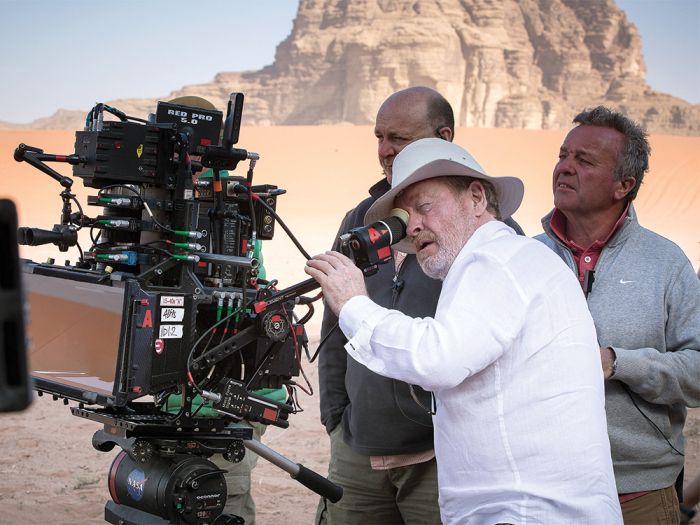
I was thinking of this recent article about Ridley Scott saying he doesn’t watch movies anymore. He feels that modern movies are “mediocre.”
I started to think about that. Because a collaborator of Scott’s, Denzel Washington, recently said something similar. “I’m tired of movies,” he said.
On the surface, this makes complete sense. Two legends north of 70, decades deep in the factory where the sausage gets made. When you know how the trick works, the magic evaporates. And movies ARE magic tricks—a carefully orchestrated series of misdirections and emotional manipulations. When they work, you get oohs and ahhs. When they don’t, you get One Battle After Another.
I’M KIDDING!
Sheesh. Try not to get triggered here. Actually, I have more to say about One Battle in a bit. And it may actually be positive.
Look, I get Scott and Washington to a degree. I’ve read thousands of screenplays. I see the gears turning, the tricks being deployed. Every year it gets harder to fool me. And when I hit a streak of ten mediocre movies in a row, I start wondering if the whole industry has driven off a cliff.
But here’s the thing—interesting movies are still being made. Great ones, even. Anora was phenomenal. Parasite was a masterclass. Eddington was fascinating. The last decade alone gave us Get Out, Promising Young Woman, The Big Short, Oppenheimer, Poor Things, Everything Everywhere All At Once, Red Rocket, The Brutalist.
Hell, the barrier to entry is so low now that Sean Baker made Tangerine on an iPhone, and it was brilliant. That film doesn’t exist in 1978. So maybe there are more interesting movies being made than ever before—we’re just drowning in so much content that the signal-to-noise ratio has scrambled our tuner.
Which made me wonder: Maybe Scott isn’t railing against ALL movies. Maybe it’s specifically the Hollywood studio movie he’s mourning. Because his solution to modern cinema’s mediocrity is rewatching his own filmography—and Scott has always operated in the big-budget studio system. That’s the language he speaks.
To that end, Scott has more of a point. Although it’s a complex one. Studio movies are definitely not the same as they used to be. I’m just not entirely sure what that means.
Because “Movies aren’t as good as they used to be” is the laziest take in cinema history. I’ve been hearing it for 30 years. I remember walking past an old couple after Crouching Tiger, Hidden Dragon, and hearing them say, “That was so good. Hollywood doesn’t make good movies like that anymore.” As long as there is a movie business, there will be people proclaiming it’s “not as good as it used to be.”
What even IS a “good” Hollywood movie? Does it require a certain sophistication that appeals mainly to adults? Or is it just that the strenuous, obsessive development culture of the past did such a thorough job weeding out the stupid that finished products came out more honed? Movies like The Rock were notoriously beaten into submission during development until the scripts were bulletproof. You had a *genuine* good time watching The Rock—not an empty good time, which is how I suspect Scott categorizes the modern moviegoing experience.
Of course, the elephant in the room is the superhero genre. It completely rewrote the map. And if you’re not into superhero movies (which I’m guessing Scott isn’t, since he’s never gone anywhere near them) then you’d naturally think the Hollywood system has bottomed out.
But I’d push back on that. Big-budget Hollywood movies with weight and sophistication still get made every year. One Battle After Another is a studio movie. Warner Brothers dropped 150 million on it. And it’s about as adult a film as you can make. I don’t see Twitch-loving teeny-boppers rushing to Century City after school to watch 50-year-old Leo in a bathrobe pontificating about immigration.
We’ve actually seen some VERY INTERESTING movies in the studio system lately. Furiosa was such a bold, risky creative swing. Barbie was unlike anything we’d ever seen. Sinners just came out earlier this year! Top Gun Maverick was so universally loved that even the most cynical corners of the internet had to tip their hats. You had the Dune movies, which are so close to the heady books in their adaptation that the Herbert family should consider adopting Denis Villeneuve.
I think what’s happened is this: The superhero genre has so dominated the studio landscape that it’s overshadowed the fact that good, interesting movies are still being made. But if you look past those overbearing 200-million-dollar marketing campaigns trying to convince you that Superman is the only movie being released this year, you’ll find good stuff, Ridley Scott and Denzel Washington. You just gotta look a little harder.
Which brings me to this: What movies still win me over despite my knowing all the tricks? The answer traces back to the first movie I liked in 2025—Novocaine. And it reveals a formula that works on everyone, from newbie moviegoers to cynical old complainers alike.
Develop a character that I really like. Put them in a difficult situation. Show them continually getting knocked down. Then have them keep getting back up and trying.
Do that, and everybody will like your movie. Because Novocaine doesn’t break ANY NEW GROUND AT ALL. It’s fairly standard. But that’s the power of that formula. When we genuinely like someone, we don’t need the story to be the second coming of Chinatown.
Of course, that first part—develop a character I really like—is the hardest thing to do in screenwriting. But the good news? Most of your writing competition doesn’t even know that should be the priority. The dumb ones actively rail against it. So just knowing that’s the goal puts you in position to write something great.
The movie business isn’t dead. It’s just changing, like it always has. It changes literally every decade. And as the superhero era flies toward its inevitable demise, it’ll change again. And I suspect it’ll change for the better, giving us more of these big, smart, fun Hollywood productions that Scott yearns for.
