

I originally had no desire to watch this show. It was actually one of you guys who made me check it out. I don’t remember who said it but the comment was essentially: “This is the first show that I’ve loved where I disliked every single character.”
I thought to myself, “Hmmm, that’s interesting.” For those who don’t follow screenwriting, here’s a little inside baseball for you. There’s an unofficial ongoing competition between all screenwriters to create the most popular piece of media but only using unlikable characters. Anybody can create something popular with likable characters. But it’s only the *truly talented* writers who can create something popular with unlikable characters. It seems like creator Mike White may have just won that competition.
To give you a little background, this is not a show that White spent years trying to make. Quite the opposite, actually. With the arrival of Covid, HBO found themselves in a pinch. They needed contained show ideas that had little risk of spreading Covid. So they ran around to a bunch of creators and asked them if they had something that could be shot on a single set.
With that being the only edict, White came up with this idea: group of rich people spending a week at a luxurious Hawaiian resort. He wanted to explore the constant interaction, on these islands, between rich and poor people. But HBO threw White a curveball. They needed to start shooting in three months. So Mike White proceeded to write six episodes, which were 60 pages each mind you, in just three months, while simultaneously preparing to direct the series.

Which may be the most shocking detail about White Lotus of all. Because this is some of the best character work I’ve enter encountered. I’m talking EVER. And, usually, it’s the character creation that takes the longest to get right. It’s hard enough to come up with one memorable character. White Lotus somehow comes up with ten. Even if you don’t like this show, it’s impossible to forget these characters. You will be thinking of them years from now.
Which is why I wanted to do an entire week of analysis on the show’s character development, starting with the pilot episode. To be clear, in 95% of the amateur scripts I read, I don’t remember a single character in the scripts 72 hours later. With this show, it’s the opposite. These people are ingrained in my mind for the rest of my life. That’s how strong the character creation was. And I’m curious to delve into the material to find all the little tricks of the trade Mike White used to achieve this.
For those who haven’t seen the show, the premise is simple. A group of very rich people come to a Hawaiian island resort to spend a week of high-end relaxation. They include Shane Patton, an exorbitantly rich 30-something mama’s boy who lives off his parents’ money. He’s come here with his new wife, Rachel, a drop dead gorgeous writer who was dirt poor when she married Shane.
You then have the Mossbachers. You have Nicole, a genuine woman who has become one of the most successful female CEOs in the US. You have her husband, Mark, who came from a rich family but lives in the shadow of his richer more famous wife.
You have their 19 year old daughter, Olivia, who uses her family’s wealth when it’s convenient, such as to be a “queen bee” at school. But then tells everyone around her that she identifies as a socialist in order to play the victim role. Olivia’s ultimate socialist act is befriending a poor Latina girl named Paula, who she’s brought with her on the trip. But don’t feel bad for Paula. Paula uses her friendship with Olivia as a way to climb the social ladder and wield the same power Olivia uses to control those around her.

The runt of the family is 16 year old Quinn, an anxious kid who’s so socially awkward that he buries himself in his phone and tablet. He’s got classic “weird kid” syndrome, where, although the parents would never say so out loud, they’re terrified he won’t be able to make it in the real world.
From there, you’ve got two wild-card characters. There’s 60 year old Tayna McQuoid, a socialite who’s draped in money although where she got it is anyone’s guess. This eccentric oddball has come here on a spiritual journey to spread her mother’s ashes in the ocean.
And then you have one of my favorite characters ever. Yes, I just said *EV-ER*. As in, this character deserves to be placed in the pantheon of greatest TV characters of all time – Armond, the hotel manager. Armond starts off as the only person in this story who seems to have their shit together. But as we’ll eventually find out, there’s nothing further from the truth.
Before we start, it’s important to note that this is a TV show but White treats it like a long movie. The characters *will* arc. That wouldn’t happen if this was a multiple season TV show. In multiple-season shows, you keep your characters struggling with their fatal flaws throughout the series. It would be weird if you wrapped their internal struggles up after one season. I bring this up because the approach to character development in this show should be seen through a “feature film” lens as opposed a “TV show” lens, if that makes sense.
In today’s article, I’m going to show you how Mike White lays the foundation for the character development that occurs throughout the rest of the show. Remember that any effective character development depends heavily on the introduction of those characters. If you don’t effectively set up who these characters are, we won’t care where they go. Which is why character introductions are so important. Okay, let’s take a look.
The writers who go on to become professionals in this business understand that character introductions are one of the most crucial components of a screenplay and, therefore, require a disproportionate level of focus. Character introductions achieve two things. One, they tell us who the character is. And two, they explain to us what the character is going to be fighting, and hopefully overcoming, over the course of the story.
Now, what’s important to note in any ensemble story is that you may not be able to perfectly set up your characters the first time we meet them. Due to the fact that some environments allow for better introductions for some characters and weaker intros for others, it’s okay to DELAY some of the scenes where you truly tell us who a character is.
For example, the first official “this is who these characters are” introduction in White Lotus occurs on the boat heading to the island. All of our main characters are on this boat. But we focus specifically on friends Olivia and Paula. They’re perched in the upper deck, bitchily making assumptions about everyone on the boat. There is no doubt, after this scene, that these two are bitches.
Again, we could’ve then cut to the other characters on the boat and tried to establish them within this environment as well. But Mike White felt it wasn’t the ideal setting to do so. So he delayed their “this is who these characters are” moments. It isn’t until newly married couple Shane and Rachel are in their suite that we appropriately establish them.
Instead of jumping into exciting honeymoon sex, Shane looks around and realizes, wait a minute, this is the wrong room. His mother bought them the best room in the hotel. But they’re in some… lesser room. In Shane’s high-end world, this is unacceptable. He begins looking around and confirming his suspicions despite the fact that the room is still huge and gorgeous. This moment gives us a crystal clear understanding of who Shane is, especially after Rachel reminds him that it wasn’t *him* who paid for the room. It was his mother.

We’re about to get nerdy so pay attention, because the way White sets up Rachel is sneaky and something not a lot of writers consciously know how to do. You see, it’s easier to set characters up who are ACTIVE – who are creating the circumstances that are affecting the situation. That’s what Shane is doing. He’s charging round, creating this ‘problem’ of not being in the right room.
Meanwhile, Rachel isn’t active, yet we still get a good feel for her. This is how we do it: You can establish who someone is through their REACTIONS to what’s happening around them. In this case, Shane is bitching about the room. Yet here Rachel is, standing in the nicest hotel room she’s ever been in in her life. So that’s the argument she’s making. “Who cares? We’re on our honeymoon. This place is amazing. Let’s just enjoy ourselves.” In her reaction to Shane’s freak-out, we get just as good of a feel for her as we do Shane’s character, even though Rachel is reactive instead of active. We understand that she comes from a poor family. We also understand that she doesn’t need everything to be perfect to be happy. She’s much more down-to-earth.
We do the same thing for the rest of the hotel guests. Socialite Tanya has an awkward exchange with one of the helpers in her room as she can’t find her bags even though they’re right behind her. This woman is so out of touch with reality that she doesn’t even know where her 14 bags are despite the fact that they were literally placed behind her 30 seconds ago.
We then switch to Mark and Nicole’s room with a close-up shot of Nicole inspecting Mark’s penis. I’m not sure I love the idea of introducing someone via their penis. But the flip side of that is that so many character introductions are forgettable. And this one definitely isn’t. Also, to Mike White’s credit, it’s organic to the situation. Mark just had tests for testicular cancer and he’s waiting on the results. So we clearly understand where this guy’s head is at after this scene.
Of all the characters in White Lotus, Nicole probably has the weakest introduction. White tries to do the same thing he did with Shane and Rachel where we introduce Nicole via her reaction to her husband’s cancer situation. But it’s not as clear who she is after this moment as it was with Rachel. There is a good line in the exchange, though, that provides some insight into their marriage. He asks her if his testicles look different. Her response is, “I don’t know. I haven’t seen them for a while.” That tells us that these two don’t get intimate often, which indicates their marriage isn’t perfect. It’s little touches like this that you need to add if you want to get to that next level of character development.
Finally, we get Armond’s big introductory scene, and this one is a little more complex, so you have to pay attention to understand its genius. Basically, Shane comes to the front desk to complain about being in the wrong room. Armond is overtly polite with him. He says he’s sorry but that’s the room they booked. Then, as soon as Shane and Rachel leave, Armond turns to the new helper, Leilani, dropping the friendly act to inform her how these people are all evil and you have to tell them whatever they want to hear to keep them happy.

In other words, the beauty of this character is the distance between how he must outwardly act and what he actually feels, which is contempt and hatred for everyone. If Armond was a genuinely happy person and enjoyed helping people, he wouldn’t be interesting at all. It’s the contrast between how he must act and what he feels that creates this powder keg of a character who we’ll see deteriorate over the course of the show.
There’s another little character trick going on here with Armond that you can use yourself. Whenever you have a mentor-student relationship, it’s easier to get inside the mentor’s head because he’s constantly explaining what’s in his head and what he’s feeling to the student. Normally, it’s hard to convey thoughts to the reader/viewer. But you can tell us EXACTLY what someone’s thinking if you’ve written in this dynamic.
“See, in that instance, you just have to stay calm and tell them that they’re right. These people are leeches. They’ll take whatever they can. You put on a smile, tell them they’re right, but then stand firm as you explain that you’ve done everything you can do.”
Another great character-writing tip you can take from White Lotus is that Mike White is so focused on creating great characters that he even gives his secondary characters storylines. Leilani is an overweight helper here on her first day of work who has a secret. She’s nine months pregnant. But she’s terrified to tell anyone because she’s afraid she’ll lose her job. Over the course of the day, her water breaks, and she tries to hide it from everyone.
You’ll note that when Armand stops her, later, to ask her a series of questions, it’s a much more intense interaction than you would normally get between two people because WE KNOW Leilani’s secret, that she’s about to burst. We can see the pain in her eyes, along with her desperate attempts to appear normal. This is the kind of detail that professional writers bring to the table that I rarely see in amateur work. So it’s a good habit to develop, especially in television writing where there are a lot of characters.
So there you have it. Lots of great character work to learn from. Tomorrow we’ll get into, once you’ve established your characters, what to do with them. Seeya then!

If it’s not in your Inbox, check your “SPAM” and “PROMOTIONS” folders!
We’ve got a good one, starting with a sneaky good show that nobody over 25 has heard of. Yet I guarantee once you start watching it, you won’t be able to stop. I give my thoughts on the current shaky state of the superhero genre. I help make sure you never rely on a deus ex machina again. I get into a couple of giant Apple TV sales and what you can learn from them. And I review the best original sci-fi spec of the year.
Oh, and one more thing. I know yesterday’s post was a bit controversial. But I stand by it. Of course there are times where you will write “two people sitting and talking” scenes. But it’s the laziest choice you can make. And if I can be that little voice in the back of your head every time you’re about to write one of these scenes that motivates you to try a little harder and come up with something else? And that leads to 2 or 3 better scenes a script? I’ve done my job.
If you want to read my newsletter, you have to sign up. So if you’re not on the mailing list, e-mail me at carsonreeves1@gmail.com with the subject line, “NEWSLETTER!” and I’ll send it to you.
p.s. For those of you who keep signing up but don’t receive the newsletter, try sending me another e-mail address. E-mailing programs are notoriously quirky and there may be several reasons why your e-mail address/server is rejecting the newsletter. One of which is your server is bad and needs to be spanked.
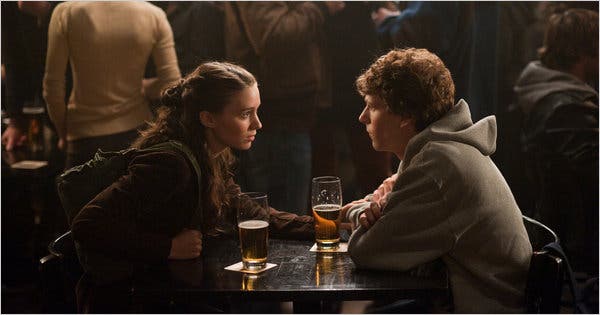
Earlier this week, I pointed out that two out of three of Demonic’s first scenes were “sitting down and talking” scenes. I said that I knew, as soon as I watched those scenes, that the movie was doomed. “Sitting down and talking” scenes are the worst types of scenes you can write. They’re stagnant. They’re visually uninteresting. They lack imagination. And they’re just straight up uninspired.
And yet, as several of you have pointed out, you see them ALL THE TIME in movies. How can I possibly say to NEVER use “sitting down and talking” scenes when there are so many of them? To answer this, we have to understand why the majority of “sitting down and talking” scenes are shot.
They’re shot because they ARE THE CHEAPEST AND EASIEST SCENES TO SHOOT. So what will often happen is that a day is running long, you need to get the scene in, so you scrap your more elaborate idea and settle for a “sitting down and talking” scene. This happens all the time. It’s important to note that nobody wants to do this. They’re forced into it by circumstance. So when you see that, that’s often the reason – time and money.
But here’s the thing – as a spec screenwriter, you never have to worry about that. It’s not your job to save money or time. It’s your job to write the most entertaining script possible. In other words, you have zero excuse to write a “sitting down and talking” scene.
I’m sure many of you are thinking of dozens of “sitting down and talking” scenes that you’ve liked and that it’s unlikely were dictated by a rushed production schedule. The opening scene between Zuckerberg and Erica in The Social Network. The fake orgasm scene in When Harry Met Sally. Vincent and Mia at Jack Rabbit Slims in Pulp Fiction. DeNiro and Pacino in Heat.
If it’s such a bad idea to write a “sitting down and talking” scene, why do these scenes exist? It basically comes down to philosophy. If there’s a designed PURPOSE to sitting your characters down to talk, it’s okay to write a “sitting down and talking” scene. Where it’s not okay, is when you don’t know what to do, so you fall back on sitting your characters down and having them talk to each other.
When it comes to the When Harry Met Sally scene, that scene is building up to a huge moment – when Sally fakes the orgasm. Let me ask you a question. Does that scene work if they’re in the car together? No. It requires them being in a big public space with a lot of people around. In other words, the scene was designed around that restaurant. So sitting down and talking made sense.
With Vincent and Mia, the Jack Rabbit Slim’s sequence is a stand-in for a sex scene. The dancing is them having sex. Quentin uses the dinner portion, then, as foreplay. Them eating at the table is all about the sexual tension building between them so that it can explode out on the dance floor. Again, sitting down and talking is by design. It’s not because Quentin couldn’t think of anywhere to put his characters.
Another time when it’s okay to sit your characters down to talk is when the situation warrants it. For example, if you’re writing a romantic comedy and you’re building up to the first date, it makes sense that your characters might sit down at a restaurant for their date.
But this is where things get tricky because I’d argue that you could come up with something more interesting than a restaurant date. Set the date up for the restaurant, but when they get there, they find out that the restaurant doesn’t have them down for a reservation. So they can’t eat there. What do they do? I don’t know, but you’ve already created a much more interesting date than had you sat them down at a table to talk for an entire scene.
Do you see what I’m getting at? Yes, you can write “sitting down and talking” scenes. But there are always better options out there. And those are the options you should be exploring.
Often, the reason we write “sitting down and talking” scenes is due to a mistake we made before we started the script. A story without a proper engine will leave your script sputtering along, fertilizing the pages with very little to do. When there’s nothing for your characters to do, you’re going to start sitting them down to talk – anything to fill up pages.
Look at Raiders of the Lost Ark. Do you remember any scenes in that movie where two people are sitting across form each other just to chat? There might be two or three. But I’m going to bet that, if there are, there’s tons of tension in those scenes, which still makes them entertaining.
The reason Raiders of the Lost Ark doesn’t have many sitting down and talking scenes is because the story engine is so powerful. There’s some of the best GSU (goal, stakes, urgency) in any movie ever. Goal – Find the ark, Stakes – if you don’t, Hitler uses it to destroy the world, Urgency – you got to find it before Hitler does, and he has his entire army looking for it.
When you have strong GSU, YOUR CHARACTERS ALWAYS HAVE SOMETHING TO DO. They don’t have time to sit down and talk. That’s why sitting down and talking scenes are bad. They’re a symptom of a deeper problem – that your story doesn’t have a powerful enough plot engine.
Now things get trickier when you’re writing character pieces. By their very nature, character pieces don’t have giant story engines. I don’t know if movies like Moonlight or Minari have any story engine at all. Also, since those movies are more character driven, the set pieces are built around character interaction. And if your characters are constantly interacting, it’s only a matter of time before they’re sitting down to do so.
When you find yourself in this place, you have to have a creative mindset. Only sit your characters down to talk as a last resort. For example, let’s say you want to write a scene between two characters at a coffee shop. What if you, instead, had them talk on the way to the coffee shop? Or on the way to somewhere else?
Sure, if you have a wife and a husband discussing a problem, you can sit them down at the breakfast table and have them hash the problem out. Alternatively, you could make it so the husband is late for work, and the argument is happening as he rushes to get his clothes on, get the kids ready, and get out the door. That’s a much more interesting way to approach the scene.
With all that said, there are times when you do want to sit your characters down to talk. The biggest of these is when you’ve built up a ton of tension between characters and don’t want any distractions for when they collide. The most obvious example of this is the DeNiro Pacino diner scene in Heat. I had no problem with that being a “sitting down and talking” scene because the movie had done such a great job building up to that moment.
Again, to be clear, this scene is BY DESIGN. It’s not because the writers didn’t know what to do and, therefore, sat the characters down to talk to each other. It was carefully orchestrated. Their sitting down and talking is crucial to the design of the movie.
A few last points about these scenes. If you’re a dialogue master, you’re allowed to write more of these scenes than the average writer. Tarantino has quite a few “sitting down and talking” scenes in his movies. But he’s also one of the top 5 dialogue writers in the world. And great dialogue neutralizes the boredom that typically occurs during a “sitting down and talking” scenario.
The worst type of “sitting down and talking” scene is the exposition “sitting down and talking” scene. If you do that more than once in your script, I guarantee you the reader will stop reading. That is the epitome of a lack of creativity – when you’re so boring that the only scene idea you can think of is your characters sitting down and talking, and then, on top of that, you bore us to death with a bunch of exposition.
Finally, in television, you’ll have more sitting down and talking scenes. They have less time and less money in television so they have no choice but to shoot more of these scenes. But that doesn’t give you a free pass to make the scene boring. If anything, it should challenge you to make the scene entertaining in spite of these restrictions. Make sure there’s tons of conflict or tension or sexual tension or unresolved problems between the characters invovled. White Lotus does a great job of this. When the characters sit down for, say, dinner, they’re rarely on the same page with each other, which creates lots of unresolved conflict that plays out during their conversations, keeping things entertaining.
Can you write “sitting down and talking” scenes? Of course you can. But only if they’re by design and only if you’ve done everything in your power to come up with a better option but came up empty.
Good luck!
Genre: Slow-Burn Thriller/Period
Premise: Set in the 1930s when a giant dust cloud had settled over Oklahoma, a mentally unstable mother and her two children must survive both the dust and a mysterious person using the cover of the dust to infiltrate her home.
About: This script finished with 7 votes on the 2020 Black List. Karrie Crouse is relatively new on the scene. She wrote on HBO’s Westworld.
Writer: Karrie Crouse
Details: 105 pages
Readability: Slow/Clunky

One of my favorite horror movies is The Others. I absolutely love that movie. There was nothing spookier than that trio in that house, with the sick kids who couldn’t endure sunlight. I loved it. Which is why I chose this script. Cause it sounded like an update to that formula. Was it? Or was it dust in the wind?
Margaret Bellum and her family live in the Oklahoma Panhandle in the year 1933. They live in a farm house in the middle of nowhere and have been dealing with a never-ending dust drought that’s already killed one of their kids, who breathed too much dust.
Currently, Margaret is getting her kids, Rose (16) and Ollie (7) ready for their father’s extended absence. He’s got to go to work. Which means these three will be on their own. Well, unless you count the dust as a person, which it might as well be. It’s all anybody in the town talks about.
Speaking of the town, the rumor is that a creepy man has made his way into the area and is appearing inside peoples’ houses, sometimes stealing, other times killing. The assumption is that the dust has driven him crazy. Margaret isn’t convinced that the rumor is real. Although maybe she’s just telling herself that because the alternative is too terrifying to accept.
After the father leaves, Margaret becomes obsessed with all the little cracks in her house that are letting in dust. So she cuts up all her clothes to stitch up those cracks. And yet, the dust keeps getting in. Her obsession starts to worry her daughters, who are not down with a crazy mommy. But what can they do?
Margaret also starts thinking that someone is sneaking into the house at night and stealing things. Just when it seems like she’s imagining it, she catches the man in question, Wallace, a preacher who says he knows Margaret’s husband. Wallace somehow convinces Margaret that he’s good people. But she later receives a letter from her husband that says, “By the way, watch out for a psycho preacher.”
Margaret and her children are able to get rid of the Wallace problem. But now they’re back to square one – Margaret going crazy and all that darned dust! As we creep towards the climax, we get the sense that Margaret might do something drastic to herself and her children. Will the town step in before it happens? Or might the kids finally realize that, in order to survive, they’ll have to turn against their crazy mommy?
It’s appropriate that today’s script is titled, “Dust” because that’s what you feel like you’re looking through when you read it – layers and layers of dust. We talk so much on this site about character and plot and structure and dialogue. But we rarely talk about the words on the page and how they’re constructed to create an engaging reading experience.
The Oklahoma Panhandle circa 1930 is an interesting setting for a movie. A constant onslaught of dust makes for all sorts of unique challenges. Unfortunately, the script is plagued – at least early on – with a writing style that’s hard to follow. I’ll give you a few examples.
“A DINGY HALO OF DUST radiates out from a clean WHITE CIRCLE where Rose’s head blocked her pillow from dust.”
While I eventually understood the image this sentence describes, it goes about describing it in an inefficient and confusing manner. A “dingy” halo of dust. Isn’t that redundant? Isn’t all dust dingy? Or is dingy being used to add another layer of dirt? It’s confusing. This is followed by the adjective “radiates,” which seems like the worst possible way to describe dust. Which makes me think I’m reading it wrong. Which forces me to go back and read it again. Which is never a good sign for a screenplay.
It seems like we’re trying to say that there’s a spot on the pillow where there’s no dust because that’s where Rose’s head was. So why not just say that?
“There’s a halo of dust around the center of the pillow where Rose’s head was lying.” That’s it. That’s all you need.
Here’s another sentence from the same page:
“MILK pours into the cup, Margaret quickly places a saucer ON TOP of the cup.”
Sentences become unnecessarily complicated when you shift the action from the person to the object. Milk can’t pour itself. It needs someone to pour it. So starting with milk pouring itself results in a reading hiccup. We *will* understand what you mean. But not without some effort.
This is followed by a comma, and then a brand new sentence. Why is there a comma? The sentence has come to an end. You need a period there.
Why not just, “Margaret pours some milk then places a saucer on top of the cup?” Isn’t that a million times clearer?
A page later, Margaret’s daughter talks about meeting her grandparents. Margaret replies, “They want to meet you too. Maybe next summer. If the crops come in.” Which is followed by the description line, “Margaret quickly moves to the door. Clearly a sore spot.”
How unnecessarily confusing can a simple one-two beat be? The ‘sore spot’ is in relation to the grandparents. But if you read that sentence, you’d think it was referring to the door.
I bring this up because it’s a classic example of a writer trying to be too cute. You’re telling a story. Yet you’re doing everything in your power to get in your own way. Just tell us what’s happening.
I understand that screenwriting contains its own shorthand. For example, you might say “GUN APPEARS, pointed at John’s face,” as opposed to, “Ray yanks his gun out of his holster and shoves it in John’s face.” But you have to be careful with this stuff because, as the writer, you have a lot more information than we do. What you think is clear isn’t always clear.
Because of all these clunky faux-pas, “Dust” exists in this hazy netherworld where the reader only grasps about 70% of what they’re reading. You’re constantly having to go back and re-read pages because you realize, by the end of the page, you’ve forgotten everything you’ve read.
Despite this issue, the script does rebound when Wallace enters the picture. Whenever you insert a potential danger into a home, you create a looming dread that builds all sorts of suspense. We’re terrified of who this guy might be and what he’ll do when he finally reveals his true colors.
Also, some of the stuff with Margaret going crazy, particularly her obsession with sealing up every little crack in the house to keep the dust from getting in, was interesting. I was curious whether she was going to get herself back on track or completely crack.
But these cylinders take so long to get turning that we’ve already made up our mind by that point. Even if I wanted to be engaged, it’s hard to turn it on after 50 pages of a ‘waiting around’ narrative that doesn’t have the easiest writing style to follow.
For all the issues I found in yesterday’s script, Emancipation, this script doesn’t come close to that one in terms of storytelling and writing. There’s such a clear directive in yesterday’s story whereas, with Dust, you get the feeling that the writer is trying to figure out their story as they write it.
So this is another no-go for me, guys.
[ ] What the hell did I just read?
[x] wasn’t for me
[ ] worth the read
[ ] impressive
[ ] genius
What I learned: When it comes to screenwriting sentence construction, the default approach should be starting with the subject. For example, you would say, “Joe runs” as opposed to, “Running along the sidewalk is Joe.” It’s not that the second example is wrong or should never be used. But it’s usually harder for the reader to follow. Not to mention, when it comes to screenwriting, you’re trying to say as much as possible in as few words as possible. When you start your sentence with something other than your subject, you usually have to use more words.
Might Emancipation be the next Revenant, switching out a bear for an alligator?
Genre: True Story/Drama/Thriller/Period
Premise: (from IMDB) A runaway slave forges through the swamps of Louisiana on a tortuous journey to escape plantation owners that nearly killed him.
About: This is the huuuuuge package that sold to Apple TV (for 105 million bucks!), no doubt buoyed by the attachments of Will Smith and Antoine Fuqua. One of the more interesting things about the project is that it was written by Bill Collage, who isn’t known for this kind of material. He wrote Assassins Creed, Allegiant, and broke into the industry with the college comedy, Accepted. This is pretty cool to see since it’s often thought to be impossible to break out of your pigeonhole. Emancipation proves it can be done!
Writer: Bill Collage
Details: 104 pages
Readability: medium

Figure out what’s unique about your script THEN LEAN INTO THAT. Simplest most effective screenwriting advice there is. If your concept doesn’t have anything unique about it, you’re probably in trouble. Because how do you mine unique scenarios out of a familiar premise?
You would think, at first glance, that Emancipation would fall victim to this pitfall. A slave on the run isn’t exactly an original premise. But look closer and you’ll find that you’re dead wrong. That’s because of one, seemingly, irrelevant factor – TERRAIN. The terrain that our main character must escape through is swampland. And swampland might be the most unique terrain of all.
It’s 1862. The Civil War is raging. Slaves are free but only in the North. In the South, where our main character, Peter, lives, slavery is still legal. Peter is ripped away from his family and sold to a man named Jim Fassel, who’s using slaves to build a railroad halfway across the state. Peter’s specific job is to bury slaves who die on the job.
Peter is two things – a God fearing man and a perceptive man. And he hears a few of Fassel’s men talking about how Baton Rouge was claimed by the Union army. That’s about a 5 day journey north. He thinks he can make it. So he pitches the idea to four other slaves. They think he’s crazy but eventually buy in.
When the time is right, they make a break for it. When Fassel and his hounds begin chasing, the five split up. Which means Peter is alone. He eventually trespasses on a farm, resulting in the family hunting him throughout their cornfields. Peter escapes to the bank of the swampland, and reluctantly enters. Within seconds, he’s attacked by an alligator. This is not going to be easy.
Peter improvises his way through miles of swampland, at one point building a makeshift canoe out of a hollowed tree. He encounters 100 degree heat, giant spiders, gianter rats, snakes, more gators, even raging fires. He finally makes it to the end of the swamp and jumps on a passing train. The train takes him to the battlefield, where he’s forced to join the war and fight. But before he does, someone sees his back, which is scarred with lash marks. A war photographer takes a picture of it and that picture becomes one of the most well-known photos in American history and the face of slavery.
Emancipation tries to walk a three-pronged tightrope over the course of its 100 pages. Those prongs include 1) entertainment 2) reality 3) trying to win an Oscar. I liked when the script was focused on 1, not so much when it was focused on 2 or 3.
One of my favorite moments occurs when Peter first goes into the swamp, sees an alligator, turns back to shore, sees his pursuers, and must choose which direction to go. He chooses the alligator, which forces him to fight it, leading to, easily, the most memorable scene in the script.
There are also encounters with snakes, with spiders, and with a terrifying animal I’d never heard of before called a Louisiana swamp rat. Just the way these things were described scared the hell out of me. These were the moments when the script felt most alive, mainly because of what I said at the outset – we were leaning into what was original about the material.
The reality stuff was harder to stomach. There’s a sequence where Peter comes across an abandoned slave house and goes down into the basement to find that a dozen slaves were chained up and left to die. There’s one 10 year old girl barely still alive who Peter tries to save to no avail. Those moments were too sad for me. I found myself not wanting to subject myself to more of that.
Then you had the statue-chasing moments. The big one occurs when Peter takes off his shirt to have his scarred back photographed. It’s an iconic moment because Peter is based on the slave who the original picture was taken of. The problem is that the original picture has inspired so many versions of this scene throughout history that it, ironically, feels cliche. It also feels like it’s trying to be a big important moment. And that’s when moments don’t work. Cause we feel the manipulation of the writer underneath the scene. For these moments to work, you have to come at them in the most natural way possible. Which Emancipation does not do.
I think the reason I’m on the fence about Emancipation is because the first 45 pages promise something intense and visceral and entertaining. I loved, for example, the escape sequence in the opening act. It was like a mini-version of The Great Escape. Then, right after that, it becomes this exciting chase movie.
But the script makes this choice to become darker as it continues on and so, with every 15 pages, I was a little less engaged than I was the previous 15 pages. Which leaves me not quite sure how I’d rate the script. If I were basing the rating off the first 45 pages, it would get an “impressive” without question. But, unfortunately, movies don’t get graded on their best 45 minutes.
The straw that may have broken the camel’s back was Peter himself. He just wasn’t that interesting. His core identity is built around his unwavering belief in God. For every obstacle he encounters, he assures everyone that he’s going to be fine because of God. And he’s right. He always comes out okay.
But how does that make for an interesting character? For characters to be interesting, their inner beliefs need to be challenged in some actionable way. So what you would do is place Peter in a dire situation where his only way out is to denounce, or stop believing in, God. In that moment, Peter has an actionable choice of whether to live, in which case he denounces everything he believes in, or die, in which case he goes to the grave still believing. That’s how you develop character. You constantly challenge their belief system, whether that be a belief in God or a belief in drinking alcohol til you’re blackout drunk every night.
But nothing like that ever happens in Emancipation. There isn’t any character growth at all. I think they figure you’ll get your emotional needs met through the ups and downs of Peter’s harrowing journey. But my experience has taught me that these movies only stay with audiences when there’s character growth. And there’s none of that here.
Emancipation has some really great moments. But the majority of them are packed into those first 45 minutes. What my rating comes down to is simple. Would I tell people to read this? I probably wouldn’t. It just never quite lives up to its promising opening.
[ ] What the hell did I just read?
[x] wasn’t for me
[ ] worth the read
[ ] impressive
[ ] genius
What I learned: Make a little movie out of your first act. Don’t get locked into this idea that your first act is only about setting your characters up. Do what Emancipation does. It uses its first act to create a mini-movie built around escaping “prison.” The planning, the suspense, the build-up to their escape – all of that makes for a really exciting mini-movie that thrusts us into the second act.
