
Plus the writer, Alex Felix, chimes in on what it was like getting the script made. An insightful look into the development and production process of Hollywood!
Genre: Drama/Crime
Logline: (from IMDB) A social worker assigned to the care of the daughter of a single mother intervenes when the dad returns from prison and lures them into a life of crime.
About: Almost a decade ago, I read a script that blew my socks off called Where Angels Die. I still remember being up at 4 in the morning, exhausted, opening this script up, and getting taken on this wild kickass ride. The script then began a long journey familiar to many in Hollywood known as development hell. Well, finally, the movie has been made as The Gateway (renamed because it’s now set in St. Louis, considered the “gateway to the West”). Today, I review the movie as well as get some deft insight into the film’s journey from the writer himself, Alex Felix.
Writers: Alex Felix Bendaña and Andrew Levitas and Michele Civetta
Details: 90 minutes, directed by Michele Civetta
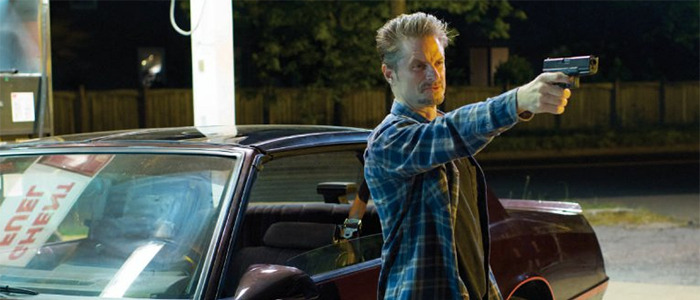
I watched two things this weekend – The Gateway and Y The Last Man. If there ever was a reminder that you must be in this business for the long run, these two projects are it. Both have taken almost a decade to get made. And while you can still recognize the original material in each, a lot was changed over the course of their development.
It wasn’t supposed to be that way for Where Angels Die. The project had a chance at getting made quickly. Here’s writer Alex Felix explaining what happened:
“Shortly after you gave the script a glowing review, I got repped and my agents began sending the script around town. While that was happening, someone else had sent the script to Adrián Guerra at Nostromo Pictures and he reached out almost immediately. He wanted to option the script for Rodrigo Cortés, a director who he had worked with and who I was a big fan of. I loved what Rodrigo had done with BURIED and RED LIGHTS and met with him to discuss his vision for the project. He said that if I gave him a shot, that he’d be interested in taking it to Ryan Reynolds, who he had worked with on BURIED.
I went back to my team and told them about Adrián and Rodrigo and was immediately shut down. They said they were out to A-List directors and talent and that there was no way we were going to lock the script up so soon. At that point in time, I had just secured representation, and with zero experience under my belt, I decided to listen to them. If I’m being honest, I was worried that if I didn’t listen to them, that they would let me go as a client. Looking back, this was the biggest single mistake I’ve ever made in my time in Hollywood and the hardest lesson I’ve ever had to learn.”
I’ve seen this happen many times myself. Agencies want to do things their way. They have a system they follow. That doesn’t mean they’re wrong. CAA puts a ton of projects together. But they can be dismissive when an outside package is presented to them that doesn’t align with their master equation.
To Alex’s credit, he kept pushing and would eventually get some help.
“I kept networking and I did land a few big writing assignments but I still really wanted to get WHERE ANGELS DIE made, and so I re-approached Adrián and Rodrigo. Unsurprisingly, they were busy with newer projects, but Adrián did have some script doctoring work he needed done and so I worked on a few really cool projects with him and we remain good friends to this day.
Later on, I met a producer named Anna Halberg who I instantly clicked with. She absolutely loved ANGELS and asked if she could help me try to get it made. Looking back, there is no doubt in my mind that the reason the project actually became a film is as a direct result of all the hard work Anna poured into the project and because of her unwavering belief in the script.”
For those who haven’t seen The Gateway, it’s about a social worker, Parker, who’s become close with one of the families he was assigned to. He helps take the daughter to school when needed and is a shoulder to cry on for the mother, Dahlia. But then Dahlia’s convict boyfriend, Mike, gets out of prison and throws everything out of whack.
After Mike reunites with his buddies and steals a bunch of drugs from a drug house, Parker makes the decision to excavate Dahlia and her daughter from Mike’s clutches, getting his hands on the drugs Mike stole in the process. Since Parker knows Mike will follow him to the ends of the earth to get his family back, he offers Mike the drugs if he’ll leave them alone. This results in a big final shoot-em-up where not everyone is left standing.
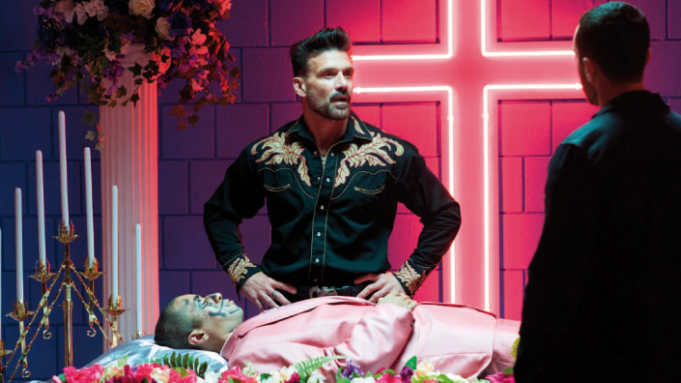
Watching this movie was a bit of an out-of-body experience. You have this very exciting memory from your past and then this movie comes along that gives you a direct line into that memory, but does so from a completely different point of view. All of the details are different. And the details, it turns out, are what made the memory so powerful.
For example, I remember this crazy stapler attack scene from the script. It was a big moment that really stayed with me after reading it. When that scene appeared in The Gateway, it was much softer, much quicker, less original. This would happen a lot while watching the film. The moments I remembered didn’t have the teeth those original scenes did. Jaws were replaced with dentures.
It was a reminder of how brutal the system can be. You move mountains to get an A-list director or actor on your project because if you do that, it’s like having a Michelin star chef cook your meal. You don’t just get the chef. You get the gorgeous restaurant, the best location, the best cuts of meat, all the freshest ingredients. People like that can turn a meal into an experience.
If no A-listers bite, you can still make a great meal. Hell, I’ve had a slice of pepperoni pizza from Village Pizzeria that was just as good as the Margherita pizza at Osteria Mozza. But the odds start working against you. B-List actors mean B-list money. That means you have less days to shoot. That means you have less money for sets and locations. You have less money for actors. You have less money for music.
As I’m watching The Gateway, I kept thinking, “if they just had a little more money.” What I remember about the screenplay is that it would strategically creep along, building tension, before hitting you with these WHOPPER moments. Those moments are less frequent in the film. Instead, they focus on the smaller quieter exchanges.
I’m guessing they had to do this because they didn’t have the money. I’m sure they would’ve loved to have shot in an opera house. But, due to budget constraints, they shot in a tiny bar with three patrons instead.
Stories need balance. The small personal moments are what drive the emotional through-line of your movie, yes. But they need bigger flashier moments to balance them out. If it’s all small all the time, the movie starts to feel monotone. It starts to feel generic.
A good comp would be a movie like Good Time (it seems like Civetta is inspired by the Safdie Brothers). Good Time has small intense moments between the two brothers. But those moments were balanced out by a crazy chase scene. Or a random tweaked-out dude who would show up in their car and tell them a wild ten minute story about how he ended up there.
The Gateway tries its best, but even the big featured set-piece – the bad guys storming the drug den to steal money – felt muddled and unclear. As it was happening, I said to myself, “Wait, what’s going on right now? Why are they coming here?” It wasn’t explained well.
“Why is there a kiddie pool in the middle of the floor? Why is there a guy riding a bike inside the warehouse?” It was like the director wanted to do some Boogie Nights inspired weirdness but forgot to organically tie it into the story, something I thought Alex did a great job of in the original script. Every crazy moment from the script felt designed. Felt like it had a purpose.
Despite all this, the movie had its moments. Almost all of them come from Shea Whigham, who’s dialed into the role of Parker throughout. Him sharing a fun moment with the daughter. Him staring Mike down in his doorway when they first meet. It was cool to see those moments come to life because you read these scripts when they’re digital paper and you never know what’s going to come of them, then ten years later you’re seeing it acted out with real actors and a real crew and the production level that even a small Hollywood production can bring to the table and, I’m not going to lie, I got a little choked up. I saw those flashes of the script I read and, for a brief moment, I was experiencing the same thing I experienced that Friday morning at 4am.
I don’t think there’s enough ‘different’ going on in this movie to draw in the average viewer but if you’ve been following Where Angels Die from the beginning here on Scriptshadow, you should definitely check The Gateway out.
[ ] What the hell did I just watch?
[x] wasn’t for me
[ ] worth the stream
[ ] impressive
[ ] genius
What I learned: Today’s lesson comes from Alex. “If I can pass on just one piece of advice to aspiring writers out there, it’s this: if you ever get the opportunity to get your project made by a director whose work you like and respect and/or a producer with a great track record who is enthusiastic about your project, take it. For an unproduced writer, getting a project made is literally like winning the lottery. Think about it this way: If you found out that you won a million-dollar lottery, and someone told you that instead of cashing in your winning million-dollar ticket, they wanted you to forfeit it in order to put it back into a smaller lottery pool for a one in a hundred chance to win one hundred million dollars, would you do it? Would you trade a guaranteed million dollars for a one in a hundred chance to win one hundred million? Because that’s essentially what you’re doing at that point, and unfortunately, it’s what I did. Sure enough, all of the A-List prospects that my reps were out to dried up as time went on. I went on a ton of general meetings and did some great networking, but I completely blew my shot at getting my movie made with what would have been an absolutely fantastic team. I want to be clear that I don’t blame my reps for taking the position that they did, and I understand why they insisted on waiting. They gave me the advice they thought was in the best interest of the project, which I just so happened to disagree with. My only regret is not going with my gut, and the only person I blame is myself.”
And here’s a little more from Alex…
Pretty soon, she (Anna) got the script set up at Radar Pictures, and they sent the
project out to directors and actors they had worked with. As time
marched on, Anna and I realized that it looked like they were really
busy with some other projects they had that were further along and that
ANGELS probably wasn’t going to happen with them, so we respectfully
parted ways and there were no hard feelings on either side. Radar had
had the script for quite some time, but Anna kept hustling and we soon
found a new possible producing partner for the project along with a
director who was interested.
I had never heard of this director but I met with him and he seemed
passionate about the project. By this time, years had gone by and I was
afraid the project was going to die on the vine so I decided to give him
a shot at the material. We took the project back out with this new
director, but as time went by, we were unable to attach talent to the
project, which I can only assume was because he was a newcomer and
relatively unheard of. Luckily, he decided to step down as director but
stayed on as a producer, which meant that Michele Civetta, who had a
great background doing music videos, commercials, and indie films, was
able to board the project. Shortly after that, Shea Whigham signed on to
play Parker, then Olivia Munn signed on to play Dahlia and the rest of
the cast quickly followed.
In the end, I feel incredibly grateful to have finally seen this project
get made. I learned so many hard-fought lessons along the way and made
mistakes which I’ll never make again and which I hope other writers can
learn from, but without a doubt, the most important lesson I learned was
to never let anyone stand in the way of you getting your project made.
Whether that be an agent or a producer or a manager, it’s up to you as
the writer to do everything in your power to protect your project. This
project almost died because I made that mistake so early on, and
although I was new to the industry and had no idea what I was doing, it
took me many years to fully forgive myself.
I was incredibly lucky to find a producer who believed in and fought for
the project the way Anna did. She stuck with it through all of the ups
and downs, and I can’t stress enough how important it is to find someone
like that, someone who is as passionate about your project as you are
and who is 100% committed to seeing it through to the end. I also want
to tip my hat to Michele, who I thought did a fantastic job making this
movie on an indie budget. I liked a lot of the creative decisions that
were made on his part, and I loved the ensemble cast he put together.
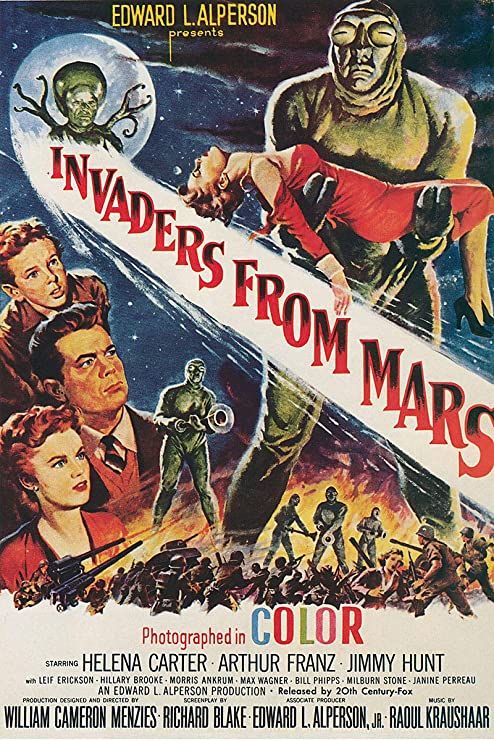
It’s finally here. If you don’t know what’s happening, let’s catch you up. The Scriptshadow Showdown Series is a screenplay competition where anyone can send in their script to compete. I go through all the loglines and pick my favorite five. I then post those five, along with the scripts, for you, the readers, to judge.
Yes, that’s where you come in. You read as much of each entry as you can and vote for your favorite in the comments section (just write the title of your favorite script and your vote is counted). Feel free to add commentary on why you picked the script and also why you didn’t pick the others. Showdowns double as an opportunity for the competing screenwriters to get feedback and improve.
Today’s showdown is for sci-fi scripts only. Whoever gets the most votes will get a script review next Friday, so you can check back to see how the winning script fared. In the best case scenario, I’ll flip for the script and we can try and get it produced. A friendly reminder that voting closes Sunday at 11:59pm. So make sure to get your votes in before then!
Finally, a big thank you to everyone who submitted. If you didn’t get picked, it could be for any number of reasons. The idea wasn’t interesting/big enough. It wasn’t marketable enough. The logline didn’t convey a clear story with a beginning, middle, and end. It wasn’t my cup of tea. I’ve seen too many similar projects out there. The idea wasn’t good enough to justify the huge budget. As is the case with all showdowns, if you feel like your idea is better than these five, pitch it in the comments. If a bunch of people say, “You missed out on a good one, Carson,” I’ll make it an official entry. Time permitting, I’ll respond and let you know why your logline wasn’t picked.
Now…
ARE YOU REAAAAADDDYYYYYYY FORRRRRR SOME SCREENPLAAAAAAYS!!??
I’ve read the first page of all five entries and two of those entries, in my opinion, are head and shoulders better than the rest. Excited to see if you agree.
Welcome to Sci-Fi Showdown 2021
Good luck!
Title: Shardworld
Genre: Sci-Fi
Logline: In a future where Earth has been shattered to pieces, a young tribeswoman must stop a war that will destroy the last remaining records of human history.
Why You Should Read: The post-apocalyptic story to end all post-apocalyptic stories! Earth has literally been blown to pieces, one of them large enough to just barely sustain human life. The new center of gravity is so close to the surface that the remaining air and water bunch up and form a mile-high mountain that moves due to the tidal effect of the other shards from the shattered Earth. 99.999% of all species are gone, leaving algae, floating reeds, a few fishes, and humans – a tiny group of scavengers that has survived 800 years by religiously limiting their population to what their environment can sustain. And suddenly, a new and much larger group emerges…
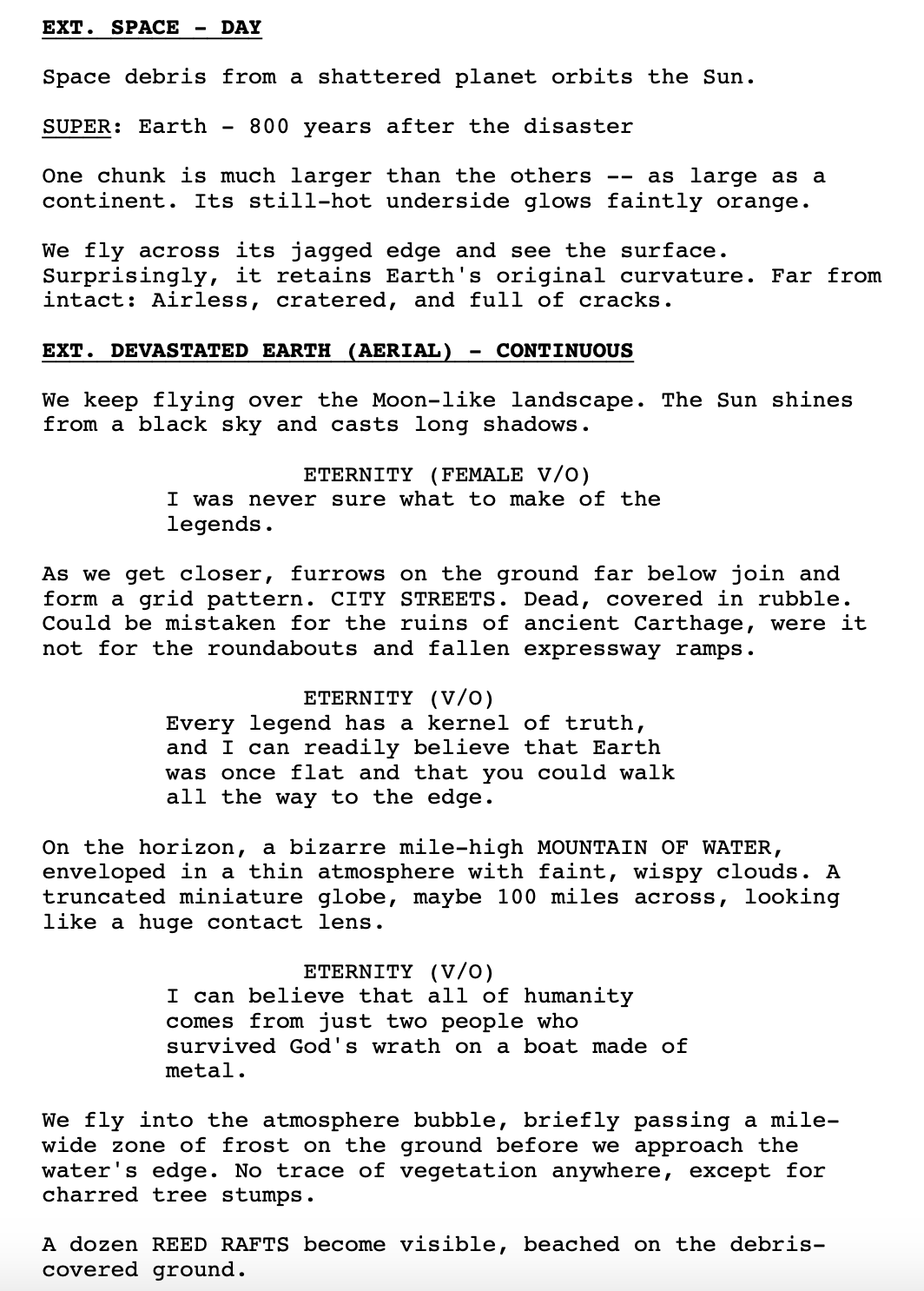
Title: FIVE MINUTES DEAD
Genre: Sci-fi/Horror
Logline: When a lonely man finds a button that enables him to travel back in time five minutes once a day, he uses it to win the love of a troubled waitress, then starts exploring darker possibilities.
Why You Should Read: Imagine coming across a device offering great power. A time machine! But what if that time machine is very specific? You can only go back in time five minutes once a day. You can’t kill Hitler, but you can ask the same woman out over and over until you get it right. You can punch the jerk you’ve always wanted to punch, then take it back. Power is intoxicating, even a very specific power like the Button. With FIVE MINUTES DEAD I wanted to put a unique spin on the time travel story. There are no fancy special effects (budget-wise, very doable). There’s only a man who loses himself to the power, and a woman with big dreams who discovers his secret and must either stop him, or fall victim to his descent into darkness. You should want to read FIVE MINUTES DEAD because it’s thrilling, dark, and different.
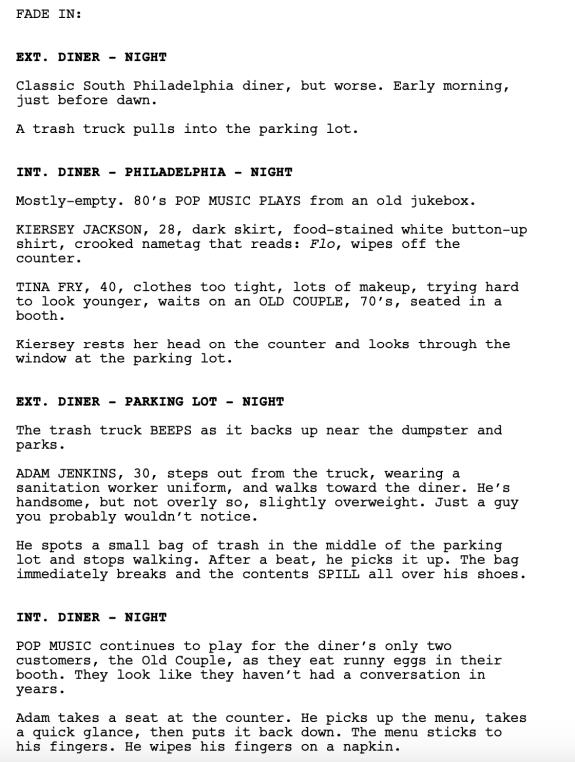
Title: Turnpike Jackknife
Genre: Sci-fi
Logline: In the future, a loner soldier-for-hire riding shotgun on a driverless truck must get her secret cargo past pirate drones, rogue farmers and a corporate countdown, aided by a ragtag team she picks up along the way.
Why You Should Read: This screenplay is chock-full of osmotic influences from ’70s/‘80s B-movie sci-fi and road movies, things I probably watched after midnight when there was such a thing as a late show, with a big nod to trucker movies such as Jonathan Kaplan’s “White Line Fever” and Sam Penckinpah’s “Convoy,” This is a simple and propulsive tale that speculates on some of the less-considered aspects of future tech on our workaday lives: for instance, if the highway of tomorrow is all robotically driven, what happens to the romance of the road for those left to travel it? Such speculative notions are weaved in and around action set pieces that take full advantage of a mid-21st century road setting, with drones, airships, and AI-controlled truck convoys all coming into play.
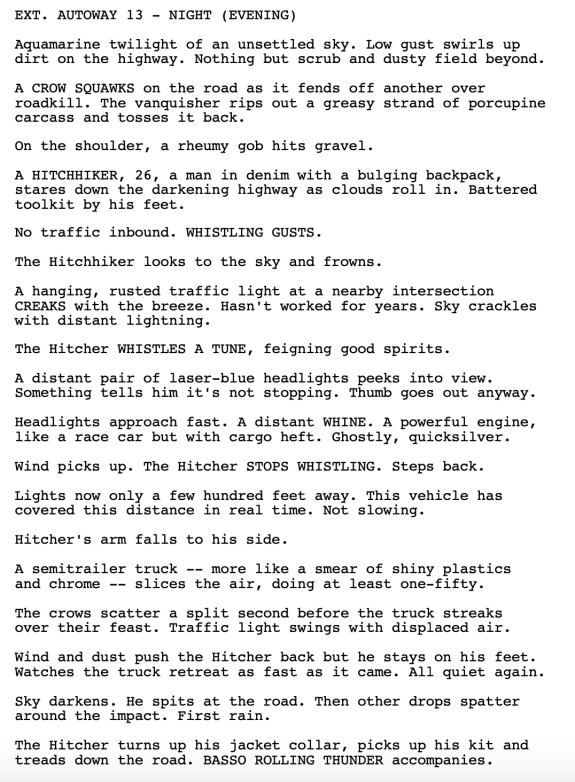
Title: MAXIMUS
Genre: Sci-Fi
Logline: After an apocalyptic event, a washed-up bounty hunter must escort a sixteen year old girl to safety – the key to the survival of a species – before the launch of a full scale alien invasion.
Why You Should Read: I’ve been obsessed with mind control type movies for a long time. Probably since watching the original Invasion of the Body Snatchers in film school, as it related to the Communist Red Scare paranoia of the 1950’s. I’m even a fan of the late 90’s movie Disturbing Behavior starring Katie Holmes. This obsession led me to the idea that maybe an alien species does not need to be organic in nature. Why not a gas? Or a liquid, perhaps? Turning over such an idea led me to write Maximus, which my brother feels is my own Terminator, though I prefer to think of it as Logan meets War of the Worlds. It was written to be a low budget sci-fi feature and it was purposely set in locales that could take advantage of current U.S. film tax incentives. I was thinking like a producer during the entire writing phase! Lately, I’ve been feeling that Covid-19 and world pandemics may have played a part in influencing this story (how could they not!) – just the way a deadly mysterious new disease influenced John Carpenter’s The Thing, and 9-11 may have brought on The Walking Dead and a slew of zombie films (as they represent a world in chaos). So with that, I bring you MAXIMUS, a low budget sci-fi movie that will scare the hell out of you, keep you wearing an N-95 mask over your face until your dying breath, and will make you wary of every living thing… because, after all, you could be next! Enjoy!
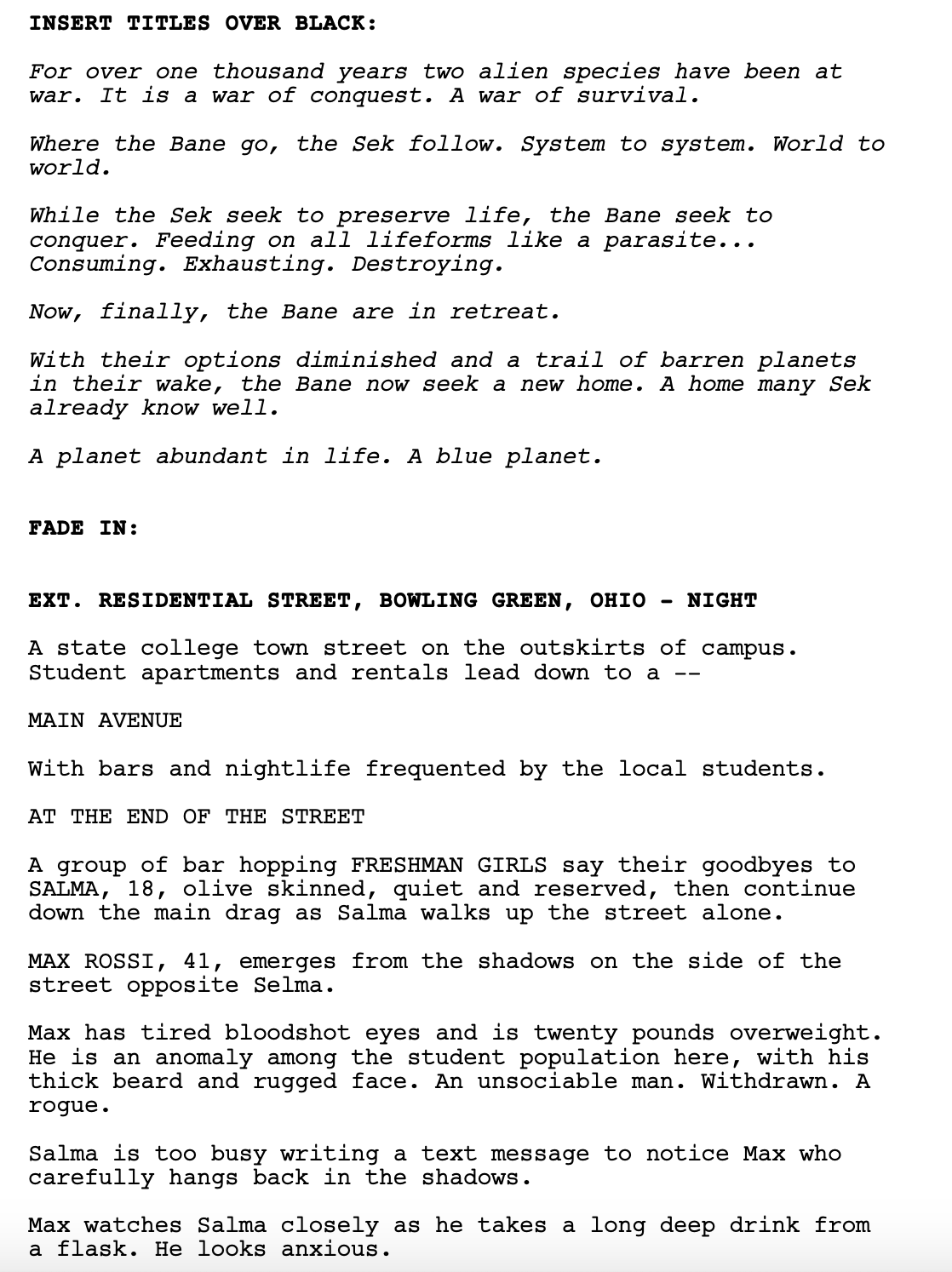
Title: Black Sky
Genre: Sci-fi/Horror
Logline: When a photosensitive alien force blacks out the sun, a dysfunctional family must survive together in a perpetually dark world full of predatory creatures, while trying not to lose the only thing that can protect them: the light.
Why You Should Read: Black Sky is my first sci-fi screenplay, though it’s as much a horror/thriller and family drama as it is sci-fi. Definitely a sci-fi concept though. I see Black Sky as a possible franchise, and/or a TV series. It’s in the vein of A Quiet Place, Signs, Bird Box, and The Walking Dead. I wrote it to be produced on a low-budget, but ironically a couple of people who’ve read it compared it to War of The Worlds. I’m not sure about that but I was pleased by the comparison and in any case I believe it can be produced low-budget regardless of that comparison. My last two screenplays, both set in a car and written to be made for a micro-budget, were recently #1 and #3 on the black list paid platform top list and consequently I have a shopping agreement with a great company in LA for one of the scripts, and I’m in negotiations with a producer who’s made more than a dozen movies on the other script, so being high on the black list really made a difference and hopefully I’m on a bit of a roll and can get representation now. In the meantime, it’d be great to get feedback from Scriptshadowers and possibly Carson if it were selected for Sci-fi Showdown.
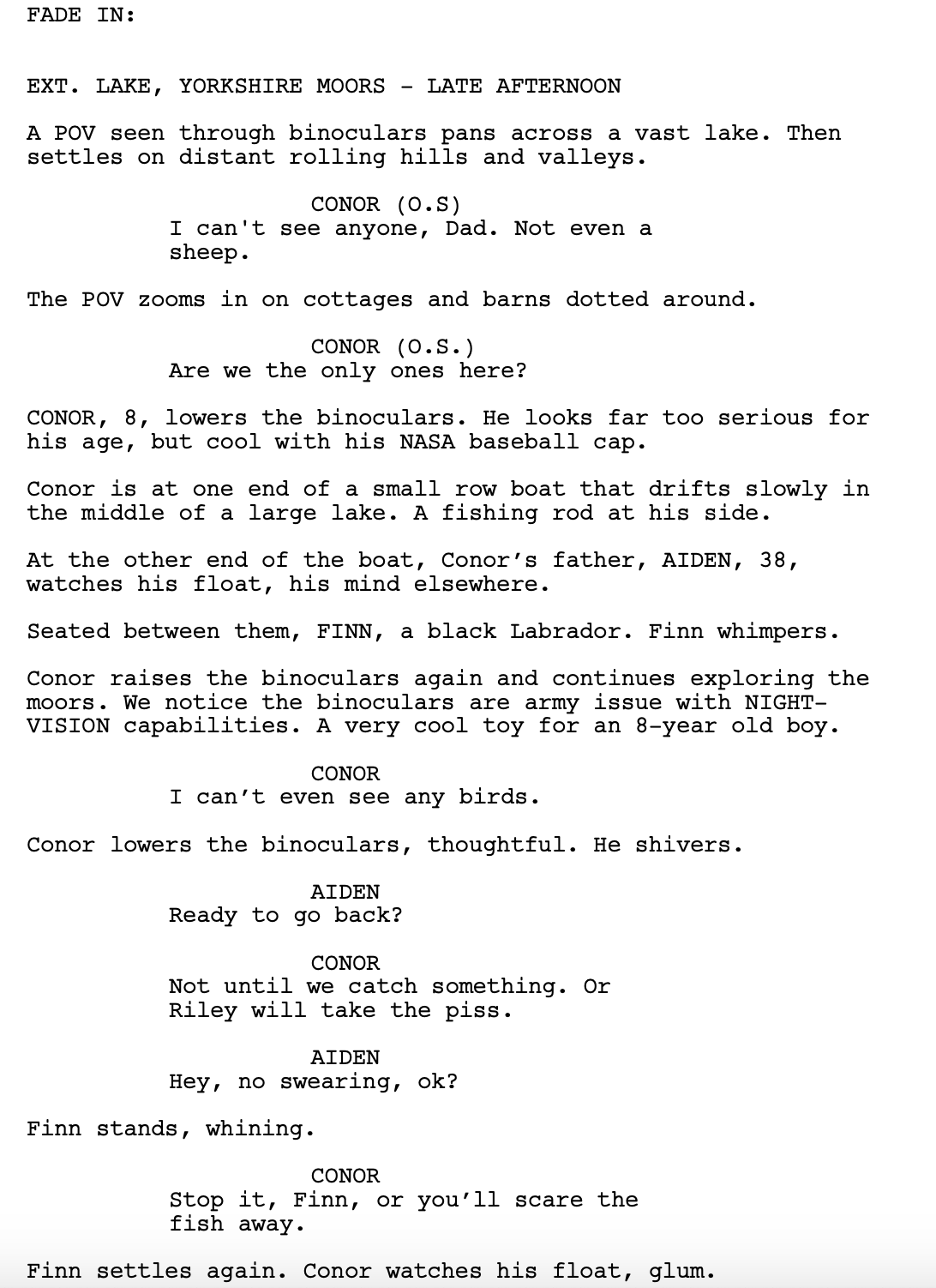
Deadline for Sci-Fi Showdown is tonight (Thursday) at 11:59 pm pacific time. Details for entry ARE HERE
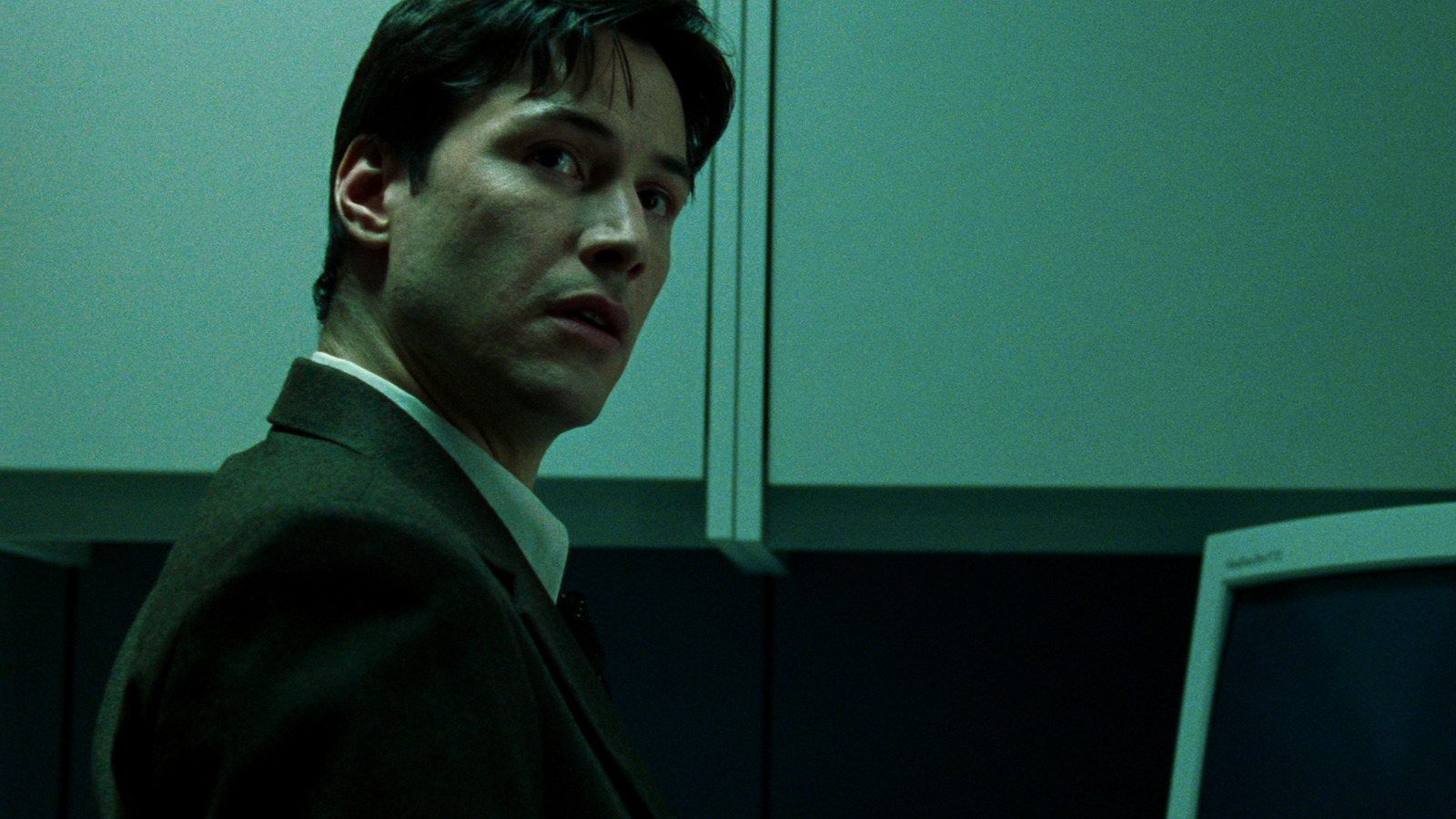
I was going to save this for the newsletter but what the hell. It’s Sci-Fi Week and what’s more Sci-Fi than The Matrix?
So let’s go back in time for a second. I remember seeing the Matrix trailer during the Superbowl and reacting exactly how Keanu Reeves reacted. “Whoa.” There was so much going on at that time in Hollywood. George Lucas was about to release the first Star Wars movie in 15 years. That’s all anybody could talk about, was the lead up to that movie.
And then you had this random flick from a couple of directors nobody had ever heard of starring an actor who most people felt was on the downslide, and yet when it was all said and done, the polls were unanimous. The Phantom Menace was a bust. The Matrix was the future.
The lead up to the sequels was the most heavily discussed lead up to any movies ever. There’d be daily articles about how the Wachowskis were building entire freeways for action scenes. Or how the famous (infamous?) burly brawl set piece had taken more days to shoot than most studio movies.
And so it was heartbreaking when the movies came out and they were such a mess. To give you some insight into how big of a dud those movies were, it’s important to remember that Quentin Tarantino was at his peak popularity at the time. The only modern filmmakers he was intimidated by were the Wachowskis. And the Matrix sequels had the potential of putting the zeitgeist king in their shadow. He was legit afraid of them.
What do you think his reaction was after watching an early matinee of the film on its opening day? “This is what I was worried about??” he said. He left Matrix Reloaded with zero fear of the Wachowskis ever again. Which might seem pompous but anyone who watched that movie knew that the Wachowskis had some deep set issues in their writing.
Their approach to narratives was laborious. Their favorite scenes tended to feature characters espousing endless exposition. They overcomplicated their mythology until it became nonsensical. And, on top of it all, they didn’t have a good plan for their story. The overall plot goal was strong – defeat the machines and destroy the Matrix – but literally every other aspect of the script felt fuzzy, like they’d only given cursory thought to it.
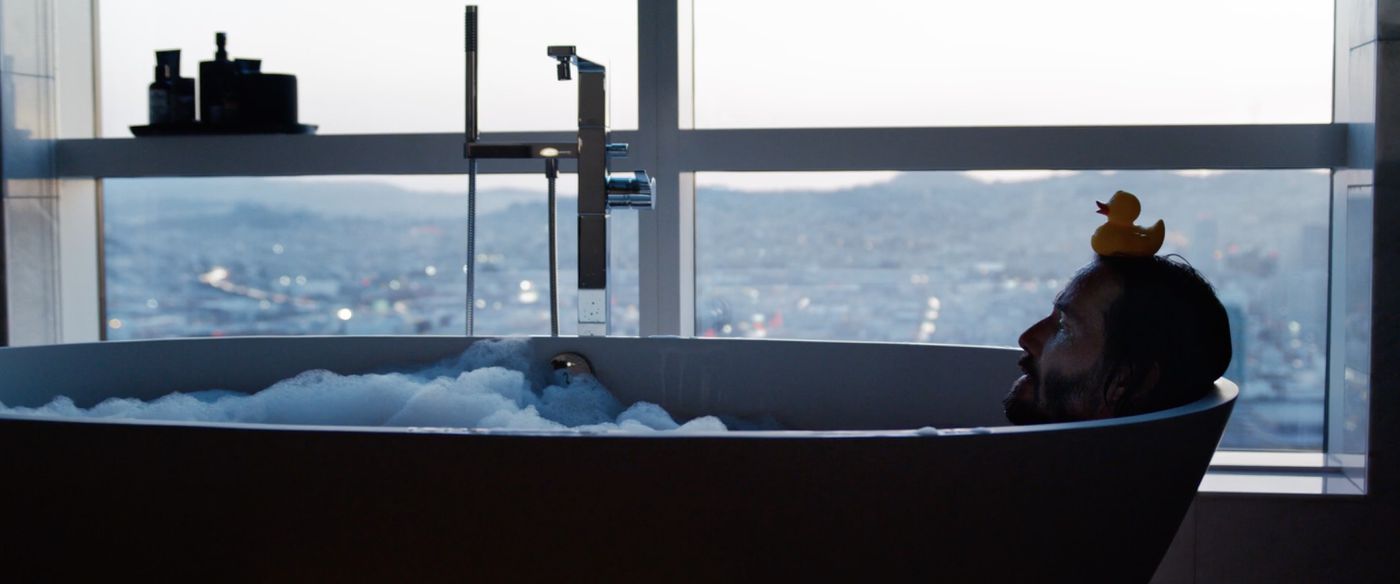
Despite all of this, I still love The Matrix. I believe it was one of those pivotal game-changing moments in Hollywood history that redirected the industry. And for that reason, when I heard that they were making a new Matrix movie, I was ecstatic. Now some of you might say, Carson, you just listed all these reasons why the Wachowskis suck. What makes you think anything’s going to change now?
Fair question.
I don’t know that it is going to change. But there are a few things that I find encouraging. Number one, there has never been a time in history where the dilemma of being too “plugged in” is more relevant than right now. I can’t even tell you how much more dependent I am on machines now than I was in 1999. We didn’t even have Instagram in 1999. Hell, we didn’t even have Twitter! *If* the script really leans into this theme of what being plugged in means in 2021, I think it has the potential to be powerful.
Two, the Matrix sequels were rushed. It’s hard to write any script in a short amount of time. It’s even harder to write a sequel in that time. And it’s harder still to write two sequels in that time. I would go so far as to say they never stood a chance. They rushed it, which is exactly why the movies feel the way they do – big and sloppy. That wasn’t the case with Resurrections. They’ve had 15 years to come up with an idea.
And finally, we have the x-factor, which is that there’s one Wachowski instead of two. When you have two writers, each writer tends to favor certain things. I’m hoping that the Wachwoski that *didn’t* do the movie is the one obsessed with ten minute exposition monologues and stuffing as much mythology into the story as possible. I’m hoping that the Wachowski that *did* do the movie is the one who favors a lean storytelling style, like we got in the first Matrix.
As some of you have pointed out, plot details of Ressurections have already leaked. I am avoiding those. So, if those leaks are accurate and if they point out that everything I’m about to say is wrong? Well, I guess I’ll find that out when the movie premieres. Now let’s get into the trailer…
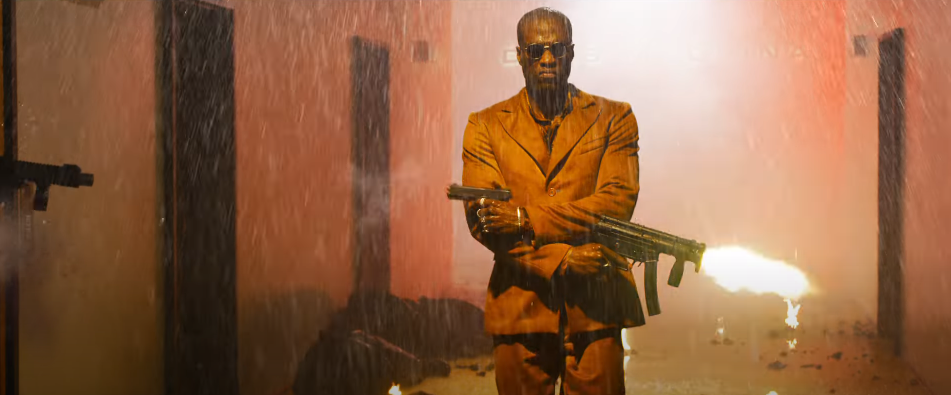
What’s interesting about watching this trailer is that I didn’t have any expectations. I didn’t go into it convinced the movie was going to be great. I didn’t go into it convinced it was going to be terrible. Truly, I went into it as open-minded as I have in a long time for a franchise. And I felt I was rewarded for that mindset.
The first thing I noticed was how different the cinematography was. The Matrix is known for that green tint. Every movie between 1999 and 2004 had a green tint as a result. Even indie films about pregnant teenagers had a green tint. I like that Wachowski recognized that repeating that green tint would date the movie. By moving into this more vibrant color palette, it gives the Matrix a completely fresh look. You need that to let people know, “This isn’t your daddy’s matrix.”
Once the trailer gets going, you start to get a feel for the story they’re going to tell. It seems that Neo was placed back in The Matrix and is going to, once again, get pulled out by Morpheus and his team. This brings up questions such as, are they going to do a soft-reboot of the film a la The Force Awakens? In which case I believe a lot of people are going to feel cheated.
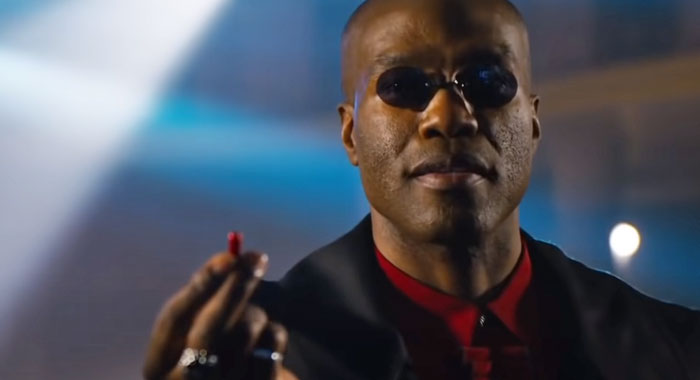
Or are they – and this is the route I’m hoping they’ll take – use the unique mythology of the Matrix to play into the repeating nature of the system? Deja-vu, glitches, memories, dreams. Some people have complained that a lot of shots from the trailer are taken from the first films. Well, maybe that’s the point. Maybe the Matrix is repeating the same events and Neo has to find a way to stop it.
With that said, I do wish there was a little more “new” going on. I like the Doogie Howser opening. Without question, he’s a bad guy, there to specifically get inside Neo’s head so they know what he’s thinking and can continue to control him. Carrie-Anne Moss looks way better than I thought she’d look. Keanu looks great although he sort of looks like he does whenever he’s walking around LA. I like the blue-haired chick. She feels like she’s going to steal the movie.
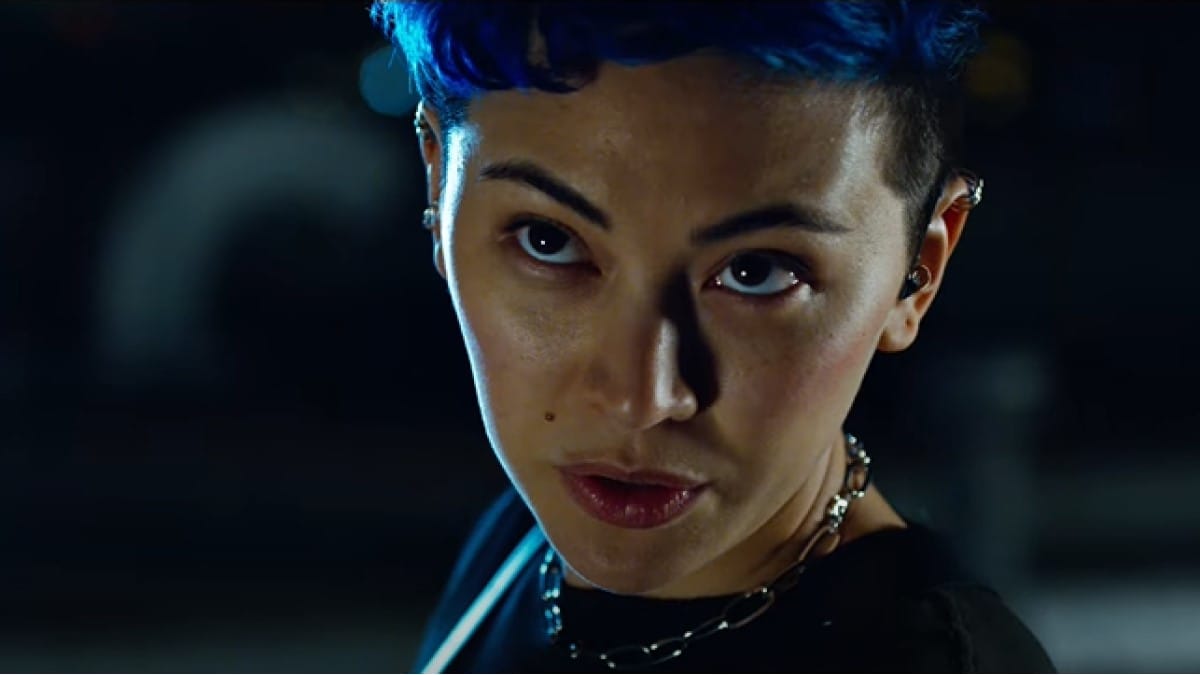
As far as the action goes… I mean, let’s be honest, this is where the movie is going to live or die. The awesome thing about The Matrix is that it can provide a type of action scene that no other franchise can match, even comic book movies – this mix between the real and the fantastical that’s, strangely, grounded in reality.
For example, if you look at a Spider-Man set piece, he’s fighting in the real world, yes, but he’s also fighting 1000 drones that can create illusions. Whereas, with the Matrix, you can only bend reality so much. So we get these heightened “real-world” action scenes that are bigger and better than your straight-up action set-pieces. James Bond on steroids with a side of DMT.
The action in the trailer looks good. But there isn’t yet a money shot. There are scenes that get right up to the “money shot” line but they don’t cross it. Like the girl flipping over the car. The guy walking through a door where reality is tilted. Or that mid-city cross-walk set piece where there are a million things going on at once. All of those look good. But not great.
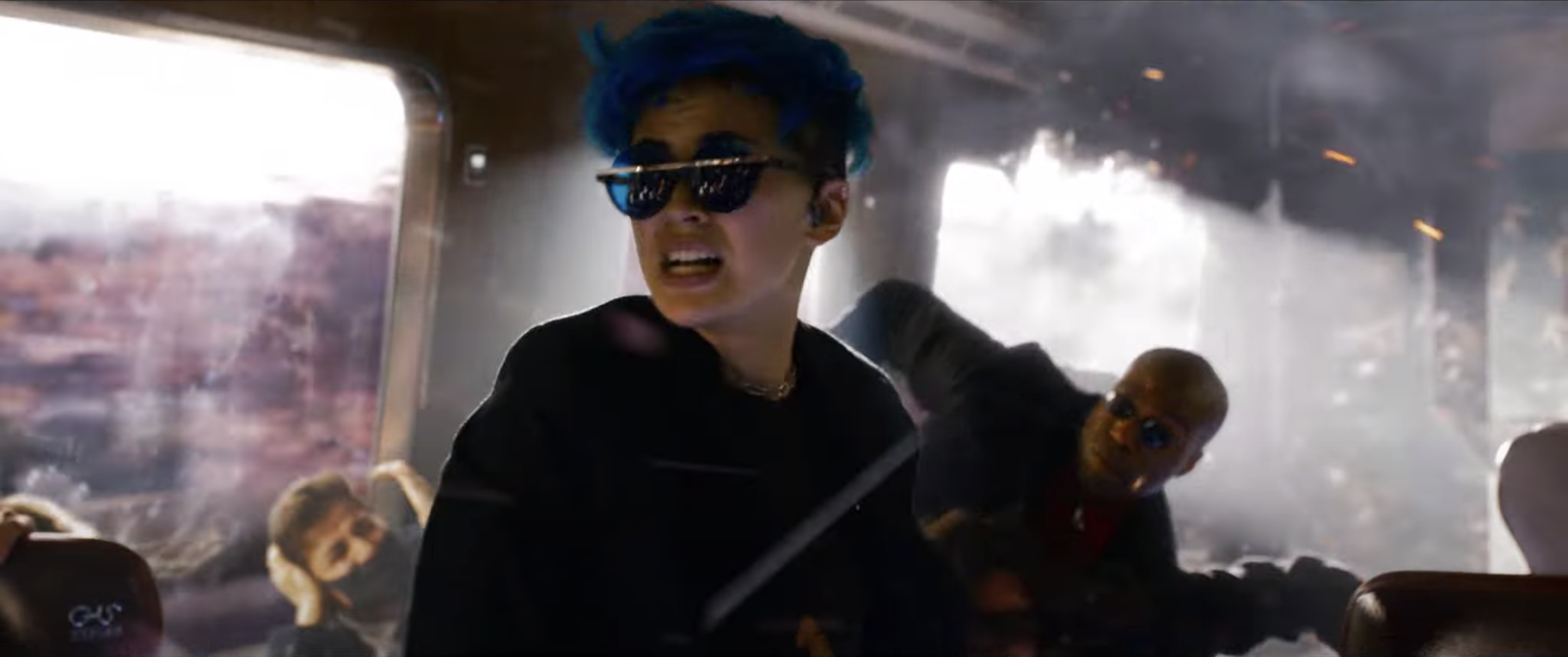
The problem with changing the industry so radically is that you influence so many people who have, since, tried to elevate what you invented. Walking through a door where reality is 180 degrees upside-down doesn’t have the same punch after Christopher Nolan built an entire set-piece around the very same idea in Inception.
So I’m hoping they’re keeping their money shots under wraps until the movie, or, at the very least, until the final trailer.
I, for one, am more hopeful for this Matrix sequel than I was before I saw the trailer. And I’m going to say one last thing that’s probably going to tick some people off but I don’t care. I think a huge reason this looks good is because Lawrence Fishburne isn’t back. When I saw how much weight Fishburne gained for the sequels, that told me everything I needed to know about how little he respected the franchise.
I’ve heard numerous times that he’s a diva. That he wanted way more money than he deserved. I feel like he would’ve been an emotional drain on the entire set if he would’ve come back. Putting this new guy, the Candyman dude, in the role – think about how excited he is to be playing such an iconic character. I’m sure that that positive energy affected everyone. Because, whether you liked this trailer or not, you can’t deny that everyone looks engaged. They want to be there. They want to make a great movie. Now, did they make a great movie? We’ll have to wait and see. But you know my ass is going to be there opening night to find out.
********
Hey, have a great sci-fi script with a killer concept? Want to get your own “Matrix” made? Enter Scriptshadow’s Sci-Fi Showdown screenwriting competition. I pick the best five concepts. You, the readers, vote on the best script, then I give that script a review. If I like it, we’re going to do everything in our power to get it made. The deadline is today (Thursday) at 9:59pm Pacific time. Details to enter are here! Good luck!
Genre: Sci-Fi
Premise: (my logline) A female doctor who’s ripped out of the virtual patriarchal world she’s existed in her whole life must team up with a group of rebels who plan to take down the giant evil company that runs this matrix.
About: This script finished with 7 votes on last year’s Black List. Heather Quinn has a couple of projects in development. But this is really her first official breakthrough script.
Writer: Heather Quinn
Details: 120 pages
Readability: slow

So, I’m going to be honest with you. There were a couple of red flags right off the bat with this one. First was the logline that appeared on the Black List: “A woman abruptly discovers nothing she’s known until now is real, and she must recover the truth in order to save the rest of the country, still trapped inside of the lie.” This isn’t a logline. This is a teaser, and a vague one at that. It doesn’t tell us anything about the story. 99 times out of 100 when I encounter a logline that doesn’t give us any sense of what the story is about, it means the script is in trouble.
Two, the script is 120 pages. Now we’ve had discussions on this site ad nauseam about page count. Some writers will threaten to rip your eyes out if you tell them they have to keep their script under 110 pages. And I respect that point of view. However, one thing is undeniably true about page count. Certain stories warrant a bigger page count. Certain stories do not. A script that takes place over 3 time periods and has a cast of 25 characters is, naturally, going to need more time to be told. Whereas a story about a single character escaping a virtual reality… that shouldn’t require 120 pages to tell.
Of course, as new information in this script arrives, I may change my mind. But that brings us back to the first point, which is that we have zero idea of what this movie is about because the logline is so vague. Hopefully, this is one of those amazingly gifted writers who can make any scenario work. Let’s check it out…
32 year old Lynn Roberts is a doctor. She’s got no friends other than her twin brother, Duke. Speaking of, at Lynn and Duke’s birthday party, we notice that the men all feel very 1955 in their approach to the world. They think it’s bizarre, for example, that a woman could be a doctor.
One night while Lynn is walking from her bedroom to her bathroom, her bathroom disappears. Every time she goes through the door, she’s still in her bedroom. This glitch eventually results in her waking up in a glass container. That’s right, Lynn was inside this movie’s version of the matrix!
Lynn is rescued by a guy named Gray Johnson who tells her that a company called VTI has almost 70% of humanity plugged into their version of the matrix. Out here, in the real world, woman can be doctors without being sneered at!
He brings Lynn back to his secret hideout where Ruth, Lynn’s aunt, explains to her that her grandmother was going to be the first female president of the United States when her car was run off the road and she died. Lynn was in that car!
According to Ruth, Lynn has to reclaim that memory of what happened in the car that night so that they can upload that memory to everyone else in the VTI matrix. Once they all realize what really happened that fateful night, they’ll snap out of their imprisoned minds and wake up. But that’s only if Lynn can access that memory. Will she do it? Only time will tell!
For the first 30 pages of Reality, I thought to myself, “Wow, this writer totally proved me wrong. This’ll teach you to make giant assumptions in the future, Carson.” I was most impressed by the detail-oriented writing, which did a great job painting a picture of both the characters and the world they were in. Really solid stuff.
And then, ever so slightly, the cracks started to show. There started to be a whole bunch of exposition. Which is fine. There was a lot of exposition when Neo exited the Matrix.
The difference is that this exposition didn’t make sense. Apparently, the point of creating this virtual world was to keep women more domesticated. However, it wasn’t clear why anyone wanted to do this or what the end game of such a virtual world was. You also had a woman in charge of this evil program, which confused the message.
We’re told that upwards of 70% of the population are inside the virtual world. If I have this right, that means you’ve created an evil virtual world where women are kept down yet none of the other 30% of the people on the planet are trying to stop it. Do they even know it’s happening? If no, how is it that the rest of the world has no idea what’s happening to 4.5 billion people? Wouldn’t that be hard to cover up? Or are you saying they know and are okay with it? And if they’re okay with it, then why do you need to create a virtual world in the first place? It sounds like you could’ve just done it in the real world.
Not to mention, the financial requirements of placing 4.5 billion people inside of a virtual reality would be in the vicinity of 500 trillion dollars. And that’s a conservative estimate. And what happens to all the infrastructure of the planet when 70% of the population are no longer using it? Wouldn’t that have devastating implications for society?
Some of you may be thinking, “Why does that matter? Who cares how much it costs?” The reason it matters is because suspension of disbelief is critical to buying into any science-fiction story. Even if, as an audience member, you aren’t calculating the exact cost of the enterprise like I am, you’re still thinking, “Something’s off here. This doesn’t feel realistic at all.”
I call this practice working it out on the page exposition. This occurs when you have this giant chasm of mythology to manage and you try to work it all out on the page. You have your characters talking about it and hope you can write yourself into something that makes sense. While this is okay to do in first drafts, you need to refine and focus your mythology so that it’s not just some big garble of information, but rather something that’s logical and can hold up to scrutiny.
At one point Phyllis, the leader of VTI, mentions that she’s worried the United Nations is going to make a stink about the company’s latest actions. Um, why exactly should anyone be worried about a governmental body that’s already allowed 4.5 billion people to be enslaved? I think it’s safe to assume that they aren’t that bothered if they didn’t do anything after the first billion.
We also get this shaky plot goal about changing a memory in Lynn’s past, which will then, if I understand it correctly, change all the other imprisoned peoples’ memories, which will then wake them up. I must’ve read this part ten times and I still don’t understand how it works. You don’t get points just because you include a goal in your screenplay. The goal has to actually make sense. It must be clear. We must believe in it.
The script has a few interesting moments later on when we’re not sure whether our current reality is actually another matrix but these ideas are scattered and never amount to more than a brief, “Oh, that’s cool.”
It’s too bad because it seems like Quinn is using this story to explore several things she’s passionate about, specifically the place of women in society. But it’s buried underneath so much shaky mythology that it’s impossible for any of it to register. Which is why I will say it for the ten millionth time: KEEP IT SIMPLE STUPID. Stop overcomplicating your stories. Stop trying to do too much. Your story will be lost. Your message will be lost.
Luckily, we have the perfect comp for what “Reality” looks like in a tighter sleeker package: “Don’t Worry Darling.” The reason that script became one of the biggest script sales of the year was because it had ONE CLEAR MESSAGE and it didn’t do anything to distort that message. The script isn’t perfect. But in the battle between patriarchal Matrix movies, it’s much more focused and a lot more entertaining. And it’s because the writers kept things so simple.
Look, “Reality” isn’t a bad script. But the writer is still learning the craft. There’s that ‘searching’ quality to the writing that I see all the time with new writers. They’re trying to work their plot and characters out on the page instead of focusing on what they should be focusing on – entertaining you, the reader.
If you’re an aspiring screenwriter yourself, this is a rare opportunity to see the difference between a sale-able sci-fi script and what most amateur sci-fi scripts look like. Read “Reality” and “Don’t Worry Darling” back to back and you’ll have a better understanding of screenwriting than 90% of the aspiring writers out there.
[ ] What the hell did I just read?
[x] wasn’t for me
[ ] worth the read
[ ] impressive
[ ] genius
What I learned: Use different colored text ORGANICALLY to help your story. The best part of the script is that the first 15 pages are written in blue text. Then, when Lynn gets pulled out of virtual reality, it changes to black text. It had a similar effect to what it was like watching The Wizard of Oz when they went from black and white to color.
Deadline for Sci-Fi Showdown is THIS THURSDAY. If you want to enter your script, DETAILS HERE!
Genre: Light Sci-Fi
Premise: Six astronauts on the ISS, three Americans, three Russians, are ordered by their respective governments to take the other side out when a nuclear war erupts down on earth.
About: This script finished with 7 votes on last year’s Black List. The writer, Nick Shafir, is repped by UTA and Zero Gravity. Nick is a director as well. This is his first big breakout screenplay.
Writer: Nick Shafir
Details: 105 pages
Readability: Medium to Fast

Man, after the twist in Malignant, can any script ever keep my attention again? It’s hard to get juiced up about explosions a hundred miles away if the people dealing with them aren’t parasitic tumor twins.
I actually see a lot of International Space Station scripts and I’m not surprised why. You’ve got a group of people crammed up in close quarters. You introduce something that goes wrong (usually something down on earth). And then let the conflict of nobody agreeing with each other combined with the ultra-contained location do the work for you.
And yet nobody’s written a genuinely good version of this setup. I suspect the problem is at least, partially, due to the ISS being a weak location for a movie. Visually, it’s a disaster. And while a cramped location sounds good for a rip-roaring story in theory. There’s something almost too limited about this tiny space.
30 year old American Dr. Kira Williams is headed up to the International Space Station for the first time to work on her cancer research. Headed up there with her is 20-something Christian, who seems a bit nerdy and really nice.
Once on the ship, they meet everyone else. There’s American captain, Gordon Barrett. There’s his secret girlfriend, Weronika (a Russian). Then there are brothers Alexey and Nicholai. Alexey is the nice one. Nicholai is a little more calculating.
After Kira settles in, she checks her research station, which she learns Alexey is sharing for his own research. This information was not given to her before she was sent up here so Kira is immediately upset.
But that’s about to be the least of her worries because while everyone is staring down at earth, they start to see a bunch of little flares pop up. A few minutes later, the station shakes. And a few minutes after THAT, the power goes down. It doesn’t take a genius to realize that there’s a nuclear battle going on down on earth and they’ve been hit by the EMP blasts.
Gordon then gets a message from the US government: Take over the space station by any means necessary. He huddles up with Kira and Christian and figures that if they’re getting that message, the Russians are also likely getting that message. Which means it’s time for an all out war, right?
Ehhh, not exactly. Instead, we get a lot of scenes of people talking, acting a little agitated, a space walk, and learning that if they don’t get the station turned back on, they’re going to crash into earth’s atmosphere in 24 hours. Who’s going to end up winning this space station spat? Will we even care? I think you can tell by my attitude what the answer to that question will be.

Alright, so here’s something to think about. Whenever you walk into an idea, you’re basically walking into a movie where there’s 12 obvious choices you can make throughout the narrative. That’s an admittedly arbitrary number but it’s typically in that ball park.
For example, if you write a haunted house movie, jump scares are one of the 12 obvious choices. Someone standing in front of a mirror and a freaky ghost appearing behind them in the mirror is one of the twelve obvious choices. Someone hearing a noise upstairs and, even though no one in the real world would ever go check what that noise was, our character goes up to check it out – that’s one of the twelve obvious choices.
These 12 obvious choices can be found in every common movie blueprint. Your job, as a writer, is to understand that these 12 obvious choices exist, and to attack them in two ways. The first is to avoid them. This is preferable. If you can give us something we haven’t seen before, that’s always better than something we have seen before. But if you can’t do that, and you’re forced to use an obvious choice, you must look for a way to elevate it. Give us a version of that obvious choice that feels fresh.
So, take a second to think about this concept. Bunch of people up on a space station. What are some of the 12 obvious choices? Well, losing air is one. That always happens. The space station losing power and it’s going to crash into earth within a certain amount of time is another. I read that plot beat a lot. There’s, of course, going to be a spacewalk at some point.
Actually, the spacewalk is the perfect example. We all knew it was coming. So, okay, give us a version of that spacewalk we’ve never seen before! But we don’t get that here. There’s always a moment that I know a script can’t recover from. The spacewalk scene was that moment in ISS. It was such a vanilla execution of a spacewalk, it felt like the story wasn’t even trying. You didn’t know *exactly* what was going to happen. But you knew about 95% of what was going to happen. It was achingly familiar.
The frustrating thing about screenwriting is that it’s impossible to avoid all 12 of these obvious choices. There’s an argument to be made on the writer’s behalf that he would’ve been negligent to NOT include a spacewalk scene. It would’ve seemed weird to be up on the space station and remain inside the entire time. You need at least some outside time to break the monotony up.
Which basically leaves you with two options. Figure out a way to give us a never-before-seen spacewalk scene OR think twice about writing the script in the first place. Because some scenarios are so limiting that you get locked into the most obvious versions of these obvious choices whether you fight it or not. That would be my assessment of ISS. The problems weren’t made once you got to the station. The problem was writing “FADE IN” in the first place. All of the scenarios that happened in this movie have happened in other movies in much better ways. So if your concept doesn’t have a way to twist this that gives you new more exciting versions of these scenes? Why write it?
There is one lifeline that can save you should you find yourself in this predicament. And that’s the characters. If the characters are great, they can make up for a familiar scenario. But, unfortunately, the characters are very vanilla here.
Every character feels safe. There are no wildcards. Everybody exists in this safe gray zone where they’re all trying to do the right thing. And while that sounds good in theory, this setup needed an x-factor character. It needed someone evil. It needed someone to root against. If everyone is mostly good and a few characters are kind of bad… you’re not going to get much drama out of that equation. I’ve read numerous versions of this setup that were better mostly because they had ruthless characters that would do anything to survive.
This is yet another example of how important concept is. Every concept has a ceiling. If that ceiling is low, you better think twice about writing the script. Even if today’s writer knocked the execution out of the park, I still think this would gotten a ‘wasn’t for me’ just because of how limiting the concept it. Unless it had a parasitic cancer twin. In that case, genius rating without question.
[ ] What the hell did I just read?
[x] wasn’t for me
[ ] worth the read
[ ] impressive
[ ] genius
What I learned: If you have a script built around a war, you better have a character to root against. We have to hate someone and want to see them go down more than anything. ISS doesn’t have that. As a result, I felt zero emotional attachment to what was going on.
