
Has a Daniel Craig James Bond film finally won me over???
Genre: Action
Premise: James Bond is pulled out of retirement to hunt down the owners of a dangerous new virus that can target its victims through their specific DNA profile.
About: There probably isn’t a movie that has been more hurt by the pandemic than James Bond’s latest jaunt. The movie had rolled out practically its entire promotion when it was suddenly delayed. And, since then, they’ve been notably gun-shy about when to open it. They finally took their shot over the weekend and it didn’t go well. While films like Venom and Shang-Chi have nearly reached 100 million in their opening weekends, No Time To Die cleared only 56 million. It turns out there was way too much time to die. It’s a sour note on the franchise’s best run ever. But hey, that’s the pandemic for you!
Writers: Neal Purvis & Robert Wade, Cary Fukunaga, Phoebe Waller-Bridge (characters by Ian Fleming)
Details: 165 minutes!

I think James Bond’s weak box office in the wake of recent over-performers Shang-Chi and Venom is telling the market something. Which is that, at this moment, audiences don’t want real life. They want fantasy. Now I know chasing around DNA-specific viruses and hunting down burn victim gardener villains who wear baby masks isn’t real life real life. But Bond is about as close to a “real life” blockbuster as we get these days. And audiences have told you exactly how they feel about that.
Which is too bad. Because in a market that’s becoming increasingly dependent on fantastical characters acting within fantastical worlds, James Bond, in a 180 turn from a decade ago, has become the one unique option on the menu. There’s nothing else like him out there in 2021. So to see audiences turn on him in favor of CeeGeeI McSpecialEfects is a little disheartening.
However, we now know what people want at this point in the pandemic and that is pure escapism. Take us far far away from the real world so we can forget about all this craziness for a couple of hours.
Now, as you know, I’ve had a rough go of it with my buddy Bond these last 15 years. I have not been his BFF. Heck, I haven’t even been an acquaintance he can borrow a couple of bucks from. So, naturally, I wasn’t expecting to be wowed by the latest installment. Let’s see if a bionic eyeball, a face that got stuck in the toaster for too long, and a scene politely borrowed from Silence of the Lambs won me over.
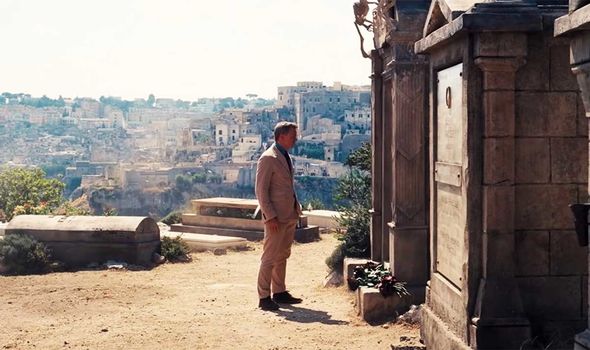
If you haven’t seen the film, James Bond is retired and traveling the world with his wife, French psychiatrist Madeleine. While visiting the grave of an old flame, the grave blows up, and Bond barely survives. Convinced that Madeleine set up him, he leaves her.
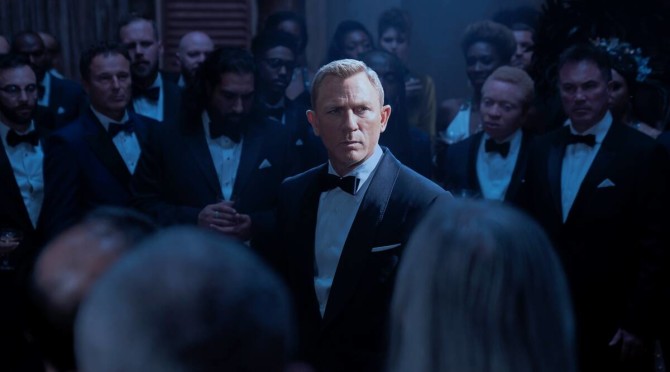
Five years later, Bond is lured out of retirement to find a terrorist in Cuba. He and a local female agent, Paloma, infiltrate a SPECTRE party, which stops mid song, as a spotlight reins down on Bond. They knew he was coming! A mist then appears in the air and everyone around him starts dying, even though he’s okay.
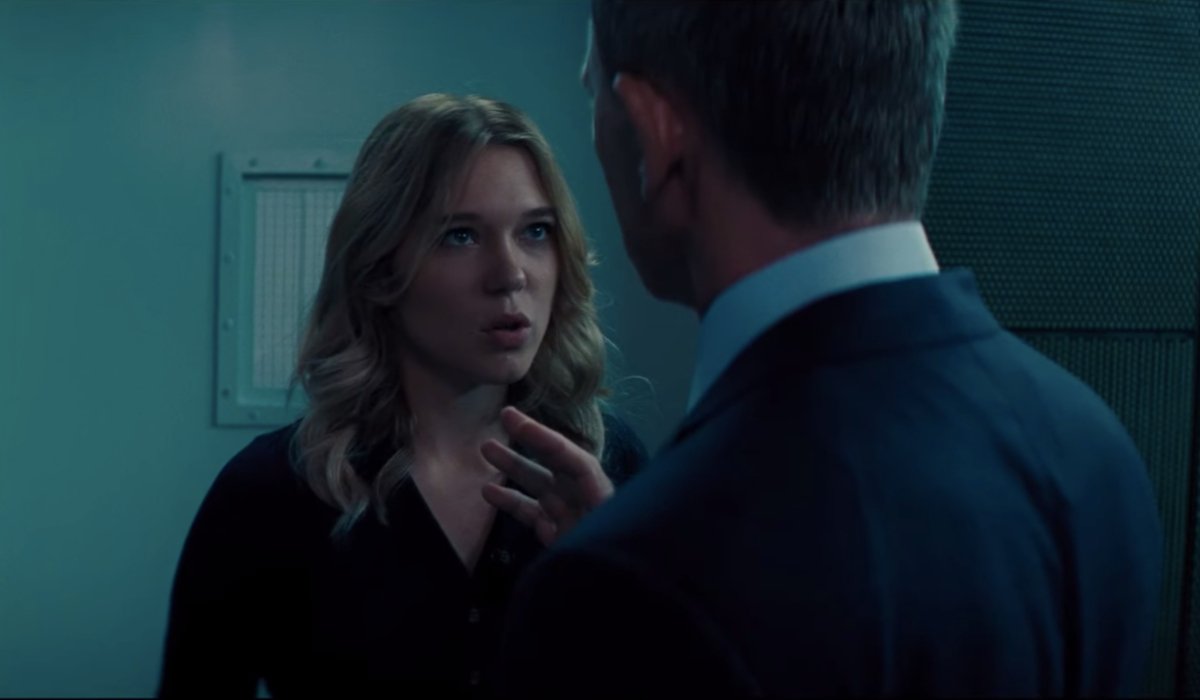
Bond and Paloma fight their way out and Bond now has no choice but to rejoin MI-6. His first mission is to visit his nemesis, Blofeld, in a psychiatric hospital, to find out what that misty stuff was all about. But Blofeld will only talk to him if a specific psychiatrist is present – Madeleine!!!
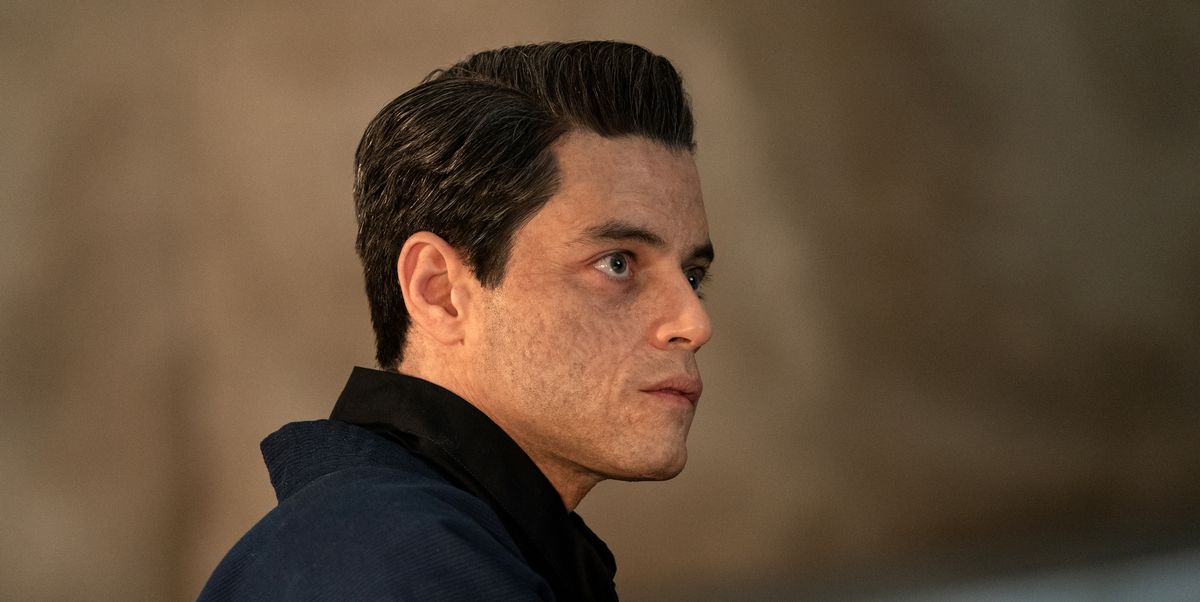
Bond then accidentally kills Blofeld with the same thing that killed the rest of SPECTRE. It turns out that someone’s developed a virus that is DNA specific. You can program it to kill only certain people. While Bond takes that in, Madeleine and her previously hidden 5 year old daughter (don’t worry, we’re told right off the bat it’s not Bond’s) are kidnapped by Lyutsifer Safin, a guy who never wears sunscreen, who has unfinished business with Madeleine. Bond will have to go to Lyutsifer’s secret island to get her back… AND SAVE THE WORLD!
One of the themes of my screenwriting advice is to surprise the reader. Give us things we’re not expecting. It’s one of the hardest things for a screenwriter to do because your mind is hardwired to use stuff you’ve already seen before. Something that’s previously existed is always going to be more prominent in your head than something that has never existed. It takes discipline to ignore that known image, that familiar plot beat, that twist, that turn, from previous movies and come up with your own.
So I have to say I was impressed with how much Fukunaga surprised me. He didn’t do anything earth-shattering. But it became clear to me during many of the movie’s scenes that he was actively trying to keep the viewer off balance. And I loved that.
The first moment this occurred was when Bond went to the grave site of his old girlfriend. I loved that Fukunaga leaned into the dramatic music, the sadness of the moment, all the cliches that usually come from visiting a grave in a movie. I was right on the cusp of falling asleep. And then the front of the grave blew up, launching Bond backwards 30 feet. As soon as that happened, I sat up, and I said, “Okay, we have a movie now.”
The second time this happened was when Bond drove Madeleine to the train station after he believed that she deceived him. We’ve seen many “One lover leaves another lover on a train” scenes before. So I loved that this played out the exact opposite way of how all those scenes did.
In this version, these aren’t two lovers sadly leaving each other. It’s two people breaking up. And the person outside the train isn’t chasing anybody. He’s standing still. It’s the person inside the train, Madeleine, who’s running backwards through the cars to try and convince James with one last look that she didn’t deceive him.
Again, it’s not a crazy good scene. And I’m not sure anybody noticed this but me. But there’s a bigger point to be made here. Which is you could tell Fukunaga and the writers worked really hard to try and make these traditionally stereotypical moments feel fresh and different.
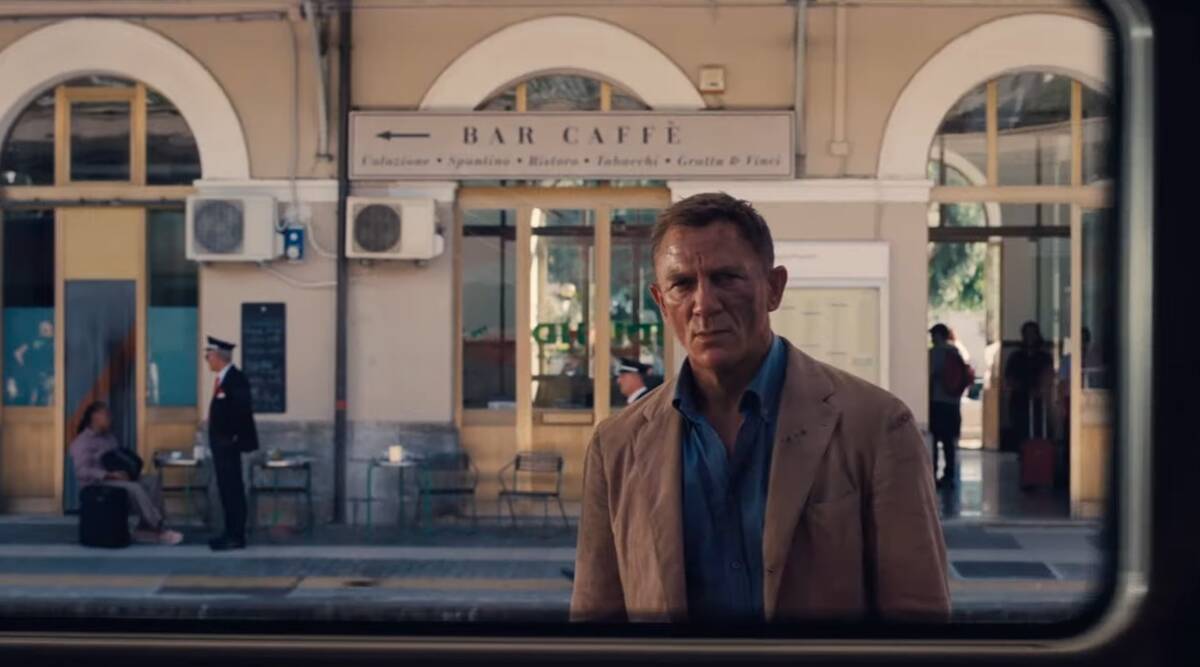
The third time this happened was when Bond went to Cuba to infiltrate the SPECTRE PARTY. When he gets to the heart of the party and everyone backs away as a spotlight washes over him, again, I thought, this is really unexpected. Usually, in these scenes, Bond (or Bourne, or Wick, or Turetto) expertly executes his mission until all hell breaks loose. I was constantly jolted out of my assumptions in No Time To Die and that kept this Bond more exciting for me.
The set pieces were all really good as well. A lot of them don’t transfer well to the page, unfortunately, because they’re built on the uniqueness of the location. Like when Bond is zipping up and down those tiny hilly streets in Italy(?). If you would’ve asked someone how that scene read in script form, they would’ve told you they were bored.
Luckily, there was one relevant “writing choice” set piece we can learn from. That happens after Bond came back to see Madeleine at her rural house, noticed that bad guys were coming, and jumped in the car with her and her five year old daughter. I know it seems, on the surface, like a mundane decision to have the daughter in the car during the chase. But we’re used to seeing chases where it’s only the hero behind the wheel, or the hero with someone in the front seat. We don’t often get kids in the car. And I noticed I was way more into the chase as a result. I was terrified for that little scared girl. It just goes to show there’s always a choice around the corner than can super-charge your scene. So push yourself and ask, “Can I do more with this scene?”
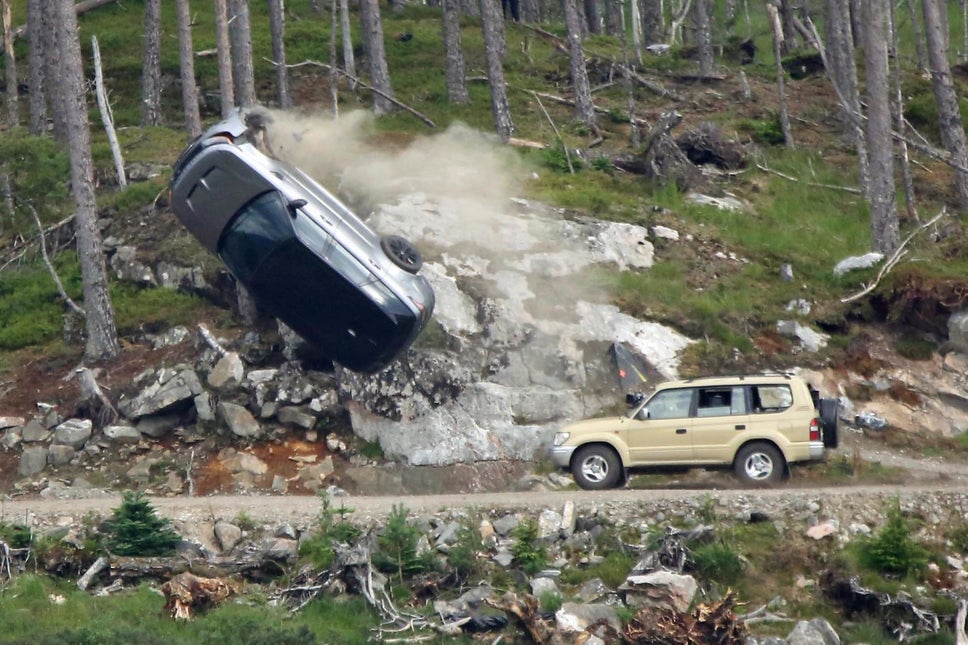
The reason I’m not scoring No Time To Die off the charts is because it still has the same problems as every Bond film. There are so many moving parts to the plot that you need to take a local University course on the movie to keep up. From Project Heracles to Blofeld to SPECTRE to Lyutsifer Safin, I’d consistently get lost as to where Bond was headed and why. It wasn’t as bad as previous Bond films for me. But it’s always hard to enjoy something when you’re never quite sure what’s going on.
**MAJOR SPOILER**
As for Bond dying, I don’t have much of an opinion on it to be honest. It’s not like Han Solo dying where you know he can’t come back. Everyone knows Bond will be back in three years. And they don’t even have to explain why he’s all of a sudden alive again because it will be a different actor playing him and we’ll all just go with it. Also, Bond has never been a real person to me. He’s a wish-fullfiment version of the ideal man, a fantasy of sorts. So I don’t hold any particular emotional connection to him. I guess it makes sense in that it’s the death of Daniel Craig playing the part. But I don’t know. It didn’t do much for me.
In the end, I liked the latest Bond. It’s packed with some really good set pieces and lots of unexpected moments. Worth the price of admission for sure.
[ ] What the hell did I just watch?
[ ] wasn’t for me
[x] worth the price of admission
[ ] impressive
[ ] genius
What I learned (spoiler edition): If you want to sell a twist, LIE HARD to your audience. I actually learned this trick all the way back in Shawshank Redemption. When Andy gets that tiny rock hammer and Red says to us, “Make no mistake, Andy couldn’t do anything with that hammer. It would take a man 600 years to dig a tunnel with that tool.” As soon as he said that, I slumped my shoulders and thought, “Dammit! I thought he was going to escape.” Same thing here. When we meet Madeleine’s daughter, one of the first things Madeleine says to Bond is, “She’s not yours.” It’s so direct and blatant that we buy it wholesale. Which makes the twist that she IS his daughter a shock.
The story behind Squid Game is almost as compelling as the story in it.
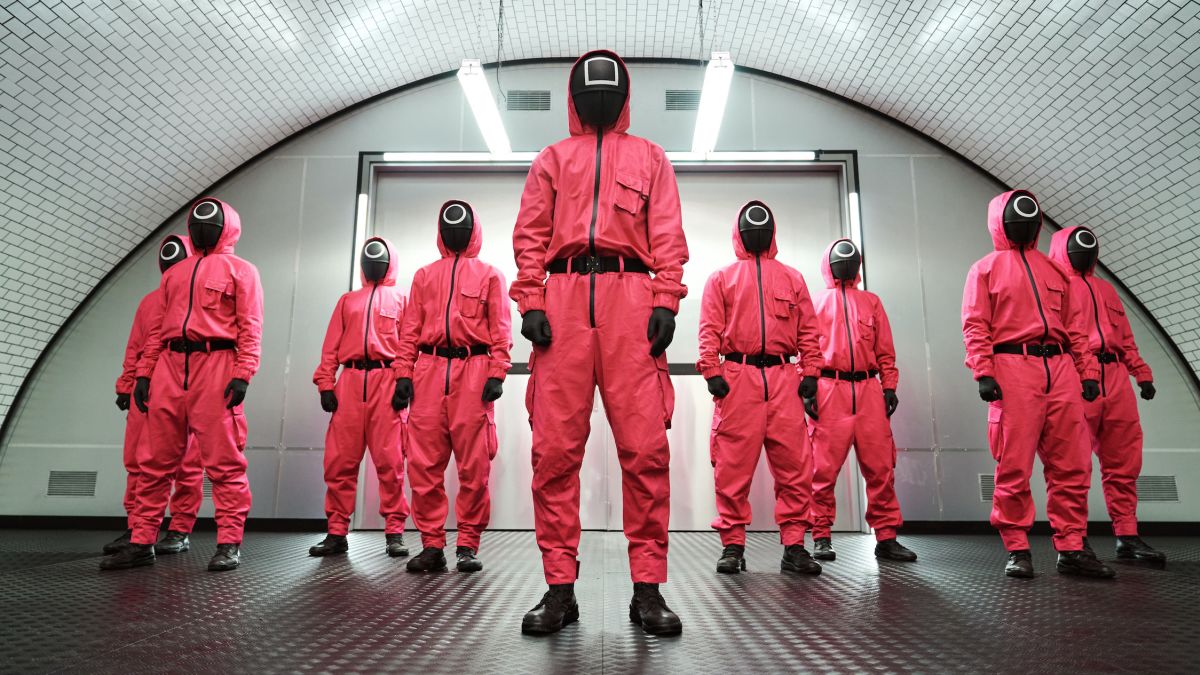
Squid Game is a sensation.
Ted Sarandos, Netflix’s content guy, says that the show is on track to become the most watched piece of entertainment in Netflix’s history.
Full disclosure, I watched the first episode and a half of Squid Game and I didn’t think it was very good. Korean cinema can be kind of goofy, in my opinion, which can sometimes take me out of the story.
There was an early scene, for example, where a business man plays a weird game with our protagonist where he drops an envelope on the floor and if it doesn’t land just right, the other guy gets to hit him. The protagonist proceeds to lose 60 times in a row and the other guy just keeps hitting him afterwards. Quite frankly, I thought it was one of the dumbest scenes I’d ever seen. It yanked me right out of the show and I couldn’t get back into it.
There were some other issues I had as well. Why do the people get to vote to stop the game? That’s lame. It’s so much better if they’re forced to play it. I gave up watching after the people were allowed to quit.
BUT. That does not change the fact that Squid Game is a runaway success. I’ve seen several of you praising it in the comments. And the internet loves it (I recently read that the squid game hash tag has been shared 22 billion times on TikTok, which I guess means everyone in the world has used the hashtag 3 times each). I texted my brother (who has zero interest in Hollywood) to see what he thought and he said, “I haven’t seen it but the world is screaming at me to watch this, so I will.” And that’s the current pull of the show. Everybody knows about it. Everybody is going to check it out if they haven’t already.
But, as was brought to the world’s attention this week, the creator, Hwang Dong-Hyuk, has been pitching the show to Hollywood for ten years and they all told him it wouldn’t work. He was so broke at one point, he had to sell the very laptop he was writing the script on!
So what happened here? Writers love a good “the studios were wrong!” story. But were they wrong? Was this a guaranteed hit that the studios missed?
Let’s dig into that question.
One of the things I’ve found is that if you’re an unknown writer and you have a really unique vision – your story is going to look different than anything else out there – it’s hard to convey that on the page. I remember when Zach Braff was trying to get Garden State made and nobody gave him the time of day because the script was so bad. However, after he made a strong visually unique film, everybody was surprised as to how Garden State could’ve been rejected. Well, it was rejected because there was no way to show everyone what the movie would look like using just words.
Which is clearly what’s happened here. Squid Game is all about the look. The dudes with the weird masks and these ridiculous colorful game sets – the second you see that on Netflix’s home page, you’re intrigued. And if you’re intrigued, you’re going to check it out.
But let’s not pretend like it an obvious hit and everyone who passed on it was dumb. There wasn’t any way to know the show was going to look the way it does. If this had been a graphic novel first, I have no doubt that it would’ve been optioned and made into a movie (or a show). But if he was just pitching this as a script, of course people are going to say no. It’s big, it’s expensive, it’s weird, and the writer is unknown. That’s like a quadro handicap on your screenplay.
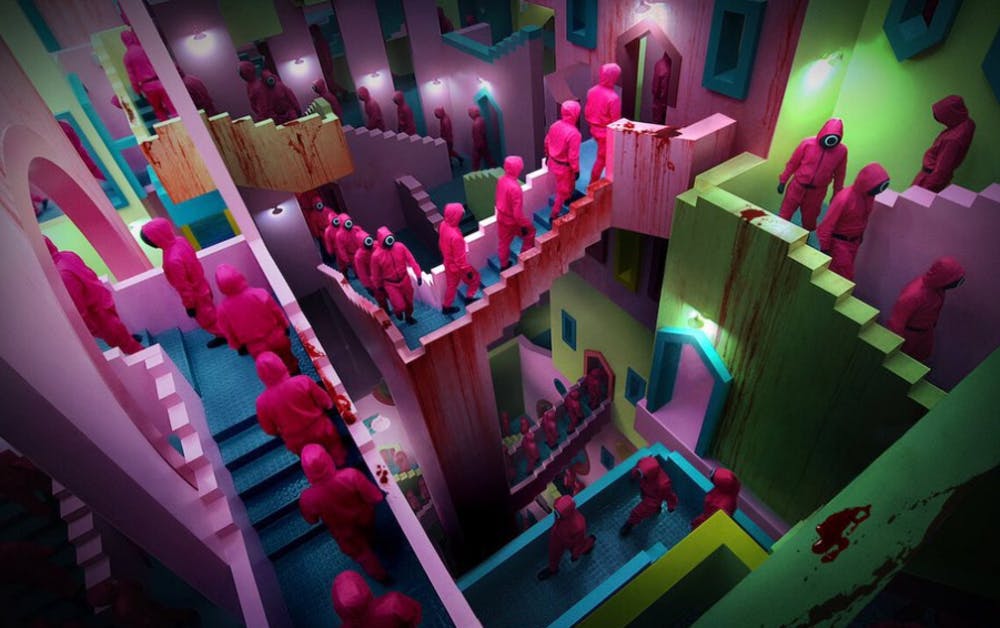
The reason I bring this up is because, if you’re a writer trying to break in, having some groundbreaking visual palette for your movie isn’t going to matter one iota in script form. That’s for the directing side of things. It’s why directors will shoot short films as proof-of-concept. But nobody’s going to be able to see that in a screenplay.
Which is why you should be conceiving of ideas that work first ON THE PAGE and then ON THE SCREEN. Not ideas that jump straight to the “on the screen” part. That’s a little confusing so let me parse it out for you. A Quiet Place is a script that works on the page. It’s got clear high-concept rules (you can’t make a sound or you’re dead) and a highly marketable story (horror film, monsters that hunt you, family that’s trying to survive). Cloud Atlas is a script that does not work on the page. You could argue it doesn’t work on screen either. But it definitely looks beautiful. And that’s the lesson here. If your script is highly dependent on how it looks, you shouldn’t be writing that as an unknown screenwriter. Nobody’s going to be able to see what you see (unless you’re a writer-director and shoot a proof-of-concept short).
Where we venture into the gray zone is when we look at Squid Game’s concept. Squid Game has a very high concept pitch. It’s a bunch of poor people playing deadly children’s games to win millions of dollars. Shades of The Running Man and The Hunger Games. To be clear, that *does* work on the page. So I’m not sure why that didn’t sway Hollywood more than it did other than maybe the writer was originally pitching Squid Game as a movie and it didn’t read well as a feature, combined with the fact that he was an unknown, which always makes things more difficult.
Let’s also not forget that, as is the case with every giant hit, there’s a fortuitous aspect to it. Steven Spielberg is Steven Spielberg in large part because when he came out with Jaws, the world was experiencing an overwhelming number of shark attacks. When Hwang Dong-Hyuk first pitched Squid Game ten years ago, we weren’t in the middle of a pandemic that was taxing everyone’s bank accounts. The second the pandemic came along and everyone started losing their jobs, Netflix greenlit Squid Game.
There are a few final writing lessons I can take away from Squid Game. The first is that screenwriting is a marathon. It isn’t a sprint. I can count the number of people who have “made it” within five years of starting screenwriting on two hands. And, in almost all of those cases, it was because that person had a family member in the business. Ten years, as scary as that sounds, is a realistic number when it comes to screenwriting success. That doesn’t mean you have to starve for ten years. You can have a job and pursue screenwriting in the meantime. But try to put 2-3 hours a day into it if you really want to get good.
Next up, high concept remains your best bet for success. Some people may look at Squid Game and say, “Wow, Hollywood is effed up. They rejected this awesome show for ten years.” But another way to look at it is, kudos to Dong-Hyuk for coming up with such a high concept that it could be pitched long enough whereby it never got old. A lot of writers come up with ‘of-the-moment’ ideas and, as soon as the moment is over, their scripts are worthless. A big high concept timeless idea is something you can pitch for years no matter how many times you get rejected.
Finally, write about what’s affecting you RIGHT NOW. That tends to create the most authentic exploration of character. Dong-Hyuk was dirt poor ten years ago. He was just trying to survive. So he came up with an idea that explored the depths a person would go to to become financially stable. I don’t think Dong-Hyuk would be able to write Squid Game today. He’s rich now. He doesn’t feel that same desperation. That same destitution. As much as I love concept, you ultimately have to write characters that the average person connects with. And this is a big part of the equation for doing that. Write characters that are versions of you and what you’re going through right now in your life.
I’m curious what conclusions you’ve drawn from Squid Game’s success. While you write out those comments, maybe, just maybe, I’ll give this show a second chance. :)
Genre: Horror
Premise: A troubled young surgeon travels to a desolate peak to climb the mountain where her father suffered a mental breakdown years earlier, only to realize halfway up the rock wall that she might be subject to the same fate.
About: This one was on last year’s Black List. Another brand new writer!
Writer: Arthur Hills
Details: 104 pages
Readability: Fast

You guys know how much I love Free Solo. So it’s time to Free Solo ourselves a mountain climbing script review! Join me! Oh, and if you think you can write a better horror script than today’s, make sure you enter the Halloween Horror Showdown!
28 year old Sloane is just about ready to become a surgeon. In fact, we see her operate on one of her first patients, under the watchful eye of a veteran surgeon, only to accidentally let the blade slip and paralyze the guy she’s cutting open. Oops!
Sloane goes home to her boyfriend, Stephen, and laments about paralyzing this guy. We also learn, during this time, that the anniversary of Sloane’s father’s death is coming up. Her father used to be a great climber until one day when he climbed a mountain called Lytta’s Peak and went crazy on it.
Sloane thinks it’d be a good idea to climb the peak herself and finally face the trauma of her father’s death. Sort of like what Reese Witherspoon did in that movie about the girl who walked a 500 mile trail. But unlike Reese, Sloane isn’t going by herself. She’ll be joined by her boyfriend, Stephen, Stephen’s attractive friend, Mia, and the youngster of the group, 24 year old sexual dynamo, Luna.
Off they go to Lytta’s Peak, where Sloane immediately starts seeing things. She sees people in white clothes walking through the forest (but not appearing on her iPhone screen). She sees Mia and Stephen kiss, even though a second later they’re not there. She keeps finding these circles everywhere with a bunch of random designs carved inside.
But things really get nuts when they’re on the side of the cliff and Mia goes plunging to the forest floor. Hashtag Mia’s dead. Around this time, we learn that both Sloane’s dad AND Sloane have SHADOWS that are on the mountain with them. And their plan is to kill everyone climbing the mountain. Including Sloane herself! The only way to defeat them is to get to the top.
“Peak” started out strong and is a good example of how to set up character while keeping things entertaining. The script begins with a teaser. We see a person falling from a mountain. But we don’t know who they are. We’re not close enough to identify them. This creates an immediate mystery that we want answered (and that keeps us reading!).
This is followed by Sloane visiting her father at the psychiatric hospital. One of the best ways to set up characters is through SHOWING. You show us he’s at a psychiatric hospital. You show us that he’s emaciated and worn down. We immediately know where this character is at. Ditto Sloane who’s developing as a character by the writer simply showing us what her family situation is. She has a dad who’s in a psychiatric hospital. That takes a huge toll on someone which creates a richer deeper character in the eyes of the reader. On top of that, the scene is filled with the conflict of the dad not quite being “all there,” despite Sloane desperately wishing he was. It’s heartbreaking.
The next scene happens four years later where Sloane is getting her first chance to operate under the eye of an experienced surgeon. We see how exhausted she is beforehand. So she crushes and snorts some adderall to get her adrenaline pumping for the surgery. Again, another SHOWING moment.
We then watch her operate on this guy and the surgery is the best scene in the script, easily, because she starts bleeding from her nose because of the adderall, which is dripping into her mask, all while she’s making an incision right next to the guy’s spine. Any sudden move could paralyze him for life. It’s an intense scene that really draws you in. Again, this is the goal with writing. You want to set up WHILE entertaining. You don’t just want to set things up and that’s it.
A couple of scenes later we’re driving to the mountain. This section is entertaining as well because the writer sets up that Stephen and Mia are really close. To the point where Sloane is suspicious of their relationship. This creates a ‘dramatic irony’ situation within the car where Mia playfully chats away with Stephen with Sloane watching on, trying to pick up cues if there’s more there than friendship.
In that case, it’s the CONFLICT – Sloane disliking and being suspicious of Mia – that keeps the reader entertained. If you don’t think that’s worthy of mentioning, let me just say that I read tons of scenes like this where the writer doesn’t make any attempt to create conflict within the ride, so all the characters are doing is babbling on, setting up exposition, trying to be funny. These are always less entertaining than scenes where the writer is actively looking to inject conflict into the conversation.
So I was encouraged after those first 20 pages.
And then the writer made the same mistake so many writers writing “Is my protagonist going crazy” storylines make. Which is to start injecting that classic repeated beat of something weird happening (sees someone dressed in white walking through the forest, sees Mia and Stephen kiss) only for it to be in her head. And it just ruined the story for me.
I don’t know why writers think this is interesting. Once you establish the character is seeing things that aren’t there, we know every weird thing that happens from now on is going to be another hallucination. Where’s the suspense in that? The mystery? We, the reader, are now ahead of you, since we can predict these things. And the second the reader gets ahead of the writer, the script is cooked.
I don’t want to completely undersell the story because this idea of peoples’ shadows orchestrating death and mayhem is kind of cool. And it does get rid of some of the story’s predictability. But it wasn’t cool enough to win me over.
There’s a broader topic to explore here about first and second acts. There are writers who are good at first acts and bad at second acts. There are writers who are good at second acts and bad at first acts. But there aren’t a lot of writers who are good at both. And that’s because the requirements for each are so different.
The first act is about setting up the plot and characters then sending your hero off on their journey. The second act is double the length and about pushing your hero towards their goal, throwing obstacles at them, giving us compelling twists and turns, and, of course, exploring all of the relationships in a compelling way, including the main character’s relationship with himself.
To nail that second act, you have to stay away from repeated beats as much as possible. Once you establish a pattern, you risk boring the reader. That happened here with all the, “What’s that! Did you see that!???” fakeouts.
Look, I’m not saying that any script about going crazy is going to suck. I loved Black Swan. I liked Taxi Driver. I like The Shining. But it’s a pretty short list from there on out of ‘going crazy’ movies that are good. And I think that’s because, ironically, ‘going crazy’ movies need a higher level of SOPHISTICATION to be convincing compared to other genres. And all three of those movies showed a lot of sophistication in the way the craziness was built into the story.
Mileage may vary here if you’re into ‘going crazy’ narratives. You might like this because it’s kinda fun. But once I figured out the story’s pattern, I got bored. So it wasn’t for me. P.S. I feel VERY confident that we can find a better horror script than this for Halloween Horror Showdown. Which would mean we’d find ourselves a Black List script. So get writing!
[ ] What the hell did I just read?
[x] wasn’t for me
[ ] worth the read
[ ] impressive
[ ] genius
What I learned: I would strongly suggest that you never end your movie with your character waking up strapped to a bed in a psychiatric hospital. It’s just so obscenely cliche at this point. I’ve read that ending more times than I can count.
Genre: Drama/Serial Killer (loosely based on true events)
Premise: A struggling single mother must confront dangerous forces – and sins of her past – when her world collides with that of a serial killer. Inspired by the true story of Delaware’s only serial murderer, the Route 40 killer.
About: This script finished on last year’s Black List. Brand new writer.
Writer: Erin Kathleen
Details: 117 pages
Readability: Medium
Yesterday, we had a main character with a prosthetic leg. Today we have a main character with a severe limp. What is it with writers and legs??? They’re obsessed! Wasn’t it Billy Bob Thorton who said that he wasn’t going to play the Control Room Director in Armageddon until they gave him a gimp foot? People in this business are passionate about legs, I guess.
The year is 1987. We’re in Delaware. A woman named Diane, who used to be a prostitute but who’s finally getting her life back on track, hitchhikes at night. A guy in a van picks her up. When has that ever ended well? He immediately attacks her with a hammer. She’s able to fend him off, burst out the door, and run into the forest. But he chases her and brutally murders her.
Cut to an hour ago where we meet our heroine, 40-something Pam Spinelli. Pam is the manager of a nice restaurant on the Route 40 highway there. Pam is giving some leftovers to Diane out the back door. We get the sense that Pam helps Diane out whenever she can. There might have been a close friendship here once.
Obviously, when they find Diane’s body the next week, Pam’s devastated. That’s the fourth murder along the highway in the past several months. She worries for her 16 year old daughter, Nikki, who works at a donut shop on the highway. Nikki usually gets a ride home but sometimes she has to walk. What if this monster picks her up?
When local cop Miles (he who has the limp), comes around to ask Pam questions about Diane, Pam says she wants to help find the killer. There’s a truck stop down the road where a lot of prostitutes work. They won’t talk to cops but they will talk to her. Miles is reluctant. He’s not supposed to put pedestrians in danger. But this psycho killer is on the loose and the pressure to catch him is high. So he okays it.
At first Pam just talks to hookers to get info. But soon she’s profiling truckers, trying to figure out which one of them is the killer. Things get dicey when she starts riding with them. As Pam tries to work things through with her daughter (so her daughter doesn’t end up like her) and Miles (who she wants but can’t be with since she no longer trusts men) she takes riskier and riskier chances with these truck drivers until she finally finds herself in the company of the killer. Will she survive????
Today I’d like to talk about the balance between character and plot because this balance is something you’re going to be faced with in every movie you write. On the one hand you have character development. That’s characters battling internal demons, characters battling trauma from their pasts, characters battling broken relationships. Whenever you have two characters in a scene and neither of them are trying to forward the plot, they are likely dealing with character related issues.
Conversely, you have plot development and that’s when you’re hitting the reader with new story developments, surprising twists, new information that helps them “solve the case” – anything that pushes your characters closer to the story’s ultimate resolution.
For a point of reference, let’s look at two extreme examples. Raiders of the Lost Ark is, I’d say, the ultimate plot-driven movie. Every scene is shoving the plot forward. Manchester by the Sea may be the best example of a pure character driven movie. I don’t remember any plot beats from that movie at all.
Why am I bringing this all up? Well, it’s because as I read today’s script, I felt like it put the majority of its eggs in the wrong basket, which was the character-development basket. “What’s wrong with character development, Carson? Don’t you tell us all the time that character is everything?”
Yes, character is everything. But, usually, when I say that, I’m talking about creating a really interesting character or a really likable character that we’ll want to follow. Not necessarily writing a ton of character development scenes. For example, Nightcrawler. Gilroy created a really cool character and then mostly left the script in the hands of the plot. He didn’t have fifty scenes of Louis Bloom introspectively trying to overcome himself.
The Women of Route 40 leans HARD into character development and the problem I had with that was when you write in this genre (the serial killer genre), there’s an expectation. People want to see the plot develop in interesting ways and they want those plot beats to come every 10-12 pages. I kept waiting for stuff to happen here and it just didn’t. And even when it did – when someone would be murdered for example – it was covered quickly before pushing on to the next thoughtful character interaction.
And look, I get that the balance between plot and character is going to affect everyone differently. There’s something to be said for taking traditionally plot-fueled narratives and making them character pieces, and vice versa. But you’ve got a really fertile serial killer garden here to grow plot in. So it just seems strange that you only planted a few vegetables.
Here’s what I think happened. The writer wanted to tell an emotional story about the victims of Route 40. And I get that. It’s based on real events so you want to focus on that emotional component and give those victims their due. But I think a time comes with every script where we have to let go of the reason we originally wanted to write it, and we have to embrace what the story needs in order to be entertaining.
We all get wrapped up in that initial reasoning for writing our story. For example, I once wrote a script about the dissolution of the American dream. And I tried to show this through a character doing everything he was supposed to do to make it in America, but it still not working out in the end. And I showed the script to a few people and they were bored. I said, “But don’t you see! This is about America! And how it’s a lie! And he represents the average American!” And one reader just looked at me and said, “Yeah but it was boring.”
Ouch.
But he was right!
I’d gotten so wrapped up in trying to get that emotional point across that I forgot about what the audience needed in order to enjoy the story. That’s all I’m saying here. I don’t know if the script cared enough about keeping the audience engaged. It was more about hitting those character beats that honored the women who died.
For me, at least, that wasn’t enough. You had a unique serial killer. It felt like we could’ve explored him for some bigger plot moments.
[ ] What the hell did I just read?
[x] wasn’t for me
[ ] worth the read
[ ] impressive
[ ] genius
What I learned: Here’s a line from the script: “It’s sleeting now, the heavens spitting on her.” While a fun line, this is more of a novel description than a screenplay description. With screenplays, you want to write descriptions that create an image in the reader’s head, not descriptions that will win you an analogy contest. The name of the game is always to paint a picture in the reader’s head. You want them to feel like they’re in the theater looking up at the screen, watching the movie. So come up with descriptions that support that. I’d focus this description more on the violence of the sleet, that it’s “slamming” into her. Something along those lines. Create that image!
Is La Brea the new Lost?
Genre: TV Pilot/Drama/Sci-Fi
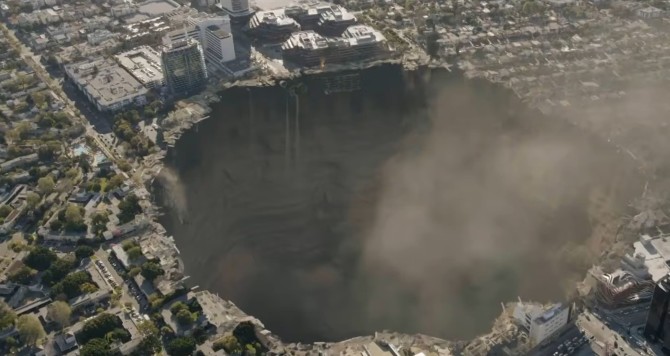
Premise: (from IMDB) A massive sinkhole mysteriously opens up in Los Angeles, separating part of a family in an unexplainable primeval world, alongside a disparate group of strangers.
About: Here’s series creator David Applebaum on his high concept show: “The genesis of the idea was just an image of a sinkhole opening in the middle of Los Angeles, and it was just an image that I couldn’t shake. I had never seen a show open that way with something so dramatic and I knew I wanted that to start the story, but didn’t know anything else. But started asking so many questions about why does the sinkhole open? Where does it go? Who are the people that fall in? And then, once you’re starting with those questions, you start to create a world of characters in situations. And then from there, a thousand other things happen, but it really just started with an image.”
Writer: David Applebaum
Details: 60 min
If you’re anything like me – and you probably aren’t but let’s just pretend for a second you are – you miss “Lost.” That show took over my life. For a good five years, everything was built around Wednesday’s at 8 o’clock. I couldn’t get enough of that show. Even when the Lost backlash began and everybody started piling on JJ (“HE ONLY KNOWS HOW TO ASK QUESTIONS! NOT ANSWER THEM!”), I was still Team Lost. Even detractors have to admit that there was something magical about that show. And if you disagree, I have the ultimate argument to prove you wrong.
For the next five years, all anybody did was try to recreate Lost. AND FAILED. Here are just some of the shows that attempted to become “the next Lost.” Flash-Forward, Threshold, V, The Event, Invasion, and the most successful of the failures, Heroes. People think Lost was a bad show? No no no no no. THOSE were bad shows.
It turns out Lost was lightning in a bottle, the perfect TV idea, never to be repeated again.
Or maybe not.
Recently, there’s been a resurgence in trying to recreate Lost, probably because writers who loved the show and were in that target demographic (18-25) when it aired have now become seasoned enough to be able to pitch their own shows. Westworld sort of re-started the “Lost” like formula. A couple of years back there was Manifest, which is now in its final Season on Netflix. And today we get La Brea, which is the most Lost-y show yet. Hell, one of the characters in the pilot literally says, “Or maybe we’re just stuck in an episode of Lost.”
The reason I even gave La Brea a chance at becoming the next Lost is because it has a genuinely cool premise. Let’s take a look at how the pilot shakes out.
Set in Los Angeles, the show starts off with mother, Eve Harris, driving her teenaged kids, Josh and Izzy (who has a prosthetic right leg), across town somewhere, when, all of a sudden, a giant sinkhole appears near La Brea and 3rd Street, swallowing up five square blocks of real estate. Everyone in their cars and inside of buildings fall into the hole of death, including Eve and her son (Izzy and her prosthetic leg are able to outrun the hole).
After the government sets up a perimeter around the hole and begins a clean-up process, Eve’s husband and former Air Force pilot, Gavin, swoops into town. But he’s not just here to hug his daughter with the prosthetic leg. No. You see, several years ago, Gavin had strange visions which got him kicked out of the military. He’s having those visions again, but this time they’re more specific: he can see his ex-wife and a bunch of other people STILL ALIVE.
Cut to a hilly tree-lined rural land and a giant piece of building in the middle of it, along with a bunch of cars and dazed people stumbling around. I’ll save you the mystery. Eve and everyone else on La Brea are a few hundred thousand years in the past, in Los Angeles BEFORE it was Los Angeles. “Those are the Hollywood Hills,” someone points out. The show then sets up a scenario where we will jump back and forth between the past and the present until somebody figures out the mystery of how they ended up here and, hopefully, a way to get home.
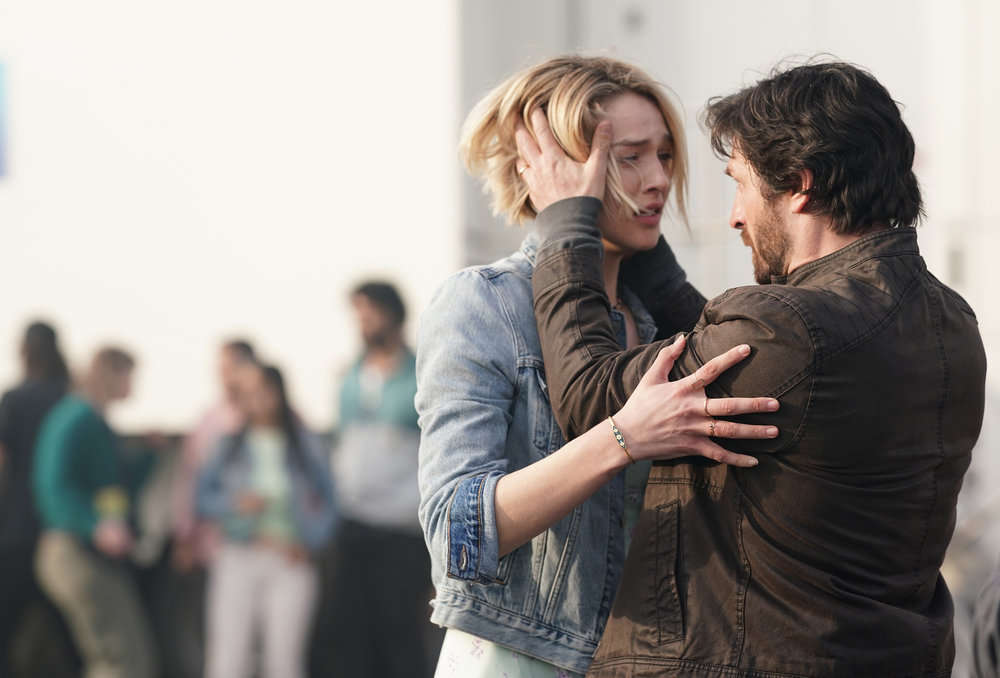
Let me just go ahead and say that, so far, I like this show.
At times the writing is juvenile. Frustratingly so. Yet it’s a really cool premise with all sorts of possibilities. I mean, towards the end of the pilot, a group of our time-traveling characters get into a standoff with a saber-tooth tiger. Count me in on that!
But I am oh so worried. This show is already exposing weaknesses and we’re only in the pilot episode. As a means of comparison, Lost didn’t show any cracks until its third season, a full 50 episodes in. Let’s go over a few of these concerns.
The dad had visions – This is extremely concerning. Just going off the odds, what are the chances that someone who has special visionary powers will have a wife that, three years later, will be involved in the single most unique event in the history of humanity? Clearly, the only reason he has this power is that the writers needed a way to bring the husband into the military mix. So they gave him this special power that the military needs. It’s a lazy juvenile coincidental choice that makes me think more choices like it are coming. Although I hope I’m wrong!
The default is melodrama – One of the reasons that cable has usurped the buzzy one-hour drama from networks is because they leaned into more realistic interactions between people. Meanwhile, the network shows are still stuck in melodrama. When your big opening scene turns ultra slow motion while focusing on a prosthetic leg JUST BARELY pushing away from the final crumbling concrete of a giant sinkhole, that’s melodrama. Even Lost knew this. Whenever Jack was saving someone, it felt genuine. It didn’t feel like this over-acted silliness that networks seem to think audiences still like, and which we’re seeing here.
The cars and buildings didn’t survive the fall from the sky but, somehow, all humans did – This is something one of the characters even says. “How are all the cars damaged but we’re okay?” “I don’t know,” another person says. I know they’re going to try and answer this question at some point but it’s clear that the reason the people survived the fall is that they wouldn’t have a show if they didn’t. There is no answer down the road that will adequately explain this, which means they’ll have to construct some nonsensical answer that will ultimately disappoint us.
There are a couple of things going on here. First, the pilot is the foundation for your story. If it’s not solid, the episodes that follow it are going to be even less solid. To make matters worse, each subsequent episode will display the law of diminishing returns. This is why bad shows seem to get worse with every episode. I’m hoping La Brea is an exception to the rule but I’m not optimistic.
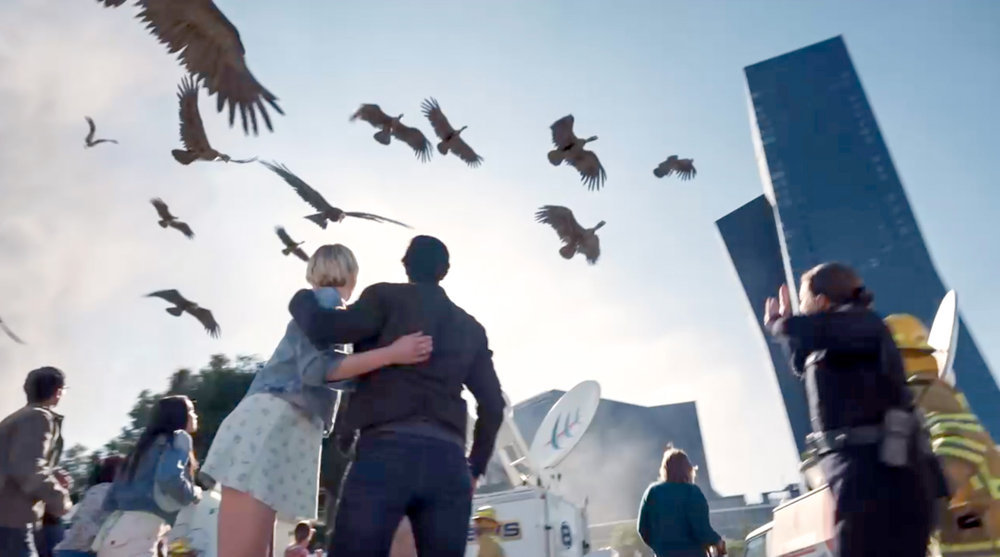
Second, a good mystery isn’t built off of a coincidence you need for your story to work. A good mystery is something you create for the sole purpose of the mystery alone. So everyone surviving a fall from 30,000 feet in the air in order for you to have a show isn’t a designed mystery. It’s more of a “paint yourself into a corner” mystery. Polar bears on a tropical island. THAT’S a good mystery because it was specifically designed into the show.
Despite all this, I was into all the stuff that was happening in the pre-historic era. I love the idea of a technology-dependent people being thrust into a past where they’ll be tasked with surviving giant wolves, saber-tooth tigers, cave men, and who the hell knows what else. The power of any show basically comes down to its ideas. Are the ideas imaginative and dramatically compelling? So far, La Brea has that going for it.
I’m just worried they’re going to get in their own way. Will the sloppy conveniences continue? Will the melodrama continue to be laid on too thick? I hope not. Because I would love more than anything to finally be able to watch the next “Lost.”
[ ] What the hell did I just watch?
[ ] wasn’t for me
[x] worth the stream
[ ] impressive
[ ] genius
What I learned: David Applebaum got his first job as a P.A. in the writer’s room of the O.C. Desperate to become a writer on the show, David pushed to move up, eventually becoming a script coordinator (in charge of reading and distributing scripts to everyone on the production and cast) but they wouldn’t give him a writing job. Applebaum said that was his first big lesson learned in Hollywood. “Don’t stay anywhere just because it’s comfortable. Keep your end goal in mind and make choices that help you achieve that goal.” Because they clearly weren’t going to let him write on the O.C., Applebaum quit. He finally got his first paid writing job several years later on a pilot that didn’t get picked up called King’s English. A couple of years after that, he started writing on The Mentalist.
